

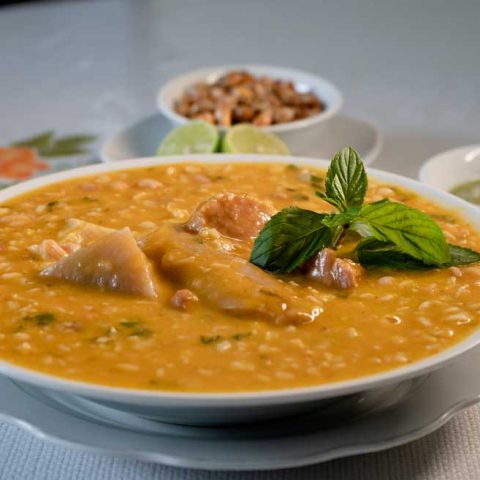
Shambar is the thick Monday soup of Trujillo, Peru: wheat, canary beans, chickpeas, fava beans and split peas simmered with smoked pork until the broth turns creamy, then seasoned with an ají panca aderezo and finished with fresh mint and cilantro. It is eaten as a full meal, with toasted cancha corn, lime and hot ají on the side.
Shambar at a Glance
AmigoFoods may earn a commission from qualifying Amazon purchases made through links on this page.
What is shambar?
Shambar (also written shámbar) is a legume-and-wheat soup from Trujillo, the capital of Peru’s La Libertad region on the north coast. It is built on three things: grain, dried legumes and pork. Peeled cracked wheat called trigo shámbar gives it body, a mix of beans, chickpeas, favas and split peas breaks down into a creamy broth, and smoked meats give it a deep, almost bacon-like flavor.
The seasoning is a classic Peruvian aderezo, a slow-fried base of red onion, garlic, ají panca and ají amarillo. Fresh mint (hierbabuena) goes in at the end with cilantro, which is what makes shambar taste different from other bean soups. Peruvians call it a sopa de fondo, a soup that is the main course rather than a starter.

Why shambar is a Monday soup
In Trujillo, shambar is the dish of the lunes. Restaurants, markets and family kitchens all serve it on Mondays, and some trujillanos will tell you it is only proper from late morning onward. The custom is often explained two ways: the legumes can soak overnight on Sunday so the soup is ready for Monday lunch, and a heavy, collagen-rich bowl is the traditional cure for a weekend of celebrating.
Whatever the reason, the habit has stuck. Ask anyone from La Libertad what they eat on Monday and the answer is almost always shambar.
Where shambar comes from
Shambar is usually described as a descendant of the Spanish cocido, the pot of chickpeas and mixed meats that arrived in Peru with colonization. In the highland provinces of La Libertad, including Otuzco, Santiago de Chuco and Sánchez Carrión, the dish was rebuilt with local ingredients: Andean wheat, favas and ají instead of Spanish chorizo and cabbage. It fed farm workers on the haciendas and later moved down to the coast, where Trujillo adopted it as its signature dish during the twentieth century.
The word itself has no agreed meaning. Peruvian food writers trace it to the La Libertad highlands but have never pinned down its root, so be wary of any single etymology you see repeated online.
Shambar sits alongside caldo de gallina and chupe de camarones as one of the great soups in our guide to Peruvian soups and stews.
Shambar ingredients
The ingredient list looks long, but it falls into four groups. Every serious shambar has wheat, at least three dried legumes, at least three cuts of pork or other meat, and the aderezo.
The wheat: trigo shámbar
Trigo shámbar is wheat that has been hulled and partly cracked, so it cooks faster than whole berries and releases starch that thickens the soup. Peruvian grocers sell it in bags labeled trigo shámbar or trigo pelado. In the US, hulled wheat berries are the closest swap; pulse them a few times in a blender after soaking so some grains break. Farro works too. Bulgur is too fine and dissolves.

The legumes
Most Trujillo cooks use canary beans (frijol canario), chickpeas, dried fava beans and split peas. Some add zarandaja, a small speckled bean from northern Peru. The mix matters: chickpeas stay firm, favas turn soft and earthy, and split peas melt into the broth. Look for peeled dried favas so you do not have to slip off the skins. Mayocoba beans, sold in the US as Peruvian canary beans, are the same bean as frijol canario.
The meats
Tradition asks for three meats. The classic combination is pork skin (pellejo), smoked pork ribs and smoked ham; many cooks add a piece of chicken or beef brisket as well. The pork skin is the secret ingredient: it gives the broth a silky, gelatin-rich body. If you cannot find it, a smoked ham hock does the same job.
The aderezo
The flavor base is red onion and garlic fried slowly with chili pastes, cumin, oregano and black pepper. Ají panca paste gives a smoky, raisin-like depth and the red-brown color; a spoonful of ají amarillo paste adds fruitiness and gentle heat. Read more about both peppers in our guides to ají panca and ají amarillo.

What to buy in the US
| In Peru | What it is | US swap |
|---|---|---|
| Trigo shámbar | Peeled, cracked wheat | Hulled wheat berries, pulsed after soaking, or farro |
| Frijol canario | Pale yellow canary bean | Mayocoba beans |
| Habas secas | Dried fava beans | Peeled dried favas from Latin or Middle Eastern grocers |
| Zarandaja | Small speckled northern bean | Skip it, or use black-eyed peas |
| Pellejo de chancho | Pork skin | Smoked ham hock |
| Costilla ahumada | Smoked pork ribs | Smoked spare ribs or smoked pork chops |
| Hierbabuena | Spearmint | Any fresh mint |
How to make shambar
Shambar takes time but very little work. Most of the cooking is a slow simmer while you do something else. Full quantities and step-by-step instructions are in the recipe card below; here is how the method works.
- Soak overnight. Wheat, beans and chickpeas go in one bowl and the favas in another, since favas stain the water dark.
- Build a smoky broth. Blanch the pork skin to clean it, then simmer it with the smoked ribs to make the stock.
- Cook the grains and legumes in that broth until every bean is tender and the split peas have started to dissolve.
- Fry the aderezo separately until the chili paste darkens and the oil turns red. This step is where most of the flavor comes from, so do not rush it.
- Combine and thicken with the ham and mint, stirring often, then finish with cilantro just before serving.
Shambar variations
Shambar trujillano. The coastal city version, and the one in our recipe: whole cracked wheat, a mix of legumes, smoked pork and an ají panca aderezo, finished with mint and cilantro.
Highland shambar. In Otuzco and the other sierra provinces where the dish began, cooks often use more wheat, add more favas and lean on fresh pork and chicken rather than smoked meats.
Shambar cajamarquino. In neighboring Cajamarca the wheat is often ground rather than cracked, which makes a smoother, porridge-like soup, and some cooks add huacatay (Peruvian black mint) to the herbs.
With chicken or beef. Many families add a chicken leg or a piece of beef brisket as a fourth meat. Simmer it with the ribs and shred it into the pot at the end.
How to serve shambar
Serve shambar in deep bowls as a complete meal. Three things always go on the table with it:
- Cancha, the toasted corn kernels Peruvians snack on, sprinkled over the top for crunch. Maíz chulpe is the variety to buy for toasting.
- Lime wedges to brighten the rich broth.
- Ají, usually a fresh rocoto or ají limo sauce, so everyone controls their own heat. Our guide to Peruvian peppers covers the options.

In Trujillo, some restaurants also add a few pieces of crisp chicharrón on top. A cold chicha morada or a glass of beer is the usual drink.

Tips for the best shambar
- Salt at the end. Smoked ham and ribs release a lot of salt as they cook. Season only after the aderezo and ham are in.
- Stir the bottom. Once the wheat and split peas break down, the soup can catch on the pot. Scrape the bottom every 10 minutes in the last half hour.
- Keep favas separate while soaking. Their skins darken the soaking water and can turn the whole soup gray.
- Use a heavy pot. A Dutch oven holds a gentle simmer without scorching.
- Add the herbs late. Mint goes in for the last 20 minutes and cilantro only at the end, so both stay fresh and green-tasting.
Storing and reheating shambar
Shambar keeps for 4 days in the fridge and freezes well for up to 3 months. Like most bean soups it tastes even better the next day, but it also thickens a lot as it cools. Reheat it gently over medium-low heat with a splash of water or broth, stirring often, until it is loose enough to ladle again.
Shambar FAQ
Is shambar the same as sambar?
No. The names sound alike, but they are unrelated dishes. Sambar is a South Indian lentil and vegetable stew soured with tamarind. Shambar is a Peruvian soup of wheat, mixed legumes and smoked pork from the city of Trujillo.
What does shambar mean?
Nobody knows for certain. The word comes from the highlands of La Libertad, where the dish began, but its origin has never been confirmed.
What is trigo shámbar?
It is hulled wheat that has been partly cracked, sold under that name in Peru. It cooks faster than whole wheat berries and thickens the soup. Wheat berries pulsed in a blender after soaking, or farro, are the best substitutes.
Is shambar spicy?
Not very. Ají panca is mild and smoky, and the ají amarillo adds only gentle warmth. Real heat comes from the ají sauce served on the side.
Can I make shambar in a pressure cooker or Instant Pot?
Yes. After soaking, cook the meats, wheat and legumes with 10 cups of water for 30 minutes at high pressure and let the pressure release naturally. Then stir in the aderezo, ham and mint and simmer on the sauté setting for 15 minutes.
Can I make shambar without pork?
You can. Use smoked turkey legs for the smoky flavor, add a chicken leg for body, and cook the legumes in chicken stock instead of water. It will be lighter but still recognizably shambar.
Is shambar gluten-free?
No. The wheat is an essential ingredient, so shambar contains gluten.
What day is shambar eaten?
Monday. In Trujillo and across La Libertad, shambar is the traditional Monday lunch.
Shambar Recipe
Shambar (Peruvian Wheat and Bean Soup)
Shambar is the thick Monday soup of Trujillo, Peru: wheat, beans, chickpeas, fava beans and split peas simmered with smoked pork and finished with an ají panca aderezo, mint and cilantro.
Ingredients
For the wheat and legumes
- 1 cup trigo shámbar (peeled cracked wheat) or hulled wheat berries
- 1/2 cup dried canary beans (frijol canario) or mayocoba beans
- 1/2 cup dried chickpeas
- 1/2 cup dried peeled fava beans (habas secas)
- 1/2 cup dried green split peas
For the meats
- 8 ounces pork skin (pellejo), cut into 2-inch squares
- 1 1/2 pounds smoked pork ribs, cut into single ribs
- 8 ounces smoked ham, cut into 1/2-inch dice
For the aderezo
- 3 tablespoons vegetable oil
- 1 large red onion, finely chopped
- 6 garlic cloves, minced
- 3 tablespoons ají panca paste
- 2 tablespoons ají amarillo paste
- 1 teaspoon ground cumin
- 1 teaspoon dried oregano
- 1/2 teaspoon ground black pepper
To finish
- 12 cups water
- 4 sprigs fresh mint (hierbabuena)
- 2 teaspoons kosher salt, plus more to taste
- 1/2 cup chopped fresh cilantro
To serve
- 1 cup cancha (toasted Peruvian corn)
- 2 limes, cut into wedges
- Ají or rocoto sauce, for the table
Instructions
- Soak the night before. Rinse the wheat, canary beans and chickpeas, put them in a large bowl and cover with 3 inches of cold water. Soak the fava beans in a separate bowl, because they turn the water dark. Soak for 8 to 12 hours. The split peas do not need soaking.
- Blanch the pork skin. Put the pork skin in an 8-quart pot, cover with water and boil for 20 minutes. Drain and rinse the pot.
- Start the broth. Return the pork skin to the pot with the smoked ribs and 12 cups of water. Bring to a boil, skim off any foam, then lower the heat and simmer, partly covered, for 30 minutes.
- Cook the wheat and legumes. Drain the soaked wheat, beans, chickpeas and favas and add them to the pot with the split peas. Simmer, partly covered, for 1 hour 15 minutes to 1 hour 30 minutes, stirring every 15 minutes, until every grain and bean is tender and the soup has started to thicken. Add a cup of hot water if it gets too thick before the beans are done.
- Make the aderezo. While the legumes cook, heat the oil in a skillet over medium heat. Cook the onion for 8 to 10 minutes until soft and golden, add the garlic for 1 minute, then stir in the ají panca paste, ají amarillo paste, cumin, oregano and black pepper. Cook for 4 to 5 minutes, stirring, until the paste darkens and the oil turns red.
- Bring it together. Scrape the aderezo into the pot and add the diced ham, mint sprigs and salt. Simmer for 20 to 25 minutes, stirring often and scraping the bottom so the starch does not catch, until the soup is thick enough to coat a spoon.
- Finish. Remove the mint sprigs. Lift out the ribs, pull the meat off the bones if you like and return it to the pot. Taste and adjust the salt, then stir in the cilantro.
- Serve. Ladle into deep bowls and pass cancha, lime wedges and ají at the table so everyone can add crunch, acid and heat to taste.
Notes
Salt at the end. Smoked ham and ribs are salty, so taste before adding more than the 2 teaspoons in the recipe.
No trigo shámbar? Use hulled wheat berries and pulse them 3 or 4 times in a blender after soaking so some grains crack, or use farro. Cracked bulgur is too fine and turns to mush.
No pork skin? Use a smoked ham hock in its place; it gives the same body and smoke.
Pressure cooker: after soaking, cook the meats, wheat and legumes with 10 cups of water for 30 minutes at high pressure with a natural release, then stir in the aderezo, ham and mint and simmer 15 minutes.
Storage: keeps 4 days in the fridge and 3 months in the freezer. It thickens as it sits, so thin it with water or broth when reheating.
More Peruvian soups
If you like shambar, try the Andean sopa de olluco, the pumpkin stew locro de zapallo, or the restorative caldo de gallina. Every soup we cover is in our guide to Peruvian soups and stews, and the bigger picture is in our list of the best Peruvian foods.
More Peruvian Foods
See all →
Jorge Garcia is the founder of AmigoFoods, where he has spent over 20 years helping readers discover authentic Latin American and Spanish cuisine. Raised in a Cuban-American household, Jorge learned to cook at the hands of his mother and grandmother, carrying forward generations of family recipes. That heritage, backed by his family’s four-generation history in the Latin food industry, inspired him to launch AmigoFoods in 2003. With more than 1,000 published articles on recipes, ingredients, and food culture, Jorge’s mission is simple: make authentic Latin cooking approachable for home cooks everywhere while honoring the traditions behind every dish.