
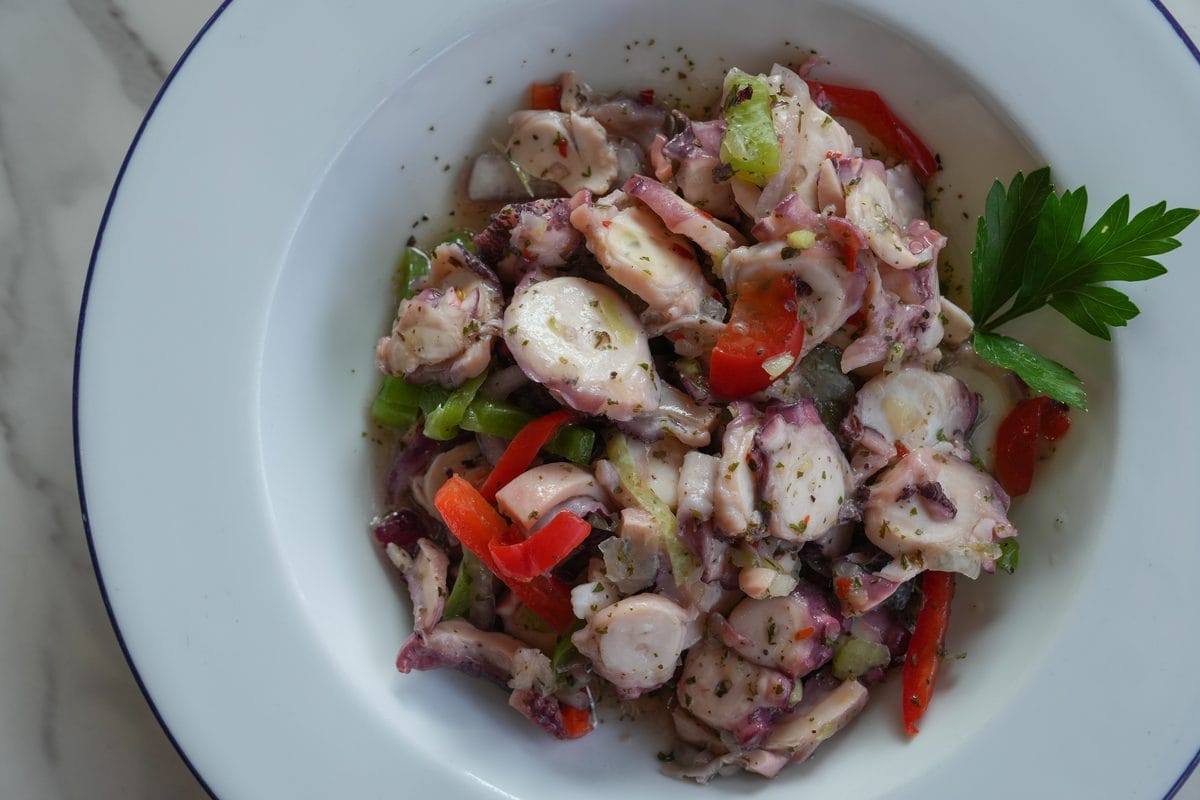
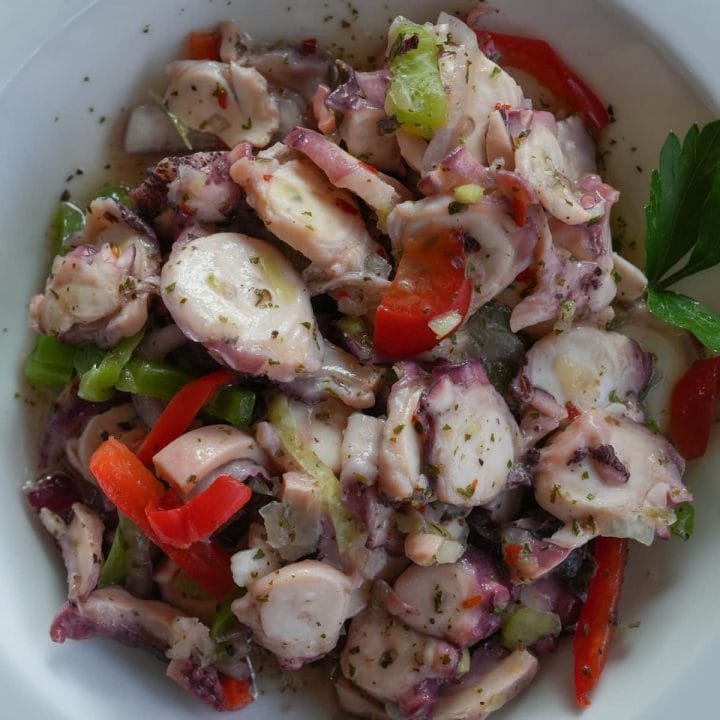
Octopus ceviche (ceviche de pulpo) is tender, already-cooked octopus cut into bite-size pieces and dressed in lime, red onion, chile and cilantro. The lime seasons the octopus rather than cooking it, so get it tender first and keep the citrus time short so the pieces stay bouncy, not rubbery.
Octopus Ceviche at a Glance
AmigoFoods may earn a commission from qualifying Amazon purchases made through links on this page.
What Is Octopus Ceviche?
Ceviche de pulpo shows up on Peruvian, Mexican and Ecuadorian menus as a chopped, lime-dressed octopus appetizer. It is not raw octopus, and it is not the same dish as Spanish pulpo a la gallega (sliced tentacles with paprika and olive oil) or as tiradito, which is sashimi-sliced fish with sauce poured over the top. Here the octopus is cooked until tender, cut into small pieces, and tossed with a classic Latin citrus dressing.
The closest cousins on this site are Peruvian fish ceviche and leche de tigre. Use those for the raw-fish version and the spicy marinade. This page stays with pulpo. For the wider map, see our ceviche guide.
Why the Octopus Is Cooked First
Octopus is tough until collagen in the flesh has time to break down in heat. A lime bath will not do that job. Recipes that drop raw octopus straight into citrus either blanch it first or rely on already-tender, previously frozen cooked legs. The reliable home method is simple: cook the octopus until a knife slides into the thickest part of a tentacle, cool it, then dress it.
How to Cook the Octopus
If you start with raw octopus, rinse it, and if the head and beak are still attached, cut them away and discard the beak. Some cooks dip the tentacles in and out of boiling water two or three times so they curl neatly; that is optional. Then simmer the octopus in a large pot of unsalted or lightly salted water with a halved onion, a bay leaf and a few peppercorns. Keep the water at a gentle simmer, not a rolling boil, for 45 to 60 minutes, until a knife meets little resistance. Whole animals vary; start checking at 40 minutes. Cool the octopus in the cooking liquid or in an ice bath, then cut it.
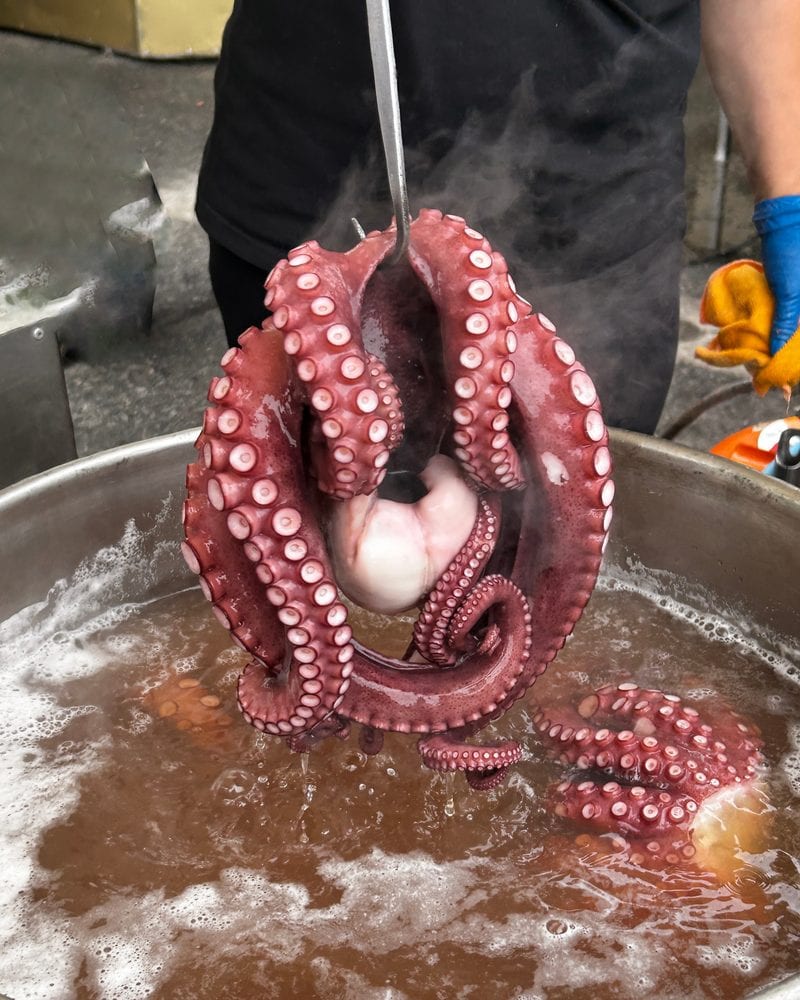
A pressure cooker shortens the simmer to about 15 to 20 minutes at high pressure with a natural release, still followed by a tenderness check. Frozen raw octopus often cooks up more tender than never-frozen, which is why many restaurant kitchens prefer it. Once it is cooked and cooled, pat it dry so the dressing is not watery.
Ingredients
Amounts are in the recipe card below. The dressing is Peruvian-leaning: lime, red onion, chile and cilantro, with a little olive oil at the end to round the acid. It does not use the tomato-cucumber mix from Mexican shrimp ceviche, so the two plates stay distinct. A Mexican tomato-cucumber variation is noted later if you want that direction.
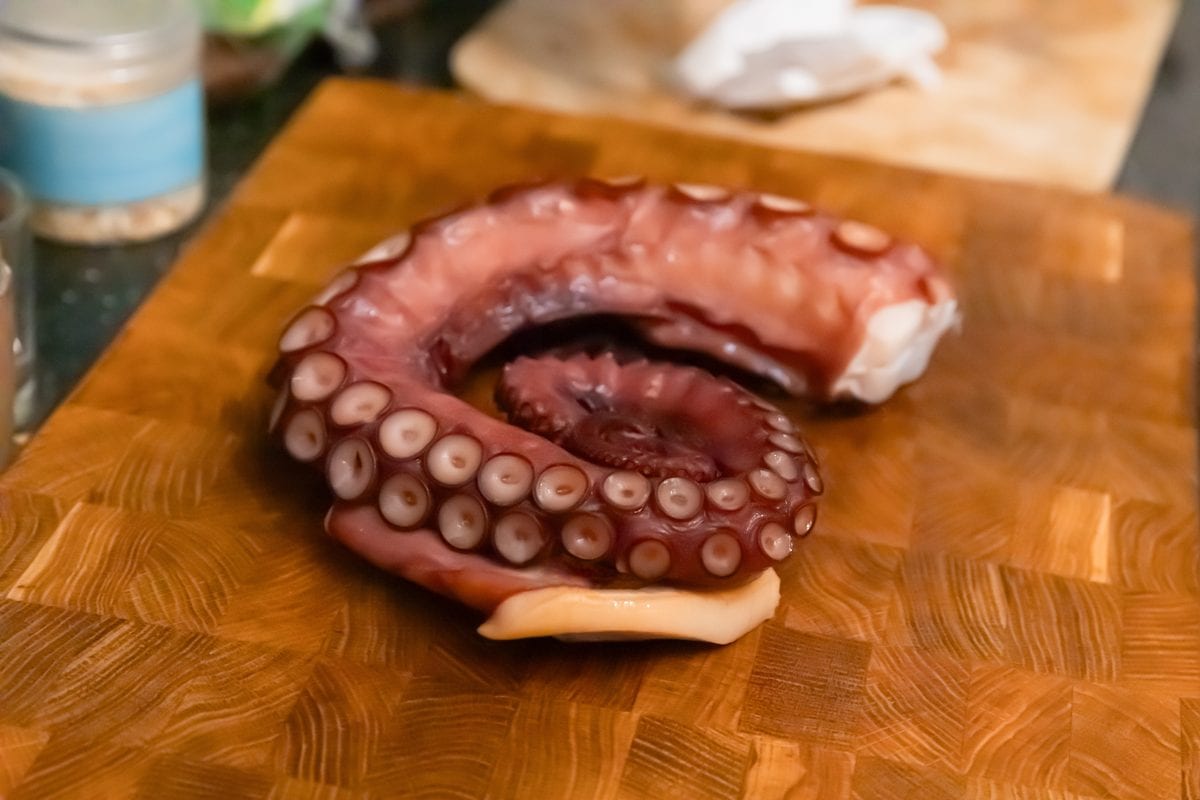
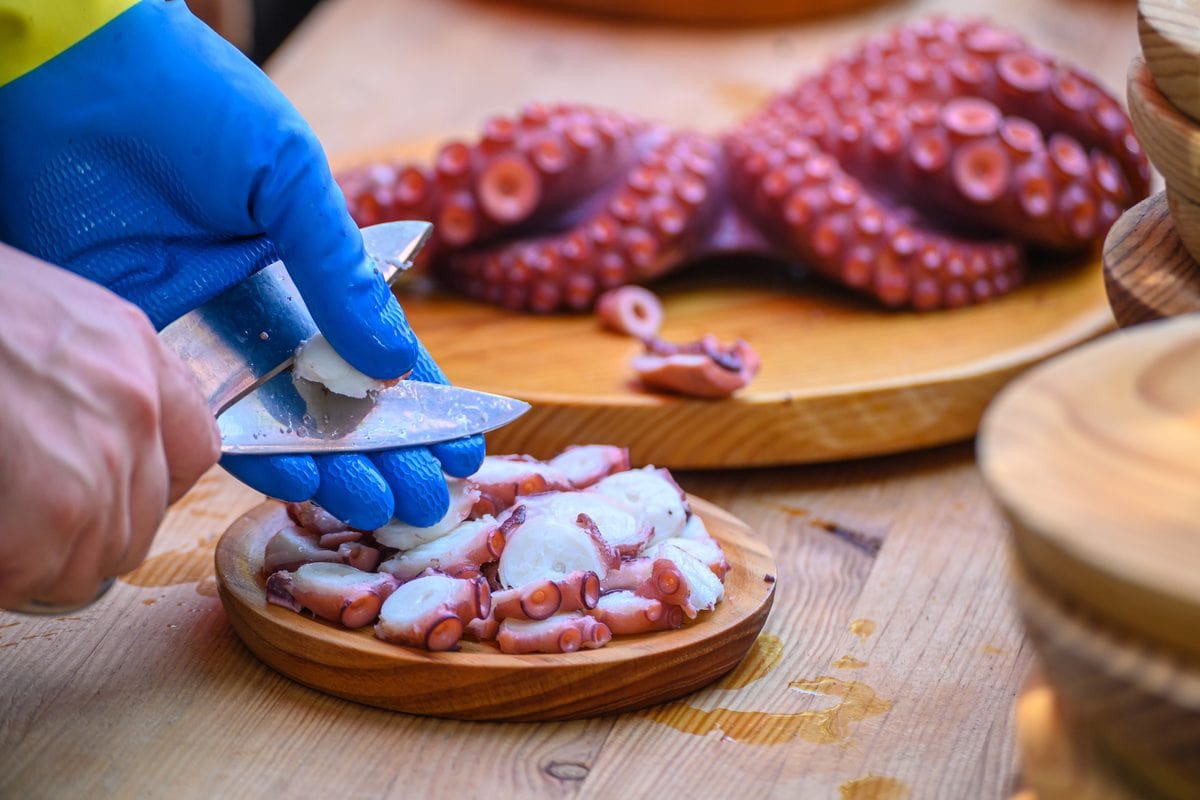
- Cooked octopus. 1 1/2 pounds of meat, cut into 1/2- to 3/4-inch pieces. Thick legs can be sliced into coins, then halved.
- Lime juice. About 3/4 cup, freshly squeezed. This is a generous dressing, closer to a classic cebiche than to a drizzle.
- Red onion. Thinly sliced, rinsed and drained so the raw bite does not take over.
- Chile. A minced serrano, or 1 teaspoon of ají amarillo paste, or a little rocoto if you can find it.
- Cilantro and olive oil. Cilantro goes in just before serving. A tablespoon or two of oil at the end softens the lime.
How to Dress It
Full measurements are in the recipe card. If the octopus is already cooked and cold, you are 15 minutes from the table.
1. Cut the octopus and soak the onion
Cut the cooked, cooled octopus into bite-size pieces and pat them dry. Slice the red onion thinly, toss it with a pinch of salt, cover it with cold water for 10 minutes, then drain and rinse. This is the usual Peruvian step so the onion stays crisp and less harsh.
2. Dress with lime and chile
In a glass or ceramic bowl, combine the octopus, half of the onion, the chile or ají paste, 3/4 cup of lime juice and 3/4 teaspoon of kosher salt. Toss and refrigerate for 10 to 15 minutes. That is long enough for the lime to season the octopus. Some older recipes leave it for a couple of hours; the acid can turn the texture tight and rubbery, so taste at 15 minutes and stop there if the pieces already taste bright.

- EXTRACTS UP TO 20% MORE JUICE: Patented dual-gear pressing mechanism maximizes juice yield from...
- DUAL-GEAR HAND-SAVING LEVERAGE: Innovative dual-gear mechanism multiplies your pressing power to...

3. Finish with onion, cilantro and oil
Fold in the remaining onion, the cilantro and 1 to 2 tablespoons of olive oil. Taste for salt and lime. Serve cold, with cancha (toasted corn), sweet potato, chifles, or tostadas. A small glass of leche de tigre on the side is welcome if you have extra dressing.

- Smart Essentials 4qt. Mixing Bowl with Red plastic cover.
- Pyrex glass is safe in the oven, microwave, refrigerator, freezer, and dishwasher.
Variations
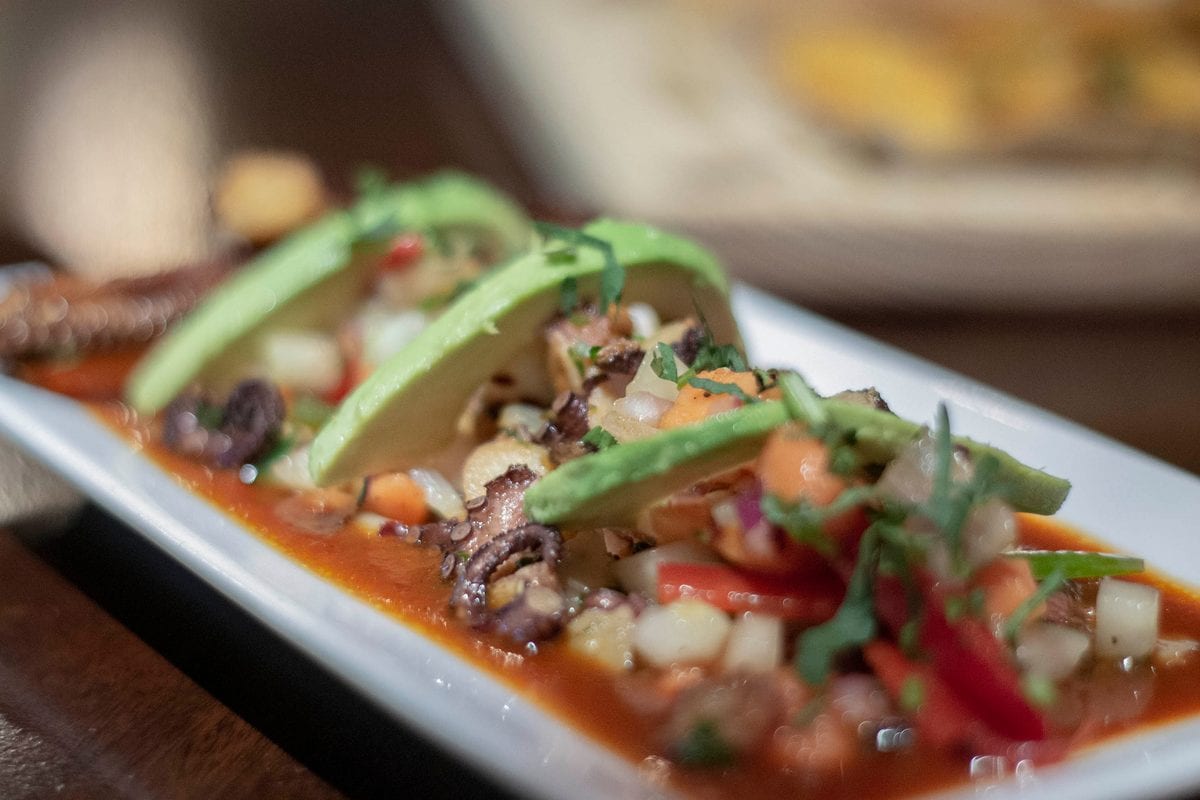
- Mexican Pacific mix. After the short lime cure, fold in diced tomato, cucumber and avocado, the way you would for shrimp, and serve on tostadas. Keep this as a variation so the default plate stays distinct from the shrimp recipe.
- Celery. A little finely diced celery, common in some Peruvian and Panamanian bowls, adds crunch. See also Panamanian ceviche de corvina for the celery-and-chombo idea, used here only as a note.
- Ecuadorian extras. Diced tomato and a little more oil, served with chifles, lean toward the Ecuadorian octopus versions described by Laylita. The country’s shrimp classic is still our Ecuadorian ceviche recipe.
Make Ahead and Storage
You can cook the octopus a day ahead and keep it covered in the refrigerator. Dress it 10 to 15 minutes before serving. Leftover dressed ceviche keeps for up to 1 day, but the lime keeps working and the texture tightens. Do not freeze the finished bowl. Cooked, undressed octopus can be frozen, thawed in the fridge, and then dressed.
Troubleshooting
| Problem | Why it happens | Fix |
|---|---|---|
| Rubbery or tight octopus | It was undercooked, or it sat in lime too long. | Cook until a knife slides in, then dress for only 10 to 15 minutes. |
| Mushy octopus | It boiled hard for too long, or it was cut while still hot and then over-dressed. | Simmer gently, cool completely, and keep the citrus time short. |
| Watery dressing | The octopus was not dried, or the onion was not drained. | Pat the meat dry and drain the soaked onion well. |
| Flat flavor | Not enough salt or lime, or bottled juice. | Use fresh limes and salt in stages, then finish with a little olive oil. |
Octopus Ceviche (Ceviche de Pulpo)
Octopus ceviche (ceviche de pulpo): tender cooked octopus dressed in lime, red onion, chile and cilantro. The octopus is cooked first; the lime only seasons it, for 10 to 15 minutes.
Ingredients
For cooking the octopus (skip if you buy it already cooked)
- 1 raw octopus, about 2 to 3 pounds, cleaned, or enough to yield 1 1/2 pounds cooked meat
- 1 onion, halved
- 1 bay leaf
- 6 black peppercorns
For the ceviche
- 1 1/2 pounds (680 g) cooked octopus meat, cut into 1/2- to 3/4-inch pieces
- 3/4 cup (180 ml) freshly squeezed lime juice (about 6 to 8 limes)
- 1 small red onion, thinly sliced
- 1 serrano pepper, seeded and minced, or 1 teaspoon aji amarillo paste
- 3/4 teaspoon kosher salt, plus more to taste
- 1/4 cup chopped fresh cilantro
- 1 to 2 tablespoons olive oil
- Cancha, sweet potato, chifles or tostadas, to serve
Instructions
- Cook the octopus (if needed). Rinse the raw octopus and remove the beak if it is still attached. Simmer it gently in a large pot of water with the halved onion, bay leaf and peppercorns for 45 to 60 minutes, until a knife slides into the thickest part of a tentacle with little resistance. Cool completely, then cut into bite-size pieces and pat dry. (If you start with pre-cooked octopus, skip this step, cut and dry the meat, and go to step 2.)
Cut the octopus and soak the onion. Cut the cooked, cooled octopus into 1/2- to 3/4-inch pieces and pat them dry. Slice the red onion thinly, toss it with a pinch of salt, cover it with cold water for 10 minutes, then drain and rinse.
Dress with lime and chile. In a glass or ceramic bowl, combine the octopus, half of the onion, the chile or aji paste, the lime juice and 3/4 teaspoon of kosher salt. Toss and refrigerate 10 to 15 minutes.
Finish with onion, cilantro and oil. Fold in the remaining onion, the cilantro and 1 to 2 tablespoons of olive oil. Taste for salt and lime. Serve cold, with cancha, sweet potato, chifles or tostadas.
Notes
The octopus must be cooked first. Lime will not tenderize raw octopus.
Do not leave it in lime for hours. 10 to 15 minutes is enough; a long soak can make it rubbery.
Use a non-reactive bowl. Glass or ceramic only.
Mexican Pacific variation: After the short lime cure, fold in diced tomato, cucumber and avocado, and serve on tostadas.
Make ahead: Cook the octopus up to 1 day ahead and refrigerate. Dress it 10 to 15 minutes before serving. Cooked, undressed octopus can be frozen; do not freeze the finished ceviche.
Storage: Dressed leftovers keep up to 1 day in the refrigerator.
Nutrition Information:
Serving Size: 1/4 of recipe (about 1 cup)Amount Per Serving: Calories: 230Total Fat: 6gSaturated Fat: 1gTrans Fat: 0gUnsaturated Fat: 5gCholesterol: 95mgSodium: 720mgCarbohydrates: 8gFiber: 1gSugar: 2gProtein: 34g
Nutrition information is an estimate and will vary with the brands and amounts used.
Octopus Ceviche FAQ
Is octopus ceviche raw?
No. The octopus is cooked until tender, then dressed in lime. The citrus seasons it; it does not replace the cooking step.
How do you make octopus tender for ceviche?
Simmer it gently until a knife slides into the thickest tentacle, usually 45 to 60 minutes, or buy pre-cooked octopus. A hard boil and a long lime soak both work against you.
How long should octopus sit in lime juice?
10 to 15 minutes is enough for already-tender cooked octopus. Longer cures can make it rubbery.
Can I use canned octopus?
Only if you are stuck. Canned octopus is already cooked and often packed in oil or brine, so it can taste dull and soft. Freshly cooked or vacuum-packed cooked legs are much better.
More Ceviche Recipes
See the ceviche guide, then try Peruvian ceviche, scallop ceviche, leche de tigre or tiradito.
Sources
- Laylita’s Recipes, octopus ceviche (ceviche de pulpo): cooked octopus, lime, onion, chile, cilantro
- Platings + Pairings and El Rey del Pulpo: cooked octopus, short to moderate lime dress
- Bacalalo, Peruvian-style pulpo method: leche de tigre and a 10- to 15-minute dress so the texture stays tender
More Seafood
See all →
Jorge Garcia is the founder of AmigoFoods, where he has spent over 20 years helping readers discover authentic Latin American and Spanish cuisine. Raised in a Cuban-American household, Jorge learned to cook at the hands of his mother and grandmother, carrying forward generations of family recipes. That heritage, backed by his family’s four-generation history in the Latin food industry, inspired him to launch AmigoFoods in 2003. With more than 1,000 published articles on recipes, ingredients, and food culture, Jorge’s mission is simple: make authentic Latin cooking approachable for home cooks everywhere while honoring the traditions behind every dish.