

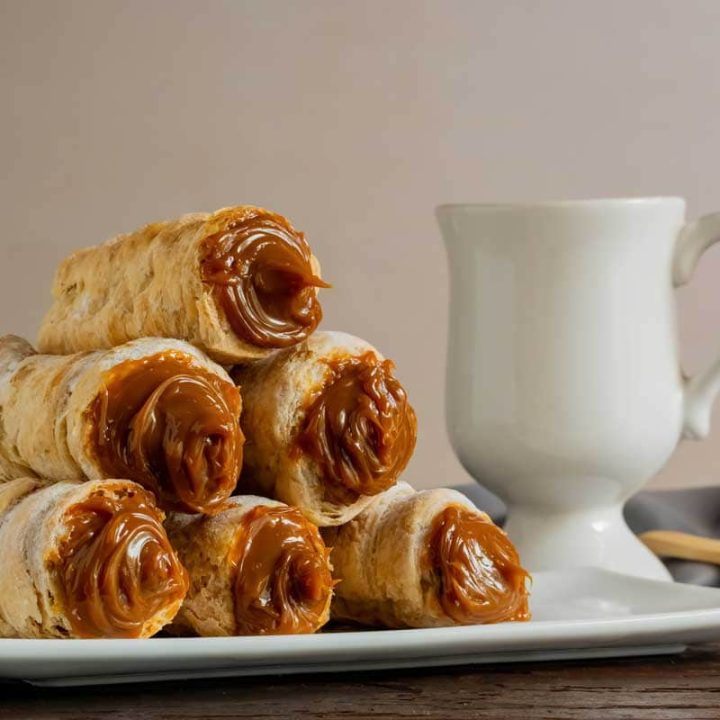
Cañoncitos are crisp puff-pastry tubes filled with dulce de leche, a favorite among Argentine desserts. This shortcut version uses prepared puff pastry and takes about an hour, including cooling before you pipe in the filling.
Cañoncitos at a Glance
Cañoncitos share the bakery box with medialunas, bolas de fraile and tortitas negras — our guide to Argentine breakfast foods covers all of them.
These pastries are part of the broader Argentine food tradition.
What Are Cañoncitos?

Cañoncitos are a traditional Argentine pastry that have become a staple of the country’s dessert culture.
These sweet treats consist of flaky puff pastry tubes, filled to the brim with creamy dulce de leche, making them one of the most popular Argentine desserts.
Their name, which translates to “little cannons,” reflects their tubular shape and fun, bite-sized appeal.
Often enjoyed as a tea-time snack or a festive dessert, cañoncitos are beloved for their perfect combination of buttery, crispy pastry and the rich sweetness of dulce de leche filling.
They are frequently dusted with powdered sugar, adding an extra layer of indulgence to their already irresistible flavor.
In many ways, cañoncitos represent the heart of Argentine dessert culture—simple yet elegant, with a focus on high-quality ingredients like homemade dulce de leche.
Whether you enjoy them with a steaming cup of yerba mate, a rich espresso, or even on their own, cañoncitos are a must-try for anyone who loves classic pastries from Argentina.
A Brief History of the Argentine Dessert

The story of cañoncitos, one of the most iconic Argentine pastries, is deeply intertwined with the country’s love affair with dulce de leche desserts.
These delightful pastries trace their origins back to Argentina’s rich culinary traditions, where sweet treats with dulce de leche became synonymous with celebrations and family gatherings.
Dulce de leche became central to many traditional Argentine sweets, including cañoncitos; its precise origins are disputed.
Once this creamy caramel spread became a staple in Argentine homes, it wasn’t long before bakers began experimenting, using it as a filling for various puff pastry recipes.
Cañoncitos emerged as a perfect combination of the flaky, buttery pastry and the smooth, luscious filling that continues to captivate dessert lovers today.
Over time, it became a staple at Argentine bakeries, found on the shelves of local panaderías in Buenos Aires and beyond.
Their popularity grew not only because of their delicious flavor but also due to their versatility as both a tea-time snack and a celebratory dessert.
How to Make Cañoncitos at Home

Making cañoncitos at home is easier than you think!
These Argentine pastries only require a few simple ingredients and a little bit of patience to achieve that perfect balance of flaky puff pastry and creamy dulce de leche filling.
Here’s a cañoncitos recipe to bringing this classic pastry to your kitchen.
Ingredients You’ll Need:
- 1 sheet puff pastry, thawed but cold
- 1 cup thick dulce de leche repostero (see our dulce de leche brands guide)
- Powdered sugar, for dusting
- A little butter for greasing the molds and flour for rolling
- Optional: melted chocolate or shredded coconut
Step-by-Step Instructions:
- Heat the oven to 400°F (200°C). Line a baking sheet with parchment. Use thawed but still cold puff pastry; follow the package for thawing. Lightly butter oven-safe metal pastry tubes or cones.
- On a lightly floured surface, gently roll the pastry to about 1/8 inch (3 mm) thick. Cut strips about 1 inch (2.5 cm) wide. Wrap around the molds with slight overlap, without stretching the pastry; leave the mold ends accessible for removal. If the pastry warms or softens, refrigerate until firm before baking.
- Arrange seam-side down on the prepared sheet with space between them. Bake for about 20–25 minutes, until well risen, deeply golden and crisp. Follow your pastry brand’s temperature guidance if different, and cook until the overlapping layers are baked through.
- Let cool until the molds can be handled safely, then gently slide the shells off. Cool completely on a rack before filling; allow about 20 minutes overall, or longer if needed.
- Pipe thick dulce de leche repostero into each cooled shell, using about 1 cup in total. Dust with powdered sugar. If desired, dip the ends in melted chocolate and let set, or coat the exposed filling with shredded coconut. Serve promptly for the crispest pastry.
Makes approximately 10–12 pastries; the number depends on pastry-sheet and mold size. The estimated 1-hour total includes 15 minutes of preparation, up to 25 minutes of baking and about 20 minutes of cooling. Thawing frozen pastry, making homemade pastry and extra chilling or chocolate setting are additional. Keep the dough cold and use thick dulce de leche repostero so the filling holds its shape. Store completely cooled unfilled shells airtight at room temperature for up to 2 days and fill shortly before serving. Refrigerate filled leftovers according to the filling’s storage instructions; the shells will soften. Custard or cream-cheese fillings must stay refrigerated.
Tips for the Perfect Cañoncitos:
- Use a high-quality dulce de leche for the best flavor. Homemade or authentic Argentine brands are ideal.
- Ensure your puff pastry is cold before baking to achieve maximum flakiness.
- Experiment with fillings! While dulce de leche is traditional, you can try chocolate, cream cheese, or fruit preserves for a unique twist.
Creating homemade Argentine desserts like cañoncitos allows you to enjoy a piece of Argentine dessert culture wherever you are.
Variations of Cañoncitos

While the classic cañoncitos filled with dulce de leche are a timeless favorite, there are plenty of creative twists and adaptations to explore.
These Argentine pastries lend themselves to a variety of fillings and toppings, making them a versatile treat for any occasion.
Here are some of the most popular variations:
Different Fillings for Cañoncitos
- Chocolate Filling: Replace the traditional dulce de leche filling with rich, creamy chocolate for a decadent twist on the classic pastry.
- Cream Cheese or Custard: Opt for a tangy cream cheese or smooth custard filling for a balance of flavors that complements the buttery puff pastry.
- Fruit Preserves: Add a fruity twist with strawberry, raspberry, or apricot preserves, creating a lighter, sweeter variation of this traditional Argentine sweet.
- Nutella: Combine the flakiness of the pastry with the indulgent hazelnut flavor of Nutella for a modern take on Argentine desserts.
Gluten-Free and Vegan Adaptations
- Gluten-Free: Use gluten-free puff pastry to make these treats accessible for those with dietary restrictions.
- Vegan: Opt for dairy-free puff pastry and a plant-based dulce de leche alternative, ensuring everyone can enjoy this classic dessert.
Regional Variations Across Argentina
- In some regions, cañoncitos are topped with shredded coconut after being filled with dulce de leche, adding texture and a tropical flair.
- Some bakeries in Buenos Aires add a drizzle of chocolate or a sprinkle of powdered cinnamon to give cañoncitos a signature local twist.
Creative Toppings and Decorations
- Powdered Sugar: The traditional finishing touch that adds a hint of sweetness and elegance.
- Melted Chocolate Drizzle: Enhance the look and flavor with a drizzle of dark or milk chocolate.
- Shredded Coconut: Roll the ends of the filled cañoncitos in coconut for added texture and flavor.
- Colored Sprinkles: Perfect for festive occasions, sprinkles add a playful and celebratory vibe.
Mini Cañoncitos
For bite-sized delights, make mini versions of cañoncitos. These smaller treats are perfect for parties or as part of a dessert spread alongside other Argentine pastries.
Whether you stick with the classic dulce de leche pastry or experiment with new flavors, these variations of cañoncitos showcase the versatility and creativity of Argentine dessert culture.
Where to Buy the Best Cañoncitos

If you’re craving authentic Argentine pastries like cañoncitos but don’t feel like making them at home, you’re in luck!
These sweet treats with dulce de leche are available at bakeries and online stores, offering you the chance to enjoy their irresistible flavor no matter where you are.
Here’s how to find the best cañoncitos:
Popular Bakeries in Argentina
- Buenos Aires Panaderías: The capital city is home to countless bakeries renowned for their traditional Argentine desserts. Look for cañoncitos at local favorites like Las Violetas, Café Tortoni, or smaller neighborhood panaderías.
- Regional Specialties: Beyond Buenos Aires, cities like Córdoba and Mendoza also offer bakeries known for their unique spins on dulce de leche pastries.
- Market Finds: Explore markets like San Telmo or Mercado del Progreso, where local vendors often sell freshly baked cañoncitos.
Online Stores Offering Cañoncitos
- Specialty Food Sites: Check specialty Argentine retailers for current availability and delivery areas. Fragile pastries are often easier to find from a local bakery.
- Local Latin Markets: Many Latin American grocery stores stock pre-packaged puff pastries filled with dulce de leche or offer frozen options to bake at home.
- Global Delivery Platforms: Check the bakery’s delivery area and how it packages fresh pastries before ordering.
Tips for Choosing the Best Cañoncitos
- Authentic Ingredients: Look for cañoncitos made with high-quality puff pastry and authentic Argentine dulce de leche for a genuine flavor.
- Freshness Matters: Choose bakeries or vendors that prioritize freshness and proper packaging to ensure your pastries arrive in perfect condition.
- Read Reviews: Check customer reviews for recommendations on the best cañoncitos in your area or from online vendors.
Enjoying Cañoncitos Around the World
Even if you’re far from Argentina, many Latin American bakeries in cities like Miami, Los Angeles, or New York offer classic pastries from Argentina, including cañoncitos.
These shops often bring a taste of Argentine dessert culture to their local communities.
Whether you’re visiting a bakery in Buenos Aires or ordering online, finding the perfect cañoncitos is worth the search.
These delightful pastries are sure to bring a bit of Argentine culinary magic to your day!
Perfect Pairings for Cañoncitos

Cañoncitos, with their flaky puff pastry and luscious dulce de leche filling, are a versatile treat that pairs beautifully with various beverages and complementary dishes.
Whether you’re enjoying them as a tea-time snack or as part of a decadent dessert spread, the right pairing can elevate the experience.
Here are some of the best pairings for these Argentine pastries:
Beverages to Complement Cañoncitos
- Mate: The earthy and slightly bitter flavor of Argentine mate is the perfect counterbalance to the sweetness of cañoncitos. It’s a classic pairing that embodies Argentine dessert culture.
- Coffee: Pair them with a rich espresso, a creamy cappuccino, or a classic café con leche for a satisfying treat.
- Tea: Black or herbal teas, especially those with fruity or floral notes, provide a light and refreshing contrast to the indulgent pastry.
- Hot Chocolate: A cup of thick, velvety Argentine hot chocolate enhances the richness of cañoncitos, making it ideal for colder days.
Cañoncitos in a Dessert Spread
- Argentine Dessert Favorites: Serve cañoncitos alongside other traditional Argentine sweets like alfajores, facturas, or churros for a festive dessert table.
- Ice Cream: Use it as a topping for vanilla or dulce de leche ice cream, adding texture and flavor to your scoop.
- Cheese Plate: Balance the sweetness of cañoncitos with a mild cheese, such as Manchego, for a sophisticated pairing.
Creative Ways to Serve Cañoncitos
- Brunch or Tea-Time Delight: Include cañoncitos in a brunch spread with croissants, fresh fruit, and sweet pastries to create a memorable dining experience.
- Festive Touch: Sprinkle them with colored sugar or pair them with sparkling wine for a festive occasion.
- Tropical Twist: Pair them with a glass of chilled passion fruit juice or a fruity cocktail for a refreshing twist.
Why Pairings Matter
The beauty of cañoncitos lies in their ability to harmonize with a variety of flavors.
Whether you prefer the bold taste of mate or the creamy indulgence of hot chocolate, the right pairing enhances the textures and flavors of this classic pastry from Argentina.
By pairing cañoncitos with complementary beverages and dishes, you can create a more memorable and satisfying experience that highlights the best of Argentine dessert culture.
So, grab a cup of your favorite drink and enjoy these sweet treats with dulce de leche like never before!
Cañoncitos Deserve a Spot on Your Dessert Plate

Cañoncitos are a sweet taste of Argentina’s heart and soul.
Whether you’re savoring them with a hot mate or sharing them at a festive gathering, their irresistible combination of buttery pastry and rich dulce de leche is pure bliss.
Ready to bring this sweet treat into your life?
Try making cañoncitos at home or grab a box from your favorite Argentine bakery and experience why they’re loved by so many.
¡Buen provecho!
Cañoncitos Recipe
Ingredients
- 1 sheet puff pastry, thawed but cold
- 1 cup thick dulce de leche repostero
- Powdered sugar, for dusting
- A little butter for greasing the molds and flour for rolling
- Optional: melted chocolate or shredded coconut for decoration
Instructions
- Heat the oven to 400°F (200°C). Line a baking sheet with parchment. Use thawed but still cold puff pastry; follow the package for thawing. Lightly butter oven-safe metal pastry tubes or cones.
- On a lightly floured surface, gently roll the pastry to about 1/8 inch (3 mm) thick. Cut strips about 1 inch (2.5 cm) wide. Wrap around the molds with slight overlap, without stretching the pastry; leave the mold ends accessible for removal. If the pastry warms or softens, refrigerate until firm before baking.
- Arrange seam-side down on the prepared sheet with space between them. Bake for about 20–25 minutes, until well risen, deeply golden and crisp. Follow your pastry brand’s temperature guidance if different, and cook until the overlapping layers are baked through.
- Let cool until the molds can be handled safely, then gently slide the shells off. Cool completely on a rack before filling; allow about 20 minutes overall, or longer if needed.
- Pipe thick dulce de leche repostero into each cooled shell, using about 1 cup in total. Dust with powdered sugar. If desired, dip the ends in melted chocolate and let set, or coat the exposed filling with shredded coconut. Serve promptly for the crispest pastry.
Notes
Makes approximately 10–12 pastries; the number depends on pastry-sheet and mold size. The estimated 1-hour total includes 15 minutes of preparation, up to 25 minutes of baking and about 20 minutes of cooling. Thawing frozen pastry, making homemade pastry and extra chilling or chocolate setting are additional. Keep the dough cold and use thick dulce de leche repostero so the filling holds its shape. Store completely cooled unfilled shells airtight at room temperature for up to 2 days and fill shortly before serving. Refrigerate filled leftovers according to the filling’s storage instructions; the shells will soften. Custard or cream-cheese fillings must stay refrigerated.
More Argentine Foods
See all →
Jorge Garcia is the founder of AmigoFoods, where he has spent over 20 years helping readers discover authentic Latin American and Spanish cuisine. Raised in a Cuban-American household, Jorge learned to cook at the hands of his mother and grandmother, carrying forward generations of family recipes. That heritage, backed by his family’s four-generation history in the Latin food industry, inspired him to launch AmigoFoods in 2003. With more than 1,000 published articles on recipes, ingredients, and food culture, Jorge’s mission is simple: make authentic Latin cooking approachable for home cooks everywhere while honoring the traditions behind every dish.