
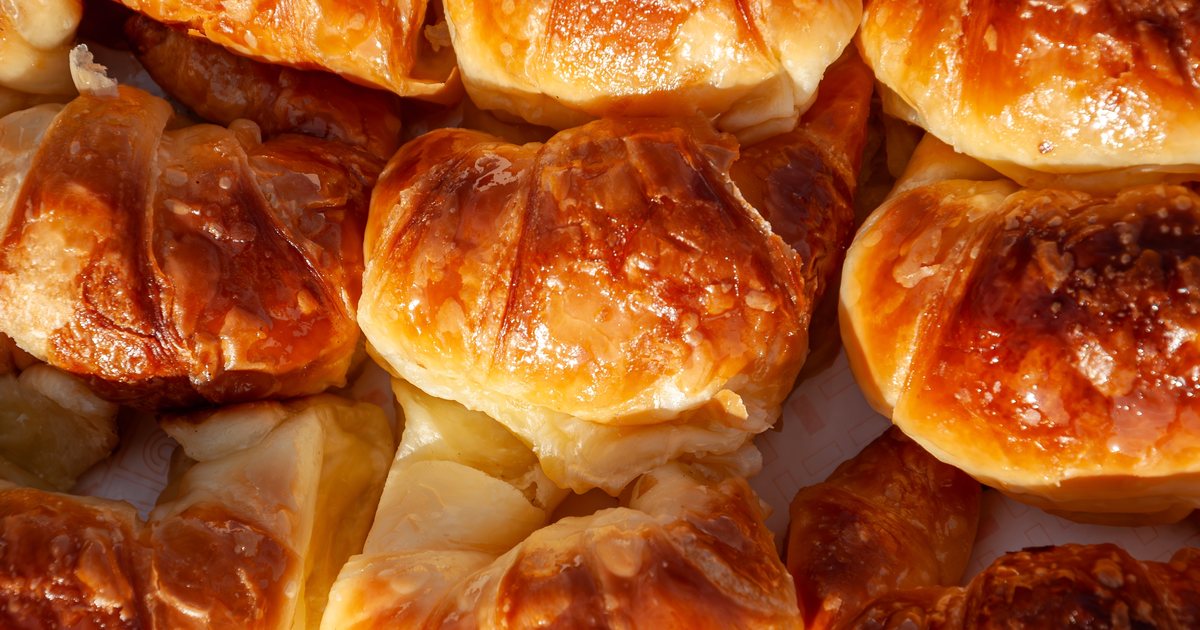
Medialunas are Argentine crescent pastries made from a sweet, butter-layered dough scented with honey, vanilla and lemon. Brushed with sugar syrup while warm, they make a tender, lightly sticky companion to café con leche or mate.
Medialunas at a Glance
What Are Medialunas?

A medialuna is a crescent-shaped pastry made from a laminated dough: a yeast dough folded around a slab of fat so it bakes into thin layers. In that sense it is a croissant. But the dough itself is enriched with egg, sugar, honey, vanilla and lemon zest, which makes it closer to a brioche in flavor.
The result is a pastry that pulls apart in soft, tender layers rather than shattering into flakes. Bakers finish them with almíbar, a simple sugar syrup, which gives medialunas their signature shine and slightly sticky top.
Medialunas belong to a family of Argentine bakery pastries called facturas, along with cañoncitos filled with dulce de leche, vigilantes and bolas de fraile. They are just as common across the river in Uruguay, and you’ll find them in Paraguay and Chile too.
Medialuna vs. Croissant: What’s the Difference?
They look alike, but a medialuna and a French croissant are made and eaten differently.
| Medialuna (de manteca) | French croissant | |
|---|---|---|
| Size | Small, about 2 to 3 bites | Larger |
| Dough | Enriched with egg, sugar, honey, vanilla and lemon | Flour, water or milk, yeast, a little sugar and salt; usually no egg |
| Butter | Less butter in the layers | More butter, which makes more and crisper layers |
| Texture | Soft, tender, pull-apart | Shatteringly crisp outside, open honeycomb inside |
| Finish | Brushed with sugar syrup (almíbar) | Egg wash only |
| Flavor | Sweet, with honey and citrus | Buttery and only lightly sweet |
| How it’s eaten | Several at a time, dunked in coffee or with mate | One at a time, often with jam |
In short: a croissant is about butter and crunch, and a medialuna is about softness and sweetness. That’s why Argentines happily eat three with their morning coffee.
Medialunas de Manteca vs. Medialunas de Grasa
Walk into any Argentine panadería and you’ll be asked: ¿de manteca o de grasa? They come from the same idea but taste quite different.
Medialunas de manteca
Fat: butter (manteca in Argentine Spanish).
Taste: sweet, soft and rich, with a shiny syrup glaze.
Shape: usually curved into a true crescent.
Best for: breakfast with coffee, or filled with ham and cheese for a sweet-salty bite.
Medialunas de grasa
Fat: lard or beef tallow (grasa).
Taste: less sweet, a little salty, flakier and crisper, with little or no glaze.
Shape: bakeries often roll them straighter, so you can tell them apart in the case.
Best for: mate, which pairs well with something less sweet.
The recipe below makes medialunas de manteca, the version most people mean. The recipe notes include the swaps for medialunas de grasa.
Butter or margarine? Argentina’s food code allows medialunas to be made “with or without butter or edible fats,” so some bakeries use margarine and still call them de manteca. Real butter melts cleanly in your mouth; margarine leaves a waxy film. At home, you control it.
A Short History of the Medialuna
The medialuna’s family tree starts in Austria with the kipferl, a crescent-shaped bread. In the late 1830s, Austrian baker August Zang opened a Viennese bakery in Paris, and French bakers later turned the kipferl into the laminated, all-butter croissant.
Crescent pastries reached Argentina with the huge wave of European immigration in the late 1800s and early 1900s, when bakers from Italy, Spain and France opened shops in Buenos Aires. Local bakers made the dough sweeter and richer and started glazing it with syrup. By the 20th century, a coffee with medialunas was the classic order in the city’s cafés, and it still is.
Why Argentine pastries have such strange names: In the 1880s, Buenos Aires bakers formed one of the country’s first labor unions, with help from the Italian anarchist Errico Malatesta, and went on strike in 1888. The bakers are credited with giving facturas names that mocked the church, police and army: bolas de fraile (“friar’s balls”), suspiros de monja (“nun’s sighs”), vigilantes (slang for police) and cañoncitos (“little cannons”). Even the word factura, which also means “invoice,” is often read as a working-class joke. The medialuna, simply named for its shape, is the plain-spoken one of the family.
How to Make Medialunas (Step by Step)
Homemade medialunas take time, but very little of it is hands-on. You make a soft, sweet dough, wrap it around a block of butter, and fold it three times with short rests in the fridge. The cold is what keeps the butter in thin, separate layers.
The ingredients that matter
- ButterUse the best unsalted butter you can. European-style butter (82% fat or more) is more pliable when cold and makes cleaner layers.
- Honey and lemonThis is the Argentine signature. A spoonful of honey and fresh lemon zest give medialunas their gentle sweetness and bright aroma.
- FlourAll-purpose flour gives the soft, tender crumb medialunas are known for. Bread flour works but makes them chewier.
- AlmíbarA quick syrup of equal parts sugar and water, brushed on while the medialunas are hot. Don’t skip it.
Step 1: Make the dough and the butter block
Knead the dough until smooth and elastic, then chill it flat for an hour. While it chills, beat the cold butter with a little flour (this is the empaste) and shape it into a 7-inch square between sheets of parchment. The flour makes the butter more flexible, so it rolls out without cracking.
Step 2: Lock in the butter and fold
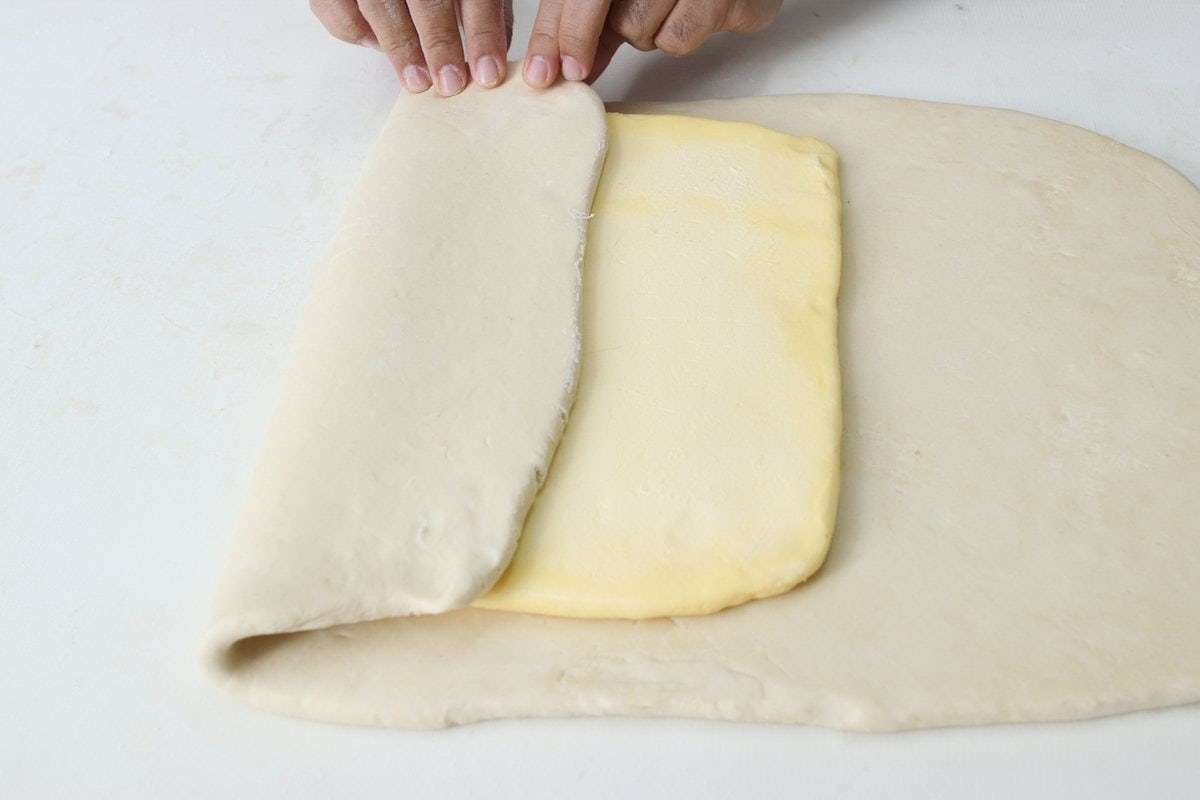
Wrap the dough around the butter, roll it into a long rectangle and fold it in thirds like a letter. Chill 30 minutes and repeat twice more, for three folds in total. If butter starts to poke through or feel soft, put the dough back in the fridge; cold is your friend.
Step 3: Roll and cut triangles
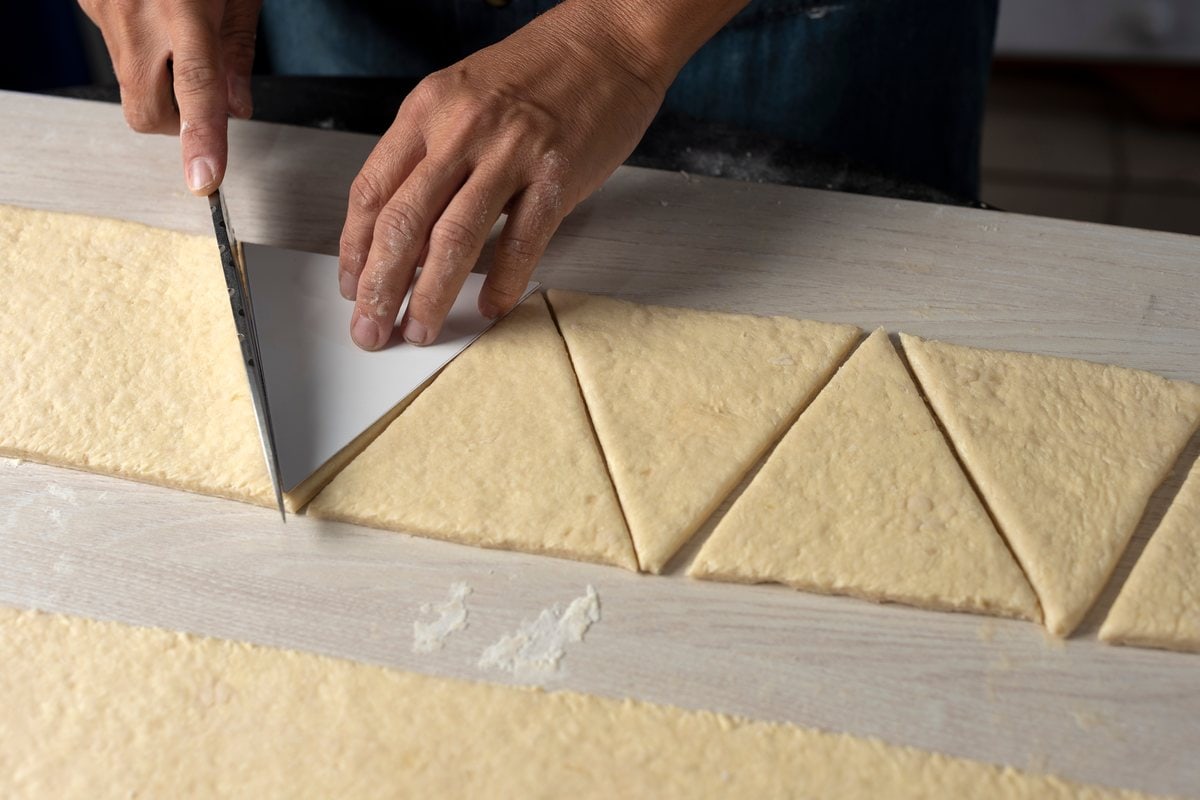
Roll the dough to about 1/6 inch (4 mm) thick, cut it into two long strips, then into tall triangles about 4 inches (10 cm) wide at the base. Medialunas are smaller than croissants, so you’ll get 18 to 20.
Step 4: Shape the half moons
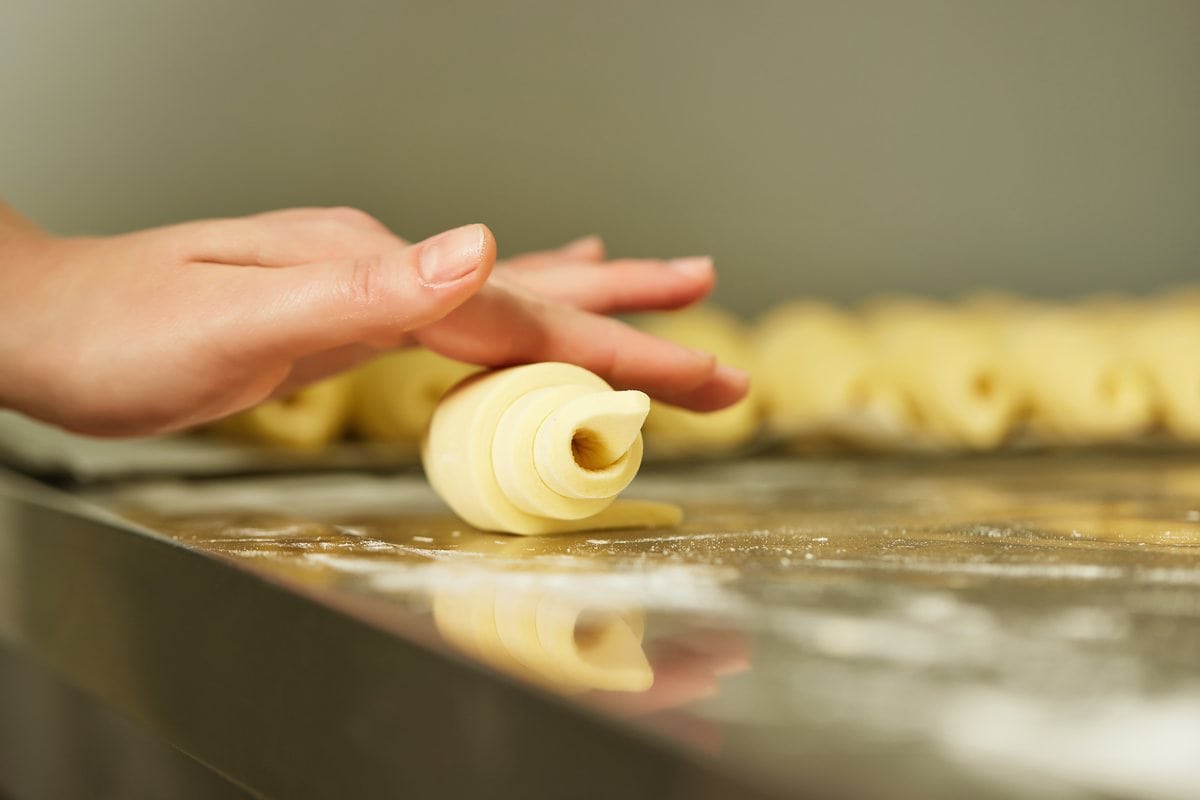
Cut a small notch in the base of each triangle, stretch the tip gently, and roll from the base to the point. Curve the two ends toward each other to make the half moon, with the tip tucked underneath so it doesn’t unroll in the oven.
Step 5: Proof, bake and glaze
Let the medialunas rise somewhere warm, but not hot, until they’re puffy and jiggle when you shake the pan. Brush with egg wash, bake at 400°F (200°C) until deep golden, and brush with almíbar straight out of the oven. The full amounts and timings are in the recipe card below.
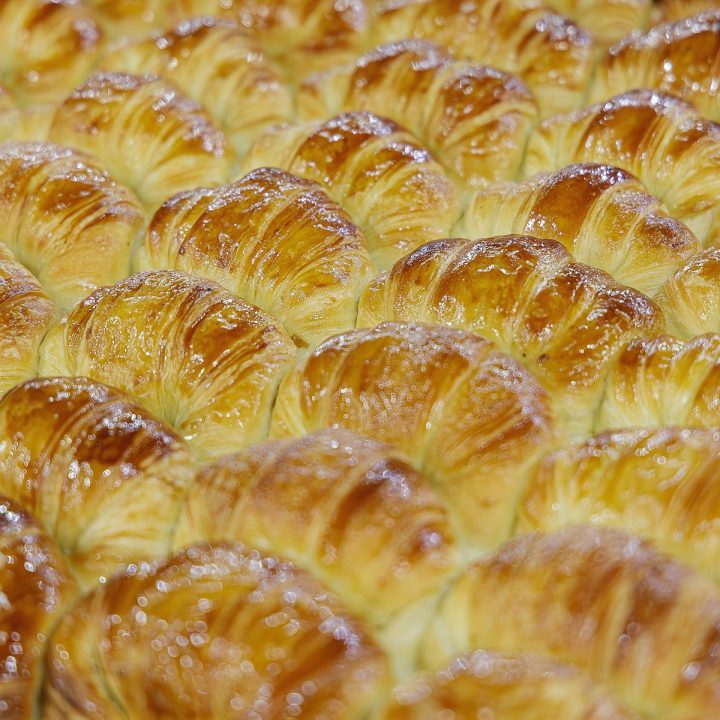
Medialunas (Argentine Croissants)
Medialunas de manteca are Argentina's small, sweet croissants: a soft, butter-layered yeast dough with egg, honey and lemon zest, rolled into half moons and brushed with sugar syrup straight from the oven. Serve them warm with café con leche or mate.
Ingredients
Dough
- 4 cups (500 g) all-purpose flour, plus more for rolling
- 1/3 cup (65 g) granulated sugar
- 1 tablespoon (10 g) instant yeast
- 1 1/2 teaspoons (9 g) fine salt
- 1 cup (240 ml) whole milk, lukewarm
- 1 large egg, at room temperature
- 1 tablespoon (20 g) honey
- 1 teaspoon vanilla extract
- Finely grated zest of 1 lemon
- 2 tablespoons (30 g) unsalted butter, softened
Butter block (empaste)
- 1 cup plus 2 tablespoons (250 g) cold unsalted butter, preferably European-style
- 3 tablespoons (25 g) all-purpose flour
Egg wash and syrup (almíbar)
- 1 large egg
- 1 tablespoon milk
- 1/2 cup (100 g) granulated sugar
- 1/2 cup (120 ml) water
- 1 strip lemon peel (optional)
Instructions
- Make the dough. In the bowl of a stand mixer, whisk the flour, sugar, instant yeast and salt. Add the lukewarm milk, egg, honey, vanilla and lemon zest. Mix with the dough hook on low for 3 minutes, add the softened butter, then knead on medium-low for 6 to 8 minutes until smooth, elastic and only slightly tacky. If it feels dry, add 1 to 2 tablespoons more milk.
- Chill the dough. Pat the dough into a 1-inch-thick rectangle, wrap it and refrigerate for 1 hour (or up to overnight).
- Make the butter block (empaste). Beat the cold butter with the 3 tablespoons of flour for about 1 minute, just until smooth and pliable but still cold. Spread it between two sheets of parchment into a 7-inch (18 cm) square and refrigerate for 20 to 30 minutes, until firm but still bendable.
- Lock in the butter. On a lightly floured surface, roll the dough into an 11-inch (28 cm) square. Set the butter square on it like a diamond, fold the four corners of dough over the butter so they meet in the center, and pinch the seams to seal.
- First fold. Roll the dough into an 8 x 20-inch (20 x 50 cm) rectangle. Brush off excess flour and fold it in thirds like a letter. Wrap and refrigerate for 30 minutes.
- Second and third folds. Turn the dough so the open end faces you, roll it into an 8 x 20-inch rectangle again and fold in thirds. Chill 30 minutes, then repeat once more for three folds in total. After the third fold, refrigerate for at least 1 hour, or overnight.
- Roll and cut. Roll the dough into a 12 x 24-inch (30 x 60 cm) rectangle about 1/6 inch (4 mm) thick. Cut it lengthwise into two 6-inch strips, then cut each strip into tall triangles about 4 inches (10 cm) wide at the base. You should get 18 to 20.
- Shape. Cut a 1/2-inch notch in the center of each triangle's base. Gently stretch the tip, then roll from the base to the point without pressing down. Curve the ends toward each other into a crescent and place on parchment-lined baking sheets, tip-side down, about 2 inches apart.
- Proof. Cover loosely and let rise in a warm spot, 75 to 80°F (24 to 27°C), for 1 1/2 to 2 1/2 hours, until puffy, nearly doubled and wobbly when you nudge the pan. Do not proof somewhere hotter or the butter will melt out.
- Make the almíbar. Simmer the sugar, water and lemon peel for 3 to 4 minutes, until the sugar dissolves and the syrup thickens slightly. Remove the peel and let it cool.
- Bake. Heat the oven to 400°F (200°C). Beat the egg with the milk and brush it gently over the medialunas. Bake for 12 to 16 minutes, rotating the pans halfway, until deep golden brown.
- Glaze. As soon as the medialunas come out of the oven, brush them generously with the syrup. Let them cool for 10 minutes and serve warm.
Notes
Keep it cold. The butter and dough should have the same cool, clay-like firmness when you roll. If butter cracks, let the dough sit for 5 minutes; if it softens or pokes through, chill for 15 minutes.
Make ahead: Refrigerate the dough overnight after the third fold and shape in the morning, or shape the medialunas, cover and refrigerate overnight, then proof 2 to 3 hours before baking.
Medialunas de grasa: Use 250 g cold lard or beef tallow instead of butter in the butter block, cut the dough sugar to 2 tablespoons, leave out the honey, roll them straight instead of curved, and skip or go light on the syrup.
Filled medialunas: Split cooled medialunas and fill with ham and cheese, or pipe in thick dulce de leche repostero.
Storage: Best the day they are baked. Keep airtight for up to 2 days, or freeze baked medialunas for up to 1 month and reheat at 350°F (175°C) for 6 to 8 minutes.
Make-Ahead Schedule for Breakfast
The easiest way to have warm medialunas for breakfast is to split the work over two days.
| When | What to do | Time |
|---|---|---|
| Day 1, evening | Make the dough and butter block, then do all three folds | About 2½ hours (mostly chilling) |
| Overnight | Refrigerate the folded dough, well wrapped | 8 to 18 hours |
| Day 2, morning | Roll, cut and shape the medialunas | 20 to 30 minutes |
| Day 2, morning | Proof in a warm spot, then bake and glaze | About 2 to 2½ hours |
Want them faster in the morning? Shape the medialunas the night before, cover the pans and refrigerate. Next morning, let them proof at room temperature for 2 to 3 hours, then bake.
Tips and Troubleshooting
- Keep the butter and dough at the same firmness. If the butter is much harder than the dough it shatters into pieces; if it’s softer it smears and the layers disappear. Cool and pliable, like modeling clay, is right.
- Chill whenever in doubt. Ten extra minutes in the fridge fixes most lamination problems.
- Don’t proof too warm. Above about 80°F (27°C) the butter melts out of the layers. Use the oven with only the light on, or a spot near (not on) a warm stove.
- Proof fully. Underproofed medialunas leak butter in the oven and bake up dense. They’re ready when they’re clearly puffy and wobble when you nudge the pan.
- Glaze while hot. Hot pastry soaks up the syrup. Brushed on cold medialunas, almíbar just sits on top and turns sticky.
| Problem | Likely cause | Fix |
|---|---|---|
| Butter pools on the pan | Underproofed, or proofed too warm | Proof longer at 75 to 80°F (24 to 27°C) |
| Dense, bready inside | Butter smeared into the dough, or underproofed | Chill more between folds; let them rise until puffy |
| Dough springs back when rolling | Gluten is tight | Rest it in the fridge for 15 minutes, then roll again |
| Medialunas unroll in the oven | Tip not tucked under | Place each one tip-side down on the pan |
| Too pale | Oven too cool, or no egg wash | Bake at 400°F (200°C) and brush with egg wash |
How to Make Medialunas de Grasa
For the less sweet, flakier version, use the same method with three changes:
- Swap the fatReplace the butter block with the same weight of cold lard or rendered beef tallow (grasa vacuna).
- Cut the sugarUse 2 tablespoons of sugar in the dough, add an extra pinch of salt, and leave out the honey.
- Skip the glazeBake until a shade deeper, and serve plain or with just a thin wash of syrup. Roll them straight rather than curved, the bakery way.
How Argentines Eat Medialunas

With coffee. The most famous combination in Argentina is a café con leche with two or three medialunas, often offered as a breakfast deal in cafés. Dunking is not just allowed, it’s expected.

With mate. At home, medialunas are the go-to snack with a gourd of yerba mate for breakfast or the afternoon merienda. Many people pick medialunas de grasa here, because their saltiness balances the bitter tea.

- Item Package Length: 7.37cm
- Item Package Width: 9.91cm
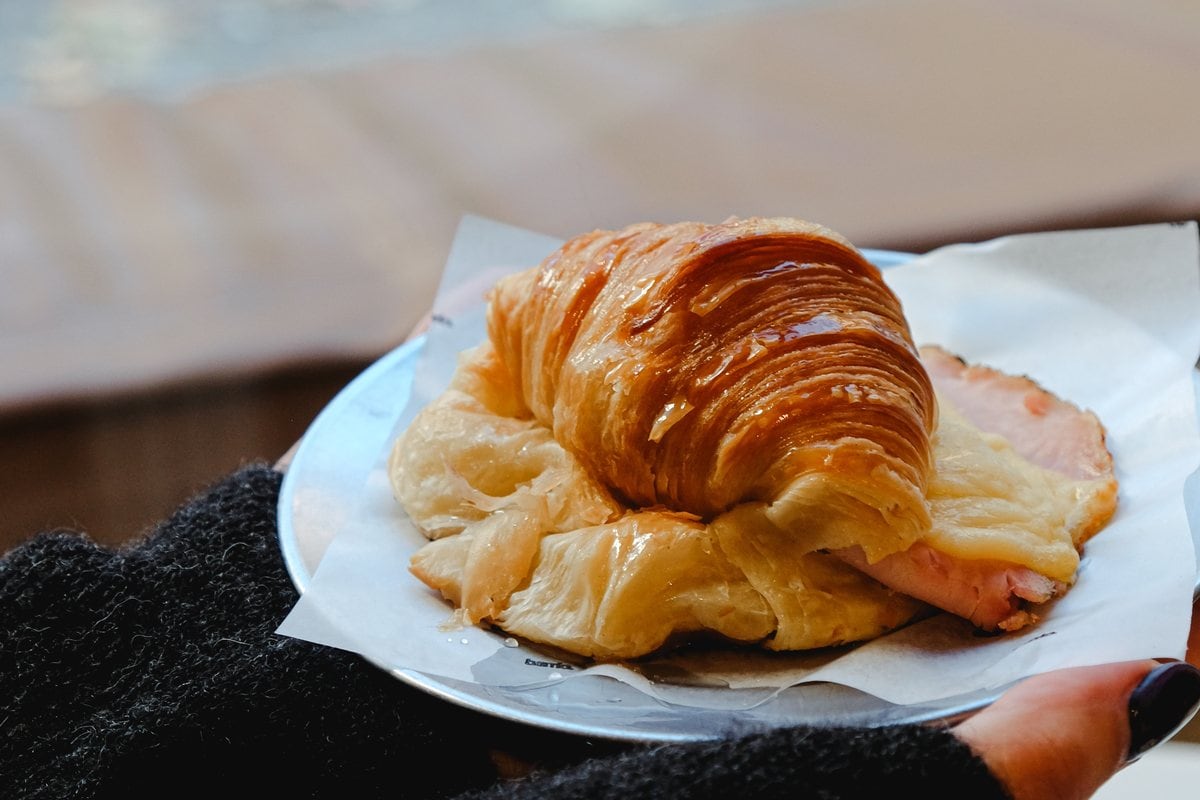
With ham and cheese. A medialuna de jamón y queso is a medialuna de manteca split and filled with ham and cheese, often warmed so the cheese melts. The sweet glaze and salty filling are the whole point.
Filled with dulce de leche. Bakeries also sell medialunas filled with dulce de leche or pastry cream. At home, slit cooled medialunas and pipe in a thick, bakery-style dulce de leche; look for jars labeled repostero, which hold their shape. You can find dulce de leche repostero on Amazon.
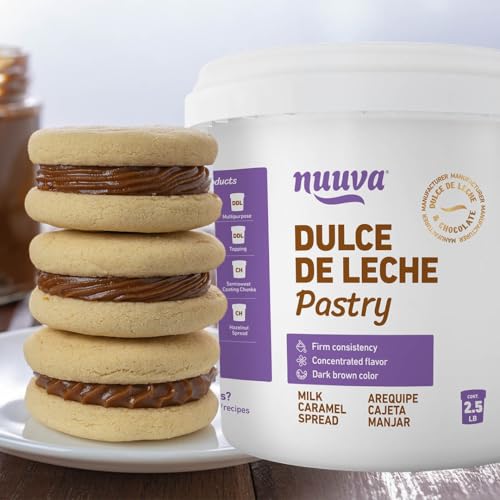
- AUTHENTIC DULCE DE LECHE FLAVOR – Just like our other Dulce de Leche products, our Pastry Dulce de...
- THICK & FIRM CONSISTENCY – Don’t compromise on smoothness! Though creamy, the firm texture of...
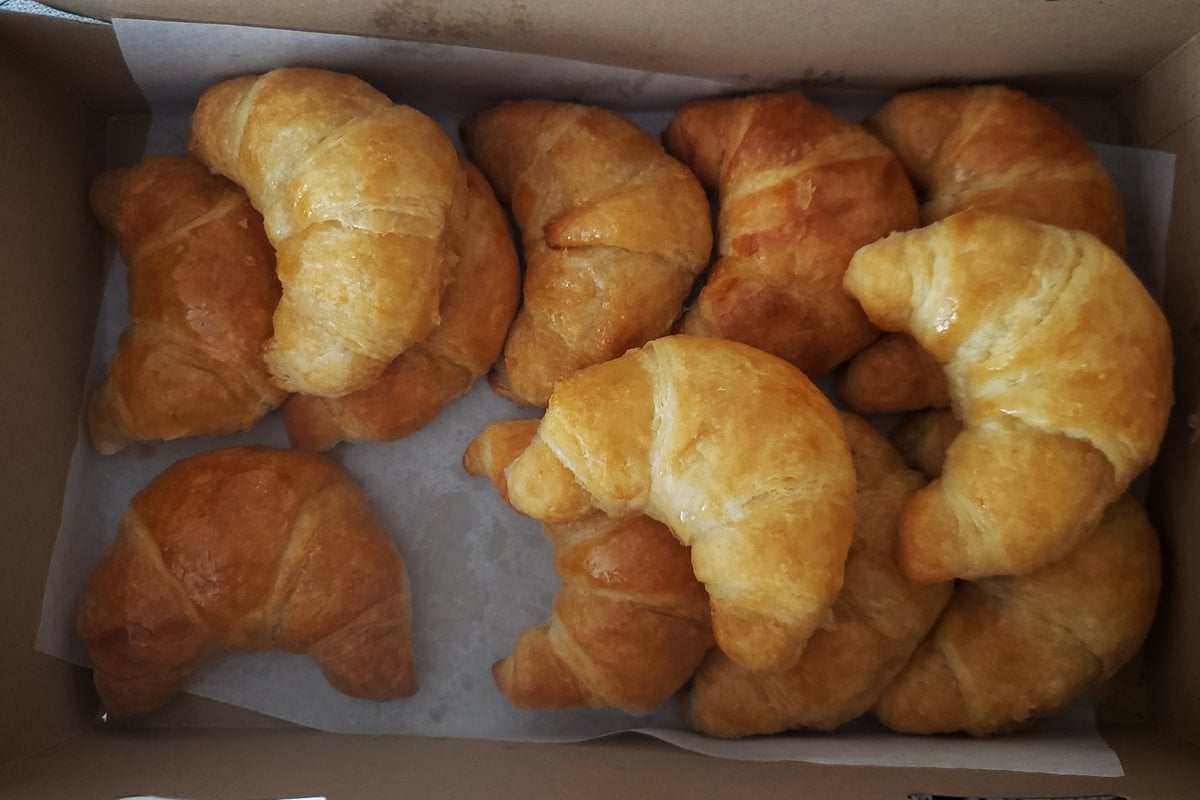
By the dozen. Nobody buys one medialuna. Argentines order a docena or media docena from the corner panadería, often mixing de manteca and de grasa, and bring the box to work, to a friend’s house or to Sunday breakfast.
How to Store and Reheat Medialunas
- Room temperatureBest the day they’re baked. Keep leftovers in an airtight container for up to 2 days.
- Freeze bakedFreeze glazed medialunas in a bag for up to 1 month. Reheat from frozen at 350°F (175°C) for 6 to 8 minutes.
- Freeze unbakedFreeze shaped, unproofed medialunas on a tray, then bag them. Thaw overnight in the fridge, proof 2 to 3 hours, and bake.
- ReheatA few minutes in a 350°F (175°C) oven or toaster oven brings back the crisp edges. The microwave makes them soft and chewy.
Medialunas FAQ
What are medialunas?
Medialunas are Argentine crescent pastries made from a laminated yeast dough enriched with egg, sugar and honey. They are smaller, softer and sweeter than French croissants and are brushed with sugar syrup after baking. Argentines eat them for breakfast and merienda with coffee or mate.
What are medialunas called in English?
Medialuna means “half moon.” In English they’re usually called Argentine (or Argentinian) croissants, or sweet Argentine croissants.
What is the difference between a medialuna and a croissant?
A medialuna’s dough contains egg, honey, sugar, vanilla and lemon, and it has less butter in the layers, so it bakes up soft and tender rather than shatteringly crisp. Medialunas are also smaller and are glazed with syrup, while croissants get only an egg wash.
What is the difference between medialunas de manteca and de grasa?
Medialunas de manteca are made with butter and are sweet, soft and glazed with syrup. Medialunas de grasa are made with lard or beef tallow, are less sweet and flakier, and are often shaped straighter than the curved de manteca.
How do Argentinians eat medialunas?
Usually two or three at a time with café con leche for breakfast, or with mate in the afternoon. They’re also split and filled with ham and cheese (medialunas de jamón y queso) and are bought by the dozen to share.
Why are medialunas sticky?
The shine and slight stickiness come from almíbar, a simple syrup of sugar and water brushed onto the pastries while they’re still hot.
Can I make medialunas the night before?
Yes. Either refrigerate the folded dough overnight and shape in the morning, or shape the medialunas, cover and refrigerate them overnight, then proof for 2 to 3 hours before baking.
Explore more Latin American and Spanish cakes and pastries, including Argentina’s breakfast favorites.
More Argentine Breakfast and Pastry Recipes
- Argentine breakfast foods, what locals actually eat in the morning
- Cañoncitos, puff pastry tubes filled with dulce de leche
- Alfajores, Argentina’s dulce de leche sandwich cookies
- Torta rogel, the layered dulce de leche and meringue cake
- Argentine empanadas and their history
- Argentine breads and sides, from medialunas to chimichurri
- Argentine dessert recipes and the 20 Argentinian desserts you have to try
- Argentine drinks to go with them
- Argentina food: 32 traditional dishes and all Argentine recipes
More Argentine Foods
See all →
Jorge Garcia is the founder of AmigoFoods, where he has spent over 20 years helping readers discover authentic Latin American and Spanish cuisine. Raised in a Cuban-American household, Jorge learned to cook at the hands of his mother and grandmother, carrying forward generations of family recipes. That heritage, backed by his family’s four-generation history in the Latin food industry, inspired him to launch AmigoFoods in 2003. With more than 1,000 published articles on recipes, ingredients, and food culture, Jorge’s mission is simple: make authentic Latin cooking approachable for home cooks everywhere while honoring the traditions behind every dish.