
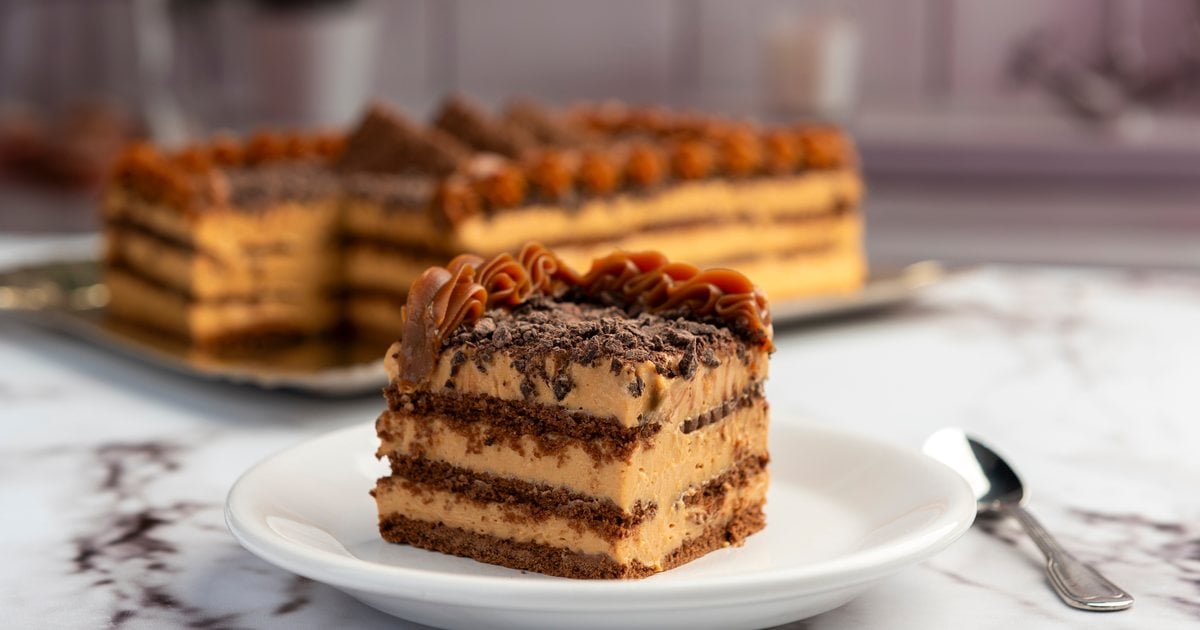
Chocotorta is Argentina’s no-bake cake of chocolate cookies dipped in coffee or milk and layered with dulce de leche cream. A long chill softens the cookies into tender, sliceable layers for an easy make-ahead dessert.
Chocotorta at a Glance
What Is Chocotorta?
Chocotorta (from chocolate + torta, “cake”) is a layered icebox cake built from three things Argentines always have in the pantry: Chocolinas, the thin rectangular chocolate cookies made by Bagley; dulce de leche; and queso crema, a soft, spreadable cream cheese.

Each cookie gets a quick dip in coffee or milk, then goes into the pan in a single layer. The cream goes on top, and you repeat until you have four or five layers. Nothing is baked. The moisture from the dip and the cream slowly turns the crisp cookies into something close to sponge cake.
Here is how a slice is built, from the bottom up:
A Short History of Chocotorta
Unlike most classic desserts, chocotorta has a known inventor and a known date. In 1982, Marité Mabragaña, a creative at a Buenos Aires advertising agency, was asked to come up with a campaign that would sell more of two clients’ products: Bagley’s Chocolinas cookies and Mendicrim, a cream cheese.

Her answer was a recipe rather than a slogan: layer the cookies with cream cheese and dulce de leche, and call it “chocotorta.” The recipe became the heart of the brands’ advertising, including a TV commercial filmed the following year, and home cooks took it from there. Mabragaña coined the name too, although as an agency employee she never earned royalties from it.
It soon became the birthday cake for Argentine children. In 2020 the food guide TasteAtlas ranked it the best dessert in the world, which delighted Argentina and raised a few eyebrows among pastry chefs. In 2024 Mabragaña told the Argentine press that her own version had a secret: she liked to dip the cookies in port wine (oporto) rather than milk.
Why it stuck: it uses easy-to-find supermarket ingredients, kids can help build it, it feeds a crowd, and it tastes better on day two. In Argentina it sits alongside alfajores, torta rogel and chajá as a dulce de leche classic.
Chocotorta Ingredients: What to Buy
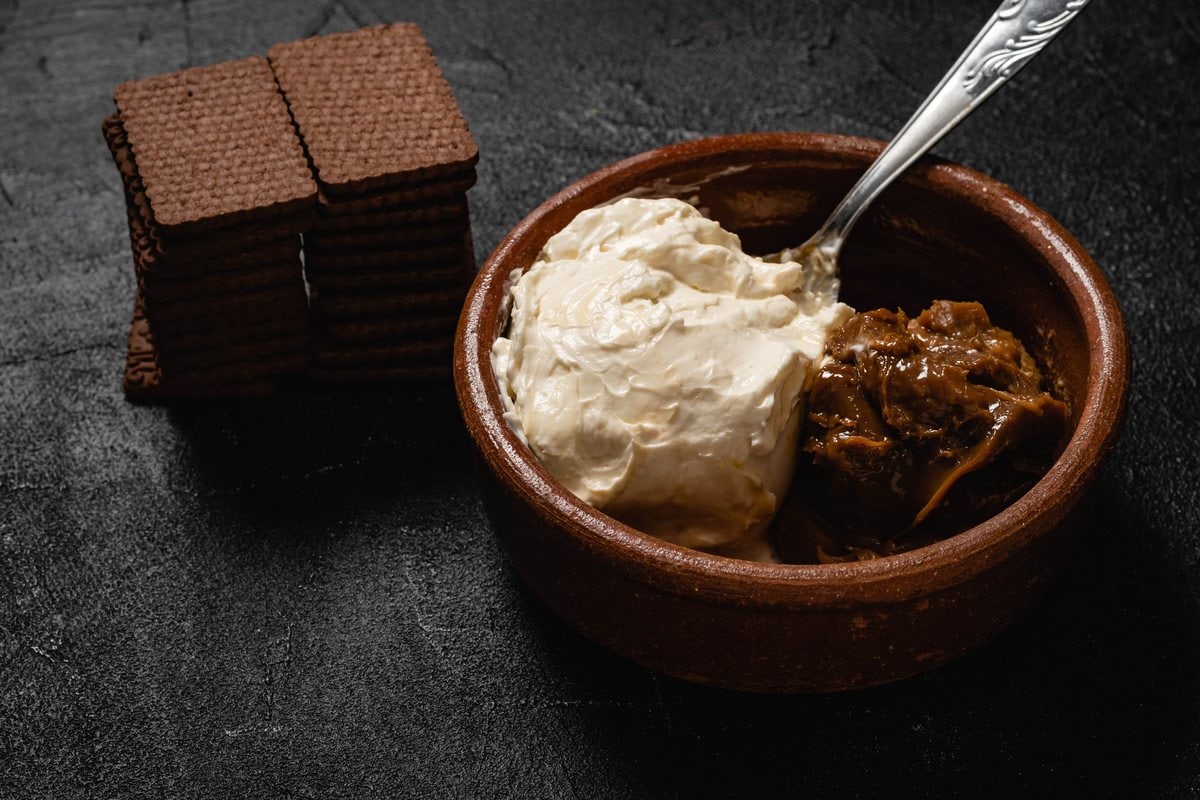
- Chocolinas cookies (3 packs, about 500 g)The original. Latin grocers and online shops carry them in the US, usually in 170 g packs. Find Chocolinas on Amazon →
- Dulce de leche repostero (500 g)Use the thick “repostero” (pastry) style, not the runny sauce. Our favorite brands, or make it from condensed milk. Shop dulce de leche →
- Cream cheese (16 oz / 450 g)Argentine queso crema is softer than US block cream cheese. Use full-fat blocks at room temperature, or a spreadable tub, so the cream beats smooth.
- Coffee or milk (about 1½ cups)Cooled brewed coffee is the classic grown-up choice. Milk or chocolate milk for kids. Port, Kahlúa or Baileys mixed into the coffee for an adults-only version.
Can’t find Argentine brands locally? Our Argentine pantry list on Amazon has the cookies and dulce de leche together.
Chocotorta Without Chocolinas: The Best Substitutes
Any thin, dry, not-too-sweet chocolate cookie will work. Avoid anything with a filling or a chocolate coating, and anything soft like brownies or chocolate chip cookies.
| Substitute | How it works |
|---|---|
| Goya Chocolate Maria | The closest match. Round, but thin and dry. Dip for just 1 second. |
| Chocolate graham crackers | Easy to find in the US and rectangular. Slightly sweeter, so add a pinch more cream cheese to the cream. |
| Famous-style chocolate wafers | Very thin and crisp. Great flavor; they soften fast, so dip only briefly. |
| Chocolate digestive biscuits (uncoated) | The UK favorite. Sturdier, so dip for 2 seconds and chill overnight. |
| Oreo cookies, filling scraped out | Works in a pinch and very chocolatey. Fiddly for a whole cake, better for cups. |
How to Make Chocotorta, Step by Step
You need an 8×8-inch (20 cm) square dish or a similar rectangular platter, a mixing bowl, an electric mixer, and a shallow bowl for dipping. In Argentina it is often built straight on a flat serving tray. Exact amounts are in the recipe card below.
1Soften the cream cheese
Take the cream cheese out of the fridge 30 to 60 minutes ahead. Cold cream cheese makes a lumpy cream that no amount of beating will fix.
2Beat the dulce de leche cream
Beat the cream cheese alone for 1 minute until smooth, then add the dulce de leche and beat 1 to 2 minutes more. Use the full 500 g dulce de leche in the filling. If you want a piped border, have an extra ½ cup (150 g) plain dulce de leche ready for the top.
What to look for: an even, pale caramel color with no white streaks, thick enough to hold soft peaks. If it’s runny, your dulce de leche was the thin kind: chill the cream for 20 minutes before building.
3Dip the cookies, one at a time
Pour cooled coffee or milk into a shallow bowl. Dip each cookie for about 1 second per side, let the excess drip off, and lay it in the dish. Cover the whole bottom in a single layer, breaking cookies to fill the gaps.
What to look for: the cookie should still feel firm in your fingers. If it bends or breaks when you lift it, you soaked it too long.
4Layer cream and cookies
Spread a thin layer of cream, about ⅕ of it, over the cookies all the way to the edges. Add another layer of dipped cookies, then more cream. Keep going until you have 4 to 5 layers of cookies, finishing with cream on top.

What to look for: cookies laid edge to edge with the joints staggered from the layer below, like bricks. That’s what makes clean, even slices.
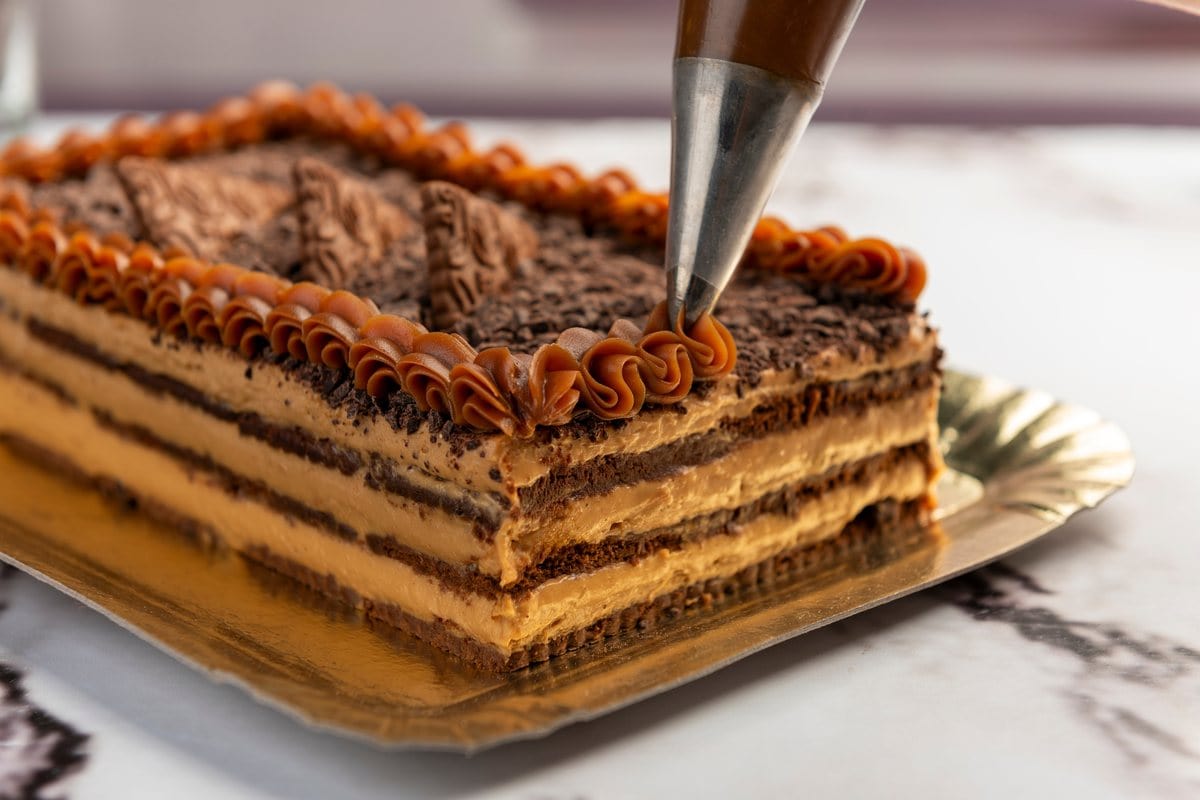
5Decorate the top
Smooth the top layer of cream. The simplest finish is a dusting of cocoa powder or crushed cookies. For a birthday, pipe a border of dulce de leche and scatter grated chocolate in the middle.
6Chill, then slice
Cover loosely and refrigerate for at least 6 hours, ideally overnight. Slice with a long knife dipped in hot water and wiped between cuts.
What to look for: when you press a knife tip into the side, the cookie layers should feel soft all the way through, like cake, not crunchy.
Tips for the Perfect Chocotorta
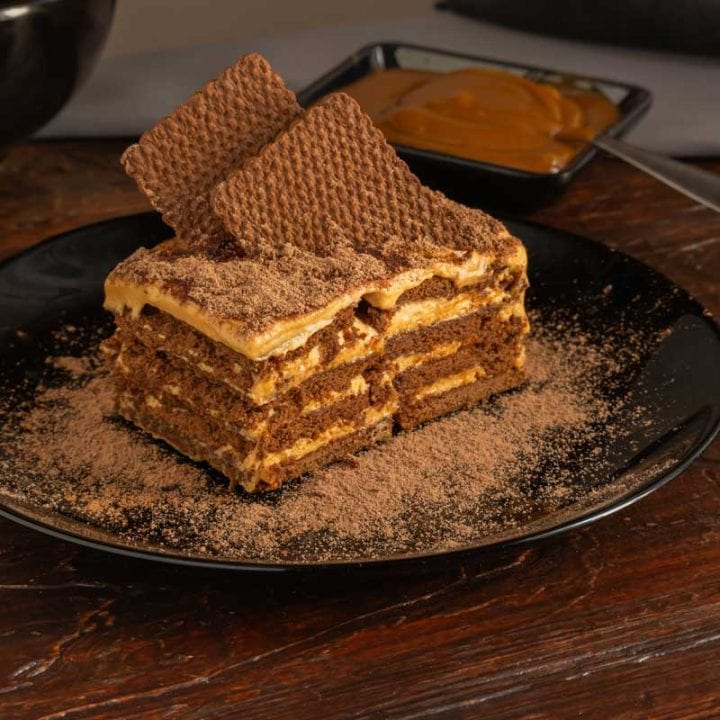
Chocotorta (Argentine Chocolate Cookie Cake)
Authentic Argentine chocotorta: chocolate cookies dipped in coffee or milk and layered with a dulce de leche and cream cheese cream. No baking, four ingredients and 20 minutes of hands-on work, then an overnight chill turns the cookies into cake.
Ingredients
Cream
- 16 oz (450 g) full-fat cream cheese, at room temperature
- 1¾ cups (500 g) thick dulce de leche (repostero style)
Layers
- 3 packages (6 oz / 170 g each) Chocolinas chocolate cookies, about 1 lb 2 oz (500 g)
- 1½ cups (360 ml) brewed coffee, cooled, or milk or chocolate milk
Topping
- ½ cup (150 g) dulce de leche, for piping (optional)
- 1 oz (30 g) dark chocolate, grated, or 1 tablespoon cocoa powder
Instructions
- Soften the cheese. Leave the cream cheese at room temperature for 30 to 60 minutes until soft.
- Make the cream. Beat the cream cheese with an electric mixer for 1 minute until smooth. Add 1¾ cups dulce de leche and beat 1 to 2 minutes more, until evenly pale caramel with no white streaks.
- Set up the dip. Pour the cooled coffee (or milk) into a shallow bowl. Have an 8x8-inch (20 cm) square dish or a flat serving platter ready.
- First layer. Dip each cookie for about 1 second per side, let it drip, and lay it in the dish. Cover the bottom in a single layer, breaking cookies to fill gaps.
- Layer. Spread about one fifth of the cream over the cookies, right to the edges. Add another layer of dipped cookies, staggering the joints like bricks, then more cream. Repeat to make 4 to 5 cookie layers, finishing with cream.
- Decorate. Smooth the top. Pipe a border of the reserved dulce de leche and sprinkle grated chocolate or cocoa over the center.
- Chill. Cover loosely and refrigerate at least 6 hours, ideally overnight, until the cookies are soft all the way through.
- Slice. Cut with a long knife dipped in hot water and wiped between slices. Serve cold.
Notes
Dulce de leche: use thick repostero (pastry) dulce de leche. Thin, sauce-style dulce de leche makes a runny cake.
No Chocolinas? Use Goya Chocolate Maria cookies, chocolate graham crackers, uncoated chocolate digestives or thin chocolate wafers.
Kid-friendly: dip in milk or chocolate milk instead of coffee. For adults, add a splash of port, Kahlúa or Baileys to the coffee.
Storage: keeps 4 to 5 days covered in the fridge (best on day 2) and up to 1 month in the freezer. Thaw overnight in the fridge.
Cups: crumble the dipped cookies into small glasses and layer with the cream; they set in about 2 hours.
Chocotorta Variations
Once you’ve made the classic, Argentines riff on it endlessly. These are the versions you’ll actually see at parties and bakeries in Buenos Aires.


Chocotorta vs. Tiramisu vs. Icebox Cake
Chocotorta gets compared to both, and it does belong to the same family of no-bake layered desserts. The differences are in the cookie and the cream.
| Dessert | Cookie | Cream | Dip |
|---|---|---|---|
| Chocotorta (Argentina) | Chocolate cookies | Dulce de leche + cream cheese | Coffee or milk |
| Tiramisu (Italy) | Ladyfingers | Mascarpone, eggs, sugar | Espresso, often with liqueur |
| Icebox cake (US) | Chocolate wafers | Whipped cream | None |
| Pavê (Brazil) | Maria biscuits or ladyfingers | Custard or condensed-milk cream | Milk or liqueur |
How to Serve and Store Chocotorta

Serve it cold, straight from the fridge, or let it sit 10 minutes for a softer, creamier slice. In Argentina it comes with a cup of coffee, a café con leche, or a round of mate.
| Where | How long | How |
|---|---|---|
| Fridge | 4 to 5 days | Covered with plastic wrap or in an airtight container. Best on day 2. |
| Freezer | Up to 1 month | Freeze whole or in slices, wrapped tightly. Thaw overnight in the fridge. |
| Make ahead | 1 to 2 days | Build it the day before the party and decorate the top on the day. |
| Room temperature | 2 hours max | The cream cheese filling needs to stay cold. |
Chocotorta FAQ
What does chocotorta taste like?
Like a cross between caramel cheesecake and tiramisu. The dulce de leche cream is sweet and milky with a slight tang from the cream cheese, and the soaked cookies taste like soft chocolate cake with a hint of coffee.
What does “chocotorta” mean?
It’s a blend of chocolate and torta, the Argentine word for cake. The name was coined by its creator, Marité Mabragaña, in 1982.
How many packs of Chocolinas do I need?
Three 170 g packs (about 500 g) make a 12-serving cake in an 8×8-inch dish with 4 to 5 layers. Two packs are enough for a smaller, 3-layer cake.
Why is my chocotorta runny?
Usually one of three things: the dulce de leche was the thin, sauce-style kind; the cookies were soaked too long; or the cake didn’t chill long enough. Use repostero dulce de leche, dip for 1 second per side, and chill overnight.
Can I make chocotorta without coffee?
Yes. Milk or chocolate milk is the standard choice for children’s birthday parties in Argentina, and it’s just as traditional.
How long does chocotorta need to set?
At least 6 hours in the fridge, and ideally overnight. Cups (vasitos) are ready in about 2 hours because the layers are thinner.
Can you freeze chocotorta?
Yes, for up to a month. Wrap it tightly and thaw in the fridge overnight, or serve it half-frozen as an ice cream cake.
Where can I buy Chocolinas in the US?
Latin American grocery stores, Argentine specialty shops and Amazon all carry them. If you can’t find them, Goya Chocolate Maria cookies are the closest substitute.
Is chocotorta the same as tiramisu?
No, but they are cousins. Tiramisu uses ladyfingers and a mascarpone-and-egg cream, while chocotorta uses chocolate cookies and a dulce de leche and cream cheese cream. Neither is baked.
More Argentine Sweets to Try
Chocotorta is the easiest way into Argentina’s dulce de leche obsession. When you’re ready for the next one, make alfajores, or browse the full list of traditional Argentinian desserts and our dulce de leche desserts. For more recipes by type, see Argentine dessert recipes, the Latin American cakes and pastries guide, and the Argentine food hub.
Sources: Chocotorta’s origin with Marité Mabragaña and the Chocolinas and Mendicrim campaign as reported by Los Andes (Mendoza) and summarized in reference works; the 2020 TasteAtlas ranking as reported by the Argentine press.
More Argentine Foods
See all →
Jorge Garcia is the founder of AmigoFoods, where he has spent over 20 years helping readers discover authentic Latin American and Spanish cuisine. Raised in a Cuban-American household, Jorge learned to cook at the hands of his mother and grandmother, carrying forward generations of family recipes. That heritage, backed by his family’s four-generation history in the Latin food industry, inspired him to launch AmigoFoods in 2003. With more than 1,000 published articles on recipes, ingredients, and food culture, Jorge’s mission is simple: make authentic Latin cooking approachable for home cooks everywhere while honoring the traditions behind every dish.