

On this page
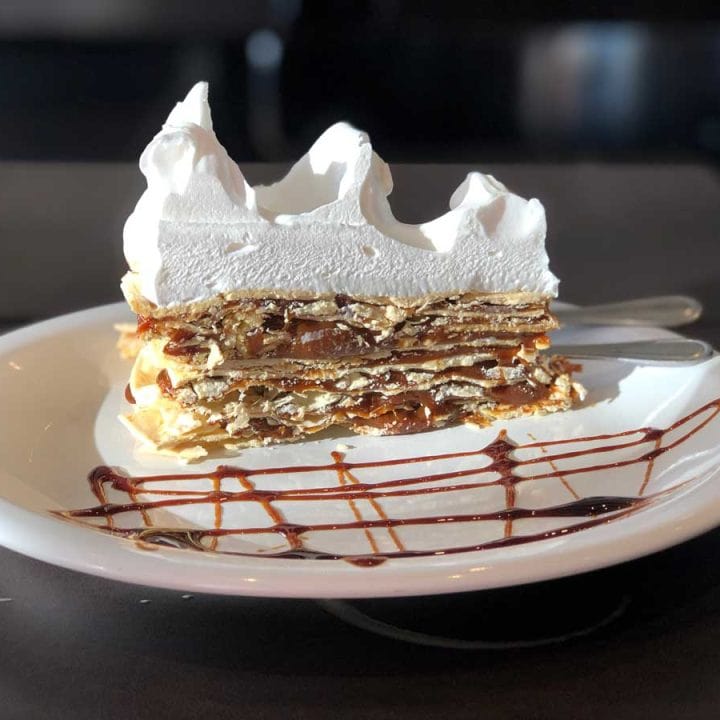
Torta rogel is Argentina’s celebration cake: ten or more paper-thin, cracker-crisp pastry discs stacked with thick dulce de leche and crowned with glossy Italian meringue. Argentines also call it simply rogel or alfajor rogel, and almost every bakery in Buenos Aires sells it by the slice.
Torta Rogel at a Glance
AmigoFoods may earn a commission from qualifying Amazon purchases made through links on this page.
What is torta rogel?
Torta rogel is a layer cake built from thin, crisp discs of unsweetened yolk pastry, each one spread with dulce de leche, and topped with a thick cap of Italian meringue. There is no sponge and no cream.
The pastry gives it structure, the dulce de leche brings almost all of the sweetness, and the meringue adds a light, marshmallow-like lid.
Purists say a proper rogel has eight layers of pastry and seven of dulce de leche, because the top disc carries the meringue instead. Home bakers often go higher. Ten to fourteen layers is common, and bakeries also sell small “mini rogel” cakes.

What does torta rogel taste like?
Like a giant alfajor. The first bite is crisp and slightly flaky, then comes the soft caramel of the dulce de leche, then the sweet, airy meringue.
After a day, the pastry softens a little where it touches the filling. Many Argentines think that is when it tastes best.

Where torta rogel comes from
Two Buenos Aires stories meet in the rogel. The first belongs to Rogelia Iglesias, a Spanish-born cook who baked a layered dulce de leche cake for her neighbors. By the 1950s she was selling it as the Alfajor Rogel, in a small three-layer size and a large five-layer one. The cake’s name comes from her.
The second belongs to Charo and Ricardo Balbiani, a couple in Recoleta who, in the 1960s, adapted a Dutch layered cake made with fruit preserves and swapped the fruit for dulce de leche. When Rogelia stopped baking, the Balbianis bought her equipment and the Rogel name, and the family later registered it as a trademark.
The Balbiani family still makes rogel today, and in 2026 it opened its first shop of its own, in San Telmo.
Older relatives exist too. The alfajor santafesino of Santa Fe stacks crisp discs and dulce de leche under a sugar glaze, and some historians trace a 12-layer “torta argentina” back to the 19th century. The rogel’s signature is the meringue on top.
Torta rogel vs. milhojas and other layered desserts
Rogel is often lumped in with milhojas and mille-feuille. Here is how they actually differ.
| Dessert | Layers | Filling | Topping | Texture |
|---|---|---|---|---|
| Torta rogel (Argentina) | Thin, unsweetened yolk pastry baked crisp | Thick dulce de leche | Italian meringue | Crisp, chewy, airy |
| Milhojas (Argentina, Chile, Colombia) | Puff pastry | Dulce de leche or pastry cream | Powdered sugar, glaze or meringue | Flaky and shattering |
| Alfajor santafesino (Argentina) | Two or three crisp discs | Dulce de leche | Hard sugar glaze | Crunchy |
| Mille-feuille (France) | Puff pastry | Pastry cream | Fondant or icing sugar | Flaky and creamy |
Some bakeries do build their rogel with puff pastry, which is why you will see it called a milhojas. The home-style rogel uses a firm butter-and-yolk dough instead. It bakes flat and crisp, stacks more easily and slices more cleanly. Colombia’s flaky version has its own guide: Colombian milhojas.
Ingredients for torta rogel
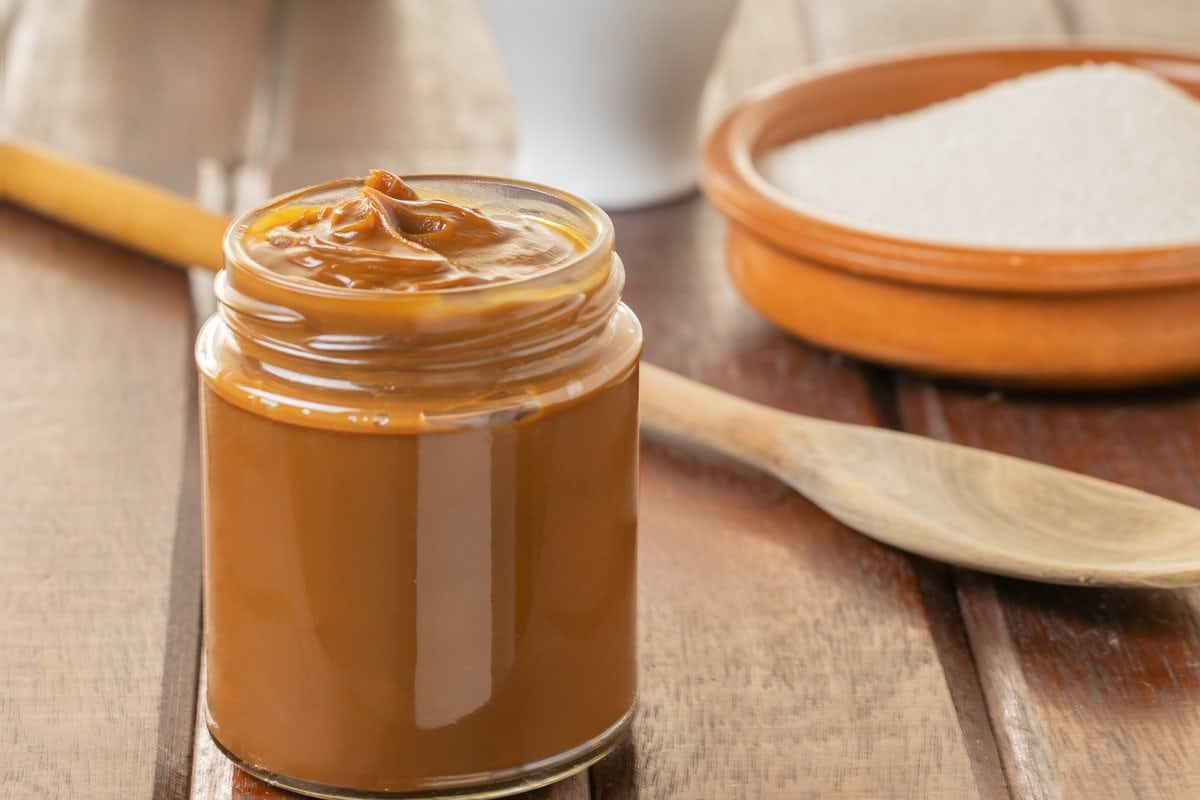
- All-purpose flour: Argentine bakers use harina 0000. US all-purpose flour works well.
- Egg yolks: eight of them give the layers their color, richness and snap. Save four of the whites for the meringue.
- Butter: softened and kneaded in after the dough comes together.
- Vodka: a couple of tablespoons of neutral spirit help the thin discs dry out and crisp in the oven. The alcohol bakes off. Argentines use alcohol fino or caña; white rum works too.
- Dulce de leche repostero: the thick “baker’s” style. Regular dulce de leche is softer and lets the layers slide.
- Egg whites, sugar and water: for the Italian meringue. A pinch of cream of tartar or a little lemon juice keeps it steady.
Which dulce de leche to use
Look for the word repostero on the label. It is cooked longer than the spreadable clásico, so it holds its shape between the layers and the slices cut clean. You need about 2 pounds (1 kg) for a 10-layer cake.
If you only have regular dulce de leche, stir it in a heavy saucepan over low heat for 10 to 15 minutes to thicken it, then let it cool completely. Or make it yourself with our homemade dulce de leche recipe and cook it to the thick end of the range.
How to make torta rogel
The full recipe with exact amounts is in the recipe card below. Here is how the process works and what to look for at each stage.
1. Make a firm yolk dough
Mix the flour and salt, add the yolks, vodka and cold water, then knead in soft butter a little at a time. Keep kneading for 8 to 10 minutes until the dough is smooth and firm, closer to pasta dough than pie dough. A stand mixer with the dough hook makes this easy.
2. Divide and rest
Cut the dough into 10 equal pieces, about 3 ounces each, and roll them into balls. Cover and rest for 30 minutes so the gluten relaxes and the discs roll thin without springing back.
3. Roll paper-thin and prick
Roll each ball on parchment to about 1/16 inch (1.5 mm), just larger than 9 inches. Trim around a 9-inch plate or cake pan, then prick all over with a fork so the disc bakes flat. Keep the waiting dough covered.
4. Bake one or two at a time
Bake at 400°F (200°C) for 6 to 9 minutes, until pale golden with darker edges. Roll the next disc while one bakes. The discs crisp as they cool, so pull them before they brown; dark layers taste bitter.
5. Stack with dulce de leche
Glue the first disc to the cake board with a dab of dulce de leche. Spread about ⅓ cup thinly to the edge, add the next disc and repeat, ending with a plain disc on top. Press gently with a flat plate to level the stack, then let it set for at least 4 hours.
6. Top with Italian meringue
Cook sugar and water to 240°F (116°C), stream the hot syrup into whipping egg whites, and beat until thick, glossy and barely warm. Pile it on top or pipe tall peaks, then toast it with a kitchen torch if you like.

Italian or Swiss meringue?
Italian meringue is traditional. The hot syrup cooks the whites, so the topping is stable, glossy and holds at room temperature for hours.
Swiss meringue is the easier option if you don’t have a thermometer: whisk the whites and sugar over simmering water until the sugar dissolves and the mixture reaches 160°F (71°C), then whip until thick and cool. Skip uncooked French meringue here. It weeps on dulce de leche and the whites stay raw.
Tips for crisp layers and clean slices
- Roll thinner than seems right. Thick discs bake hard instead of crisp and make the cake heavy.
- Prick every disc well. Unpricked dough puffs into domes that won’t stack.
- Cool the discs flat on a rack. Warm pastry steams under the filling and goes soft.
- Spread the dulce de leche thin. Too much makes the cake cloying and lets the layers slide.
- Save your best disc for the top. Cracked ones can go in the middle; broken pieces patch together inside the stack.
- Reroll the trimmings into an extra layer.
- Rest the cake before the meringue so the layers bond.
- Use a serrated knife and a gentle sawing motion to slice.
Variations: mini rogel, chocolate and more
- Mini rogel: cut 3-inch rounds and stack four or five layers each, topped with a swirl of meringue. Good for parties and easy to serve.
- Rectangular rogel: roll the dough into rectangles that fit your baking sheet. It bakes faster and slices neatly into bars.
- Chocolate rogel: brush the top disc with melted dark chocolate before the meringue, or stir a little cocoa into the dulce de leche.
- Fondant rogel: some Buenos Aires bakeries cover the whole cake in white fondant instead of meringue for birthdays.
When Argentines serve torta rogel
Rogel is a special-occasion cake. It appears at birthdays, christenings, Mother’s Day and big family Sunday lunches, and it shares the Christmas table with pan dulce and turrón.
In cafés it is sold by the slice for the afternoon merienda, usually with coffee or mate. Along with the no-bake chocotorta, it is one of Argentina’s best-loved birthday cakes.

How to store and make torta rogel ahead
- Up to 3 days ahead: bake the discs and keep them flat and airtight at room temperature.
- 1 day ahead: stack the cake with dulce de leche, cover it and leave it in a cool spot or the fridge.
- Day of serving: make the meringue and finish the cake a few hours before guests arrive.
Leftovers keep at cool room temperature for a day, then loosely covered in the fridge for up to 4 days. The layers soften a little each day. Let cold slices sit out for 20 minutes before serving.
Don’t freeze the finished cake, because the meringue weeps as it thaws. You can freeze the stacked cake without meringue, well wrapped, for up to a month. Thaw it in the fridge and top it fresh.

Torta rogel FAQ
What is torta rogel made of?
Thin, crisp pastry made from flour, egg yolks and butter; thick dulce de leche between the layers; and Italian meringue on top.
How many layers does a rogel have?
Traditionally eight layers of pastry and seven of dulce de leche, but anywhere from 8 to 14 is normal. This recipe makes 10.
Why is there vodka in rogel dough?
Alcohol evaporates quickly in the oven, which helps the thin discs dry out and turn crisp instead of tough. It bakes off. You can replace it with the same amount of cold water; the layers will be slightly less crisp.
Can I use regular dulce de leche?
Yes, but thicken it first by stirring it over low heat for 10 to 15 minutes and letting it cool. Soft dulce de leche makes the layers slide.
Does torta rogel need to be refrigerated?
It is fine at cool room temperature for about a day. After that, or in a hot kitchen, keep it in the fridge and let slices warm up for 20 minutes before serving.
Is torta rogel the same as milhojas?
No. Milhojas is made with puff pastry and is flaky. Rogel uses a firm yolk pastry that bakes crisp, and it is always finished with meringue.
Torta Rogel Recipe
Torta Rogel (Argentine Dulce de Leche Layer Cake)
Argentina's favorite celebration cake: ten paper-thin, crisp yolk-pastry discs stacked with thick dulce de leche and crowned with glossy Italian meringue. This recipe makes a 9-inch cake.
Ingredients
For the pastry layers
- 4 cups (500 g) all-purpose flour, plus more for rolling
- ½ teaspoon fine salt
- 8 large egg yolks
- 7 tablespoons (100 g) unsalted butter, softened
- 2 tablespoons vodka or white rum
- ½ cup (120 ml) cold water, plus 1 to 2 tablespoons if needed
For the filling
- 2.2 lb (1 kg) thick dulce de leche (repostero), about 3 cups
For the Italian meringue
- 4 large egg whites (about ½ cup / 120 g), at room temperature
- 1¼ cups (250 g) granulated sugar
- ⅓ cup (80 ml) water
- ¼ teaspoon cream of tartar or ½ teaspoon lemon juice
Instructions
- Make the dough: whisk the flour and salt in a large bowl and make a well in the center. Add the egg yolks, vodka and ½ cup cold water and mix with a fork, then with your hands, until a shaggy dough forms.
- Knead in the softened butter in three additions. Knead 8 to 10 minutes, until smooth and firm, like pasta dough (or use a stand mixer with the dough hook on low). If it stays crumbly, add cold water 1 tablespoon at a time.
- Divide the dough into 10 equal pieces (about 3 oz / 85 g each), shape into balls, cover with plastic wrap and rest 30 minutes at room temperature.
- Heat the oven to 400°F (200°C). Cut 10 sheets of parchment a little larger than 9 inches.
- On a lightly floured sheet of parchment, roll one ball into a very thin round, about 1/16 inch (1.5 mm) thick and slightly larger than 9 inches. Trim to a 9-inch (23 cm) circle using a plate or cake-pan bottom as a guide. Prick all over with a fork and slide the parchment onto a baking sheet. Keep the other balls and the trimmings covered.
- Bake 6 to 9 minutes, until pale golden with darker golden edges. If a disc puffs, press it flat with a clean towel as soon as it comes out. Cool flat on a rack. Roll the next disc while one bakes and repeat with all the dough; reroll the trimmings for an extra layer if you like.
- Assemble: spread a dab of dulce de leche on a cake board or flat plate and set the flattest disc on it. Spread about ⅓ cup (100 g) dulce de leche thinly to the edge. Top with another disc and press gently. Repeat, ending with your best-looking disc on top, left plain.
- Set a flat plate on top and press gently to level the cake. Cover and let it set at least 4 hours at cool room temperature, or overnight in the fridge.
- Make the Italian meringue: put the sugar and water in a small saucepan, stir to dissolve, then boil over medium-high heat without stirring. When the syrup reaches 230°F (110°C), start whipping the egg whites and cream of tartar in a stand mixer on medium-high to soft peaks.
- When the syrup reaches 240°F (116°C), turn the mixer to medium and pour the syrup in a thin stream down the side of the bowl. Whip on high for 6 to 8 minutes, until thick, glossy and just barely warm.
- Spread the meringue over the top of the cake in swirls, or pipe tall peaks with a large round or star tip. Toast lightly with a kitchen torch if you like.
- Slice with a sharp serrated knife using a gentle sawing motion. Serve at room temperature.
Notes
Dulce de leche: use thick repostero (baker's) dulce de leche. Regular dulce de leche is softer; thicken it by stirring over low heat for 10 to 15 minutes, then cool completely before using.
Vodka: helps the discs dry out and turn crisp, and bakes off. White rum works too, or replace it with cold water (the layers will be slightly less crisp).
Egg whites: you will have 4 whites left over from the dough; use them for the meringue.
Make ahead: bake the discs up to 3 days ahead and keep them flat and airtight at room temperature. Assemble the cake up to 1 day ahead and add the meringue on the day you serve it.
Storage: keeps at cool room temperature for 1 day, then covered in the fridge for up to 4 days. Do not freeze once topped with meringue.
Timing: the total includes 30 minutes of dough resting and at least 4 hours of setting before the meringue goes on.
More Argentine desserts to try
Hooked on dulce de leche? Make a batch of alfajores, try the no-bake chocotorta, or bake a quince pasta frola. For breakfast, there are medialunas.
You’ll find 20 more ideas in our guide to Argentinian desserts and more ways to use the filling in our list of dulce de leche desserts. See where the rogel fits among layered cakes across the region in our Latin American and Spanish cakes and pastries guide, and explore all 32 dishes in our guide to Argentina food.
More Argentine Foods
See all →
Jorge Garcia is the founder of AmigoFoods, where he has spent over 20 years helping readers discover authentic Latin American and Spanish cuisine. Raised in a Cuban-American household, Jorge learned to cook at the hands of his mother and grandmother, carrying forward generations of family recipes. That heritage, backed by his family’s four-generation history in the Latin food industry, inspired him to launch AmigoFoods in 2003. With more than 1,000 published articles on recipes, ingredients, and food culture, Jorge’s mission is simple: make authentic Latin cooking approachable for home cooks everywhere while honoring the traditions behind every dish.