
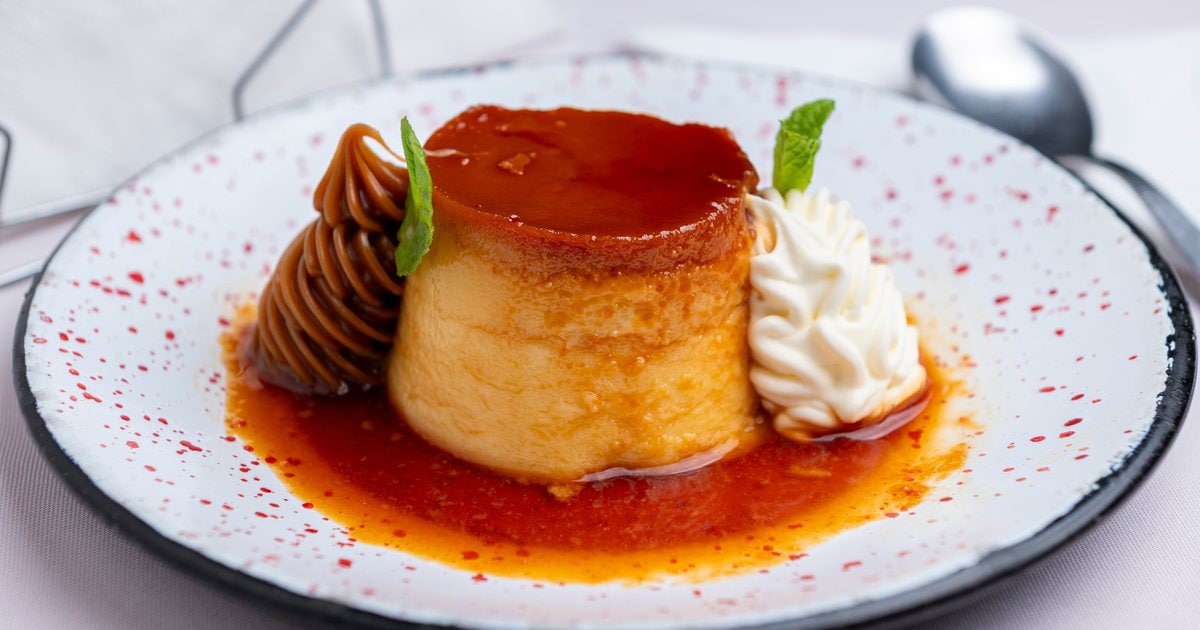
Dulce de leche flan is a baked caramel custard with dulce de leche whisked straight into the eggs and milk, so every slice tastes of slow-cooked milk caramel instead of plain vanilla. In Argentina and Uruguay you will also see flan con dulce de leche, a regular flan served with a spoonful of dulce de leche on the side. This recipe does both: dulce de leche in the custard, and more on the plate if you want it.
It makes one 9-inch flan (12 small slices), needs about 20 minutes of hands-on work, and has to chill for at least 4 hours, so it is a natural make-ahead dessert.
In Uruguay, flan almost always comes “con dulce,” with an extra spoonful of dulce de leche on top. See the other classics in our guide to Uruguayan desserts.
Dulce de Leche Flan at a Glance
What Is Dulce de Leche Flan?
Start with a classic caramel flan: eggs, sweetened milk and vanilla baked gently over a layer of caramel, then turned out so the caramel runs down the sides. Dulce de leche flan swaps part of that sweetened milk for dulce de leche, the thick milk caramel of the Río de la Plata. The custard turns a pale toffee color and tastes deeper and rounder, less like a sugar syrup and more like caramelized milk.
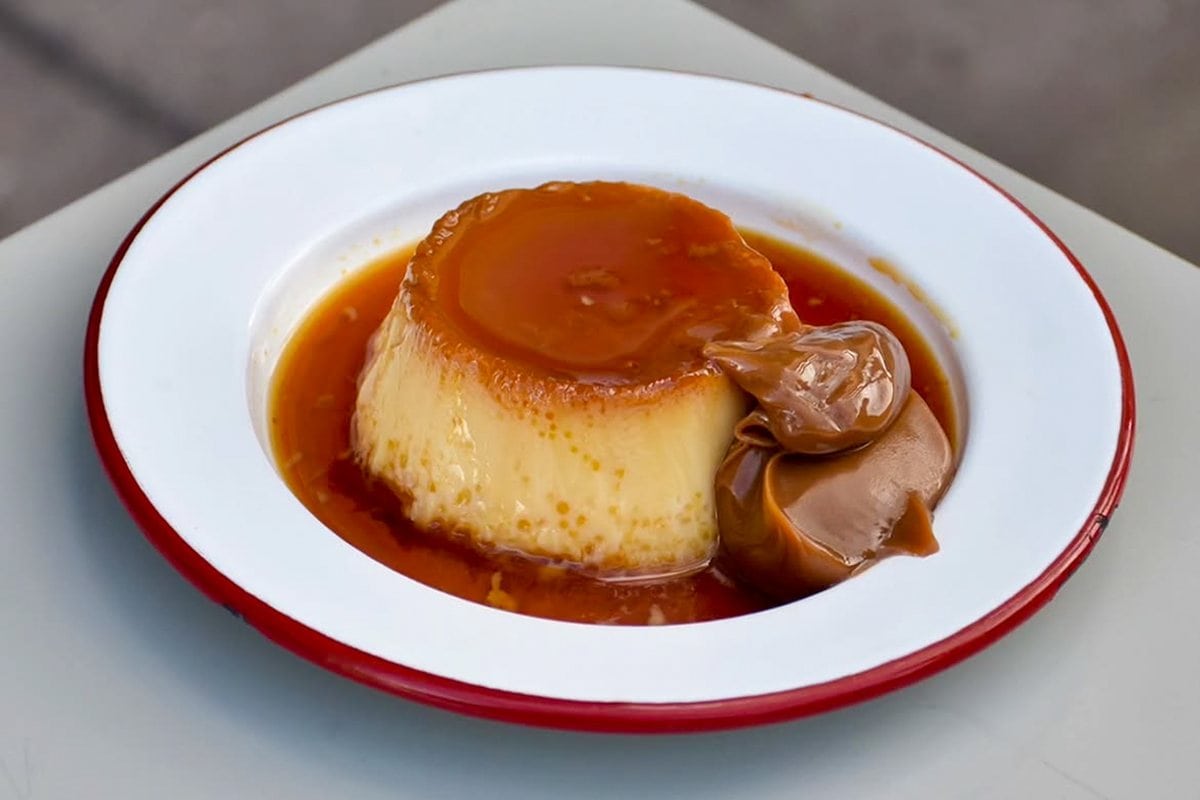
In Argentina, flan is one of the desserts every parrilla and neighborhood bodegón has on the menu. You order it three ways: plain, con dulce de leche (a big dollop beside it), or mixto, with both dulce de leche and whipped cream. The flan in our featured photo is a mixto. See more in our guide to Argentinian desserts.
Flan de dulce de leche vs. flan con dulce de leche: de means the dulce de leche is in the custard; con means it is served with it. This recipe is the first, and the serving section shows you how to do the second.
Ingredients and What Each One Does
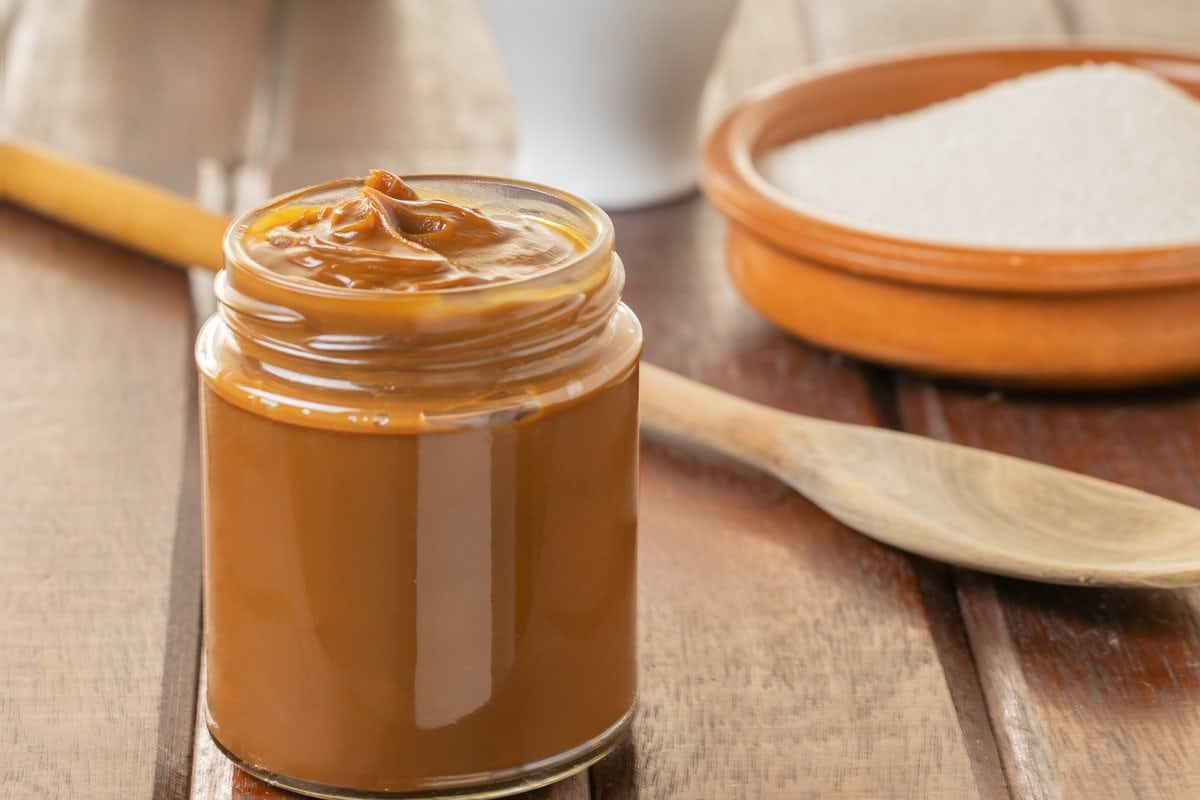
- Dulce de leche (380 g jar)The flavor. A thick, spoonable style blends in without thinning the custard. Argentine “repostero” (pastry) dulce de leche is the thickest; the everyday “clásico” works too.
- Sweetened condensed milkAdds sweetness and body and helps the custard set dense and smooth, the way most Latin American flans do.
- Evaporated milkBrings the mix to the right pourable consistency without the watery edge fresh milk can give.
- 5 large eggsThe structure. Whole eggs give a flan that slices cleanly and holds its shape when turned out.
- Sugar and waterFor the caramel that lines the mold and becomes the sauce.
- Vanilla and a pinch of saltVanilla rounds out the caramel notes; salt keeps a very sweet dessert from tasting flat.
Which dulce de leche to buy: pick a jar or can, not a squeeze-bottle sauce, which is thinner and sweeter. An imported Argentine brand like Havanna Dulce de Leche is a safe choice; we compare others in our roundup of the best dulce de leche brands. Colombian arequipe works the same way (you will need two 8.8 oz jars of Colombina dulce de leche). Prefer to make your own? Follow how to make dulce de leche from condensed milk and let it cool before using.
Equipment and Mold Sizes
The recipe is written for one solid 9-inch round pan at least 2 inches deep. Do not use a springform pan; the caramel and custard will leak. If you bake in a different mold, the time changes:
| Mold | Batch | Approximate bake at 350°F |
|---|---|---|
| 9-inch round cake pan or flan mold, 2 in deep | Full recipe | 55–65 minutes |
| Six to eight 6 oz ramekins | Full recipe | 30–40 minutes |
| 6-inch stovetop flanera (about 38 fl oz) | Half recipe | 40–50 minutes |
Handy tools for this recipe
- DOWAN 6 oz ceramic ramekins (set of 6) for individual flans that unmold in seconds.
- A 6-inch stainless flanera with lid if you want the traditional mold for a half batch.
- A fine-mesh strainer to catch egg strands and foam before baking.
- An instant-read thermometer for the doneness check, and an oven thermometer, because many ovens run hot and hot ovens make bubbly flan.
As an Amazon Associate, AmigoFoods earns from qualifying purchases.
You will also need a saucepan for the caramel, a blender or a bowl and whisk, a roasting pan big enough to hold your mold, and foil.
How to Make Dulce de Leche Flan (Step by Step)

- Heat the oven and set up the bath. Preheat to 350°F (175°C). Put your 9-inch mold inside a roasting pan and put a kettle of water on to boil.
- Make the caramel. Stir 1 cup sugar and 1/4 cup water in a saucepan over medium heat until the sugar dissolves, then stop stirring and swirl the pan now and then. In 10–15 minutes it will turn amber, the color of strong tea. Take it off the heat as soon as it gets there; it keeps darkening.
- Coat the mold. Pour the caramel into the mold and tilt it (with oven mitts, it is extremely hot) to cover the bottom and a little way up the sides. It will crackle and harden. That is normal; it melts back into sauce in the oven.
- Blend the custard. Blend the dulce de leche with the evaporated milk first until smooth, so no streaks are left. Add the condensed milk, eggs, vanilla and salt and blend on low just until combined. Let it rest 10 minutes and skim off the foam.
- Strain and cover. Pour the custard through a fine-mesh strainer onto the hardened caramel. Cover the mold loosely with foil.
- Bake in the water bath. Set the roasting pan on the oven rack and pour hot water around the mold until it comes halfway up the sides. Bake about 60 minutes, checking from 50.
- Cool, then chill. Lift the mold out of the water and let it cool for 1 hour on the counter, then refrigerate at least 4 hours, ideally overnight.
- Turn it out. Run a thin knife around the edge, dip the bottom of the mold in hot water for 30 seconds, put a rimmed plate on top and flip in one confident motion. Lift the mold and let the caramel pour over.

Exact amounts, times and a printable version are in the recipe card below.
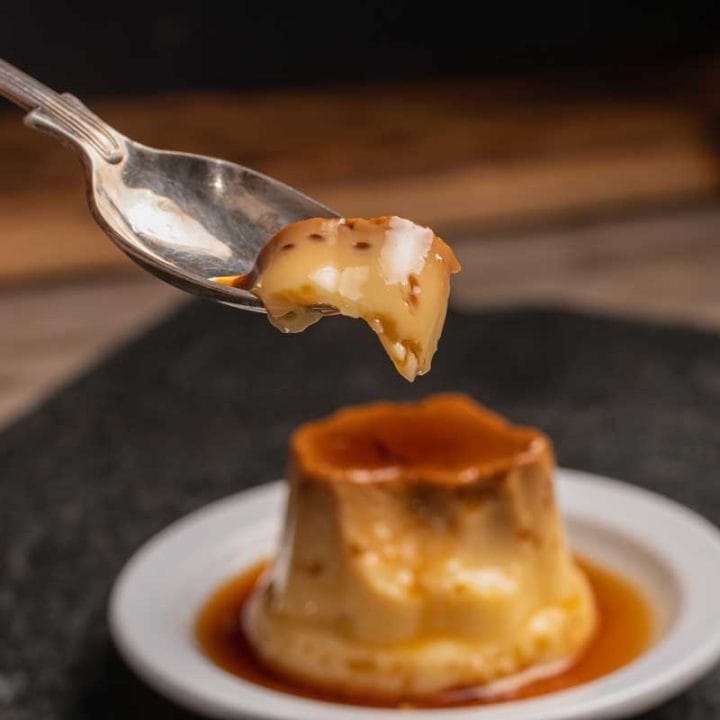
Dulce de Leche Flan
Silky baked flan with dulce de leche blended right into the custard, set over amber caramel and chilled until it slices cleanly. Serve it plain, with extra dulce de leche, or mixto with whipped cream the way Argentina does.
Ingredients
- 1 cup (200 g) granulated sugar, for caramel
- 1/4 cup (60 ml) water, for caramel
- 1 jar or can (13.4 oz / 380 g) dulce de leche
- 1 can (12 fl oz / 354 ml) evaporated milk
- 1 can (14 oz / 397 g) sweetened condensed milk
- 5 large eggs
- 1 teaspoon vanilla extract
- Pinch of fine salt
- Hot water, for the baking water bath
Instructions
- Preheat the oven to 350°F (175°C). Set a solid 9-inch (23 cm) round flan mold or cake pan, at least 2 inches deep, inside a larger roasting pan. Do not use a springform pan. Bring a kettle of water to a boil.
- Combine the sugar and 1/4 cup water in a saucepan over medium heat. Stir until the sugar dissolves, then stop stirring and swirl the pan occasionally until the caramel turns amber, about 10–15 minutes. Immediately pour it into the mold and tilt with oven mitts to coat the bottom; the caramel is extremely hot. Let it harden.
- Blend the dulce de leche with the evaporated milk until completely smooth. Add the condensed milk, eggs, vanilla and salt and blend on low just until combined. Rest 10 minutes and skim off any foam.
- Pour the custard through a fine-mesh strainer into the caramel-lined mold. Cover the mold loosely with foil.
- Place the roasting pan on the oven rack, then carefully pour hot water around the mold to reach about halfway up its sides. Keep water out of the custard.
- Bake about 60 minutes, checking from 50 minutes. The edges should be set and the center should tremble gently rather than slosh; the center should reach at least 160°F (71°C). Remove before it passes about 175°F (80°C).
- Lift the mold out of the water bath and cool on a rack for 1 hour. Cover and refrigerate at least 4 hours, preferably overnight.
- To serve, run a thin knife around the edge, dip the bottom of the mold in hot water for 30 seconds, set a rimmed platter on top and invert. Lift off the mold and let the caramel pour over the flan. Serve chilled, with extra dulce de leche or whipped cream if you like.
Notes
Makes 12 small slices. Allow about 20 minutes preparation, 70 minutes cooking (caramel plus baking), 1 hour cooling and at least 4 hours refrigeration: about 6 hours 30 minutes total.
Use a thick jarred or canned dulce de leche, not a thin squeeze-bottle sauce. This is a rich version with both condensed milk and dulce de leche, so cut thin slices.
Ramekins: divide between six to eight 6 oz ramekins and start checking at 30 minutes. A 6-inch flanera takes a half batch, about 40–50 minutes.
Keep covered at 40°F (4°C) or colder and eat within 3–4 days. Do not freeze.
Nutrition Information:
Yield: 12 Serving Size: 1 sliceAmount Per Serving: Calories: 344Total Fat: 9.6gSaturated Fat: 5.3gTrans Fat: 0gUnsaturated Fat: 3.6gCholesterol: 107mgSodium: 159mgCarbohydrates: 55.5gFiber: 0gSugar: 53.6gProtein: 9.5g
How to Tell When Flan Is Done
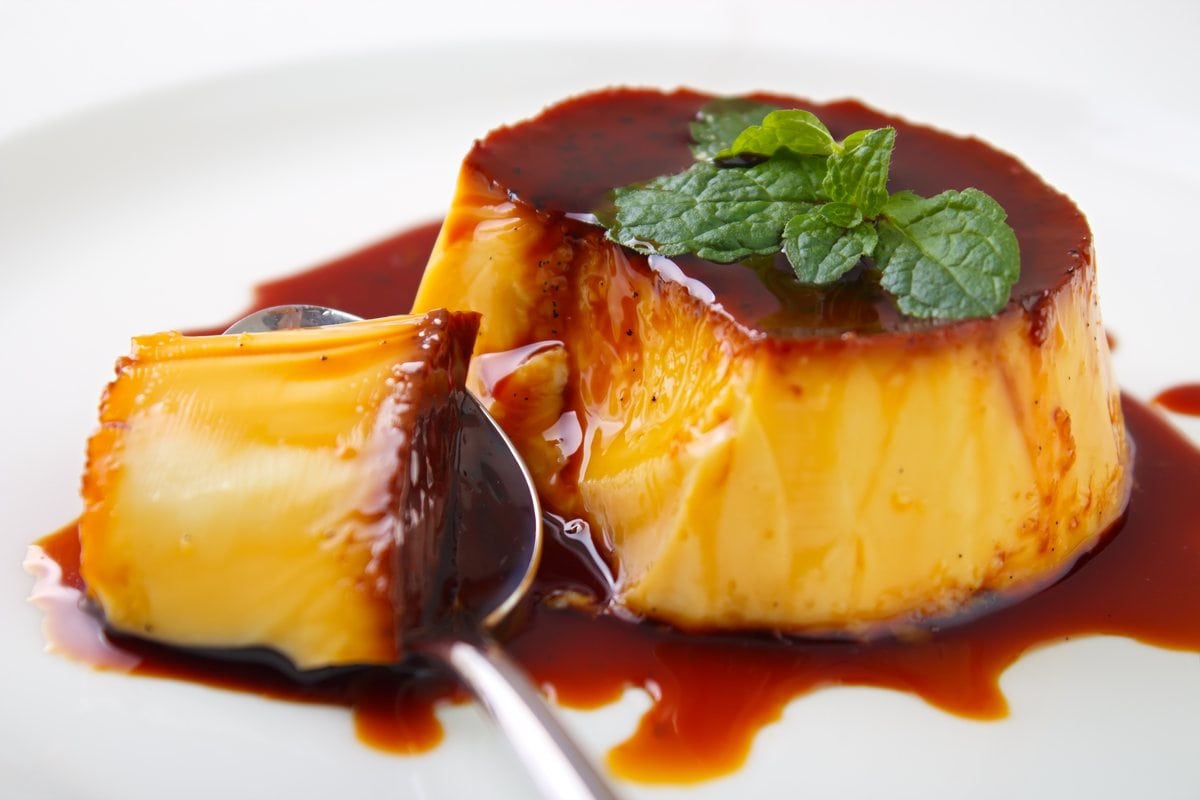
Flan keeps cooking from its own heat after it leaves the oven, so pull it while the middle still moves. Use these cues together:
| Check | Ready | Needs more time |
|---|---|---|
| Jiggle the pan | Edges firm, center trembles like set gelatin | Center ripples or sloshes like liquid |
| Thermometer in the center | At least 160°F (71°C); take it out before it passes about 175°F (80°C) | Below 160°F (71°C) |
| Knife near the center | Comes out with custard clinging but no liquid | Liquid runs into the cut |
Troubleshooting: Bubbles, Cracks and Stuck Flan
The oven was too hot, the water boiled, or the mix was over-blended. Blend on low, rest and skim the foam, strain, cover with foil and check your oven with a thermometer.
It overbaked. Start checking at 50 minutes and take it out once the center trembles; it firms up as it chills.
It came out too early. Next time bake until the center reads at least 160°F (71°C). A deeper pan needs longer.
Run the knife all the way down the side, dip the mold in hot water for 30–60 seconds and try again. A light tap on the bottom helps.
The caramel went past amber into dark brown. Pull it at the color of strong tea; it darkens in the pan off the heat.
Some always stays behind. Chilling overnight dissolves more of it into sauce. Pour a splash of hot water into the empty mold to melt the rest and spoon it over.
How to Serve It the Argentine Way
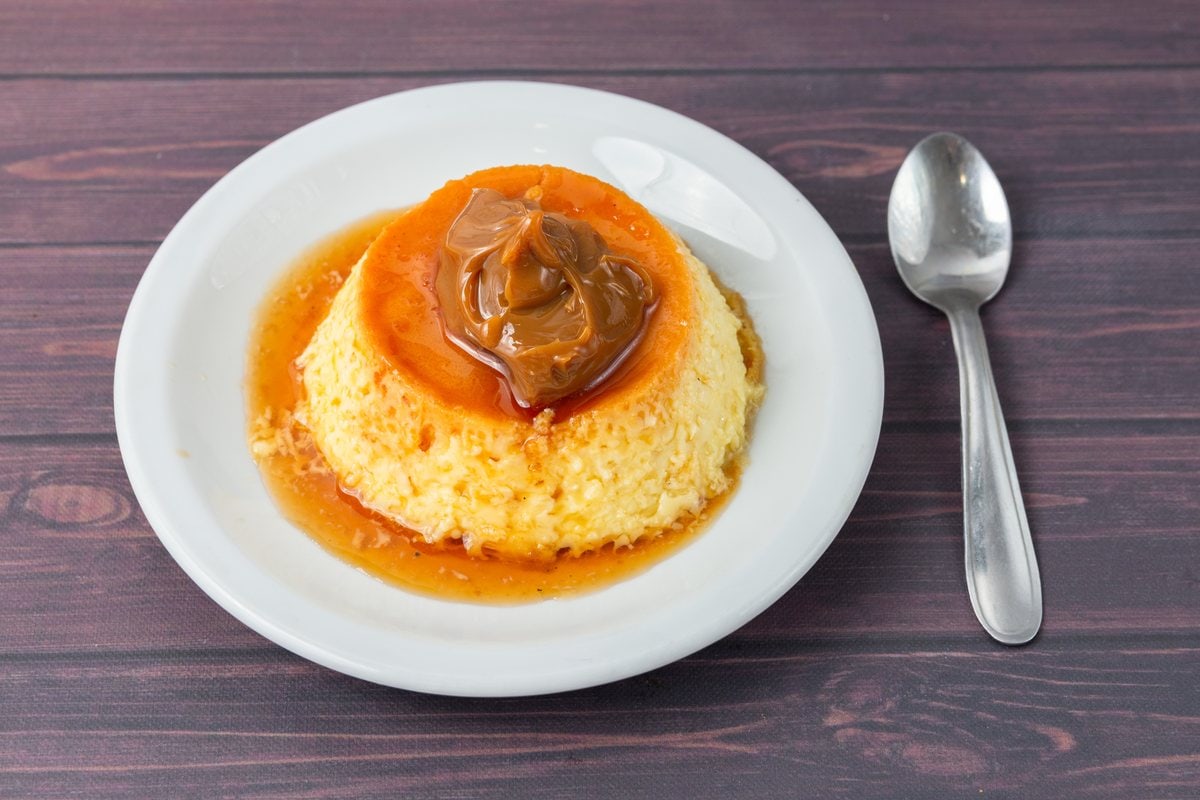
- Con dulce de lecheA generous spoonful beside or on top of each slice, as in the photo above.
- MixtoDulce de leche on one side and lightly sweetened whipped cream on the other. The cream cuts the richness.
- With coffeeA small slice with espresso or a cortado balances the sweetness.
- With fruitSliced strawberries or orange segments add freshness if you are serving it after a heavy Argentine asado.
Cut it into thin wedges. This is a rich flan, and 12 slices is a realistic count for a 9-inch pan.
Variations
- Individual flansDivide the caramel and custard between six to eight 6 oz ramekins and start checking at 30 minutes.
- Flan de cajetaSwap the dulce de leche for Mexican goat-milk cajeta for a tangier, darker caramel flavor.
- Homemade dulce de lecheCook your own from condensed milk a day ahead and use 380 g (about 1 1/4 cups) once it has cooled.
- Extra vanillaUse a Mexican vanilla like Suchiate pure vanilla for a warmer, spicier vanilla note.
Storage and Make-Ahead
- Make aheadBake it the day before. Flan is better after a night in the fridge and unmolds more cleanly.
- RefrigerateKeep it covered at 40°F (4°C) or colder and eat within 3–4 days. Store it in its caramel so it stays moist.
- FreezingNot recommended. Frozen custard weeps and turns grainy when it thaws.
Dulce de Leche Flan FAQ
Can you use dulce de leche in flan?
Yes. Dulce de leche blends smoothly into a flan custard and replaces some of the sugar and milk. Blend it with the evaporated milk first so it does not leave streaks, and use a thick jarred or canned style rather than a thin squeeze-bottle sauce.
What is the difference between dulce de leche and leche flan?
Dulce de leche is a spread: milk and sugar cooked slowly until thick and caramel colored. Leche flan is the Filipino name for a caramel custard, usually made with egg yolks and condensed milk and often steamed in an oval llanera. Dulce de leche flan uses the first inside a version of the second.
Is dulce de leche just caramelized condensed milk?
Traditional dulce de leche is made by slowly cooking fresh milk with sugar. Cooking a can of sweetened condensed milk gives a very similar result, which is why it is a popular shortcut at home.
Why does my flan have bubbles?
Bubbles come from air beaten into the custard or from cooking it too hot. Blend on low, rest and skim the foam, strain it, cover the mold with foil and keep the water bath from boiling.
How long does dulce de leche flan keep in the fridge?
Up to 3–4 days, covered, at 40°F (4°C) or colder. Keep it in its caramel and return leftovers to the fridge promptly.
Can I freeze dulce de leche flan?
It is not recommended. Freezing breaks the custard’s texture, and it thaws watery and grainy.
Can I make it without a water bath?
You can, but the edges overcook before the middle sets and the texture is spongier. The water bath keeps the heat gentle and even, which is what makes flan silky.
More Latin American Flans and Custards
- Classic Caramel FlanThe base recipe, no dulce de leche
- Brazilian PudimCondensed-milk flan with a hole in the middle
- Venezuelan QuesilloDenser, with tiny bubbles on purpose
- Peruvian Crema VolteadaPeru’s tall, firm caramel custard
- ChocoflanMexico’s chocolate cake and flan in one pan
- Latin Custards and PuddingsA country-by-country guide
- ChocotortaArgentina’s no-bake dulce de leche cake
- AlfajoresDulce de leche sandwich cookies
More Argentine Foods
See all →
Jorge Garcia is the founder of AmigoFoods, where he has spent over 20 years helping readers discover authentic Latin American and Spanish cuisine. Raised in a Cuban-American household, Jorge learned to cook at the hands of his mother and grandmother, carrying forward generations of family recipes. That heritage, backed by his family’s four-generation history in the Latin food industry, inspired him to launch AmigoFoods in 2003. With more than 1,000 published articles on recipes, ingredients, and food culture, Jorge’s mission is simple: make authentic Latin cooking approachable for home cooks everywhere while honoring the traditions behind every dish.