

On this page
Empanadillas are Puerto Rico’s crispy fried turnovers: a thin wheat-flour dough folded around a sofrito-seasoned beef picadillo, sealed with a fork and fried until golden and blistered. Many Puerto Ricans call the same snack a pastelillo, and you will find both names on the beach kioskos from Piñones to Luquillo.
Empanadillas at a Glance
AmigoFoods may earn a commission from qualifying Amazon purchases made through links on this page.
What are empanadillas?
An empanadilla is a small, half-moon turnover. The name is the Spanish diminutive of empanada, from empanar, “to wrap in bread,” so an empanadilla is literally a little empanada. Spain brought the idea to the Caribbean, and in Puerto Rico it became a fried street snack with its own dough, its own fillings and its own crimp.
The Puerto Rican version is thinner and crisper than most Latin American empanadas. The dough is rolled to about ⅛ inch, sealed with the tines of a fork and fried, so the surface puffs into small blisters. The classic filling is carne molida, a beef picadillo cooked with Puerto Rican sofrito, sazón, tomato sauce and olives. At the kioskos you will also see chicken, cheese, pizza and seafood versions such as jueyes (land crab), carrucho (conch) and lobster.

Empanadillas sit in the same family as the other cuchifritos, the fried snacks sold from roadside stands and beach kiosks, alongside alcapurrias and bacalaítos. They are one of the dishes in our guide to Puerto Rican food.
Empanadillas vs. pastelillos vs. empanadas
Short answer: in Puerto Rico, empanadillas and pastelillos are mostly two names for the same fried turnover, and both are smaller, thinner-crusted cousins of the empanada. Which word you use usually depends on where your family is from.
When people do draw a line, it tends to fall like this:
| Empanadilla (PR) | Pastelillo (PR) | Empanada (Latin America) | |
|---|---|---|---|
| Size | Medium to large half-moon | Small, often bite-size | Medium to large |
| Dough | Thin wheat dough, sometimes tinted orange with achiote | Very thin, flaky dough that blisters | Thicker wheat dough, or corn dough in Colombia and Venezuela |
| Seal | Fork-crimped | Fork-crimped | Often braided (repulgue) or pinched |
| Cooking | Fried | Fried | Baked or fried, depending on the country |
| Fillings | Beef, chicken, pizza, crab, conch, lobster | Beef, cheese, or sweet guava and cheese | Beef, chicken, cheese, corn and many regional fillings |
Spain’s empanadillas are a separate tradition again (see Spanish empanadillas below), and the big Galician empanada gallega is a whole pie cut into squares. For a tour of every style, see our guide to the best empanadas in Latin America.
Ingredients for Puerto Rican empanadillas
The full measurements are in the recipe card. Here is what each ingredient does.
For the dough
- All-purpose flour: regular flour gives a crisp, slightly chewy shell. Bread flour makes it tough.
- Cold butter or lard: rubbed into the flour, it is what makes the dough flaky. Lard is the old-school choice and fries up a little crisper.
- Egg and ice water: the egg makes the dough supple enough to roll thin without tearing; the water must be cold so the fat stays in pieces.
- Baking powder: a teaspoon is the secret to the small bubbles and blisters you see on kiosko empanadillas.
- Sazón (optional): a teaspoon in the dough turns it the pale orange color many Puerto Rican cooks prefer.
For the picadillo
- Ground beef: 85/15 has enough fat for flavor; spoon off the excess after browning.
- Sofrito: the green base of Puerto Rican cooking, made from ají dulce, culantro, cilantro, onion, garlic and peppers. Use homemade sofrito or a jar; the Goya Puerto Rican pantry pack bundles sofrito with the other basics.
- Sazón con culantro y achiote: adds color, salt and the familiar savory flavor. One envelope seasons a pound of beef; the Goya Sazón jumbo box lasts a long time.
- Adobo, oregano and cumin: adobo seasons the meat; dried oregano and a little cumin round it out.
- Tomato sauce: plain canned tomato sauce, cooked down until the pan is dry.
- Alcaparrado: the Puerto Rican mix of olives, pimientos and capers. Goya alcaparrado is the standard; chopped pimento-stuffed olives work too.
- Potato (optional): a small diced potato stretches the filling and is common in home kitchens.
Homemade dough or Goya discos?
Both are authentic. Plenty of Puerto Rican families buy frozen discos, the pre-cut dough rounds sold in the freezer aisle of Latin markets, and Goya’s discos are the best-known brand. They come plain and tinted orange with annatto, and they save about 45 minutes.
Homemade dough is worth it when you want a flakier, more blistered shell and a size you choose yourself. It takes 10 minutes to mix and 30 minutes to rest, and it can be made 2 days ahead. If you make empanadillas often, a dough press set folds and crimps them in one motion and keeps every empanadilla the same size.
How to make empanadillas
1. Make the dough
Whisk the flour, salt, baking powder and sazón together. Rub in the cold butter with your fingertips until it looks like coarse crumbs with a few pea-size pieces. Beat the egg with ½ cup of ice water, stir it in, then add water a tablespoon at a time until the dough just holds together. Knead it for one minute, wrap it and chill for 30 minutes so the gluten relaxes and the dough rolls without shrinking.
2. Cook the picadillo
Brown the beef in a little oil over medium-high heat, breaking it up, and spoon off the fat. Add the sofrito and spices and cook for 2 minutes, then stir in the tomato sauce, alcaparrado and potato. Simmer uncovered until the potato is tender and the pan is dry, about 10 to 12 minutes. A wet filling is the main reason empanadillas burst, so cook it down further than you would for rice. It is the same picadillo we use in pastelón.

3. Cool the filling completely
Spread the picadillo on a plate and let it cool for about 20 minutes, or refrigerate it. Warm filling softens the dough from the inside and steams the seal open in the oil.
4. Roll and cut the discs
Divide the dough in half. Roll each half on a lightly floured counter to about ⅛ inch, the thickness of a coin, and cut 5-inch rounds with a cutter or a small bowl. Reroll the scraps once. You will have about 16 discs.
5. Fill, fold and crimp
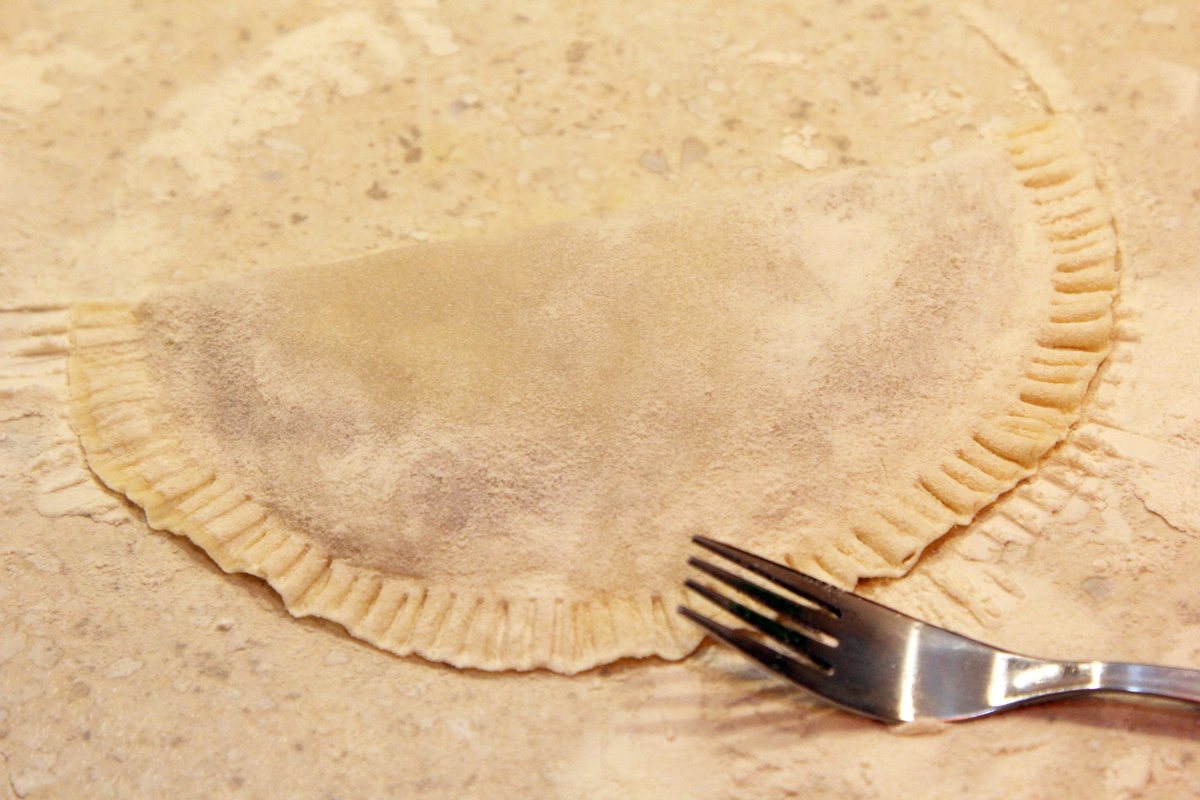
Put about 2 tablespoons of filling on one half of each disc, leaving a ½-inch border. Brush the border lightly with water, fold the dough over into a half-moon and press from the filling outward to push out the air. Seal the edge firmly with the tines of a fork, then flip it and crimp the other side.
6. Fry until blistered and golden
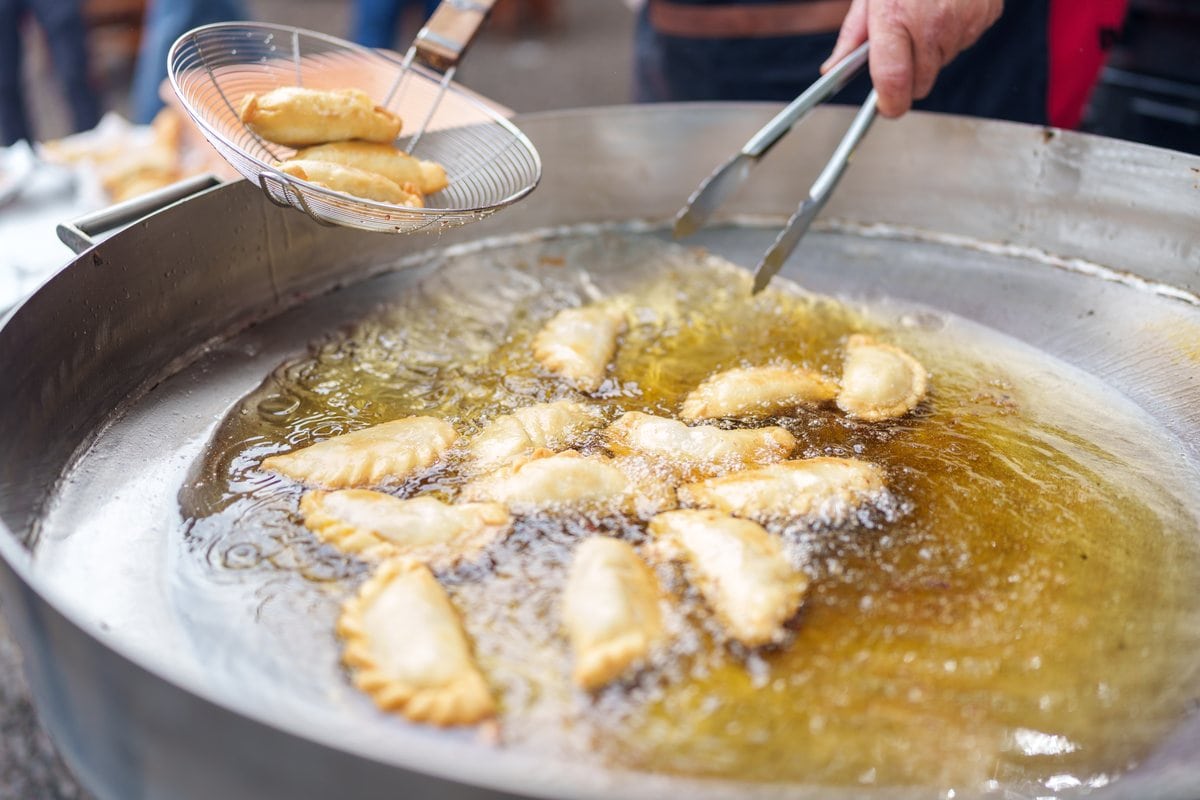
Heat 1½ inches of neutral oil in a heavy pot to 350°F. Fry 3 or 4 empanadillas at a time for 2 to 3 minutes per side, until deep golden and covered in small blisters. Lift them onto a wire rack, not paper towels, so the bottoms stay crisp, and let them rest 5 minutes; the filling is very hot.
Baking or air frying empanadillas
Frying is traditional and gives the blistered shell, but both alternatives work with this dough:
- Baked: brush with beaten egg and bake on a parchment-lined sheet at 400°F for 18 to 22 minutes, until golden. The crust is more like a hand pie.
- Air fryer: brush or spray lightly with oil and cook at 370°F for 8 to 10 minutes, turning halfway. Do not skip the oil, or the dough dries out and turns hard.
Empanadilla fillings to try
Once you have the dough down, the filling is up to you. Keep every filling cool and on the dry side, and use about 2 tablespoons per 5-inch disc.
Pizza empanadillas (empanadillas de pizza)
For 16 pizza empanadillas, you need about 2 cups of shredded low-moisture mozzarella, ½ cup of thick pizza sauce and 32 small slices of pepperoni. Spread a teaspoon of sauce on each disc, add 2 tablespoons of cheese and 2 slices of pepperoni, then seal and fry exactly as above. Use less sauce than you think; too much is the fastest way to a blowout.
Why empanadillas burst (and other fixes)
| Problem | Likely cause | Fix |
|---|---|---|
| Bursting in the oil | Wet or warm filling, overfilling, trapped air | Cook the filling dry, cool it fully, use 2 tablespoons and press the air out before crimping |
| Seal opens | Flour or oil on the edge | Brush the border with water and crimp both sides with a fork |
| Greasy, pale shell | Oil below 325°F or a crowded pot | Keep the oil at 350°F and fry 3 or 4 at a time |
| Dark outside, raw dough inside | Oil too hot or dough too thick | Lower the heat and roll the dough to ⅛ inch |
| Dough shrinks when cut | Dough not rested | Chill it for at least 30 minutes before rolling |
| Dough cracks when folded | Too dry, or discos thawed uncovered | Add a spoonful of water; keep discos under a damp towel |
Make ahead and freezing
- Dough: refrigerate, wrapped, for up to 2 days.
- Filling: refrigerate for up to 3 days. Cold filling is actually easier to work with.
- Unfried empanadillas: freeze in one layer on a tray, then move them to a freezer bag for up to 3 months. Fry straight from frozen at 340°F, adding 1 to 2 minutes per side.
- Fried leftovers: refrigerate for up to 3 days and reheat at 375°F in the oven or air fryer for 5 to 8 minutes. The microwave makes them soft.
What to serve with empanadillas

In Puerto Rico, empanadillas are eaten out of hand with a cold drink. For dipping, mix equal parts mayonnaise and ketchup with a little garlic to make mayo-ketchup, or splash on some pique, the vinegar hot sauce sold in bottles at every kiosko.
For a party, serve them on a fritura platter with alcapurrias, bacalaítos and other Latin appetizers. To make a meal of them, add arroz con gandules and a simple avocado salad.
Spanish empanadillas

In Spain, an empanadilla is the small half-moon version of the empanada, and the best-known filling is tuna with tomate frito, chopped hard-boiled egg and sometimes olives or roasted peppers. Spanish cooks often buy ready-cut wafers of dough, fry or bake the empanadillas, and serve them as a tapa or at Christmas. If you came here looking for the Spanish style, try them alongside our guide to Spanish tapas.
Empanadillas FAQ
What is the difference between an empanada and an empanadilla?
An empanadilla is a smaller, thinner-crusted empanada. In Puerto Rico it is almost always fried and sealed with a fork, while empanadas elsewhere in Latin America are often larger, thicker and baked.
Are empanadillas and pastelillos the same thing?
Mostly, yes. Both are fried, fork-crimped Puerto Rican turnovers. Some families use pastelillo for smaller ones with very thin, flaky dough, and empanadilla for the larger kiosko style, but the names overlap across the island.
What are empanadillas made of?
A wheat-flour dough made with fat, egg and water, filled with seasoned meat, cheese or seafood. The classic filling is ground beef cooked with sofrito, sazón, tomato sauce and olives.
Can you bake empanadillas instead of frying them?
Yes. Brush them with beaten egg and bake at 400°F for 18 to 22 minutes. They will be golden and tender rather than blistered and crisp.
Can I make empanadillas in an air fryer?
Yes. Brush them with oil and air fry at 370°F for 8 to 10 minutes, turning halfway. Without oil the dough dries out.
How do I keep empanadillas from opening when frying?
Use a cool, dry filling, do not overfill, press out the air, wet the edge with water and crimp both sides firmly with a fork. Fry at 350°F so the dough sets quickly.
Can you freeze empanadillas?
Yes. Freeze them unfried on a tray, then bag them for up to 3 months. Fry from frozen, adding 1 to 2 minutes per side.
Puerto Rican Empanadillas Recipe
Puerto Rican Empanadillas (Beef Pastelillos)
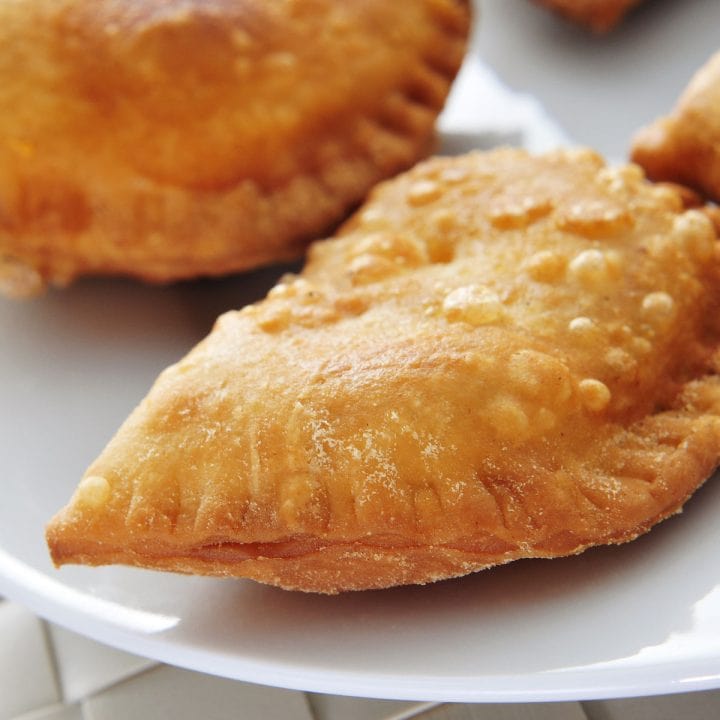
Crispy Puerto Rican empanadillas with a flaky homemade dough and a sofrito-seasoned beef picadillo, sealed with a fork and fried until golden and blistered. Also called pastelillos de carne.
Ingredients
For the Dough
- 3 cups (375 g) all-purpose flour, plus more for rolling
- 1 teaspoon salt
- 1 teaspoon baking powder
- 1 teaspoon sazón con culantro y achiote (optional, for an orange dough)
- 6 tablespoons (85 g) cold unsalted butter or lard, cubed
- 1 large egg
- ½ to ⅔ cup ice water
For the Picadillo
- 1 tablespoon olive oil
- 1 pound ground beef (85/15)
- ¼ cup Puerto Rican sofrito
- 1 packet sazón con culantro y achiote
- 1 teaspoon adobo seasoning
- ½ teaspoon dried oregano
- ¼ teaspoon ground cumin (optional)
- ½ cup tomato sauce
- 3 tablespoons alcaparrado or chopped pimento-stuffed olives
- 1 small potato, peeled and finely diced (optional)
- Salt and black pepper, to taste
For Frying
- About 4 cups neutral oil (canola, vegetable or corn)
Instructions
- Make the dough. Whisk the flour, salt, baking powder and sazón (if using) in a large bowl. Rub in the cold butter with your fingertips until it looks like coarse crumbs. Beat the egg with ½ cup ice water, stir it in, then add more water a tablespoon at a time until the dough just holds together. Knead for 1 minute until smooth, wrap and refrigerate for 30 minutes.
- Cook the picadillo. Heat the oil in a large skillet over medium-high heat. Brown the beef for 5 to 6 minutes, breaking it up, and spoon off the excess fat. Add the sofrito, sazón, adobo, oregano and cumin and cook for 2 minutes. Stir in the tomato sauce, alcaparrado and potato and simmer uncovered, stirring often, for 10 to 12 minutes, until the potato is tender and no liquid is left in the pan. Season with salt and pepper.
- Cool the filling. Spread the picadillo on a plate and let it cool completely, about 20 minutes, or refrigerate it. Warm filling softens the dough and makes empanadillas burst in the oil.
- Roll and cut. Divide the dough in half. On a lightly floured counter, roll each half about ⅛ inch thick and cut 5-inch rounds with a cutter or small bowl. Gather and reroll the scraps once. You should have about 16 discs.
- Fill and seal. Place about 2 tablespoons of filling on one half of each disc, leaving a ½-inch border. Brush the edge lightly with water, fold into a half-moon, press out the air and seal firmly with the tines of a fork on both sides.
- Fry. Heat 1½ inches of oil in a heavy pot to 350°F. Fry 3 or 4 at a time for 2 to 3 minutes per side, until deep golden and blistered. Drain on a wire rack and let rest 5 minutes before serving with mayo-ketchup or pique.
Notes
Shortcut dough: Thawed frozen empanada discs (such as Goya discos) replace the homemade dough. Thaw them in the fridge, keep them covered and use about 16.
To bake: Brush with beaten egg and bake on a parchment-lined sheet at 400°F for 18 to 22 minutes, until golden.
To air fry: Brush lightly with oil and cook at 370°F for 8 to 10 minutes, turning halfway.
To freeze: Freeze the sealed, unfried empanadillas on a tray, then bag them for up to 3 months. Fry from frozen at 340°F, adding 1 to 2 minutes per side.
More Puerto Rican street food
Keep the kiosko going with alcapurrias and bacalaítos, or browse every fried favorite in our Puerto Rican street foods guide and the Puerto Rico street food recipes page. Want to try another dough? Our empanada dough guide covers the baked and fried styles from across Latin America.
More Puerto Rican Foods
See all →
Jorge Garcia is the founder of AmigoFoods, where he has spent over 20 years helping readers discover authentic Latin American and Spanish cuisine. Raised in a Cuban-American household, Jorge learned to cook at the hands of his mother and grandmother, carrying forward generations of family recipes. That heritage, backed by his family’s four-generation history in the Latin food industry, inspired him to launch AmigoFoods in 2003. With more than 1,000 published articles on recipes, ingredients, and food culture, Jorge’s mission is simple: make authentic Latin cooking approachable for home cooks everywhere while honoring the traditions behind every dish.