
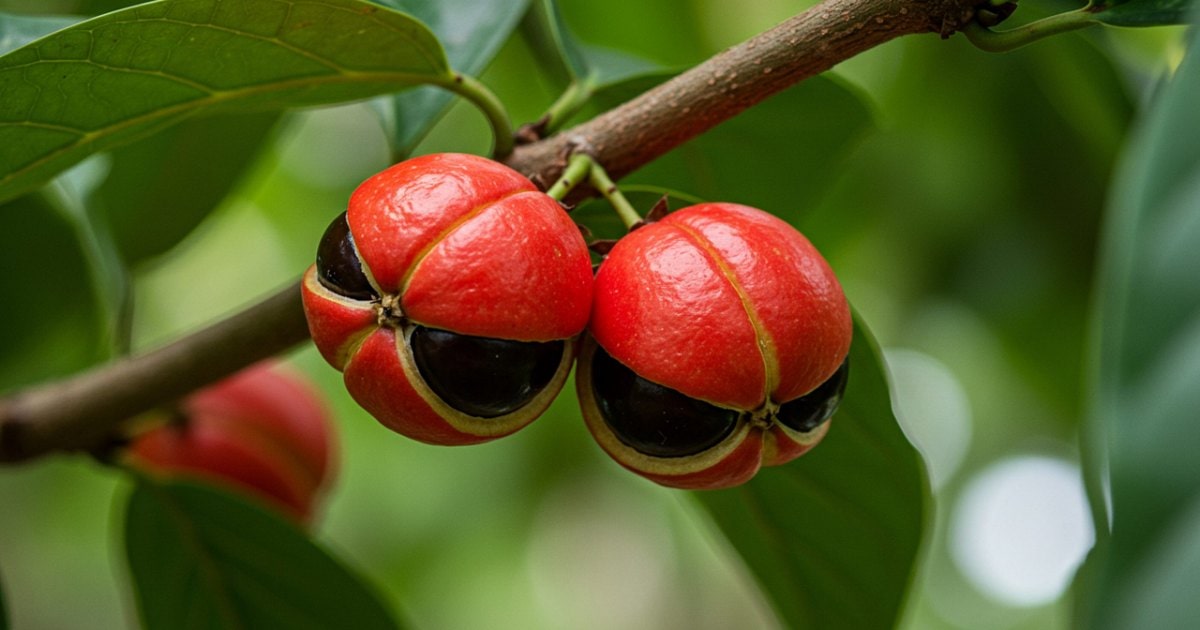
Guarana fruit (guaraná, Paullinia cupana) is a small red fruit from the Amazon that splits open to show a black seed in white flesh, so a ripe cluster looks like a handful of eyes. The seeds can hold up to about 6% caffeine, more than coffee beans, and they flavor Brazil’s favorite soda.
Guarana at a Glance
AmigoFoods may earn a commission from qualifying Amazon purchases made through links on this page. This article is about food and culture, and it isn’t medical advice.
What Is Guarana?
Guarana is a woody climbing plant native to the Amazon basin. In the wild it climbs through the forest. On farms it is usually grown as a low, spreading shrub.
Its fruit grows in dense clusters and turns bright red as it ripens. The shell then splits to reveal a shiny black seed, partly wrapped in a white aril. That’s the eye you see in every photo.

Nearly everything people use comes from the seed. A 1990s analysis of the fruit’s parts found about 4.3% caffeine in the seed kernel and 1.6% in the seed coat. The white aril had almost none, but it was rich in natural sugars, which is the reward for the birds that carry the seeds away.
Is guarana a fruit, a berry or a seed?
All three words get used. Guarana is sold as a “berry” and is often called one, but botanically the fruit is a capsule that splits open on its own. When a label says guarana, it means the seed.
What does the word guarana mean?
The name comes from warana, the word for the plant in the language of the Sateré-Mawé people of the Amazon. In Brazilian Portuguese it is written guaraná and pronounced gwah-rah-NAH. English labels usually drop the accent.
What Does Guarana Taste Like?
That depends on which guarana you mean, and this is where most people get confused. Roasted guarana seed tastes nothing like the sweet soda named after it.
| Form | What it tastes like |
|---|---|
| Fresh aril | A thin layer with natural sugars and almost no caffeine. Not a fruit people grow to eat out of hand. |
| Raw seed | Very bitter and mouth-drying from caffeine and tannins. |
| Roasted powder | Bitter, woody and earthy, close to unsweetened dark cocoa, with a slightly sweet finish. |
| Syrup | Sweet and fruity, with a faint bitter edge. |
| Guarana soda | Crisp and fruity, often compared to apple with a hint of berry. |
The fruity flavor you know from cans comes from a small amount of extract plus a lot of sugar and flavoring. If you buy guarana powder hoping for apple soda, you’ll be surprised. It needs something sweet or acidic, such as banana, lime or honey.
How Much Caffeine Is in Guarana?
A lot, by weight. A major scientific review puts guarana seeds at up to 6% caffeine. Coffee beans generally run about 1% to 3%. So gram for gram the seed is stronger, but you use far less of it than you would coffee.
| Serving | Approximate caffeine |
|---|---|
| Guarana powder, 1 teaspoon (about 2.5 g) | 60 to 150 mg (our estimate; varies by batch) |
| Brewed coffee, 8 oz | 80 to 100 mg |
| Energy drink, 8.4 oz can | About 80 mg |
| Cola, 12 oz can | About 34 mg |
| Guaraná Antarctica soda, 12 oz can | About 30 mg |
Guarana vs. caffeine: is there a difference?
No. You may see the term guaranine on older labels, but it is simply caffeine found in guarana. Guarana isn’t “stronger than caffeine.” It’s a plant source of caffeine, along with small amounts of related compounds and a lot of tannins.
You’ll also read that guarana releases its caffeine slowly. That claim is popular in marketing, but it isn’t well established. Irish health officials reviewing stimulant drinks said in 2002 that guarana’s caffeine is released and absorbed the same way as free caffeine. It’s safest to count it like any other caffeine.
Where Guarana Comes From
Guarana’s story starts with the Sateré-Mawé, an Indigenous people living between the Tapajós and Madeira rivers in Brazil. They domesticated the plant and still call themselves the children of guarana.
The first written record dates to 1669, when the Jesuit priest João Felipe Betendorf described a little fruit the people dried, crushed and shaped into balls that they valued as Europeans valued gold. Colonial writers later noted that it even served as currency.
Guarana is still grown mainly in the Brazilian states of Amazonas and Bahia. About 70% of the crop goes to soft drinks and energy drinks, and the rest becomes powder, supplements and cosmetics. The town of Maués calls itself the land of guaraná and holds its Festa do Guaraná around the harvest, traditionally in late November or early December. In 2020 the Sateré-Mawé’s traditional waraná received a Brazilian appellation of origin.
How Guarana Is Processed the Traditional Way
- Harvest. Ripe clusters are picked by hand, roughly November to March around Maués.
- Clean. The seeds are washed free of the shell and aril.
- Roast. They spend hours in clay pans, which dries them and mellows their raw edge.
- Grind and shape. The roasted seeds are peeled, ground and mixed with water into a paste, then rolled into hard batons.
- Smoke. The batons dry in a smokehouse and can keep for years.
- Grate and drink. A baton is grated with the rough dried tongue of a pirarucu fish and stirred into water. The drink is called çapó, and it’s part of daily life and ceremony alike.

Forms of Guarana You Can Buy
Fresh guarana fruit is perishable and rarely leaves the Amazon. In the United States you will find it in one of these forms.
How Brazilians Use Guarana
Few Brazilians cook savory food with guarana. It belongs to the drinks counter, and these are the places you’ll find it.
- Soda. Guaraná Antarctica has been made since 1921, and it is a fixture at Brazilian barbecues. Our guarana soda guide covers its history and the regional brands.
- Açaí. Brazilian açaí na tigela is traditionally blended with guarana syrup, which sweetens the unsweetened fruit pulp. Read more in our guide to açaí.
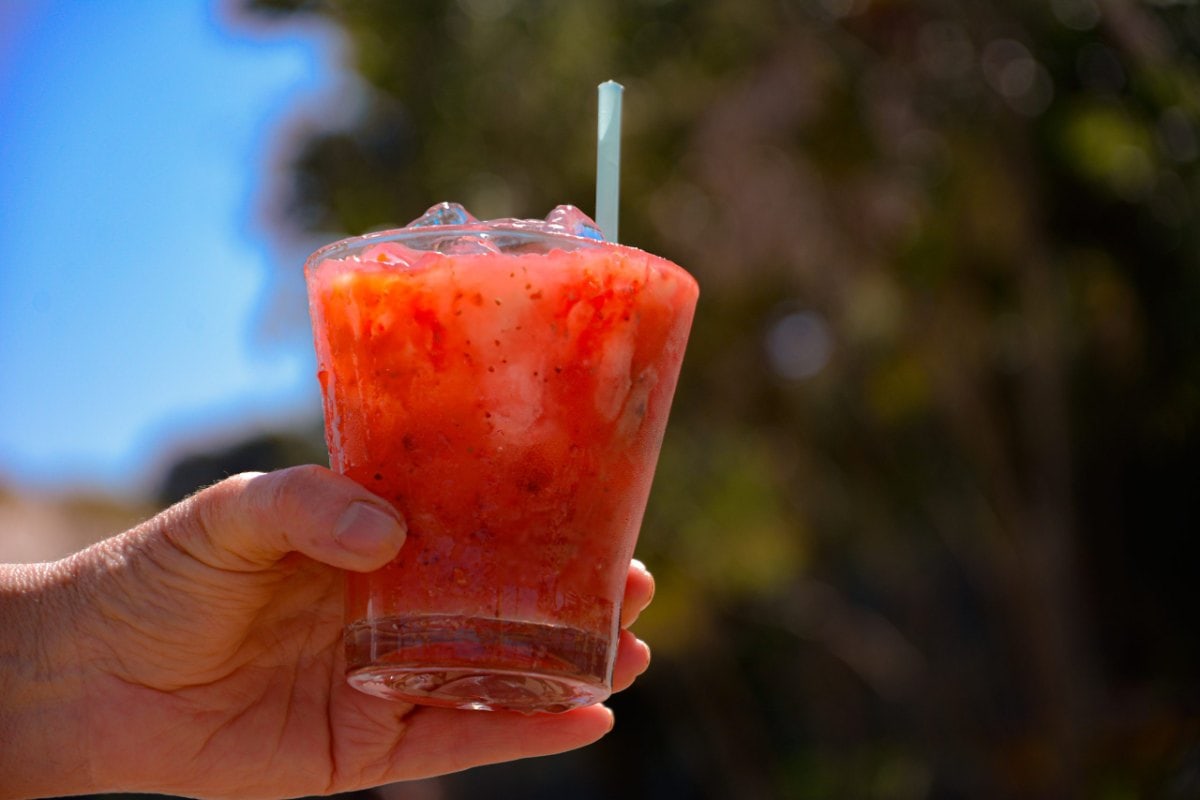
- Guaraná da Amazônia. A frosty blended drink from Brazil’s North, made with syrup, powder, nuts and powdered milk. The recipe is below.
- Turbinado. At the Maués festival, vendors sell this “turbocharged” shake of guarana, avocado and peanuts to dancers who stay up until dawn.
- Çapó. Grated guarana in plain water, drunk every day in Sateré-Mawé and riverside communities.
Guarana is one of several Amazon ingredients worth knowing. You can meet the others in our guides to Brazilian rainforest fruits and Brazilian ingredients.
Is Guarana Good for You?
Most of what guarana does in your body is what caffeine does. It can make you feel more alert and less tired. Beyond that, the evidence is thinner than supplement ads suggest.
- Focus and alertness: a 2023 review and meta-analysis found that short-term guarana use may affect cognitive performance, but it couldn’t say whether anything beyond caffeine was responsible.
- Fatigue: small studies in cancer patients gave mixed results, and a 2021 meta-analysis found guarana no better than placebo for cancer-related fatigue.
- Weight loss, heart health and antioxidants: guarana does contain antioxidant catechins, but much of this research is in animals or lab dishes, so it doesn’t tell us much about people yet.
Guarana side effects
Memorial Sloan Kettering lists nausea and trouble sleeping as side effects. At high amounts from supplements, it lists vomiting, changes to heartbeat, high blood pressure and seizures.
Is Guarana Banned?
No. Guarana isn’t a controlled substance in the United States, and you can buy it legally in soda, powder and capsules. It’s approved as a flavoring ingredient in foods. When two U.S. senators raised concerns about energy drinks, the FDA replied that its literature search had found nothing calling into question the safety of guarana as used in beverages.
The “banned” rumor probably comes from 2001, when the FDA told some drink makers that herbal additives, including guarana, ginseng and echinacea, had to be shown safe for use in foods. Some products were pulled at the time.
Cooking With Guarana Powder
Treat it like strong, bitter cocoa. Start with ½ teaspoon, pair it with something sweet or fatty, and don’t use it late in the day. Three easy ways to try it:
Guarana hot chocolate

Warm 1 cup of milk with 1 tablespoon of unsweetened cocoa, 2 teaspoons of sugar or honey, a pinch of cinnamon and ½ teaspoon of guarana powder. Whisk until it just simmers. One mug has an estimated 30 to 75 mg of caffeine from the guarana, plus a little from the cocoa.
Guarana energy balls

Soak 1 cup of pitted dates in hot water for 10 minutes and drain. Pulse with ½ cup of almonds, 2 tablespoons of cocoa, 1 teaspoon of guarana powder and a pinch of salt until sticky. Roll into 12 balls, coat in cocoa or coconut, and chill for 30 minutes. Each ball has an estimated 5 to 12 mg of caffeine.
Açaí with guarana
Blend frozen unsweetened açaí with banana and a splash of guarana syrup, the way Brazilian shops do. Follow our açaí bowl recipe.
Guarana FAQ
Is guarana a fruit?
Yes. Guarana is the fruit of Paullinia cupana, an Amazon climbing plant. People use the seed inside it more than the fruit itself.
Can you eat guarana fruit?
The thin white aril is edible, but the raw seed is extremely bitter. That’s why the seeds are roasted and ground before anyone drinks them.
Does guarana have caffeine?
Yes. The seeds can contain up to about 6% caffeine by weight. Guarana soda has much less, about 30 mg in a 12-ounce can of Guaraná Antarctica.
Is guarana stronger than coffee?
Gram for gram, yes. In a typical serving, not necessarily: 1 teaspoon of powder has roughly as much caffeine as a cup of coffee, give or take, depending on the batch.
Is guarana bad for you?
In food and drink amounts it’s generally treated like any other caffeine source. Too much can cause jitters, poor sleep and a racing heart, and concentrated supplements carry more risk. Ask your doctor if you’re pregnant, have a heart condition or take blood thinners.
Where can I buy guarana?
Latin markets and Brazilian shops usually carry the soda and syrup. Herb shops and Amazon sell powder and seeds. Fresh fruit is very hard to find outside Brazil.
Guaraná da Amazônia Recipe
This is the guarana drink to make if you want the real flavor rather than the soda. Think of it as a nutty, lightly bitter slush. It is sold at juice counters across Brazil’s North, and recipes vary from shop to shop.
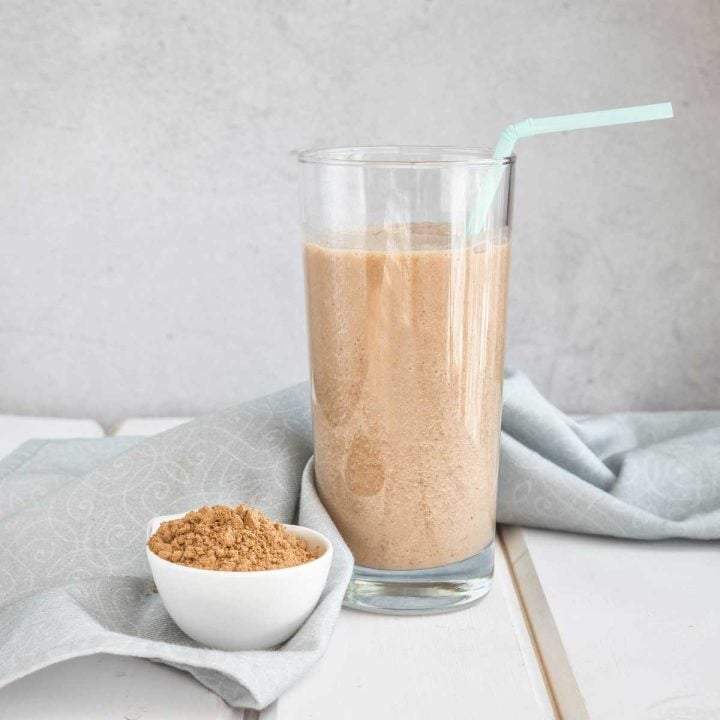
Guaraná da Amazônia (Brazilian Guaraná Slush)
The frosty blended drink of Brazil’s Amazon region: guaraná syrup and guaraná powder whirled with banana, peanuts, cashews, powdered milk and plenty of ice.
Ingredients
- 1 cup cold water
- 1/3 cup guaraná syrup (xarope de guaraná)
- 1 teaspoon guaraná powder
- 2 tablespoons powdered whole milk
- 1 ripe banana
- 2 tablespoons roasted unsalted peanuts
- 2 tablespoons roasted unsalted cashews
- 2 cups ice
- 1 tablespoon lime juice (optional)
Instructions
- Add the cold water, guaraná syrup, guaraná powder, powdered milk, banana, peanuts and cashews to a blender.
- Blend on high for about 1 minute, until the nuts are completely smooth.
- Add the ice and blend until thick and frosty, like a slushy. Add a splash of water if the blender stalls.
- Taste and add the lime juice or a little more syrup. Pour into 2 tall glasses and serve right away.
Notes
Caffeine: 1 teaspoon of guaraná powder holds an estimated 60 to 150 mg of caffeine, so each glass has roughly 30 to 75 mg, plus any in the syrup. Skip the powder for a milder drink. Count it toward your caffeine for the day, and do not serve this to children.
No syrup? Replace the syrup and water with one chilled 12-ounce can of Guaraná Antarctica, and sweeten with 1 tablespoon of honey if you like.
Allergens: contains milk, peanuts and tree nuts. Use coconut milk powder and sunflower seeds to avoid them.
Variation: blend in 3.5 ounces of frozen unsweetened açaí for an açaí version.
More Brazilian Drinks and Ingredients
Keep exploring with our guides to Brazilian drinks, cachaça and the Brazilian vitamina smoothie. Or browse every recipe on our Brazilian foods page.
Sources
- Schimpl FC, et al. Guarana: Revisiting a highly caffeinated plant from the Amazon. Journal of Ethnopharmacology, 2013.
- Baumann TW, et al. Guarana rewards seed dispersers without intoxicating them by caffeine. Phytochemistry, 1995.
- BBC Travel. Guaraná: The edible ‘eyes of the Amazon’.
- Cultural Survival. The Eyes of the Forest.
- Memorial Sloan Kettering Cancer Center. Guarana: Purported Benefits, Side Effects & More.
- Hack B, et al. Effect of guarana on cognitive performance: a systematic review and meta-analysis, 2023.
- U.S. Food and Drug Administration. Spilling the Beans: How Much Caffeine Is Too Much?
- Perfumer & Flavorist. FDA Responds to Energy Drink Plea; Cites GRAS Standards.
- Houses of the Oireachtas (Ireland). Parliamentary question on guarana in stimulant drinks, 2002.
More Brazilian Foods
See all →
Jorge Garcia is the founder of AmigoFoods, where he has spent over 20 years helping readers discover authentic Latin American and Spanish cuisine. Raised in a Cuban-American household, Jorge learned to cook at the hands of his mother and grandmother, carrying forward generations of family recipes. That heritage, backed by his family’s four-generation history in the Latin food industry, inspired him to launch AmigoFoods in 2003. With more than 1,000 published articles on recipes, ingredients, and food culture, Jorge’s mission is simple: make authentic Latin cooking approachable for home cooks everywhere while honoring the traditions behind every dish.