

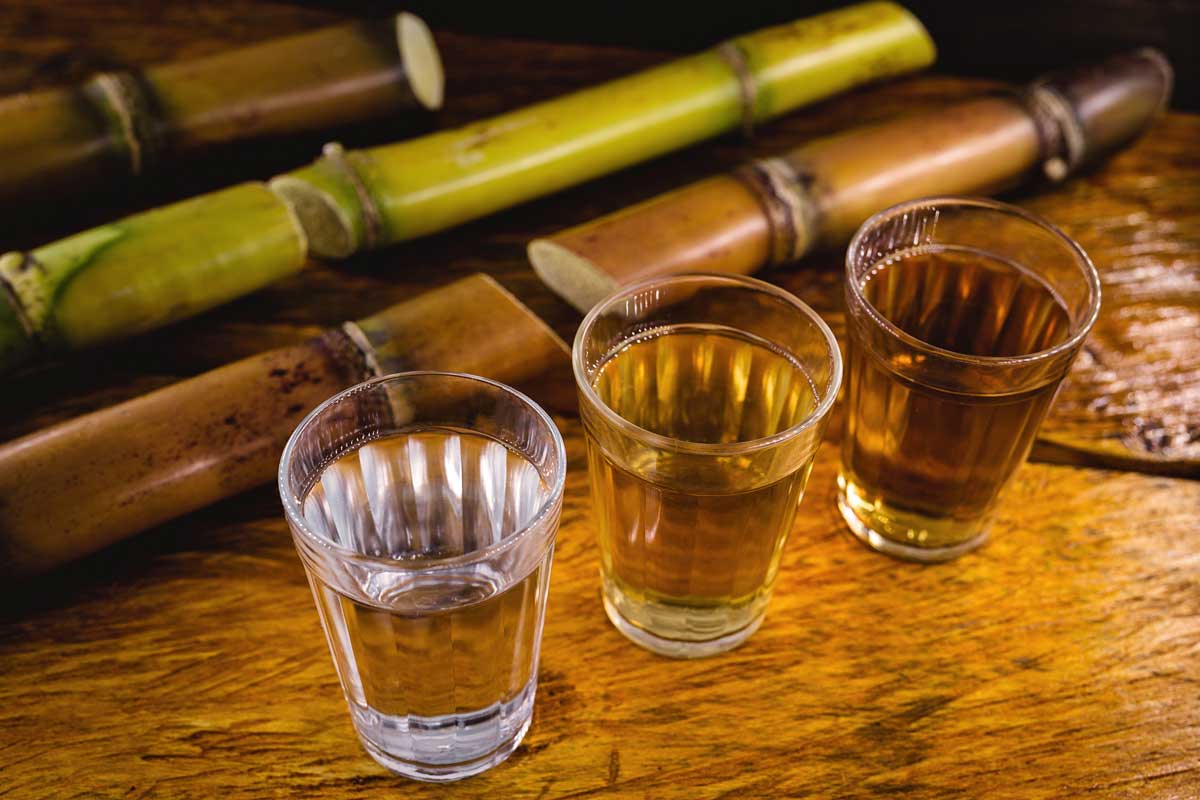
Cachaça (kah-SHAH-sah, often typed cachaca) is Brazil’s national spirit: a clear or golden liquor distilled from fermented fresh sugarcane juice, not molasses, and bottled at 38–48% alcohol. By Brazilian law it can only be made in Brazil. It tastes grassy, fruity and a little peppery when unaged, and picks up vanilla, cinnamon or nutty notes when it rests in Brazilian woods like amburana.
It’s the spirit in a caipirinha, but most cachaça in Brazil is simply sipped from a small glass at the bar. This guide covers how cachaça differs from rum, how it’s made, the legal types on the label, the woods it’s aged in, how Brazilians drink it, and which bottles to look for in the US.
Cachaça at a Glance
Branca or prata (white/silver) is unaged or rested in neutral wood: bright and grassy, best for caipirinhas. Amarela or ouro (yellow/gold) has spent time in wood and is made for sipping.
Fresh-cut cane, green banana, citrus peel and white pepper when unaged. Aged bottles add vanilla, cinnamon, clove, toasted nuts or dried fruit, depending on the wood.
What Is Cachaça?
Cachaça is a sugarcane spirit made in Brazil from the fermented juice of freshly cut cane. Brazilian regulations define it as the cane spirit produced in Brazil at 38% to 48% alcohol by volume, made from fermented sugarcane juice, with no more than 6 grams of added sugar per liter. Anything sweeter (up to 30 g/L) has to be labeled cachaça adoçada, or sweetened cachaça.
Brazilians have dozens of nicknames for it: pinga (“drip”), caninha, branquinha for the white stuff, and the old joke água que passarinho não bebe, “water that birds won’t drink.” Many of those nicknames date back to the colonial years when cachaça was banned and drinkers needed code words.

The industry is bigger than most people outside Brazil realize. According to Brazil’s Ministry of Agriculture yearbook, the country had 1,583 registered cachaça producers and bottlers in 2025, with more than 8,000 registered products and about 234 million liters of declared production. Only around 8 million liters were exported that year, to 76 countries, so the vast majority of cachaça never leaves Brazil.
Cachaça vs. Rum: What’s the Difference?
Cachaça is a sugarcane spirit, so it sits in the same family as rum, and older US labels even called it “Brazilian rum.” The difference starts with the raw material. Most rum is made from molasses, the cooked syrup left after sugar is refined. Cachaça has to be made from fresh cane juice, which keeps the green, vegetal flavor of the cane that molasses rums lose. The United States formally recognized cachaça as a distinct product of Brazil in 2013, which is why you now see it labeled simply as cachaça.
The closest relative is French Caribbean rhum agricole, which is also made from fresh cane juice. The two still taste different because of the cane, yeasts, stills and, above all, the woods each one is aged in.
| Cachaça | Most rum | Rhum agricole | |
|---|---|---|---|
| Made from | Fresh sugarcane juice | Molasses (sometimes cane syrup or juice) | Fresh sugarcane juice |
| Where | Brazil only | Anywhere | Mainly Martinique and the French Caribbean |
| Bottled at | 38–48% ABV | Usually 40% or higher | Usually 40–55% |
| Aged in | Native Brazilian woods and oak | Mostly ex-bourbon oak | Mostly oak |
| Flavor | Grassy, fruity, peppery; spiced or nutty when aged | Sweeter, caramel and vanilla | Grassy, earthy, often funkier |
| Signature drink | Caipirinha | Daiquiri, mojito | Ti’ punch |
How Cachaça Is Made
Every cachaça follows the same basic path from field to bottle. What separates a cheap industrial bottle from a prized small-batch one is how carefully each step is handled.
- Cut and press the caneSugarcane is harvested and crushed within about a day, before the juice starts to sour. The fresh juice is called garapa, the same sweet, green juice sold at street stands all over Brazil.
- Ferment the juiceThe juice is filtered, diluted and fermented for roughly a day or two. Many small producers still use a fermento caipira, a wild-yeast starter often fed with corn meal or rice bran, which gives each distillery its own fingerprint.
- Distill itArtisanal cachaça is distilled once in a copper pot still called an alambique. The distiller discards the cabeça (head) and cauda (tail), roughly the first and last tenth of the run, and keeps only the coração, the heart. Industrial cachaça is made in continuous column stills, which are faster and more neutral.
- Rest or age itThe spirit rests in stainless steel or neutral wood to become white cachaça, or goes into barrels to become aged cachaça. Brazil’s native woods are what make aged cachaça unlike any other spirit.
About the label: cachaça de alambique means pot-stilled, usually by a small producer, and tends to be richer and more aromatic. Column-still brands are cleaner and cheaper, and they’re what most Brazilian bars pour into caipirinhas. Both are legally cachaça.
Types of Cachaça
Brazilian law sets the words you’ll see on a cachaça label. Aging has to happen in wooden barrels of no more than 700 liters, so the spirit has enough contact with the wood.
| Label term | What it means | Best for |
|---|---|---|
| Cachaça (branca, prata, clássica) | Unaged, or rested in stainless steel or neutral wood. Clear. | Caipirinhas, batidas, mixing |
| Armazenada | Stored in wood for an unspecified time, often months. May pick up light color. | Softer caipirinhas, sipping |
| Envelhecida | At least 50% of the blend aged a minimum of 1 year in wood. | Sipping, stirred drinks |
| Premium | 100% of the blend aged at least 1 year. | Sipping neat |
| Extra Premium | 100% of the blend aged at least 3 years. | Sipping like a fine whiskey |
| Adoçada | Sweetened, with 6–30 g of sugar per liter. | Easy-drinking shots |
Aged in Brazilian Woods: Amburana, Bálsamo and More
Whiskey and rum are aged almost entirely in oak. Cachaça producers use oak too, but they also age in barrels made from more than two dozen native Brazilian woods, and each one changes the spirit in its own way. This is the single biggest reason aged cachaça tastes like nothing else.
Amburana
CinnamonVanillaSweet spice
The most famous cachaça wood. It turns the spirit golden and smells like a spice cake. Bold, so a little time in the barrel goes a long way.
Bálsamo
CloveAniseHerbal
Resinous and aromatic, with a slightly medicinal, balsamic edge. Bálsamo cachaça has a loyal following in Minas Gerais.
Jequitibá
SoftMellowPale
A neutral wood that rounds off the edges without adding much color or flavor. Used for “rested” white cachaças that stay clear.
Ipê
Light vanillaSmooth
A dense hardwood that softens the spirit gently and adds a pale yellow tint and subtle sweetness.
Castanheira
NuttyButtery
Wood from the Brazil nut tree. It gives a light, nutty, slightly buttery profile.
Carvalho (oak)
CaramelVanillaToast
European and American oak give the most familiar, whiskey-like flavors. Many “extra premium” cachaças are oak-aged.

What Does Cachaça Taste Like?
White cachaça tastes like the field it came from: fresh-cut grass and cane, green banana, citrus peel, a little white pepper, and sometimes a funky, earthy note in pot-stilled bottles. It’s drier and less sweet than white rum, with more texture.
Aged cachaça depends on the wood. Amburana brings cinnamon and vanilla, bálsamo brings clove and herbs, castanheira tastes nutty, and oak brings caramel and toast. A good extra premium sips as smoothly as a fine brandy or bourbon.
The quickest way to understand cachaça is to buy one white bottle and one aged bottle and taste them side by side, neat, at room temperature. You’ll taste the cane in the first and the wood in the second.
How to Drink Cachaça
Outside Brazil, cachaça is almost always met in a caipirinha. Inside Brazil, it’s just as often taken straight. Here’s how Brazilians drink it:
Neat, in a small glass
At a boteco (neighborhood bar), cachaça is served in a small shot glass and sipped slowly, often alongside a cold beer and bar snacks like coxinha or pastel. Aged cachaça is best this way.
“Um gole pro santo”
Many Brazilians pour the first drop on the floor “for the saint” before drinking, an old custom that’s still common at the bar and at parties.
Chilled or with ice
White cachaça straight from the freezer is a summer favorite. A single large ice cube opens up aged cachaça, too.
In cooking
A splash of cachaça goes into Brazilian pastel dough to make the crust blister and crisp, and into marinades for grilled meats.
For sipping neat: a set of heavy-based 1.5 oz glasses is the closest thing to the little copinhos used at Brazilian bars.
As an Amazon Associate, AmigoFoods earns from qualifying purchases.
Cachaça Cocktails to Try

Caipirinha
LimeSugarWhite cachaça
Brazil’s national cocktail: lime wedges muddled with sugar, topped with ice and cachaça. Follow our full caipirinha recipe for the right lime cut and sugar ratio.
Fruit caipirinhas
Passion fruitStrawberryKiwi
Swap the lime for tropical fruit. The maracujá caipirinha is the most popular in Brazil.
Batida
CoconutCondensed milkFruit
Cachaça shaken or blended with fruit juice, coconut milk or sweetened condensed milk. Batida de coco and batida de maracujá are party staples.
Rabo-de-galo
Sweet vermouthAged cachaça
“Rooster’s tail”: cachaça stirred with sweet red vermouth, a classic of old São Paulo bars and a good use for an aged bottle.
Quentão
GingerCinnamonHot
Hot spiced cachaça with ginger, cloves and sugar, served at June festivals. See our quentão recipe.
Caipiroska & friends
VodkaRum
Make a caipirinha with vodka and it’s a caipiroska; with rum, a caipiríssima. Neither has the cane flavor that makes the original.
For more drinks from across the region, see our guides to Brazilian drinks and Latin American and Spanish cocktails.
Making caipirinhas at home? A sturdy wooden muddler presses the lime oils out of the peel without shredding the pith.
Cachaça Brands to Try
These are the bottles you’re most likely to find in US liquor stores, from everyday mixers to sipping cachaça.
Cachaça 51
WhiteColumn stillBudget
From Pirassununga, São Paulo. Brazil’s best-known everyday cachaça and the default in countless bar caipirinhas.
Ypióca
White & agedSince 1846
One of the oldest cachaça brands, from Ceará in the Northeast. Its gold bottlings are a step up for sipping.
Pitú
WhiteMixing
From Pernambuco, recognizable by the river shrimp on the label (pitu is a freshwater shrimp). A classic, punchy caipirinha cachaça.
Leblon
WhitePot stillCocktails
Made in Minas Gerais and widely stocked at US cocktail bars. Smooth and lightly rested, built for caipirinhas.
Novo Fogo
OrganicWhite & aged
An organic, pot-stilled cachaça from the coast of Paraná, near the Atlantic rainforest. Their barrel-aged bottles are a good intro to sipping.
Avuá
AmburanaSipping
A small-batch producer from Rio de Janeiro state. Avuá Amburana is many drinkers’ first taste of a native-wood cachaça.
Weber Haus
OrganicMany woods
A family distillery in Rio Grande do Sul known for aging in a wide range of Brazilian woods.
Germana
AgedMinas Gerais
Easy to spot thanks to the dried banana leaf wrapped around the bottle. A mellow, gently aged cachaça from Minas.
Use a white (prata) cachaça. Pot-stilled bottles like Leblon or Novo Fogo Silver make a brighter, more aromatic caipirinha; 51 and Pitú make the punchier version you’d get at a Brazilian beach kiosk. Save the aged bottles for sipping.
A Short History of Cachaça
Cachaça is older than rum. Portuguese colonists brought sugarcane to Brazil from Madeira in the early 1500s, and the sugar mills (engenhos) of Pernambuco and São Vicente were soon fermenting and distilling cane juice. By the time the first written records of rum appear in the Caribbean around 1650, cachaça had been made in Brazil for over a century.
It was cheap and local, which made it a problem for Portugal. To protect sales of Portuguese wine and bagaceira (grape-pomace brandy), the Crown banned cachaça in the 1600s. The ban didn’t hold. Producers in Rio de Janeiro revolted in 1660, and on September 13, 1661, the Crown legalized cachaça again. Brazil now celebrates that date as the Dia Nacional da Cachaça, National Cachaça Day.
For centuries cachaça had a rough, working-class reputation inside Brazil. That changed from the 1990s on, as craft alambique producers, especially in Minas Gerais, began aging in native woods and competing with whiskey and cognac. Brazil defined the spirit’s technical standards in 2005, and the town of Salinas in Minas Gerais now has more registered cachaça producers than any other municipality in the country.
Where to Buy Cachaça (and What to Use Instead)
In the US, look for cachaça in the rum section of larger liquor stores, or ask a store that carries Latin American spirits. Brands like 51, Ypióca, Pitú, Leblon, Novo Fogo and Avuá are the easiest to find. If you’re near a Brazilian community, local Brazilian markets and restaurants are often the best source for harder-to-find alambique bottles.
If you can’t find cachaça, the best substitutes are, in order:
- Rhum agricole blanc: also fresh-cane-juice spirit, the closest match in flavor.
- Haitian clairin: a rustic cane-juice spirit with a similar grassy funk.
- A good white rum: works in a pinch, but the drink will taste sweeter and less vegetal.
Pair your bottle with a Brazilian spread: pão de queijo, bolinhos de bacalhau or a full Brazilian dinner. For the rest of the Brazilian pantry, see our guide to Brazilian ingredients.
Cachaça FAQ
Is cachaça the same as rum?
No. Both are sugarcane spirits, but most rum is made from molasses while cachaça must be made from fresh sugarcane juice, in Brazil, and bottled at 38–48% ABV. That gives cachaça a grassier, more vegetal flavor. The closest spirit to it is rhum agricole.
How do you pronounce cachaça?
Say it kah-SHAH-sah. The ç has an “s” sound, so it’s never “ka-CHA-ka.” Many English speakers type it as cachaca without the cedilla.
Is cachaça stronger than vodka?
About the same. Cachaça is bottled between 38% and 48% ABV, and most vodka is 40%. Many popular cachaças are 39–40%.
What is the best cachaça for a caipirinha?
A white (prata) cachaça. Pot-stilled bottles like Leblon or Novo Fogo give a brighter, more aromatic drink, while 51 and Pitú give the classic Brazilian bar version. Aged cachaça is better saved for sipping.
What’s the difference between cachaça and aguardente?
Aguardente de cana is the broader legal term for Brazilian cane spirit and can be bottled at 38–54% ABV. Cachaça is the specific name reserved for the cane-juice spirit made in Brazil at 38–48%. In everyday Brazilian Portuguese, people use the words almost interchangeably. Don’t confuse either with Colombian aguardiente, which is an anise-flavored cane spirit.
Does cachaça go bad?
Not really. Like other spirits, an unopened bottle keeps indefinitely. Once opened, store it upright, sealed and away from heat and light; the aroma slowly fades over a year or two, but it stays safe to drink.
When is National Cachaça Day?
September 13. It marks the day in 1661 when the Portuguese Crown legalized cachaça again after the Cachaça Revolt in Rio de Janeiro.
More Brazilian Foods
See all →
Jorge Garcia is the founder of AmigoFoods, where he has spent over 20 years helping readers discover authentic Latin American and Spanish cuisine. Raised in a Cuban-American household, Jorge learned to cook at the hands of his mother and grandmother, carrying forward generations of family recipes. That heritage, backed by his family’s four-generation history in the Latin food industry, inspired him to launch AmigoFoods in 2003. With more than 1,000 published articles on recipes, ingredients, and food culture, Jorge’s mission is simple: make authentic Latin cooking approachable for home cooks everywhere while honoring the traditions behind every dish.