
On this page
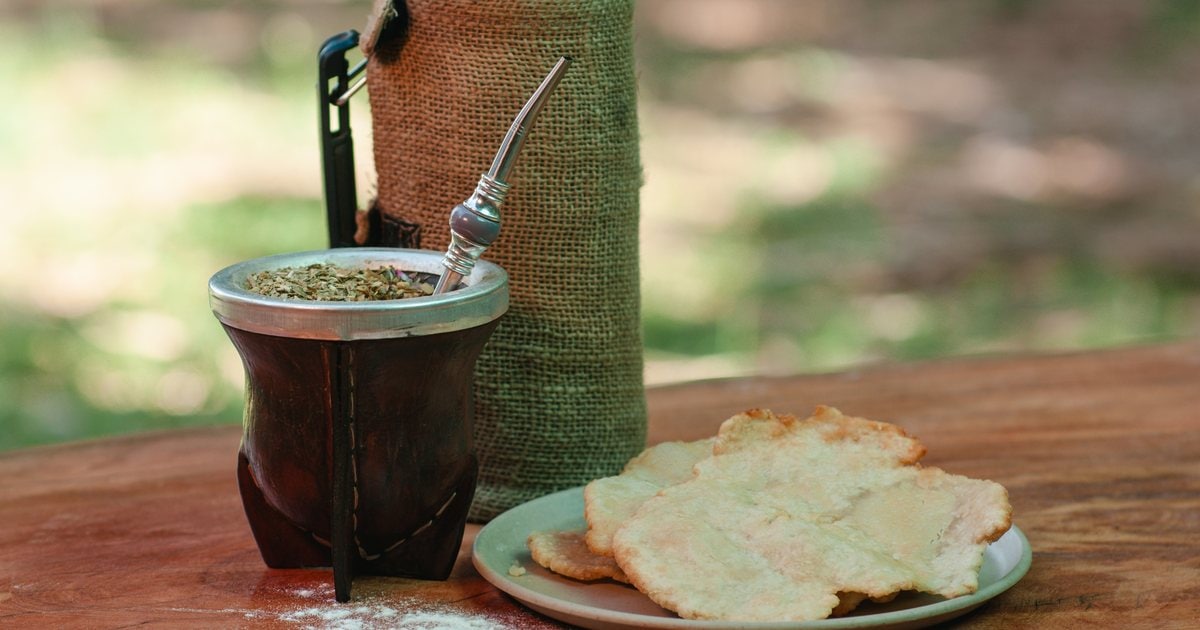
To make yerba mate the traditional way, fill a gourd two-thirds with yerba, shake it so the leaves slope to one side, dampen the low side with cool water and push in the bombilla. Then pour 150–170°F (65–77°C) water beside the straw and sip. Refill the same spot 10 to 20 times.
No gourd? Steep 1 to 2 tablespoons of yerba per cup of hot water in a French press, a mug with a strainer or a tea bag for 3 to 5 minutes. Below you’ll find the full gourd method with photos, a ratio chart for eight ways to make it, and the mistakes that turn mate bitter.
Yerba Mate at a Glance
Yerba Mate Ratio and Water Temperature by Method
Yerba mate is not brewed like tea. In a gourd you pack in a lot of leaf and add a little water at a time, over and over. Every other method steeps a smaller amount of leaf once, the way you would black tea. Use this chart to pick your method.
| Method | Yerba | Water | Temp | Time | Best for |
|---|---|---|---|---|---|
| Gourd + bombilla | Half to two-thirds of the gourd (about 30 g) | 1–2 oz per refill | 150–170°F | Sip at once; 10–20 refills | The real thing |
| French press | 1–2 tbsp per 8 oz | 8 oz per cup | 160–170°F | 3–5 min | Easiest first try |
| Mug + strainer | 1 tbsp per 8 oz | 8 oz | 160–170°F | 3–5 min | One cup at work |
| Tea bag (mate cocido) | 1 bag | 8 oz | 170°F | 3–5 min | No gear at all |
| Drip coffee maker | 1 tbsp per 8 oz | A full pot | Machine heat | One brew cycle | Several people |
| Cold brew | 2 tbsp per 8 oz | Cold water | Fridge | 8–12 hours | Iced mate |
| Tereré | Half a guampa or glass | Ice water or juice | Ice cold | Sip at once; refill | Hot days |
| Mate latte | 2 tbsp | 4 oz water + 4 oz milk | 165°F | 4–5 min | Café style |
What You Need to Make Yerba Mate
The traditional setup is three things and hot water: a gourd (the cup, itself called a mate), a bombilla (a metal straw with a filter at the bottom) and loose yerba. A thermos keeps the water at the right heat for a long session, which is why you see Argentines and Uruguayans carrying one under an arm.

Calabash gourd set on Amazon →
Steel gourd with 2 bombillas →
Cruz de Malta on Amazon →
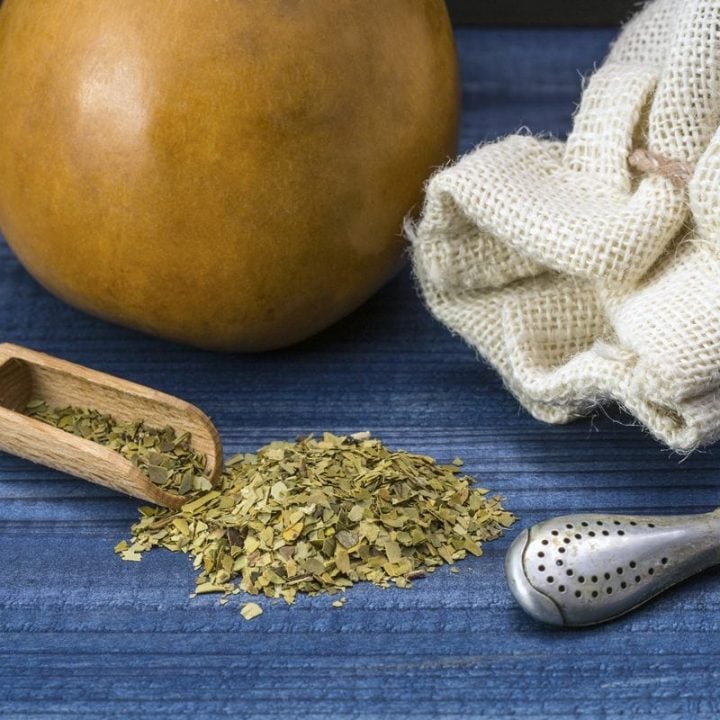
Which yerba cut? Bags labeled con palo (with stems) brew milder and are easiest for beginners, like Cruz de Malta, Taragüi and Playadito. Sin palo or despalada (leaf only) is stronger and dustier, the Uruguayan style. Brazilian erva-mate for chimarrão is ground almost to a bright green powder.

As an Amazon Associate, AmigoFoods earns from qualifying purchases.
How to Make Yerba Mate in a Gourd, Step by Step
This is the Argentine method, and it works for any hot mate. The idea is to wet only part of the yerba at a time, so the flavor lasts through many refills instead of washing out in five minutes. Once your water is hot, it takes about a minute.
- Heat the water. Bring about 1 liter (4 cups) to 150–170°F (65–77°C), hot but never boiling, and pour it into a thermos.
- Fill the gourd halfway to two-thirds. That’s far more leaf than you’d use for tea. Mate works the other way around: lots of yerba, a little water at a time.

- Cover, flip and shake. Cap the gourd with your palm, turn it upside down and shake for 3 to 5 seconds. The fine dust sticks to your hand instead of clogging the straw later. Tap it off.
- Tilt to make the mountain. Turn the gourd back upright at about 45 degrees so the yerba slides into a slope, with one high, dry side and one low side. Argentines call the high side the montañita, the little mountain.
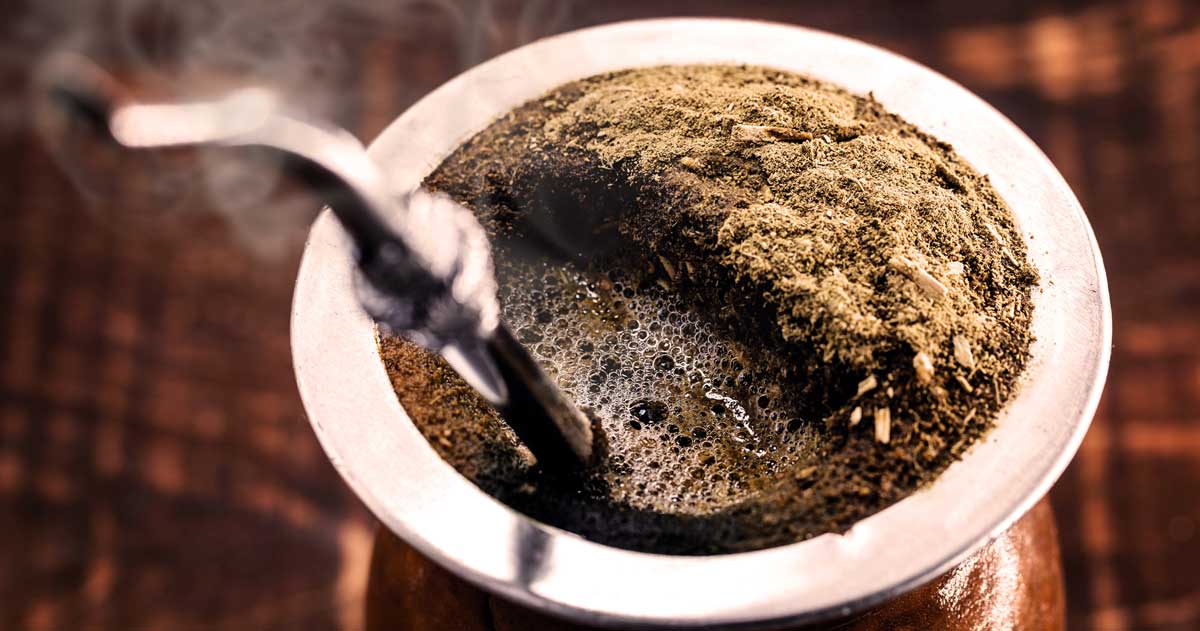
- Wake it up with cool water. Pour about 2 tablespoons of cool or room-temperature water into the low side and wait 1 minute. The leaves swell, the slope firms up, and the first hot pour won’t scorch them.
- Set the bombilla once. Cover the top of the straw with your thumb and slide the filter down the wet side until it touches the bottom, then ease it under the slope. From here on, don’t stir it and don’t move it.

- Pour beside the straw. Add hot water into the wet side, right next to the bombilla, and stop just before it reaches the top of the slope. Keep the high side dry.
- Sip, then refill. Drink until the gourd gurgles. Refill in the same spot and repeat 10 to 20 times, letting the water reach a little more of the dry yerba as the flavor fades.

Why Your Mate Tastes Bitter (and Other Beginner Mistakes)
Yerba mate is naturally earthy and a little bitter, but harsh, burnt or washed-out mate almost always comes from one of these.
How to Make Yerba Mate Without a Gourd
You don’t need special gear to try yerba mate. Any of these makes a good cup, and they’re how most people outside South America start. The flavor is closer to a strong green tea than to gourd mate, because the leaf steeps once instead of being sipped through many small pours.
French press
The easiest no-gourd method, because the plunger does the straining. Add 1 to 2 tablespoons of yerba per 8 oz of water, pour in 160–170°F water, steep 3 to 5 minutes and press slowly. Pour it all out right away so it doesn’t keep steeping. A stem-free, unsmoked yerba such as Ecoteas organic yerba mate brews smooth this way.

Mug with a tea strainer or infuser
Put 1 tablespoon of yerba in a mesh infuser, or straight into the mug, and add 8 oz of 160–170°F water. Steep 3 to 5 minutes, then lift out the infuser or pour through a fine strainer. If you only have a bombilla, you can also drop one into a mug of steeped yerba and sip through it.
Tea bags (mate cocido)
In Argentina, yerba in tea bags is called mate cocido, and it’s a breakfast drink, often with milk and sugar. Steep one bag in 8 oz of hot water (about 170°F) for 3 to 5 minutes. Bagged options like Guayakí organic yerba mate sachets are the lowest-effort way to try it.

Drip coffee maker
Put 1 tablespoon of yerba per 8 oz cup into a paper filter and run the machine as usual. Most machines brew hotter than ideal, so use a little less yerba if it comes out harsh. Our full guide covers making yerba mate in a coffee maker, including pour-over and Keurig pods.
Mate latte (mate cocido con leche)
Steep 2 tablespoons of yerba in 4 oz of 165°F water for 4 to 5 minutes and strain. Add 4 oz of hot, frothed milk and sweeten with honey or sugar. It’s the café version of the mate cocido con leche many Argentines grow up drinking at breakfast.
Iced Yerba Mate: Cold Brew and Tereré
Cold brew: stir 2 tablespoons of yerba into each 8 oz of cold water, cover and refrigerate 8 to 12 hours, then strain. It comes out smooth, with very little bitterness, and keeps 2 to 3 days in the fridge.
Tereré: Paraguay’s iced mate is made in a gourd or a horn cup (guampa) exactly like the hot method above, but with ice water or citrus juice instead of hot water, often with crushed herbs. Here’s our full guide to making tereré.

How to Make Yerba Mate Taste Better
If straight mate is too strong, change one thing at a time:
- Cooler water. Dropping from 170°F to 150°F softens the bitterness more than anything else.
- A milder yerba. Switch to a con palo or “suave” yerba, or an unsmoked one.
- Sugar or honey. Mate dulce, with a spoon of sugar in the gourd or in the thermos, is common in Argentina.
- Citrus peel. A strip of dried orange, lemon or grapefruit peel tucked into the gourd.
- Herbs. Fresh mint, lemon verbena (cedrón), chamomile, or Córdoba’s peperina. Herb-blended yerbas like CBSé Hierbas Serranas or Kurupí mint and lemon do this for you.

How Long Does a Gourd of Yerba Mate Last?
One filling gives you 10 to 20 refills, which is 30 minutes to 2 hours, depending on how fast you sip. You’ll know it’s done when it tastes flat and grassy. In Argentina that’s called lavado, washed out.
When it’s lavado, dump the leaves (they’re great in compost), rinse the gourd with warm water and dry it upside down so it doesn’t mold. You can top up a session later the same day, but leaves left overnight lose their flavor fast. More in our guide to whether you can reuse yerba mate.
How Yerba Mate Is Made Across South America

Yerba Mate Preparation FAQ
How much yerba mate do you use per cup?
In a gourd, fill it half to two-thirds full, about ½ cup or 30 g, whatever the size of the gourd. For a French press, mug or coffee maker, use 1 to 2 tablespoons per 8 oz of water.
What temperature water is best for yerba mate?
150–170°F (65–77°C). Hotter water makes it bitter and burns out the leaf fast. Never use boiling water in a gourd.
How long should you steep yerba mate?
In a gourd, it doesn’t steep: you drink each pour right away. For a French press, mug or tea bag, steep 3 to 5 minutes. Cold brew needs 8 to 12 hours in the fridge.
Can you make yerba mate like regular tea?
Yes. Steep 1 to 2 tablespoons per cup for 3 to 5 minutes and strain, or use tea bags. It tastes milder and less concentrated than gourd mate, which makes it a good first step.
Do you need a gourd to drink yerba mate?
No. A gourd and bombilla give the traditional experience, but a French press, a mug with a strainer, a tea bag or even a mug with a bombilla all work.
Why does my bombilla keep clogging?
Usually the yerba wasn’t shaken first, the bombilla was moved after it was set, or the yerba is very fine. Shake out the dust, set the straw once, and try a spoon-style bombilla or a coarser con palo yerba.
Should you stir yerba mate?
No. Stirring breaks down the leaves and clogs the filter. Set the bombilla once and leave it in place for the whole session.
Is yerba mate good for you?
It has caffeine and antioxidants, and it also carries some cautions, especially if you drink a lot of it very hot. We cover the research in yerba mate benefits and risks.

Yerba Mate (Traditional Gourd Method)
How to make yerba mate the way it is drunk in Argentina and Uruguay: loose yerba in a gourd, sipped through a bombilla and refilled with hot (never boiling) water for an hour or more.
Ingredients
- 1/2 to 2/3 cup loose-leaf yerba mate (about 30 g), enough to fill the gourd halfway to two-thirds
- 2 tablespoons cool or room-temperature water
- About 1 liter (4 cups) water, heated to 150–170°F (65–77°C)
- Optional: 1 teaspoon sugar, a strip of orange peel or a sprig of fresh mint
Instructions
- Heat about 1 liter (4 cups) of water to 150–170°F (65–77°C), hot but not boiling. Without a thermometer, mix 3 parts just-boiled water with 1 part cold tap water. Pour it into a thermos.
- Fill the gourd one-half to two-thirds full with loose yerba mate.
- Cover the mouth of the gourd with your palm, turn it upside down and shake for 3 to 5 seconds to bring the fine dust up against your hand. Tip the gourd back to about 45 degrees so the yerba settles into a slope: one high, dry side and one low side.
- Pour about 2 tablespoons of cool water into the low side and wait 1 minute while the leaves absorb it.
- Cover the top of the bombilla with your thumb and push the filter end down the low, wet side until it touches the bottom. Settle it so the filter sits under the slope. From now on, do not stir or move it.
- Pour hot water into the wet side, right beside the bombilla, stopping just before it reaches the top of the slope. Keep the high side dry.
- Sip until you hear a gurgle and the gourd is empty. The first one or two rounds are the most bitter, so the person pouring traditionally drinks them.
- Refill in the same spot and drink again. Repeat 10 to 20 times, letting the water reach a little more of the dry yerba as the flavor fades. When it tastes flat (lavado), empty the gourd, rinse it and dry it upside down.
Notes
Equipment: mate gourd, bombilla (metal filter straw), kettle and thermos.
No gourd? Steep 1 to 2 tablespoons of yerba per 8 oz of 160–170°F water for 3 to 5 minutes in a French press or a mug with a tea strainer, then strain.
New gourd? A calabash or wooden gourd needs curing before its first use. Stainless steel and glass gourds do not.
Too bitter? Use cooler water, a milder yerba with stems (con palo), or add a pinch of sugar or a strip of orange peel.
More Yerba Mate Guides
- Yerba Mate Guide: What It Is and How to Drink It
- Best Yerba Mate Brands by Country, Cut and Taste
- How to Choose a Yerba Mate Gourd
- How to Cure a Yerba Mate Gourd
- Tereré: How to Make Cold Yerba Mate
- Chimarrão, Brazilian Yerba Mate
- Yerba Mate in a Coffee Maker
- The History of Yerba Mate
More Yerba Mate
See all →
Jorge Garcia is the founder of AmigoFoods, where he has spent over 20 years helping readers discover authentic Latin American and Spanish cuisine. Raised in a Cuban-American household, Jorge learned to cook at the hands of his mother and grandmother, carrying forward generations of family recipes. That heritage, backed by his family’s four-generation history in the Latin food industry, inspired him to launch AmigoFoods in 2003. With more than 1,000 published articles on recipes, ingredients, and food culture, Jorge’s mission is simple: make authentic Latin cooking approachable for home cooks everywhere while honoring the traditions behind every dish.