

Yerba mate benefits are real, but they are more modest than the marketing on the bag suggests. Brewed from the leaves of Ilex paraguariensis, a holly native to Paraguay, northeastern Argentina and southern Brazil, a cup of mate gives you roughly the caffeine of a cup of coffee plus a heavy dose of plant antioxidants. Small human trials link it to more fat burned during exercise, less body fat, and better blood sugar and cholesterol numbers.
The catch is how it gets drunk. Mate sipped scalding hot, liters a day, for decades is tied to higher rates of throat cancer, and leaves dried over wood smoke carry contaminants worth avoiding. Below is what every benefit rests on, how strong that evidence is, and how to drink mate so you keep the upside and lose most of the downside.
Yerba Mate Benefits at a Glance
Here is every commonly claimed benefit next to what human studies actually measured. “Early” means one small trial or an observational study; treat those as promising, not proven.
| Benefit | What human studies found | Evidence |
|---|---|---|
| Energy and focus | About 80 mg of caffeine per cup, plus theobromine | Strong |
| Antioxidants | Rich in chlorogenic acids, the same family of polyphenols found in coffee | Strong |
| Fat burning during exercise | 24% more fat burned at light and moderate intensity, 14 adults | Early |
| Body fat | Lower body fat and waist-to-hip ratio after 12 weeks, 30 adults | Early |
| Cholesterol | LDL down 8.6 to 13.1% in one 40-day trial; a 2022 meta-analysis found no clear effect | Mixed |
| Blood sugar | Fasting glucose down 25 mg/dL in people with type 2 diabetes after 60 days | Early |
| Bone density | 9.7% higher spine density in long-time drinkers after menopause (observational) | Early |
| Digestion | Caffeine can stimulate the bowel; mate is a traditional after-meal drink | Early |
What Is Actually in Yerba Mate?

Nearly every benefit people credit to mate traces back to four groups of compounds in the leaf:
- Caffeine. About 80 mg in a typical cup, according to Cleveland Clinic, though a packed gourd refilled all afternoon can deliver far more. “Mateine,” a word you will see on some labels, is simply caffeine under another name.
- Theobromine. The milder stimulant best known from chocolate, present in smaller amounts.
- Chlorogenic acids. The main polyphenols in mate and the reason it tests so high for antioxidants. Coffee is the other big dietary source.
- Saponins. The bitter compounds that give mate its bite, which researchers suspect play a part in its effects on cholesterol.
Mate also contains small amounts of minerals like potassium and magnesium, but not enough per cup to count as a meaningful source.
8 Yerba Mate Benefits, Ranked by Evidence
These run from best supported to most speculative. Most of the human research comes from Brazil, Argentina and South Korea, and much of it uses roughly a liter of mate a day or concentrated capsules, which is more than a casual drinker takes in.
1. Steadier energy and sharper focus
Strong evidence It is caffeine, and caffeine works.
The most reliable thing yerba mate does is wake you up. A cup carries about as much caffeine as a cup of brewed coffee, and caffeine’s effects on alertness, reaction time and focus are among the best-studied in nutrition. Many drinkers describe mate’s lift as smoother than coffee’s. There is no solid trial proving that, but the way it is traditionally drunk (small sips from a gourd, refilled over an hour or two) spreads the caffeine out instead of delivering it in one hit.
| Drink (8 oz) | Approx. caffeine |
|---|---|
| Brewed coffee | About 95 mg |
| Yerba mate | About 80 mg |
| Black tea | About 47 mg |
| Green tea | About 28 mg |
Caffeine in mate swings widely with how much leaf you use and how many times you refill the gourd. Our complete yerba mate guide breaks it down by preparation.

2. More fat burned during light exercise
Early evidence One small, well-designed trial.
This is where mate’s fat-burning reputation comes from. In a double-blind crossover study published in Nutrition & Metabolism in 2014, people burned noticeably more fat during easy and moderate cycling after taking yerba mate than after a placebo, and their peak performance did not suffer.
Keep that in proportion: burning a larger share of fat during a workout is not the same as losing weight, and capsules are not a cup of tea.
3. Less body fat (in one 12-week trial)
Early evidence Small randomized trial, capsules.
A Korean randomized, placebo-controlled trial gave 30 adults with obesity either yerba mate capsules or placebo for 12 weeks. The mate group lost more body fat and saw their waist-to-hip ratio shrink, with no significant side effects reported.
It is a promising result, but it is one trial of 15 people per group. Yerba mate can be a helpful swap for a sugary coffee drink; it is not a weight-loss treatment on its own.
4. Lower LDL cholesterol (results are mixed)
Mixed evidence Good trial, weaker pooled results.
The study everyone quotes comes from Brazil: 102 adults drank 330 ml of mate (about 11 oz) three times a day for 40 days. LDL cholesterol fell 8.7% in people with normal levels and 8.6% in people with high levels, and people already on statins saw an extra 13.1% drop on top of their medication.
The honest footnote is that a 2022 systematic review and meta-analysis pooling all the available studies found no significant overall change in cholesterol from drinking mate. If your cholesterol is high, mate is not a substitute for anything your doctor prescribed.
5. Better blood sugar control
Early evidence Pilot study, 58 people.
In a 2011 pilot study from the same Brazilian group, people with type 2 diabetes drank 330 ml of roasted mate three times a day for 60 days. Their fasting blood sugar dropped by 25 mg/dL, their HbA1c (the three-month average) fell by 0.85 points, and their LDL cholesterol dropped as well. A larger trial has not yet confirmed it.
If you take diabetes medication, check with your doctor before adding three cups of mate a day, since anything that lowers blood sugar can stack with your treatment.
6. A real dose of antioxidants
Strong evidence For the content; the health payoff is less clear.
Yerba mate is loaded with polyphenols, chiefly chlorogenic acids, and lab tests consistently rank it as high in antioxidant activity, in the same league as green tea. What that does inside the body is harder to pin down: diets rich in polyphenol drinks like coffee and tea are linked with better health, but no study shows mate’s antioxidants preventing a specific disease.
7. Stronger bones after menopause (maybe)
Early evidence Observational, and contested.
Caffeine has long been suspected of thinning bones, so Argentine researchers expected the opposite of what they found. Postmenopausal women who had drunk at least a liter of mate a day for five years or more had 9.7% higher bone density in the lumbar spine and 6.2% higher at the hip than women who did not drink it.
That study could only show an association, not cause and effect, and a later Brazilian case-control study found no link between mate and fracture rates. The fairest reading is that mate does not appear to harm bones and might help them.
8. It keeps things moving
Early evidence Traditional use plus caffeine’s known effect.
Across the Southern Cone, mate is the drink after a heavy asado, and people often say it settles the stomach. The more concrete effect is that caffeine stimulates the colon in many people, which is why a morning mate can send you to the bathroom, much like coffee. On the flip side, caffeine also irritates some stomachs, so if mate gives you heartburn, drink it after food rather than on an empty stomach.
Yerba Mate Benefits for Women
Most of the research above included both men and women, so the energy, fat-burning and blood sugar findings apply to everyone. A few points matter specifically for women:
- Bones after menopause. The Argentine bone density study was done entirely in postmenopausal women, the group most at risk of osteoporosis. Mate did not weaken bones the way researchers feared caffeine might, and long-time drinkers had denser spines and hips.
- Weight and body fat. The 12-week Korean trial included women, and the waist-to-hip ratio it improved is one of the measures linked to heart risk.
- Pregnancy and breastfeeding. Obstetricians generally advise keeping caffeine under 200 mg a day in pregnancy, which works out to about two cups of mate. Mayo Clinic suggests checking with your provider before drinking it at all while pregnant.
- Iron. Like tea and coffee, mate’s polyphenols can reduce how much iron you absorb from plant foods. If you are low in iron, drink it between meals rather than with them.
Yerba Mate Side Effects and Risks
For a healthy adult drinking a few cups a day, the side effects of yerba mate are mostly the side effects of caffeine. The more serious concerns come from the way mate is traditionally drunk and processed, and both are easy to work around.
Caffeine side effects
Too much mate can cause the same problems as too much coffee: trouble sleeping, jitters, a racing heart, headaches, nausea and an upset stomach. The FDA considers up to 400 mg of caffeine a day safe for most healthy adults, which is about five cups of mate, minus whatever coffee, tea, soda or energy drinks you also have. A gourd refilled for hours can quietly add up to far more than a single cup.
Does yerba mate cause cancer?
Mate on its own does not appear to. In 2016, the World Health Organization’s cancer agency (IARC) reviewed the evidence and concluded that drinking mate at temperatures that are not very hot could not be classified as a cause of cancer. What it did classify as a probable cause of esophageal cancer was drinking any beverage very hot, meaning above 65°C (149°F). Traditional mate is often drunk at around 70°C, through a metal bombilla that delivers it straight to the back of the throat.

Smoke-dried yerba and PAHs
Most commercial yerba is dried with heat from wood fires, and the smoke leaves behind polycyclic aromatic hydrocarbons (PAHs), including benzo[a]pyrene, a known carcinogen. A 2008 study of eight Brazilian brands found high PAH levels in both the dry leaves and the brewed tea, and a follow-up found that levels varied widely by brand and batch, with the lowest in yerba processed without touching smoke.
The practical fix is simple: look for yerba labeled sin humo (smoke-free), air-dried or unsmoked. It tastes cleaner and less campfire-like, too. Our guide to the best yerba mate brands covers what is on the shelf.
Interactions with medications
Because it is a caffeine source, mate can stack with stimulant medications, decongestants and pre-workout supplements, and caffeine affects how some drugs are processed. If you take medication for your heart, blood pressure, blood sugar, mood or attention, ask your doctor or pharmacist before making mate a daily habit.
Who Should Skip or Limit Yerba Mate
How to Drink Yerba Mate for the Benefits (Without the Risks)
- Never use boiling water. Traditional cebadores heat water to 70 to 80°C (158 to 176°F), well short of a boil. Give each pour a moment before you sip: if it feels scalding, it is over the line.
- Try it cold. Tereré, mate steeped in ice water or juice, keeps the caffeine and the polyphenols and drops the temperature issue completely.
- Buy smoke-free yerba. Look for sin humo, air-dried or unsmoked on the label.
- Stay around one to three cups a day. Count mate toward your total caffeine, alongside coffee, tea and soda.
- Stop by early afternoon. Caffeine lingers for hours, so a late gourd can cost you sleep.
- Keep your gear clean and dry. A damp natural gourd can grow mold. See how to choose a yerba mate gourd, or use a stainless or glass one that rinses clean.
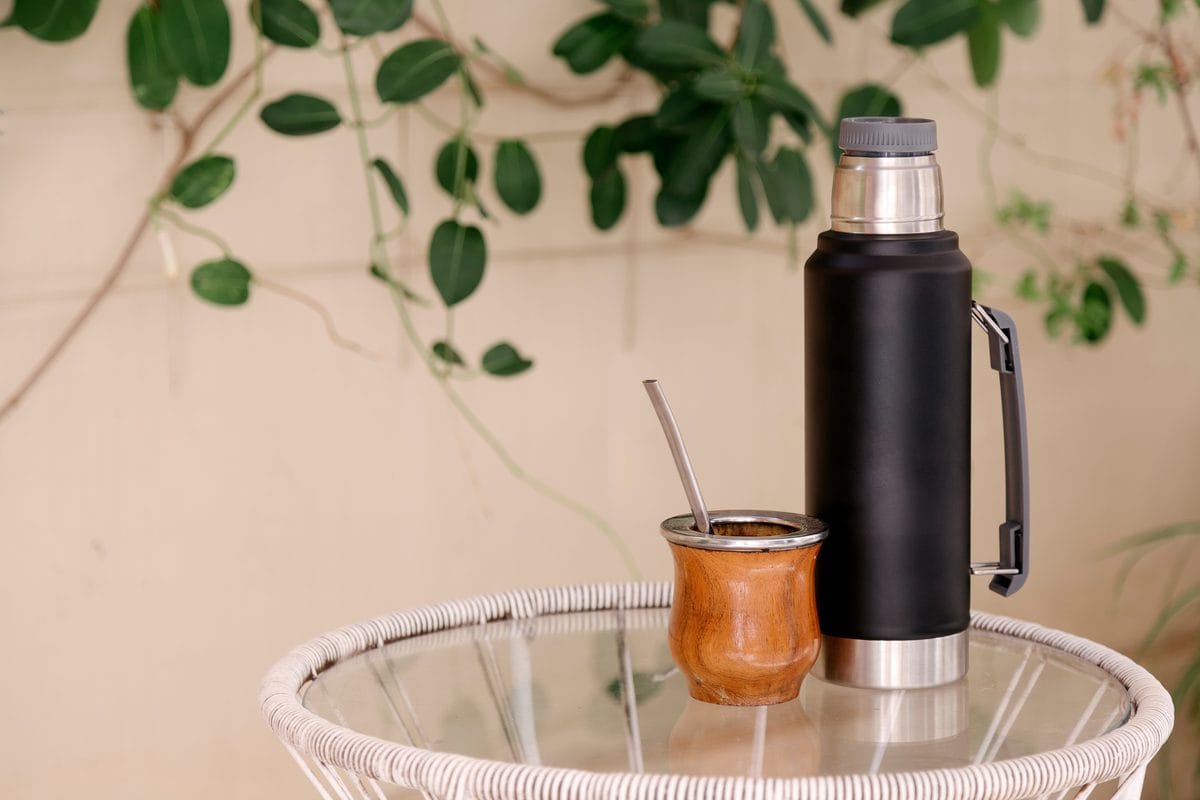
New to the routine? Start with our step-by-step guide to preparing yerba mate with or without a gourd, or brew it in a coffee maker if you want it to taste more like tea.
A few things that make the healthier version easier:
Guayakí Organic Yerba Mate SachetsPre-measured bags make it easy to know how much caffeine you are drinking.Check price on Amazon
MADFLOW Stainless Steel Mate CupInsulated gourd with two bombillas; rinses clean with no mold worries.Check price on Amazon
As an Amazon Associate, AmigoFoods earns from qualifying purchases. Browse our full yerba mate shopping list.
Yerba Mate in Everyday Latin American Life
For all the lab work, the people who drink the most mate rarely think of it as a health drink. In Argentina, Uruguay, Paraguay and southern Brazil it is closer to a social habit: one gourd, one bombilla, passed around a circle of friends or coworkers, with the host refilling it for each person in turn. The yerba mate ritual has its own etiquette, Brazil drinks a bright green, finely milled version called chimarrão, and the drink’s roots go back to the Guaraní people long before the Jesuits planted it on plantations, as our history of yerba mate explains.

That slow, shared way of drinking may be one of mate’s best features: small sips over an hour, in company, with the water kept warm instead of boiling.
Yerba Mate Benefits: Frequently Asked Questions
Is yerba mate good for you?
For most healthy adults, yes, in moderate amounts. One to three cups a day gives you caffeine and antioxidants with a few promising extras for fat burning, blood sugar and bones. The risks come from drinking it scalding hot, in very large amounts for years, or from heavily smoke-dried yerba.
Can you drink yerba mate every day?
Yes. Mayo Clinic notes that a daily cup made with about 3 grams of leaf may be safe for up to 12 weeks, and millions of people in South America drink it daily for life. The cancer link shows up at around 1 to 2 liters a day over many years, especially very hot and alongside smoking or alcohol.
Is yerba mate healthier than coffee?
Neither is clearly healthier. They carry similar caffeine and the same family of antioxidants, and coffee has far more long-term research behind it. Mate’s two specific downsides, very hot temperatures and smoke-drying, are easy to avoid by drinking it warm and buying smoke-free yerba.
Does yerba mate burn belly fat?
No food or drink burns fat from one spot. One 12-week trial did find a smaller waist-to-hip ratio and less body fat in people taking yerba mate capsules, and another found more fat burned during light exercise, but both were small and the effects were modest.
Does yerba mate make you poop?
It can. Caffeine stimulates the colon in many people, so a morning mate often has the same effect as a morning coffee.
Can you drink yerba mate while pregnant?
Talk to your doctor or midwife first. Caffeine is generally kept under 200 mg a day during pregnancy, about two cups of mate, and that limit includes coffee, tea, soda and chocolate.
Does yerba mate have L-theanine?
L-theanine is the calming amino acid associated with green and black tea, which come from a different plant. Yerba mate is not a source people turn to for it; its other stimulant is theobromine, the gentle one found in chocolate.
Is yerba mate good for your skin?
Its antioxidants show up in some skincare products, but there is little human research on drinking mate for better skin. Staying hydrated and sleeping well, which too much late-day caffeine works against, matter more.
Is mate de coca the same as yerba mate?
No. Mate de coca is an Andean tea made from coca leaves, a completely different plant from Ilex paraguariensis. In the Andes “mate” just means an herbal infusion.
Studies and Sources Cited
- Alkhatib A. Yerba Maté (Illex paraguariensis) ingestion augments fat oxidation and energy expenditure during exercise at various submaximal intensities. Nutrition & Metabolism, 2014. PubMed
- Kim SY, et al. Anti-obesity effects of Yerba Mate (Ilex paraguariensis): a randomized, double-blind, placebo-controlled clinical trial. BMC Complementary and Alternative Medicine, 2015. PubMed
- de Morais EC, et al. Consumption of yerba mate improves serum lipid parameters in healthy dyslipidemic subjects and provides an additional LDL-cholesterol reduction in individuals on statin therapy. Journal of Agricultural and Food Chemistry, 2009;57(18):8316-24.
- Masson W, et al. Effect of yerba mate (Ilex paraguariensis) on lipid levels: a systematic review and meta-analysis. Plant Foods for Human Nutrition, 2022. PubMed
- Klein GA, et al. Mate tea improves glycemic and lipid profiles of type 2 diabetes and pre-diabetes individuals: a pilot study. Journal of the American College of Nutrition, 2011. PubMed
- Conforti AS, Gallo ME, Saraví FD. Yerba maté consumption is associated with higher bone mineral density in postmenopausal women. Bone, 2012. DOI
- da Veiga DTA, et al. The yerba mate intake has a neutral effect on bone: a case-control study in postmenopausal women. Phytotherapy Research, 2018.
- International Agency for Research on Cancer. IARC Monographs evaluate drinking coffee, maté, and very hot beverages, 2016. Press release (PDF)
- Kamangar F, et al. High levels of carcinogenic polycyclic aromatic hydrocarbons in mate drinks. Cancer Epidemiology, Biomarkers & Prevention, 2008; and Oranuba E, et al. Polycyclic aromatic hydrocarbons as a potential source of carcinogenicity of mate, 2019. Review
- Mayo Clinic. Yerba mate: Is it safe to drink? Mayo Clinic
- Cleveland Clinic. Yerba mate: what it is, benefits and side effects. Cleveland Clinic
- U.S. Food and Drug Administration. Spilling the beans: how much caffeine is too much? FDA
This article is for general information and is not medical advice. If you are pregnant, take medication or have a heart, blood pressure or blood sugar condition, talk with your doctor before adding yerba mate to your routine.
Ready to pick a bag? Compare the classics in our yerba mate brands guide, learn to reuse your spent yerba, or browse everything in our yerba mate section.
More Yerba Mate
See all →
Jorge Garcia is the founder of AmigoFoods, where he has spent over 20 years helping readers discover authentic Latin American and Spanish cuisine. Raised in a Cuban-American household, Jorge learned to cook at the hands of his mother and grandmother, carrying forward generations of family recipes. That heritage, backed by his family’s four-generation history in the Latin food industry, inspired him to launch AmigoFoods in 2003. With more than 1,000 published articles on recipes, ingredients, and food culture, Jorge’s mission is simple: make authentic Latin cooking approachable for home cooks everywhere while honoring the traditions behind every dish.