

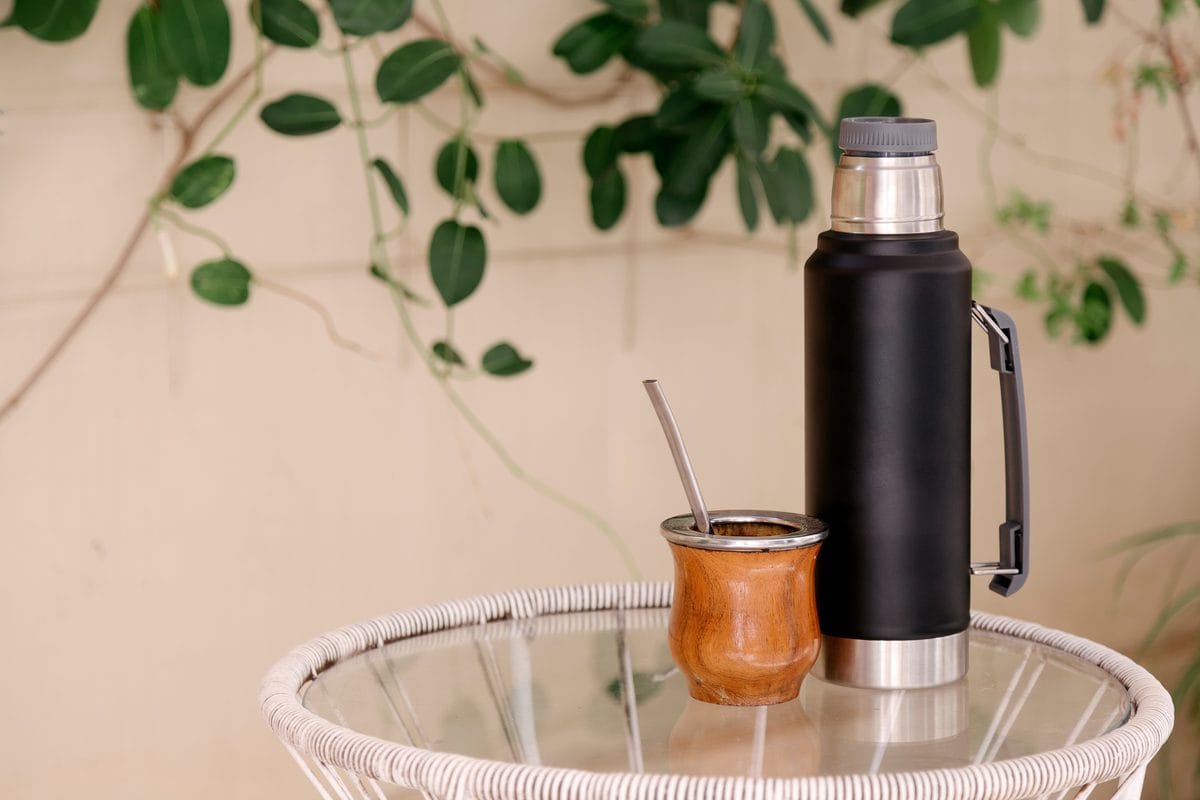
A yerba mate gourd is the small cup you drink yerba mate from, through a metal filter straw called a bombilla. In Argentina and Uruguay it is simply called a mate (or a calabaza or porongo), and in southern Brazil it is a cuia. Gourds come in eight main types, from the traditional calabash squash to wood, leather-wrapped imperial, stainless steel, ceramic, glass, horn and the big Brazilian cuia.
The short answer: if you are new to mate, start with a double-wall stainless steel mate cup. It needs no curing, never grows mold and goes in the dishwasher. If you want the flavor and feel of a gourd in Buenos Aires or Montevideo, buy a calabash or an imperial calabash, cure it once, and keep it dry between uses. Everything below helps you pick between them.
Yerba Mate Gourds at a Glance
What Is a Yerba Mate Gourd (and What Is It Called)?
The word “gourd” comes from the original vessel: the hard shell of the bottle gourd, Lagenaria siceraria, cut open, scraped and dried. People in Paraguay, Argentina, Uruguay and southern Brazil have drunk yerba mate from these shells for centuries, and the name stuck even after makers began turning the same shape out of wood, steel, ceramic and glass. Today “yerba mate gourd” and “mate cup” mean the same thing: any small, narrow-mouthed vessel built for a packed bed of leaves and a bombilla.
Why not just use a mug? Because mate is not steeped like tea. You fill the gourd about two-thirds with dry yerba, tilt it so the leaves form a slope, and pour a little hot water down one side. Each pour makes a few sips, and the same leaves are refilled 15 or 20 times. A small, narrow vessel keeps that slope intact, keeps each serving short and hot, and lets the bombilla’s filter sit in wet leaves without clogging. A wide mug drowns the yerba and turns it bitter in minutes.
What you call the cup depends on where you are:
8 Types of Yerba Mate Gourds Compared
The material decides almost everything that matters day to day: whether the gourd changes the taste, whether you have to cure it, how fussy it is to clean, and how hot it feels in your hand. Here is the whole field in one table.
| Type | Effect on flavor | Curing | Upkeep | Price | Best for |
|---|---|---|---|---|---|
| Calabash | Softens bitterness; earthy after weeks of use | Yes | High: dry fully or it molds | $15–30 | Traditional Argentine and Uruguayan mate |
| Imperial | Same as calabash | Yes | High; keep leather dry | $35–90 | Gifts, daily drinkers who want a sturdy classic |
| Wood | Adds a woody, sometimes sweet aroma | Yes | Medium; can crack if soaked | $15–60 | People who like a seasoned, aromatic cup |
| Stainless steel | Neutral | No | Low; often dishwasher safe | $12–30 | Beginners, offices, travel |
| Ceramic | Neutral | No | Low; can chip | $40–90 | Home drinkers who want clean taste and a handmade look |
| Glass | Neutral | No | Low; fragile | $12–25 | Watching the yerba; very easy cleaning |
| Guampa (horn) | Neutral when cold | Rinse | Medium; hand wash | $20–50 | Cold tereré |
| Cuia | Same as calabash | Yes | High | $20–45 | Brazilian chimarrão |

The 8 Types of Mate Gourds, One by One
1. Calabash gourd (calabaza or porongo)
The calabash is the original yerba mate gourd and still the one you will see in most hands in Buenos Aires and Montevideo. It is the dried shell of a bottle gourd, often stained, carved or burned with designs, and usually finished with a metal rim. The inner wall is porous, so over the first weeks it absorbs a little of every mate you make. Fans say this “seasons” the cup and rounds off the bitterness of the yerba; that is the reason many Argentines keep one calabash for years and never wash it with soap.
The trade-off is care. A calabash has to be cured before its first use, emptied after every session, and dried completely, mouth down at an angle, or it will grow mold. Leave it soaking and it can split.

2. Imperial gourd (calabash wrapped in leather)
An imperial is a calabash dressed up: the shell is covered in stitched leather (often vaqueta, cowhide), crowned with a rim of alpaca, the nickel-silver alloy Argentine silversmiths use, and often set on a metal base or feet. Inside, it is the same gourd, so it tastes and cures exactly like a plain calabash. The leather protects the shell from knocks and lets it stand upright, which is why imperials are the classic gift and the gourd many serious drinkers keep at home.
Check the inside before you buy. Cheap imitations hide a plastic or resin cup under the leather, and some use faux leather that peels. A real imperial feels light for its size and shows natural gourd texture inside.
3. Wooden gourd (palo santo, algarrobo and more)
Wooden mates are turned from a single block. Two woods dominate. Algarrobo (mesquite, from the Prosopis tree) is the everyday choice in Argentina: dense, mild and long-lasting. Palo santo (Bulnesia sarmientoi) from the Gran Chaco is famous for its strong, resinous perfume, which comes through in the first weeks of mate. Other woods such as guayubira and incienso turn up in artisan shops.
Wood dries faster than calabash and molds less, but it still needs curing, and it hates extremes: never leave it soaking, in the sun, or next to a heater, or it will crack. Avoid any wooden mate that is varnished or lacquered inside.

4. Stainless steel gourd
Double-wall stainless steel cups are the easiest mate cups to find in the United States, and for good reason. The vacuum or air gap between the walls keeps water hot and your fingers cool, the steel adds no flavor, and there is nothing to cure or grow mold on. Most are dishwasher safe. Many are shaped like a calabash and sold as a set with a bombilla and a cleaning brush.
Stanley has taken the idea further: its insulated Mate System is a thermos whose lid doubles as a gourd-shaped cup with a notch for the bombilla, and a Messi edition followed. Purists will tell you steel tastes “flat” next to a cured calabash; most beginners never notice.

5. Ceramic gourd
Ceramic mates have taken off in the last few years, especially double-wall insulated designs from small Argentine and American makers. Glazed ceramic is completely neutral, so you taste only the yerba, and it cleans as easily as a coffee mug. Hand-thrown stoneware versions are the most expensive gourds on the market and the most decorative.
6. Glass gourd
Glass mates let you watch the yerba darken and settle, which makes them a good teaching tool and a favorite for sharing photos. They are neutral in taste and the easiest of all to clean. Most come wrapped in a leather, silicone or steel sleeve because plain glass gets hot and slippery; double-wall glass solves the heat problem. The downside is obvious: they break.

7. Guampa (horn cup for tereré)
The guampa is Paraguay’s cup for tereré, yerba mate served with ice water or fruit juice. The classic guampa is cut from a bull’s horn, often carved and fitted with a metal rim and base; modern ones are wood or steel. Because tereré is cold, the horn never has to stand up to boiling water, and a tall, straight guampa holds plenty of ice. Use it for cold mate only: hot water can warp or crack horn.

8. Cuia (Brazilian chimarrão gourd)
In Rio Grande do Sul and the rest of southern Brazil, mate is chimarrão, and the cup is the cuia: a large porongo gourd with a wide, open mouth, often trimmed with a metal band. Brazilian yerba is ground almost to a powder and very green, so the cuia is filled higher and shared around a group with a long bomba. Treat it exactly like a calabash: cure it, empty it, and dry it after every round. A standard Argentine-size gourd works for chimarrão in a pinch, but the powdery yerba will clog a small mouth.
Two newer options round out the market. Silicone mates are cheap and unbreakable for camping, though some drinkers notice a faint rubbery taste. Autocebantes (“self-serving” mates) combine an insulated bottle with a built-in gourd: you press a button and hot water flows straight onto the yerba, which makes them popular for commuting.
Which Yerba Mate Gourd Should You Buy?
Match the gourd to how you actually drink mate, not to what looks best on a shelf.
Yerba Mate Gourd Size and Shape: Camionero, Torpedo and More
Most gourds hold 4 to 8 ounces of liquid with the yerba in place. A small gourd (4 to 6 oz) suits one person and the Argentine habit of short, frequent pours. Uruguayans tend to fill larger gourds and drink them over a longer stretch with a thermos tucked under the arm, and a group passing one cuia of chimarrão needs a large one. If you are unsure, 6 to 8 oz is the sweet spot.
Shape matters too, mostly for how the yerba sits and how the gourd feels in your hand:
- Camionero: a big, round calabash with a wide, flat rim, said to be the trucker’s mate in Uruguay. Easy to fill and to build a yerba “mountain” in.
- Torpedo: tall and slim, tapering toward the bottom, so most come with a metal foot or stand. Holds heat well and fits the hand like a glass.
- Criollo (pear shape): the classic rounded body and narrow neck most people picture. Good all-rounder.
- Galleta: squat and rounded like a biscuit (galleta), common in Uruguay and easy to grip.
- Cup shape: straight-sided steel, ceramic and glass mates with a flat base. Stable on a desk, but the wide mouth makes a neat slope harder to keep.

Our Best Yerba Mate Gourd Picks
These are the mate cups we would point a friend to on Amazon, one for each way of drinking. Natural gourds vary piece to piece, so whatever you order, check it for cracks and a sound interior when it arrives.
BALIBETOV 8 oz Double-Wall Steel Mate Cup
The easiest way into mate: a calabash-shaped, double-wall stainless steel cup with a bombilla. No curing, no mold, cool to the touch, and the 8 oz size works for one person or two.
BALIBETOV Natural Calabash Gourd Set
A handmade Argentine calabash with a metal rim, a bombilla and a brush. This is the gourd to buy if you want the real seasoned taste and are ready to cure it. Every shell is different; reviews note some variation, so inspect yours on arrival.
MADFLOW Double-Wall Steel Mate with 2 Bombillas
A heavier, nicely finished vacuum-insulated steel gourd that comes with two bombillas, so you always have a clean spare. One of the best-reviewed mate cups on Amazon.
DON MATE Handmade Imperial Gourd and Bombilla
A leather-wrapped imperial calabash with a metal rim and a bombilla, the classic gift set. Treat the inside like any calabash: cure it and keep it dry.
Novomates Double-Wall Glass Mate Kit
Double-wall glass keeps the outside cool while you watch the yerba work. Neutral taste and the easiest cleanup of any gourd here.
Goodmate Autocebante 500 ml
An insulated bottle with a built-in mate: fill it with yerba, press, pour and sip. Ideal for a commute or a day out when carrying a thermos and a gourd is too much.
As an Amazon Associate, AmigoFoods earns from qualifying purchases. Prices change often; check Amazon for the current price.
How to Spot a Good Mate Gourd
Whether you are shopping online or at a feria in San Telmo, run through this list before you pay:
- Calabash: thick, even walls with no soft spots, hairline cracks or dark patches. Tap it: a dull thud is fine, a rattle means loose pieces.
- Imperial: look inside for real gourd texture, not smooth plastic; the leather should be stitched, not glued, and the rim should sit tight.
- Wood: one solid block with no glued seams, and a raw, unvarnished interior.
- Steel: food-grade 18/8 (304) stainless, double wall, and no seams or welds inside where yerba can lodge.
- Ceramic and glass: a food-safe glaze, a thick base, and double walls if you want to hold it without a sleeve.
- Every gourd: the mouth should be wide enough for your bombilla’s filter, and the gourd should sit steady without tipping.
How to Care for a Yerba Mate Gourd
Natural gourds (calabash, imperial, cuia and wood) need a one-time cure and a simple daily habit; steel, ceramic and glass need no more than a mug.
| Material | Cure first? | Soap? | Dishwasher? | Main risk |
|---|---|---|---|---|
| Calabash, imperial, cuia | Yes | No, hot water only | Never | Mold, splitting |
| Wood | Yes | No | Never | Cracking |
| Stainless steel | No | Yes | Usually (check label) | Dents |
| Ceramic | No | Yes | Often | Chips |
| Glass | No | Yes | Often | Breakage |
| Horn guampa | No | Mild, by hand | Never | Warping with heat |
Curing conditions a natural gourd so it doesn’t crack and doesn’t pass a raw, grassy taste into your first mates. The short version: fill it with warm (never boiling) water for about 20 minutes, scrape out any loose pulp, then pack it with wet, used yerba for several hours to a day before rinsing. We cover every step, and when you can skip it, in How to Cure a Mate Gourd (and When You Don’t Need To)
Every day: empty the spent yerba as soon as you finish (or reuse it in the garden), rinse with hot water, and dry the gourd mouth down at an angle in open air, away from direct sun and heaters. Don’t store it with a bombilla in it or a lid on.

What Else You Need: Bombilla, Thermos and Yerba
A gourd is half the kit. The bombilla is the filtered straw, and the filter style matters: a spoon-shaped filter is the classic Argentine design and works with most yerba; a coil-spring filter slides apart for cleaning; a fine-mesh or slotted filter is best for powdery Brazilian yerba. Stainless steel is the safe choice; alpaca bombillas are traditional and pretty but need polishing. A pack of spare straws, like this 5-piece stainless bombilla set, means there is always a clean one.
You also need hot water at 150 to 170°F, kept in a thermos, never boiling. And of course you need the yerba: if you are choosing your first bag, our guide to the best yerba mate brands sorts them by strength and cut. When everything is ready, follow how to make yerba mate step by step.
Yerba Mate Gourd FAQ
What is the best yerba mate gourd for beginners?
A double-wall stainless steel mate cup. It needs no curing, can’t grow mold, doesn’t break, and keeps your hand from getting burned while you learn to pour. Once you are hooked, add a calabash for the traditional taste.
Why drink yerba mate from a gourd?
Because mate is made by refilling the same packed leaves many times with small amounts of water. A small, narrow gourd keeps the yerba in a slope, keeps every serving short and hot, and lets the bombilla filter work. A calabash also mellows the flavor as it seasons.
What is a mate gourd called?
In Argentina, Uruguay and Paraguay it is simply a mate, also a calabaza or porongo. In Brazil it is a cuia, and Paraguay’s horn cup for cold tereré is a guampa. The straw is a bombilla (bomba in Brazil).
Do you have to cure a mate gourd?
Only natural gourds: calabash, imperial, cuia and wood. Curing takes about a day and helps prevent cracks and off flavors. Stainless steel, ceramic and glass need just a wash before their first use.
Can you put a yerba mate gourd in the dishwasher?
Never a calabash, imperial, cuia, wooden or horn gourd. Most stainless steel and many glass and ceramic mate cups are dishwasher safe; check the maker’s label.
How long does a calabash gourd last?
With good drying habits, years. Gourds usually fail from being stored wet (mold) or soaked too long (splitting), not from age. Many Argentines drink from the same calabash for a decade.
Is the Stanley mate cup a real mate gourd?
Stanley’s Mate System is an insulated steel bottle whose lid doubles as a gourd-shaped cup with a bombilla notch. It works just like a steel mate: neutral taste, no curing, very good at holding heat. Traditionalists prefer a calabash, but for travel it is hard to beat.
Can I use the same gourd for hot mate and tereré?
Steel, glass and ceramic handle both. A calabash can too, but switching between ice water and hot water stresses the shell, so many people keep one gourd for each. Horn guampas are for cold tereré only.
How much does a good yerba mate gourd cost?
About $15 to $30 for a good steel cup or plain calabash, $35 to $90 for a genuine leather imperial, and $40 to $90 for insulated or handmade ceramic. Paying more mostly buys craftsmanship and looks, not better mate.
More Yerba Mate Guides
- The complete yerba mate guide
- How to make yerba mate
- How to cure a mate gourd
- Best yerba mate brands
- Tereré: cold yerba mate
- Chimarrão, Brazil’s mate
- The yerba mate ritual
- The history of yerba mate
- Yerba mate health benefits
- All yerba mate articles
More Yerba Mate
See all →
Jorge Garcia is the founder of AmigoFoods, where he has spent over 20 years helping readers discover authentic Latin American and Spanish cuisine. Raised in a Cuban-American household, Jorge learned to cook at the hands of his mother and grandmother, carrying forward generations of family recipes. That heritage, backed by his family’s four-generation history in the Latin food industry, inspired him to launch AmigoFoods in 2003. With more than 1,000 published articles on recipes, ingredients, and food culture, Jorge’s mission is simple: make authentic Latin cooking approachable for home cooks everywhere while honoring the traditions behind every dish.