

Pollo chuco, also called pollo con tajadas, is Honduran fried chicken served on a bed of crisp fried green-banana slices, topped with shredded cabbage, pickled onion and sauces. It is the signature street dish of San Pedro Sula, on the north coast of Honduras, and every stall and family dresses it a little differently. Below you will find where the dish and its name come from, what goes on a classic plate, and a home recipe that makes four plates in about an hour.
Pollo Chuco at a Glance
AmigoFoods may earn a commission from qualifying Amazon purchases made through links on this page.
What is pollo chuco?
Pollo chuco is a plate of fried chicken on fried green bananas. The chicken is dredged in flour and fried until crisp, and the bananas are cut into long, thin tajadas and fried until they snap. On top go a lime-dressed cabbage salad, pickled red onion and a generous pour of sauces. La Prensa, the San Pedro Sula daily, calls it one of the city’s favorite recipes and says its flavor is hidden in the combination of sauces that come with it.
The two names describe the same dish. Pollo con tajadas (“chicken with slices”) simply says what is on the plate. Pollo chuco is the popular name, and in San Pedro Sula it is the one you will hear most. El Heraldo describes the dish as one that represents Hondurans and notes that it is eaten at lunch or dinner. It sits alongside baleadas as one of the best-known Honduran foods.

San Pedro Sula and the name
La Prensa writes that the dish is believed to have originated in San Pedro Sula, the industrial city of the north coast, and that it became popular as street food. It also notes that the dish has roots in Honduras’s mestizo cooking, which mixes Indigenous, Spanish and African influences, with chicken and green bananas as its key ingredients. El Heraldo adds that San Pedro Sula marks a Día Nacional del Pollo Chuco every January.
Chuco is Honduran slang for dirty, and nobody agrees on exactly why the chicken got the name. La Prensa gives several theories:
- The streets: at first the dish was only sold on the dirt streets of San Pedro Sula, which locals call la ciudad de los Zorzales.
- The oil: the name may come from the oil the chicken is fried in.
- The hands: it is covered in several sauces and eaten with your hands, which leaves them messy.
El Heraldo reports that people in San Pedro Sula say the name came from the food stalls set up along the edges of the streets, and that over the years they simply accepted it, even if it is not the most appetizing name. For more of what is sold on those streets, see our guide to Honduran street foods.
What goes on the plate
A plate of pollo chuco is built in layers. La Prensa’s recipe sets out a generous bed of tajadas, then cabbage and a piece of fried chicken, and finishes with sauces and chismol, with pickled onion on the side. Buen Provecho notes that each place and family has its own version. These are the usual parts:
- Tajadas: long, thin slices of green banana (guineo or banano verde) fried until crisp. Buen Provecho’s tajadas recipe keeps the cut slices in salted water until frying so they do not darken. They are a cousin of plantain chips such as mariquitas and chifles.
- Ensalada de repollo: finely shredded cabbage, usually with cilantro, dressed with lime juice, salt and pepper. It is one of the most common Honduran side dishes.
- Aderezo: the pink sauce poured over the top. Buen Provecho calls the classic version a mix of mayonnaise, mustard and sweet tomato sauce (ketchup). The proportions change from cook to cook.
- Encurtido: pickled vegetables. Buen Provecho says it can be a red-onion pickle or an escabeche-style one with onion, carrot and jalapeño. It plays the same role as Salvadoran curtido.
- Chismol: the Honduran fresh salsa of diced tomato, onion and cilantro, sometimes with cucumber, sweet pepper and lime.
- Salsa roja: a thin tomato sauce. La Prensa’s 2021 recipe blends roasted tomato, onion and green pepper with chicken broth, and Buen Provecho notes that some cooks add chicken broth when serving.
La Prensa says that some regions prefer chismol and others pickled cabbage or onion, so you do not need every one of these on the same plate. Our roundup of Latin salsas and condiments has more ideas for the toppings.


- The information below is per-pack only
- BOLD, CHILE LIMON FLAVOR: Experience the iconic taste of Latin America with Zambos Chili Limón...

Green bananas or plantains?
The Honduran recipes we checked use green bananas: La Prensa, El Heraldo and Buen Provecho all call for bananos verdes or guineos verdes, and Comida Honduras accepts either green banana or green plantain. Chef Bryan Giron’s recipe for TODAY adds that the greener the bananas, the better.
Firm green plantains are an alternative, but they are larger and produce a different amount of sliced fruit, so choose one type for a batch and slice evenly. Ripe yellow plantains make a sweeter, softer side, like our tajadas made with ripe plantains, and are not a direct match for crisp green-banana tajadas. Our guide to choosing plantains explains how to tell the stages apart.
Ingredients
These are the ingredients from the recipe card. The full card, with print and save buttons, is further down.
For the Chicken
- 4 pieces of chicken (drumsticks or thighs)
- 2 cups of flour
- 1 teaspoon paprika
- 1 teaspoon garlic powder
- 1 teaspoon onion powder
- 1 teaspoon salt
- 1 teaspoon black pepper
- Vegetable oil (for frying)
For the Tajadas (Green Bananas or Green Plantains)
- 6 green bananas or plantains
- Salt (to taste)
- Vegetable oil (for frying)
For the Toppings
- 2 cups shredded cabbage
- ½ cup sliced pickled onions
- ½ cup chopped fresh cilantro
- ½ cup Honduran tomato sauce (or your favorite sauce)
- Lime juice and salt, to taste, for the cabbage
The card uses prepared pickled onions and a ready-to-serve tomato sauce, which keeps the total time to about an hour. Look for Honduran ingredients and sauces in our Honduran ingredients guide.

How to make pollo chuco
These are the steps from the recipe card.
- Prepare the cabbage and set out the prepared pickled onions, cilantro and sauce. Toss the cabbage with lime juice and salt to taste; keep these toppings away from raw chicken.
- Mix the flour and seasonings. Pat the chicken dry, coat evenly and shake off excess flour. Discard flour that has contacted raw chicken.
- Heat frying oil in a heavy, deep pan to about 350°F (175°C), leaving plenty of headroom. Fry chicken in uncrowded batches, turning as needed and regulating the oil around 325–350°F (165–175°C). Medium drumsticks or thighs often take about 15–20 minutes, but larger pieces can take longer. Check the thickest part of every piece, away from bone, for 165°F (74°C). Color alone is not a doneness test. Lower heat if the coating browns too quickly, and drain cooked chicken on a clean rack.
- Peel green bananas or firm green plantains and slice evenly lengthwise, about ⅛ inch thick. Pat dry. Fry in batches around 350°F (175°C) until crisp and lightly golden, roughly 3–5 minutes depending on thickness. Drain and season with salt. Allow the oil to recover between batches.
- Divide tajadas among four plates, top each with one chicken piece, cabbage and onions, then add sauce and cilantro. Serve immediately.

A clip-on deep-fry thermometer keeps the oil in the right range: shop deep-fry thermometers on Amazon.
Frying safely at home
Deep-frying chicken is easy to get wrong, so a few rules from the USDA Food Safety and Inspection Service (FSIS) are worth following:
- Use two thermometers. A clip-on frying thermometer tells you the oil temperature. An instant-read thermometer tells you the chicken is done. FSIS says poultry is safe at 165°F, and advises taking the temperature after you lift the food out of the oil, not while it is submerged.
- Keep the oil steady. Adding cold chicken drops the oil temperature. Fry in batches and let the oil come back up before the next one, as the card says.
- Leave headroom. Keep the pan less than half full of oil, as the card notes, and dry the chicken and banana slices well. Water makes hot oil spatter.
- Choose the right pan. A heavy, deep pan or a deep fryer is safest. FSIS advises against cast iron for deep-frying because the iron breaks down the oil faster.
- Keep raw and cooked apart. Use separate utensils and plates for raw and cooked chicken, and throw away flour that has touched raw chicken.
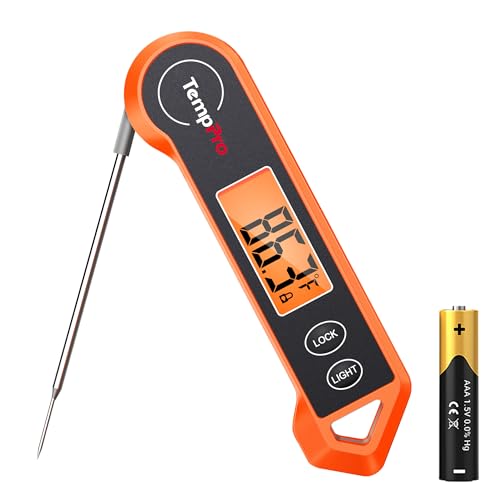
- Fast & Accurate: Get precise readings in just 1 second with ±0.9°F accuracy. NSF Certified for...
- 2.0" Large Auto-Rotating Backlit Display: A large 2.0-inch backlit display with 180° auto-rotation...
How Honduran cooks vary it
The card is a simplified home version. Honduran recipes usually take a few extra steps:
- A marinade. La Prensa’s 2024 recipe and El Heraldo’s, by chef Efraín Corea, blend garlic sauce, vinegar, mustard and chicken bouillon and marinate the chicken, covered and refrigerated, for at least 1 hour. Buen Provecho’s chef Carlos Espinal uses garlic, vinegar, mustard, salt and pepper, and recommends drying the chicken well before marinating. La Prensa’s 2021 recipe uses a quick 15-minute mustard marinade. Comida Honduras seasons the chicken with consomé, cumin and vinegar. If you marinate, keep the chicken in the refrigerator and add that time to the total.
- Whole chicken. La Prensa and El Heraldo cut a whole chicken into 4 pieces for 4 plates, the same one-piece-per-plate portion as the card.
- More tajadas. Those recipes use 6 to 10 green bananas for 4 servings. The card calls for 6; buy a few extra if you like a big bed of tajadas.
- Same oil. Comida Honduras fries the tajadas in the same oil after the chicken.
For more fried favorites from the region, see Nicaraguan fritanga and crispy chicharrón de pollo.

Serving and leftovers
Assemble the plates as each batch is ready rather than holding assembled portions, and keep the wet slaw and sauce separate until the last minute so the tajadas stay crisp. Drain fried food on a rack and avoid piling it up while hot. The tajadas already make a filling side, so extra rice or beans are optional. A cold agua de tamarindo is a good match.
Refrigerate leftover chicken within 2 hours of cooking, or within 1 hour if the room is above 90°F, as FSIS advises. Store the chicken, tajadas and toppings separately. Tajadas lose their crunch in the fridge, so fry them fresh when you can.

Pollo Chuco Recipe
Honduran fried chicken with crisp green-banana tajadas, cabbage, pickled onions and prepared tomato sauce. Firm green plantains are an alternative.
Ingredients
For the Chicken
- 4 pieces of chicken (drumsticks or thighs)
- 2 cups of flour
- 1 teaspoon paprika
- 1 teaspoon garlic powder
- 1 teaspoon onion powder
- 1 teaspoon salt
- 1 teaspoon black pepper
- Vegetable oil (for frying)
For the Tajadas (Green Bananas or Green Plantains)
- 6 green bananas or plantains
- Salt (to taste)
- Vegetable oil (for frying)
For the Toppings
- 2 cups shredded cabbage
- ½ cup sliced pickled onions
- ½ cup chopped fresh cilantro
- ½ cup Honduran tomato sauce (or your favorite sauce)
- Lime juice and salt, to taste, for the cabbage
Instructions
- Prepare the cabbage and set out the prepared pickled onions, cilantro and sauce. Toss the cabbage with lime juice and salt to taste; keep these toppings away from raw chicken.
- Mix the flour and seasonings. Pat the chicken dry, coat evenly and shake off excess flour. Discard flour that has contacted raw chicken.
- Heat frying oil in a heavy, deep pan to about 350°F (175°C), leaving plenty of headroom. Fry chicken in uncrowded batches, turning as needed and regulating the oil around 325–350°F (165–175°C). Medium drumsticks or thighs often take about 15–20 minutes, but larger pieces can take longer. Check the thickest part of every piece, away from bone, for 165°F (74°C). Color alone is not a doneness test. Lower heat if the coating browns too quickly, and drain cooked chicken on a clean rack.
- Peel green bananas or firm green plantains and slice evenly lengthwise, about ⅛ inch thick. Pat dry. Fry in batches around 350°F (175°C) until crisp and lightly golden, roughly 3–5 minutes depending on thickness. Drain and season with salt. Allow the oil to recover between batches.
- Divide tajadas among four plates, top each with one chicken piece, cabbage and onions, then add sauce and cilantro. Serve immediately.
Notes
Makes four plates with one chicken piece per plate. Allow about 20 minutes prep and 40 minutes cooking, including heating oil and frying chicken and tajadas in batches: about 1 hour total. Larger pieces, smaller pans or additional batches can take longer.
Timing assumes prepared pickled onions and tomato sauce. This is a simplified home version; marinated and double-fried versions take longer. Green bananas and green plantains differ in size and yield. Keep wet toppings separate until serving.
Use separate utensils and plates for raw and cooked chicken. Keep the frying pan less than half full of oil and dry the banana slices before frying.
Pollo Chuco FAQ
Why is it called pollo chuco?
Chuco means dirty in Honduran slang. La Prensa lists several theories: the dish was first sold on the dirt streets of San Pedro Sula, the name refers to the frying oil, or it describes your hands after eating chicken covered in sauces. El Heraldo says the name came from the food stalls along the streets.
Is pollo chuco the same as pollo con tajadas?
Yes. Pollo con tajadas describes the plate, fried chicken with fried green-banana slices, and pollo chuco is its popular name in San Pedro Sula.
What is the pink sauce on pollo chuco?
It is aderezo. Buen Provecho calls the classic version a mix of mayonnaise, mustard and sweet tomato sauce (ketchup). Cooks adjust the proportions to taste.
Can I use plantains instead of green bananas?
Yes. Firm green plantains are an alternative, but they are larger, so they give a different amount of slices. Do not use ripe yellow plantains; they turn out sweet and soft instead of crisp.
How do I know the chicken is done?
Check the thickest part of every piece, away from bone, with an instant-read thermometer. It should read 165°F (74°C). Color alone is not a doneness test.
Where does pollo chuco come from?
From San Pedro Sula, on the north coast of Honduras, according to La Prensa and El Heraldo. The city celebrates a Day of Pollo Chuco every January.
More Honduran dishes
Browse all our Honduran recipes, or start with baleadas, Honduran side dishes and the anafre bean dip.
Shopping list: Zambos Chile Limón plantain chips, a clip-on deep-fry thermometer and an instant-read meat thermometer.
Sources
- La Prensa: Receta de Pollo Chuco, tradición de la costa norte
- La Prensa: Pollo con tajadas hondureño
- El Heraldo: Pollo con tajadas, un deleite sampedrano
- Buen Provecho: Pollo chuco o con tajadas
- Buen Provecho: Tajadas de plátano verde
- Comida Honduras: Pollo con tajadas
- TODAY: Pollo Chuco (Honduran Fried Chicken), by Bryan Giron
- USDA FSIS: Deep Fat Frying and Food Safety
- USDA FSIS: Safe Minimum Internal Temperature Chart
More Honduran Foods
See all →
Jorge Garcia is the founder of AmigoFoods, where he has spent over 20 years helping readers discover authentic Latin American and Spanish cuisine. Raised in a Cuban-American household, Jorge learned to cook at the hands of his mother and grandmother, carrying forward generations of family recipes. That heritage, backed by his family’s four-generation history in the Latin food industry, inspired him to launch AmigoFoods in 2003. With more than 1,000 published articles on recipes, ingredients, and food culture, Jorge’s mission is simple: make authentic Latin cooking approachable for home cooks everywhere while honoring the traditions behind every dish.