

Tajadas de plátano maduro are sweet fried plantain slices with caramelized edges and soft centers. Made with very ripe plantains, oil and an optional pinch of salt, they pair beautifully with rice, beans or shredded beef.
Tajadas at a Glance
Tajadas are a classic side for Honduran baleadas, the bean-and-cheese flour tortillas eaten for breakfast all over Honduras.
What Are Tajadas?
In Spanish, tajadas means slices. In a food context, tajadas de plátano usually refers to sliced, fried plantains. The name alone does not tell you whether they will be sweet: ripe plantains make tender, sweet tajadas, while green plantains make a firmer, savory version.
Sweet tajadas are familiar alongside Colombian and Venezuelan meals. In Venezuela, they accompany the rice, black beans and shredded beef in pabellón criollo. Honduras and Nicaragua also have savory preparations made with unripe fruit.
Sweet Tajadas vs. Green Tajadas vs. Tostones
| Preparation | Plantain & cut | Texture & method |
|---|---|---|
| Tajadas de plátano maduro | Very ripe; long or diagonal slices | Sweet, soft centers; fried once |
| Tajadas de plátano verde | Green; thin lengthwise slices | Savory, crisp slices; fried without smashing |
| Tostones / patacones | Green; thicker pieces | Fried, flattened, then fried again |
Looking for tajadas hondureñas? The crisp base for pollo con tajadas (pollo chuco) often uses green bananas or green plantains. That is a different preparation from this sweet ripe-plantain recipe. In Nicaragua, thin green tajadas can be served with fried cheese and cabbage salad.
For another green-plantain preparation, explore chifles, thin fried plantain chips. Sweet tajadas overlap with plátanos maduros; names, cuts and serving traditions vary by country and household.
Ingredients and Choosing the Right Plantains
- 3 large very ripe plantains: Look for yellow skins with extensive black patches, or mostly black skins. The fruit should give gently when pressed but remain firm enough to slice.
- 1/2 cup vegetable or canola oil: This is the amount used in the skillet, not an estimate of how much the plantains absorb.
- 1/4 teaspoon fine salt, optional: Sprinkle over the cooked slices to balance the sweetness.
No added sugar is needed. Ripeness supplies the sweetness; a mostly green plantain will stay starchy even after frying. For more shopping guidance, see how to choose plantains.
Ripeness matters more than the clock. Mostly black peel can be normal for a ripe plantain. Choose fruit that still holds its shape; avoid leaking, moldy or fermented-smelling fruit. If your plantains are still hard and green, let them ripen at room temperature before making this sweet recipe.
Ordinary dessert bananas are not a like-for-like substitute: they soften and break down differently in hot oil. Optional toppings include crumbled queso fresco or a little crema. Keep them separate from the basic three-ingredient recipe.
How to Make Tajadas de Plátano Maduro
Use a large heavy skillet, a knife, a cutting board and a slotted spatula. Set out a paper-towel-lined plate before you begin.
- Peel 3 large very ripe plantains. Cut off the ends, slit the skin lengthwise without cutting deeply into the flesh, and remove the peel.
- Slice diagonally into even 1/2-inch (1.3 cm) ovals. Pat any surface moisture dry.
- Heat 1/2 cup vegetable or canola oil in a large heavy skillet over medium heat. Add one slice to check: it should sizzle steadily without darkening immediately.
- Fry in a single layer in batches, about 2–3 minutes per side, until golden brown with caramelized edges and a tender center. Adjust the heat as needed; very ripe slices brown quickly. Allow about 15 minutes total for batches.
- Lift out with a slotted spatula and drain briefly on paper towels. Sprinkle with 1/4 teaspoon fine salt, if using, and serve warm.

Tips for Golden Edges and Tender Centers
- Cut evenly. Keep slices about 1/2 inch thick so they cook at a similar rate. Diagonal ovals are easier to turn than very long strips.
- Start over medium heat. The oil should produce a steady sizzle. Lower the heat if the outside darkens before the center softens.
- Leave room between slices. Overcrowding cools the oil and makes turning harder. Let the oil regain heat between batches.
- Turn gently. Ripe plantains soften as they cook; slide a spatula underneath instead of squeezing them with tongs.
- Serve promptly. Sweet tajadas should be tender inside. Their edges may crisp, but they will not stay crunchy like green plantain chips.
Why are my tajadas hard or not sweet?
The plantains may be underripe, the slices too thick, or the heat too high. Start with softer, well-ripened fruit and lower the heat if browning outpaces softening.
Why are my tajadas greasy or falling apart?
A crowded skillet and oil that is too cool can leave slices oily. Very soft fruit, thin slices and rough handling can cause breakage. Fry small batches and use fruit that is ripe but still sliceable.
What to Serve with Tajadas
Serve sweet tajadas beside rice and beans, shredded beef, grilled chicken or fried eggs. Their sweetness provides a pleasing contrast to a savory main course.
Make it a meal: Pabellón Criollo →
Pair sweet tajadas with Venezuela’s combination of shredded beef, black beans and rice.
Explore the savory version: Pollo con Tajadas →
Try Honduran fried chicken over crisp green-fruit tajadas, with cabbage, pickled onions and sauce.
For a simple rice-and-bean pairing, try Nicaraguan gallo pinto. For green tajadas with cheese, add the cheese and cabbage just before serving so the chips keep their texture.
A note on vigorón: Classic Nicaraguan vigorón is built around boiled yuca, chicharrón and cabbage salad. Tajadas may be served alongside a meal, but they are not its defining starch.
Storing and Reheating Tajadas
Refrigerate leftovers promptly in a covered container for up to 4 days. Arrange in a shallow layer; parchment between layers helps prevent sticking. Reheat in a skillet over medium-low heat until hot throughout, turning gently. A microwave is convenient but gives a softer result.
For longer storage, freeze cooked slices separately on a lined tray, then transfer them to a freezer container. Thaw in the refrigerator before reheating. Expect a softer texture than freshly fried tajadas.
Tajadas Recipe
This printable recipe is for the sweet ripe-plantain version. Timing is approximate and includes several batches in a large skillet.
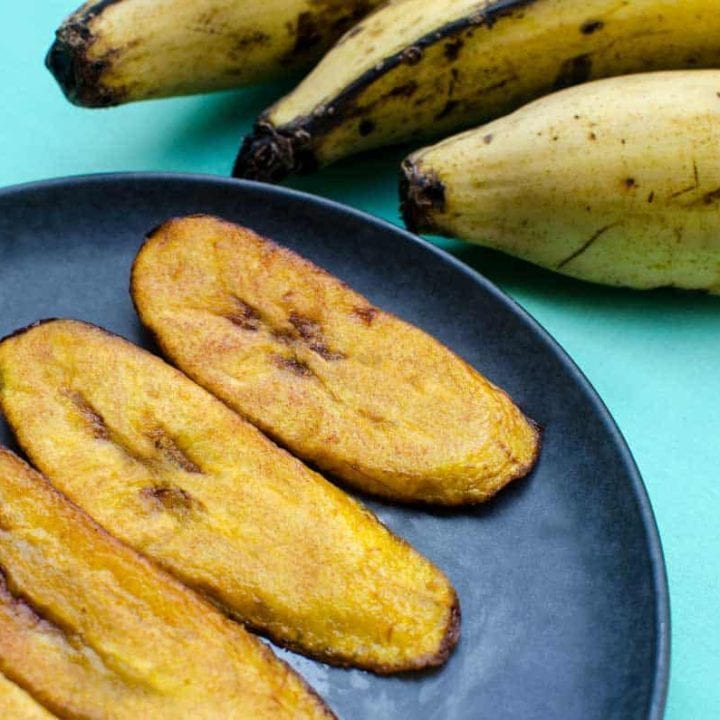
Tajadas de Plátano Maduro (Sweet Fried Plantains)
Sweet ripe plantain slices, pan-fried until golden with caramelized edges and soft centers. Serve as a Latin American side dish with rice, beans or shredded beef.
Ingredients
- 3 large very ripe plantains
- 1/2 cup vegetable or canola oil, for frying
- 1/4 teaspoon fine salt (optional)
Instructions
- Peel 3 large very ripe plantains. Cut off the ends, slit the skin lengthwise without cutting deeply into the flesh, and remove the peel.
- Slice diagonally into even 1/2-inch (1.3 cm) ovals. Pat any surface moisture dry.
- Heat 1/2 cup vegetable or canola oil in a large heavy skillet over medium heat. Add one slice to check: it should sizzle steadily without darkening immediately.
- Fry in a single layer in batches, about 2–3 minutes per side, until golden brown with caramelized edges and a tender center. Adjust the heat as needed; very ripe slices brown quickly. Allow about 15 minutes total for batches.
- Lift out with a slotted spatula and drain briefly on paper towels. Sprinkle with 1/4 teaspoon fine salt, if using, and serve warm.
Notes
Use yellow plantains with extensive black patches, or mostly black skins, that yield gently but still hold their shape. This recipe is for sweet tajadas de plátano maduro; green tajadas use a different ripeness and thinner cut. Ordinary dessert bananas are not a like-for-like substitute. Oil quantity is for frying, not the amount absorbed. Optional cheese, crema or beans are serving suggestions, not included ingredients. Refrigerate leftovers promptly in a covered container for up to 4 days; reheat in a skillet over medium-low heat until hot throughout. Recipe reviewed against published culinary sources; not independently kitchen-tested.
Frequently Asked Questions
Are tajadas sweet or savory?
Both versions exist. Tajadas made with very ripe plantains taste sweet and have soft centers. Green tajadas are starchy and savory. Check which fruit and ripeness a recipe specifies.
Are tajadas the same as maduros?
Sweet tajadas de plátano maduro are a form of fried ripe plantain, often called maduros. “Tajadas” emphasizes the slices, while “maduro” identifies the ripe fruit. The terms overlap, but regional usage differs.
Do tajadas need to be fried twice?
No. This sweet recipe is fried once. Tostones and patacones usually involve frying green plantain pieces, flattening them, and frying again.
Can I bake or air-fry tajadas?
Ripe plantains can be cooked with less oil in an oven or air fryer, but the surface and texture will differ from pan-fried tajadas. The skillet timing in this recipe should not be used for those methods. See our maduros guide for more on preparing sweet plantains.
Are tajadas spicy?
The basic plantain, oil and salt preparation is not spicy. Heat comes from sauces or toppings added at serving time.
Can I make tajadas ahead?
Yes, but they are best just after frying. Refrigerate and reheat as described above, and add wet toppings only when serving.
Recipe Sources and Further Reading
This recipe was editorially cross-checked with Erica Dinho’s Colombian tajadas and Layla Pujol’s fried ripe plantains. Slice size, oil depth and timing vary legitimately among cooks; this version uses a consistent 1/2-inch cut and allows time for batches. The green-plantain distinction is also illustrated by Tropical Cheese’s Nicaraguan tajadas con queso frito. This was a source-based review, not independent kitchen testing.
More Nicaraguan Foods
See all →
Jorge Garcia is the founder of AmigoFoods, where he has spent over 20 years helping readers discover authentic Latin American and Spanish cuisine. Raised in a Cuban-American household, Jorge learned to cook at the hands of his mother and grandmother, carrying forward generations of family recipes. That heritage, backed by his family’s four-generation history in the Latin food industry, inspired him to launch AmigoFoods in 2003. With more than 1,000 published articles on recipes, ingredients, and food culture, Jorge’s mission is simple: make authentic Latin cooking approachable for home cooks everywhere while honoring the traditions behind every dish.