

Choripán pairs juicy grilled Argentine chorizo with crusty bread and tangy chimichurri. Make four sandwiches in about 30 minutes with prepared sauce and a ready grill, or allow about 40 minutes when mixing fresh chimichurri.
Choripán at a Glance
What Is Choripán?

Choripán is Argentina’s answer to the sausage sandwich — but with way more attitude.
The name itself is a fusion of two words: chorizo (sausage) and pan (bread).
Put them together, and you get choripán, a mouthwatering staple of Argentine street food culture that’s simple, flavorful, and deeply satisfying.
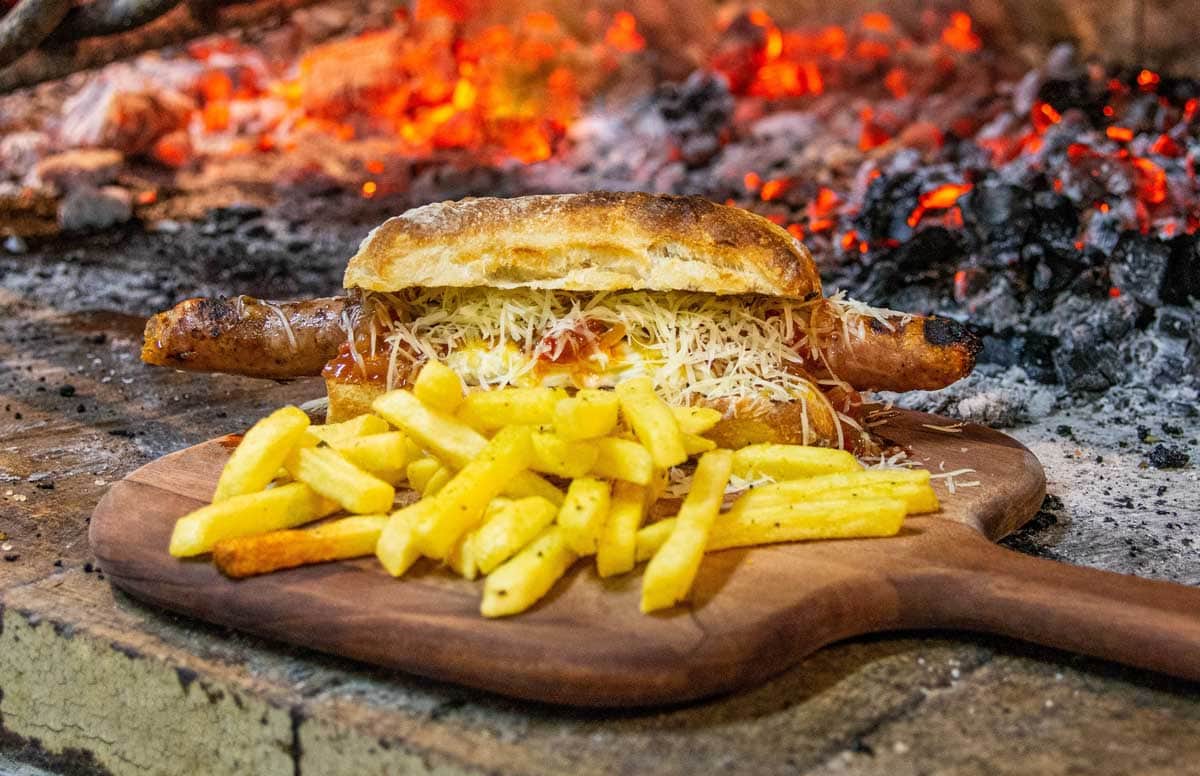
At its core, choripán is made with a grilled chorizo sausage — usually split down the middle to get that perfect char — tucked into a crusty roll or baguette.
But the magic doesn’t stop there. What truly elevates this humble sandwich is the generous drizzle of chimichurri, a zesty herb and garlic sauce that adds an explosion of flavor with every bite.
While it might look like just another sausage sandwich, choripán is so much more.
It’s the go-to snack at football matches, a crowd-pleaser at weekend asados (Argentine BBQs), and a symbol of everyday comfort food across South America.
Choripán isn’t just food — it’s a vibe. One that brings together smoky grill aromas, tangy sauces, and the warmth of shared moments around a fire.
How to Make the Perfect Choripán at Home

Ingredients for 4 sandwiches
- 4 fresh, uncured Argentine-style pork or beef chorizo sausages
- 4 crusty bread rolls
- About 1/2 cup prepared chimichurri, or use the batch below (there will be extra)
- Optional: salsa criolla, mustard, mayonnaise or hot sauce
- 1/2 cup finely chopped fresh parsley
- 4 garlic cloves, minced
- 2 tablespoons chopped fresh oregano, or 2 teaspoons dried oregano
- 1 pinch chili flakes, to taste
- 3/4 cup olive oil
- 1/4 cup red wine vinegar
- Salt and black pepper, to taste
Method
- If making chimichurri, combine the parsley, garlic, oregano, chili flakes, oil and vinegar; season with salt and pepper. Let it rest for 30 minutes while you prepare and grill the sandwiches. Skip this step when using prepared sauce.
- Prepare a grill for medium heat with a cooler area available. Grill the fresh chorizos, turning occasionally, for about 15–20 minutes or until their centers reach 160°F (71°C) for pork or beef. Move away from direct heat if the casings brown too quickly; thicker links may take longer. Poultry sausages need 165°F (74°C).
- Using clean utensils, optionally split the cooked sausages lengthwise and place cut-side down on the grill for 1–2 minutes. Leave whole if preferred.
- Split the rolls and briefly toast their cut sides on the grill while the sausages finish.
- Add one sausage to each roll and spoon over about 2 tablespoons chimichurri per sandwich, or to taste. Add optional toppings and serve immediately.
Makes 4 sandwiches. With prepared chimichurri and a ready grill, allow about 30 minutes (10 prep plus 20 cooking). Making fresh sauce adds about 10 minutes of elapsed time: its 30-minute rest overlaps grilling, giving approximately 40 minutes total. Lighting and heating a charcoal grill may add time.
Use fresh uncured chorizo, not cured Spanish slicing chorizo. Judge doneness with a thermometer, not char alone. The homemade sauce makes more than four sandwiches need; refrigerate the extra promptly and use within 3–4 days.
✅ Pro Tips:
- Always toast the bread.
- Don’t skip the chimichurri.
- Pair with fries and a Malbec for the full experience.
What to Serve with the Argentine Sausage Sandwich
Perfect Sides:
- Papas fritas: Crispy fries with herbs or cheese.
- Provoleta: Grilled provolone with oregano.
- Ensalada criolla: Fresh and acidic balance.
- Grilled veggies: Peppers, zucchini, onions.
- Empanadas: Bonus snack before the main event.
Want to build out the rest of the table? Our roundup of what Argentines actually serve alongside the grill goes deeper on the salads, potatoes and breads that round out a parrilla spread.
Best Drinks:
- Malbec wine: Bold, classic pairing.
- Beer: Quilmes or craft lagers.
- Fernet con Coca: Bitter-sweet Argentine staple.
- Sparkling water or lemonade for a non-alcoholic refresh.
️ Bonus Ideas:
- Create a DIY choripán bar with different sausages, sauces, and breads.
- Offer regional topping stations — from chimichurri to pebre.
- Serve with rustic wooden boards and colorful napkins for that street food vibe.
The Origins and History of Choripán

Choripán wasn’t born in a fancy kitchen — it was forged in the smoky flames of the asado, Argentina’s sacred barbecue tradition.
Its origins date back to the 19th century, when European immigrants, particularly from Spain and Italy, brought their love for cured meats and rustic cooking techniques to South America.
As the asado culture evolved, so did the use of chorizo — a flavorful, garlicky sausage made from pork or beef.
Gauchos (Argentine cowboys) and working-class folks began sandwiching grilled chorizo between pieces of bread for a quick and hearty meal.
It was practical, delicious, and required no utensils — just fire, meat, and bread.
Over time, this no-frills sandwich became a cultural phenomenon.
By the mid-20th century, choripán had made its way from the countryside into the cities, where it quickly became a staple of street vendors, particularly around football stadiums, public parks, and political rallies.
It’s not just a snack; it’s a symbol.
The Argentine sausage sandwich represents unity, community, and national pride.
Whether you’re cheering on your team or hanging out with friends at a weekend asado, choripán is always there — smoky, juicy, and unforgettable.
Regional Variations Across South America

While Argentina may be the birthplace of choripán, this iconic latin sandwich has crossed borders and evolved into a regional favorite throughout South America.
Each country — and sometimes even each city — adds its own twist, using local ingredients and cultural flair to make it truly unique.
Argentina: The Classic
In Argentina, choripán stays true to its roots: juicy pork or beef chorizo, grilled over wood or charcoal, served in crusty pan francés or baguette.
The crown jewel is the chimichurri — a garlicky, herby, oil-and-vinegar-based sauce that gives the sandwich its unmistakable zing.
Another common topping is salsa criolla, a fresh mix of tomatoes, onions, and bell peppers.
Uruguay: Balanced and Bold
Uruguayan choripán uses a milder, slightly sweeter chorizo and often includes mayonnaise or mustard as a base layer.
The bread is typically softer, and it’s not uncommon to find versions with melted cheese or hot sauces.
Chile: The Pebre Powerhouse
In Chile, choripán is a must-have at any asado, especially during national holidays like Fiestas Patrias.
The chorizo is often grilled until extra crispy and served with pebre — a vibrant Chilean condiment made from cilantro, tomatoes, onions, chili, and olive oil.
Paraguay & Brazil: Regional Hybrids
In Paraguay and southern Brazil, choripán blends with local flavors.
The Paraguayan sandwich might include sopa paraguaya or pickled vegetables.
In Brazil, choripán (aka pão com linguiça) features Brazilian sausages and vinaigrettes.
Where Can You Try the Best Choripán in Argentina?

If you’re visiting Argentina, tasting an authentic choripán is a must.
While you’ll find this iconic sandwich all over the country—from football stadiums to street corners—some places stand out for serving the very best.
Here are the top spots to enjoy an unforgettable choripán experience:
Buenos Aires – The Capital of Choripán Culture
-
Costanera Sur
Located along the riverside promenade, this area is famous for its rows of food trucks (locally known as carritos). Each offers its own spin on the Argentine sausage sandwich, often with a smoky, charcoal-grilled touch. -
Choripánes Mandinga
A cult favorite known for its juicy chorizo, crusty bread, and flavorful chimichurri. It’s a go-to for locals who know their choripán. -
El Parrillón
Right near Puerto Madero, this open-air grill spot serves the traditional-style sandwich with a side of beautiful city views.
️ Córdoba – Home of the Gourmet Choripán
Córdoba has taken choripán to the next level, adding local ingredients and creative twists:
-
Chori
A trendy spot offering modern takes on choripán, with toppings like provolone cheese, avocado, and caramelized onions. -
El Dante
Located in Parque Sarmiento, this food truck is famous for its perfectly grilled chorizos and spicy sauces.
️ Mendoza – Wine Country Meets Choripán
What’s better than pairing choripán with a glass of Malbec? Mendoza’s parrillas serve up bold-flavored choripanes with regional flair.
-
Fuente y Fonda
This cozy eatery puts a gourmet spin on traditional Argentine dishes, including a must-try house-made choripán.
Bonus: Choripán Festivals
-
Festival del Choripán Cordobés (Córdoba)
Held annually, this festival celebrates the art of the choripán with live music, dozens of vendors, and lots of local pride.
Final Thoughts: Why Choripán Is Argentina’s Must-Try Street Food

Choripán is more than a grilled sausage in bread — it’s a symbol of Argentine identity, tradition, and flavor.
From smoky food carts in Buenos Aires to weekend asados and global food festivals, choripán continues to win hearts with its bold simplicity and irresistible taste.
Whether you’re biting into one on the streets of Costanera or making your own at home with fresh chimichurri, choripán is a must-try dish for any food lover.
It’s fast, flavorful, and filled with culture in every bite.
So next time you’re craving something satisfying, skip the hot dog — and reach for a choripán instead. ¡Buen provecho!

Choripán Recipe
Discover the classic Argentine Choripán—a mouthwatering sandwich that features smoky, juicy chorizo and vibrant chimichurri sauce. It’s the ultimate crowd-pleaser for your next cookout!
Ingredients
Sandwiches
- 4 fresh, uncured Argentine-style pork or beef chorizo sausages
- 4 crusty bread rolls
- About 1/2 cup prepared chimichurri, or use the batch below (there will be extra)
- Optional: salsa criolla, mustard, mayonnaise or hot sauce
Homemade chimichurri (optional)
- 1/2 cup finely chopped fresh parsley
- 4 garlic cloves, minced
- 2 tablespoons chopped fresh oregano, or 2 teaspoons dried oregano
- 1 pinch chili flakes, to taste
- 3/4 cup olive oil
- 1/4 cup red wine vinegar
- Salt and black pepper, to taste
Instructions
- If making chimichurri, combine the parsley, garlic, oregano, chili flakes, oil and vinegar; season with salt and pepper. Let it rest for 30 minutes while you prepare and grill the sandwiches. Skip this step when using prepared sauce.
- Prepare a grill for medium heat with a cooler area available. Grill the fresh chorizos, turning occasionally, for about 15–20 minutes or until their centers reach 160°F (71°C) for pork or beef. Move away from direct heat if the casings brown too quickly; thicker links may take longer. Poultry sausages need 165°F (74°C).
- Using clean utensils, optionally split the cooked sausages lengthwise and place cut-side down on the grill for 1–2 minutes. Leave whole if preferred.
- Split the rolls and briefly toast their cut sides on the grill while the sausages finish.
- Add one sausage to each roll and spoon over about 2 tablespoons chimichurri per sandwich, or to taste. Add optional toppings and serve immediately.
Notes
Makes 4 sandwiches. With prepared chimichurri and a ready grill, allow about 30 minutes (10 prep plus 20 cooking). Making fresh sauce adds about 10 minutes of elapsed time: its 30-minute rest overlaps grilling, giving approximately 40 minutes total. Lighting and heating a charcoal grill may add time.
Use fresh uncured chorizo, not cured Spanish slicing chorizo. Judge doneness with a thermometer, not char alone. The homemade sauce makes more than four sandwiches need; refrigerate the extra promptly and use within 3–4 days.
More Argentine Foods
See all →
Jorge Garcia is the founder of AmigoFoods, where he has spent over 20 years helping readers discover authentic Latin American and Spanish cuisine. Raised in a Cuban-American household, Jorge learned to cook at the hands of his mother and grandmother, carrying forward generations of family recipes. That heritage, backed by his family’s four-generation history in the Latin food industry, inspired him to launch AmigoFoods in 2003. With more than 1,000 published articles on recipes, ingredients, and food culture, Jorge’s mission is simple: make authentic Latin cooking approachable for home cooks everywhere while honoring the traditions behind every dish.