

Sopa paraguaya is Paraguay’s national dish and, despite the name, it isn’t soup at all. It’s a dense, moist, savory cornbread made with fine cornmeal, slow-softened onions, plenty of fresh cheese, eggs, milk and lard or butter, baked until the top turns deep gold. Paraguayans cut it into squares and eat it beside grilled beef, with a bowl of soup, or on its own with coffee. This recipe makes a 9 × 13-inch pan (12 squares) with cheeses you can buy at any US supermarket.
Sopa Paraguaya at a Glance
What Is Sopa Paraguaya?
Sopa paraguaya (Spanish for “Paraguayan soup”) is a baked corn cake that sits somewhere between cornbread, spoonbread and a cheese soufflé. It’s richer and heavier than American cornbread and contains no sugar. The center stays soft and almost custardy under a browned, cheesy top, and the flavor comes from three things: sweet cooked onion, salty fresh cheese and the fat it’s made with.
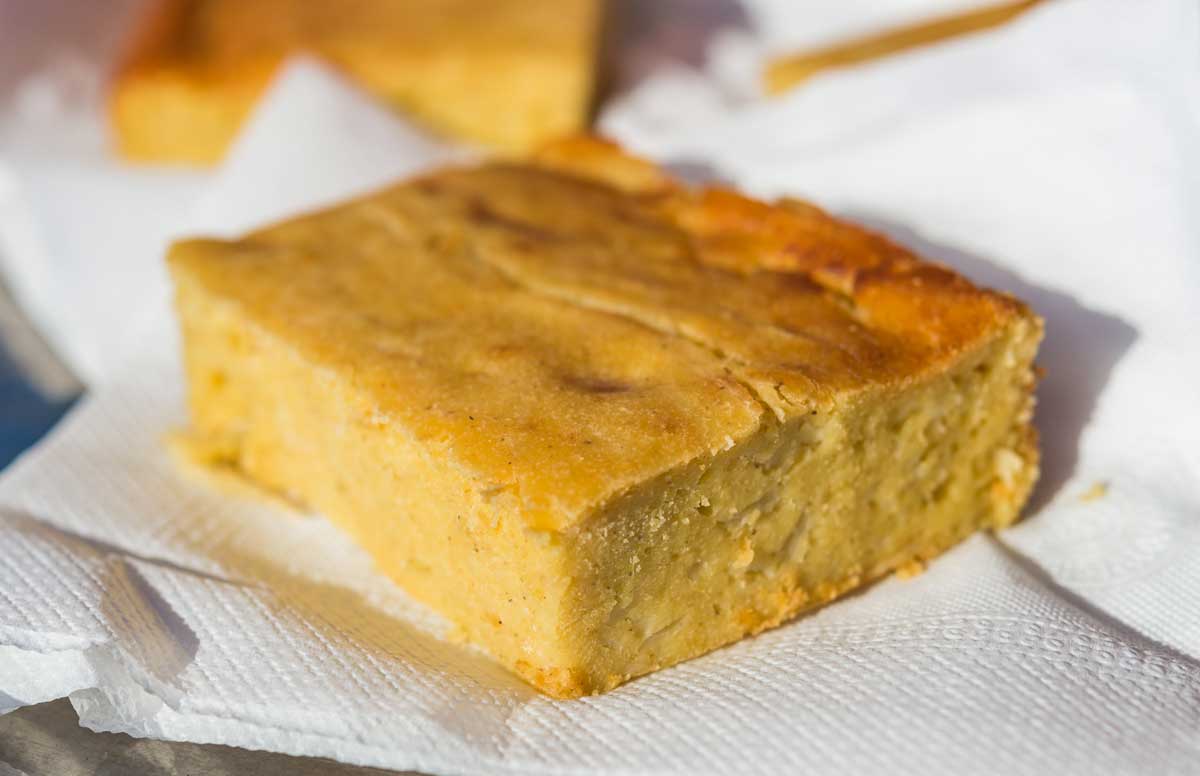
In Paraguay it’s everyday food and party food at the same time. Street vendors and bakeries sell it by the slice alongside chipa, it’s on the table at every asado and Sunday lunch, and no Paraguayan Christmas or New Year’s spread is complete without it. In 2017 Paraguay’s National Secretariat of Culture declared sopa paraguaya, together with vori vori, locro and jopara, part of the country’s intangible cultural heritage.
- Origin: Paraguay (also northeast Argentina)
- Course: side dish, snack, breakfast
- Texture: dense, moist, spongy
- Sugar: none
- Gluten: naturally gluten-free*
It’s usually the first dish people try when they start exploring Paraguayan food, and it’s the gateway to the rest of the country’s corn-and-cheese cooking, from chipa to mbeju.
Why Is Sopa Paraguaya Called “Soup”?
The story every Paraguayan knows involves Carlos Antonio López, who led Paraguay from 1841 until his death in 1862. He loved tykuetĩ, a thick white soup of milk, cheese, eggs and corn flour. One day his cook added far too much corn flour. With no time to start again, she poured the mixture into an iron pan and baked it in the tatakua, the domed clay oven found in Paraguayan backyards. The president liked the result so much that he named it “sopa paraguaya.” A Paraguayan cookbook from 1931 already tells this version of events.
Historians treat it as legend. The real roots go deeper: the Guaraní people of the Asunción region were baking breads and cakes of corn and cassava (mbujapé) long before the Spanish arrived. Once the Spanish brought cattle to Asunción in the 1550s, those corn breads gained milk, cheese, eggs and animal fat. Another theory holds that the Spanish simply called the Guaraní’s thick corn mashes “sopa,” and the name stuck to the baked version.
A tatakua is a dome of adobe or brick heated with a wood fire. When it’s hot, the embers are raked out and the pans go in to bake in the stored heat, which gives country-style sopa its slightly smoky, deeply browned crust. At home, a hot oven and a metal pan or cast-iron skillet get you closest.
Sopa Paraguaya vs. Chipa Guasu vs. Cornbread
Sopa paraguaya is often confused with chipa guasu, its fresh-corn cousin, and with American cornbread. Here’s how they differ.
| Sopa paraguaya | Chipa guasu | American cornbread | |
|---|---|---|---|
| Corn | Dry, fine cornmeal | Fresh corn kernels, blended | Coarse cornmeal, often with wheat flour |
| Texture | Dense, moist, sliceable | Soft, soufflé-like | Crumbly and cake-like |
| Sweetness | None | Natural sweetness from the corn | Often sweetened |
| Lift | Eggs (sometimes a little baking powder) | Eggs | Baking powder or soda |
| Cheese | Lots, mixed through | Lots, mixed through | Optional |
If you see sopa de choclo in Paraguay, it’s sopa made partly with fresh corn: a halfway point between the two. And chipa, the third member of the family, is something else again: small baked rings or rolls made with cassava starch and cheese.
Sopa Paraguaya Ingredients
Sopa paraguaya uses a short list of ingredients, so each one matters. Exact amounts are in the recipe card.

Supermarket cornmeal is often coarse, so check the label. A fine-ground yellow cornmeal gives the smooth, cake-like crumb you want. If you want to cook the way Paraguay’s grandmothers did, swap the butter for lard or rendered beef tallow: the oldest written recipes call for beef fat.
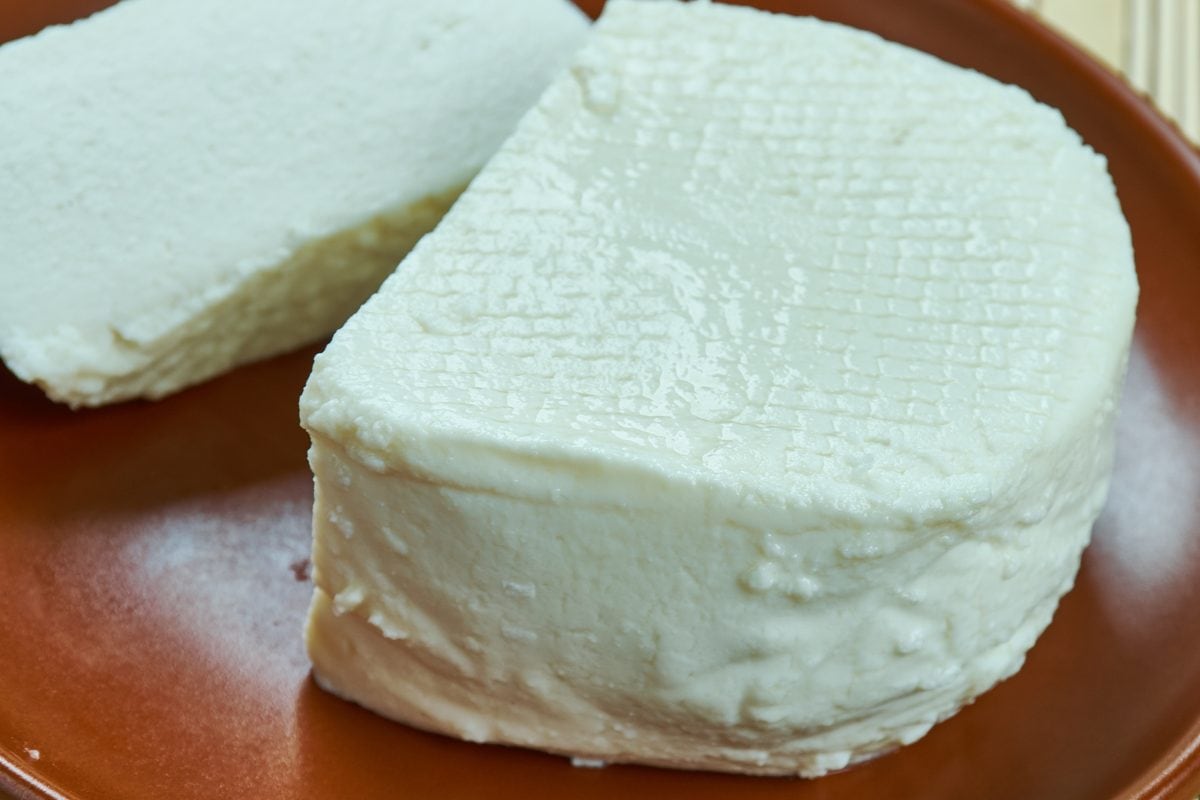
Queso Paraguay is a fresh, lightly aged farmhouse cheese that’s rarely sold in the US. The closest match is two parts crumbled queso fresco to one part shredded Muenster (or low-moisture mozzarella) for melt. Farmer’s cheese or well-drained cottage cheese also work. Avoid making sharp cheddar your main cheese: it turns greasy and overwhelms the corn.
How to Make Sopa Paraguaya
The full quantities and timings are in the recipe card below. Here’s what each step does and what to look for.
1. Soften the onions in fat and water
Cook the chopped onions with a little lard or butter, a splash of water and some salt until the water evaporates and the onions turn soft and translucent, 12 to 15 minutes. The water lets them go sweet and tender without browning, so they melt into the crumb instead of leaving crunchy bits. Let them cool before they meet the eggs.
2. Cream the fat with the eggs
This is the Paraguayan technique most recipes skip. Beat softened butter or lard until it’s pale and creamy, then beat in the eggs one at a time. Older recipes have you do it by hand until the fat looks like cream. That trapped air is what keeps sopa spongy rather than heavy.
3. Fold in the cheese and onions
Stir in the crumbled fresh cheese, most of the shredded cheese, the cooled onions and the salt. Leave the cheese in small crumbles and cubes; those pockets melt into the soft, cheesy spots everyone fights over.
4. Add the cornmeal and milk, then let it rest
Add the cornmeal in three additions, alternating with the milk, until the batter is thick but pourable, like pancake batter. Let it stand for 10 minutes. Fine cornmeal drinks up liquid as it sits, and the rest prevents a gritty texture.

5. Bake hot until deep golden
Pour the batter into a generously greased metal pan or cast-iron skillet, top with the last of the cheese and bake at 375°F (190°C) for 45 to 55 minutes. It’s ready when the top is deep golden, the edges pull away from the pan and a knife in the center comes out clean. Metal and cast iron brown the edges far better than glass or ceramic.
6. Let it set before slicing
Give it 15 minutes. Straight from the oven the center is still soft; as it cools it firms up enough to cut clean squares.
Tips for the Best Sopa Paraguaya
| Problem | Likely cause | Fix |
|---|---|---|
| Dry or crumbly | Too much cornmeal, or overbaked | Weigh the cornmeal (300 g) and pull it when the knife comes out clean, not when the edges darken |
| Wet, gummy center | Underbaked or the pan is too small | Use a 9 × 13-inch pan, not 8 × 8, and bake until the center is set |
| Gritty | Coarse cornmeal, or no rest | Use fine-ground cornmeal and rest the batter 10 minutes |
| Bland | Mild cheese, under-salted onions | Salt the onions as they cook and taste your cheese first; add a little Parmesan if it’s very mild |
| Sticks to the pan | Not enough grease | Grease generously with lard or butter, or bake in seasoned cast iron |
Sopa Paraguaya Variations
- Sopa so’o: a layer of seasoned ground beef sautéed with onion and peppers baked between two layers of batter. It turns the side dish into a meal.
- Sopa de choclo: replace about a third of the cornmeal with fresh or frozen corn kernels, blended. Sweeter and softer, closer to chipa guasu.
- Sopa cargada: “loaded” sopa with an extra layer of cheese through the middle.
- Skillet sopa: bake in a 12-inch cast-iron skillet for the crispiest edges; start checking at 35 minutes.
- Lighter sopa: use oil instead of butter and 2% milk. It’s a little less rich but still very good.
How to Serve Sopa Paraguaya
Sopa paraguaya is a side dish first. At an asado it sits next to grilled beef ribs, sausages and mandioca. At home it goes with stews such as bife koygua or a bowl of vori vori or pira caldo; yes, Paraguayans happily eat “soup” with soup.

It’s also a snack and a breakfast. A cold square with cocido (Paraguay’s toasted yerba mate drink) or coffee is a standard morning, and in the afternoon it shows up next to a jug of tereré, the iced yerba mate Paraguayans drink all day. If you want to try it, a Paraguayan blend such as Kurupi yerba mate with mint and boldo is made for tereré. At Christmas and New Year’s it’s served with roast pork, chipa guasu and potato salad; see more on our Paraguayan holiday dishes page.
Storing, Reheating and Making Ahead
- Room temperature: up to 2 hours.
- Fridge: covered, up to 4 days. It firms up as it chills, and many Paraguayans like it cold.
- Reheat: squares on a sheet pan at 350°F for 10 to 12 minutes, or in a dry skillet over medium-low heat with a lid for 5 minutes, turning once. The microwave works but softens the crust.
- Freeze: wrap squares individually and freeze for up to 3 months. Thaw overnight in the fridge, then reheat in the oven.
- Make ahead: bake it up to 2 days before a party; it reheats better than most cornbreads.
Receta de sopa paraguaya (en español)
Para una asadera de 23 × 33 cm (12 porciones).
- 300 g de harina de maíz fina
- 2 cebollas blancas grandes, picadas
- 160 g de grasa de cerdo, de vaca o manteca (en total)
- 4 huevos
- 340 g de queso Paraguay o queso fresco + 170 g de queso para derretir
- 480 ml de leche entera
- 1½ cucharaditas de sal gruesa; 1 cucharadita de polvo de hornear (opcional)
- Rehogar la cebolla en un poco de grasa con ½ taza de agua y sal hasta que quede transparente. Dejar enfriar.
- Batir el resto de la grasa hasta que quede cremosa y agregar los huevos de a uno.
- Incorporar el queso, la cebolla y la sal.
- Agregar la harina de maíz alternando con la leche. Dejar reposar 10 minutos.
- Hornear a 190 °C durante 45 a 55 minutos, hasta que esté dorada. Dejar reposar 15 minutos antes de cortar.
Sopa Paraguaya Recipe
Sopa Paraguaya (Paraguayan Cornbread)
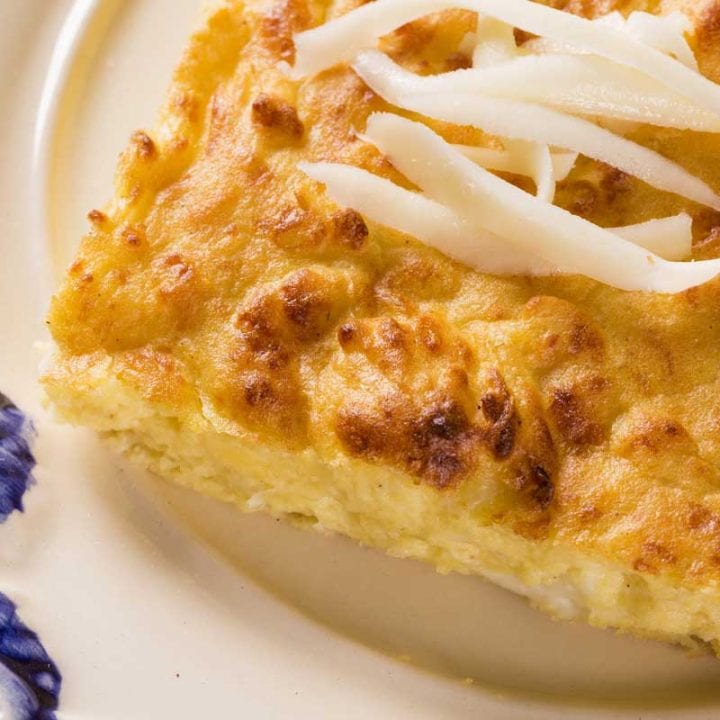
Paraguay’s national dish: a dense, moist, savory cornbread made with fine cornmeal, slow-softened onions, fresh cheese, eggs and milk. Serve warm squares with grilled meat, soup or coffee.
Ingredients
- 3 tablespoons (40 g) lard, beef tallow or butter, for the onions
- 2 large white onions (about 1¼ lb / 570 g), finely chopped
- ½ cup (120 ml) water
- 1½ teaspoons kosher salt, divided
- ½ cup (113 g) unsalted butter or lard, softened, plus more for the pan
- 4 large eggs, at room temperature
- 12 oz (340 g) queso fresco or queso Paraguay, crumbled
- 6 oz (170 g) Muenster or low-moisture mozzarella, shredded
- 2 cups (300 g) fine yellow cornmeal
- 2 cups (480 ml) whole milk, at room temperature, plus more as needed
- 1 teaspoon baking powder (optional, for a lighter crumb)
Instructions
- Heat the oven to 375°F (190°C). Generously grease a 9 × 13-inch baking dish (metal is best) or a 12-inch cast-iron skillet with lard or butter.
- Soften the onions: Melt the 3 tablespoons of lard, tallow or butter in a large skillet over medium heat. Add the onions, water and ½ teaspoon of the salt. Cook, stirring now and then, until the water has evaporated and the onions are very soft and translucent but not browned, 12 to 15 minutes. Let cool for 10 minutes.
- Cream the fat and eggs: In a large bowl, beat the softened ½ cup butter or lard with a whisk or hand mixer until pale and creamy, about 1 minute. Beat in the eggs one at a time.
- Add the cheese and onions: Stir in the crumbled queso fresco (or queso Paraguay), three-quarters of the shredded Muenster, the cooled onions and the remaining 1 teaspoon salt.
- Add the cornmeal and milk: Stir in the cornmeal in three additions, alternating with the milk, mixing until smooth after each. Stir in the baking powder, if using. The batter should be thick but pourable, like pancake batter; if it feels stiff, add more milk 1 tablespoon at a time. Let the batter rest for 10 minutes so the cornmeal can hydrate.
- Bake: Pour the batter into the prepared pan, smooth the top and scatter the remaining Muenster over it. Bake for 45 to 55 minutes (35 to 45 minutes in cast iron), until deep golden, pulling away from the sides, and a knife inserted in the center comes out clean.
- Rest and serve: Cool for 15 minutes before cutting into 12 squares. Serve warm or at room temperature.
Notes
Cornmeal: Use fine-ground yellow cornmeal (harina de maíz). Coarse cornmeal or polenta works but the texture turns gritty. Do not use masa harina, cornstarch or precooked corn flour such as Harina P.A.N.
Cheese: Queso Paraguay is hard to find in the US. Crumbled queso fresco plus Muenster (or low-moisture mozzarella) is the closest match; farmer's cheese or well-drained cottage cheese also work.
Fat: Pork lard or beef tallow gives the most traditional flavor; butter is the common modern choice.
Make ahead: Bake up to 2 days ahead, cover and refrigerate. Reheat squares at 350°F for 10 to 12 minutes, or freeze individually wrapped for up to 3 months.
Sopa Paraguaya FAQ
What is sopa paraguaya made of?
Fine cornmeal, onions cooked in fat, fresh cheese (traditionally queso Paraguay), eggs and milk, with lard, beef fat or butter. Some modern recipes add a little baking powder.
Is sopa paraguaya gluten-free?
Yes, the traditional recipe contains no wheat. *If you need it strictly gluten-free, buy cornmeal and baking powder labeled gluten-free, since cornmeal is often milled alongside wheat.
Is sopa paraguaya sweet?
No. It’s savory, with a gentle sweetness from the cooked onions and corn. It’s served as a side dish or snack, never as dessert. For Paraguay’s sweets, see our Paraguayan desserts guide.
Can I use masa harina or cornbread mix?
Not for good results. Masa harina is nixtamalized and makes a heavy, tortilla-flavored cake, and cornbread mixes contain wheat flour and sugar. Fine yellow cornmeal is the right choice; coarse cornmeal or polenta work in a pinch.
When do Paraguayans eat sopa paraguaya?
All the time: with an asado, at Sunday lunch, as a mid-afternoon snack with tereré, and on every Christmas and New Year’s table.
Can you freeze sopa paraguaya?
Yes. Wrap cooled squares individually and freeze for up to 3 months, then reheat in a 350°F oven.
Is sopa paraguaya the national dish of Paraguay?
It’s the dish most often named as Paraguay’s national dish, and in 2017 the government declared it part of the country’s intangible cultural heritage. See how it compares with the rest of the region in our guide to the national dishes of Latin America.
More Paraguayan Food to Try
Sources: Última Hora, “Declaran patrimonio cultural a la sopa, vori, locro y jopara”; Paraguayan culinary histories of the tykuetĩ legend and colonial Guaraní corn breads.
More Paraguayan Foods
See all →
Jorge Garcia is the founder of AmigoFoods, where he has spent over 20 years helping readers discover authentic Latin American and Spanish cuisine. Raised in a Cuban-American household, Jorge learned to cook at the hands of his mother and grandmother, carrying forward generations of family recipes. That heritage, backed by his family’s four-generation history in the Latin food industry, inspired him to launch AmigoFoods in 2003. With more than 1,000 published articles on recipes, ingredients, and food culture, Jorge’s mission is simple: make authentic Latin cooking approachable for home cooks everywhere while honoring the traditions behind every dish.