

Kak’ik (also spelled kaq’ik or kakik) is a brick-red, gently spicy turkey soup from Cobán in Guatemala’s Alta Verapaz. Turkey legs simmer into a rich broth, which is then blended with charred tomatoes, tomatillos, dried chiles and achiote and finished with fresh mint and cilantro. It is a Q’eqchi’ Maya dish, served with rice and little tamales, and Guatemala named it part of the nation’s Intangible Cultural Heritage in 2007.
Kak’ik at a Glance
AmigoFoods may earn a commission from qualifying Amazon purchases made through links on this page.
What is kak’ik?
Kak’ik is a Guatemalan turkey soup built on a recado, the blended red sauce of charred vegetables and chiles that anchors so much of Guatemalan food. The name comes from Q’eqchi’, the Maya language of Alta Verapaz: kaq means red and ik means chile, so the dish is literally “red and spicy.” You will see it written kak’ik, kaq’ik, kakik, kak ik and kak-ik on menus and in recipes. They all mean the same soup.
It is brothy rather than thick. A good bowl is deep red from achiote and dried chiles, smoky from the charred tomatoes, a little tart from tomatillos, and bright at the end from a handful of fresh mint and cilantro. In Guatemala the turkey goes into the bowl as a whole leg or thigh, so the bone sticks up out of the broth.
Kak’ik is spicy, but not punishing. Most of the heat comes from the small smoked cobanero chile, and every family adjusts it. Many cooks keep the soup moderate and put a dish of crushed chile on the table.
Where kak’ik comes from
Kak’ik belongs to the Q’eqchi’ Maya of Alta Verapaz, the misty, mountainous coffee and cardamom country around the city of Cobán. Its roots are pre-Hispanic. Turkey was domesticated in Mesoamerica long before the Spanish arrived, and it was a prized, ceremonial animal rather than everyday food. Locally the native bird is called chunto or chompipe, and many cooks still say a free-range criollo turkey makes the best kak’ik.
The deep red color is often explained as a reference to blood and to the ritual role turkey played in Maya ceremonies. Whatever the symbolism, kak’ik is still celebration food in the Verapaces: it is cooked for weddings, saints’ days, Christmas and important guests, and it is the dish visitors are told to order in Cobán.
In 2007 Guatemala’s Ministry of Culture and Sports declared kak’ik part of the nation’s Intangible Cultural Heritage (Acuerdo Ministerial 801-2007), recognizing both the dish and the way it is made.

Kak’ik vs. pepián vs. jocón
Guatemala has three famous recados, and they are easy to confuse. The quickest way to tell them apart is color and thickness.
| Kak’ik | Pepián | Jocón | |
|---|---|---|---|
| Color | Bright brick red | Reddish brown | Green |
| Usual meat | Turkey legs | Chicken, beef or pork | Chicken |
| What makes it | Charred tomatoes, tomatillos, dried chiles, achiote, mint | Toasted pumpkin and sesame seeds, chiles, charred tomatoes | Tomatillos, cilantro, green onion, toasted seeds |
| Texture | Brothy soup | Thick stew | Thick green sauce |
| Home region | Alta Verapaz (Cobán) | Central highlands | Western highlands |
If you love kak’ik, try pepián, Guatemala’s best-known national stew, and jocón, its green, tangy cousin.
Ingredients for kak’ik

- Turkey legs: bone-in drumsticks and thighs give the richest broth and hold together through the long simmer. Breast meat dries out.
- Roma tomatoes: the base of the red recado. Charring them is what gives kak’ik its smoky depth.
- Tomatillos: called miltomate in Guatemala. They add tartness. Use fewer tomatillos than tomatoes.
- Red bell pepper: chiltoma in Guatemala. It adds sweetness and color without heat.
- White onion and garlic: charred with the skins on so they turn soft and mellow, not harsh.
- Dried chiles: guaque for color, pasa for depth and cobanero for smoke and heat. More on them below.
- Achiote: annatto, the seed that turns the soup red. Achiote paste is easiest; a Central American recado achiote paste is close to what Guatemalan cooks use.
- Fresh mint and cilantro: hierbabuena and cilantro (or culantro, called samat in Guatemala) go in at the end and lift the whole pot. Do not skip the mint.
- Optional warm spices: some Cobán cooks add a small piece of cinnamon and a couple of whole cloves to the recado.
The three chiles (and substitutes)
Kak’ik traditionally uses three dried Guatemalan chiles. Each has a job, and each has an easy substitute in a US supermarket or online.
| Guatemalan ingredient | What it does | Best substitute |
|---|---|---|
| Chile guaque | Color and mild, fruity heat | Guajillo (the same pod under its Mexican name) |
| Chile pasa | Dark, raisiny depth | Pasilla or ancho |
| Chile cobanero | Smoke and most of the heat | 1 dried chipotle morita, or ½ tsp chipotle powder |
| Miltomate | Tartness | Tomatillos |
| Samat (culantro) | Strong herbal aroma | Cilantro, a little more of it |
| Achiote paste | Red color, earthy flavor | 1 tsp ground annatto plus a squeeze of lime |
Chile cobanero is a small, round chile that is dried over wood smoke around Cobán, which is why it tastes smoky as well as hot. It is sold whole, crushed and ground; look for chile cobanero in Central American shops or online. Guaque is simply the Guatemalan name for the guajillo, so dried guajillo chiles are an exact match. Read more about all of them in our guide to Guatemalan chiles and ingredients.

How to make kak’ik
Kak’ik is easy but not quick. The turkey simmers on its own while you char and blend the recado, then everything comes together for a final 30 minutes. Exact amounts are in the recipe card below.
1. Simmer the turkey 1½–2 hr
Put the turkey pieces in a large pot with water, a few garlic cloves, a few cilantro sprigs and salt. Bring it to a boil, skim off the foam, then lower the heat and simmer, partly covered, until the meat is tender but still on the bone. Heritage or wild turkey can take longer.
2. Char the vegetables 15 min
Heat a dry comal or cast-iron skillet over medium-high. Char the tomatoes, tomatillos, bell pepper, onion and unpeeled garlic, turning them, until they are blistered and blackened in spots and soft. A broiler works too. This char is the flavor of kak’ik, so let them get properly dark.
3. Toast and soak the chiles 20 min
Stem and seed the guaque and pasa chiles. Toast them on the same comal for 20 to 30 seconds per side, just until fragrant, then soak them in a cup of the hot turkey broth until soft. Burnt chiles turn the soup bitter, so watch them closely.
4. Blend the red recado 5 min
Peel the garlic. Blend the charred vegetables, soaked chiles and their liquid, achiote paste, cobanero chile and a few mint and cilantro leaves until very smooth. Add a splash more broth if the blender struggles. For a silky restaurant-style broth, push the recado through a sieve.
5. Bring it together 30 min
Lift out the turkey and strain the broth. Return the broth to the pot, stir in the recado and simmer for about 20 minutes so the raw edge cooks off and the color deepens. Put the turkey back in and simmer 10 minutes more. Taste for salt.
6. Finish with herbs
Off the heat, stir in a big handful of chopped mint and cilantro. Ladle into bowls with one turkey piece each and serve right away.
Tips for the best kak’ik
- Use legs, not breast. The collagen in drumsticks and thighs gives the broth body and keeps the meat moist.
- Char hard. Pale vegetables make a flat, tomato-soup flavor. You want real black spots.
- Season in two places. Salt the broth while the turkey cooks, then adjust once the recado is in.
- Control the heat with cobanero. Start with one chile or ½ teaspoon of ground cobanero and serve more at the table.
- Add herbs last. Mint and cilantro boiled for 20 minutes lose their freshness. Stir them in off the heat.
- Thicker if you like. Some cooks whisk a spoonful of masa harina into the simmering broth for a slightly thicker, stew-like kak’ik.
How to serve kak’ik

In Cobán, kak’ik comes with two starches. The first is plain white rice, often spooned right into the bowl. The second is pochitos, small plain tamales of corn masa steamed in leaves. Corn tortillas are common too.
- At the table: lime wedges, extra crushed cobanero or chiltepe chile, and more chopped mint.
- On the side: avocado slices or one of these Guatemalan side dishes.
- At Christmas: kak’ik is a holiday dish in the Verapaces. See what else is on the table in our Guatemalan Christmas foods guide.
Storing and reheating
- Fridge: up to 4 days in a covered container. The flavor improves overnight.
- Freezer: up to 3 months. Freeze it before adding the fresh herbs if you can.
- Reheat: gently on the stove until steaming, then add fresh mint and cilantro.
Kak’ik FAQ
What does kak’ik mean?
In the Q’eqchi’ Maya language, kaq means red and ik means chile, so kak’ik means “red and spicy,” a description of the soup’s color and heat.
How do you pronounce kak’ik?
Kah-KEEK, with the stress on the second syllable. In Q’eqchi’ the apostrophe marks a sharper, popped consonant, but in Spanish and English nearly everyone simply says kah-KEEK.
Is kak’ik spicy?
It is moderately spicy. Most of the heat comes from the cobanero chile, and many cooks keep the soup mild and serve extra chile on the side.
What does kak’ik taste like?
Smoky, savory and gently tangy, with rich turkey broth, roasted tomato, earthy achiote, a little chile heat and a cool, fresh finish from mint and cilantro.
Where is kak’ik from?
Cobán and the rest of Alta Verapaz in northern-central Guatemala. It is a Q’eqchi’ Maya dish with pre-Hispanic roots.
What is the difference between kak’ik and pepián?
Kak’ik is a thin, bright red turkey soup flavored with achiote and dried chiles. Pepián is a thick, browner stew thickened with toasted pumpkin and sesame seeds, usually made with chicken.
Can I make kak’ik with chicken?
Yes. Kak’ik de pollo or de gallina is common in Guatemala when turkey is too expensive. Use bone-in thighs and drumsticks and simmer them about 45 minutes instead of 2 hours.
Why was kak’ik declared cultural heritage?
Guatemala’s Ministry of Culture and Sports named it Intangible Cultural Heritage of the Nation in 2007 to protect a traditional Maya recipe and the way it is prepared.
Kak’ik Recipe
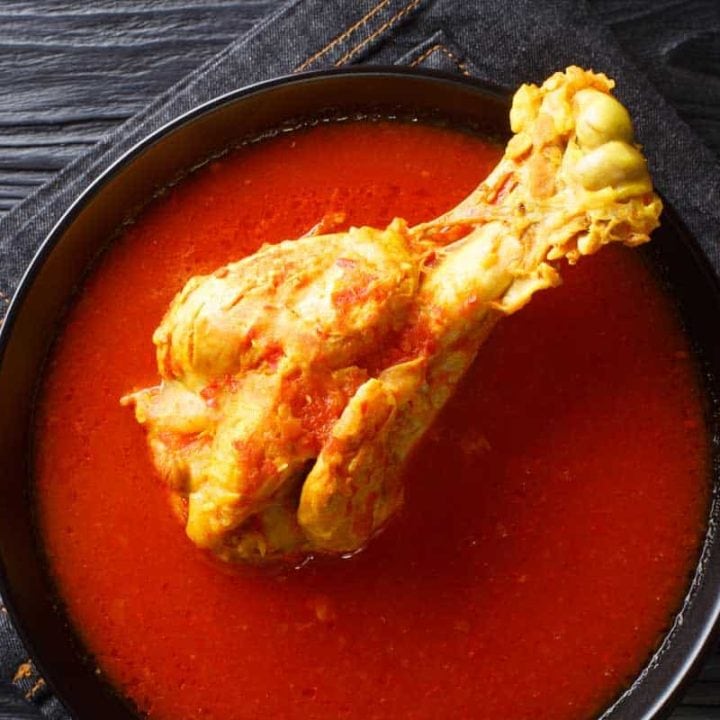
Kak’ik (Guatemalan Turkey Soup)
Kak’ik is Guatemala’s red, gently spicy turkey soup from Cobán: turkey legs simmered in a broth blended with charred tomatoes, tomatillos, dried chiles and achiote, then finished with fresh mint and cilantro.
Ingredients
Turkey and broth
- 3½ to 4 lb (1.6 to 1.8 kg) bone-in turkey drumsticks and thighs, cut into 6 serving pieces
- 10 cups (2.4 L) water
- 4 garlic cloves, smashed
- 4 sprigs fresh cilantro
- 2 teaspoons kosher salt, plus more to taste
Red recado
- 5 Roma tomatoes (about 1¼ lb / 565 g)
- 6 medium tomatillos (about 8 oz / 225 g), husked and rinsed
- 1 red bell pepper, stemmed and seeded
- 1 small white onion, quartered
- 6 garlic cloves, unpeeled
- 3 dried guaque (guajillo) chiles, stemmed and seeded
- 2 dried pasa (pasilla) chiles, stemmed and seeded
- 1 to 2 dried cobanero chiles, or ½ to 1 teaspoon ground chile cobanero (or ½ teaspoon chipotle powder)
- 2 tablespoons achiote paste
- 1-inch piece cinnamon stick and 2 whole cloves (optional)
To finish and serve
- ½ cup chopped fresh mint, divided
- ½ cup chopped fresh cilantro or culantro, divided
- Cooked white rice, tamalitos or corn tortillas, and lime wedges, to serve
Instructions
- Simmer the turkey. Put the turkey, water, smashed garlic, cilantro sprigs and 2 teaspoons salt in a large pot. Bring to a boil, skim off the foam, then reduce to a gentle simmer. Cook partly covered for 1½ to 2 hours, until the meat is tender but still on the bone.
- Char the vegetables. While the turkey cooks, heat a dry comal or cast-iron skillet over medium-high heat. Char the tomatoes, tomatillos, bell pepper, onion and unpeeled garlic, turning occasionally, until blistered, blackened in spots and soft, 12 to 15 minutes. Let cool slightly.
- Toast and soak the chiles. Toast the guaque and pasa chiles on the comal for 20 to 30 seconds per side, just until fragrant; do not let them burn. Put them in a bowl, cover with 1 cup hot broth from the turkey pot and soak for 15 minutes.
- Blend the recado. Peel the garlic. In a blender, combine the charred vegetables, the chiles and their soaking liquid, the achiote paste, the cobanero chile, the cinnamon and cloves if using, and 2 tablespoons each of the mint and cilantro. Blend until very smooth, adding a little more broth if needed. For a silkier broth, strain it through a fine-mesh sieve.
- Combine. Transfer the turkey to a plate. Strain the broth (you should have about 8 cups; top up with water if needed) and return it to the pot. Stir in the recado and simmer, uncovered, for 20 minutes.
- Return the turkey. Add the turkey pieces and simmer 10 minutes more. Taste and season with salt.
- Finish and serve. Remove from the heat and stir in the remaining mint and cilantro. Ladle into bowls with one piece of turkey in each. Serve with white rice, tamalitos or corn tortillas, lime wedges and extra chile cobanero.
Notes
Substitutes: use guajillo for guaque, pasilla or ancho for pasa, and 1 dried chipotle morita or ½ teaspoon chipotle powder for cobanero. Replace 2 tablespoons achiote paste with 1 teaspoon ground annatto plus a squeeze of lime.
Chicken kak’ik: use 3 lb bone-in chicken thighs and drumsticks and simmer about 45 minutes in step 1.
Leftover turkey: make the broth from the carcass, then add the cooked dark meat in step 6 for 10 minutes only.
Make ahead: refrigerate up to 4 days or freeze up to 3 months. Reheat gently and add fresh herbs just before serving.
More Guatemalan soups and stews
Kak’ik is one of many great bowls from Guatemala. Browse them all in our Guatemalan soups and stews roundup or the Guatemala soups and stews recipe page, then try hilachas, a shredded beef stew in tomato sauce, or gallo en chicha, a festive chicken braised in fermented corn drink.
More Guatemalan Foods
See all →
Jorge Garcia is the founder of AmigoFoods, where he has spent over 20 years helping readers discover authentic Latin American and Spanish cuisine. Raised in a Cuban-American household, Jorge learned to cook at the hands of his mother and grandmother, carrying forward generations of family recipes. That heritage, backed by his family’s four-generation history in the Latin food industry, inspired him to launch AmigoFoods in 2003. With more than 1,000 published articles on recipes, ingredients, and food culture, Jorge’s mission is simple: make authentic Latin cooking approachable for home cooks everywhere while honoring the traditions behind every dish.