

Maracuya mousse combines tangy passion fruit with whipped cream for an airy dessert. This version uses pasteurized egg whites and gelatin, makes six individual servings, and needs at least six hours in the refrigerator to set.
Maracuya Mousse at a Glance
What is Maracuya Mousse?

Maracuya Mousse is a delicious dessert that hails from the heart of Latin America.
“Maracuya” is the Spanish word for passion fruit, a tropical fruit known for its bright, tangy flavor and aromatic fragrance.
Mousse, a French culinary term, refers to a light, airy dessert made by incorporating air bubbles into a mixture, giving it a fluffy, creamy texture.
Maracuya Mousse is a delightful fusion of these two elements, blending the exotic and slightly tart flavor of passion fruit with the rich, smooth consistency of a traditional mousse.
The result is a popular latin dessert that is both refreshing and indulgent, perfect for warm weather or as a palate-cleansing finish to a meal.
Maracuya Mousse is popular throughout Latin America, especially in countries like Brazil, Colombia, and Peru, where passion fruit is abundant.
It’s often served in individual cups or glasses, garnished with a dollop of whipped cream, fresh passion fruit seeds, or a sprig of mint, making it as visually appealing as it is delicious.
Maracuya Mousse Ingredients
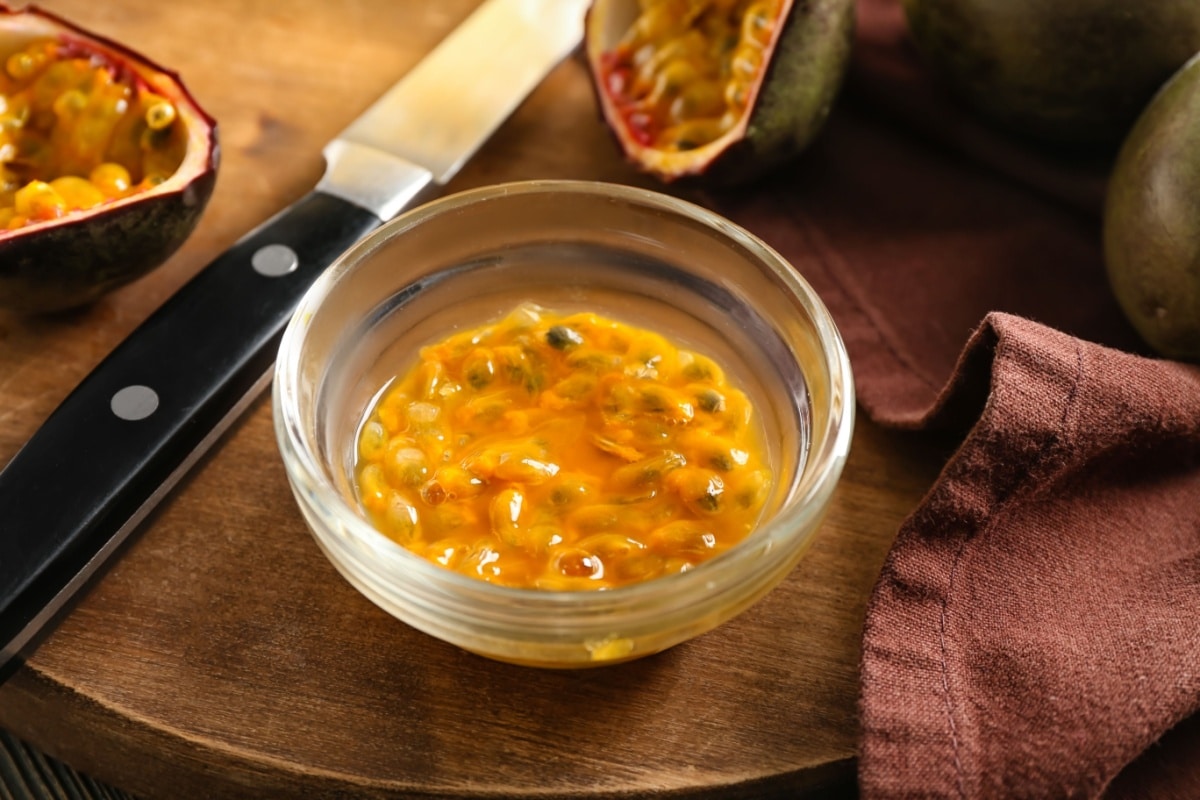
For 6 dessert cups:
- 1 cup unsweetened seedless passion fruit pulp, fresh or thawed
- 1/2 cup granulated sugar
- 1 tablespoon unflavored powdered gelatin (about 9 g)
- 1/4 cup cold water
- 1 cup cold heavy whipping cream
- 2 large pasteurized egg whites, suitable for whipping
- Optional: fresh passion fruit seeds, whipped cream or mint to garnish
Measure the fruit pulp after removing the seeds. Keep the cream cold; prepare the egg whites as their package directs. The fruit base must be cool but still pourable when folded into the whipped ingredients.
Maracuya Mousse Recipe

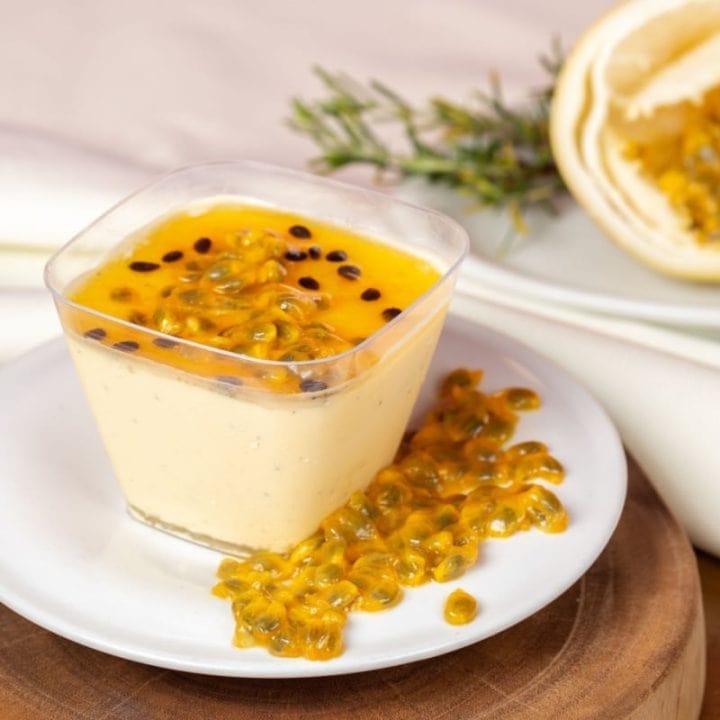
Maracuya Mousse
Airy passion fruit mousse with whipped cream, pasteurized egg whites and gelatin, chilled in individual dessert cups.
Ingredients
- 1 cup unsweetened seedless passion fruit pulp, fresh or thawed
- 1/2 cup granulated sugar
- 1 tablespoon unflavored powdered gelatin (about 9 g)
- 1/4 cup cold water
- 1 cup cold heavy whipping cream
- 2 large pasteurized egg whites, suitable for whipping
- Optional: fresh passion fruit seeds, whipped cream or mint to garnish
Instructions
- Strain fresh passion fruit pulp and measure 1 cup after straining, or use thawed unsweetened seedless pulp. Sprinkle the gelatin evenly over 1/4 cup cold water and leave 5 minutes to hydrate.
- Warm the passion fruit pulp and sugar in a saucepan, stirring until the sugar dissolves, about 5 minutes. Remove from the heat. Stir in the bloomed gelatin until fully dissolved; use gentle heat if needed but do not boil the gelatin.
- Set the bowl of fruit mixture over cold water and stir occasionally until it is no longer warm but still fluid, about 20–30 minutes. Do not let it gel before folding.
- Whip the cold cream in a chilled bowl to soft-to-medium peaks. In a separate clean, grease-free bowl, whip the pasteurized egg whites according to their package directions to firm peaks. Use whites labeled suitable for whipping.
- Fold a spoonful of whipped cream into the cooled fruit base to loosen it, then gently fold in the remaining cream. Fold in the beaten whites in two additions, retaining as much air as possible.
- Divide among 6 dessert cups, cover and refrigerate at least 6 hours, preferably overnight, until set. Add optional garnishes just before serving. Keep refrigerated.
Notes
This version uses whipped cream, pasteurized egg whites and gelatin, rather than the condensed-milk blender variation. Gelatin is included for a reliable set; agar is not a direct substitute. Fresh fruit yield varies: measure the strained pulp rather than relying on a fruit count. Use unsweetened pulp, not nectar or syrup.
Allow about 7 hours total: 25 minutes prep, 5 minutes heating, 30 minutes cooling and at least 6 hours refrigeration. Store covered at 40°F (4°C) or colder and enjoy within 2–3 days. Do not leave out longer than 2 hours, or 1 hour above 90°F (32°C).
- Strain fresh passion fruit pulp and measure 1 cup after straining, or use thawed unsweetened seedless pulp. Sprinkle the gelatin evenly over 1/4 cup cold water and leave 5 minutes to hydrate.
- Warm the passion fruit pulp and sugar in a saucepan, stirring until the sugar dissolves, about 5 minutes. Remove from the heat. Stir in the bloomed gelatin until fully dissolved; use gentle heat if needed but do not boil the gelatin.
- Set the bowl of fruit mixture over cold water and stir occasionally until it is no longer warm but still fluid, about 20–30 minutes. Do not let it gel before folding.
- Whip the cold cream in a chilled bowl to soft-to-medium peaks. In a separate clean, grease-free bowl, whip the pasteurized egg whites according to their package directions to firm peaks. Use whites labeled suitable for whipping.
- Fold a spoonful of whipped cream into the cooled fruit base to loosen it, then gently fold in the remaining cream. Fold in the beaten whites in two additions, retaining as much air as possible.
- Divide among 6 dessert cups, cover and refrigerate at least 6 hours, preferably overnight, until set. Add optional garnishes just before serving. Keep refrigerated.
Tips for Serving Maracuya Mousse
- Garnishing: Before serving, garnish the mousse with a dollop of whipped cream, fresh mint leaves, and a few passion fruit seeds for an extra touch of elegance.
- Serving Suggestions: Serve the mousse chilled for the best texture and flavor. It pairs beautifully with fresh fruits or a light biscuit on the side.
Serving Suggestions

Maracuya Mousse is a versatile and elegant dessert that can be presented in various ways to enhance its appeal.
Here are some serving suggestions to make your Maracuya Mousse even more delightful:
Presentation Ideas
-
Individual Servings:
- Serve the mousse in individual glasses or cups for an elegant touch. Clear glass containers work best to showcase the mousse’s beautiful color and airy texture.
- Use small mason jars or ramekins for a rustic or casual presentation.
-
Layered Desserts:
- Create a layered dessert by alternating layers of Maracuya Mousse with other complementary ingredients such as crushed cookies, cake crumbs, or fruit compote.
- A trifle dish or parfait glass works well for this type of presentation.
-
Family-Style:
- For a family-style presentation, serve the mousse in a large, decorative bowl, allowing guests to scoop their portions.
- This approach is perfect for casual gatherings or buffets.
Garnishing Tips
-
Whipped Cream:
- Add a dollop of freshly whipped cream on top of each serving. You can pipe it on using a pastry bag for a more polished look.
- Lightly sweeten the whipped cream with a bit of powdered sugar and a touch of vanilla extract for added flavor.
-
Mint Leaves:
- Garnish with fresh mint leaves for a pop of color and a refreshing contrast to the mousse’s sweetness.
- Place a small mint leaf on top of the whipped cream or directly on the mousse.
-
Passion Fruit Seeds:
- Reserve a few passion fruit seeds from the fresh fruit to sprinkle on top of the mousse. The seeds add a pleasant crunch and an extra burst of flavor.
- Alternatively, drizzle a small amount of fresh passion fruit pulp over the mousse for added visual appeal and taste.
-
Fruit Slices:
- Decorate the mousse with thin slices of fresh fruits like strawberries, kiwis, or mangoes. The vibrant colors and flavors complement the maracuya.
- Arrange the fruit slices artfully around the edge of the mousse or on top.
-
Edible Flowers:
- Edible flowers like pansies or violets make a beautiful and unique garnish. They add a touch of sophistication and elegance to your dessert.
- Ensure the flowers are safe to eat and free from pesticides.
Pairing Suggestions
-
Fresh Fruit:
- Serve the mousse with a side of fresh fruit salad or fruit skewers. The natural sweetness and acidity of the fruit enhance the mousse’s flavor.
- Tropical fruits like pineapple, mango, and berries work particularly well.
-
Cookies and Biscuits:
- Pair the mousse with light, buttery cookies or biscuits for a delightful textural contrast. Shortbread, ladyfingers, or biscotti are excellent choices.
- Dip the cookies in the mousse for a fun and interactive eating experience.
-
Light Beverages:
- Complement the mousse with light and refreshing beverages such as sparkling water, lemonade, or a chilled glass of white wine.
- For a non-alcoholic option, consider serving it with a fruity iced tea or a tropical juice blend.
-
Herbal Teas:
- Herbal teas like chamomile or mint tea make a soothing accompaniment to the mousse. The subtle flavors of the tea won’t overpower the delicate taste of the dessert.
- Serve the tea hot or iced, depending on the weather and your preference.
Maracuya Mousse Variations and Tips

For chocolate flavor, garnish the finished mousse with chocolate shavings. Toasted coconut or layers of fresh berries also work without changing the base mixture. Serve in cups rather than assuming it will hold a freestanding tart shape.
A vegan mousse requires a different recipe: aquafaba, coconut cream and agar behave differently from egg whites, dairy cream and gelatin. Do not substitute them one-for-one here.
This version uses whipped cream, pasteurized egg whites and gelatin, rather than the condensed-milk blender variation. Gelatin is included for a reliable set; agar is not a direct substitute. Fresh fruit yield varies: measure the strained pulp rather than relying on a fruit count. Use unsweetened pulp, not nectar or syrup.
Allow about 7 hours total: 25 minutes prep, 5 minutes heating, 30 minutes cooling and at least 6 hours refrigeration. Store covered at 40°F (4°C) or colder and enjoy within 2–3 days. Do not leave out longer than 2 hours, or 1 hour above 90°F (32°C).
Layla Pujol’s classic mousse uses the same general cream, egg-white and gelatin approach with a sweeter ratio. Adamance’s pastry method uses Italian meringue instead. This recipe retains its existing pasteurized-white variation; the FDA recommends pasteurized eggs for preparations that are not thoroughly cooked.
Ingredient Notes and More Uses

This sweet dessert contains dairy, eggs and gelatin. Check ingredient labels for dietary needs; standard gelatin is animal-derived.
For more ways to use passion fruit, try a maracuya smoothie or passion fruit sauce, or spoon fresh pulp over fruit salad.
Delight in the Flavors of Maracuya Mousse
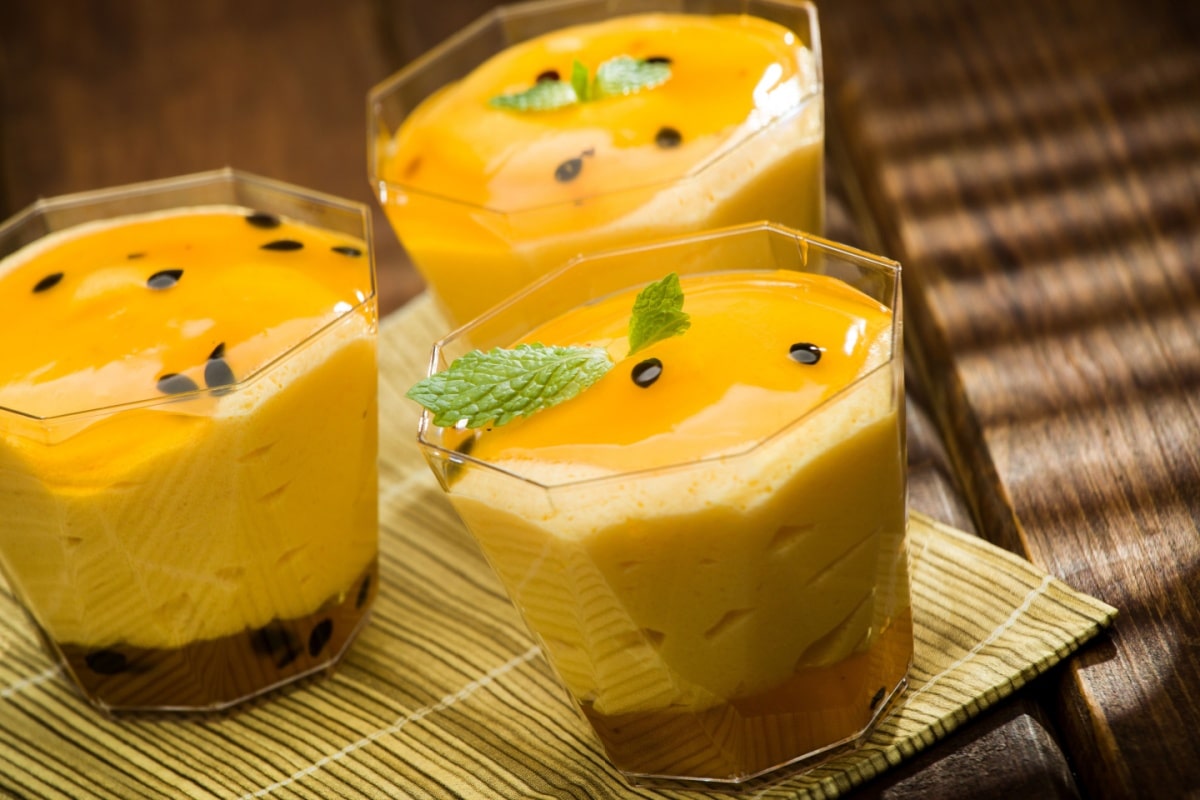
Maracuya Mousse is a delicious celebration of the vibrant flavors and rich culinary traditions of Latin America.
This tropical treat combines the tangy, aromatic essence of passion fruit with a light, airy texture, creating a dessert that’s both refreshing and indulgent.
Whether you serve it at a dinner party, a family gathering, or simply as a special treat for yourself, Maracuya Mousse is sure to impress.
More Latin Favorites
See all →
Jorge Garcia is the founder of AmigoFoods, where he has spent over 20 years helping readers discover authentic Latin American and Spanish cuisine. Raised in a Cuban-American household, Jorge learned to cook at the hands of his mother and grandmother, carrying forward generations of family recipes. That heritage, backed by his family’s four-generation history in the Latin food industry, inspired him to launch AmigoFoods in 2003. With more than 1,000 published articles on recipes, ingredients, and food culture, Jorge’s mission is simple: make authentic Latin cooking approachable for home cooks everywhere while honoring the traditions behind every dish.