

Milhojas layers crisp puff pastry with sweet filling for a much-loved Colombian dessert. This simple version uses ready-made pastry and dulce de leche; many Colombian bakery versions combine pastry cream with arequipe.
Milhojas at a Glance
What is Milhojas

Milhojas, translating to “a thousand sheets” in Spanish, is a traditional pastry dessert known for its delicate and flaky texture.
It is composed of multiple layers of puff pastry, often alternating with rich and creamy fillings such as dulce de leche, pastry cream, or whipped cream.
The top layer is usually dusted with powdered sugar or drizzled with a sweet glaze, adding an extra touch of sweetness and visual appeal.
Originating from European culinary traditions, Milhojas has been embraced and adapted by various Latin American countries, including Colombia.
In Colombia, it has become a beloved dessert, enjoyed during special occasions, family gatherings, and as a treat from local bakeries.
The combination of the crispy pastry and the smooth, sweet filling creates a delightful contrast that makes Milhojas a favorite among dessert enthusiasts.
History and Origin of Milhojas

Milhojas, meaning “a thousand sheets” in Spanish, has a rich history that traces back to European culinary traditions.
Its origins are often linked to the French dessert mille-feuille, which also features layers of puff pastry filled with cream or custard.
The technique of layering thin sheets of dough with butter to create a light, flaky pastry was perfected in Europe and brought to Latin America by Spanish colonists and immigrants.
In Colombia, Milhojas quickly gained popularity and became a cherished part of the country’s culinary heritage.
Colombian bakers added their unique touch to the dessert, incorporating local ingredients and flavors.
The traditional filling in Colombian Milhojas is often dulce de leche, a sweet and creamy caramel-like spread that pairs perfectly with the crispy pastry layers.
Over time, Milhojas has become a staple dessert in Colombian bakeries, celebrated for its delightful texture and indulgent taste.
Each region in Colombia might have slight variations in the preparation and presentation of Milhojas, reflecting local tastes and culinary influences.
Despite these differences, the essence of Milhojas remains the same: a deliciously layered pastry that embodies the art of baking and the joy of sharing sweet moments with loved ones.
Milhoja Ingredients and Preparation

The recipe below uses two thawed puff-pastry sheets, about 490 g total, and thick, spreadable dulce de leche. Cut 18 matching rectangles for six individual three-layer pastries.
Bake the pastry until browned and dry, cool completely, then fill. Soft pastry or warm filling makes assembly difficult. The full quantities and method appear under How to Make Milhojas at Home.
Milhojas is among the Colombian foods and Latin American desserts in our guides. It also represents Colombia in our country-by-country cakes and pastries guide.
Variations of Milhojas

Milhojas is a versatile dessert that lends itself to various interpretations and creative twists.
In Colombia, as well as other parts of Latin America and Europe, you’ll find a delightful array of Milhojas variations that cater to different tastes and preferences.
Here are some popular and innovative versions of this beloved pastry:
Classic Dulce de Leche Milhojas
- Filling: This simplified variation is filled with dulce de leche; many Colombian versions combine pastry cream and arequipe. This rich caramel-like filling pairs perfectly with the crispy layers of puff pastry, creating a harmonious blend of textures and flavors.
- Topping: A generous dusting of powdered sugar or a drizzle of caramel sauce on top adds the finishing touch.
Pastry Cream Milhojas
- Filling: For those who prefer a lighter filling, pastry cream is a popular alternative. This smooth and velvety custard-like cream is made with milk, sugar, egg yolks, cornstarch, and vanilla. It provides a delightful contrast to the flaky pastry layers.
- Topping: Powdered sugar or a thin layer of icing sugar glaze enhances the elegance of this version.
Fruit-Filled Milhojas
- Filling: Fresh fruit adds a refreshing twist to Milhojas. Strawberries, raspberries, and sliced bananas are popular choices. The fruit can be layered with either dulce de leche or pastry cream for added flavor.
- Topping: A light dusting of powdered sugar or a drizzle of fruit syrup can complement the fruit-filled layers.
Chocolate Milhojas
- Filling: Chocolate lovers can enjoy Milhojas with a rich chocolate ganache or chocolate pastry cream filling. This variation combines the indulgence of chocolate with the crispiness of puff pastry.
- Topping: A drizzle of melted chocolate or chocolate shavings on top enhances the visual appeal and adds extra chocolatey goodness.
Argentina takes the idea in a different direction with torta rogel, which swaps the puff pastry for thin, crisp yolk-pastry discs and finishes the stack with Italian meringue.
Serving and Presentation

The beauty of Milhojas lies not only in its delicious taste but also in its elegant and inviting appearance.
Proper serving and presentation can elevate this classic dessert, making it the centerpiece of any gathering.
Here are some tips and ideas for serving and presenting Milhojas:
Traditional Serving Style
- Classic Slice: Milhojas is typically served as individual slices. Use a sharp knife to cut clean, even portions. The sight of the distinct layers of puff pastry and filling is sure to entice your guests.
- Accompaniments: Serve each slice with a dollop of whipped cream or a scoop of vanilla ice cream. Fresh fruit, such as berries or sliced mango, can also add a refreshing contrast to the rich pastry.
Elegant Plating
- Garnishes: Add a touch of sophistication with simple garnishes. A dusting of powdered sugar, a drizzle of chocolate or caramel sauce, and a few fresh mint leaves can enhance the visual appeal.
- Edible Flowers: For a more luxurious presentation, decorate each plate with edible flowers like pansies or violets. Their vibrant colors can make the dessert look even more enticing.
Creative Presentation Ideas
- Layered Parfaits: For a modern twist, serve Milhojas as parfaits in clear glasses. Alternate layers of crumbled puff pastry, dulce de leche, and pastry cream. Top with a layer of whipped cream and a sprinkle of nuts or fruit.
- Mini Milhojas: Create mini Milhojas by cutting smaller portions of puff pastry and assembling bite-sized versions. These are perfect for parties or as part of a dessert platter.
- Dessert Board: Arrange slices of Milhojas on a dessert board along with a variety of toppings and accompaniments. Include bowls of fresh fruit, chocolate shavings, nuts, and sauces, allowing guests to customize their slices.
Themed Presentations
- Holiday Treat: During holidays, give Milhojas a festive touch. For example, during Christmas, decorate with red and green accents using colored sugars or fruit. For Valentine’s Day, use heart-shaped cutters to create romantic portions.
- Cultural Celebration: Highlight Colombian culture by serving Milhojas alongside other traditional Colombian treats like buñuelos and natilla. This can be a great way to introduce guests to the rich flavors of Colombian cuisine.
Practical Tips for Serving
- Chilling Time: Chilling is optional for the dulce-de-leche-only recipe. It firms the filling but softens the pastry; serve soon after assembly for the crispest layers.
- Sharp Knife: Use a sharp, serrated knife to cut through the layers cleanly without crushing them. Wipe the knife clean between cuts to maintain neat edges.
- Serving Temperature: Serve the assembled pastries promptly. Keep custard-filled variations and assembled leftovers refrigerated.
Where to Find the Best Milhojas in Colombia

Whether you’re a local or a tourist, knowing where to find the best Milhojas can enhance your culinary experience.
Here are some of the top places to enjoy Milhojas across Colombia:
Bogotá
- Pastelería Florida: Located in the heart of Bogotá, Pastelería Florida is renowned for its traditional pastries. Their Milhojas is a standout, featuring perfectly crisp layers and a rich dulce de leche filling.
- La Puerta Falsa: A historic café that has been serving traditional Colombian treats since 1816. Their Milhojas is a must-try for anyone visiting the capital, known for its authentic flavor and delightful texture.
Medellín
- Santa Leña: This popular bakery in Medellín is famous for its wide range of pastries, with Milhojas being one of the top favorites. Their version is praised for its light, flaky pastry and creamy filling.
- Astor Repostería: A beloved bakery with a long-standing reputation, Astor offers a Milhojas that locals rave about. It’s a perfect stop for anyone looking to indulge in high-quality Colombian pastries.
Cali
- Panadería Kuty: Known for its delicious and fresh-baked goods, Panadería Kuty offers a Milhojas that is both visually appealing and mouthwateringly good. The combination of crispy pastry and luscious filling makes it a local favorite.
- La Casa del Pandebono: While famous for its pandebono, this bakery also excels in making delightful Milhojas. It’s a great spot to enjoy a variety of traditional Colombian baked goods.
Cartagena
- Pastelería Mila: Situated in the historic center of Cartagena, Pastelería Mila is a charming spot known for its exquisite desserts. Their Milhojas is particularly popular, often praised for its delicate layers and balanced sweetness.
- Café San Alberto: While primarily known for its excellent coffee, Café San Alberto also offers a delectable Milhojas. It’s the perfect accompaniment to a cup of their signature brew, making it a great place to relax and enjoy a sweet treat.
Barranquilla
- El Portal de los Dulces: This well-known establishment in Barranquilla is a paradise for those with a sweet tooth. Among their array of traditional sweets, the Milhojas stands out as a must-try item.
- Panadería y Pastelería Olimpica: Offering a wide range of pastries, this bakery is a local favorite. Their Milhojas is celebrated for its consistent quality and delicious flavor.
Regional Delights
- Local Markets: In addition to established bakeries, many local markets and street vendors across Colombia offer excellent Milhojas. Exploring these markets can lead to delightful discoveries of homemade versions that carry a unique regional flair.
Recommendations for Tourists
- Cultural Tours: Consider joining a culinary tour that includes stops at renowned bakeries and cafés. These tours often provide an in-depth look at the making of traditional Colombian desserts, including Milhojas.
- Ask Locals: Don’t hesitate to ask locals for their recommendations. Colombians are proud of their culinary heritage and are often eager to share tips on where to find the best Milhojas in town.
How to Make Milhojas at Home

Ingredients
- 2 sheets ready-made puff pastry, about 17.3 oz (490 g) total, thawed but cold
- 1 1/2–2 cups thick dulce de leche (arequipe), spreadable and cooled
- Powdered sugar, for dusting
- A little all-purpose flour, for rolling
- Melted chocolate for drizzling (optional)

Method
- Thaw the puff pastry according to its package, keeping it cold. Heat the oven to 400°F (200°C), unless the package specifies otherwise. Line two baking sheets with parchment.
- On a lightly floured surface, gently roll each sheet to roughly 9 by 12 inches and about 1/8 inch thick. Cut each into nine equal 3-by-4-inch rectangles, giving 18 pieces. Keep the pastry cold; chill it briefly if it becomes soft.
- Space the rectangles on the sheets and prick all over with a fork. Bake about 15–25 minutes until well browned and dry through the layers, rotating the trays as needed. Follow the package guidance and doneness rather than assuming every brand bakes at the same rate.
- Cool fully on a rack, about 30 minutes. Do not fill warm pastry.
- Make six individual pastries, each with three rectangles. Spread a thin, even layer of dulce de leche on the first rectangle, top with a second, add another layer of filling, and finish with a plain rectangle. Use 1 1/2–2 cups filling across the batch, to taste; avoid pressing hard.
- Dust with powdered sugar and add optional chocolate just before serving. Serve soon after assembly for the crispest texture.

Makes 6 three-layer pastries. Estimate: 20 minutes preparation, 25 minutes baking and 30 minutes cooling, about 1 hour 15 minutes. Frozen-pastry thawing, extra tray batches and making dulce de leche from scratch are not included. This simplified version uses only dulce de leche; many Colombian bakery versions also include pastry cream. Optional refrigeration firms the filling but softens the pastry: allow up to 1 hour extra if desired. Refrigerate assembled leftovers covered and use within 2 days; expect softer layers. Equipment: two baking sheets, parchment, rolling pin, fork, knife, rack and spreading knife.
The photograph of dulce de leche preparation illustrates an optional homemade filling; this recipe starts with ready-to-use dulce de leche. Technique and Colombian variation reference: Erica Dinho’s milhojas con arequipe. This is a source-based editorial review, not kitchen testing.
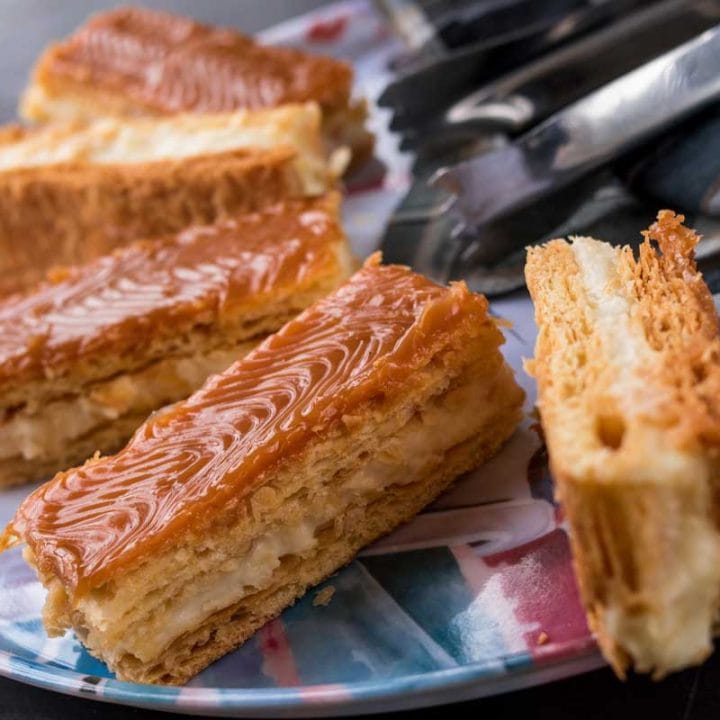
Milhojas with Dulce de Leche
A simplified milhojas made with crisp puff-pastry rectangles and dulce de leche, assembled as six individual three-layer pastries.
Ingredients
- 2 sheets ready-made puff pastry, about 17.3 oz (490 g) total, thawed but cold
- 1 1/2–2 cups thick dulce de leche (arequipe), spreadable and cooled
- Powdered sugar, for dusting
- A little all-purpose flour, for rolling
- Melted chocolate for drizzling (optional)
Instructions
- Thaw the puff pastry according to its package, keeping it cold. Heat the oven to 400°F (200°C), unless the package specifies otherwise. Line two baking sheets with parchment.
- On a lightly floured surface, gently roll each sheet to roughly 9 by 12 inches and about 1/8 inch thick. Cut each into nine equal 3-by-4-inch rectangles, giving 18 pieces. Keep the pastry cold; chill it briefly if it becomes soft.
- Space the rectangles on the sheets and prick all over with a fork. Bake about 15–25 minutes until well browned and dry through the layers, rotating the trays as needed. Follow the package guidance and doneness rather than assuming every brand bakes at the same rate.
- Cool fully on a rack, about 30 minutes. Do not fill warm pastry.
- Make six individual pastries, each with three rectangles. Spread a thin, even layer of dulce de leche on the first rectangle, top with a second, add another layer of filling, and finish with a plain rectangle. Use 1 1/2–2 cups filling across the batch, to taste; avoid pressing hard.
- Dust with powdered sugar and add optional chocolate just before serving. Serve soon after assembly for the crispest texture.
Notes
Makes 6 three-layer pastries. Estimate: 20 minutes preparation, 25 minutes baking and 30 minutes cooling, about 1 hour 15 minutes. Frozen-pastry thawing, extra tray batches and making dulce de leche from scratch are not included. This simplified version uses only dulce de leche; many Colombian bakery versions also include pastry cream. Optional refrigeration firms the filling but softens the pastry: allow up to 1 hour extra if desired. Refrigerate assembled leftovers covered and use within 2 days; expect softer layers. Equipment: two baking sheets, parchment, rolling pin, fork, knife, rack and spreading knife.
Savor the Delight of Colombian Milhojas

Creating Milhojas at home may seem daunting, but with the right ingredients and a bit of patience, you can master this classic Colombian dessert.
From its flaky layers of puff pastry to its rich, creamy filling, Milhojas is a treat that’s sure to impress your family and friends.
Whether you stick to the traditional dulce de leche filling or experiment with different flavors, each bite of Milhojas will bring a taste of Colombia to your table.
More Colombian Foods
See all →
Jorge Garcia is the founder of AmigoFoods, where he has spent over 20 years helping readers discover authentic Latin American and Spanish cuisine. Raised in a Cuban-American household, Jorge learned to cook at the hands of his mother and grandmother, carrying forward generations of family recipes. That heritage, backed by his family’s four-generation history in the Latin food industry, inspired him to launch AmigoFoods in 2003. With more than 1,000 published articles on recipes, ingredients, and food culture, Jorge’s mission is simple: make authentic Latin cooking approachable for home cooks everywhere while honoring the traditions behind every dish.