
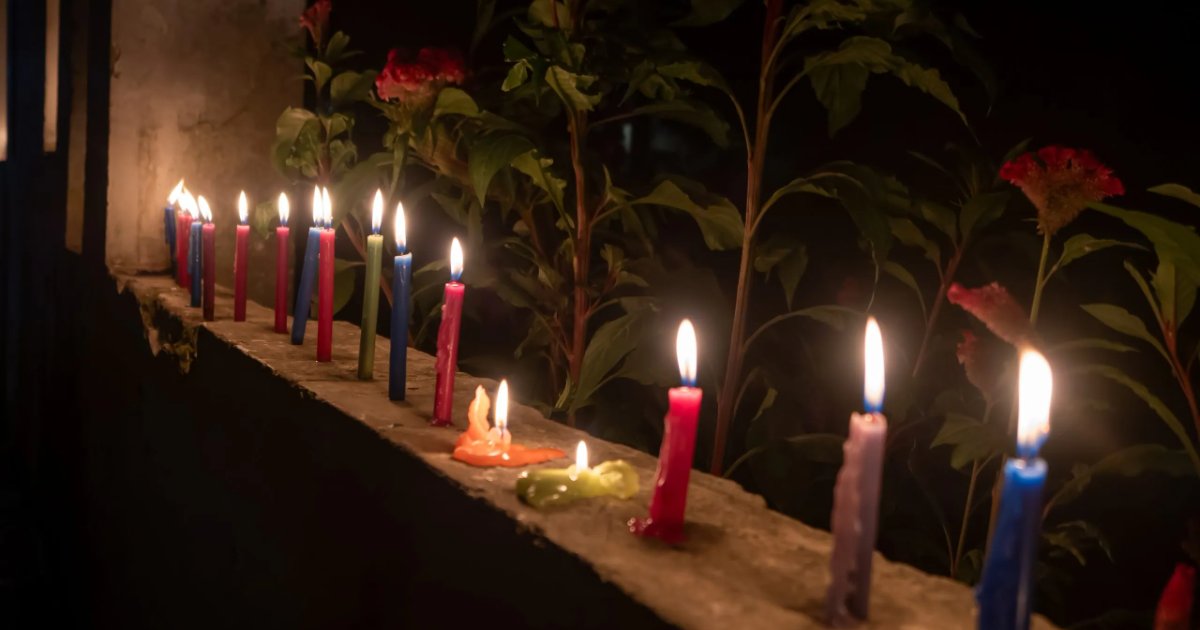
Día de las Velitas, the Day of the Little Candles, is the night of December 7, when Colombian families light candles and paper lanterns outside their homes to honor the Virgin Mary on the eve of the Feast of the Immaculate Conception. It is the unofficial start of Christmas in Colombia, and it has its own menu: hot buñuelos, a tray of natilla and something warm to drink.
Here is where the tradition comes from, how Colombians celebrate it, what the candle colors mean, where to see the biggest displays, and the dishes to make if you want to celebrate at home.
Just want the recipes? Our Colombian holiday dishes page collects them in one place.
Día de las Velitas at a Glance
What Is Día de las Velitas?
Velitas means “little candles,” and that is the whole idea. As night falls on December 7, families step outside and set rows of candles along the curb, on the front steps, on balcony railings and windowsills. Paper lanterns called faroles go up beside them. By nine o’clock whole streets glow, neighbors are out on the sidewalk, and someone is handing around a plate of buñuelos.
The candles are lit for the Virgin Mary on the eve of December 8, the Feast of the Immaculate Conception. For most Colombians, though, the night is just as much about family and the arrival of the holidays. The liturgical season starts with Advent, but in practice December 7 is when Christmas begins in Colombia: the lights are up, the music starts, and the December sweets come out for the first time.
Why Colombians Light Candles on December 7
On December 8, 1854, Pope Pius IX proclaimed the dogma of the Immaculate Conception in the apostolic letter Ineffabilis Deus, declaring that Mary was conceived free of original sin. According to the most widely told account, Catholics in Colombia marked the news by lighting candles, and the Church turned the gesture into an annual vigil held the night before the feast.
December 8 is still a national holiday in Colombia, and it is one of the few that never moves. Under the Ley Emiliani (Law 51 of 1983), most religious holidays shift to the following Monday to create long weekends, but the Immaculate Conception stays on its date. In 2026 it falls on a Tuesday, so there is no long weekend, but the night of Monday the 7th still works like a holiday eve.
Colombia is not the only country that celebrates on this night. In Nicaragua, December 7 is La Gritería, when crowds go from altar to altar singing to the Virgin and come home with bags of traditional sweets.
How Colombians Celebrate Día de las Velitas
Every family has its own routine, but most nights follow the same shape.
- When to light the candles. In most of the country the candles go out after dark, around 7 p.m. Some families wait until midnight. On the Caribbean coast many people get up at 3 or 4 a.m. and light them before dawn on December 8.
- Where they go. On the sidewalk in front of the house, along the curb, on front steps, balconies, windowsills, garden walls and garages. Anywhere they can be seen from the street. In Medellín and Cali people also line the banks of the rivers with candles.
- The faroles. Paper lanterns, often made by the family that afternoon from colored paper or cardboard cut into patterns, protect the flames from the wind and throw colored light on the pavement.
- A wish for every candle. Many people light each candle with a wish, a prayer or a thank-you. A popular custom is to light 12, one for each month, either to give thanks for the year that is ending or to ask for blessings for each month of the next one.
- Sharing food. Natilla and buñuelos come out, and plates travel from house to house along the street.
- December 8. The next day is for Mass, family visits and, in many towns, fireworks. Some households hang a white flag with an image of the Virgin outside all day.
What the Candle Colors Mean
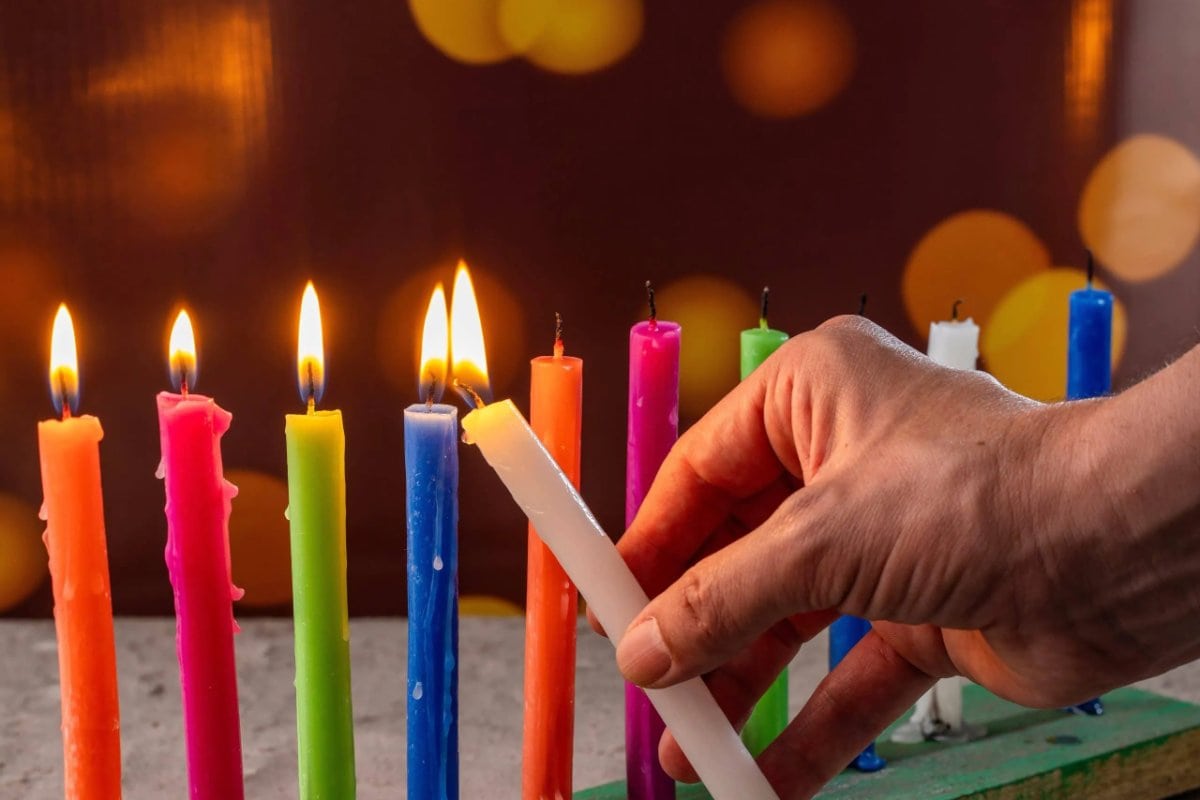
The traditional velitas are thin, plain candles, and many families still buy whatever colors they like. Over the years, though, a popular color code has grown up around the night, and Colombian newspapers publish their own versions of it every December. There is no official list, and the meanings vary from source to source, but these are the most common:
| Candle color | What people light it for |
|---|---|
| White | Peace, harmony and purity, and the Virgin herself |
| Red | Love and passion |
| Green | Hope and good health |
| Yellow | Prosperity and success (some say clarity) |
| Purple, pink and others | Renewal, gratitude and protection |
If you’re lighting a long row outdoors, a rechargeable arc lighter is easier than matches in the wind. In an apartment, or anywhere open flames aren’t allowed, flameless pillar candles on the windowsill keep the tradition without the risk.
Where to See the Biggest Celebrations
Quimbaya, Quindío: the Festival de Velas y Faroles
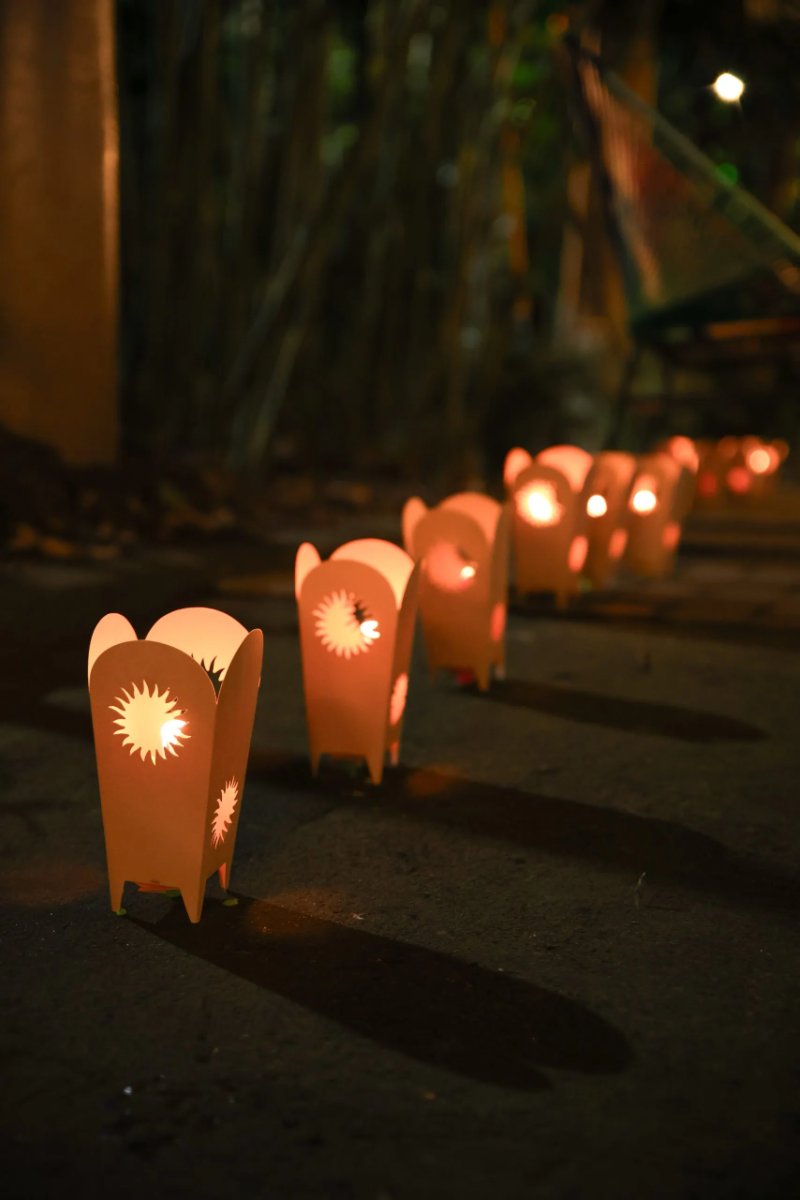
The most famous Día de las Velitas in Colombia happens in Quimbaya, a small coffee town about 20 km from Armenia in the department of Quindío. Since the early 1980s, its neighborhoods have competed on December 7 and 8 to build the most spectacular display of handmade faroles. Each block picks a theme, families spend weeks cutting and gluing lanterns, and on the night the streets are lit with tens of thousands of them.
The festival draws visitors from all over the country. It has been declared part of the cultural heritage of Quindío, and in 2023 a national law named Quimbaya the “Tierra de luz de Colombia,” the land of light. If you can’t get there, you can at least drink the local coffee: Café Quindío roasts its beans in the same department.
Medellín and Cali
In both cities candles go out on sidewalks and balconies across every neighborhood, and people also set them along the riverbanks. The city Christmas lights are already up by December 7, so the night is a good time to walk.
Bogotá
In the capital the night is more about neighborhood family gatherings. Parks, streets and plazas have free Christmas light displays, there are fireworks, and shopping centers stay open late.
The Caribbean coast
In Barranquilla, Cartagena and the rest of the coast, the night is louder and more public. Many families keep the custom of lighting the candles before dawn on December 8, then stay up to watch the sun rise.
What to Eat on Día de las Velitas
The Velitas menu is sweet, made in big batches and meant to be shared on the sidewalk. Natilla and buñuelos are the two you can’t skip. The rest depends on the family and the region, and most of it reappears two weeks later at the Novena and on Christmas Eve.
1. Buñuelos

Colombian buñuelos are fried balls of starch and grated salty white cheese. When the dough is right they turn themselves over in the oil and come out round, golden and crisp, with an airy, cheesy middle. They are best eaten within minutes of frying, so they are usually the last thing made before the candles are lit.
They are nothing like the flat, crackly Mexican buñuelos with piloncillo syrup, even though they share a name.
2. Natilla
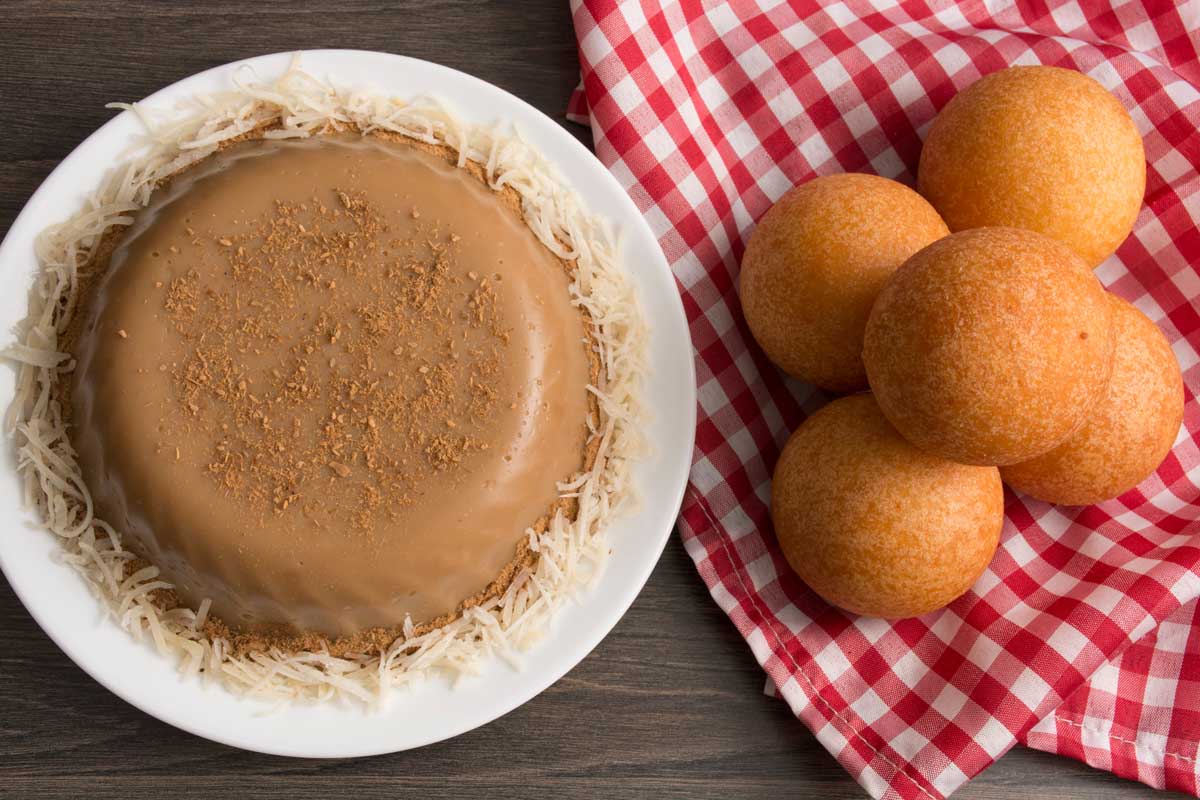
Natilla colombiana is a firm custard made from milk, panela, cinnamon and cornstarch, stirred until it is thick enough to hold a spoon upright, then poured into a dish to set. Once cool it is cut into squares, often with grated coconut or raisins mixed in and a dusting of cinnamon on top.
It needs a few hours to firm up, so make it in the afternoon. All you need from the store is panela and a box of cornstarch.
3. Hojuelas

Hojuelas are thin sheets of wheat dough fried until they puff and blister, then dusted with sugar or drizzled with panela syrup. They are light, crunchy and easy to pass around, which makes them ideal for a night spent on the sidewalk. A sugar shaker makes the dusting quick when you’re frying a big batch.
4. Colombian Hot Chocolate
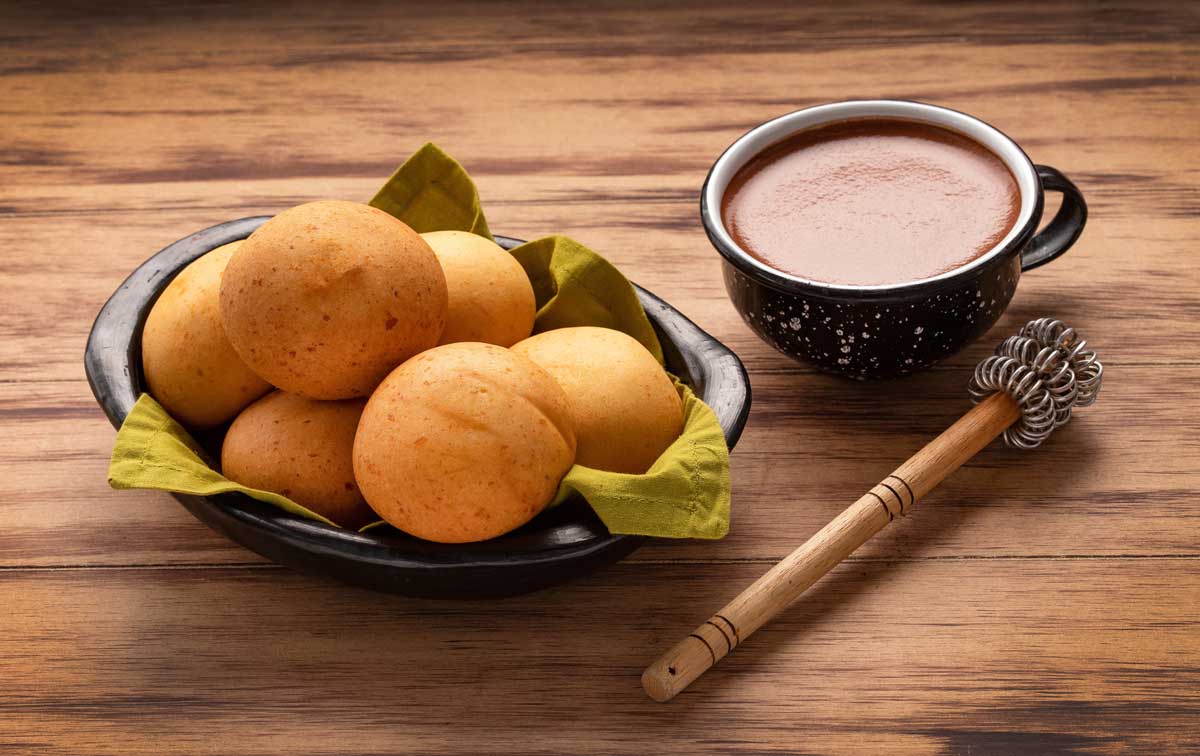
December nights in Bogotá and the Andean towns are cold, and Colombian hot chocolate is the drink that keeps people outside. It is made with tablets of table chocolate melted in water or milk and frothed with a wooden molinillo. In Bogotá it comes with a slice of fresh cheese that you drop into the cup and fish out half melted. Look for Luker table chocolate, one of the classic Colombian brands.
5. Brevas con Arequipe

Brevas con arequipe are green figs cooked slowly in panela syrup until they are dark and tender, then split and filled with arequipe, Colombia’s dulce de leche. They are a December favorite and a good make-ahead dessert, since the figs keep for days in their syrup. In the US, Colombina dulce de leche is the easiest Colombian brand to find.
6. Tamales
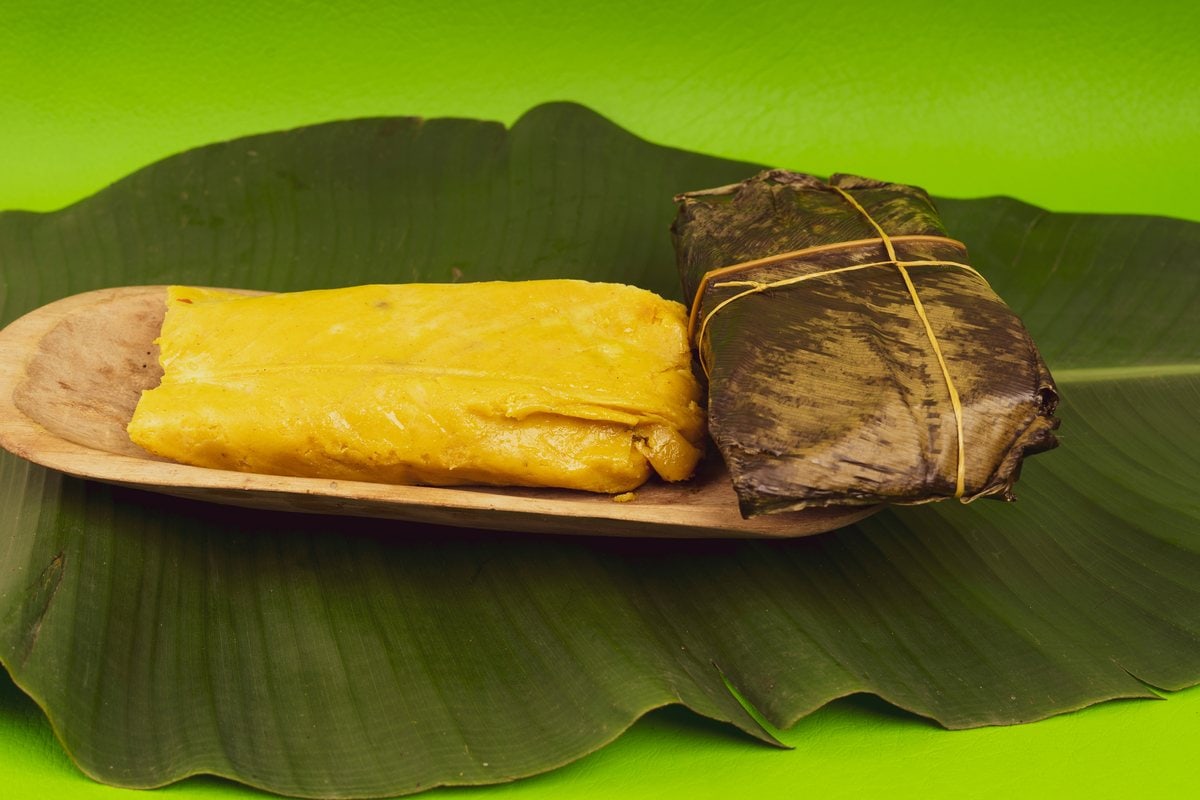
Not everything on the table is sweet. Many families make a batch of Colombian tamales for the long night or for breakfast on the holiday morning. The tamal tolimense, wrapped in banana leaves and filled with pork, chicken, egg, peas and carrot, is the most famous, and it goes perfectly with a cup of hot chocolate.
7. Lechona
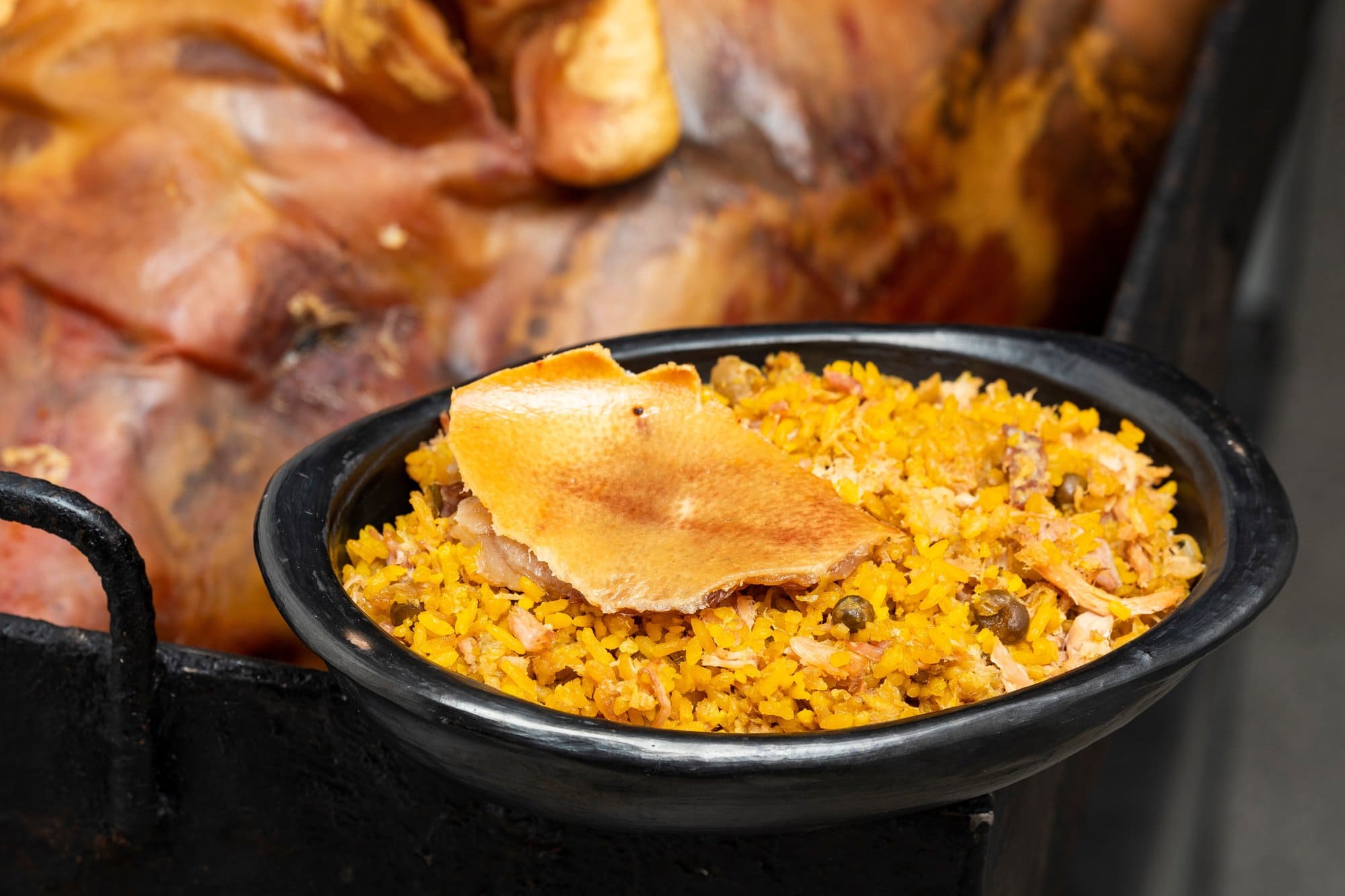
For a big neighborhood party, nothing feeds a crowd like lechona, a whole pig stuffed with rice, peas and seasoned pork and roasted for hours until the skin crackles. It is more of a Christmas and New Year dish, but when a whole block celebrates Velitas together, someone often orders one.
8. Sabajón, Aguardiente and Coffee
For the adults, December means sabajón, a thick, creamy drink of milk, egg yolks, sugar and cinnamon spiked with aguardiente or rum, often called Colombian eggnog. Aguardiente, Colombia’s anise spirit, is poured on its own too, in small shots. And because the night runs late, there is always a pot of strong Colombian coffee on the stove.
How to Celebrate Día de las Velitas at Home
You don’t need to be in Colombia to keep the tradition. Here is a simple plan for the evening of December 7:
| When | What to do |
|---|---|
| Afternoon | Cook the natilla and pour it into a dish to set. Make the brevas or hojuelas if you’re serving them. |
| Late afternoon | Make faroles with the kids: colored paper or cardboard, cut-out shapes, a glass jar or tea light inside. |
| Before dark | Mix the buñuelo dough and set out the candles on a fireproof surface: the front steps, a walkway, a balcony ledge. |
| Around 7 p.m. | Light the candles, one wish each. Fry the buñuelos and make the hot chocolate. |
| The rest of the night | Slice the natilla, invite the neighbors and let the candles burn down. |
A few safety notes: keep candles away from curtains, dry plants and anything that can blow into them, never leave them burning unattended, and keep small children an arm’s length from the flames. Faroles and glass jars help a lot on a windy night.
Día de las Velitas FAQ
When is Día de las Velitas?
Every year on the night of December 7, the eve of the Feast of the Immaculate Conception. In 2026 that is Monday, December 7.
Is Día de las Velitas on the 7th or the 8th?
Both, in a way. The candles are lit on the night of December 7 and burn into the early hours of the 8th, and on the Caribbean coast many people light them before dawn on the 8th. December 8 itself is the religious feast and the public holiday.
Why is Día de las Velitas celebrated?
To honor the Virgin Mary and the Immaculate Conception, proclaimed as Catholic dogma by Pope Pius IX on December 8, 1854. Today it is also the unofficial start of the Christmas season in Colombia.
What do Colombians eat on Día de las Velitas?
Buñuelos and natilla above all, with hojuelas, brevas con arequipe, hot chocolate and, for some families, tamales or lechona. Adults may drink sabajón or aguardiente.
Is December 8 a holiday in Colombia?
Yes. The Immaculate Conception is a national holiday, and unlike most Colombian religious holidays it is never moved to a Monday. In 2026 it falls on a Tuesday.
What does “velitas” mean in English?
“Little candles.” Vela means candle, and -ita is the Spanish diminutive, so the holiday is often called the Day of the Little Candles or Little Candles Day in English.
Where is Día de las Velitas celebrated?
All over Colombia, and by Colombian families abroad. The biggest public celebration is the Festival de Velas y Faroles in Quimbaya, Quindío.
More Colombian Christmas Food
Día de las Velitas is just the start of the season. For everything Colombians eat between now and Reyes, see our Colombian Christmas food guide, or browse the Colombian food hub. To see how the rest of the region celebrates, visit our Latin Christmas foods hub and the Nochebuena guide.
AmigoFoods may earn a commission from qualifying Amazon purchases made through links on this page.
More Colombian Foods
See all →
Jorge Garcia is the founder of AmigoFoods, where he has spent over 20 years helping readers discover authentic Latin American and Spanish cuisine. Raised in a Cuban-American household, Jorge learned to cook at the hands of his mother and grandmother, carrying forward generations of family recipes. That heritage, backed by his family’s four-generation history in the Latin food industry, inspired him to launch AmigoFoods in 2003. With more than 1,000 published articles on recipes, ingredients, and food culture, Jorge’s mission is simple: make authentic Latin cooking approachable for home cooks everywhere while honoring the traditions behind every dish.