

Cuchuco is the soup of Colombia’s cold highlands: cracked wheat simmered with pork spine until the broth turns thick and creamy, then loaded with potatoes, fava beans, peas and cabbage. In Tunja, the capital of Boyacá, many restaurants cook a pot of it on Thursdays, and one bowl with an arepa and avocado is a full meal.
Cuchuco at a Glance
AmigoFoods may earn a commission from qualifying Amazon purchases made through links on this page.
What Is Cuchuco?
The word cuchuco refers to grain that has been cracked into coarse pieces, and by extension to the soup made with it. Food writers trace the word to Quechua, and the idea to the maize soups of the Muisca and other peoples of the highlands long before the Spanish arrived.

The version most Colombians know today is a colonial one. The Spanish brought wheat, pigs, fava beans and peas to the plateau around Tunja, and by the early 1600s wheat and barley were already being grown there. Cracked wheat simmered with pork spine, called espinazo, became the region’s everyday soup and is still the pride of Boyacá.
Wheat, Corn or Barley Cuchuco
The grain changes the name:
- Cuchuco de trigo: cracked wheat, the classic of Boyacá. It gives the creamiest broth.
- Cuchuco de maíz: cracked dried corn, closest to the pre-Hispanic original. It is heartier and a little sweeter.
- Cuchuco de cebada: cracked or pearl barley, another highland favorite with a nuttier flavor.

All three are cooked the same way, so the recipe below works for any of them. Corn takes longer to soften, so give it extra time before adding the vegetables.
Ingredients for Cuchuco de Trigo
The full ingredient list and amounts are in the recipe card below.

Finding cracked wheat: look for “cracked wheat” or trigo partido in Latin and Middle Eastern grocery stores, or buy cracked wheat online. Bulgur is pre-cooked and turns mushy, so it is not a good swap. Pearl barley is the best substitute.
How to Make Cuchuco
The step-by-step method is in the recipe card. In outline, you will:
- Soak the cracked wheat overnight, then drain and rinse it three times, until the water runs almost clear.
- Simmer the pork spine or neck bones for 45 minutes to 1 hour, until the meat starts to come away from the bone.
- Stir in the wheat, then add the vegetables in stages, and cook until the wheat is completely soft and the papa criolla starts to break apart, about 2 hours on the stove in all.
- Finish with cilantro, and serve with avocado, ají and an arepa.
Tips for the Best Cuchuco
- Do not skip the rinse. Rinsing the soaked wheat removes loose starch, so the soup gets creamy without turning gluey.
- Stir while the wheat cooks. Cracked wheat settles and sticks, especially in the first 15 minutes.
- Let the papa criolla fall apart. Papa criolla has soft yellow flesh that thickens the broth, the same trick used in ajiaco.
- Use bones, not lean meat. Pork spine or neck bones give the broth its body. Lean pork alone makes a thin soup.
- Save time with a pressure cooker. Cook the pork for 25 minutes at high pressure, then continue with the wheat and vegetables in the open pot.

What to Serve With Cuchuco
Cuchuco is a full meal, so the sides are small:
- Sliced avocado, added to the bowl or eaten alongside
- Colombian ají, the fresh salsa of green onion, cilantro and hot pepper
- A warm arepa or a piece of bread
- A cup of aguapanela or hot chocolate on a cold day
Cuchuco and Other Highland Soups

Cuchuco belongs to the same family as Bogotá’s ajiaco, the chicken and three-potato soup, and changua, the milk and egg broth eaten for breakfast. Where ajiaco gets its body from potatoes, cuchuco gets it from grain. On the coast and in the valleys, the everyday pot is sancocho instead.
Cuchuco FAQs
What does cuchuco mean?
Cuchuco means grain that has been cracked into coarse pieces. The soup takes its name from that grain, usually wheat, corn or barley.
Can I use bulgur instead of cracked wheat?
It is not ideal. Bulgur is pre-cooked, so it softens in a few minutes and turns mushy in a long simmer. Pearl barley holds up better.
What is espinazo?
Espinazo is pork spine, the backbone cut into pieces. It has little meat but lots of flavor. Pork neck bones are the easiest substitute in the US.
Why is cuchuco eaten on Thursdays in Tunja?
Local chefs connect it to Tunja’s old Thursday market day, when pork was sold in town. Many restaurants still cook cuchuco only on Thursdays.
Does cuchuco freeze well?
Yes. Freeze it without the cabbage for up to three months. The wheat keeps thickening as it sits, so add water when you reheat it.
Cuchuco de Trigo Recipe
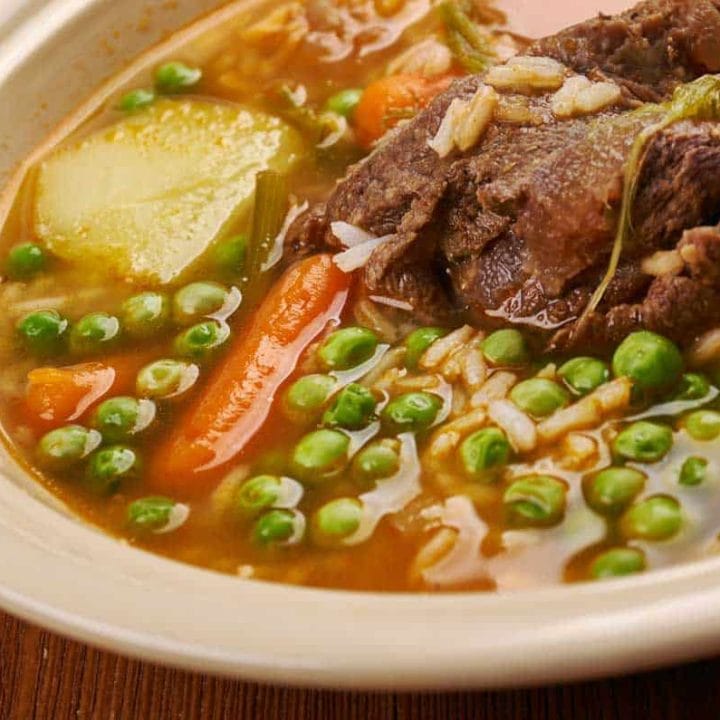
Cuchuco de Trigo con Espinazo (Colombian Wheat and Pork Soup)
Cuchuco de trigo is the thick cracked-wheat and pork-spine soup of Boyaca. Soak the wheat overnight, then simmer it with pork neck or spine, potatoes, fava beans, peas and cabbage for about 2 hours. Serves 6.
Ingredients
For the broth
- 1 cup cracked wheat (not bulgur), soaked overnight
- 2 lb (900 g) pork spine or pork neck bones, cut into pieces
- 12 cups water
- 4 green onions, 2 left whole and 2 chopped
- 4 garlic cloves, crushed
- Salt and black pepper
For the vegetables
- 1 lb (450 g) russet potatoes, peeled and cubed
- 1/2 lb (225 g) papa criolla or small yellow potatoes, left whole
- 1 cup fresh or frozen fava beans
- 1 cup fresh or frozen peas
- 1/2 cup green beans, cut into 1-inch pieces
- 1 carrot, diced
- 3 cabbage leaves, thinly sliced
- 1/4 cup chopped cilantro
Instructions
- Soak the wheat. The night before, cover the cracked wheat with plenty of water. In the morning, drain it and rinse it three times, until the water runs almost clear.
- Make the pork broth. Put the pork in a large pot with the 12 cups of cold water and bring it to a boil. Skim off the foam, then add the whole green onions, the garlic and 1 teaspoon of salt. Simmer for 45 minutes to 1 hour, until the meat starts to come away from the bone.
- Add the wheat. Stir the drained wheat into the simmering broth. Cook for 15 minutes, stirring every 5 minutes so it does not stick to the bottom. The broth will start to thicken.
- Add the first vegetables. Add the russet potatoes, carrot, fava beans, peas and green beans. Simmer for 15 minutes.
- Add the papa criolla and cabbage. Add the whole papa criolla, the cabbage and the chopped green onions. Simmer for 20 minutes more, until the wheat is completely soft and the small potatoes start to break apart.
- Finish. Remove the whole green onions, taste for salt and pepper, and stir in the cilantro. The soup should be thick enough to coat a spoon. Add a little hot water if it is too thick.
- Serve. Ladle into deep bowls with a piece of pork in each, and serve with avocado, aji and an arepa on the side.
Notes
Do not skip the rinse. Rinsing the soaked wheat removes loose starch, so the soup gets creamy without turning gluey.
Stir while the wheat cooks. Cracked wheat settles and sticks, especially in the first 15 minutes.
Let the papa criolla fall apart. The soft yellow flesh thickens the broth, the same trick used in ajiaco.
Use bones, not lean meat. Pork spine or neck bones give the broth its body.
To save time, cook the pork for 25 minutes at high pressure in a pressure cooker, then continue with the wheat and vegetables in the open pot.
Look for cracked wheat or trigo partido. Bulgur is pre-cooked and turns mushy; pearl barley is the best substitute.
Refrigerate leftovers within 2 hours and eat within 3 to 4 days. Reheat until steaming hot (165 F). Freeze without the cabbage for up to 3 months.
Nutrition Information:
Yield: 6 Serving Size: about 2 cups (1/6 of recipe)Amount Per Serving: Calories: 350Total Fat: 11gSaturated Fat: 4gUnsaturated Fat: 7gCholesterol: 45mgSodium: 400mgCarbohydrates: 47gFiber: 7gSugar: 5gProtein: 21g
More Colombian Soups
Cuchuco is one of the 12 traditional Colombian soups worth knowing, and you can find the rest on our Colombian soup and stew recipes page. From the Caribbean coast, try cazuela de mariscos. You can also browse soups and stews from across Latin America and Spain or explore all Colombian food.
More Colombian Foods
See all →
Jorge Garcia is the founder of AmigoFoods, where he has spent over 20 years helping readers discover authentic Latin American and Spanish cuisine. Raised in a Cuban-American household, Jorge learned to cook at the hands of his mother and grandmother, carrying forward generations of family recipes. That heritage, backed by his family’s four-generation history in the Latin food industry, inspired him to launch AmigoFoods in 2003. With more than 1,000 published articles on recipes, ingredients, and food culture, Jorge’s mission is simple: make authentic Latin cooking approachable for home cooks everywhere while honoring the traditions behind every dish.