

Ceviche de corvina is Panama’s bright, chilled seafood snack: white fish with lime, onion, crunchy celery, culantro and fiery ají chombo. It takes about 20 minutes of hands-on work, followed by a refrigerated soak and cure, and is traditionally scooped up with saltine crackers.
Ceviche de Corvina at a Glance
What Makes Panamanian Ceviche Different
A Peruvian ceviche is served within minutes of mixing, with sweet potato and corn on the side. Ecuador’s ceviche swims in a tomato-and-citrus broth. Panamanian ceviche is different in three ways:
- It marinates longer. The fish sits in lime juice until it turns fully opaque, usually a couple of hours.
- Celery is a signature. Finely diced celery adds crunch and a fresh, green flavor.
- The heat is ají chombo. Panama’s native pepper is a close cousin of the habanero, fruity and very hot, so a little goes a long way.
The seasoning is kept to lime juice, onion, culantro, salt and ají, so the fish is the star. For types of ceviche by country, see our ceviche guide.
Where Panamanians Eat It
Panama City’s Mercado del Marisco, the seafood market on the waterfront, is the most famous place to eat it, with stalls selling cups of ceviche by the dozen. It is also a restaurant appetizer, a party staple and a fixture of beach days on both coasts. Bocas del Toro and Colón, on the Caribbean side, keep more traditional versions.
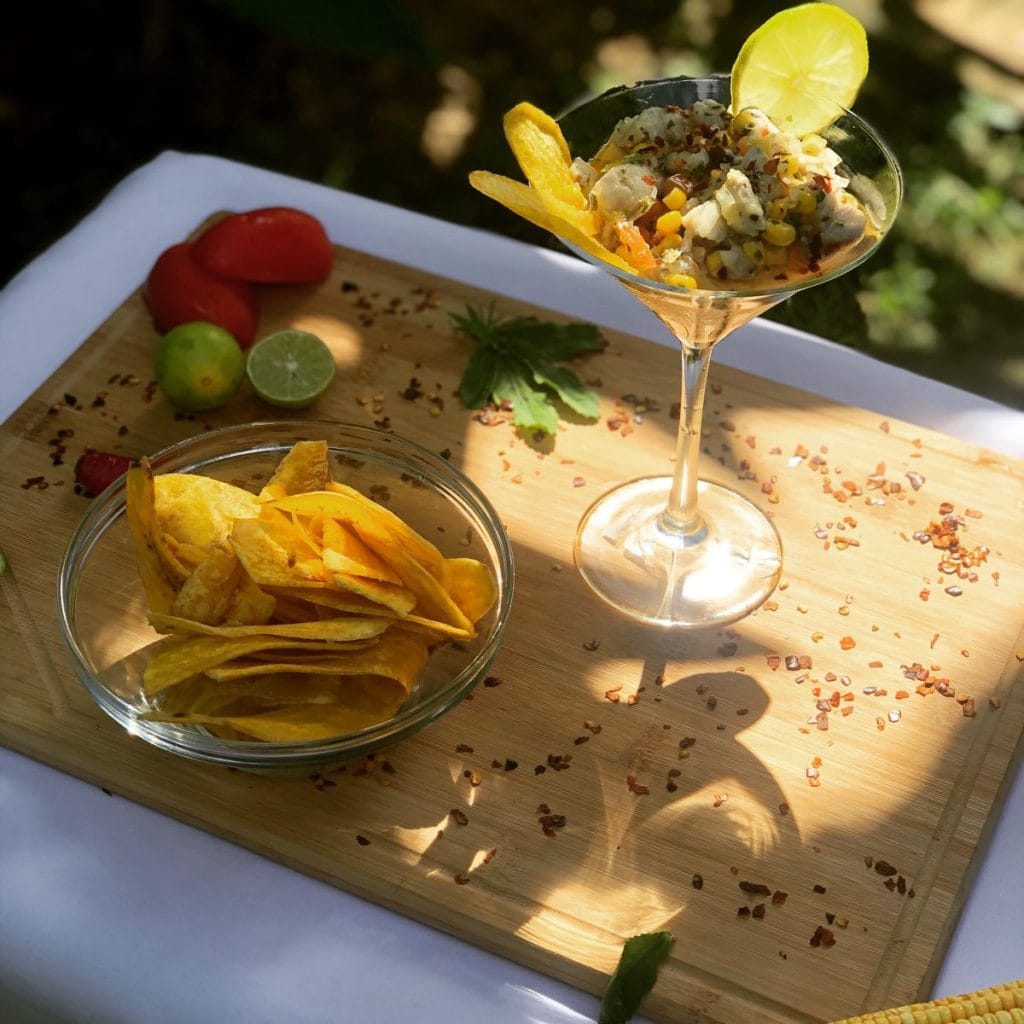
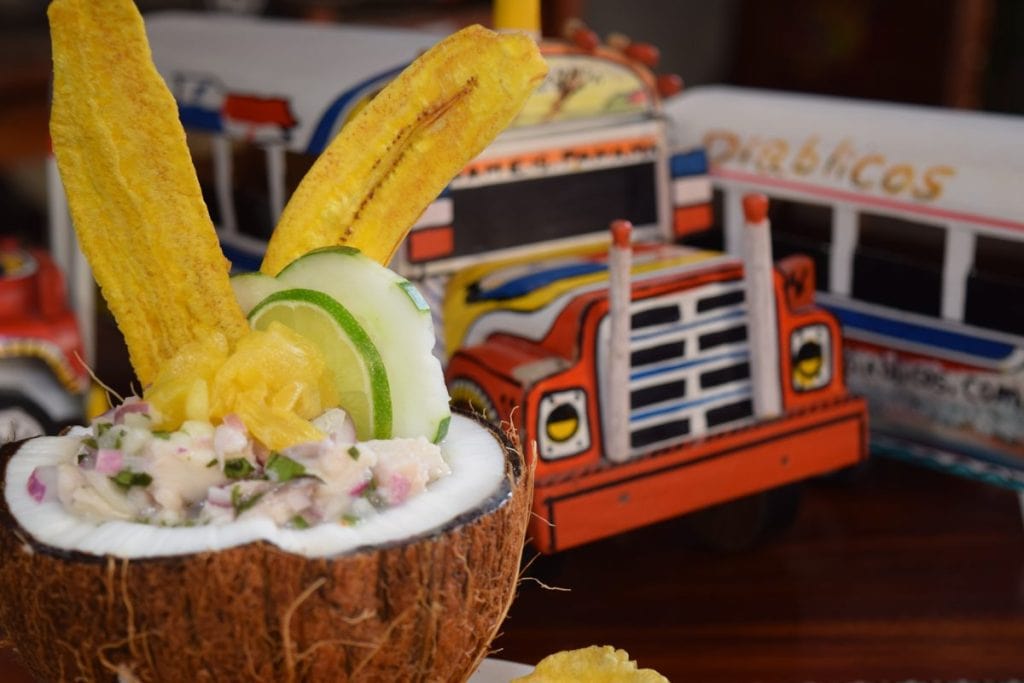
It is served in tall glasses or plastic cups, in little fried pastry cups called canastitas, or simply with a sleeve of saltines for scooping.
Choosing the Fish
Corvina is often sold in the US as white sea bass. Any firm, mild white fish works: snapper, halibut or other sea bass. The fish has to be very fresh. For more on what to buy and what to skip, see our guide to the best fish for ceviche.
Lime curing leaves fish raw. Ask the supplier for fish appropriately frozen for raw consumption; freezing does not remove all harmful germs. Keep at 40°F or below. Pregnant people, children, older adults and anyone immunocompromised should avoid raw ceviche; use fish cooked to 145°F and promptly chilled instead.
How It’s Made
The fish is cut into half-inch cubes and soaked in salted ice water in the refrigerator for 15 to 30 minutes, a Panamanian step that firms up the flesh and gives it a clean flavor. It is drained, patted dry and covered with fresh lime juice mixed with diced onion, celery, half the ají chombo and salt. After about two hours in the fridge the fish is opaque all the way through; this is a texture cue, not proof of safety. The culantro goes in at the end, and the salt and heat are adjusted to taste.
Variations
- Cooked and chilled shrimp, octopus or mixed seafood instead of or alongside the fish.
- Conchas negras, black clams, a coastal favorite.
- Creamy ceviche, finished with a spoonful of mayonnaise and mustard, a style popular at parties.
- Parsley or cilantro in place of culantro.
Panamanian Ceviche FAQ
What do Panamanians eat ceviche with?
Saltine crackers are the classic, along with canastitas, plantain chips or patacones, and a cold beer.
How long should the fish marinate?
Recipes range from 30 minutes to overnight. About two hours gives fish that is opaque all the way through but still tender.
What can I use instead of ají chombo?
Habanero or Scotch bonnet peppers have the same fruity heat.
How long does it keep?
For the best texture, eat it the day it is made. Keep it covered in the fridge.
Panamanian Ceviche de Corvina
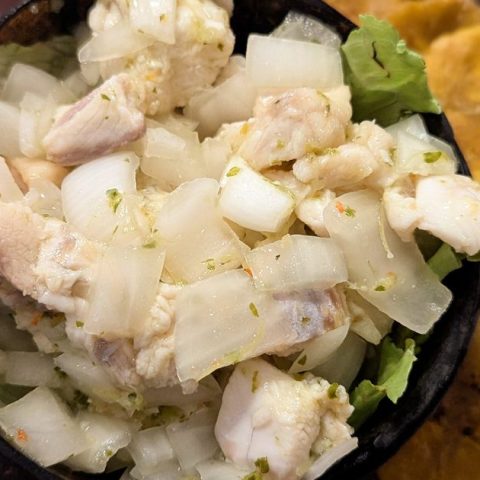
White sea bass cured in lime juice with onion, celery, culantro and ají chombo, served cold with saltine crackers.
Ingredients
- 1½ lb (680 g) skinless corvina (white sea bass) fillet, cut into ½-inch cubes
- 2 cups ice water
- 1 tablespoon salt, plus 1 to 1½ teaspoons for seasoning
- 1 cup (240 ml) fresh lime juice (from 8 to 10 limes)
- 1 medium white onion, finely diced
- ½ cup finely diced celery
- 1 ají chombo or habanero pepper, seeded and minced, divided
- ¼ cup chopped culantro
- Saltine crackers, for serving
Instructions
- Soak the fish in the ice water with 1 tablespoon salt for 15 to 30 minutes in the refrigerator. Drain and pat dry.
- In a bowl, mix the lime juice, onion, celery, half the ají and 1 teaspoon salt.
- Put the fish in a glass bowl and pour the lime mixture over it so the fish is fully covered. Cover and refrigerate for about 2 hours, until the fish is opaque all the way through; this is a texture cue, not proof of safety.
- Stir in the culantro. Taste and add more salt and the rest of the ají if you like.
- Serve cold in glasses or bowls with saltine crackers.
Notes
Fish safety: Lime curing leaves fish raw. Ask the supplier for fish appropriately frozen for raw consumption; freezing does not remove all harmful germs. Keep at 40°F or below. Pregnant people, children, older adults and anyone immunocompromised should avoid raw ceviche; use fish cooked to 145°F and promptly chilled instead.
Substitutes: snapper or halibut for corvina; cilantro or parsley for culantro; habanero or Scotch bonnet for ají chombo.
Best eaten the day it is made.
Keep Cooking Panamanian
Ceviche makes a great start to a Panamanian meal alongside carimañolas, followed by a bowl of sancocho panameño, the national chicken soup. For breakfast, Panamanians reach for hojaldras, a puffy fried bread. Find more of the country’s pantry in our guide to Panamanian ingredients, see the full roundup of Panamanian food, or browse everything on the Panamanian food hub.
More Panamanian Foods
See all →
Jorge Garcia is the founder of AmigoFoods, where he has spent over 20 years helping readers discover authentic Latin American and Spanish cuisine. Raised in a Cuban-American household, Jorge learned to cook at the hands of his mother and grandmother, carrying forward generations of family recipes. That heritage, backed by his family’s four-generation history in the Latin food industry, inspired him to launch AmigoFoods in 2003. With more than 1,000 published articles on recipes, ingredients, and food culture, Jorge’s mission is simple: make authentic Latin cooking approachable for home cooks everywhere while honoring the traditions behind every dish.