
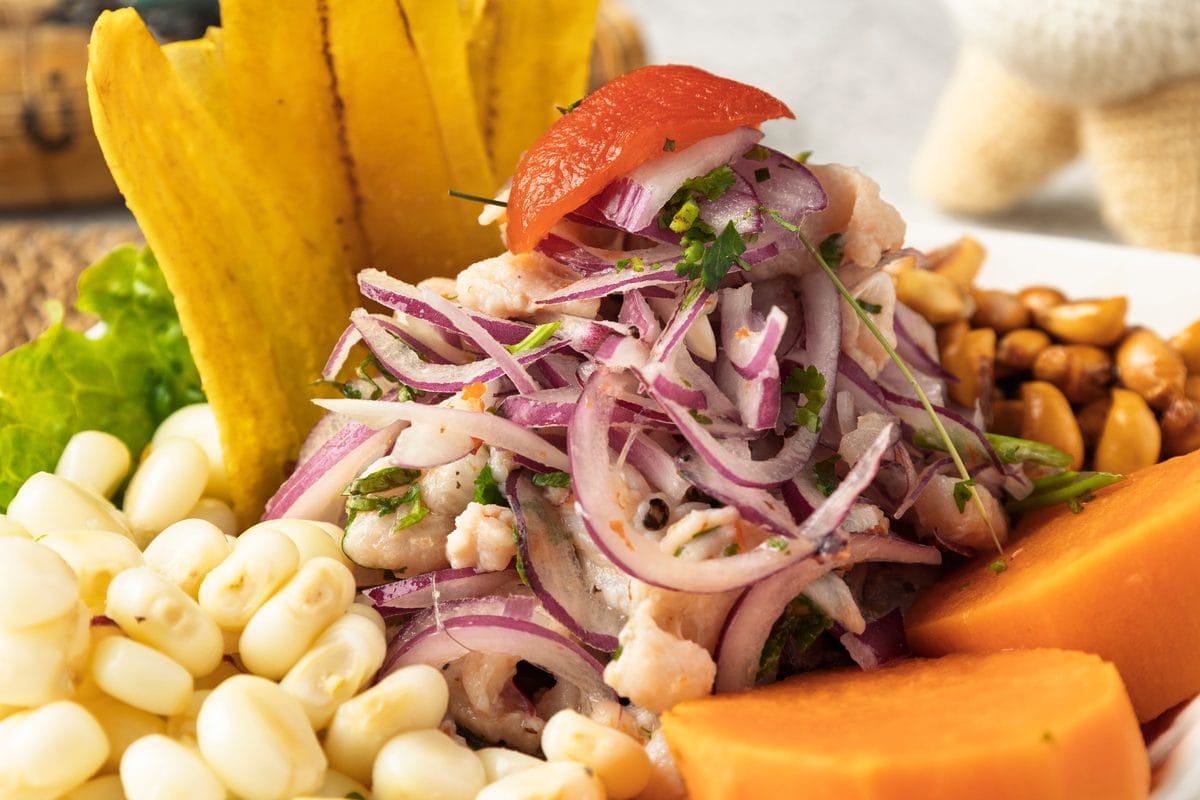
Ceviche is raw or briefly cooked seafood cured in citrus juice with onion, chile and herbs. It is Peru’s national dish, and almost every Latin American coast has its own version.
Ceviche at a Glance
AmigoFoods may earn a commission from qualifying Amazon purchases made through links on this page.
What Is Ceviche?
Ceviche (pronounced seh-VEE-chay, also spelled cebiche, especially in Peru) is seafood dressed with acidic citrus juice, usually lime, plus salt, onion, chile and a fresh herb such as cilantro. The acid changes the texture of the flesh: raw fish turns opaque and firm, the same way heat would, but the dish is still served cold and is not cooked in the thermal sense.
That is the shared idea. The cut, the juice and the sides change by country, which is what the map below is for. Two close cousins, leche de tigre and aguachile, are related but not the same bowl.

Ceviche is an appetizer, a beach snack or a light meal. It is eaten the day it is made, while the seafood is still bright and the onions still crunch.
Where Is Ceviche From?

Ceviche is from the Pacific coast of South America, and Peru is the country most closely identified with it. It is Peru’s national dish. In 2023, UNESCO added the practices around preparing and eating Peruvian ceviche to its list of Intangible Cultural Heritage of Humanity.
Coastal peoples in what is now Peru and Ecuador were already curing fresh fish with acidic local fruit, such as tumbo, more than 2,000 years ago, long before limes arrived. Spanish contact brought sour citrus and onions, which became the backbone of the modern recipe. From there, each coastline kept the citrus cure and changed the seafood, the heat and the sides.
The name may come from the Spanish escabeche (and ultimately Arabic sakbāj) or from the Quechua siwichi, “fresh fish,” and the very short Lima cure was popularized in the 1970s in Peruvian-Japanese kitchens.
So an honest short answer to “where is ceviche from?” is Peru, with deep roots along the wider Pacific coast. Mexico, Central America, Colombia and Chile all have local traditions of their own; they are cousins, not copies of the Lima plate.
Types of Ceviche by Country
Use this as a map. Each photo card links to a full recipe or, for Costa Rica and Chile, to the country guide that already covers that style. Short notes on Honduras, El Salvador, Guatemala and Nicaragua follow the cards.
Inside Peru, Nikkei kitchens sometimes dress the fish with yuzu or a soy-citrus mix instead of a plain lime cure. That is a Peruvian-Japanese variation of the same idea, not a separate country’s ceviche.

Ceviche peruano
Cubed white fish in a short lime cure with red onion, ají and cilantro, served with sweet potato, choclo and cancha.
Peruvian ceviche recipe →
Ceviche ecuatoriano
Usually cooked shrimp in a lime-and-orange tomato broth, eaten with chifles, popcorn and tostado. Fish and black-clam versions are common too.
Ecuadorian ceviche recipe →
Ceviche de camarón
Sinaloa- and Nayarit-style shrimp ceviche with tomato, cucumber, onion, cilantro and avocado, scooped onto tostadas. Fish ceviche (sierra, snapper) is a Pacific classic too.
Mexican shrimp ceviche recipe →
Ceviche de corvina
Diced sea bass with lime, onion, celery, culantro and fiery ají chombo, traditionally scooped up with saltine crackers.
Panamanian ceviche recipe →
Ceviche cartagenero
Cooked shrimp in a creamy tomato-lime or ketchup-mayo dressing, sometimes with coconut on the Caribbean coast, served in a cup.
Colombian ceviche recipe →
Ceviche tico
White fish with lime, onion and cilantro, often with a little ginger or ketchup, served as a bar snack with soda crackers.
Costa Rican foods guide →
Ceviche chileno
A finer dice of merluza or reineta with lemon or lime, onion and cilantro, sometimes with merquén. A closer cousin of the Peruvian plate.
Chilean seafood dishes →
Aguachile
Butterflied shrimp in a blended chile-lime sauce with cucumber and red onion. Related to ceviche, but the chile sauce is the point.
Aguachile recipe →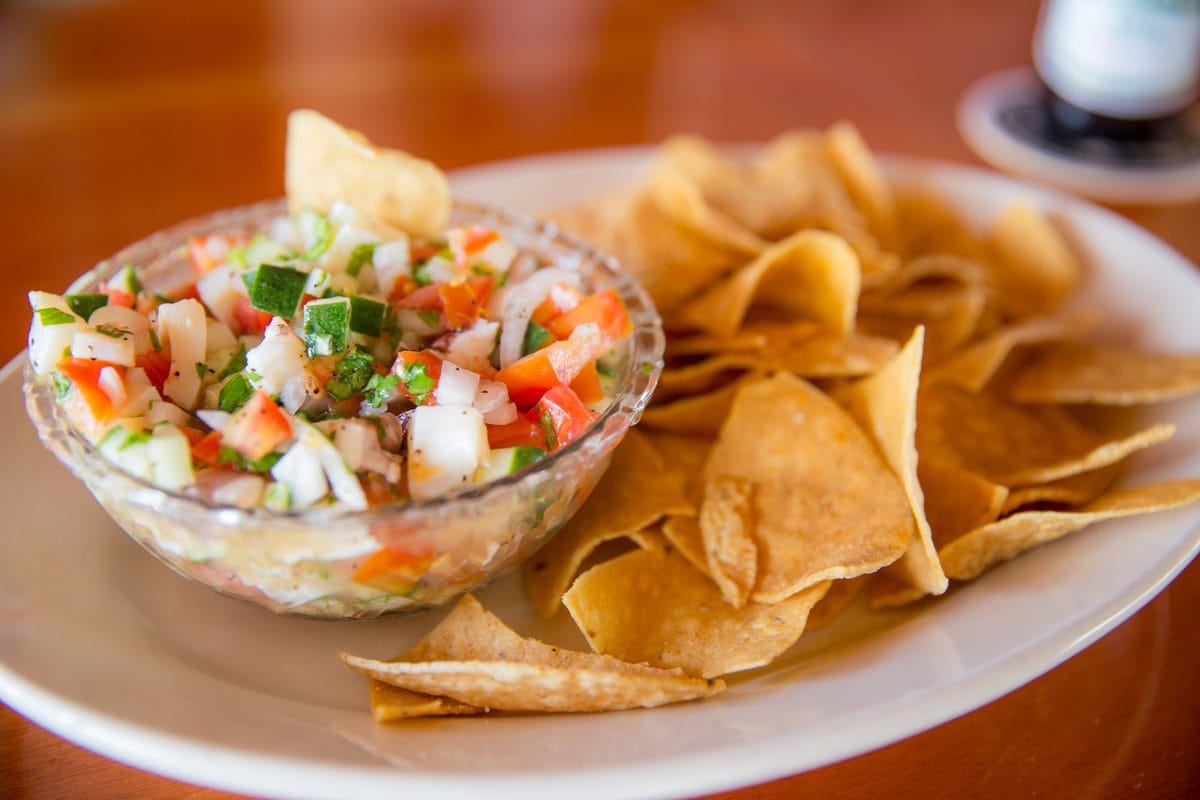
Ceviche de caracol
The coastal classic is ceviche de caracol: chopped conch cured in lime with tomato, onion, cilantro and often salsa inglesa (Worcestershire), served with saltines or chips. Coconut milk is the signature of sopa de caracol, not of the usual ceviche bowl.
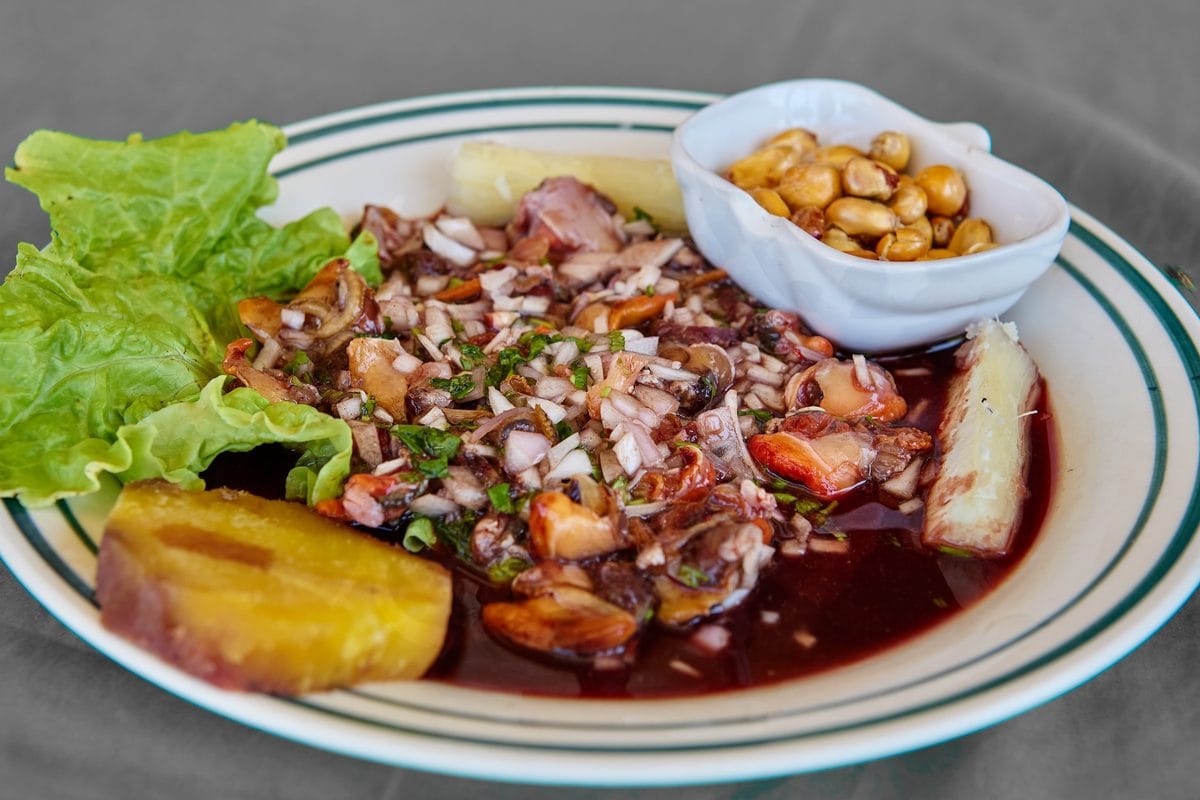
Ceviche de concha negra
The coastal signature is ceviche de conchas negras (also called cóctel de conchas): black clams in their dark liquor and lime, with tomato, onion, cilantro and salsa inglesa. It is often served in the shells, with saltine crackers.
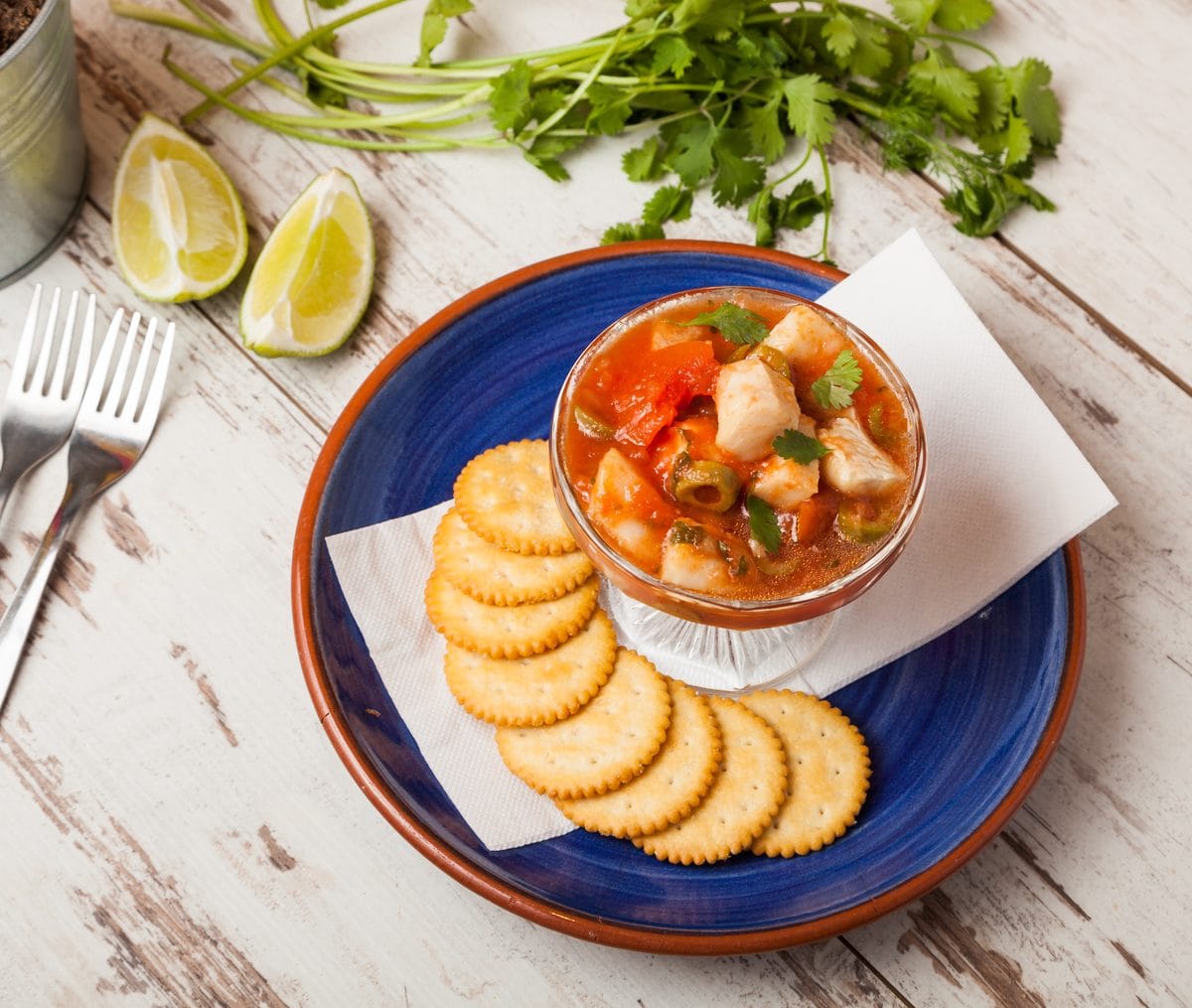
Ceviche chapín
Guatemalan ceviche cures fish or mixed seafood in lime, then folds in tomato, onion and cilantro with ketchup and Worcestershire sauce. That sweet-tangy tomato base, served with saltines, is the chapín tell.
Ceviche de pescado
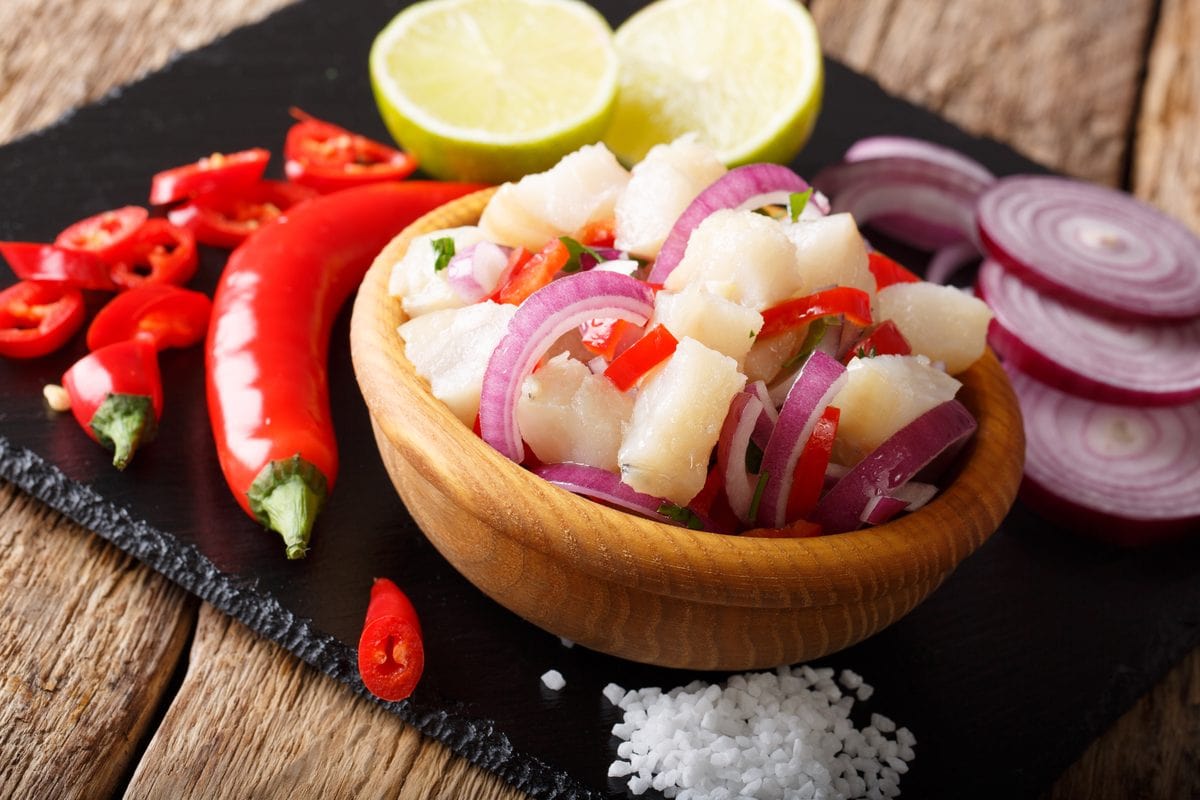
Nicaraguan ceviche is usually chopped white fish (curvina or mojarra) cured in lime with plenty of onion, tomato, chiltoma (sweet pepper) and chile. It is served as a bar or weekend snack with soda crackers.
Ceviche compared at a glance
| Country | Classic seafood | Cure or base | Typical sides |
|---|---|---|---|
 Peru | White fish (corvina, lenguado) | Lime, ají, red onion; short cure | Sweet potato, choclo, cancha |
 Ecuador | Cooked shrimp; also fish or black clams | Lime, orange and tomato broth | Chifles, popcorn, tostado |
 Mexico | Shrimp or fish (sierra, snapper) | Lime with tomato, cucumber, avocado | Tostadas, saltines, crackers |
 Panama | Corvina (sea bass) | Lime, onion, celery, culantro, ají chombo | Saltines or patacones |
 Colombia | Cooked shrimp | Tomato-lime, often creamy or with ketchup | Served in a cup; crackers |
 Costa Rica | White fish | Lime, onion, cilantro; sometimes ketchup | Soda crackers |
 Honduras | Conch (caracol) | Lime, tomato, onion, cilantro; often Worcestershire | Saltines or chips |
 El Salvador | Black clams (conchas negras) | Lime, tomato, onion, cilantro, Worcestershire | Often in the shells; saltines |
 Guatemala | Fish or mixed seafood | Lime with tomato, ketchup and Worcestershire | Saltines |
 Nicaragua | White fish (curvina, mojarra) | Lime, onion, tomato, chiltoma, chile | Soda crackers |
 Chile | Merluza or reineta | Lemon or lime, onion, cilantro | Bread or crackers |
Two Peruvian cousins belong on this map even though they are not chopped ceviche. Tiradito is sashimi-sliced raw fish with sauce poured over the top, without the usual heap of onion. Leche de tigre is the spicy citrus marinade itself, often drunk in a small glass. Mexico’s cóctel de camarones is a different dish again: cooked shrimp in a tomato cocktail sauce, served in a glass.
Coconut-Milk Ceviche
Lime-and-coconut-milk ceviche shows up on some Caribbean and Pacific coasts as a creamy variant of the citrus cure, not a separate country’s bowl. Costa Rica’s Caribbean side has a named cebiche caribeño that folds coconut milk into the lime, unlike the tico style in the card above. In Colombia, cooked shrimp in lime and coconut milk is documented on the Pacific coast; on the Caribbean coast, coconut is only an occasional add-in to the Cartagena cup already covered in the Colombian ceviche recipe. Encocado, the cooked coconut stew of Esmeraldas and Colombia’s Pacific, is not ceviche; see Ecuadorian seafood dishes.
Ceviche Ingredients
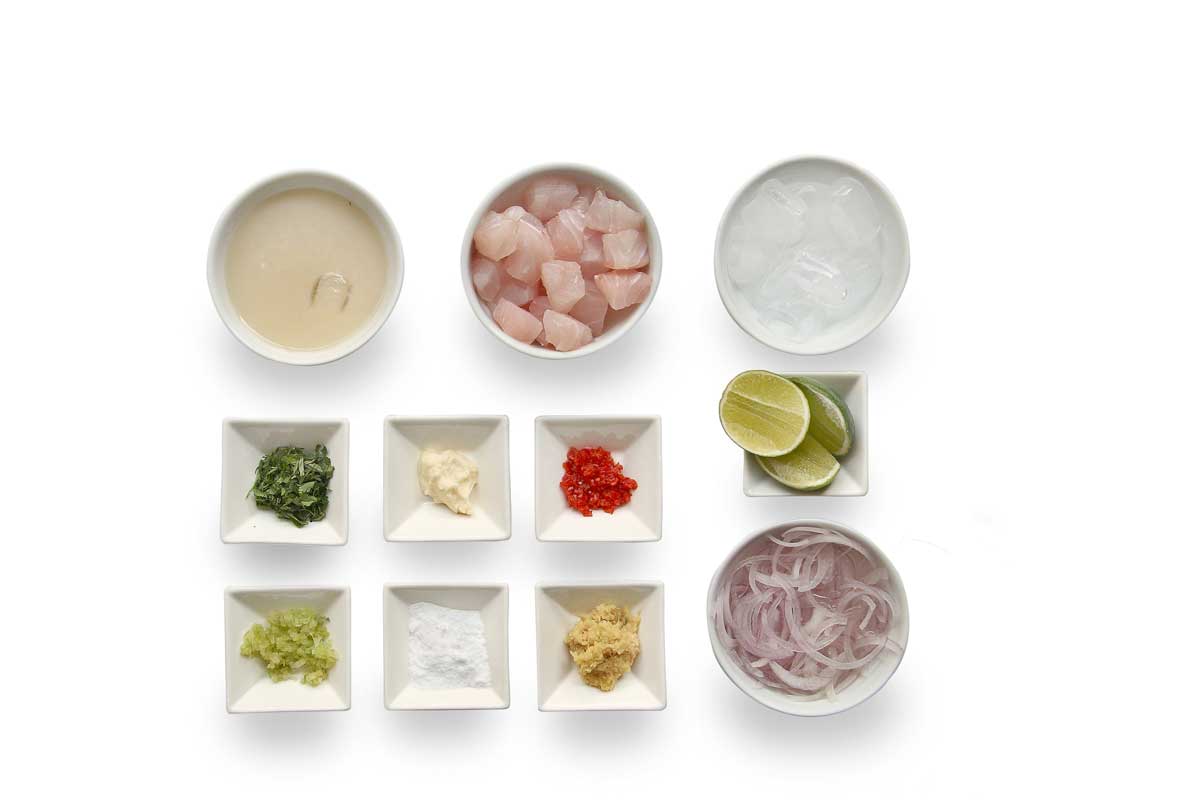
Every country starts from the same short list, then adds its own extras. Quality matters more than a long shopping list, because there is no long cooking to hide a tired fillet or a dry lime.
Firm, lean white fish is the classic. Shrimp is the standard in Mexico, Ecuador and Colombia, and it is often cooked first. See the best fish section, plus the tuna, salmon, octopus and scallop recipes linked below.
Fresh-squeezed lime is the default. Ecuador adds orange; some Caribbean and Mexican recipes use bitter orange. Bottled juice is flatter and is worth skipping.
Thin-sliced red onion and a fresh chile do most of the seasoning. Peru leans on ají limo or ají amarillo; Panama uses ají chombo; Mexico uses serrano or jalapeño.
Tomato and cucumber turn the bowl Mexican. Celery is a Panamanian tell. Mango makes a sweet-hot variation. Worcestershire and ketchup show up in several Central American bowls. Coastal Colombia sometimes adds coconut.
For a Peruvian bowl, a spoonful of ají amarillo paste is the easiest way to get that yellow-chile flavor if you cannot find fresh ají. A handheld citrus press and a non-reactive glass mixing bowl are the only other tools worth having; metal bowls can give the lime juice an off taste if the seafood sits in them.
Best Fish for Ceviche
Choose fish you would be willing to eat raw. Look for firm, lean, mild white fillets with no fishy smell: corvina or sea bass, snapper, halibut, mahi-mahi, flounder or grouper. Buy it the day you make ceviche, keep it very cold, and prefer fish that was frozen at sea, which reduces parasite risk. Oily or very delicate fish falls apart in lime and tastes stronger than the cure can handle.
Tuna and salmon work, but they are a different style: richer, often cut thicker, and cured for a shorter time. Shrimp, octopus and scallops have their own rules (shrimp and octopus are usually cooked first). For a full buying guide, including what to skip and how to cut the fish, see our best fish for ceviche guide.
How to Make Ceviche

Every recipe on this site follows the same five steps. Times and add-ins change by country, so use a full recipe for exact quantities: Peruvian fish, Ecuadorian shrimp, Mexican shrimp or Panamanian corvina are the easiest places to start. Quantities for a simple shared-method bowl are in the classic fish ceviche recipe below.
1. Start with very cold, very fresh seafood
Keep the fish or shrimp refrigerated until the moment you cut it. For raw-fish styles, previously frozen fish is a smart default. For Mexican, Ecuadorian and Colombian shrimp ceviche, cook the shrimp just until pink, then chill them completely before they meet the lime.
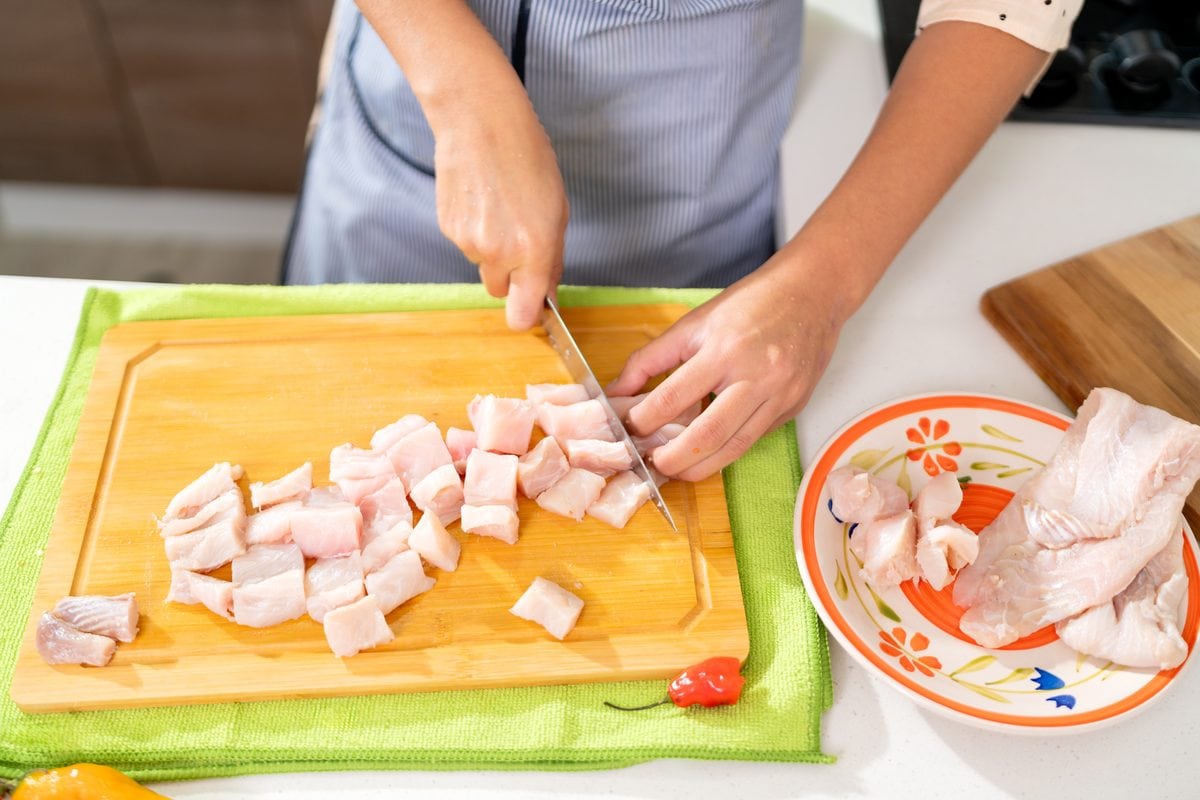
2. Cut even pieces
Dice fish into even ½- to ¾-inch cubes so it cures at the same speed. Slice onions paper-thin (a mandoline helps) and soak them in cold water for 5 minutes if you want to take the harsh edge off. Drain well so you do not water down the juice.
3. Salt, then add the citrus
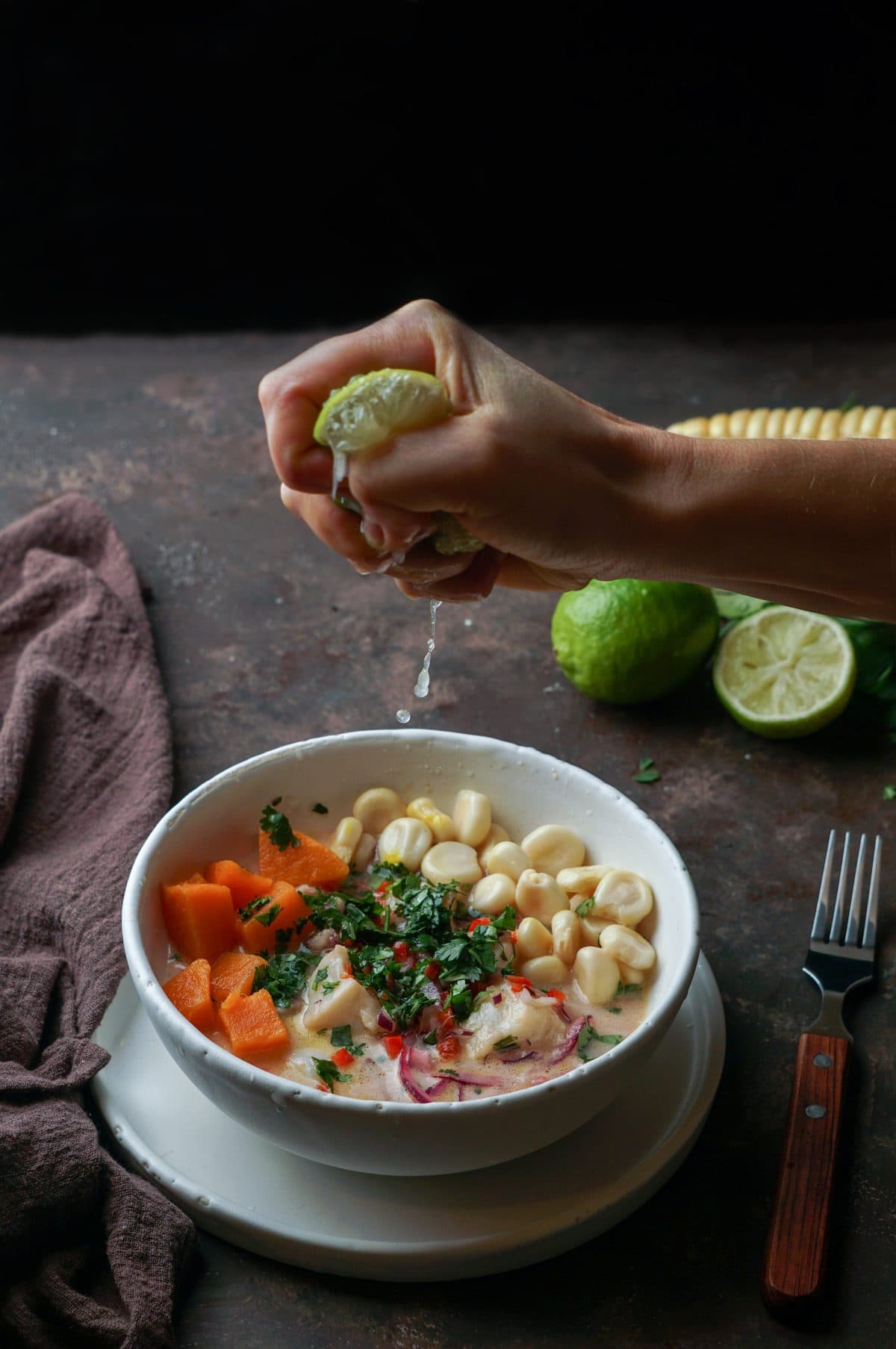
Toss the seafood with salt first, then pour on enough fresh lime juice (and orange, if the recipe uses it) to come just up the sides, not to drown it. Add the chile and onion. Use a glass or ceramic bowl.
4. Cure briefly, then taste
Peruvian-style fish is often ready in 5 to 15 minutes: the surface should be opaque and the center still tender. As a rough guide, 10 to 15 minutes stays soft in the center, 15 to 25 minutes is firmer, and past about 25 minutes the fish starts to turn chalky.
Panama and some home recipes give it a longer refrigerated soak. Cooked shrimp only needs enough time to take on the dressing, usually 15 to 30 minutes. Taste for salt, heat and acid, and add cilantro at the end so it stays green.
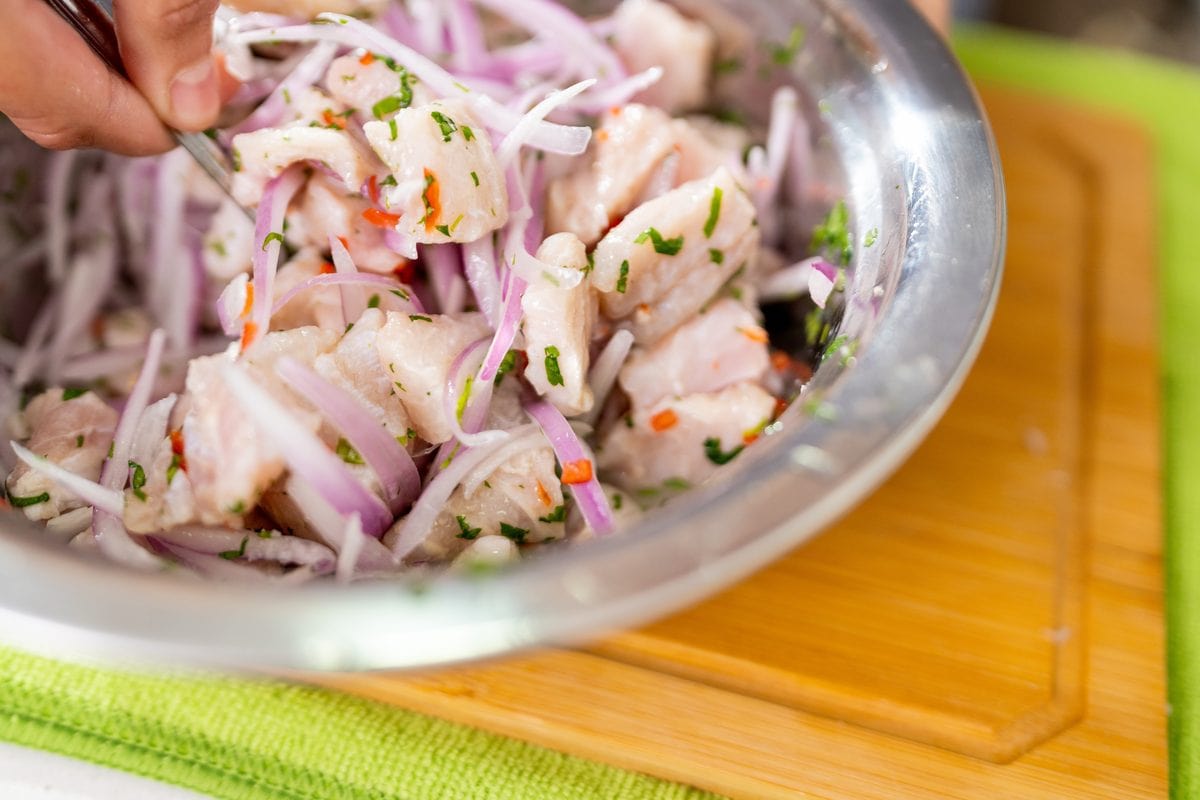
5. Serve immediately, cold
Dish it up as soon as it tastes right, with the sides that match the country: sweet potato and corn in Peru, chifles and popcorn in Ecuador, tostadas or saltines in Mexico and Panama. Once the seafood sits in lime for hours, it turns chalky.
Classic Fish Ceviche Recipe
This is the simple shared method: lime-cured white fish with onion, tomato, cucumber and chile. For the Lima plate with leche de tigre, sweet potato and corn, use the Peruvian ceviche recipe.
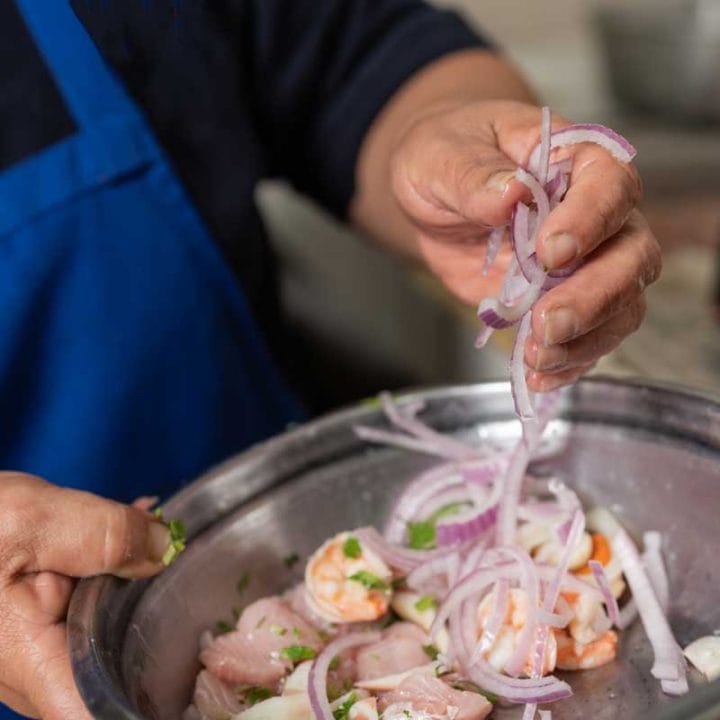
Classic Latin-Style Fish Ceviche
Lime-cured white fish with red onion, tomato, cucumber, chile and cilantro. A simple, shared Latin-style fish ceviche, served with saltines or tostadas. For the Peruvian plate with leche de tigre, sweet potato and corn, see the Peruvian ceviche recipe.
Ingredients
- 1 pound (450 g) firm white fish suitable for raw preparation (snapper, corvina or sea bass, halibut, or mahi-mahi), cut into 1/2-inch cubes
- 3/4 cup (180 ml) freshly squeezed lime juice (about 6 to 8 limes)
- 1 teaspoon kosher salt, plus more to taste
- 1/2 medium red onion, finely diced (about 3/4 cup)
- 1 ripe tomato, seeded and diced
- 1/2 cucumber, seeded and diced
- 1 jalapeno or serrano, minced (seeded for less heat)
- 1/3 cup chopped fresh cilantro
- Saltine crackers or tostadas, for serving
- 1 avocado, diced, optional, folded in just before serving
Instructions
- 1. Keep the fish very cold. If it was frozen, thaw it in the refrigerator. Dice it into even 1/2-inch cubes and place it in a glass or ceramic bowl.
- 2. Toss the fish with the salt, then pour on the lime juice. It should come just up the sides, not drown the fish. Refrigerate 15 minutes, stirring once, until the outside is opaque and the center is still tender.
- 3. Stir in the onion, tomato, cucumber, chile and cilantro. Taste and add salt or a little more lime if needed.
- 4. Fold in the avocado, if using, and serve immediately, very cold, with saltines or tostadas. Do not let it sit in the lime for hours or the fish turns chalky.
Notes
Lime juice firms the fish; it does not pasteurize it or reliably kill bacteria or parasites. Use very fresh or previously frozen fish, keep it cold, and eat the ceviche the day you make it. People who are pregnant, very young, older, or immunocompromised should skip raw-cured seafood.
For Peruvian ceviche with ají, leche de tigre, sweet potato and corn, use the recipe on the Peruvian ceviche page (card key 6). For cooked shrimp, use the Mexican shrimp ceviche recipe.
Nutrition Information:
Yield: 4 Serving Size: about 3/4 cupAmount Per Serving: Calories: 150Total Fat: 2.5gSaturated Fat: 0.5gCholesterol: 55mgSodium: 390mgCarbohydrates: 7gFiber: 1gSugar: 3gProtein: 23g
Nutrition is an estimate, entered by hand, for the fish and vegetables only. It will vary with the fish, the exact produce, and what you serve it with.
How Long Is Ceviche Good For?
Ceviche is at its best the day you make it, ideally within a couple of hours of the citrus going on. Leftovers can be covered and refrigerated promptly and eaten within 24 hours. After that the texture suffers, and the safety margin on raw seafood gets thinner. Some cooked-shrimp versions hold a little longer, up to about 2 days, but they are still a same-day dish at heart.
Do not leave ceviche at room temperature for more than 2 hours (1 hour if the room is hot). Freezing already-dressed ceviche is a bad idea: the seafood turns mushy and the vegetables weep. Freeze raw fish before you make the dish, not after. People who are pregnant, very young, older, or immunocompromised should skip raw-cured ceviche and choose a fully cooked shrimp style, or another dish.
Ceviche vs. Aguachile, Tiradito and Shrimp Cocktail
These four bowls sit next to each other on menus and get mixed up in search results. The differences are practical, not fussy.
| Dish | Cut | Sauce | Onion? |
|---|---|---|---|
| Ceviche | Cubed or chopped seafood | Citrus marinade, seafood mixed in | Yes, usually a lot |
| Aguachile | Butterflied shrimp | Blended chile and lime poured over | Yes, with cucumber; little or no tomato |
| Tiradito | Thin sashimi slices of fish | Sauce spooned over the top | No mixed-in onion |
| Cóctel de camarones | Cooked whole or chopped shrimp | Tomato or Clamato cocktail sauce | Yes, but it is a cocktail, not a citrus cure |
Ceviche FAQ
What is normally in ceviche?
A typical bowl is seafood, fresh lime juice, salt, red onion, chile and cilantro. Country extras such as ají, tomato, avocado, orange, celery, ketchup or coconut are in the ingredients section.
Is ceviche completely raw?
Classic Peruvian, Panamanian and Chilean fish ceviche is raw fish that has been cured in citrus, not heated. The acid firms and opacifies the flesh, but the fish is still raw. Many Mexican, Ecuadorian and Colombian shrimp versions start with cooked shrimp, so those bowls are not raw.
Is bacteria killed in ceviche?
No. Lime juice does not pasteurize seafood and does not reliably kill bacteria, Vibrio or parasites the way a full cook does. Buy very fresh or previously frozen seafood, keep it cold, work clean, and serve it promptly. Freezing fish first helps with parasites; it is not a substitute for heat if you need a fully cooked dish.
Is ceviche healthy?
A plain fish or cooked-shrimp bowl is lean protein, vitamin C and a lot of raw onion and chile, with little added fat. The cautions are the ones that come with raw seafood, plus sodium if you season heavily. Fried sides, creamy sauces, ketchup-heavy dressings and a pile of crackers change the plate.
What is the difference between ceviche and aguachile?
Aguachile is usually butterflied shrimp in a blended chile-lime sauce, with cucumber and red onion and little or no tomato. Ceviche mixes cubed or chopped seafood into a citrus marinade. See the comparison table, or the full aguachile recipe.
Can you freeze ceviche?
Do not freeze ceviche that has already been dressed. Freeze the raw fish beforehand if you want a safety step or a make-ahead protein, then thaw it in the fridge and make the dish fresh.
More Ceviche Recipes
- By country: Peruvian ceviche, Ecuadorian ceviche, Mexican shrimp ceviche, Panamanian ceviche de corvina, Colombian ceviche
- By seafood: best fish for ceviche, tuna ceviche, salmon ceviche, octopus ceviche, scallop ceviche, mango ceviche
- How to serve it: tostadas de ceviche, leche de tigre
- Cousins: aguachile, tiradito, Mexican shrimp cocktail
More Latin Favorites
See all →
Jorge Garcia is the founder of AmigoFoods, where he has spent over 20 years helping readers discover authentic Latin American and Spanish cuisine. Raised in a Cuban-American household, Jorge learned to cook at the hands of his mother and grandmother, carrying forward generations of family recipes. That heritage, backed by his family’s four-generation history in the Latin food industry, inspired him to launch AmigoFoods in 2003. With more than 1,000 published articles on recipes, ingredients, and food culture, Jorge’s mission is simple: make authentic Latin cooking approachable for home cooks everywhere while honoring the traditions behind every dish.