
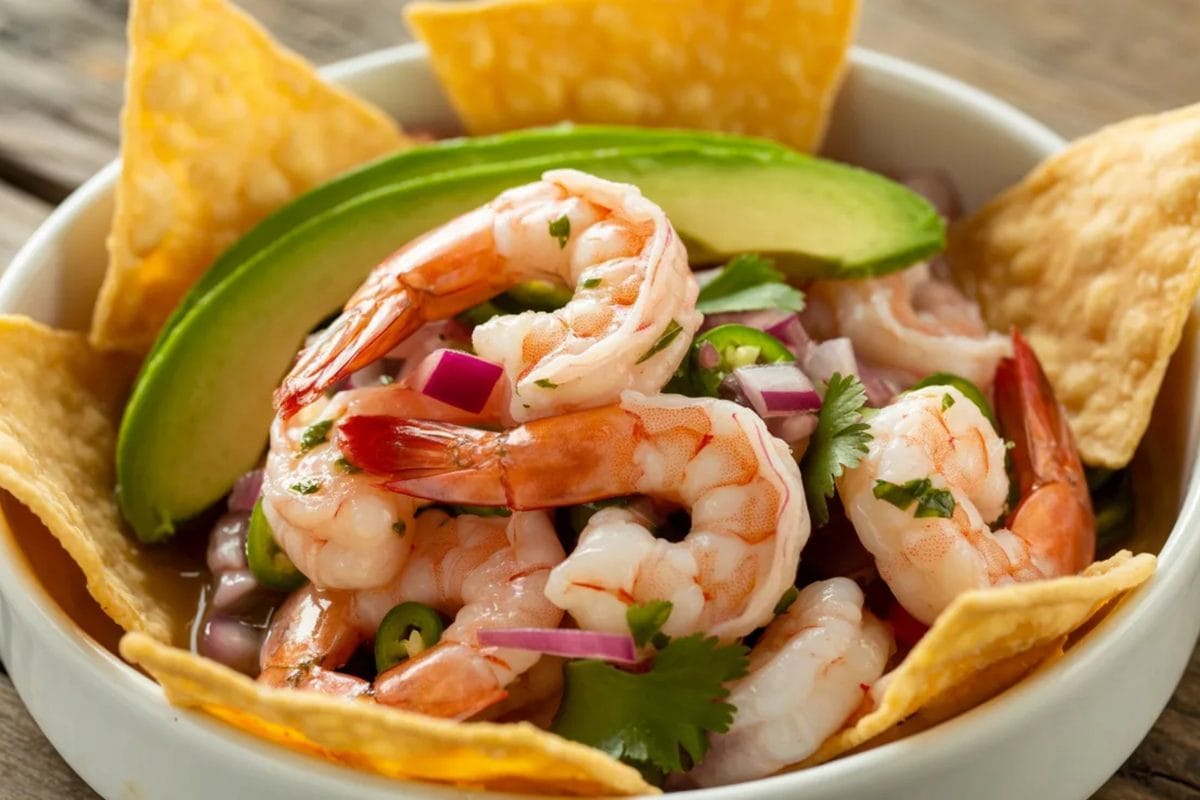
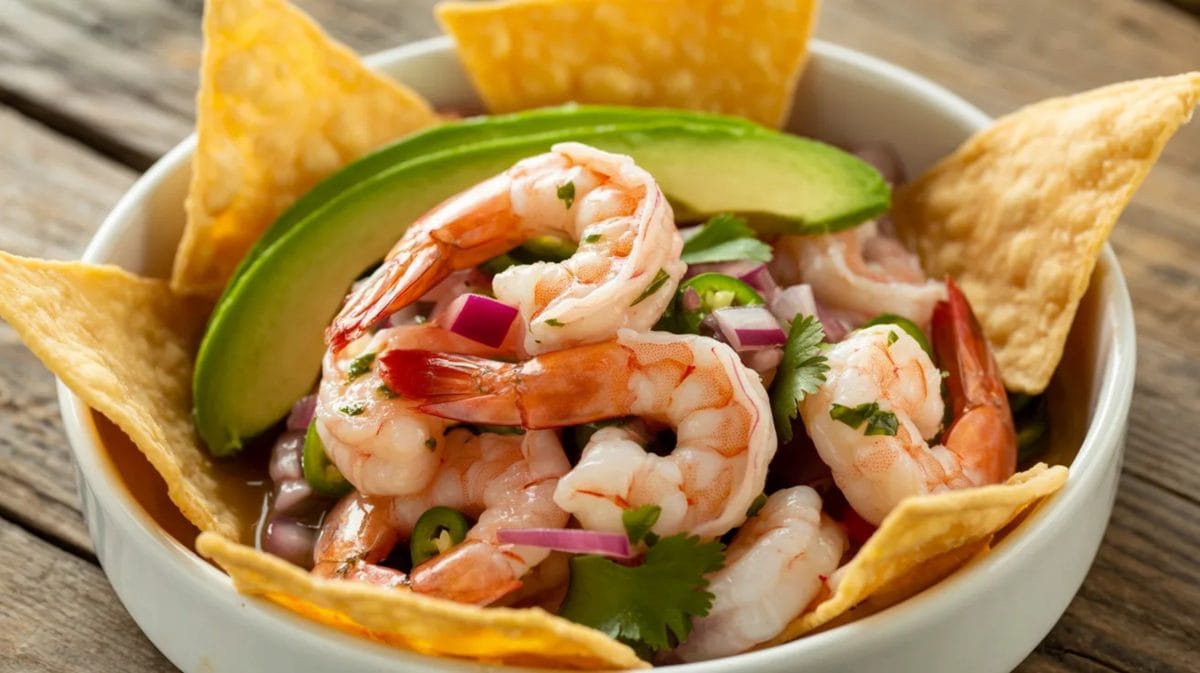
Mexican shrimp ceviche (ceviche de camarón) is chopped shrimp tossed with lime, tomato, cucumber, red onion, chile and cilantro, then piled onto tostadas. This Sinaloa-style version briefly cooks the shrimp first so they stay tender, then dresses them in citrus with avocado added at the end.
Mexican Shrimp Ceviche at a Glance
AmigoFoods may earn a commission from qualifying Amazon purchases made through links on this page.
What Is Mexican Shrimp Ceviche?
On Mexico’s Pacific coast, especially in Sinaloa and Nayarit, ceviche de camarón is a chopped mix: shrimp, lime, diced tomato, cucumber, onion, a fresh chile and a handful of cilantro. It is scooped with a spoon or piled onto a crisp tostada, often with avocado on top. The lime is the dressing, not a soup. For the wider map of styles, start with our ceviche guide.

In many Sinaloa kitchens the shrimp is cured raw in lime until it turns pink, the same acid cure used for fish in Peruvian ceviche. Lime firms the proteins and changes the color, but it does not reliably kill bacteria or parasites. This recipe briefly boils the shrimp, chills them, and then dresses them in lime, which is the method we recommend for home cooks in the United States. A traditional raw cure is in the variations, with the same safety caveat.
How It Differs from Cocktail, Aguachile and Ecuadorian Ceviche
Three other shrimp dishes on this site are easy to confuse with this one. They are related, but they are not the same bowl.
| Mexican shrimp ceviche | Mexican shrimp cocktail | Aguachile | Ecuadorian shrimp ceviche | |
|---|---|---|---|---|
| Texture | Chopped, scoopable mix | Cooked shrimp in a saucy glass | Butterflied shrimp in a thin chile sauce | Cooked shrimp in a light broth |
| Liquid | Lime, maybe a small splash of Clamato | Tomato or Clamato cocktail sauce | Blended chile and lime, poured over | Lime, orange and tomato broth |
| Vegetables | Tomato, cucumber, onion, cilantro, avocado | Tomato, onion, avocado, often cilantro | Cucumber and onion; little or no tomato | Tomato, onion, cilantro; no cucumber crunch |
| Served with | Tostadas or tortilla chips | A spoon, saltines or chips | Tostadas or chips, eaten right away | Chifles, popcorn and tostado |
If you want the cocktail in a glass, use our Mexican shrimp cocktail recipe. For the chile-forward Sinaloa cousin, see aguachile. Ecuador’s version, with its lime-orange tomato broth and chifles, is in our Ecuadorian ceviche recipe. Colombia’s coastal cup, dressed in a creamy salsa rosada, is a different style again: Colombian ceviche.
Ingredients
Amounts are in the recipe card at the bottom of the page. This is what matters in the bowl.
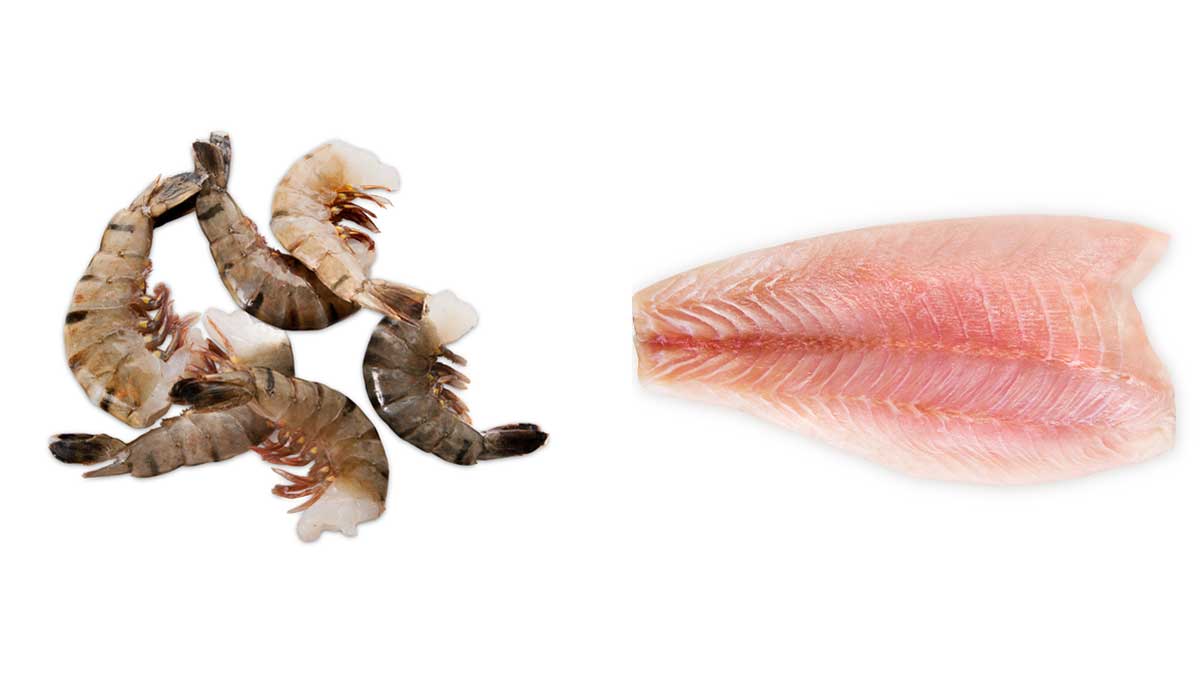
- Shrimp. 1 1/2 pounds of medium shrimp, peeled and deveined. Raw shrimp that you cook yourself have better texture than a bag of already-rubbery cocktail shrimp, but pre-cooked shrimp work if you skip the boil and go straight to the lime. Pat them dry so the dressing is not watery.
- Lime juice. Freshly squeezed, about 3/4 cup. Bottled lime juice tastes flat here. A handheld citrus press makes the job faster when you have 6 to 8 limes to squeeze.
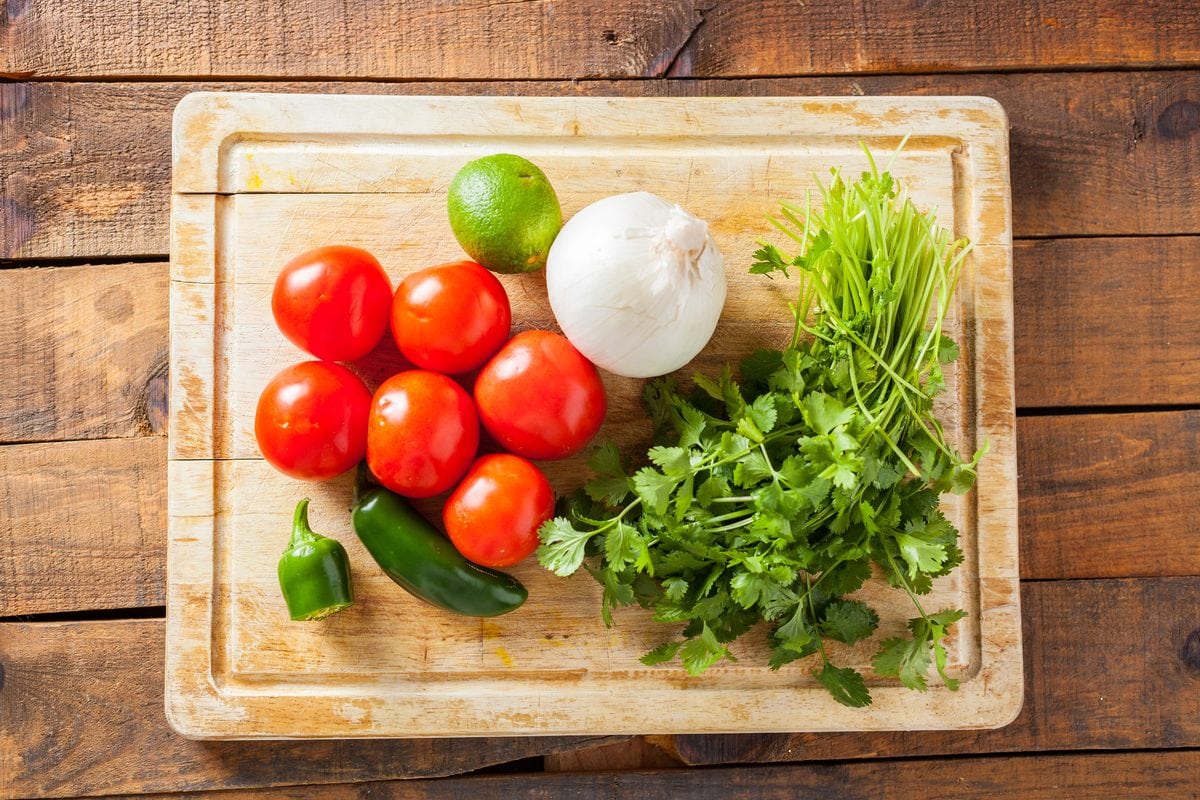
- Tomato, cucumber and red onion. The Sinaloa crunch. Seed the tomatoes and the cucumber so the mix does not get soupy. Dice everything small, close to the size of the shrimp pieces.
- Serrano or jalapeño. Serranos are hotter and common on the Pacific coast. Seed them for a milder bowl, or leave the seeds in if you want heat.
- Cilantro and avocado. Cilantro goes in with the vegetables. Avocado is folded in last so it stays green and does not turn to mash.
- Tostadas. Store-bought corn tostadas are the usual serving, or sturdy tortilla chips. For a full tray, see our tostadas de ceviche assembly recipe.

How to Make Mexican Shrimp Ceviche
Full measurements are in the recipe card below. Use a glass or ceramic bowl; lime juice can react with aluminum or some metals and pick up a metallic taste.
1. Cook and chill the shrimp
Bring a pot of salted water to a boil. Add 1 1/2 pounds of peeled, deveined shrimp and cook for 1 to 2 minutes, just until they curl and turn pink and opaque. Drain and plunge them into an ice bath so they stop cooking. Drain well, pat dry, and cut into 1/2-inch pieces. If you start with already-cooked shrimp, skip the boil, thaw if frozen, pat dry and chop.
2. Dress the shrimp with lime and onion
Put the chopped shrimp in a 3- to 4-quart glass or ceramic bowl. Add 3/4 cup of fresh lime juice, 1/4 cup of fresh lemon juice if you are using it, the diced red onion, the minced garlic and a pinch of kosher salt. Toss, cover and refrigerate for 15 to 20 minutes. The shrimp will take on a brighter citrus flavor without turning rubbery.

- Maximum Juice, Minimal Effort – Patented dual-gear mechanism delivers up to 20% more juice than...
- Premium Quality Construction – Built with durable nylon and stainless steel for long-lasting...

3. Add the vegetables
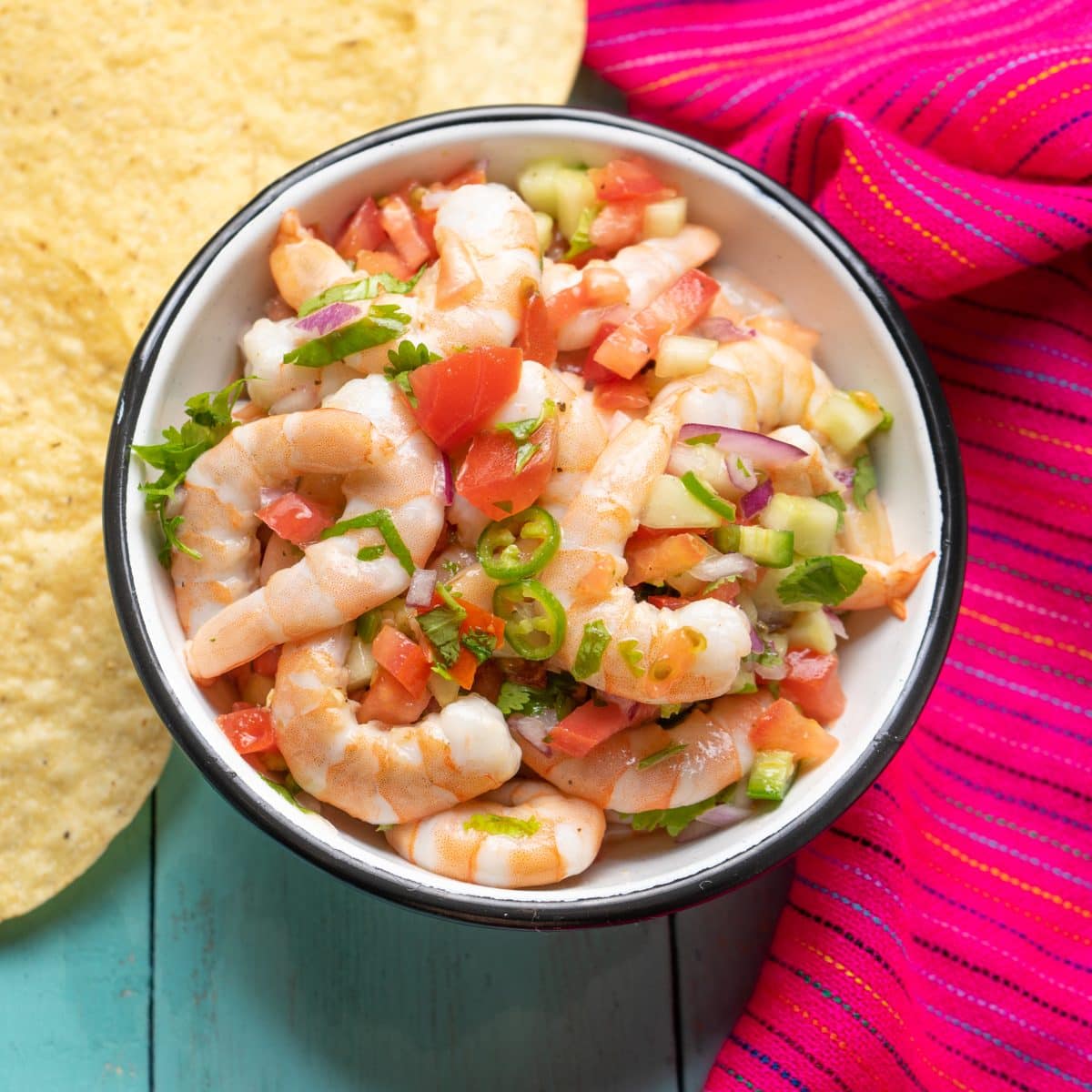
Stir in the diced tomatoes, cucumber, minced chile and cilantro. If you want the Sinaloa splash, add 1/4 to 1/3 cup of Clamato or tomato juice and a few dashes of Valentina or Maggi. Taste for salt and lime. The mix should taste bright and a little spicy, not watery.

- Smart Essentials 4qt. Mixing Bowl with Red plastic cover.
- Pyrex glass is safe in the oven, microwave, refrigerator, freezer, and dishwasher.
4. Fold in the avocado and serve
Just before serving, fold in 1 diced ripe avocado. Spoon the ceviche into a bowl or pile it onto tostadas, and finish with extra cilantro, lime wedges and hot sauce at the table. For a party tray and tips on keeping the shells crisp, use the tostadas de ceviche recipe.

Variations
- Traditional raw lime cure. If you want the Sinaloa raw method, use previously frozen raw shrimp (thawed in the fridge), cut them up, and cure them in the lime, onion and garlic for 20 to 40 minutes, until they are pink and opaque all the way through, then add the vegetables. Lime is not a kill step. Pregnant people, young children, older adults and anyone with a weaker immune system should stick to the cooked method. Our best fish for ceviche guide has the FDA freezing notes that also apply to raw shrimp.
- Mango. Stir in 1 cup of diced ripe mango with the vegetables for a sweet-tart bowl. The full fish-and-mango version is in our mango ceviche recipe.
- No Clamato, extra lime. Leave out the tomato juice entirely for a drier, lime-forward mix that sits better on a tostada.
- Fish instead of shrimp. Use a firm white fish from the best fish for ceviche list, cut into small cubes, and cure it in lime the way you would in Panamanian ceviche de corvina, then fold in the same tomato-cucumber mix.
Make Ahead and Storage
You can cook, chop and dress the shrimp with lime and onion up to 4 hours ahead, then add the tomato, cucumber, chile and cilantro an hour before serving. Fold in the avocado at the last minute. Leftovers keep in a covered glass container in the refrigerator for up to 1 day, but the shrimp continue to sit in acid and can turn rubbery, and the avocado browns. This is not a dish to freeze, and it should not sit at room temperature for more than 2 hours (1 hour in very hot weather).
Troubleshooting
| Problem | Why it happens | Fix |
|---|---|---|
| Watery bowl | Tomatoes or cucumber were not seeded, or the shrimp were not dried. | Seed both vegetables, pat the shrimp dry, and drain off extra liquid before serving. |
| Rubbery shrimp | They were boiled too long, or they sat in lime for many hours. | Cook only 1 to 2 minutes and chill in ice. Serve within 4 hours of dressing. |
| Flat flavor | Bottled lime juice, or not enough salt. | Use fresh limes and salt in stages: a pinch on the shrimp, then again after the vegetables go in. |
| Too spicy | The chile seeds went in, or you used a hot serrano. | Stir in more tomato, cucumber and avocado, and serve with extra tostadas. |
| It tastes like cocktail | Too much Clamato, ketchup or cocktail sauce. | Keep any tomato juice to a splash. For a saucy glass, make shrimp cocktail instead. |
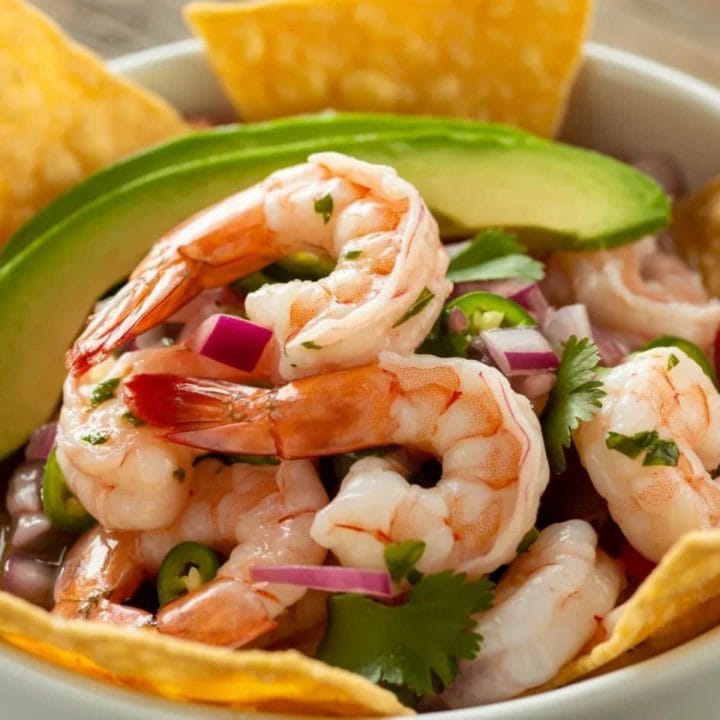
Mexican Shrimp Ceviche (Ceviche de Camaron)
Sinaloa-style Mexican shrimp ceviche: briefly cooked shrimp tossed with lime, tomato, cucumber, red onion, chile and cilantro, with avocado folded in at the end. Serve it on tostadas.
Ingredients
For the shrimp
- 1 1/2 pounds (680 g) medium shrimp, peeled and deveined
- 1 tablespoon kosher salt, for the boiling water
- Ice, for chilling
For the ceviche
- 3/4 cup (180 ml) freshly squeezed lime juice (about 6 to 8 limes)
- 1/4 cup (60 ml) freshly squeezed lemon juice (optional, about 1 large lemon)
- 1/2 medium red onion, finely diced (about 3/4 cup)
- 1 clove garlic, minced (optional)
- 1/2 teaspoon kosher salt, plus more to taste
- 2 Roma tomatoes, seeded and diced
- 1 medium cucumber, peeled, seeded and diced
- 1 to 2 serrano or jalapeno peppers, seeded and minced
- 1/3 cup chopped fresh cilantro, plus more to serve
- 1/4 to 1/3 cup Clamato or tomato juice (optional)
- A few dashes Valentina hot sauce or Maggi seasoning (optional)
- 1 ripe avocado, diced
To serve
- Corn tostadas or tortilla chips
- Lime wedges
- Hot sauce
Instructions
- Cook and chill the shrimp. Bring a pot of water with 1 tablespoon of kosher salt to a boil. Add the shrimp and cook 1 to 2 minutes, just until they curl and turn pink and opaque. Drain and plunge them into an ice bath. Drain well, pat dry, and cut into 1/2-inch pieces. (If you start with already-cooked shrimp, skip the boil, thaw if frozen, pat dry and chop.)
- Dress the shrimp with lime and onion. Put the chopped shrimp in a 3- to 4-quart glass or ceramic bowl. Add the lime juice, lemon juice (if using), red onion, garlic and 1/2 teaspoon of kosher salt. Toss, cover and refrigerate 15 to 20 minutes.
- Add the vegetables. Stir in the tomatoes, cucumber, chile and cilantro. Add the Clamato or tomato juice and the Valentina or Maggi, if using. Taste and add salt or lime juice as needed.
- Fold in the avocado and serve. Just before serving, fold in the diced avocado. Serve in a bowl or piled on tostadas, with extra cilantro, lime wedges and hot sauce.
Notes
Raw lime-cure option: For a traditional Sinaloa raw cure, use previously frozen raw shrimp, thawed in the fridge. Skip the boil, cut the shrimp, and cure them in the lime, onion and garlic for 20 to 40 minutes, until pink and opaque all the way through, then add the vegetables. Lime is not a kill step. Pregnant people, young children, older adults and anyone with a weaker immune system should use the cooked method.
Do not use a metal bowl. Lime juice can react with aluminum. Use glass or ceramic.
Keep Clamato to a splash. 1/4 to 1/3 cup is enough. A full cup turns this into shrimp cocktail, which is a different recipe.
Avocado last. Add it just before serving so it stays green and does not mash into the dressing.
Make ahead: Dress the shrimp with lime and onion up to 4 hours ahead. Add the vegetables about 1 hour before serving, and the avocado at the last minute.
Storage: Refrigerate in a covered glass container and eat within 24 hours. Do not freeze. Do not leave at room temperature more than 2 hours (1 hour in very hot weather).
Mango variation: Stir in 1 cup of diced ripe mango with the vegetables.
Nutrition Information:
Serving Size: 1/6 of recipe (about 1 cup)Amount Per Serving: Calories: 185Total Fat: 6gSaturated Fat: 1gTrans Fat: 0gUnsaturated Fat: 5gCholesterol: 160mgSodium: 420mgCarbohydrates: 11gFiber: 4gSugar: 3gProtein: 24g
Nutrition information is an estimate and will vary with the brands and amounts used.
Mexican Shrimp Ceviche FAQ
Is Mexican shrimp ceviche raw?
It can be. In Sinaloa the shrimp is often cured raw in lime. This recipe cooks the shrimp briefly first, which we recommend for home cooks in the United States. Lime juice changes the texture of seafood; it does not reliably make raw shrimp safe.
How long should shrimp ceviche sit in lime juice?
For cooked shrimp, 15 to 20 minutes is enough to season the bowl. If you use raw shrimp, plan on 20 to 40 minutes, until the pieces are pink and opaque in the center. After a few hours the shrimp turn tough.
Can I use frozen shrimp?
Yes. Thaw them in the refrigerator, pat them dry, and cook them as directed (or skip the boil if they were sold already cooked). Frozen raw shrimp that were previously frozen for food safety are a reasonable choice if you prefer the traditional lime-only cure.
How long does shrimp ceviche last?
It is best the day you make it. Refrigerate leftovers and eat them within 24 hours. Do not leave the bowl out for more than 2 hours.
What do you eat with Mexican shrimp ceviche?
Tostadas or tortilla chips are the usual pairing, with lime wedges and a Mexican hot sauce such as Valentina or Tapatío. It also works as a tostada topping in our tostadas de ceviche recipe, or as one of several bowls next to Peruvian or Ecuadorian ceviche.
More Ceviche Recipes
Start with the ceviche guide for types by country, then try tostadas de ceviche, mango ceviche, aguachile or Mexican shrimp cocktail.
Sources
- Esto es Sinaloa and Luz Noticias (Sinaloa-style ceviche de camarón, vegetable mix and regional notes)
- Isabel Eats, “Shrimp Ceviche” and “Ceviche Recipe” (raw or cooked shrimp, lime-lemon cure, tomato, cucumber, optional tomato juice or Clamato)
- Cardamomo and Food52 (coastal Mexican shrimp ceviche patterns)
- Allrecipes shrimp ceviche (reviewed as an outlier: a 12-hour cure and imitation crab; not used here)
More Mexican Foods
See all →
Jorge Garcia is the founder of AmigoFoods, where he has spent over 20 years helping readers discover authentic Latin American and Spanish cuisine. Raised in a Cuban-American household, Jorge learned to cook at the hands of his mother and grandmother, carrying forward generations of family recipes. That heritage, backed by his family’s four-generation history in the Latin food industry, inspired him to launch AmigoFoods in 2003. With more than 1,000 published articles on recipes, ingredients, and food culture, Jorge’s mission is simple: make authentic Latin cooking approachable for home cooks everywhere while honoring the traditions behind every dish.