

Cazuela de mariscos is a Colombian seafood stew with shrimp, fish, clams and squid in a creamy coconut sauce. Build the achiote-colored base first, then add the seafood near the end so it stays tender.
Cazuela de Mariscos at a Glance
What Is Cazuela de Mariscos?
Cazuela de mariscos means “seafood casserole,” but in Colombia it is closer to a thick, spoonable stew. It belongs to the Caribbean coast, where it is a restaurant classic in Cartagena, Barranquilla and Santa Marta.
The name comes from the pot. A cazuela is a clay dish, and on the coast the stew is still brought to the table in one, heated in the oven or over the fire so the sauce keeps simmering after it is served.

Its roots are debated. Some Colombian food writers trace it to Spanish seafood stews like Catalonia’s zarzuela; others point to Chile, where cazuela is a whole family of stews. What makes the Colombian version its own is coconut milk, the ingredient that ties it to the rest of Caribbean coastal cooking.
Caribbean vs. Pacific Cazuela
Colombia has two coastlines, and both make cazuela. They share coconut milk but little else.
- Caribbean (Cartagena, Barranquilla, Santa Marta): the richer, restaurant-style version. A sofrito of onion, sweet pepper and tomato, colored with achiote, often finished with white wine, a splash of cream, and sometimes grated Parmesan on top.
- Pacific (Buenaventura, Tumaco, Chocó): built on fresh coconut milk pressed at home and the herbs grown in raised “azotea” gardens, such as cilantro cimarrón, black basil and oregano. Shellfish like piangua, a mangrove cockle, go into the pot.
The recipe below follows the Caribbean style, since its ingredients are the easiest to find outside Colombia. If you can find culantro (cilantro cimarrón), stir a few leaves in at the end for a taste of the Pacific version.
Ingredients for Cazuela de Mariscos

For the seafood
- 1 lb (450 g) large shrimp, shell on
- 1 lb (450 g) firm white fish, such as corvina, snapper or cod, cut into 1½-inch pieces
- 1 lb (450 g) littleneck clams, scrubbed
- ½ lb (225 g) cleaned squid, cut into rings
- Optional: ½ lb mussels or 1 lobster tail, cut into pieces
For the sauce
- 2 tablespoons achiote oil, or 2 tablespoons neutral oil with 1 teaspoon ground annatto
- 1 tablespoon butter
- 1 large white onion, finely chopped
- 1 red bell pepper, finely chopped
- 3 ají dulce peppers or ½ green bell pepper, finely chopped
- 4 garlic cloves, minced
- 1 carrot, finely grated
- 2 ripe tomatoes, grated (skins discarded)
- 1 tablespoon tomato paste
- 1 teaspoon ground cumin
- 1 teaspoon sweet paprika
- ½ cup dry white wine
- 1 bay leaf
- 3 cups water, for the shrimp stock
- 1 can (13.5 oz / 400 ml) coconut milk
- ½ cup heavy cream (optional)
- Salt and black pepper
- Chopped cilantro and lime wedges, to serve

About achiote: it adds color more than flavor, and it is what gives the sauce its sunset-orange look. Look for annatto oil or ground achiote, or use sweet paprika alone if you cannot find it.
How to Make Cazuela de Mariscos
- Make a quick shrimp stock. Peel the shrimp and put the shells in a pot with 3 cups of water, the onion trimmings and the bay leaf. Simmer for 20 minutes, then strain. You should have about 2 cups. Keep the peeled shrimp in the fridge. While the stock simmers, steam the shellfish and begin the sofrito as described in the next two steps; this overlap is included in the 45-minute cooking estimate.
- Steam the clams and optional mussels. Discard cracked shells and any live shellfish that do not close when tapped. Put the scrubbed clams and mussels, if using, in a wide pan with the white wine, cover, and cook until the shells open, starting to check after 5 minutes. Remove opened shellfish and discard any that remain closed after cooking. Strain the liquid through a fine filter and add it to the stock.
- Build the sofrito. In a large pot, heat the achiote oil and butter over medium heat. Add the onion, red pepper and ají dulce and cook for 8 minutes, until soft. Add the garlic and carrot for 2 minutes, then the tomatoes, tomato paste, cumin and paprika. Cook for 5 more minutes, until the tomato darkens.
- Blend for a silky sauce (optional). Add the stock to the sofrito, simmer for 5 minutes, then blend until smooth with an immersion blender. Skip this if you like a chunkier stew.
- Add the coconut milk. Stir in the coconut milk and simmer gently, uncovered, for 10 minutes, until the sauce coats the back of a spoon. Season with salt and pepper.
- Cook the seafood in order. Add the fish and simmer gently for about 4 minutes, then add the shrimp and squid and continue cooking until done. Timing varies with size: fish should reach 145°F/63°C, and shrimp should be firm, pearly and opaque. If using lobster, cook it separately until its flesh is firm, pearly and opaque, then add it with the cooked clams and mussels to warm through. Do not assume raw lobster or mussels will cook in the shrimp’s 2–3-minute window.
- Finish. Stir in the cream if using, warm through without boiling, and taste for salt. Sprinkle with cilantro and serve right away, ideally in warmed clay bowls, with lime on the side.

Tips for a Creamy, Not Rubbery, Cazuela
- Seafood goes in last. The sauce does all its simmering first. The final seafood stage is brief, often about 7 minutes, but check doneness rather than relying only on the clock.
- Thicken with the sauce, not flour. Blending the sofrito and reducing the coconut milk gives you body without any starch. For more richness, add the cream.
- Never boil after the cream goes in. A hard boil can split the cream and toughen the shrimp. Keep it at a gentle simmer.
- Use full-fat coconut milk. Light coconut milk makes a thin, watery sauce. A good unsweetened full-fat coconut milk makes the difference.
- Frozen seafood works. Thaw it overnight in the fridge and pat it dry, so it does not water down the sauce.
What to Serve With Cazuela de Mariscos
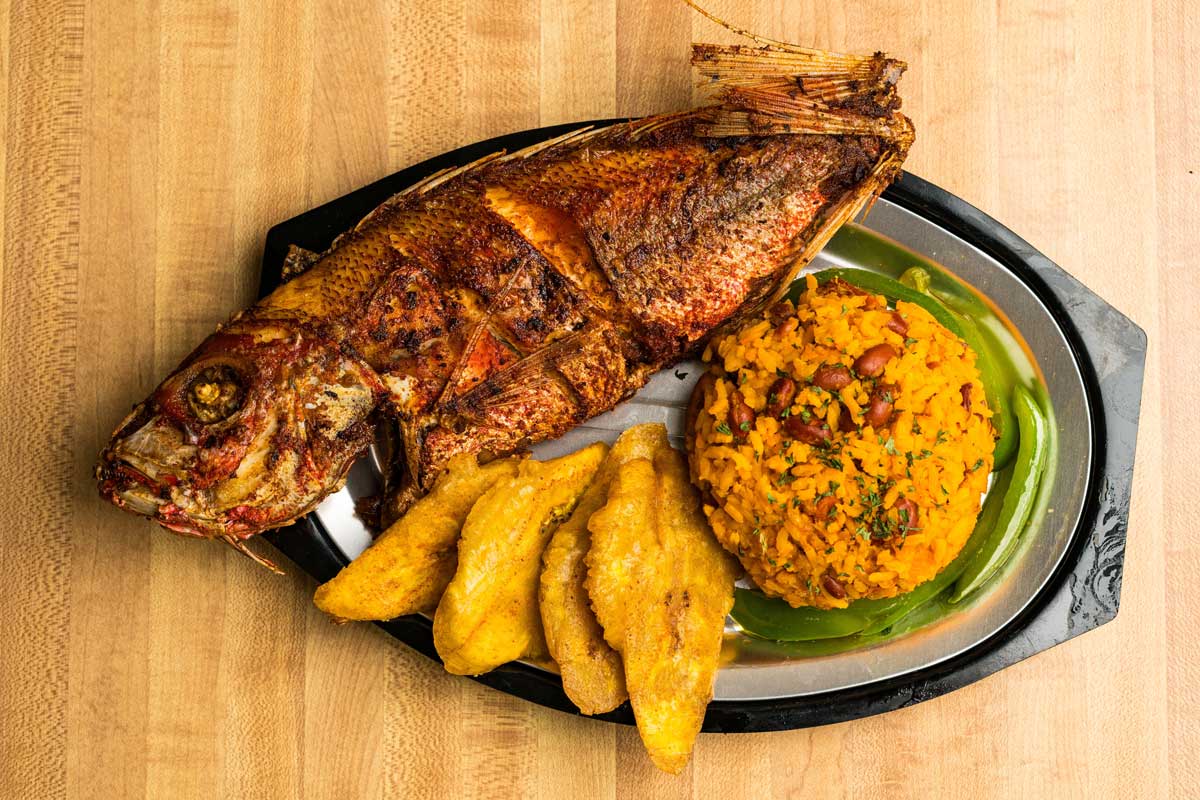
On the coast, cazuela comes with the same sides as any seafood meal:
- Arroz con coco, the toasted coconut rice of the Caribbean
- Patacones, the smashed fried green plantains, for dipping in the sauce
- Sliced avocado and a simple tomato and onion salad
- A cold limonada de coco or a crisp white wine
For a full coastal spread, add a whole mojarra frita, the fried fish served at every beach restaurant.
Where to Buy the Ingredients
Most of what you need is at a regular supermarket. The harder-to-find items are achiote, ají dulce and good coconut milk. You can find them in Latin grocery stores, or shop our Colombian pantry picks on Amazon. For serving, a set of clay cazuela bowls keeps the stew hot at the table, the way it is served in Cartagena.

Cazuela de Mariscos (Colombian Coconut Seafood Stew)
A creamy seafood stew from Colombia’s Caribbean coast: shrimp, white fish, clams and squid in an achiote sofrito with coconut milk.
Ingredients
For the seafood
- 1 lb (450 g) large shrimp, shell on
- 1 lb (450 g) firm white fish, such as corvina, snapper or cod, cut into 1½-inch pieces
- 1 lb (450 g) littleneck clams, scrubbed
- ½ lb (225 g) cleaned squid, cut into rings
- Optional: ½ lb mussels or 1 lobster tail, cut into pieces
For the sauce
- 3 cups water, for the shrimp stock
- 2 tablespoons achiote oil, or 2 tablespoons neutral oil with 1 teaspoon ground annatto
- 1 tablespoon butter
- 1 large white onion, finely chopped
- 1 red bell pepper, finely chopped
- 3 ají dulce peppers or ½ green bell pepper, finely chopped
- 4 garlic cloves, minced
- 1 carrot, finely grated
- 2 ripe tomatoes, grated (skins discarded)
- 1 tablespoon tomato paste
- 1 teaspoon ground cumin
- 1 teaspoon sweet paprika
- ½ cup dry white wine
- 1 bay leaf
- 1 can (13.5 oz / 400 ml) coconut milk
- ½ cup heavy cream (optional)
- Salt and black pepper
- Chopped cilantro and lime wedges, to serve
Instructions
- Make a quick shrimp stock. Peel the shrimp and put the shells in a pot with 3 cups of water, the onion trimmings and the bay leaf. Simmer for 20 minutes, then strain. You should have about 2 cups. Keep the peeled shrimp in the fridge. While the stock simmers, steam the shellfish and begin the sofrito as described in the next two steps; this overlap is included in the 45-minute cooking estimate.
- Steam the clams and optional mussels. Discard cracked shells and any live shellfish that do not close when tapped. Put the scrubbed clams and mussels, if using, in a wide pan with the white wine, cover, and cook until the shells open, starting to check after 5 minutes. Remove opened shellfish and discard any that remain closed after cooking. Strain the liquid through a fine filter and add it to the stock.
- Build the sofrito. In a large pot, heat the achiote oil and butter over medium heat. Add the onion, red pepper and ají dulce and cook for 8 minutes, until soft. Add the garlic and carrot for 2 minutes, then the tomatoes, tomato paste, cumin and paprika. Cook for 5 more minutes, until the tomato darkens.
- Blend for a silky sauce (optional). Add the stock to the sofrito, simmer for 5 minutes, then blend until smooth with an immersion blender. Skip this if you like a chunkier stew.
- Add the coconut milk. Stir in the coconut milk and simmer gently, uncovered, for 10 minutes, until the sauce coats the back of a spoon. Season with salt and pepper.
- Cook the seafood in order. Add the fish and simmer gently for about 4 minutes, then add the shrimp and squid and continue cooking until done. Timing varies with size: fish should reach 145°F/63°C, and shrimp should be firm, pearly and opaque. If using lobster, cook it separately until its flesh is firm, pearly and opaque, then add it with the cooked clams and mussels to warm through. Do not assume raw lobster or mussels will cook in the shrimp’s 2–3-minute window.
- Finish. Stir in the cream if using, warm through without boiling, and taste for salt. Sprinkle with cilantro and serve right away, ideally in warmed clay bowls, with lime on the side.
Notes
Add the seafood only once the sauce has finished simmering, and never boil hard after adding cream. The sauce can be made up to two days ahead; add the seafood just before serving. Serve with arroz con coco and patacones.
Cazuela de Mariscos FAQs
What is the difference between cazuela de mariscos and sopa de mariscos?
Sopa de mariscos is brothy and served as a soup. Cazuela is thicker and creamier, closer to a stew, and is traditionally served in a clay pot as a main course.
Can I make cazuela de mariscos without cream?
Yes. Many coastal cooks use coconut milk alone. Blend the sofrito and reduce the sauce a few extra minutes for body.
What seafood is best for cazuela?
Shrimp, a firm white fish that will not fall apart, and clams are the core. Squid, mussels and lobster are common additions. Avoid delicate fish like sole or tilapia, which break up.
Can I make it ahead?
Make the sauce up to two days ahead and keep it in the fridge. Reheat it gently and add the seafood just before serving. Cooked seafood toughens when reheated.
Is cazuela de mariscos spicy?
No. Ají dulce is a sweet pepper with almost no heat. Serve Colombian ají or hot sauce on the side if you want some heat.
More Colombian Seafood
Cazuela is the first of the 6 must-try Colombian seafood dishes, and you can browse all of them on our Colombian seafood recipes page. For soups from the same kitchens, see traditional Colombian soups. For coastal stews from the neighbors, try Ecuador’s encebollado and Peru’s parihuela, or explore seafood dishes from across Latin America and all Colombian food.
More Colombian Foods
See all →
Jorge Garcia is the founder of AmigoFoods, where he has spent over 20 years helping readers discover authentic Latin American and Spanish cuisine. Raised in a Cuban-American household, Jorge learned to cook at the hands of his mother and grandmother, carrying forward generations of family recipes. That heritage, backed by his family’s four-generation history in the Latin food industry, inspired him to launch AmigoFoods in 2003. With more than 1,000 published articles on recipes, ingredients, and food culture, Jorge’s mission is simple: make authentic Latin cooking approachable for home cooks everywhere while honoring the traditions behind every dish.