

Pan con chicharrón is Peru’s favorite breakfast sandwich: pork simmered in salted water until the water cooks away, fried crisp in its own fat, then sliced into a soft pan francés roll over fried sweet potato and topped with tangy salsa criolla. It is what Lima eats on Sunday mornings, and in 2025 it was voted the best breakfast in the world. This recipe takes about 2 hours, most of it hands-off simmering.
Pan con Chicharrón at a Glance
What Is Pan con Chicharrón?
Pan con chicharrón means “bread with chicharrón.” In English it is usually called a Peruvian pork sandwich or Peruvian fried pork sandwich. It is built from four things, always in the same order: a soft, thin-crusted roll called pan francés, slices of fried sweet potato (camote), thick slices of chicharrón, and a heap of salsa criolla, the lime-dressed red onion relish that shows up all over Peruvian cooking.
In Peru you will also hear it called sánguche de chicharrón. Sánguche is the Peruvian Spanish take on the English word “sandwich,” which is why Lima’s sandwich shops call themselves sangucherías. The same counters usually sell its cousin, the butifarra, made with Peruvian-style ham.
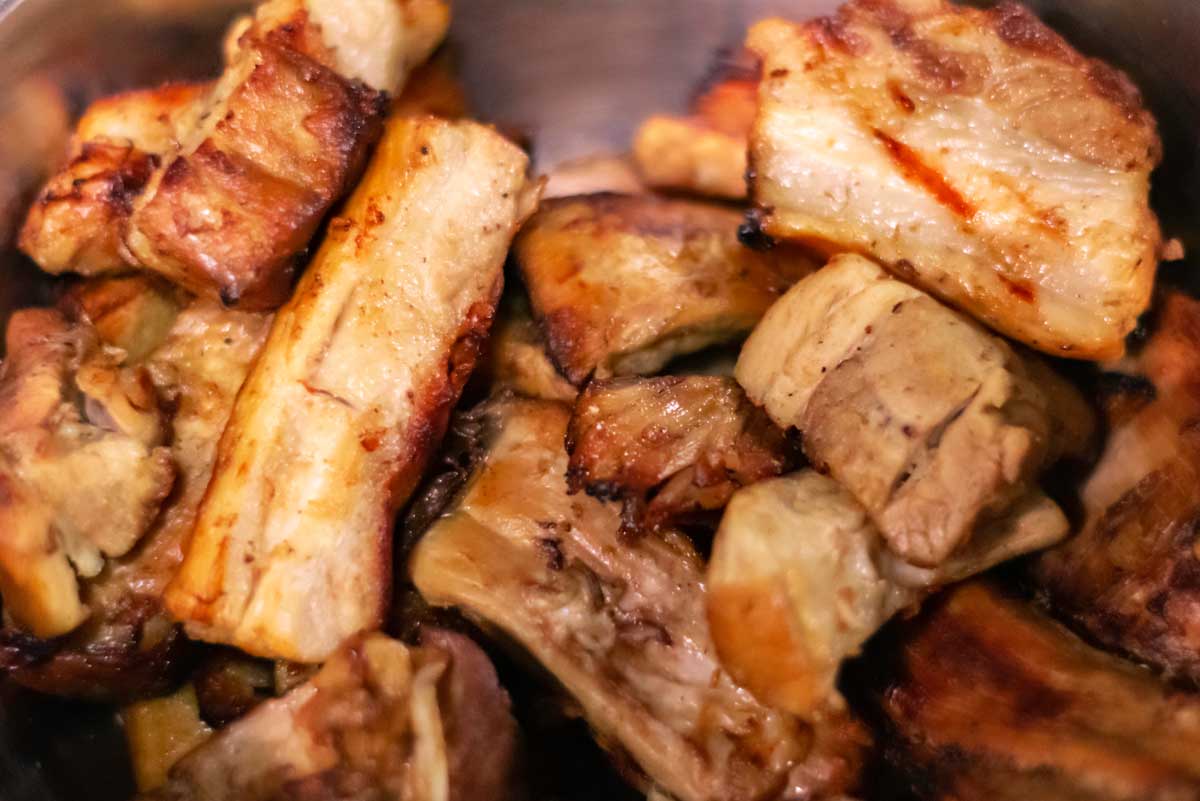
Not pork rinds. In Mexico and the US, chicharrón usually means crunchy, puffed pork skin. Peruvian chicharrón de cerdo is meaty: chunks of pork simmered in salted water until the water is gone, then fried in their own rendered fat until the outside turns crisp and golden. That two-stage method is the heart of this sandwich.
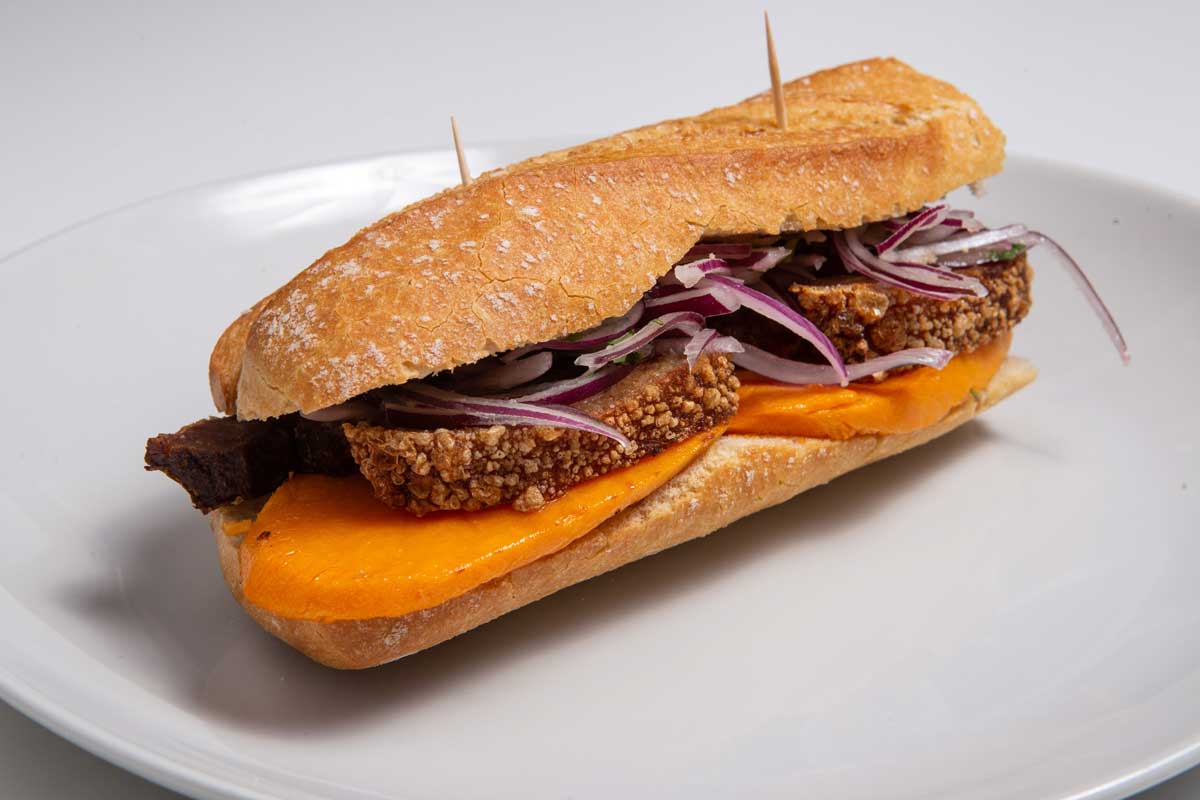
Lima’s Sunday Breakfast, Now the “Best Breakfast in the World”
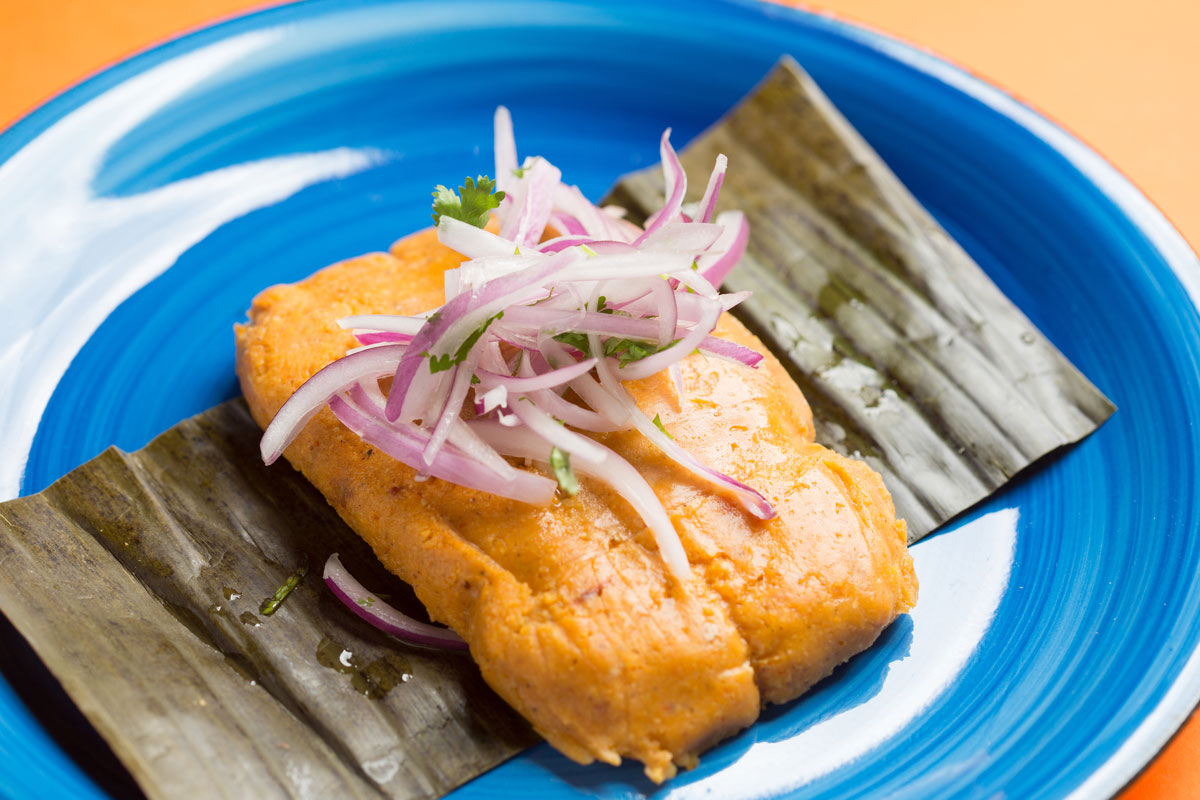
In Lima, pan con chicharrón is weekend food. It is the breakfast families go out for on Sunday morning, usually with a Peruvian tamal and a cup of café pasado, strong coffee dripped slowly through a filter. Sangucherías and neighborhood bakeries fry the pork early so it is ready when the first customers arrive.
In 2025 the sandwich went global. Spanish streamer Ibai Llanos ran a fan-voted Mundial de Desayunos (Breakfast World Cup) between the breakfasts of 16 countries. Peru’s entry was pan con chicharrón with tamal and coffee, and it won the whole thing.
The final was decided by about 200,000 votes out of more than 25 million cast on TikTok, Instagram and YouTube. Not bad for a sandwich that started as a way to use up pork.

Pan con Chicharrón Ingredients (and What to Buy in the US)
The sandwich has only four parts, so each one matters. Here is what to look for, and what to use if you cannot find the Peruvian original. Exact amounts are in the recipe card below.
The porkPork belly is the easiest choice at home because it has enough fat to fry itself. Peruvian cooks also use rib meat (costillar) and shoulder, sold in the US as country-style ribs.
The camotePeruvian camote is a sweet potato, and any orange-fleshed sweet potato works. Slice it ¼ inch thick so it stays soft inside and golden outside, not chip-crisp.
The breadPan francés is a light roll with a thin, crisp crust and an airy crumb, closer to a bolillo or Cuban roll than a baguette. Skip chewy ciabatta; the bread should give way when you bite.
The salsa criollaPaper-thin red onion, a fresh ají, lime juice, cilantro and salt. It is the acid that makes the rich pork work, so be generous. See our full salsa criolla recipe.
Which pork cut is best for chicharrón?
| Cut | What you get | Notes |
|---|---|---|
| Pork belly (panceta) | Juiciest, crispest edges | Most forgiving at home. Skin-on is crunchier but harder to slice. |
| Country-style ribs (shoulder) | Meatier, less fatty | Add 2–3 tablespoons oil when it is time to fry. |
| Half belly, half country-style ribs | Meaty with crisp, juicy edges | A good balance for a sandwich you can bite through. |
| Bone-in rib meat (costillar) | Deep pork flavor | Cut the meat off the bone before slicing. |
Ají limo or ají amarillo?
Salsa criolla gets its heat from a fresh Peruvian chile. Ají limo is small, sharp and very hot, the chile in classic ceviche. Ají amarillo is fruitier with medium heat. Either works. Outside Peru, fresh ones are hard to find, so most cooks stir a spoonful of jarred paste such as Inca’s Food ají amarillo paste into the lime juice instead. Half a seeded jalapeño is the supermarket fallback.

How to Make Pan con Chicharrón
The full recipe with measurements is in the card at the bottom of the page. Here is how the method works and what to watch for at each stage.
- Simmer the pork until the water is gone.Large pieces of pork go into a wide pot with salt, garlic and a bay leaf, just covered with water. As it simmers uncovered, the water slowly cooks off while the meat turns tender and seasoned, about 1¼ to 1½ hours. Turn the pieces every 15 minutes so they do not stick.
- Fry it in its own fat.Once the water is gone, the fat the pork released is left in the pot. Lower the heat and let the pieces fry, turning, until deep golden on every side, 15 to 20 minutes. This is the moment it becomes chicharrón.
- Rest, then slice.Give the pork 5 minutes on the board, then cut ¼-inch slices with a serrated knife.
- Fry the camote and mix the salsa while the pork simmers.Soak the sliced onion in cold salted water for 10 minutes to soften its bite, then dress it with lime, ají and cilantro.
- Build it and eat it right away.Bottom bun, sweet potato, pork, salsa criolla, top bun. The sweet potato goes first so it protects the bread from the juices.

Why Chicharrón Sticks, Shreds or Turns Out Salty
The simmer-then-fry method is simple, but it is also where most home attempts go wrong. These are the common problems and how to avoid them.
| Problem | Why it happens | Fix |
|---|---|---|
| Pork is too salty, or a salt crust forms in the pot | All the salt stays behind as the water evaporates | Use 2 teaspoons fine salt for 2 lb of pork, not tablespoons, and skip a separate salty brine. |
| Pieces stick and shred | Small pieces crowded in a narrow pot, left unturned as the water runs low | Cut 3-inch pieces, use a wide heavy pot in a single layer, and turn them every 15 minutes. |
| Water is gone but the pork is still tough | The heat was too high, so the water boiled off too fast | Add ½ cup hot water and keep simmering until a fork slides in easily. |
| Not enough fat to fry | Lean cut such as shoulder, or skinless belly | Add 2 to 3 tablespoons oil or lard once the water is gone. |
| Slices fall apart | Cut while piping hot, when the soft fat layers slide apart | Rest 5 minutes first. For perfect slices, cook the day before, chill, slice cold and re-crisp. |
| Soggy bread | Wet salsa or juicy pork straight onto the bun | Drain the salsa well and put the sweet potato on the bottom. |
A heavy enameled pot like the Lodge 6-quart enameled cast iron Dutch oven makes the whole process easier: it holds the pork in one layer, keeps the heat even as the water disappears, and goes straight from simmering to frying.
Sauces and Extras: How Peruvians Dress It
The classic sandwich needs nothing beyond salsa criolla. Most sangucherías still set out a few sauces at the counter, usually a spicy yellow ají sauce, a green ají sauce and mayonnaise, and plenty of people add a spoonful. A squeeze of extra lime over the pork is also common.
Peruvian pantry picks for this sandwich
- Inca’s Food ají amarillo paste: for the salsa criolla when you cannot find fresh ají, or stirred into mayonnaise for a quick yellow ají sauce.
- Ají verde Peruvian green sauce: cilantro and ají limo heat, the sauce many sangucherías offer on the side.
- Cenfrocafe ground Peruvian coffee: for brewing café pasado the way it is served with the sandwich in Lima.
- Lodge 6-quart enameled Dutch oven: wide enough to simmer and fry 2 lb of pork in one layer.
As an Amazon Associate, AmigoFoods earns from qualifying purchases.
What to Serve With Pan con Chicharrón
For the full Lima Sunday breakfast, serve it with a Peruvian tamal: corn masa wrapped in banana leaf and topped with the same salsa criolla. Add a pot of café pasado, or a glass of fresh juice. For a brunch spread, pair it with the other Peruvian sánguches, a pitcher of chicha morada, and a few more dishes from our list of Peruvian breakfast foods.
Variations and Close Cousins
Chicharrón de chancho al plato. Skip the bread and you have the plate version: chicharrón with fried camote, boiled corn and salsa criolla, served at the chicharronerías found around Lima and all over Peru.

Other proteins. Sangucherías also make the sandwich with chicharrón de pollo (fried chicken pieces) or crispy fried fish. Keep the camote and salsa criolla, but fry the chicken or fish the usual way; the long pork simmer does not apply.
Elsewhere in Latin America. Colombia’s chicharrón is a crackly strip of pork belly with the skin on (see how to make Colombian chicharrón), and Cuba’s pan con lechón tucks roast pork into Cuban bread. For more pork sandwiches from across the region, see our guide to Latin sandwiches.
Make Ahead, Storage and Reheating
- Make ahead: simmer and fry the pork up to a day in advance. Cool it, refrigerate it whole, then slice it cold and re-crisp the slices in a hot dry skillet for 2 to 3 minutes per side.
- Air fryer: re-crisp cold slices at 400°F for 4 to 5 minutes.
- Storage: refrigerate cooked pork within 2 hours and use it within 3 to 4 days. Keep pork, salsa, sweet potato and bread separate.
- Salsa criolla is best the day it is made. After that the onion goes soft.
Pan con Chicharrón FAQ
What is pan con chicharrón in English?
It translates as “bread with chicharrón.” In English it is usually called a Peruvian pork sandwich or Peruvian fried pork sandwich: fried pork, fried sweet potato and red onion relish in a soft roll.
Is Peruvian chicharrón the same as pork rinds?
No. Peruvian chicharrón is meaty pieces of pork simmered and then fried in their own fat. Bagged pork rinds are puffed, fried pork skin.
What is the best pork for pan con chicharrón?
Pork belly is the easiest and juiciest. For a meatier sandwich, use half belly and half boneless country-style ribs.
What bread is used for pan con chicharrón?
Peruvian pan francés, a light roll with a thin crust and soft crumb. Bolillos, Cuban rolls or soft Kaiser rolls are good substitutes.
Can I bake the sweet potato instead of frying it?
Yes. Toss ¼-inch slices with a little oil and salt and roast at 425°F for 20 to 25 minutes, turning once, until golden and tender.
When do Peruvians eat pan con chicharrón?
Mostly for breakfast, above all on Sunday mornings, with a tamal and coffee. Sangucherías serve it all day.
Which breakfast won Ibai’s Breakfast World Cup?
Peru’s pan con chicharrón. It beat Venezuela’s arepa reina pepiada in the final on September 13, 2025, by about 200,000 votes.
More from Peru: 47 traditional Peruvian dishes, Peruvian street foods and every recipe on our Peruvian breakfast recipes page.
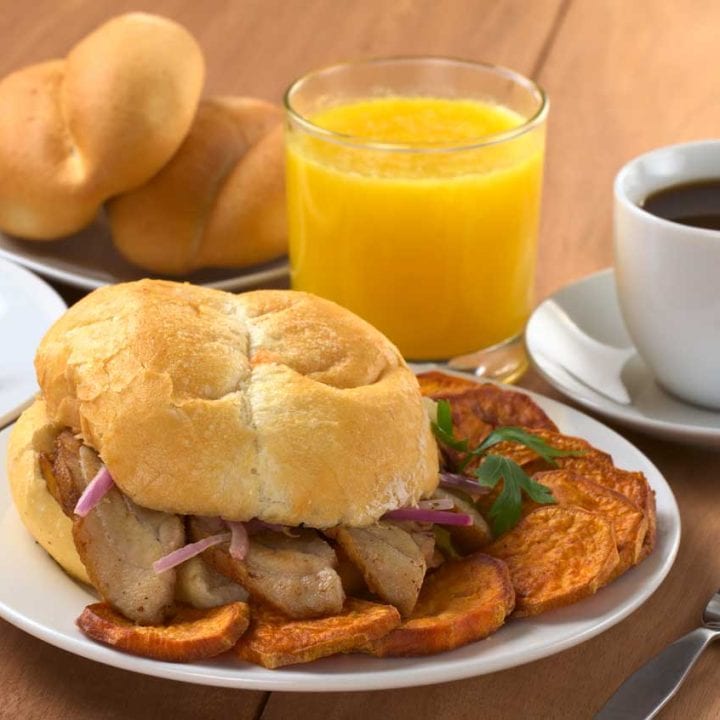
Pan con Chicharrón
Peru’s favorite breakfast sandwich: pork simmered until the water cooks off, fried crisp in its own fat, then piled into a soft roll over fried sweet potato and topped with tangy salsa criolla.
Ingredients
- 2 lb (900 g) pork belly, skin-on or skinless, or 1 lb belly plus 1 lb boneless country-style pork ribs
- 2 teaspoons fine sea salt (or 1 tablespoon Diamond Crystal kosher salt)
- 4 garlic cloves, smashed
- ½ teaspoon ground cumin (optional)
- 1 bay leaf
- About 6 cups water, enough to just cover the pork
- 2–3 tablespoons vegetable oil, if needed
- 2 medium sweet potatoes (about 1 lb / 450 g), peeled and sliced ¼ inch thick
- Vegetable oil for shallow frying
- 4 soft, crusty rolls (pan francés, bolillos or Cuban rolls)
- 1 large red onion, halved and sliced paper-thin
- 1 ají limo or ½ ají amarillo, seeded and cut into thin strips (or ½ jalapeño)
- ¼ cup fresh lime juice (about 2 limes)
- 2 tablespoons chopped cilantro
- ½ teaspoon salt and a pinch of black pepper, for the salsa
- 1 teaspoon vegetable oil, for the salsa
- Ají amarillo or ají verde sauce, for serving (optional)
Instructions
- Cut the pork into 3-inch (7–8 cm) pieces. Arrange them in a single layer in a wide, heavy pot or Dutch oven with the salt, garlic, cumin and bay leaf, then add water just to cover (about 6 cups).
- Bring to a boil and skim off any foam. Simmer uncovered over medium heat, turning the pieces every 15 minutes, until the pork is fork-tender and nearly all the water has evaporated, 1 hour 15 minutes to 1 hour 30 minutes. If the water runs out before the pork is tender, add ½ cup hot water and keep going.
- When only rendered fat and a thin film of liquid are left, turn the heat to medium-low. Fry the pork in its own fat, turning every few minutes and scraping up the browned bits, until deep golden and crisp on all sides, 15–20 minutes. Add 2–3 tablespoons oil if the pot looks dry. Keep a splatter screen handy; the fat pops as the last of the water cooks off.
- Move the pork to a cutting board and let it rest 5 minutes. Slice ¼ inch (6 mm) thick with a sharp serrated knife. Save the fat in the pot.
- While the pork simmers, make the salsa criolla: soak the sliced onion in cold salted water for 10 minutes, drain well and pat dry. Toss with the chile, lime juice, cilantro, salt, pepper and oil.
- Fry the sweet potato: heat ½ inch (1 cm) of oil, or oil mixed with the pork fat, in a skillet to 350°F (175°C). Fry the slices in batches until golden outside and tender inside, 3–4 minutes per side. Drain and salt lightly.
- Split the rolls (warm them in a 350°F oven for 3 minutes if they are a day old). Layer sweet potato on the bottom half, pile on the sliced pork and top with a generous forkful of salsa criolla. Serve right away, with ají sauce on the side.
Notes
Make it ahead: cook the pork through step 3 the day before, cool it and refrigerate. Cold chicharrón slices cleanly; re-crisp the slices in a hot dry skillet for 2–3 minutes per side the next morning.
Choosing the cut: pork belly is the most forgiving. For a meatier sandwich, use half belly and half boneless country-style pork ribs (shoulder).
Salt: stick to the amount given. All of it stays in the pot as the water evaporates, so extra salt ends up in the pork.
No fresh ají? Stir 1 teaspoon ají amarillo paste into the lime juice, or use half a seeded jalapeño.
Leftovers: refrigerate within 2 hours and use within 3–4 days. Keep pork, salsa and bread separate, and reheat the pork until steaming hot (165°F).
More Peruvian Foods
See all →
Jorge Garcia is the founder of AmigoFoods, where he has spent over 20 years helping readers discover authentic Latin American and Spanish cuisine. Raised in a Cuban-American household, Jorge learned to cook at the hands of his mother and grandmother, carrying forward generations of family recipes. That heritage, backed by his family’s four-generation history in the Latin food industry, inspired him to launch AmigoFoods in 2003. With more than 1,000 published articles on recipes, ingredients, and food culture, Jorge’s mission is simple: make authentic Latin cooking approachable for home cooks everywhere while honoring the traditions behind every dish.