

On this page ⌄
Reina pepiada is Venezuela’s most famous arepa filling: shredded chicken folded into mashed avocado, mayonnaise, lime, onion and cilantro, then stuffed into a crisp corn arepa. The name means “curvy queen,” a 1955 tribute to Miss World Susana Duijm.
This recipe makes 8 stuffed arepas in about an hour, or 45 minutes with a rotisserie chicken. The step many home recipes skip is a short trip through the oven, which keeps the shell crisp under that creamy filling.
Reina Pepiada at a Glance
What Is Reina Pepiada?
Reina pepiada is both the filling and the finished sandwich. At a Venezuelan arepera you simply order “una reina pepiada,” and you get a hot arepa split open and packed with cool chicken-avocado salad. Menus also spell it reina pepeada or call it arepa reina.
Think of it as chicken salad where avocado does most of the work that mayonnaise does elsewhere. The contrast is the point: cold, creamy and tart inside, hot and crunchy outside. Venezuelans eat it at breakfast, at lunch and late at night after a party.

- 1Crisp shell: griddled for color, then baked so it stays crunchy
- 2Soft corn center: steamy and tender; pull a little out for more room
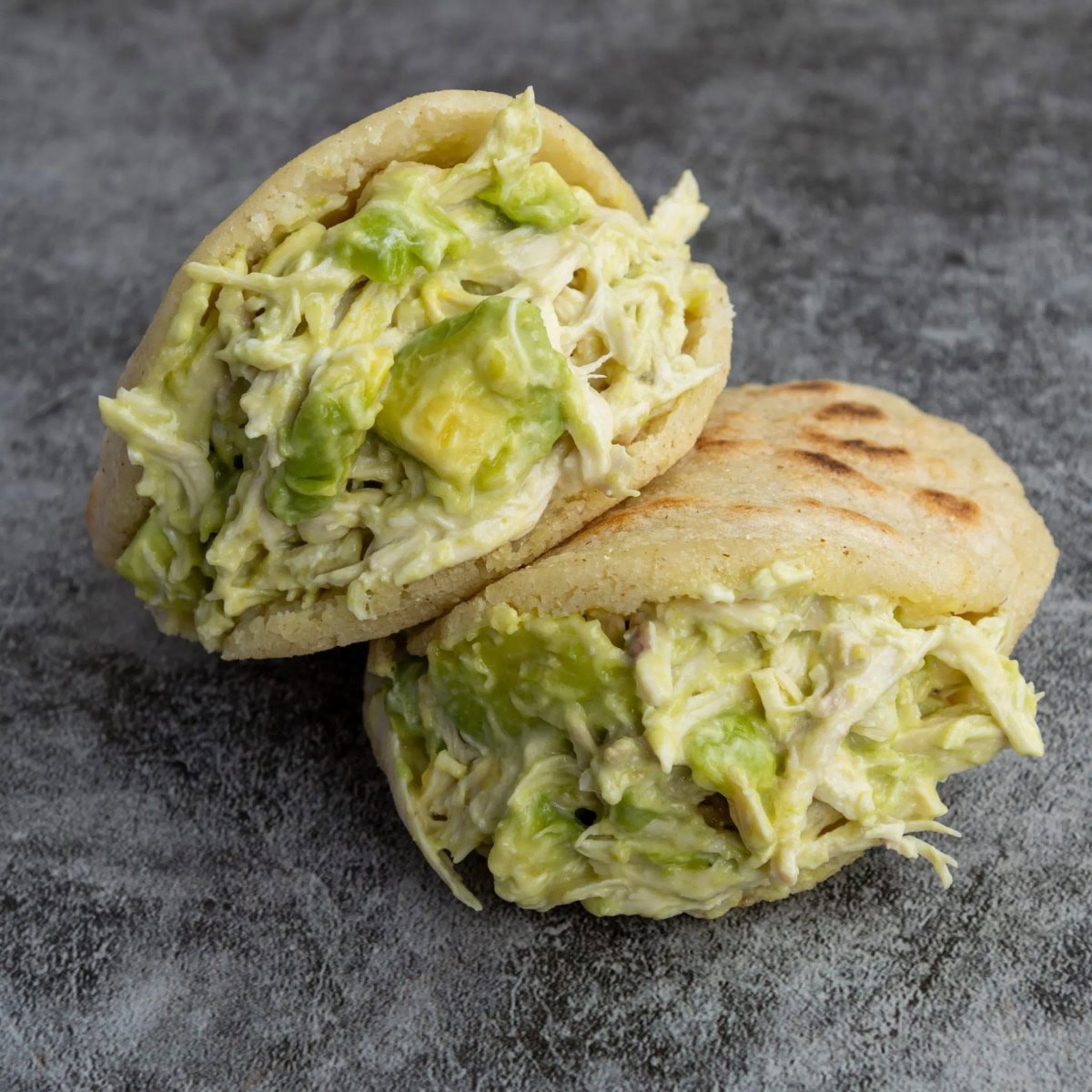
- 3Reina filling: shredded chicken in mashed avocado and mayo, with lime, onion, cilantro and a few avocado chunks
What Does Reina Pepiada Mean?
In English, reina pepiada means “curvy queen.” It is a compliment from 1950s Caracas, not a description of the food.
The Story Behind the Name
Most Venezuelan food stories are hard to pin down. This one comes with a family, a street and a year.
- Early 1950sWidowed María de los Santos Álvarez moves from Trujillo state in the Andes to Caracas with her children. The family sells food, and its stuffed tostadas help popularize filled arepas in the capital.
- 1955The Álvarez brothers open an arepera on the Gran Avenida, between Plaza Venezuela and Sabana Grande. That year 19-year-old Susana Duijm becomes the first Venezuelan, and the first Latin American, to win Miss World.
- 1955To celebrate, the family seats a young girl dressed as a queen in the shop. A passerby turns out to be Duijm’s father, and he brings her in. She is served an arepa filled with chicken, avocado, mayonnaise and peas. It becomes “la reina,” and “pepiada” soon follows.
- 1960Harina P.A.N. launches, using the precooked corn flour process developed by engineer Luis Caballero Mejías. Arepa dough no longer means soaking and pounding corn, and the arepa spreads from areperas into every home kitchen.
- 2025In the final of streamer Ibai Llanos’s online Breakfast World Cup, the arepa reina pepiada draws 12.6 million votes and loses by about 200,000 to Peru’s pan con chicharrón.
Accounts differ on small details, such as whether the girl was a niece or a daughter. Our timeline follows reporting from Atlas Obscura and La Nación.
Reina Pepiada Ingredients
The list is short, so each ingredient shows. Exact amounts are in the recipe card.
Precooked white corn flour
Harina P.A.N. is the Venezuelan standard. Donarepa works the same way. New to arepas? Our guide to arepas covers the dough and the whole family of fillings.
Cooked chicken
Shred it fine, by hand, so it folds into the avocado. It must be cold when you mix or the avocado turns dull and the mayo loosens.
Ripe avocados
Choose avocados that give under gentle pressure. Mash most of them and dice the rest, so you get both creaminess and soft chunks.

The Best Chicken for Reina Pepiada
You need about 3 cups shredded. Each option changes the flavor a little.
| Chicken | Time | What you get |
|---|---|---|
| Rotisserie | 10 min to shred | The fastest route, already seasoned; one bird yields about 3 cups |
| Poached breast or thigh | 20 min, plus cooling | Clean flavor that lets the avocado lead; the classic home method |
| Leftover roast | 10 min to shred | Deeper flavor, and a common way Venezuelan families use up leftovers |
| Charcoal-grilled | 25 min, plus cooling | Smoky edge against the cool avocado; worth it when the grill is already on |
How to Make Reina Pepiada
The trick is timing, so the arepas come out hot just as the filling is ready. Here is the game plan.
- 0:00 Start the chicken. Mix the dough while it simmers.
- 0:10 Shape the arepas and heat the griddle and oven.
- 0:15 Griddle the arepas in two batches. Shred the chicken and chill it.
- 0:35 Bake the arepas until they sound hollow.
- 0:45 Mash the avocado and fold in the cold chicken.
- 0:55 Split, stuff and serve.
1. Cook and shred the chicken
Cover the chicken with cold water, add onion, garlic, a bay leaf and salt, and keep it at a gentle simmer for 15 to 20 minutes, until the thickest part reaches 165°F (74°C). Shred it and spread it on a plate in the fridge. Cold chicken keeps the salad bright.
2. Make the arepa dough
Stir salt into warm water, then add the corn flour gradually, working it with your hand until no dry lumps remain. Rest it for 5 minutes while the flour drinks up the water. It should feel like soft clay.

3. Shape and griddle
Divide the dough into 8 balls and pat each one into a disc about 4 inches wide and ½ inch thick. Wet or oil your hands if the dough sticks. If the edges crack, the dough is too dry, so knead in a little more water.

Cook on a lightly oiled griddle or cast-iron skillet over medium heat for 5 to 6 minutes per side, until crusted with dark spots.
4. Bake until they sound hollow
This is the step that makes the shell. Bake the griddled arepas at 375°F for 10 to 15 minutes, on a sheet pan or right on the rack. They puff slightly, and a tap on the crust sounds hollow.

5. Mix the reina filling
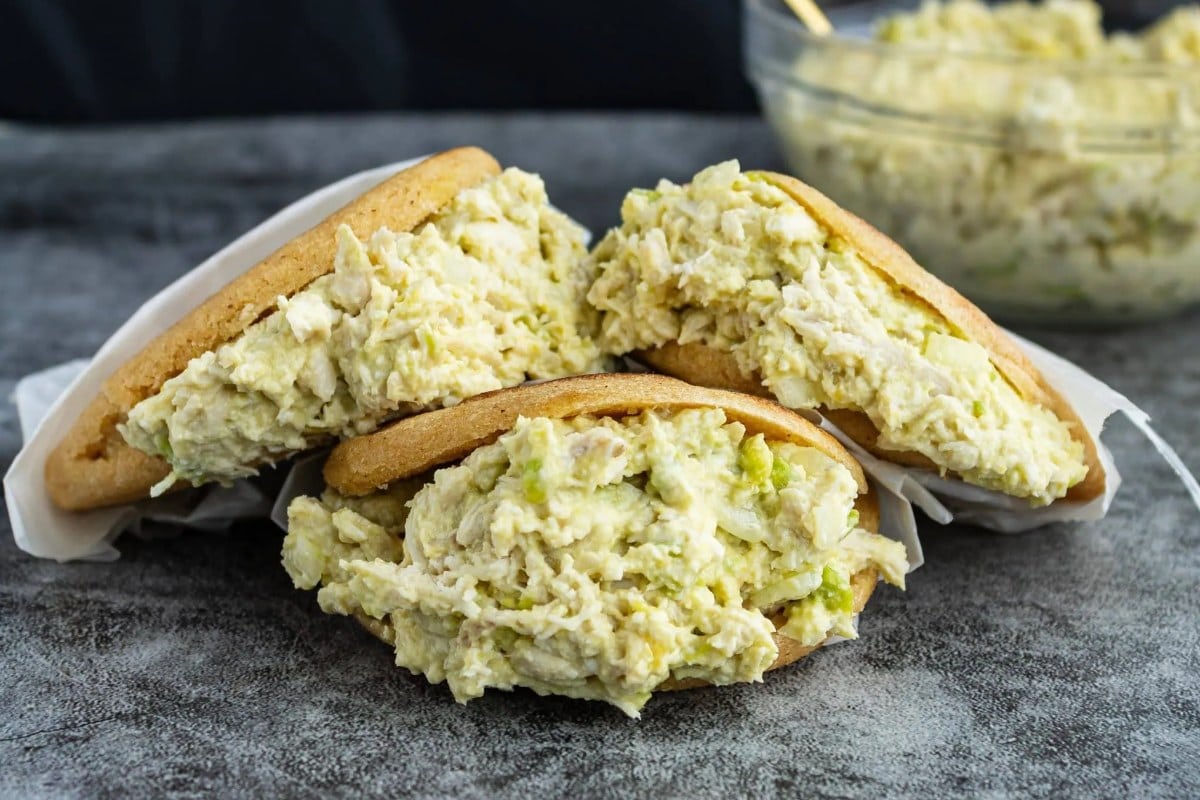
Mash about three-quarters of the avocado with the mayonnaise, lime juice, grated garlic and salt until mostly smooth. Fold in the cold chicken, onion and cilantro, then gently fold in the rest of the avocado, diced. Taste it: it should be bright and well salted, because the plain arepa needs the seasoning.
6. Split and stuff
Hold each hot arepa with a towel and cut along the edge about three-quarters of the way around, leaving a hinge. Pack in about ½ cup of filling and eat it right away, while the crust still crackles.

How we built this recipe: The dough ratio follows P.A.N.’s arepa instructions, and the filling was checked against Laylita’s recipe and Food Network Kitchen’s version. This is a source-based editorial check, not a kitchen test.
Reina Pepiada Variations
Add one thing and many of these earn a new name on the menu.
Arepa sifrina
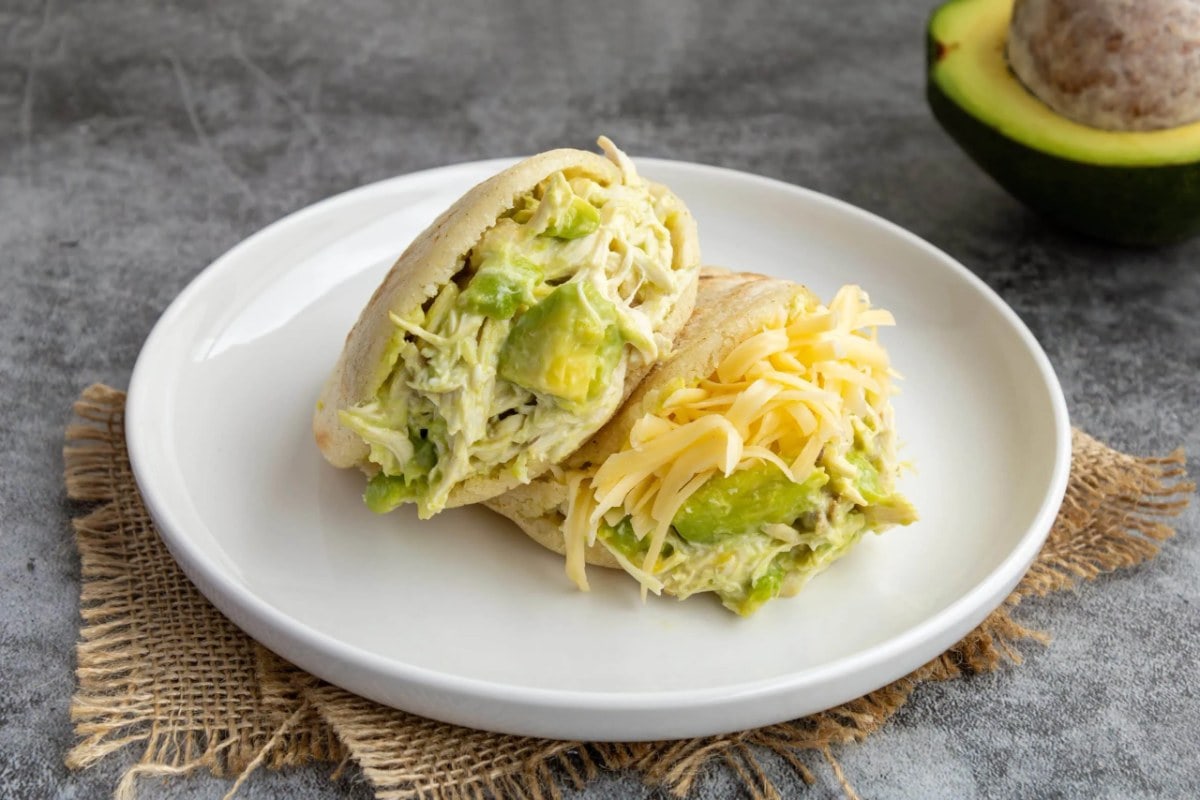
Reina pepiada topped with grated yellow cheese. Sifrina is slang for a posh girl, and this is the richer, showier version. Gouda or mild cheddar works.
The original, with peas
The Álvarez family’s first version included green peas, which most cooks have since dropped. Fold in ½ cup of cooked peas to try it.
With a kick
Add minced jalapeño or sweet ají dulce to the filling, or spoon guasacaca into the arepa before stuffing.
Reina pepiada cachapa
Swap the arepa for a sweet corn cachapa and fold it around the filling. The sweetness plays well against the lime.
For another arepera classic, try the arepa de pabellón, with carne mechada, black beans and plantain. Want a Venezuelan chicken salad with no arepa at all? See ensalada de pollo, the potato-and-chicken Christmas salad.
Common Reina Pepiada Problems
| Problem | Why | Fix |
|---|---|---|
| Arepa edges crack | Dough too dry | Knead in water a tablespoon at a time, then rest 2 minutes |
| Doughy center | Heat too high, or no bake | Griddle over medium, then finish in the oven |
| Soggy arepa | Filled too early | Stuff just before eating and keep the filling cold |
| Filling turns gray | Avocado exposed to air | Add lime, press plastic wrap onto the surface and mix close to serving |
| Bland filling | Underseasoned for a plain shell | Add salt and lime until it tastes slightly too bright by itself |
Make-Ahead and Storage
| Component | Fridge | Freezer | Notes |
|---|---|---|---|
| Cooked chicken | 3–4 days | 3 months | Shred when cold or still warm; keep it covered |
| Arepas | 3 days | 2 months | Reheat in a 350°F oven or toaster oven for 10–12 minutes |
| Mixed filling | 1–2 days | Do not freeze | Press plastic wrap onto the surface; the top may darken, so stir before serving |
| Stuffed arepas | Not recommended | No | Fill just before eating |
Do not leave the filling out for more than 2 hours, or 1 hour above 90°F. For a party, set it over a bowl of ice and let guests stuff their own arepas.
What to Serve with Reina Pepiada
A stuffed arepa is a full meal, so keep the sides simple and the drink cold.
- Drink: papelón con limón
- Drink: chicha venezolana
- Sauce: guasacaca
- Side: sweet fried plantains
- Starter: tequeños
- Dessert: quesillo

Cooking a full spread? Browse our 32 traditional Venezuelan dishes.
Where to Buy the Ingredients
Precooked corn flour is sold in most US supermarkets’ international aisle and in any Latin market. These are the pantry items and tools we would reach for:
As an Amazon Associate, AmigoFoods earns from qualifying purchases.
For the rest of the pantry, see our guide to Venezuelan ingredients.
Reina Pepiada FAQ
What is in a reina pepiada?
Shredded chicken, avocado and mayonnaise are the core, usually with lime, onion and cilantro, all stuffed into a split corn arepa. Many cooks add garlic or sweet pepper, too.
Who invented reina pepiada?
Credit goes to the Álvarez family, who ran an arepera in Caracas in the 1950s. Heriberto Álvarez and his mother, María de los Santos Álvarez, are the names most often cited.
Is reina pepiada served hot or cold?
Both. The arepa is hot and the chicken-avocado filling is cold, and that contrast is much of the appeal.
How are you supposed to eat an arepa?
With your hands, like a sandwich. Hold it upright, wrap the bottom in a napkin and tilt it as you go, since a well-stuffed reina pepiada will try to escape.

What is the difference between sifrina and reina pepiada?
A sifrina is a reina pepiada with grated yellow cheese on top. A catira is different: chicken and yellow cheese with no avocado.
Are Venezuelan and Colombian arepas the same?
No. Venezuelan arepas are usually thicker and split to hold a filling like this one. Colombian arepas are often thinner and eaten with cheese or butter. Here is how to make Colombian arepas.
Can I make reina pepiada without mayonnaise?
Yes. Use plain Greek yogurt, or more avocado with a spoon of olive oil. The filling is lighter and sharper, and it needs a little extra salt.
How many calories are in a reina pepiada?
About 350 calories per stuffed arepa with this recipe, by our estimate from standard ingredient data. Brands and portions change that number.
Is reina pepiada gluten-free?
Precooked corn flour such as Harina P.A.N. is made from corn and sold as gluten-free, and nothing in the filling contains wheat. Check your mayonnaise label if you need to be strict.
Reina Pepiada (Arepa Reina Pepiada)
Reina pepiada is Venezuela’s classic chicken and avocado arepa: crisp corn arepas stuffed with a creamy, limey chicken salad.
Ingredients
For the arepas
- 2 cups (about 290 g) precooked white corn flour, such as Harina P.A.N.
- 2 1/2 cups warm water
- 1 teaspoon fine salt
- 1 tablespoon neutral oil, for the griddle
To cook the chicken (optional)
- 1 1/2 pounds boneless, skinless chicken breasts or thighs
- 1/2 white onion
- 2 garlic cloves, smashed
- 1 bay leaf
- 1 teaspoon salt
For the reina pepiada filling
- 3 cups (about 425 g) shredded cooked chicken, cooled
- 2 large ripe avocados (about 325 g flesh)
- 1/4 cup mayonnaise
- 2 tablespoons fresh lime juice
- 1/3 cup finely chopped white or red onion
- 1/4 cup chopped cilantro
- 1 small garlic clove, finely grated
- 1/2 teaspoon fine salt, plus more to taste
- Freshly ground black pepper
Instructions
- Cook the chicken (skip with rotisserie). Cover the raw chicken with cold water in a small pot. Add the onion half, garlic, bay leaf and 1 teaspoon salt. Simmer gently 15 to 20 minutes, until the thickest part reaches 165°F (74°C). Shred it, spread it on a plate and refrigerate until cool, at least 10 minutes.
- Make the dough. Stir the salt into the warm water. Add the corn flour gradually, mixing with your hand until no dry lumps remain. Rest 5 minutes. It should feel like soft clay; if a flattened ball cracks at the edge, work in more water a tablespoon at a time.
- Shape the arepas. Heat the oven to 375°F (190°C). Divide the dough into 8 balls and pat each into a disc about 4 inches wide and 1/2 inch thick.
- Griddle. Lightly oil a griddle or cast-iron skillet over medium heat. Cook the arepas in batches, 5 to 6 minutes per side, until crusted with dark spots.
- Bake. Move the arepas to a sheet pan or directly onto the oven rack. Bake 10 to 15 minutes, until puffed and hollow-sounding when tapped. No oven? Cook 7 to 8 minutes per side on the griddle over medium-low heat instead.
- Mix the filling. Mash about three-quarters of the avocado with the mayonnaise, lime juice, garlic and salt. Fold in the cooled chicken, onion and cilantro. Dice the remaining avocado and fold it in gently. Taste and adjust the salt and lime.
- Split and stuff. Holding each hot arepa with a towel, cut along the edge about three-quarters of the way around, leaving a hinge. Pull out a little of the soft center if you want more room. Pack in about 1/2 cup of filling and serve right away.
Notes
Chicken shortcut: One store-bought rotisserie chicken yields about 3 cups of shredded meat; use it cooled, skin removed, and allow about 45 minutes in total.
Storage: Keep the filling refrigerated and eat it within 1 to 2 days, with plastic wrap pressed onto the surface to slow browning. Do not leave it out more than 2 hours, or 1 hour above 90°F (32°C). Store arepas and filling separately, and fill just before eating.
Reheating arepas: Refrigerated arepas keep 3 days and frozen arepas 2 months. Reheat in a 350°F oven or toaster oven for 10 to 12 minutes.
More Venezuelan Foods
See all →
Jorge Garcia is the founder of AmigoFoods, where he has spent over 20 years helping readers discover authentic Latin American and Spanish cuisine. Raised in a Cuban-American household, Jorge learned to cook at the hands of his mother and grandmother, carrying forward generations of family recipes. That heritage, backed by his family’s four-generation history in the Latin food industry, inspired him to launch AmigoFoods in 2003. With more than 1,000 published articles on recipes, ingredients, and food culture, Jorge’s mission is simple: make authentic Latin cooking approachable for home cooks everywhere while honoring the traditions behind every dish.