

Pescado zarandeado is Mexican fish opened flat and grilled in a hinged basket. This ancho-and-tomato version makes a generous centerpiece with warm tortillas, lime and onion, inspired by the Pacific coast’s varied preparations.
Pescado Zarandeado at a Glance
What makes pescado zarandeado distinctive?
The opened fish exposes a broad surface to the heat. A basket supports the delicate flesh while you turn it, helping keep the fish together. The sauce varies by cook and region: chile marinades, savory sauces and creamy coatings all appear in documented versions.
Adán Medrano’s Nayarit preparation uses guajillo and describes the grilling tradition. Rick Bayless’s version uses chile, tomato, soy and Worcestershire sauces; it informs the recipe below. Pati Jinich’s beachside snapper demonstrates another approach. These differences are why one sauce should not be presented as the only authentic formula.
This home adaptation has not been independently kitchen-tested by AmigoFoods. The fish’s thickness, preparation and your grill matter more than a precise minute count.
Ask the fishmonger to prepare the fish
Choose a fish that fits your grill basket before buying it. Ask for a roughly 3-pound whole snapper or similar suitable fish, scaled, cleaned and butterflied for grilling, with the skin left on. Ask which bones will remain.
The recipe’s weight refers to the whole fish before cleaning, not 3 pounds of boneless fillets. Edible yield varies, so consider your side dishes when planning portions. Professional preparation is helpful even for confident cooks: opening a whole fish evenly takes a sharp knife and practice.
Use a thin coating of marinade

This recipe makes extra marinade. Set aside the portion you need before brushing the raw fish, keeping the remainder untouched. A thin coating seasons the surface; a heavy puddle can drip into the fire and obscure the fish.
Standard soy and Worcestershire sauces can already be salty. Taste the marinade before adding salt. Check labels for wheat, soy, fish ingredients and any other allergens relevant to your household.
Manage the grill, not just the clock
Prepare a medium-heat cooking area and leave a cooler section available if the coating starts to darken too quickly. Keep the fish supported in the basket, turning carefully with heatproof gloves and following the basket’s instructions.
Check the thickest flesh with a thermometer without touching bone. The FDA recommends 145°F (63°C) for most seafood. A dark exterior does not prove the center is done. Transfer cooked fish to a clean platter rather than the tray used for raw fish.
Equipment that helps
As an Amazon Associate I earn from qualifying purchases.
A hinged fish-grilling basket supports the fish during turning. Check its dimensions against both the fish and your grill. An instant-read food thermometer helps assess the thickest portion. Suitable tools you already own are fine.
Pescado zarandeado recipe
Yield: About 4 servings, depending on the fish’s edible yield. Estimated time: 30 minutes preparation and 15 minutes grilling, excluding fishmonger preparation.
Chile marinade
- 4 dried ancho chiles, stemmed and seeded
- 1 can (8 ounces / 227 g) plain tomato sauce
- 2 garlic cloves
- 3 tablespoons soy sauce
- 3 tablespoons Worcestershire sauce
- 1/2 cup (120 ml) water from soaking the chiles
- Salt, only if needed after tasting
Fish and serving
- 1 whole fish, about 3 pounds (1.36 kg) before cleaning, butterflied by your fishmonger
- Neutral oil, for lightly coating the fish and grill basket
- 12 small corn tortillas, warmed
- 1 medium red onion, thinly sliced
- 2 limes, cut into wedges
Instructions
- Toast the ancho pieces briefly in a dry skillet over medium heat until fragrant, without blackening. Cover with hot water and soak 20 minutes.
- Drain, reserving 1/2 cup soaking water. Blend chiles, reserved water, tomato sauce, garlic, soy sauce and Worcestershire until smooth; strain if coarse. Taste before adding salt.
- Pat the butterflied fish dry. Set aside only enough marinade to brush a thin coating on both sides; keep the unused sauce separate from raw fish. Lightly oil the fish and a hinged grill basket, then secure the fish inside.
- Grill over medium heat, turning the basket every 3–4 minutes. Begin checking around 10 minutes; thickness and grill heat determine the time. Cook until the thickest flesh reaches 145°F (63°C), without touching bone with the thermometer.
- Transfer to a clean platter. Lift the flesh from the bones carefully and serve with tortillas, sliced onion and lime. Discard marinade that contacted raw fish.
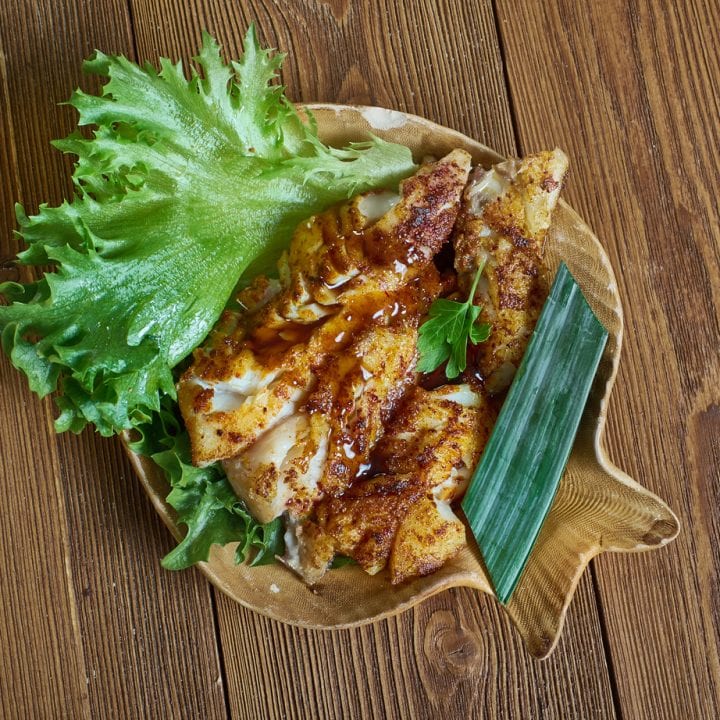
Pescado Zarandeado (Grilled Mexican Fish)
Butterflied fish grilled in a hinged basket with an ancho, tomato and savory sauce coating. A home adaptation of pescado zarandeado.
Ingredients
Chile marinade
- 4 dried ancho chiles, stemmed and seeded
- 1 can (8 ounces / 227 g) plain tomato sauce
- 2 garlic cloves
- 3 tablespoons soy sauce
- 3 tablespoons Worcestershire sauce
- 1/2 cup (120 ml) water from soaking the chiles
- Salt, only if needed after tasting
Fish and serving
- 1 whole fish, about 3 pounds (1.36 kg) before cleaning, butterflied by your fishmonger
- Neutral oil, for lightly coating the fish and grill basket
- 12 small corn tortillas, warmed
- 1 medium red onion, thinly sliced
- 2 limes, cut into wedges
Instructions
- Toast the ancho pieces briefly in a dry skillet over medium heat until fragrant, without blackening. Cover with hot water and soak 20 minutes.
- Drain, reserving 1/2 cup soaking water. Blend chiles, reserved water, tomato sauce, garlic, soy sauce and Worcestershire until smooth; strain if coarse. Taste before adding salt.
- Pat the butterflied fish dry. Set aside only enough marinade to brush a thin coating on both sides; keep the unused sauce separate from raw fish. Lightly oil the fish and a hinged grill basket, then secure the fish inside.
- Grill over medium heat, turning the basket every 3–4 minutes. Begin checking around 10 minutes; thickness and grill heat determine the time. Cook until the thickest flesh reaches 145°F (63°C), without touching bone with the thermometer.
- Transfer to a clean platter. Lift the flesh from the bones carefully and serve with tortillas, sliced onion and lime. Discard marinade that contacted raw fish.
Notes
Adapted from Rick Bayless’s Fish Zarandeado; regional technique and variation cross-checked with Adán Medrano and Pati Jinich. Not independently kitchen-tested by AmigoFoods. The marinade makes more than needed for one fish; do not pour it all over the fish. Fish weight is before cleaning, so edible yield varies. Times are estimates and exclude fishmonger preparation. Contains fish; standard soy sauce contains soy and wheat, and Worcestershire may contain anchovies. Check labels. Bones may remain even after professional preparation.
Serve it at the center of the table

Lift portions away from the bones carefully, then let diners build tacos with warm tortillas, onion and lime. Tell guests that bones may remain. Add Mexican rice and vegetables for a complete meal.
For a different fish-taco night, try our Baja fish tacos, which use battered fish and cabbage rather than grilled whole fish.
Common questions
Can I use fish fillets?
Fillets are easier to portion but have different thicknesses and cooking times. A whole-fish timing estimate should not be applied blindly. Keep the skin on if useful for support and use the same temperature check.
Can I make this in the oven?
An oven version is possible, but the grill method above has not been tested as an oven conversion. Follow a recipe developed for baking, such as Pati Jinich’s linked preparation, rather than guessing an identical time and temperature.
Why is the fish sticking?
A dry or dirty basket can grip the skin. Clean it and coat it lightly as directed by its manufacturer. Open the basket gently and free stuck areas with a suitable utensil instead of pulling the fish apart.
Can I serve the leftover marinade?
Only sauce kept separate from raw fish can be treated as unused marinade. Discard any portion that touched raw fish or its brush. Refrigerate untouched extra sauce promptly and freeze it if you will not use it soon.
What should I do with leftover fish?
Remove the bones while portioning, refrigerate promptly in a covered container and reheat only what you need. Do not leave seafood out more than 2 hours, or 1 hour above 90°F (32°C).
More Mexican Foods
See all →
Jorge Garcia is the founder of AmigoFoods, where he has spent over 20 years helping readers discover authentic Latin American and Spanish cuisine. Raised in a Cuban-American household, Jorge learned to cook at the hands of his mother and grandmother, carrying forward generations of family recipes. That heritage, backed by his family’s four-generation history in the Latin food industry, inspired him to launch AmigoFoods in 2003. With more than 1,000 published articles on recipes, ingredients, and food culture, Jorge’s mission is simple: make authentic Latin cooking approachable for home cooks everywhere while honoring the traditions behind every dish.