

On this page
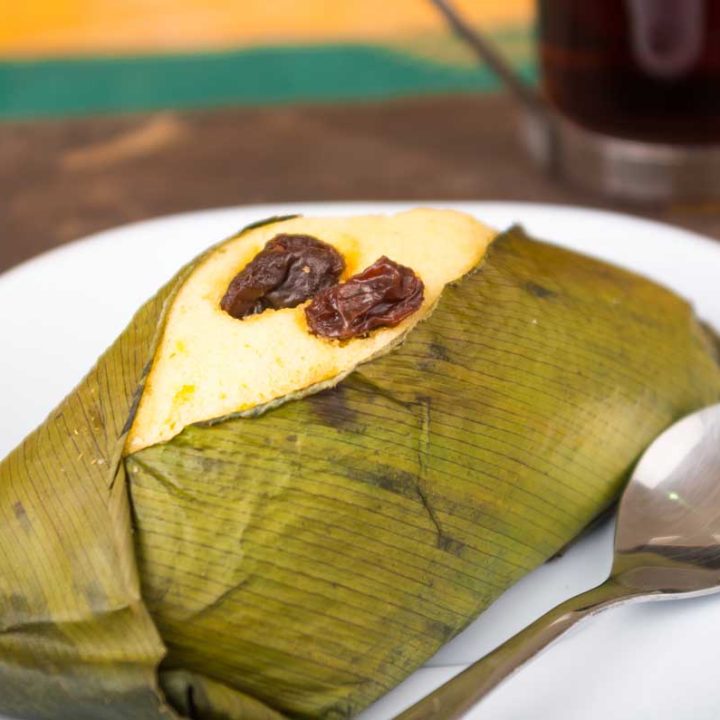
Quimbolitos are small, sweet Ecuadorian cakes steamed inside achira leaves. The batter is a light butter-and-egg cake made with flour and cornstarch, folded with whipped egg whites, crumbled fresh cheese and a splash of anise liqueur, then topped with a few raisins. Steaming keeps them moist and springy, and the leaf gives them a faint, grassy perfume. This recipe makes 12, and you can wrap them in banana leaves or corn husks if you can’t find achira.
Quimbolitos at a Glance
What Are Quimbolitos?
A quimbolito is a single-serving steamed cake from Ecuador. It sits somewhere between a sponge cake and a sweet tamale: the batter is closer to cake than to corn dough, but it’s wrapped in a leaf and cooked over boiling water the way tamales are.
They come from the Andean highlands, where they are still sold at bakeries, cafés and market stalls, and they are also made across the border in southern Colombia. Most people eat them in the late afternoon with coffee or hot chocolate, the small meal Ecuadorians call merienda or cafecito.

Ecuador has a whole family of sweets like this. You’ll find quimbolitos in our roundup of traditional Ecuadorian desserts, next to espumilla, helado de paila and figs in panela syrup.
Quimbolitos vs. Humitas vs. Tamales
All three are wrapped and steamed, and Ecuadorian bakeries often sell them side by side, so they get mixed up. The dough is what separates them.
| Quimbolitos | Humitas | Ecuadorian tamales | |
|---|---|---|---|
| Dough | Cake batter: flour, cornstarch, butter, eggs, sugar | Fresh ground corn (choclo) with cheese and eggs | Hominy-based corn dough |
| Flavor | Sweet | Lightly sweet to savory | Savory |
| Filling or topping | Raisins on top, cheese in the batter | Cheese, sometimes inside | Pork or chicken, egg, olives |
| Wrapper | Achira leaf | Fresh corn husks | Achira leaf |
| Texture | Light and spongy | Dense and moist | Firm |

If you want the corn version, see our humitas recipe. For the savory leaf-wrapped side of the family, read our guide to Latin American tamales.
Quimbolitos Ingredients
The full amounts are in the recipe card below. Here’s what each ingredient does.

Flour and cornstarch
All-purpose flour gives structure. Cornstarch (maicena) makes the crumb finer and more tender. Some Ecuadorian cooks swap part of the flour for fine corn flour, which adds a little color and corn flavor.
Butter and sugar
Creamed until pale and fluffy. This traps air and is half of what makes quimbolitos rise.
Eggs, separated
Yolks go into the butter. Whites are whipped to stiff peaks and folded in last. This is the other half of the rise, so don’t skip it.
Queso fresco
Crumbled fresh cheese adds a salty note that balances the sugar. Use queso fresco, or mild farmer’s cheese.
Anise liqueur
A spoonful of anise liqueur, brandy or rum is traditional. Orange juice works if you’re cooking for kids.
Raisins
Pressed onto the top of each one before wrapping. They’re the signature look of a quimbolito.
Achira Leaves and What to Use Instead
Achira is a canna plant grown in the Andes for its edible root and its large, soft leaves. The leaves are tough enough to hold a wet batter and don’t stick to it, which is why Ecuador uses them for both quimbolitos and tamales.
Fresh or frozen achira leaves are hard to find outside Ecuador. These substitutes all work:
| Wrapper | Where to find it | How to prep it | Result |
|---|---|---|---|
| Achira leaves | Ecuadorian and Andean grocers, sometimes frozen | Wipe clean; trim the thick center vein | Traditional look and grassy aroma |
| Banana leaves | Frozen aisle of Latin and Asian markets | Thaw, wipe, then pass over a flame or dip in hot water until soft and shiny | Closest match; slightly stronger aroma |
| Corn husks | Any Latin grocery or online | Soak 30 minutes in warm water; overlap two husks per cake | Easy and reliable; less aroma |
| Parchment or wax paper | Any supermarket | Cut 10 x 8 in. rectangles; fold like an envelope | Works fine, no leaf flavor |
How to Make Quimbolitos
Here’s the method in short. The recipe card has every quantity and the printable version.
1. Prepare the leaves and steamer
Clean and soften the leaves, then cut them into rectangles about 10 by 8 inches. Set a steamer rack in a large pot, add water up to just below the rack, and line the rack with a few leftover leaf scraps.
2. Cream the butter and sugar
Beat the soft butter and sugar for about 3 minutes, until pale and fluffy. Add the yolks one at a time, then the liqueur, vanilla and orange zest.

3. Add the dry ingredients and milk
Whisk the flour, cornstarch, baking powder and salt together. Add them to the butter mixture in three parts, alternating with the milk. Mix only until no dry streaks remain, then stir in the cheese.
4. Whip and fold in the egg whites
Whip the whites to stiff peaks. Fold them into the batter in three additions with a spatula, cutting down through the middle and turning the bowl. Stop as soon as no white streaks show.
5. Fill, top and wrap
Spoon about ⅓ cup of batter onto the center of each leaf, press 3 or 4 raisins on top and fold it into a loose packet (see the wrapping steps below).
6. Steam for 45 minutes
Stand the packets upright or seam side down in the steamer, cover with extra leaves and the lid, and steam over medium heat for 40 to 45 minutes. Check the water every 15 minutes and top it up with boiling water.
How to Wrap Quimbolitos
The fold is simple, but the cake needs room to rise. If you wrap too tightly, it comes out dense.
- Lay a leaf rectangle shiny side up, with the veins running left to right.
- Spoon the batter onto the center and leave a border of at least 2 inches on every side.
- Fold the bottom edge up over the batter, then the top edge down so they overlap loosely.
- Fold the two sides under the packet. Their weight holds it closed, so no tie is needed.
- If a packet won’t stay shut, tie a thin strip of leaf or kitchen twine around the middle. Keep it loose.
With corn husks, overlap two husks so they’re wide enough, wrap the batter in a loose roll and fold the narrow end underneath.
Quimbolito Troubleshooting
| Problem | Likely cause | Fix |
|---|---|---|
| Dense or heavy | Whites under-whipped or over-mixed; packet wrapped too tight | Whip to stiff peaks, fold gently, and leave room in each wrapper |
| Wet or soggy bottom | Water touching the packets, or condensation dripping off the lid | Keep water below the rack; wrap the lid in a towel |
| Raw center | Heat too low, or the pot ran dry | Keep a steady simmer and top up with boiling water |
| Sticks to the leaf | Undercooked, or the leaf wasn’t softened | Steam 5 more minutes; heat banana leaves until glossy before using |
| Bland | Too little salt or cheese | Don’t skip the pinch of salt and the queso fresco |
Quimbolito Variations

Chocolate quimbolitos
Replace ¼ cup of the flour with unsweetened cocoa powder. For a two-tone look, split the batter and flavor only half.
Orange quimbolitos
Use orange juice instead of the liqueur and double the orange zest.
Extra cheesy
Press a small cube of fresh cheese into the center of each one before wrapping.
Gluten-free
Replace the flour with a 1-to-1 gluten-free baking blend. The cornstarch is already gluten-free.
How to Serve and Store Quimbolitos
Serve them warm in the leaf and let everyone unwrap their own. In Ecuador they come with black coffee, café con leche or hot chocolate. In cold months a mug of canelazo is common, and around Día de los Difuntos they share the table with colada morada.

For a bigger merienda, add dulce de higo with a slice of fresh cheese, or a few savory empanadas.
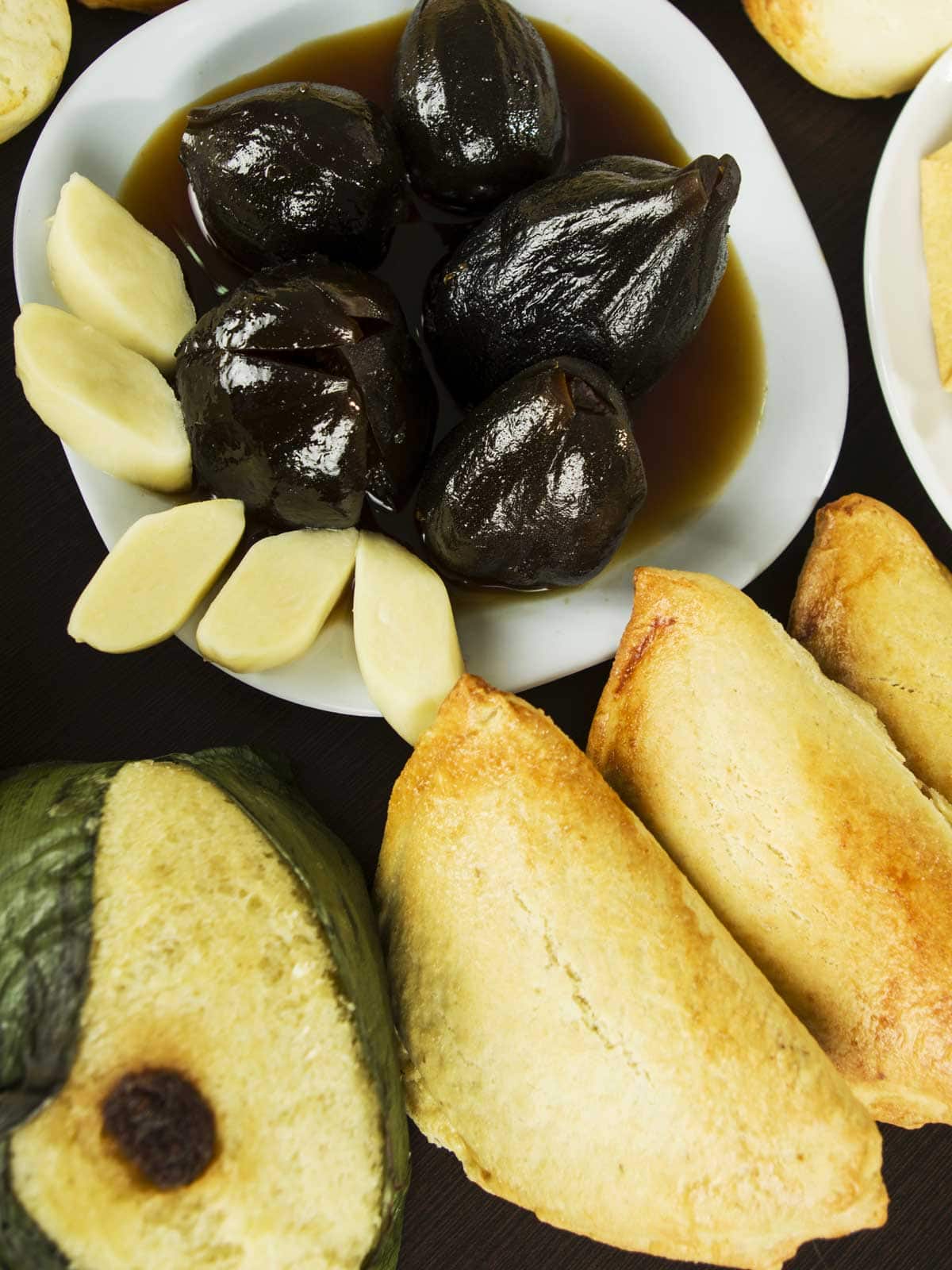
- Room temperature: Keep them in their leaves in a covered container for up to 2 days.
- Fridge: Up to 5 days.
- Freezer: Freeze in their leaves, in a freezer bag, for up to 3 months.
- Reheat: Steam for 8 to 10 minutes (15 from frozen), or microwave in the leaf for 30 to 45 seconds under a damp paper towel.
What You’ll Need
As an Amazon Associate, AmigoFoods earns from qualifying purchases. For more Ecuadorian pantry staples, browse our Ecuadorian foods list on Amazon.
Quimbolitos FAQ
What is a quimbolito?
A quimbolito is a small sweet cake from Ecuador, made with flour, cornstarch, butter, eggs, sugar and fresh cheese, topped with raisins and steamed in an achira leaf.
Are quimbolitos sweet or savory?
Sweet. The fresh cheese adds a slightly salty note, but quimbolitos are a dessert or coffee-time cake. Their savory relatives are humitas and tamales.
Can I make quimbolitos without achira leaves?
Yes. Banana leaves are the closest substitute. Soaked corn husks and parchment paper also work. Avoid plain foil, which makes the bottoms soggy.
Can I bake quimbolitos instead of steaming them?
You can bake the batter in a muffin tin at 350°F for about 20 minutes, but you’ll get a muffin, not a quimbolito. Steaming is what gives them their moist, springy texture.
Why are my quimbolitos dense?
Usually the egg whites were under-whipped or deflated during folding, or the packets were wrapped too tightly to rise. Whip to stiff peaks, fold gently and leave room in each leaf.
What’s the difference between quimbolitos and humitas?
Quimbolitos are made from a sweet cake batter and wrapped in achira leaves. Humitas are made from fresh ground corn and wrapped in corn husks.
How long do quimbolitos last?
Up to 2 days at room temperature, 5 days in the fridge or 3 months in the freezer. Reheat them by steaming.
Looking for more? Browse all our Ecuadorian food, try Ecuadorian candy, or see how quimbolitos compare with steamed and baked cakes across the region in our Latin American cakes and pastries guide.
Quimbolitos (Ecuadorian Steamed Cakes)
Quimbolitos are Ecuador's sweet steamed cakes: a light butter-and-egg batter with fresh cheese and anise liqueur, topped with raisins and steamed in achira leaves. Banana leaves or corn husks work too.
Ingredients
Batter
- 1/2 cup (113 g) unsalted butter, softened
- 1/2 cup (100 g) granulated sugar
- 4 large eggs, separated, at room temperature
- 2 tablespoons anise liqueur, brandy or rum (or orange juice)
- 1 teaspoon vanilla extract
- 1 teaspoon finely grated orange zest
- 1 cup (125 g) all-purpose flour
- 1/2 cup (64 g) cornstarch (maicena)
- 2 teaspoons baking powder
- 1/4 teaspoon fine salt
- 1/2 cup (120 ml) whole milk
- 1/2 cup (60 g) crumbled queso fresco
To wrap and finish
- 1/3 cup raisins
- 12 to 15 achira leaves or banana-leaf rectangles (about 10 x 8 inches), or 24 corn husks, soaked
Instructions
- Prepare the wrappers. Wipe achira or thawed banana leaves clean and cut them into rectangles about 10 x 8 inches. Pass banana leaves over a gas flame or dip them in hot water until soft and glossy. If using corn husks, soak them in warm water for 30 minutes.
- Set up the steamer. Put a steamer rack in a large pot or tamalera, add water to just below the rack, line the rack with leaf scraps and bring the water to a simmer.
- Cream the butter and sugar with a hand mixer for about 3 minutes, until pale and fluffy. Beat in the egg yolks one at a time, then the anise liqueur, vanilla and orange zest.
- Whisk the flour, cornstarch, baking powder and salt in a separate bowl. Add to the butter mixture in three parts, alternating with the milk, and mix just until no dry streaks remain. Stir in the crumbled queso fresco.
- In a clean bowl, whip the egg whites to stiff peaks. Fold them into the batter in three additions, stopping as soon as no white streaks remain.
- Spoon about 1/3 cup of batter onto the center of each leaf, leaving a 2-inch border. Press 3 or 4 raisins on top.
- Fold the bottom edge up over the batter, then the top edge down so they overlap loosely. Fold both sides underneath. Leave room for the cake to rise; tie loosely with a strip of leaf or twine only if needed.
- Stand the packets upright or seam side down in the steamer. Cover with extra leaves, then the lid (wrap the lid in a towel to stop drips).
- Steam over medium heat for 40 to 45 minutes, topping up with boiling water as needed. A quimbolito is done when it springs back, pulls away from the leaf and a toothpick comes out clean.
- Rest for 5 minutes and serve warm in the leaf with coffee or hot chocolate.
Notes
Flour: Use all-purpose flour plus cornstarch. Precooked corn flour or masa harina make heavy, gummy quimbolitos.
No achira leaves? Banana leaves are the closest match. Soaked corn husks (two overlapped per cake) and parchment also work. Avoid plain foil.
Chocolate quimbolitos: Replace 1/4 cup of the flour with unsweetened cocoa powder.
Storage: 2 days at room temperature, 5 days refrigerated or 3 months frozen, in their leaves. Reheat by steaming 8 to 10 minutes (15 from frozen).
More Ecuadorian Foods
See all →
Jorge Garcia is the founder of AmigoFoods, where he has spent over 20 years helping readers discover authentic Latin American and Spanish cuisine. Raised in a Cuban-American household, Jorge learned to cook at the hands of his mother and grandmother, carrying forward generations of family recipes. That heritage, backed by his family’s four-generation history in the Latin food industry, inspired him to launch AmigoFoods in 2003. With more than 1,000 published articles on recipes, ingredients, and food culture, Jorge’s mission is simple: make authentic Latin cooking approachable for home cooks everywhere while honoring the traditions behind every dish.