
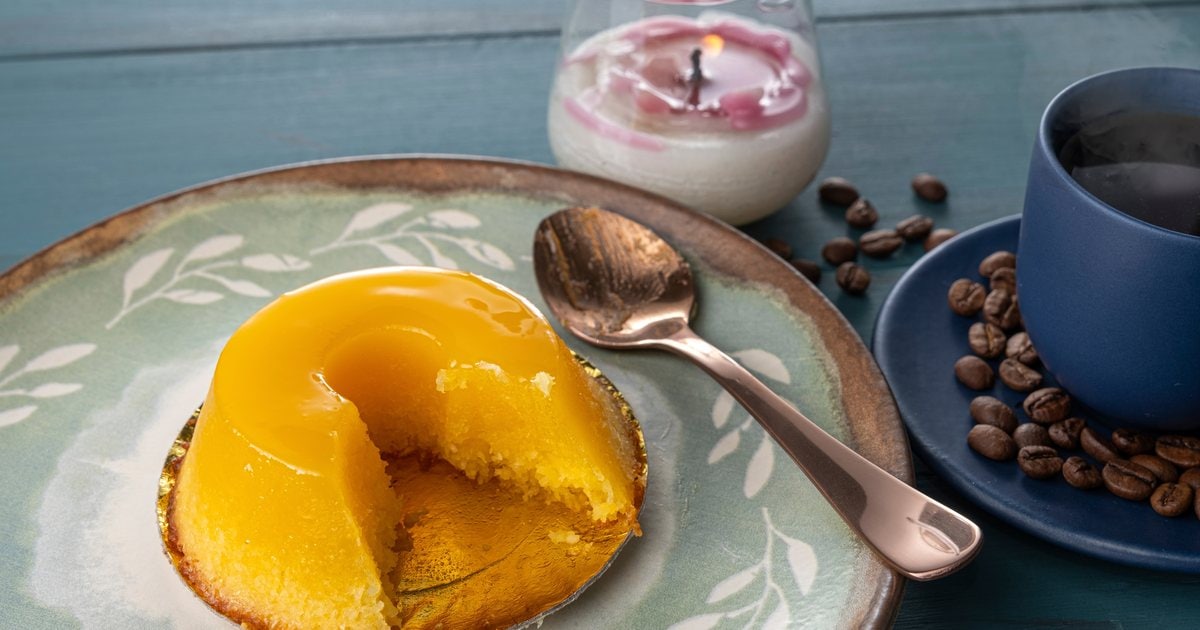
Quindim (keen-JEEN) is a glossy, bright-yellow Brazilian custard made from egg yolks, sugar and coconut. It bakes in a water bath, and when you turn it out of the mold you get two layers: a shiny, jelly-smooth custard on top and a chewy, toasted coconut base underneath.
Quindim at a Glance
AmigoFoods may earn a commission from qualifying Amazon purchases made through links on this page.
What is quindim?
Quindim is one of Brazil’s best-loved sweets: a small baked custard of egg yolks, sugar and grated coconut, served cold and turned upside down so its glossy yellow top faces up. You will find it in bakery cases across the country, at birthday parties next to brigadeiros and beijinhos de coco, and on the dessert table at Sunday lunch.
Most quindim are about the size of a muffin, small enough to finish in a few bites. Baked in a large ring mold and cut into slices, the same batter is called quindão. It contains no flour, so it is naturally gluten-free.

What does quindim taste like?
Quindim tastes rich and very sweet, with a strong coconut flavor and the deep, buttery taste of egg yolks. The top is dense and smooth, firmer than flan and almost like a soft gummy candy, while the base is moist and chewy from the coconut. If you like coconut custard pie or crème caramel, you will like quindim. Brazilians usually eat it with a small cup of strong Brazilian coffee to balance the sweetness.
Quindim vs. pudim vs. flan
All three are baked egg custards, but they are made and served differently.
| Quindim | Pudim | Flan | |
|---|---|---|---|
| Eggs | Yolks only | Whole eggs | Whole eggs, sometimes extra yolks |
| Dairy | Coconut milk or none | Sweetened condensed milk and milk | Milk, or evaporated and condensed milk |
| Coconut | Yes, it forms the base | No | No |
| Caramel | No, the shine comes from the yolks and sugar | Yes | Yes |
| Texture | Dense, glossy top and chewy base | Creamy, with small holes | Silky and soft |
| Size | Individual (quindão when large) | Large ring mold | Large or individual |
For more custards from across the region, see our guide to Latin American and Spanish custards and puddings.
Ingredients for quindim
Quindim needs only a handful of ingredients, so each one matters. Ratios vary between recipes; Easy and Delish’s quindim guide provides a useful comparison of coconut-milk and water-and-butter versions.
- Egg yolks: twelve large yolks give quindim its color and its smooth, dense top. Use them at room temperature so they mix easily with the sugar.
- Sugar: plain granulated sugar. Do not cut it much: the sugar is what sets the glossy layer.
- Coconut: unsweetened finely shredded coconut (also sold as desiccated coconut) gives the best base. Fresh grated coconut is traditional in Brazil and works even better.
- Coconut milk: full-fat coconut milk softens the coconut and deepens the flavor. Many Brazilian home cooks use a few spoonfuls of water or milk instead.
- Butter: a little melted butter in the batter, plus soft butter and sugar to coat the molds so the quindim release cleanly.
- Salt: a pinch sharpens the sweetness.
How to make quindim
Here is the method step by step. The full quantities are in the recipe card below.
Prepare the molds and water bath
Heat the oven to 350°F (175°C) and boil a kettle of water. Brush 12 muffin cups or ramekins generously with soft butter, coat them with sugar and tap out the excess. This buttered sugar coating is what helps quindim slide out with a shiny surface.
Sieve the yolks and stir in the sugar
Press the egg yolks through a fine-mesh sieve with a spatula. This removes the membranes and the stringy bits (chalazae), which makes the custard smoother and less eggy. Add the sugar and stir gently with a whisk until it dissolves. Stir, don’t beat: air bubbles leave the top dull and pitted.
Add the coconut and rest the batter
Stir in the melted butter, coconut milk, shredded coconut and salt. Let the batter rest for 10 minutes so the coconut absorbs some liquid and any bubbles rise to the surface.
Fill the molds
Stir once to redistribute the coconut, then divide the batter among the molds, dividing it evenly and leaving some room at the top; the fill depth depends on the size of your molds.
Bake in a water bath
Set the tin or ramekins in a roasting pan and pour in hot water to come halfway up the sides. Bake for 30 to 40 minutes, until the tops are set and golden, spring back lightly when touched, and a toothpick in the center comes out without liquid custard. The gentle heat of the water bath keeps the custard smooth instead of rubbery.
Cool, chill and unmold
Cool the quindim at room temperature for 30 minutes, then chill for at least 2 hours. To unmold, run a thin knife around each one, dip the bottom of the tin in hot water for about 5 seconds and turn them out onto a plate.
Why quindim forms two layers
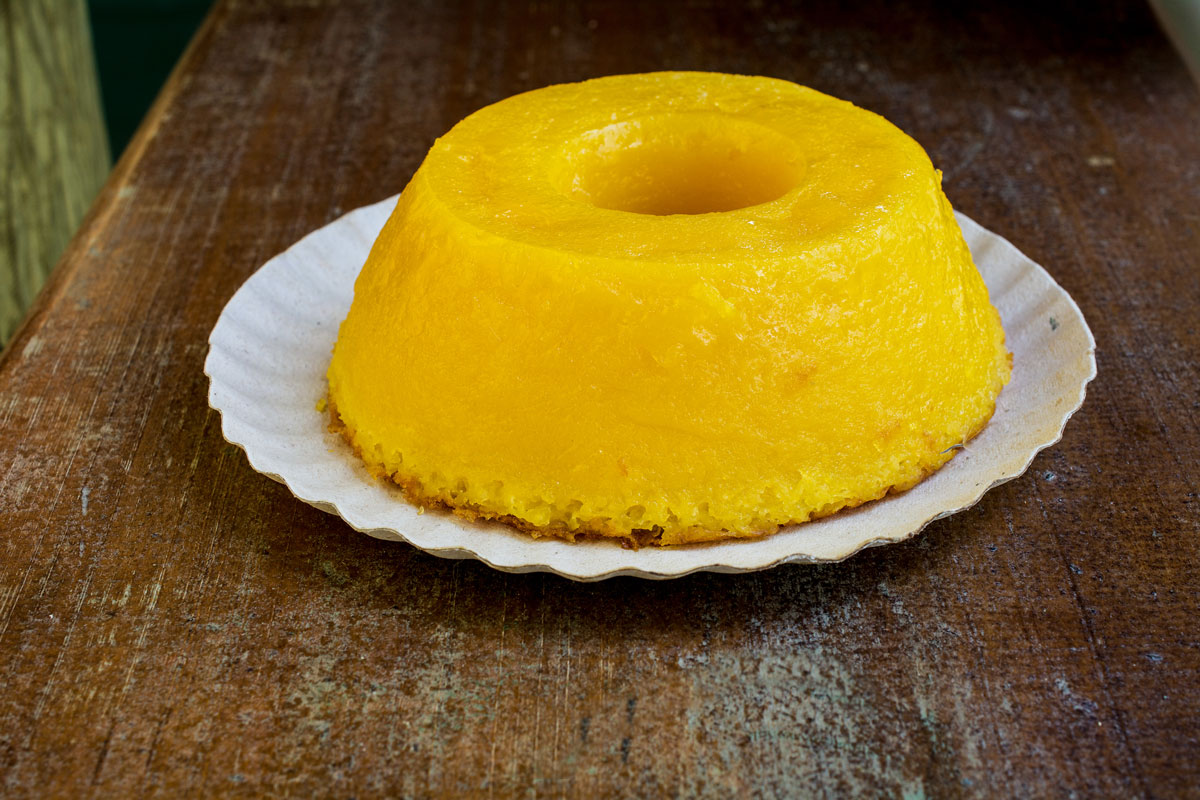
You pour in one batter, but quindim comes out with two layers. That is because the shredded coconut is lighter than the yolk-and-sugar custard, so as the quindim bakes, the coconut floats to the top and the heavy custard settles at the bottom of the mold against the buttered, sugared surface. When you turn it over, the coconut becomes the base and the dense custard becomes that smooth, shiny top. Resting the batter before baking and not overmixing both help the layers separate cleanly.
Tips for a glossy, perfect quindim
- Always sieve the yolks. It is the single biggest step toward a smooth top with no eggy smell.
- Stir gently. Use a whisk like a spoon. Bubbles become pinholes in the finished surface.
- Grease and sugar every mold. Be generous, including the sides. Missed spots stick.
- Use hot water in the water bath. Cold water slows the bake and can leave the centers underdone.
- Don’t overbake. Overbaked quindim turns rubbery and can weep. Take it out when the center is set but still slightly soft.
- Chill before unmolding. Warm quindim tear. Overnight in the fridge gives the cleanest release and the best texture.
Quindim troubleshooting
| Problem | Likely cause | Fix |
|---|---|---|
| Top is dull or full of tiny holes | Batter was beaten, trapping air | Stir gently and let the batter rest 10 minutes before filling |
| Quindim stuck to the mold | Not enough butter and sugar, or unmolded warm | Coat molds generously, chill fully, dip the tin in hot water before inverting |
| Tastes eggy | Yolk membranes left in, or overbaked | Sieve the yolks and pull the quindim as soon as the centers set |
| No clear coconut base | Coconut was coarse or the batter was not rested | Use fine shredded coconut and rest the batter so it can separate |
| Liquid in the center | Underbaked or the water bath was not hot | Bake a few minutes longer, starting with boiling water |
| Rubbery texture | Oven too hot or baked too long | Check oven temperature and start testing at 30 minutes |
Quindão: the big ring version
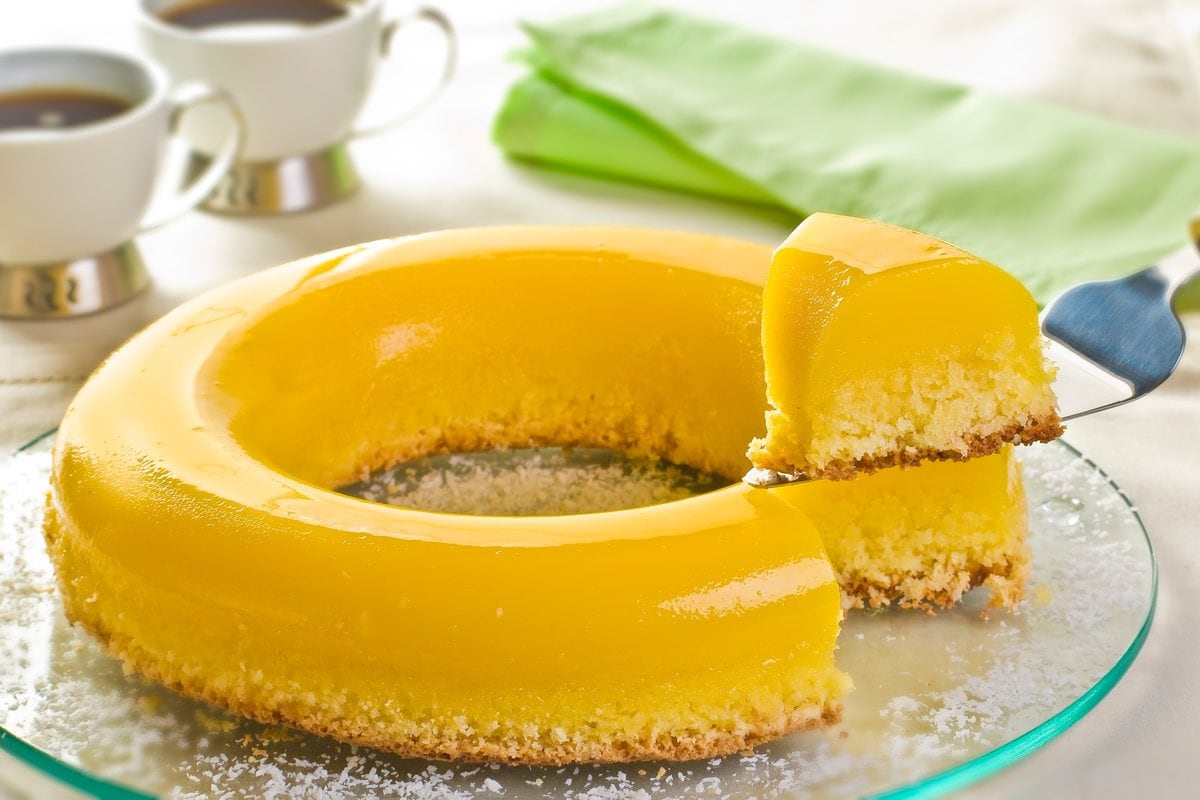
Quindão (keen-DOWN) is quindim made in one large ring or savarin mold and served in slices, which makes it easier for a party. Use the same batter, grease and sugar an 8-inch (6-cup) ring mold, and bake it in the water bath for about 50 to 60 minutes, until the center is set. Chill it overnight before you unmold it.
What to do with the leftover egg whites
Twelve yolks leave you with twelve whites. They keep in the fridge for about 4 days or in the freezer for months. Use them for meringues or Brazilian suspiros, a pavlova, coconut macaroons, or an egg-white omelet.
Where quindim comes from
Quindim brings together Portuguese and African traditions. Portuguese convents were famous for sweets made with huge amounts of egg yolks and sugar, a tradition that also shaped Spain’s dulces de convento, and those recipes traveled to colonial Brazil. In the Northeast, where sugarcane plantations dominated and coconuts were everywhere, coconut joined the yolks and sugar. That combination is usually credited to enslaved African cooks in the 17th century.
The name points the same way. Linguists trace quindim to a word from Kikongo, a Bantu language spoken in Central Africa, that described the playful, flirtatious manner of young girls. The dessert is so familiar in Brazil that writer Monteiro Lobato named a gentle rhinoceros Quindim in his children’s books, and the samba “Os Quindins de Yayá” by Ary Barroso reached international audiences in Disney’s The Three Caballeros (1944).

How to serve and store quindim
Serve quindim cold or just slightly cool, on its own or on a small paper cup the way Brazilian bakeries do. A cup of coffee is the classic partner. Keep leftovers covered in the refrigerator for up to 4 days. Freezing is not recommended because the custard turns watery as it thaws.
Quindim FAQ
What is quindim made of?
Egg yolks, sugar and coconut, usually with a little butter and coconut milk. There is no flour.
Is quindim the same as flan?
No. Flan uses whole eggs and milk and is baked over caramel. Quindim uses only yolks, adds coconut and has no caramel, which gives it a denser texture and a coconut base.
How do you pronounce quindim?
Say it keen-JEEN. The large ring version, quindão, is said keen-DOWN.
Is quindim gluten-free?
Yes. Quindim contains no flour, so it is naturally gluten-free, but check your coconut and other packaged ingredients if you are cooking for someone with celiac disease.
Can I use sweetened coconut?
Yes. Chop sweetened flakes finely and reduce the sugar by about 2 tablespoons so the quindim is not too sweet.
Can I make quindim without coconut milk?
Yes. Many Brazilian recipes skip it. Use ½ cup whole milk or ½ cup water in its place, retaining the butter in the recipe. The flavor and richness will differ.
Why is my quindim not shiny?
Usually because the batter was beaten instead of stirred, or the molds were not greased and sugared well. See the troubleshooting table above.
Quindim Recipe
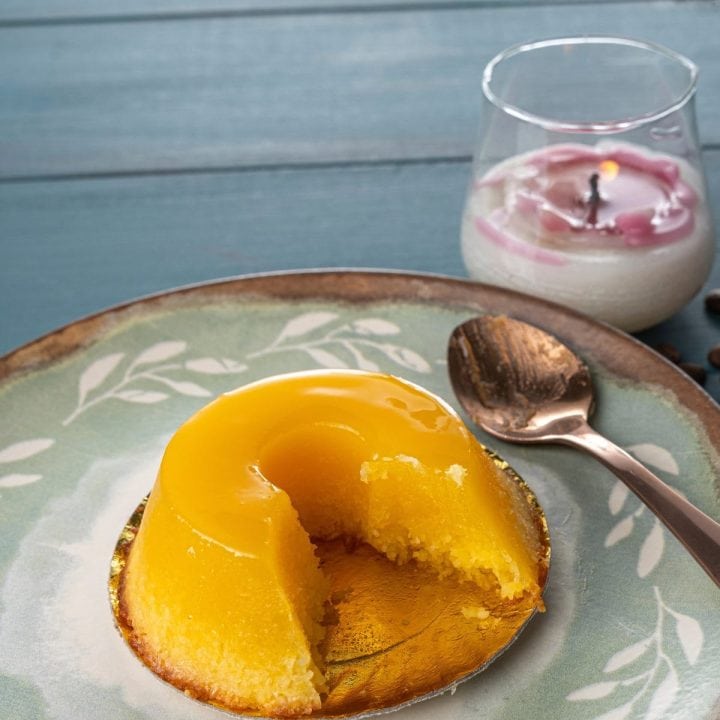
Quindim (Brazilian Coconut Custard)
Quindim is a glossy, bright-yellow Brazilian custard of egg yolks, sugar and coconut. Baked in a water bath, it turns out with a shiny custard top and a chewy toasted-coconut base.
Ingredients
- 12 large egg yolks, at room temperature
- 1 cup (200 g) granulated sugar, plus about 2 tablespoons for the molds
- 2 tablespoons (28 g) unsalted butter, melted, plus soft butter for the molds
- ½ cup (120 ml) full-fat coconut milk
- 1 cup (85 g) unsweetened finely shredded coconut
- 1 pinch fine salt
Instructions
- Heat the oven to 350°F (175°C) and put a kettle of water on to boil. Brush 12 muffin cups or small ramekins generously with soft butter, then coat them with sugar and tap out the excess.
- Press the egg yolks through a fine-mesh sieve into a large bowl with a spatula to remove the membranes. Add the sugar and stir gently with a whisk until it dissolves, about 1 minute. Stir, do not beat: air bubbles cloud the glossy top.
- Stir in the melted butter, coconut milk, shredded coconut and salt until evenly combined. Let the batter rest for 10 minutes.
- Stir the batter once, then divide it evenly among the prepared cups, leaving some room at the top. The fill depth depends on the size of your molds.
- Set the muffin tin or ramekins in a roasting pan and pour in hot water to come halfway up the sides. Bake for 30 to 40 minutes, until the tops are set, golden and spring back lightly when touched, and a toothpick in the center comes out without liquid custard.
- Lift the quindim out of the water bath and cool at room temperature for 30 minutes, then refrigerate for at least 2 hours, or overnight.
- To unmold, run a thin knife around each one, dip the bottom of the tin or ramekin in hot water for 5 seconds, and invert onto a plate. The custard side becomes the shiny top and the coconut forms the base.
Notes
Coconut: unsweetened finely shredded or desiccated coconut works best. If you only have sweetened flakes, chop them finely and reduce the sugar by 2 tablespoons.
Without coconut milk: use ½ cup whole milk or ½ cup water; retain the butter in the recipe. The flavor and richness will differ.
Quindão: bake the whole batch in a well-greased and sugared 8-inch (6-cup) ring or savarin mold, in the water bath, for about 50 to 60 minutes, until the center is set. Chill overnight before unmolding and slicing.
Leftover whites: freeze them in a labeled container for meringues, suspiros or an egg-white omelet.
Storage: keep covered in the refrigerator for up to 4 days. Freezing is not recommended.
More Brazilian desserts
Keep going with our Brazilian desserts roundup or browse every Brazilian dessert recipe. If quindim is your kind of sweet, try pudim, beijinho de coco, bolo de rolo or pavê, and stock up with our guide to Brazilian ingredients.
More Brazilian Foods
See all →
Jorge Garcia is the founder of AmigoFoods, where he has spent over 20 years helping readers discover authentic Latin American and Spanish cuisine. Raised in a Cuban-American household, Jorge learned to cook at the hands of his mother and grandmother, carrying forward generations of family recipes. That heritage, backed by his family’s four-generation history in the Latin food industry, inspired him to launch AmigoFoods in 2003. With more than 1,000 published articles on recipes, ingredients, and food culture, Jorge’s mission is simple: make authentic Latin cooking approachable for home cooks everywhere while honoring the traditions behind every dish.