

Mexican salpicón de res is tender shredded beef tossed with crisp vegetables and a tangy chipotle-lime dressing, ready to pile onto tostadas. The same name also describes seafood salads in Spain, minced beef in Central America and fruit cocktails in Colombia.
Mexican Salpicón de Res at a Glance
What Is Salpicón?
Salpicón is a Spanish name for a dish of finely chopped or shredded cooked ingredients mixed with a dressing and usually served cold. The word comes from salpicar, “to splash or sprinkle,” and that loose meaning is why so many different dishes share it.
- Something cooked, cut smallBeef, chicken, seafood or fruit.
- Something sharpLime, sour orange, vinegar or juice.
- Something freshOnion, radish, herbs, peppers or tomato.
- Served coolAs a salad, a topping, a filling or a drink.
What changes from country to country is the main ingredient. That gives four families: meat salpicón (Mexico, Central America, Chile, Peru), seafood salpicón (Spain, Venezuela), fruit salpicón (Colombia) and a few outliers.
How to Make Mexican Salpicón de Res
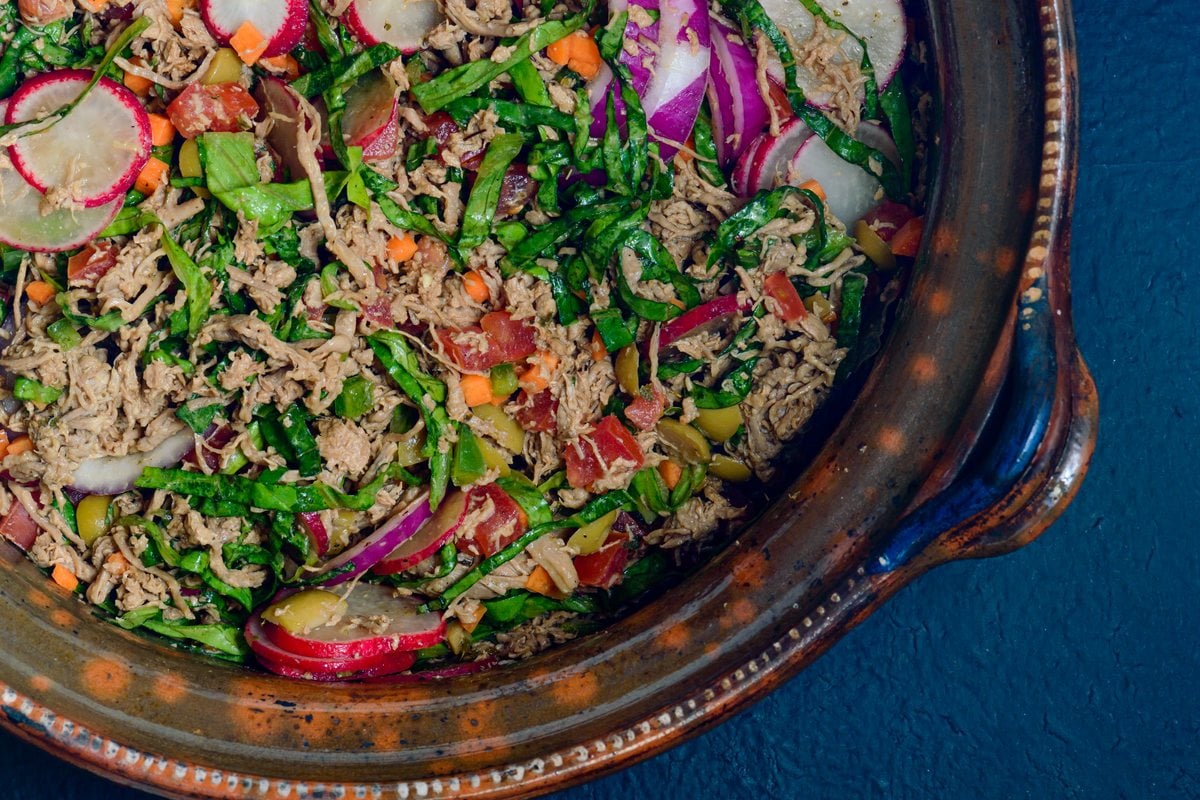
In most of Mexico, salpicón means salpicón de res: beef simmered until tender, cooled and shredded very fine, then dressed while it’s still warm so it soaks up the flavor. It’s a hot-weather lunch, a party favorite on tostadas and often a way to use up beef left over from a pot of caldo.
- Simmer the beef with onion, garlic, bay leaves and salt for 1½ to 2 hours, until it pulls apart.
- Cool it in the broth for 20 minutes so it stays juicy.
- Shred it fine with two forks and cut the strands short.
- Whisk the vinaigrette: lime, vinegar, chipotle, oregano, garlic and olive oil.
- Dress the warm beef with onion and most of the vinaigrette, and let it marinate.
- Fold in the fresh vegetables right before serving and pile it on tostadas.
Best cut of beef for salpicón
You want a lean, long-fibered cut that shreds into fine threads after slow simmering. Flank steak (falda) is the classic choice in Mexico. Brisket and chuck are good substitutes; chuck is richer and needs about 30 minutes longer. Skirt steak works too and cooks a little faster.
Chipotle or jalapeño vinaigrette
Every family has its own dressing. Ours blends lime and vinegar with a minced chipotle and a spoonful of adobo sauce for gentle smoke and heat. For a brighter, tangier version, swap the chipotle for pickled jalapeños and a splash of their brine.

- SMOKY AND SPICY: Chipotles are ripe red jalapeños that are dried and smoked, then packed in a tangy...
- ADD DEPTH: Blend into salsas, marinades, mayo, and sauces for smoky heat

How to serve salpicón de res
The most popular way is on crisp tostadas: a layer of dressed lettuce or cabbage, a mound of salpicón, then avocado, crumbled queso fresco and a drizzle of crema. You can buy corn tostada shells or fry your own from stale tortillas. Salpicón is also great in tacos, in lettuce cups or stuffed into roasted poblanos. Pass lime wedges and a bottle of Valentina at the table.

Make it a day ahead. Dressed salpicón tastes even better after a night in the fridge. Keep the lettuce, tomato and avocado separate and add them just before serving so they stay crisp.
Here’s the full recipe with exact amounts:
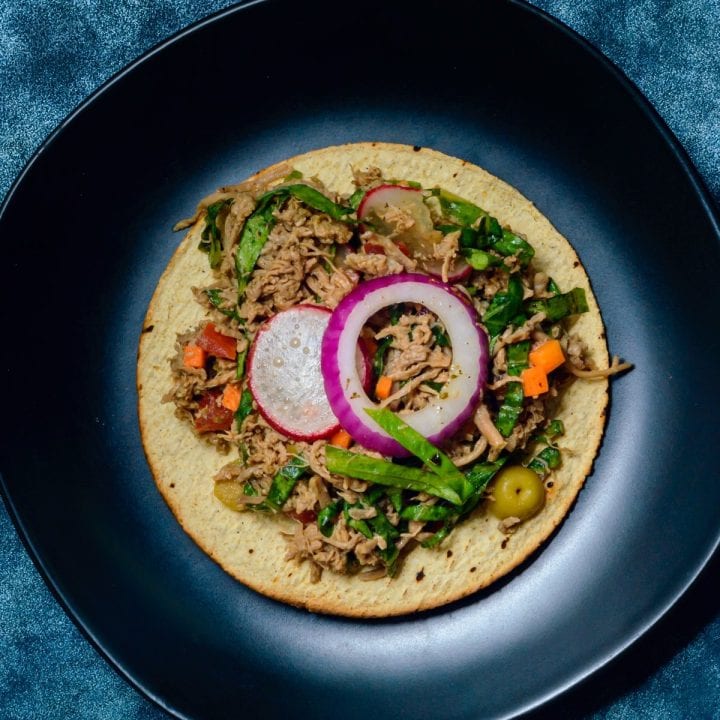
Salpicón de Res (Mexican Shredded Beef Salad)
Tender flank steak simmered, shredded fine and tossed with a smoky chipotle-lime vinaigrette, crisp lettuce, radish, onion and tomato, then piled on tostadas with avocado.
Ingredients
For the beef
- 2 pounds (900 g) flank steak, cut into 3 or 4 pieces
- ¼ white onion
- 3 garlic cloves
- 2 bay leaves
- 1 teaspoon kosher salt
- Water to cover by 1 inch
For the chipotle-lime vinaigrette
- ⅓ cup extra virgin olive oil
- ¼ cup fresh lime juice (about 2 limes)
- 2 tablespoons white or apple cider vinegar
- 1 to 2 chipotles in adobo, minced, plus 1 tablespoon adobo sauce
- 1 small garlic clove, grated
- 1 teaspoon dried Mexican oregano, crushed
- 1 teaspoon kosher salt
- ½ teaspoon black pepper
For the salad
- ½ white onion, finely chopped
- 3 cups shredded romaine lettuce and/or green cabbage
- 2 Roma tomatoes, seeded and diced
- 6 radishes, thinly sliced
- ½ cup chopped cilantro
To serve
- 12 corn tostadas
- 2 avocados, sliced
- ½ cup crumbled queso fresco
- Mexican crema (optional)
- Lime wedges
- Hot sauce
Instructions
- Simmer the beef. Put the beef, onion, garlic, bay leaves and salt in a pot and cover with water by 1 inch. Bring to a boil, skim off the foam, then simmer partly covered for 1½ to 2 hours, until the meat pulls apart easily.
- Cool it in the broth. Turn off the heat and let the beef rest in the broth for 20 minutes so it stays juicy. Save the broth for soup or rice.
- Shred it fine. Pull the beef into thin strands with two forks, then cut the strands into 1- to 2-inch lengths.
- Make the vinaigrette. Whisk the lime juice, vinegar, chipotle, adobo sauce, garlic, oregano, salt and pepper. Slowly whisk in the olive oil.
- Dress the beef. Toss the warm beef with the chopped onion and two-thirds of the vinaigrette. Let it rest 10 minutes, or refrigerate overnight.
- Add the vegetables. Just before serving, fold in the tomato, radish and cilantro, and toss the lettuce or cabbage with the remaining vinaigrette.
- Build the tostadas. Layer the dressed greens and salpicón on each tostada. Top with avocado, queso fresco and a drizzle of crema, and serve with lime wedges and hot sauce.
Notes
Cut of beef: Flank steak (falda) is classic. Brisket, chuck or skirt also work; chuck needs 2 to 2½ hours.
Jalapeño version: Swap the chipotle for 2 pickled jalapeños plus 2 tablespoons of their brine.
Make ahead: The dressed beef keeps 3 to 4 days in the fridge. Add the lettuce, tomato and avocado only when serving.
Other ways to serve: As a taco filling, in lettuce cups or stuffed into roasted poblano peppers.
Salpicón by Country at a Glance
| Country | What salpicón means there | How it’s served |
|---|---|---|
| Spain | Chopped cooked shellfish with peppers and onion in vinaigrette (historically, minced beef) | Cold, as a tapa or starter |
| Mexico | Shredded beef with lime or vinegar, onion, tomato, cilantro and chile | Cold, on tostadas or in tacos |
| El Salvador | Finely minced beef with radish, mint, onion and lime | With rice, beans and tortillas |
| Guatemala | Minced beef with mint, radish, onion and lime | With tortillas or tostadas |
| Honduras | Minced beef with lime and bitter orange, onion and green pepper | Cold with hot rice and tortillas |
| Nicaragua | Minced beef with sweet pepper, onion and plenty of lime | Cold over hot white rice |
| Colombia | Diced fresh fruit in juice or soda | In a cup, as a drink or dessert |
| Chile | Beef or chicken with potatoes, vegetables and egg | A cold summer main dish |
| Peru | Shredded chicken with vegetables and mayonnaise | As a starter or light lunch |
| Venezuela | Seafood salad with onion, tomato, pepper and lemon | Cold, on the coast |
Where the Name Comes From
Salpicón is old Spanish. Sebastián de Covarrubias’s dictionary of 1611 described it as minced meat seasoned with salt, and a few years earlier Cervantes gave it a famous cameo in the first chapter of Don Quixote (1605): the knight’s modest weekly menu includes salpicón most nights.
That was the frugal Spanish version: boiled beef, chopped and dressed with onion and vinegar, a thrifty way to stretch the stew meat. Spanish cooks carried the dish and the word to the Americas, and each region made it with what was local: beef in Mexico, mint in Central America, fruit in Colombia.
Spain: Salpicón de Marisco
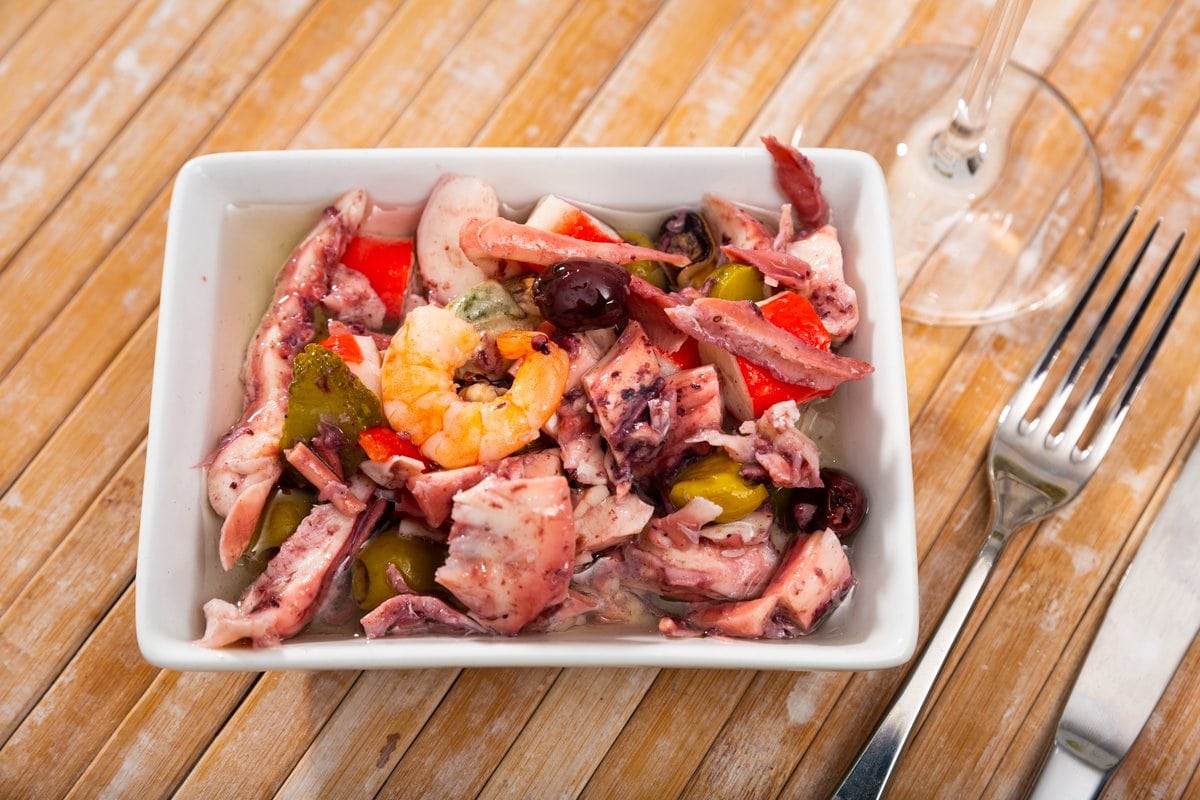
In Spain today, salpicón almost always means salpicón de marisco, a cold shellfish salad found in bars along the coasts, from Galicia to Andalusia. A typical plate has:
- ShellfishCooked prawns or langostinos, mussels, octopus or crab.
- VegetablesFinely diced red and green pepper and spring onion.
- ExtrasOlives, and sometimes chopped hard-boiled egg.
- DressingGood olive oil, vinegar and salt.
It’s chilled before serving and eaten with bread as a tapa or starter. For more small plates like it, see our guide to seafood tapas.

- FIRST COLD PRESSED: Extra virgin olive oil extracted mechanically from fresh olives for full, fresh...
- FRUITY AND PEPPERY: A well-balanced oil with fruity aroma, pleasant bitterness and a peppery finish.
Mexico’s Regional Salpicones
- Yucatán: salpicón is often a relish of radish, onion, cilantro and habanero soaked in sour orange juice, spooned over puchero and salbutes. The region also makes a venison version. More in our Yucatán food guide.
- Veracruz: a fish salpicón with onion, green chile, tomato and cilantro, eaten in tacos.
- Tamaulipas: crab salpicón, and venison versions served with lettuce and radishes.
- Tabasco: chopped beef with cilantro, chives, onion and parsley, dressed with lime.
Central America: Beef, Mint and Lime
From Guatemala to Nicaragua, salpicón is cooked beef minced very fine, almost like ground meat, and dressed with lots of lime. Cooks in El Salvador and Guatemala add fresh mint (hierbabuena) and radish, Hondurans use bitter orange, and Nicaraguans keep it simple with sweet pepper, onion and lime. It’s served cold next to hot rice, beans and tortillas.
For the full recipe and every regional variation, see our guide to salpicón salvadoreño.
Colombia: Salpicón de Frutas

Ask for salpicón in Colombia and you get no meat at all: it’s diced tropical fruit in watermelon or orange juice, served cold in a cup with a spoon and a straw. For the recipe, see our guide to salpicón colombiano (salpicón de frutas), and for more cold drinks, our list of Colombian drinks.
Chile: The Day-After-Asado Salad
Chilean salpicón is a cold main-course salad for hot summer days, traditionally made with leftover beef from a Sunday asado or a stew, though chicken is common too. The meat is mixed with cooked potatoes, carrots and peas, tomato, thin strips of lettuce and hard-boiled egg, all dressed in oil with lemon juice or vinegar. Chilean cooks dress the potatoes while they’re still warm so they soak up the vinaigrette. See more traditional Chilean dishes.
Peru: Salpicón de Pollo
In Peru, salpicón de pollo is a chicken salad: cooked, shredded chicken with diced potato, carrot, peas, green beans and corn, seasoned with lime and bound with mayonnaise. It’s usually a lunch starter; a generous portion becomes the main course. More ideas in our roundup of Peruvian chicken dishes.
Venezuela: Salpicón de Mariscos
Venezuela’s salpicón follows the Spanish seafood line: cooked prawns and white fish diced with onion, tomato and green pepper, dressed with olive oil and lemon, and served very cold on the coast.
A Note on Cuba
Some Cuban home cooks use the name salpicón for a cold meat roll similar to pulpeta or carne fría: ground beef and pork, often with ham, rolled around hard-boiled eggs, cooked, then sliced and eaten cold with crackers or in sandwiches. In most Cuban kitchens, though, you’ll hear it called pulpeta. More in our guide to Cuban food.
Not to Be Confused With: Salpicão and Salpicao
- Brazilian salpicãoA creamy chicken salad with mayonnaise and crunchy potato sticks. See our salpicão de frango recipe.
- Portuguese salpicãoA smoked pork sausage, not a salad.
- Filipino salpicaoHot cubes of beef seared with lots of garlic, soy sauce and butter, eaten with rice.

Salpicón FAQ
What is salpicón in English?
There’s no single translation. In Mexico it’s a cold shredded beef salad, in Spain a chopped shellfish salad and in Colombia a fruit cocktail. Literally, the word suggests something “splashed” or sprinkled together.
What meat is used for salpicón?
Beef is the most common. Mexican cooks prefer flank steak; brisket, chuck and skirt also work. Central American versions often use eye of round, and Peruvian and Chilean versions can be made with chicken.
What is traditionally served with salpicón de res?
Crisp corn tostadas, avocado, queso fresco, crema, lime wedges and hot sauce. It’s also served in tacos or with rice and beans.
Is salpicón served hot or cold?
Cold or at room temperature. Filipino salpicao, a hot stir-fry, is a different dish.
Is salpicón healthy?
Salpicón de res is mostly lean beef and fresh vegetables dressed with lime and a little oil, so it’s high in protein and relatively light. Tostadas, cheese and crema add calories.
Is salpicón the same as salpicão?
No. Brazilian salpicão is a mayonnaise-based chicken salad and Portuguese salpicão is a smoked sausage. Spanish-language salpicón is usually dressed with citrus or vinegar.
What is the difference between salpicón and ceviche?
Ceviche is raw fish “cooked” by citrus juice. Salpicón is made from ingredients that are already cooked, like boiled beef, poached shellfish or chicken, and then dressed.
More to Explore
- salpicón salvadoreño
- Salpicón colombiano (salpicón de frutas)
- Spanish seafood tapas
- Mexican ingredients
- Spanish foods
More Latin Favorites
See all →
Jorge Garcia is the founder of AmigoFoods, where he has spent over 20 years helping readers discover authentic Latin American and Spanish cuisine. Raised in a Cuban-American household, Jorge learned to cook at the hands of his mother and grandmother, carrying forward generations of family recipes. That heritage, backed by his family’s four-generation history in the Latin food industry, inspired him to launch AmigoFoods in 2003. With more than 1,000 published articles on recipes, ingredients, and food culture, Jorge’s mission is simple: make authentic Latin cooking approachable for home cooks everywhere while honoring the traditions behind every dish.