

Spain’s love affair with turrón is well documented. The almond and honey nougat has been the centerpiece of the Spanish Christmas table for centuries.
There are countless Spanish turrón brands to choose from: 1880, El Almendro, Castillo de Jijona and El Lobo, just to name a few.
Sanchis Mira is one of the oldest. The name has been on turrón from Jijona since 1863.
It is also one of the easiest Spanish brands to find in the United States, which makes it a good place to start if you have never tried real turrón.
Here is where the brand came from, what it makes, how to serve it, and how it compares with the other big names.
Sanchis Mira Turron History

The story starts in 1863 in Jijona (Xixona in Valencian), a small town in the hills of Alicante that has been making turrón for centuries.
That year Vicente Sanchis Monerris and María Teresa Mira Brotons began making turrón by hand. Like many Jijona families of the time, they made it at home in the autumn and then traveled to sell it in the big cities for Christmas.
Their market was Barcelona. The couple sold their turrón from a doorway on Las Ramblas, the city’s busiest street.
The next generation pushed further. Their sons Vicente and Rafael Sanchis Mira, still in their late teens and early twenties, took turrón to Havana and sold about a ton of it in their first year. Rafael later opened a factory in Cuba.
In 1929 the family registered the brand Antiu Xixona, which is still its best-known label in Spain. In 1932 the business became a company, Vicente Sanchis Mira e Hijos, and in 1935 it bought the El Turia shop on Barcelona’s Rambla de Catalunya.
Before the Spanish Civil War the company was already selling around 200,000 kilos of turrón a year in Catalonia, Cuba and the United States.

The modern company took shape in 1966. That year the Sanchis Mira family joined the La Fama group, bringing four Jijona turrón-making families under one roof: Sanchis Mira, A. Galiana, A. Monerris and Sala Miquel. Today the company is known as Sanchis Mira S.A.
The founders’ aim was to protect Jijona’s turrón tradition, and each generation has kept to it, pairing old recipes with modern production.
How Sanchis Mira Makes Turrón Today
Sanchis Mira is now one of the largest turrón makers in Spain. It runs four production plants in Jijona, covering close to 40,000 square meters, plus logistics centers in Madrid, Barcelona and Santander.
During the Christmas season the company employs more than 500 people.
It sells turrón and marzipan under three main brands: Antiu Xixona, La Fama and Sanchis Mira. Spaniards of a certain age still know the Antiu Xixona jingle by heart: “Queremos turrón, turrón, turrón… pero que sea Antiu Xixona.”
The group also makes turrón for other labels. Since 1999 it has produced the house-brand turrón for Mercadona, Spain’s biggest supermarket chain.
The Sanchis Mira label is the one you are most likely to see in Latin grocery stores and online in the U.S.
Sanchis Mira Turrón Varieties

The company makes dozens of varieties, but a handful make up most of what is sold. Like most manufacturers, turrón de Alicante and turrón de Jijona are its best sellers by far.
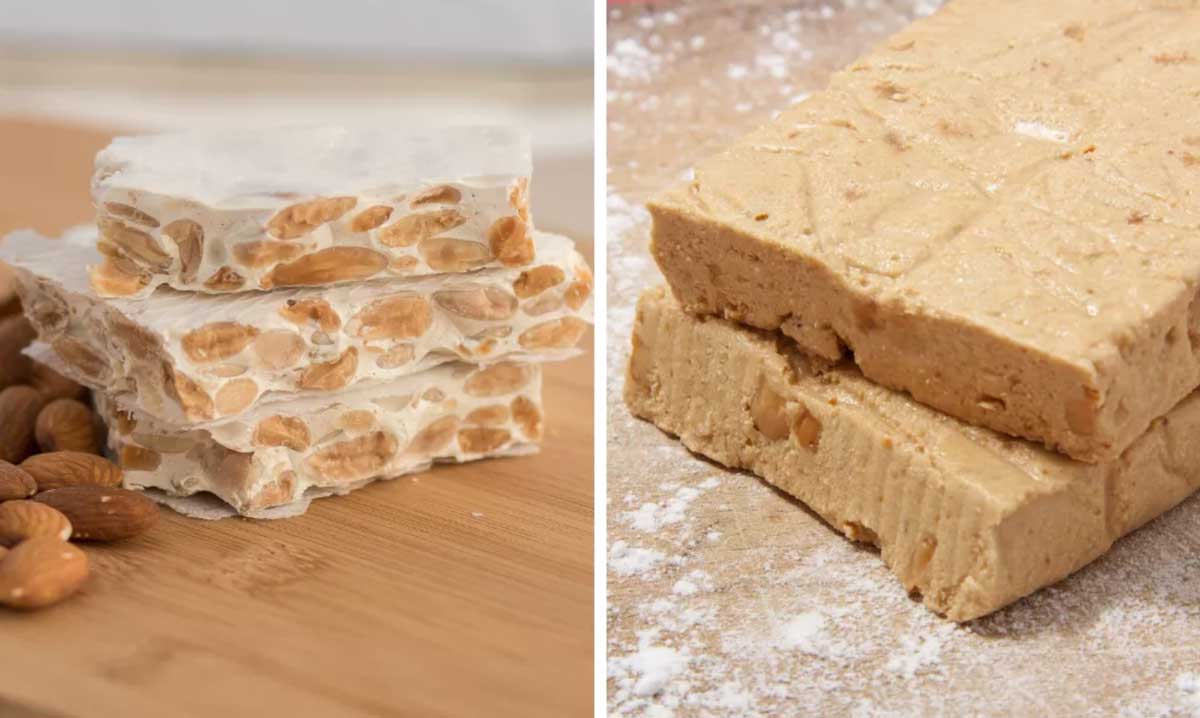
- Turrón de Jijona (blando). Soft and creamy. Toasted almonds are ground with honey and sugar until the paste turns smooth and slightly oily, like a firm almond butter.
- Turrón de Alicante (duro). Hard and crunchy. Whole toasted almonds are set in a honey and egg-white nougat and pressed between thin wafers.
- Turrón de yema tostada. Ground almonds mixed with egg yolk, with a caramelized sugar top like a crème brûlée.
- Turrón de fruta. A soft marzipan-style bar studded with candied fruit.
- Turrón de mazapán and figuritas de mazapán. Almond and sugar mazapán, sold as a bar or as small molded figures.
In Spain the range is wider still, with guirlache, peanut turrón, coconut, pistachio, torta de almendras and versions with no added sugar.
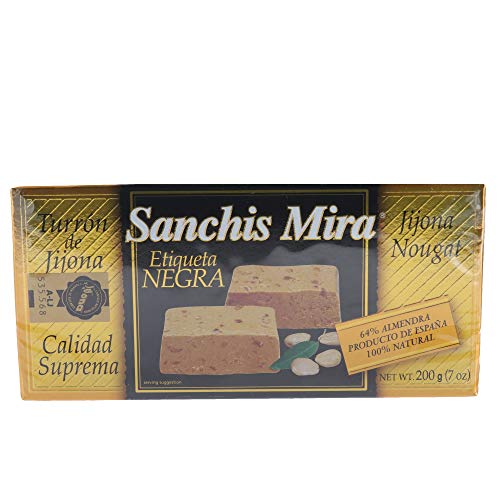
- Black Label supreme quality.
- Imported from Spain

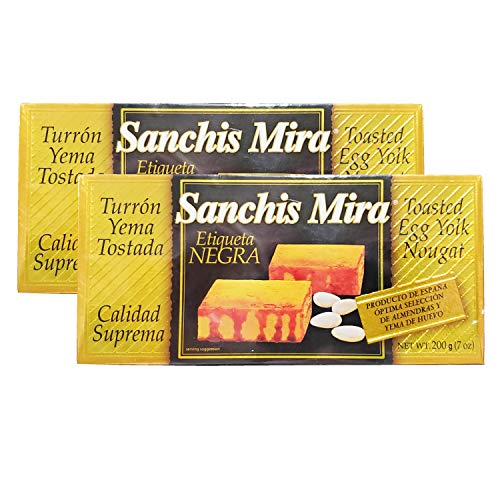
- Supreme Quality
- Black Label
Shop on Amazon: Sanchis Mira Turrón de Jijona (7 oz), Sanchis Mira Turrón de Alicante (7 oz, pack of 3) and Sanchis Mira Turrón de Yema Tostada (pack of 2).
How to Serve Sanchis Mira Turrón
In Spain, turrón comes out after Christmas Eve dinner and stays on the table until Three Kings Day on January 6.
It is usually served on a platter with other Christmas sweets such as polvorones, mantecados and marzipan. Our guide to Spanish Christmas foods covers the rest of the spread.
- Cut it right. Slice soft Jijona turrón into thin bars with a sharp knife. For hard Alicante turrón, use a heavy knife and press straight down, or score it and snap it into pieces.
- Serve it at room temperature. Cold turrón is harder and has less flavor.
- Pair it with a drink. Strong coffee, cava, sweet Moscatel wine or a glass of cold milk all work well.
- Cook with it. Crumbled Jijona turrón makes an easy ice cream or mousse, and chopped Alicante turrón is good over yogurt or vanilla ice cream.
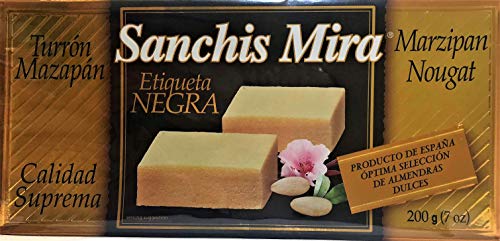
- Made in Spain
- Marzipan Nougat
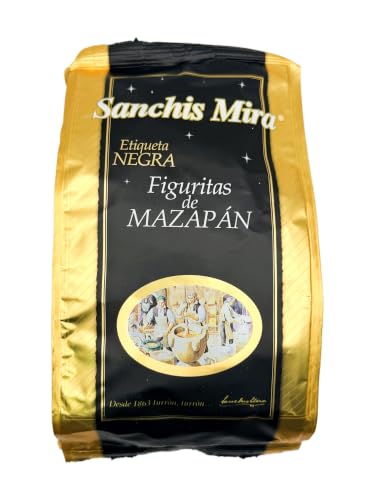
- Delicious figuritas de mazapan by Sanchis Mira
- Imported from Spain
Shop on Amazon: Sanchis Mira Turrón de Mazapán (7 oz) and Sanchis Mira Figuritas de Mazapán (7 oz).
How to Store Turrón
Keep unopened bars in a cool, dry cupboard away from heat and sunlight. Check the best-before date on the box, which usually leaves plenty of time for the holidays.
Once a bar is open, wrap it tightly in its foil or in plastic wrap, or keep it in an airtight container. Turrón picks up smells easily, so keep it away from coffee and spices.
Skip the refrigerator. The moisture softens hard turrón and can make the surface sticky.
A thin film of oil on soft Jijona turrón is normal. It is almond oil, a sign of a high almond content.
Where Sanchis Mira Fits Among Spanish Turrón
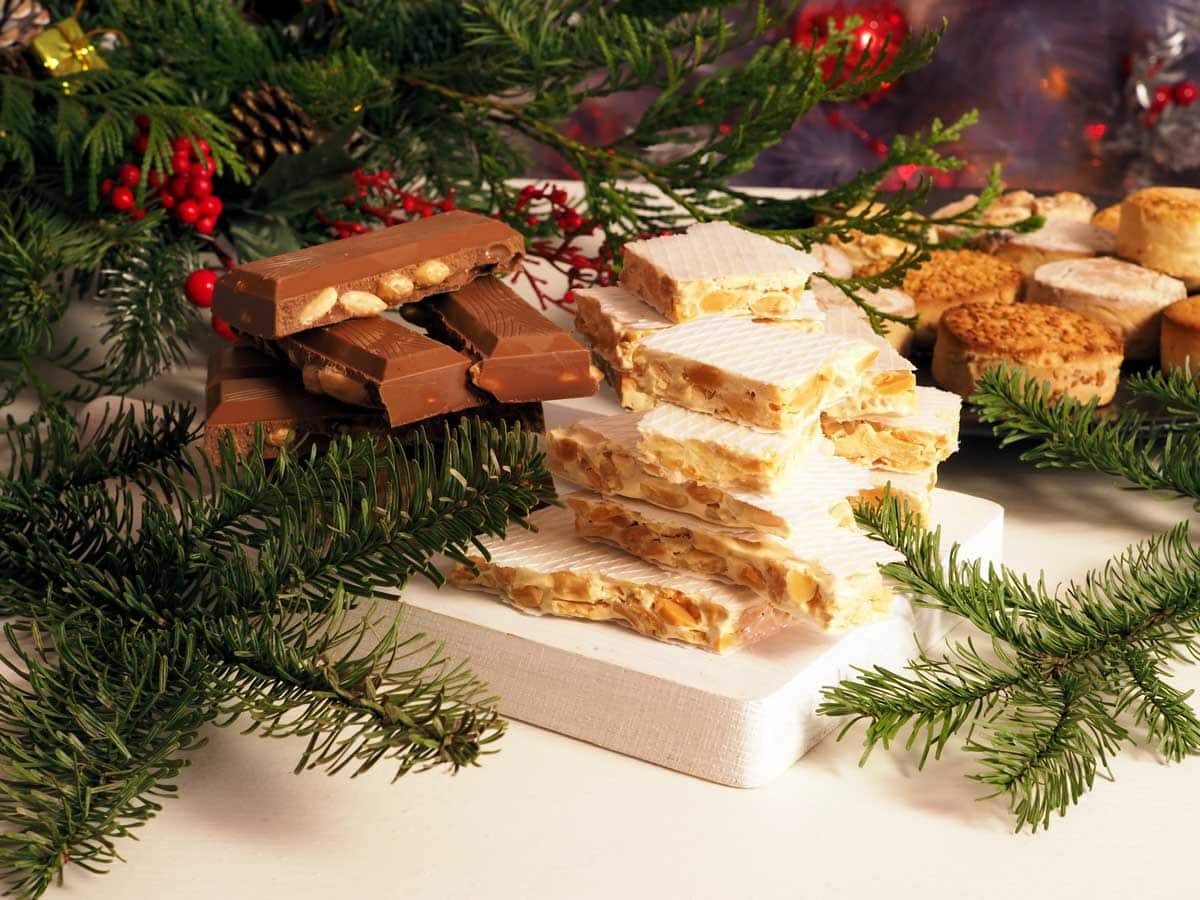
Turrón de Jijona and turrón de Alicante are both protected by a geographical indication (IGP). Bars that carry the seal must be made and packed in Jijona and graded by almond content.
- Jijona: at least 64% almonds for Suprema quality and at least 50% for Extra.
- Alicante: at least 60% almonds for Suprema and at least 46% for Extra.
When you shop, look for the IGP seal and the grade on the label. Those two details tell you more than the brand name does.
Sanchis Mira sits in the middle of the market. 1880 is the premium pick, with prices to match, while El Almendro is the brand most Americans have seen in supermarkets.
Sanchis Mira offers classic Jijona recipes at a fair price, and it is sold widely in the U.S. That makes it a dependable everyday choice for the holiday table.
For a side-by-side look at the major producers, see our list of the best Spanish turrón brands. For other sweets from the season, browse our traditional Spanish Christmas sweets.
Part of our guide to Spanish turrón — every type, region and brand in one place.
More Spanish Foods
See all →
Jorge Garcia is the founder of AmigoFoods, where he has spent over 20 years helping readers discover authentic Latin American and Spanish cuisine. Raised in a Cuban-American household, Jorge learned to cook at the hands of his mother and grandmother, carrying forward generations of family recipes. That heritage, backed by his family’s four-generation history in the Latin food industry, inspired him to launch AmigoFoods in 2003. With more than 1,000 published articles on recipes, ingredients, and food culture, Jorge’s mission is simple: make authentic Latin cooking approachable for home cooks everywhere while honoring the traditions behind every dish.