

Tapas are small portions of food served with a drink in Spain: a wedge of tortilla, a saucer of olives, a sizzling clay dish of garlic shrimp. They are shared, eaten standing at the bar, and ordered a couple at a time rather than all at once.
The word comes from tapar, “to cover.” A tapa is literally a lid. Below is what tapas really are (and aren’t), how they differ from pintxos and raciones, how Spaniards order them, and an easy tapas-style dinner you can make at home tonight.
Tapas at a Glance
AmigoFoods may earn a commission from qualifying purchases made through links on this page, at no extra cost to you.
What Does Tapas Mean?
In Spanish, tapa means “lid” or “cover,” from the verb tapar, to cover. As a food word it is surprisingly young. The Real Academia Española first defined it in 1939, as an Andalusian term for a small bite served with a drink, and only dropped the regional label around 1970.
Today the academy’s definition is simply a small portion of food served to accompany a drink. That is the key to understanding tapas: a tapa is defined by the drink next to it, not by what is on the plate. A slice of tortilla española is lunch at home and a tapa at the bar.
One is una tapa (TAH-pah); several are tapas (TAH-pahs). Going out for them is ir de tapas, the verb is tapear, and the whole custom is el tapeo.
If you searched “tapas meaning” and landed on yoga, that is a different word. In Sanskrit, tapas means discipline or inner heat, and it has nothing to do with Spanish food.
Where Did Tapas Come From?
Nobody knows for certain, and Spaniards enjoy arguing about it. Three stories get told most often:
- The lid over the glass. Andalusian tavern keepers laid a slice of bread or ham across a glass of sherry or wine to keep out flies and dust: a lid you could eat. This is the story the word itself supports.
- The ham at the Ventorrillo del Chato. King Alfonso XIII, stopping at a roadside inn between Cádiz and San Fernando, had his sherry covered with a slice of jamón against a gust of beach sand, then asked for another glass “with the same tapa.”
- A royal decree. Alfonso X “the Wise,” a 13th-century king of Castile, supposedly ordered taverns to serve food with wine so drinkers would not get drunk on an empty stomach.
The royal stories are legends without a paper trail. The practical explanations are more convincing: salty bites sell more drinks, and laborers needed something to carry them through to a late main meal. We cover the theories in more depth in our history of Spanish tapas.

Tapas vs. Pintxos vs. Raciones: The Menu Words That Matter
A Spanish bar menu often lists the same dish in several sizes and formats. Knowing these words is the difference between a snack and an accidental feast.
| On the menu | What you get | Best for |
|---|---|---|
| Tapa | One small plate or saucer, sometimes free with a drink | A bite or two per drink |
| Media ración | A half portion of a dish | Two people sharing |
| Ración | A full plate, meant to share | Three or four people, or a meal |
| Pintxo / pincho | A bite on bread, often held with a toothpick | Basque bars, paid by the piece |
| Montadito | A small open sandwich or mini roll | A one-handed bite |
| Cazuela | A hot dish served in a terracotta pot | Saucy tapas: shrimp, meatballs, chorizo |
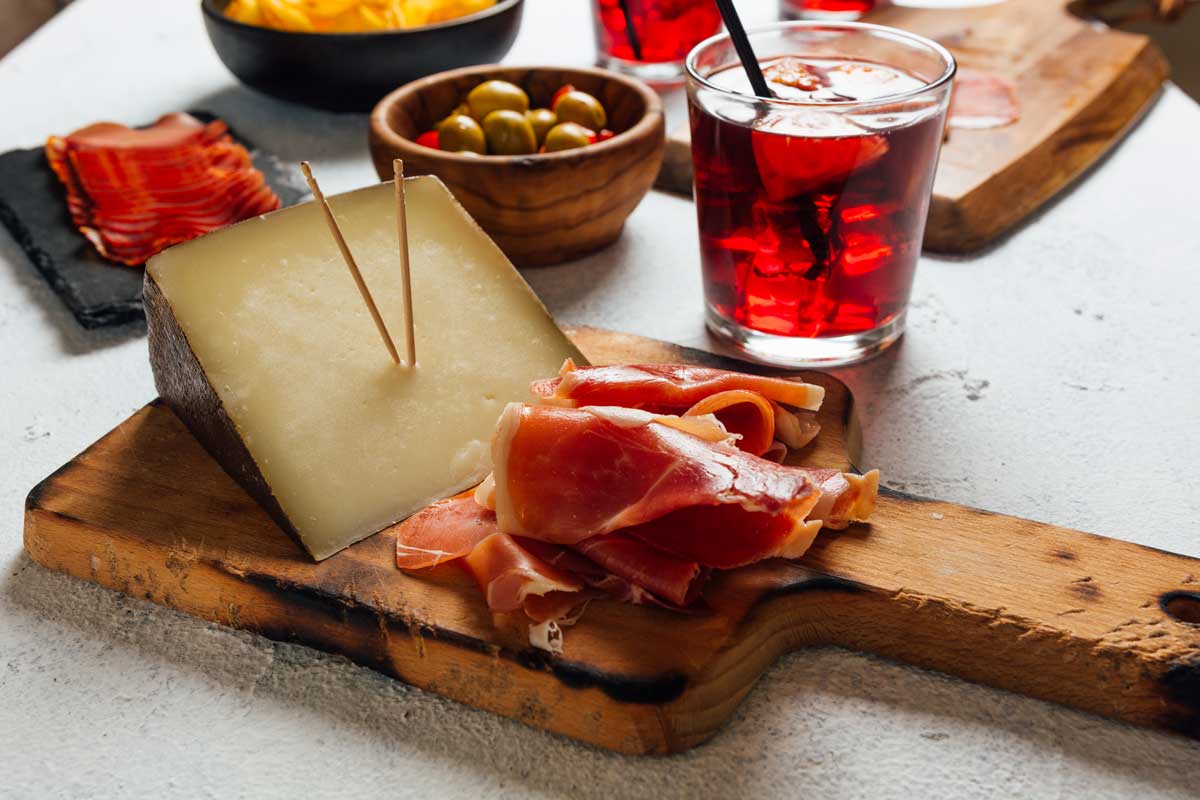
| Tabla | A board of cured meats or cheese | Sharing over a bottle of wine |
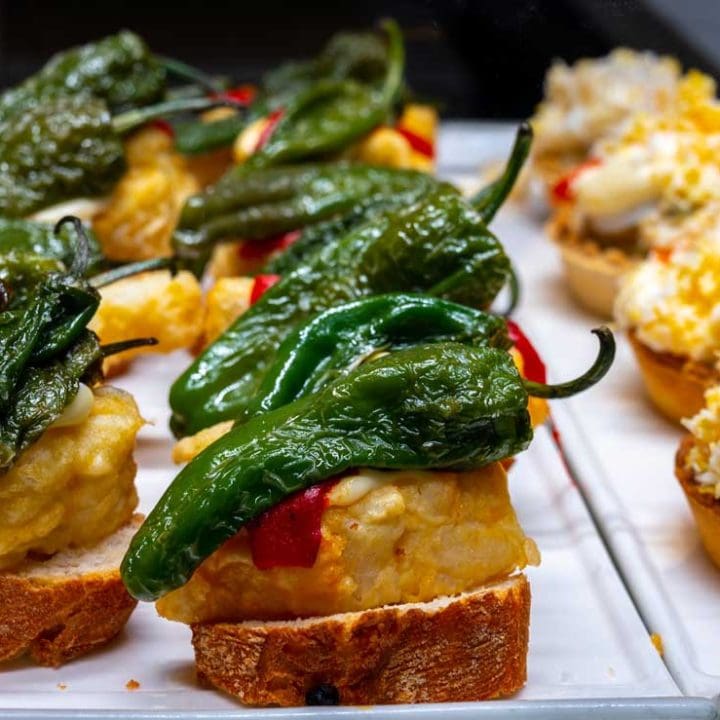
Pintxos are the Basque take, spelled the Basque way; pincho comes from pinchar, to prick, after the toothpick that holds them together. In San Sebastián and Bilbao the bites are lined up along the counter. You take a plate, help yourself, and settle up at the end, traditionally by letting the bartender count your toothpicks. The most famous of all is the Gilda, an olive, anchovy and pickled-pepper skewer.

What Kind of Food Are Tapas?
Almost anything can be a tapa if it is small and goes with a drink. Spaniards loosely sort them three ways: cosas de picar (finger food such as olives and almonds), pinchos (anything on a stick or on bread) and cazuelas (hot dishes in sauce). On a real menu you will see:
Cold tapas (tapas frías)
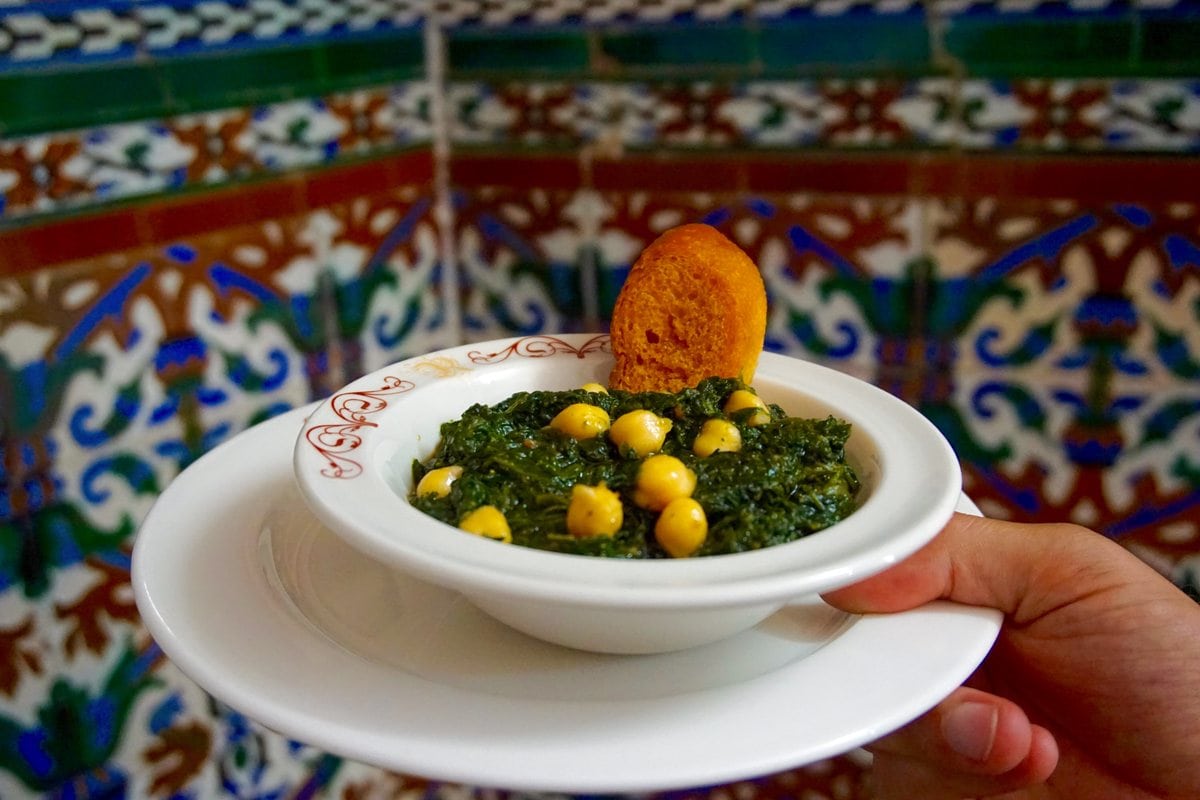
Spanish olives, ensaladilla rusa (Spain’s potato salad), vinegar-cured anchovies called boquerones, salmorejo, wedges of Manchego and slices of tortilla served at room temperature.
Hot tapas (tapas calientes)
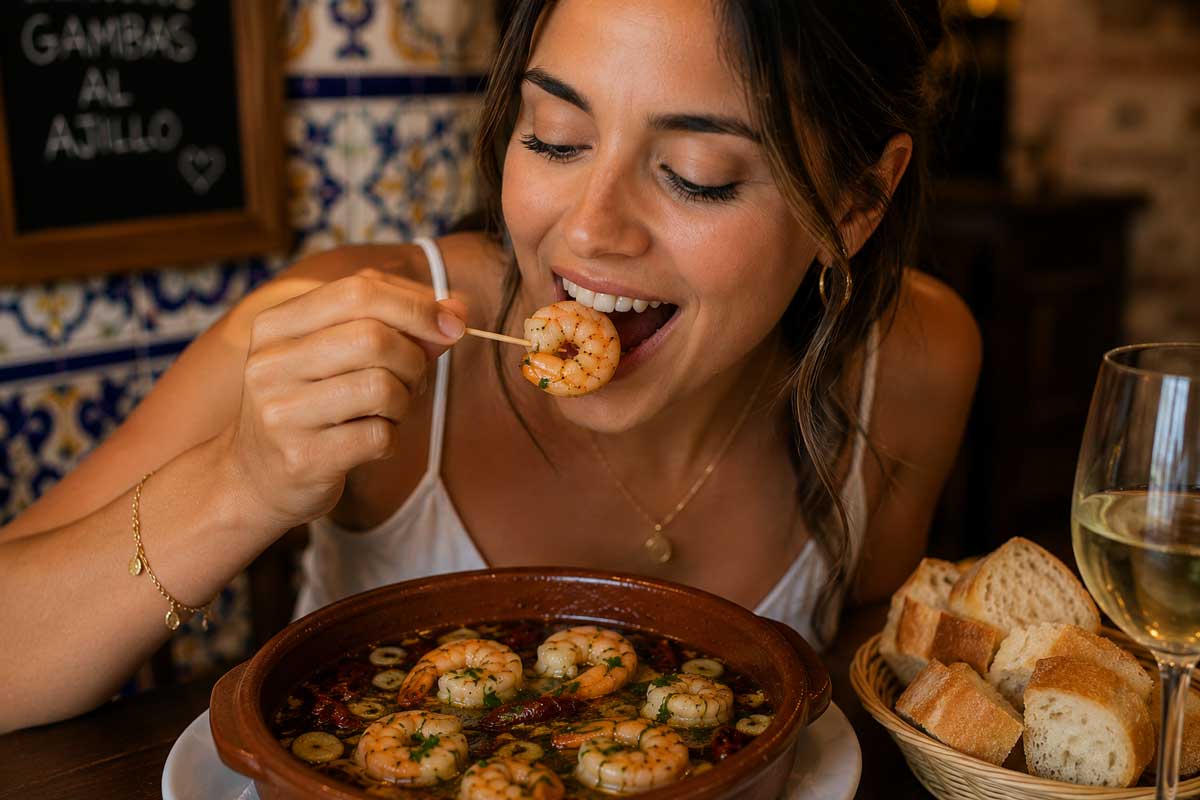
Gambas al ajillo, patatas bravas, croquetas de jamón, chorizo al vino, pimientos de Padrón, albóndigas, Córdoba’s crisp flamenquín and pulpo a la gallega.

Tapas on bread: montaditos and pintxos
Toasts, mini rolls and skewered bites: anchovy with roasted pepper, pork loin with fried green pepper, and pan con tomate, the tomato-rubbed toast that turns up under half of everything else.

Cured meats, cheese and conservas
Jamón, chorizo, salchichón, Manchego and tinned seafood are often served together as a tabla. Our guide to Spanish cured meats explains the differences, and our Spanish tapas board guide shows how to build one.
Want the full list? Our 28 Spanish tapas you need to try walks through the classics dish by dish, and there are 35 vegetarian tapas and 15 seafood tapas too.
Are Tapas Free in Spain?
Sometimes. In Granada, Jaén, Almería and León, many bars still bring a free tapa with every drink, and each new round often brings a different one. It is how locals eat dinner for the price of a few beers. Elsewhere you will usually get a small courtesy bite at most, a few olives or potato chips, and pay for everything else.
Paid tapas generally cost a few euros each at a neighborhood bar and more at gastrobars and in tourist districts. Why do they cost so much more in the US? We break that down in why tapas are so expensive.
How to Eat Tapas Like a Local
- Order a drink first. The drink is the point and the tapa follows it. Ask for a caña (a small draft beer), a glass of house wine, vermut on a weekend afternoon or a chilled fino sherry in Andalusia.
- Order one or two plates at a time. Start small, watch what comes out of the kitchen, then order the next round. Ordering everything at once is the classic beginner mistake.
- Stand at the bar. The best tapas, and sometimes the only tapas, are served at the counter. Tables and terraces may offer raciones only.
- Keep moving. Ir de tapas means hopping from bar to bar, with a drink and the house specialty at each one.
- Eat on Spanish time. Kitchens usually serve from about 1:30 to 4 pm and again from about 8:30 pm to midnight. At 6 pm you will find coffee and pastries, not tapas.
- Pay at the end. The bartender keeps a running tab. Ask for the check when you leave, and tip lightly: rounding up or leaving a coin or two is normal at the bar.
- Una caña, por favor. A small draft beer, please.
- ¿Qué tenéis de tapa? What do you have for tapas?
- Una ración de bravas para compartir. A plate of patatas bravas to share.
- La cuenta, por favor. The check, please.
What Does “Tapas Style” Mean?
Outside Spain, “tapas style” usually describes how a restaurant serves food rather than what it serves: lots of small plates, brought out as they are ready and shared by the whole table. A tapas-style menu might be Spanish, Peruvian, Japanese or New American.
At those restaurants, plan on 2 to 3 plates per person for a full meal, ordered in waves. At home, 4 or 5 different tapas plus bread will feed four people as dinner.
Tapas are also not the same thing as appetizers. An appetizer opens a meal; tapas can be the meal. We compare the two properly in tapas vs. hors d’oeuvres.
How to Make a Tapas-Style Dinner at Home
The trick is balance, not quantity. Pick one from each line and you have dinner:
- Something cured: jamón serrano or chorizo
- Something cheesy: Manchego or another of our Spanish cheeses for tapas
- Something briny: olives, anchovies or a tin of Spanish conservas
- Something on bread: pan con tomate
- Something hot and saucy: gambas al ajillo or chorizo al vino
- Something green: blistered Padrón peppers
Serve it in waves, the way a bar would: cold things first, then the hot dishes straight from the pan. Small terracotta cazuelas hold the heat and make even simple garlic shrimp look like Madrid; a set of four costs less than a single tapas dinner out.
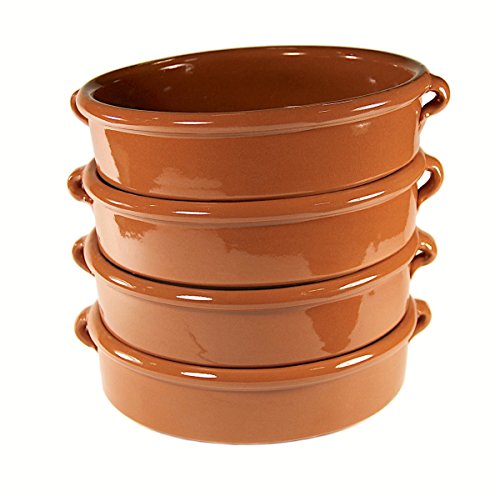
- Handmade by skilled artisans
- Great for serving soups & stews
The recipe card below is the exact spread for four, timed so everything lands hot. For a bigger crowd, add a tortilla española made earlier in the day, or browse our easy tapas recipes for a Spanish fiesta. For the smoked paprika in the shrimp, see our guide to pimentón, or grab a tin of pimentón de la Vera.
Easy Tapas-Style Dinner for Four
A five-tapa Spanish spread for four people, timed so everything lands hot: a board of jamón, Manchego, olives and almonds, pan con tomate, blistered Padrón peppers and sizzling gambas al ajillo.
Ingredients
For the board
- 3 ounces (85 g) thinly sliced jamón serrano
- 6 ounces (170 g) Manchego cheese, rind removed, cut into thin triangles
- 1 cup Spanish green olives, such as manzanilla or gordal
- ½ cup Marcona almonds
For the pan con tomate
- 1 baguette or small ciabatta, cut into ½-inch slices (about 16 slices)
- 2 large ripe tomatoes, halved crosswise
- 1 garlic clove, halved
- Spanish extra-virgin olive oil, for drizzling
- Flaky sea salt
For the Padrón peppers
- 8 ounces (225 g) Padrón or shishito peppers
- 1 tablespoon Spanish extra-virgin olive oil
- Coarse sea salt, to taste
For the gambas al ajillo
- 1 pound (450 g) large shrimp (21 to 25 per pound), peeled and deveined, patted dry
- ½ cup Spanish extra-virgin olive oil
- 6 garlic cloves, thinly sliced
- 1 dried guindilla chile, or ¼ teaspoon red pepper flakes
- ½ teaspoon kosher salt
- ½ teaspoon pimentón (sweet smoked Spanish paprika)
- 2 tablespoons dry fino sherry (optional)
- 2 tablespoons chopped fresh parsley
Instructions
- Set out the cold board. About 30 minutes before eating, arrange the jamón, Manchego, olives and almonds on a board so the cheese and ham come to room temperature. Ham served cold from the fridge tastes of almost nothing; warm, its fat turns glossy and sweet.
- Toast the bread. Heat the broiler. Lay the bread slices on a sheet pan and broil 1 to 2 minutes per side, until the edges are crisp and the centers still give a little.
- Make the pan con tomate. Rub each warm toast very lightly with the cut side of the garlic, then rub the tomato halves over the bread, squeezing as you go, until the toast is pink and the tomato skins are mostly empty. Drizzle with olive oil and sprinkle with flaky salt. Serve right away with the board.
- Blister the peppers. Heat 1 tablespoon olive oil in a large skillet over high heat until shimmering. Add the peppers in a single layer and cook, tossing every 30 seconds or so, 3 to 5 minutes, until blistered in spots and just softened. Tip onto a plate and shower with coarse salt.
- Infuse the garlic oil. In a 10-inch skillet or terracotta cazuela, warm the ½ cup olive oil with the sliced garlic and guindilla over medium-low heat for 2 to 3 minutes, until the garlic smells sweet and is just turning pale gold. Do not let it brown.
- Cook the shrimp. Raise the heat to medium-high, add the shrimp in a single layer and sprinkle with the salt. Cook 1 to 2 minutes per side, until pink and just opaque. Take the pan off the heat and stir in the pimentón, sherry and parsley.
- Serve in waves. Bring the shrimp to the table still sizzling, with the last of the bread for mopping up the oil. Eat the board and pan con tomate first, then the peppers, then the shrimp, the way a Spanish bar would send them out.
Notes
Padrón vs. shishito: Padrón peppers are traditional, and roughly one in ten is hot. Shishitos are milder, easier to find in US supermarkets and cook exactly the same way.
Make ahead: Peel and devein the shrimp, slice the cheese and wash the peppers up to a day ahead. Cook the shrimp last, after everything else is on the table.
Feeding more people: For 6 to 8, add a tortilla española made earlier in the day and served at room temperature, plus a bowl of patatas bravas or chorizo al vino.
To drink: Cold cañas of beer, Spanish vermouth on ice, a dry fino sherry or a crisp albariño.
What to Drink With Tapas
- Caña: a small, very cold draft beer. The default order in most of Spain.
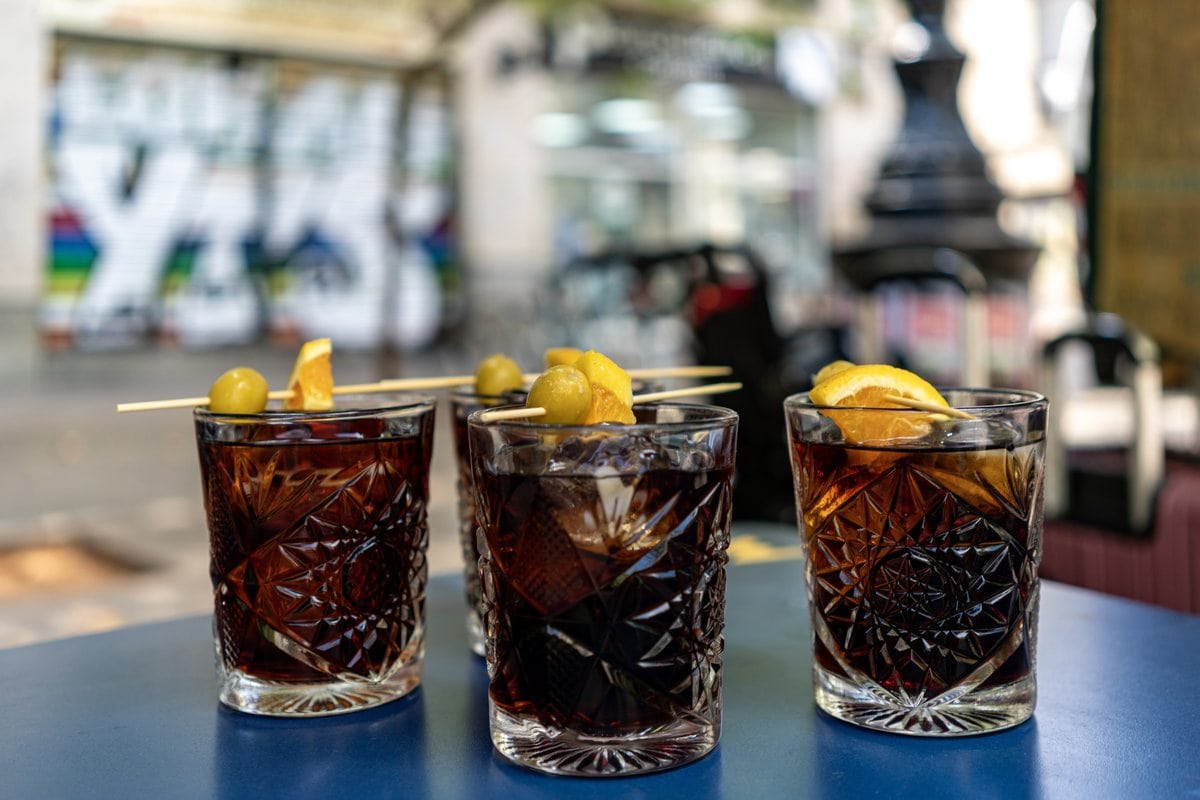
- Vermut: sweet Spanish vermouth over ice with an orange slice and an olive, the weekend aperitivo.
- Fino or manzanilla sherry: bone-dry and salty-edged, perfect with jamón, almonds and fried fish.
- Albariño: a crisp Galician white for seafood tapas.
- Rioja or Ribera del Duero: for chorizo, croquetas and cured cheese.
- Tinto de verano or rebujito: long, cold summer drinks. Spaniards order tinto de verano far more often than sangría.
Tapas FAQ
What is the difference between tapas and appetizers?
An appetizer is the first course of a meal. Tapas are small plates eaten with a drink, and a few rounds of them can replace the meal entirely. In Spain, cenar de tapas, having tapas for dinner, is completely normal.
What are the three types of tapas?
The usual split is cosas de picar (finger food such as olives, almonds and cheese), pinchos (bites on a toothpick or on bread) and cazuelas (hot dishes served in sauce). Many people simply divide them into hot and cold.
How many tapas per person?
For a full meal, figure 2 to 3 plates per person at a restaurant, or 4 to 5 different dishes for a table of four at home. For a pre-dinner snack, one or two tapas per round of drinks is plenty.
Are tapas Spanish or Mexican?
Tapas are Spanish. Mexico has its own version of the idea, botanas, the snacks that cantinas bring out with drinks, but the word tapas and the tapeo tradition come from Spain.
Is it “tapa” or “tapas”?
Both are correct: one small plate is a tapa, two or more are tapas. In English, “tapas” is also used for the style of eating, as in “let’s go for tapas.”
Is there a World Tapas Day?
Yes. Día Mundial de la Tapa, promoted by the Spanish tourism group Saborea España, is celebrated every June with tapas routes and specials in bars across Spain and at Spanish restaurants abroad.
Ready to put it into practice? Start with our 28 Spanish tapas you need to try, or browse every recipe in our Spanish foods collection.
More Spanish Foods
See all →
Jorge Garcia is the founder of AmigoFoods, where he has spent over 20 years helping readers discover authentic Latin American and Spanish cuisine. Raised in a Cuban-American household, Jorge learned to cook at the hands of his mother and grandmother, carrying forward generations of family recipes. That heritage, backed by his family’s four-generation history in the Latin food industry, inspired him to launch AmigoFoods in 2003. With more than 1,000 published articles on recipes, ingredients, and food culture, Jorge’s mission is simple: make authentic Latin cooking approachable for home cooks everywhere while honoring the traditions behind every dish.