

Arroz con gandules is Puerto Rico’s golden rice with pigeon peas, seasoned with sofrito, sazón, olives and a little pork. A caldero gives it the crisp bottom layer called pegao, making it a favorite beside pernil at holiday meals and family dinners.
Arroz con Gandules at a Glance
What Is Arroz con Gandules?

Arroz con gandules (literally “rice with pigeon peas”) is a one-pot yellow rice from Puerto Rico. The color comes from achiote, the savory backbone comes from sofrito and sazón, and the pigeon peas give it a nutty, slightly green bite that no other bean quite matches.
Want the same pigeon peas in a bowl? Asopao de gandules is the soupy version, with much less rice and plenty of broth.
Most families also add a little cured pork (smoked ham, salt pork or bacon), pimiento-stuffed olives and a spoon of tomato sauce. Everything cooks together in a caldero, the heavy cast-aluminum pot found in nearly every Puerto Rican kitchen, which is what makes the pegao possible.
It is considered Puerto Rico’s national dish by many, and it is the rice you will find at Christmas, on New Year’s Eve, at Three Kings Day, at baptisms and at any party where a big pot needs to feed a crowd. On the island it is often called simply “arroz con gandules” or, when made with pork, “arroz con gandules y jamón”.
A Brief History of Puerto Rico’s Rice
The dish is a map of the island’s history in one pot. Gandules (Cajanus cajan) came from Africa by way of the transatlantic trade and thrived in the Caribbean climate. Rice arrived with the Spanish and became the island’s daily grain. Sofrito’s peppers, culantro and garlic blend Taíno, Spanish and West African cooking, and achiote is a native seed the Taíno used long before anyone stained rice with it.
By the 19th century arroz con gandules was an everyday dish across the countryside, and by the 20th century it had become the ceremonial rice of the holidays. Fresh gandules come into season in Puerto Rico from roughly November to February, which is exactly why the dish is tied so tightly to Puerto Rican Christmas food.
Arroz con Gandules Ingredients (and What Each One Does)

There is no single official recipe, but almost every version is built from the same short list. Here is what goes in and why it matters, with the substitutes that actually work.
| Ingredient | What it does | Substitute |
|---|---|---|
| Medium-grain rice | Absorbs the seasoned broth, stays separate and forms a good pegao. Canilla, Iberia and Goya medium grain are the island standards. | Long-grain white rice (add a little more liquid); parboiled rice if you are nervous about mushiness |
| Gandules (pigeon peas) | The signature legume: firm, nutty, slightly earthy. A 15 oz can, liquid and all, is the classic amount for 2 to 3 cups of rice. | Frozen or fresh green gandules (simmer 10 minutes first); pink beans in a pinch |
| Sofrito | The aromatic base of onion, peppers, garlic, culantro and cilantro. Half a cup is plenty for a family pot. | Goya recaíto or a quick blend of onion, green pepper, garlic and cilantro |
| Sazón con culantro y achiote | Seasoning packet that adds salt, garlic, cumin, coriander and the orange annatto color. | ½ tsp each salt, garlic powder and ground coriander plus ¼ tsp turmeric or extra achiote oil |
| Achiote (annatto) oil | Gives the deep gold color and a mild peppery flavor. Optional if you use sazón with achiote. | Olive oil plus a pinch of paprika |
| Ham, salt pork or bacon | Rendered first so its fat and smoke season the whole pot. | Leftover pernil, Vienna sausages, or leave it out for a vegetarian rice |
| Olives and capers | Briny punctuation that keeps a rich rice from tasting flat. Alcaparrado (olives, capers and pimientos in one jar) does both. | Green olives only, or skip them |
| Tomato sauce | A small amount rounds the sofrito and deepens the color. | 1 tbsp tomato paste |
| Broth or water | Water is traditional; chicken broth adds body. The gandules liquid counts toward the total. | Vegetable broth |
| Oregano, bay leaf, adobo | The background seasonings. Adobo is the all-purpose salt blend of Puerto Rican kitchens. | Salt, garlic powder and black pepper |
If you want a deeper look at sazón, adobo, achiote and the other staples on this list, our guide to essential Puerto Rican ingredients covers them one by one, and our sofrito recipe makes enough to freeze for a month of rice.
Where to buy: most large supermarkets carry Goya gandules, sazón and sofrito in the Latin aisle. Online, look for canned gandules, sazón con culantro y achiote, jarred sofrito and a cast-aluminum caldero. As an Amazon Associate we earn from qualifying purchases.
The Right Rice and the Right Ratio
More arroz con gandules is ruined by the ratio than by anything else. Puerto Rican cooks use medium-grain rice and less liquid than the package suggests, because the rice is first boiled uncovered and then steamed, not simmered in a sealed pot from the start.
| Rice | Liquid per cup of rice | Uncovered boil | Covered steam |
|---|---|---|---|
| Medium grain (classic) | About 1½ to 1⅔ cups | 6 to 8 min, until craters form | 20 to 25 min on lowest heat |
| Long grain | About 1¾ cups | 6 to 8 min | 20 min |
| Parboiled | About 2 cups | 8 to 10 min | 20 to 25 min |
| Brown rice | About 2¼ cups | 10 min | 40 to 45 min |
Two habits matter as much as the numbers. Rinse the rice until the water runs nearly clear, which removes the surface starch that turns to glue. And taste the broth before the rice goes in: it should be slightly too salty, because the rice will drink it and dilute the seasoning.
How to Make Arroz con Gandules, Step by Step

The method is the same whether you are cooking two cups of rice or twelve. Full quantities are in the recipe card below; this is the technique.
- Render the pork. Heat achiote oil in the caldero over medium heat and cook diced ham or bacon until the edges brown. The rendered fat is the first layer of flavor.
- Bloom the sofrito. Add sofrito, sazón, adobo and oregano and cook for a few minutes until it darkens and smells sweet. Then stir in tomato sauce, olives with a spoon of brine, capers and a bay leaf.
- Build the broth. Measure the reserved gandules liquid and add broth or water to make 4 cups total for the recipe’s 2½ cups rice, then add it with the gandules. Bring to a boil and taste; adjust the salt now.
- Add the rice and boil uncovered. Stir in rinsed rice once, then leave it alone. Boil over medium-high heat until the liquid drops to the level of the rice and small craters open on the surface.
- Cover and steam. Lay foil or a banana leaf over the pot, press the lid on tightly and turn the heat to its lowest setting. Cook undisturbed for 20 to 25 minutes.
- Fold, rest and serve. Fold the rice gently from the bottom up so the gandules and ham are evenly distributed, cover again for 5 minutes off the heat, then serve with the pegao scraped from the bottom.

How to Get the Pegao (the Crispy Bottom)
Pegao (from “pegado”, stuck) is the thin, crackly layer of rice that toasts against the bottom of the caldero. In many families it is the most fought-over part of the meal, and getting it is mostly a matter of pot and patience.
- Use a caldero or heavy Dutch oven, never a thin pot
- Enough fat in the base so the rice fries rather than scorches
- Lowest possible heat once covered
- Leave it 5 extra minutes at the end for a thicker crust
- Scrape with a metal spoon while the pot is still hot
If the pegao comes out black and bitter instead of golden and nutty, the heat was too high or there was not enough fat in the base. A cast-aluminum caldero forgives more than stainless steel does.
Common Mistakes and How to Fix Them
| Problem | Why it happened | Fix |
|---|---|---|
| Mushy, sticky rice | Too much liquid, unrinsed rice, or stirring after the lid went on | Cut liquid to 1½ cups per cup of medium-grain rice, rinse well, stir only once |
| Hard grains on top, wet underneath | Lid not tight, or heat too high during steaming | Foil under the lid, lowest burner, fold from the bottom and rest 5 more minutes |
| Pale rice | Not enough achiote or sazón | Use achiote oil plus sazón con achiote, or bloom a pinch of annatto in the oil |
| Bland rice | Broth was under-salted before the rice went in | Season the broth until it tastes slightly too salty; add a spoon of olive brine |
| Burnt bottom | Heat too high, thin pot, too little fat | Heavy caldero, more oil in the base, lowest flame once covered |
| Gandules mushy or falling apart | Canned peas over-stirred or over-boiled | Add canned gandules with the broth and stir only once; only fresh or frozen peas need a head start |
Arroz con Gandules Variations

Arroz con gandules y jamón. The standard everyday version, with smoked ham rendered in the base. Salt pork (tocino) or bacon gives a smokier pot.
Arroz con gandules y pernil. Not so much a variation as a pairing, but many cooks fold chopped leftover pernil and its drippings into the rice on the day after Christmas.
Arroz con gandules y coco. Along the coast, and across the water in the Dominican Republic, part of the liquid is replaced with coconut milk (moro de guandules con coco). It is richer, faintly sweet and very good with fish.
Arroz con gandules y pollo. Bone-in chicken thighs browned in the base and cooked with the rice turn the side dish into a full meal, much like arroz con pollo.
Vegetarian or vegan. Skip the pork, use vegetable broth and add a little smoked paprika or a spoon of extra sofrito. Gandules carry the dish on their own.
Instant Pot or rice cooker. Use a recipe developed for your appliance and rice type; the stovetop liquid amount does not transfer directly. Count the gandules liquid in the measured total and follow the appliance’s fill and release instructions. A rice cooker can also be used, though the pegao will differ.
Arroz con gandules vs. arroz con habichuelas: arroz con gandules is a single pot in which the peas cook with the rice. Arroz con habichuelas is white rice served with a separate stew of pink or red beans. Both are daily food in Puerto Rico; only the first one goes on the holiday table.
What to Serve with Arroz con Gandules

Arroz con gandules is the side that behaves like a main. On the holiday table it sits between roast pork and pasteles; on a weeknight it needs only a protein and something green or fried.
PastelesGreen banana and pork parcels for Nochebuena
TostonesTwice-fried green plantains for crunch
MadurosSweet fried plantains to balance the salt
PastelónSweet plantain and beef casserole
CoquitoCoconut rum eggnog to finish the holiday meal
A simple ensalada verde with tomato, onion and avocado, or a few slices of avocado with salt and lime, is the usual fresh counterpoint. For more ideas, browse our roundups of Puerto Rican side dishes and traditional Puerto Rican dishes.
Storing, Freezing and Reheating
Cool the rice quickly, then refrigerate it in a covered container for up to 4 days. It freezes well for up to 3 months; portion it flat in freezer bags so it thaws fast.
To reheat, sprinkle a tablespoon or two of water over the rice, cover, and warm it gently on the stove or in the microwave. The steam brings the grains back to life. Leftover arroz con gandules also makes excellent fried rice with an egg on top, and a scoop pressed into a hot pan gives you a second chance at pegao.
Arroz con Gandules FAQ
What does arroz con gandules taste like?
Savory and mildly smoky from the pork and sofrito, with a gentle earthiness from the achiote and a nutty, slightly green bite from the pigeon peas. Olives add a briny edge. It is well seasoned but not spicy.
Are gandules the same as pigeon peas?
Yes. Gandules is the Spanish name for pigeon peas (Cajanus cajan), also called gungo peas in Jamaica and toor dal in India. In Puerto Rican cooking they are used green, not dried and split.
Can I use dried, frozen or fresh gandules instead of canned?
Yes. Frozen or fresh green gandules should simmer in the seasoned broth for about 10 minutes before the rice goes in. Dried gandules need soaking overnight and 45 to 60 minutes of cooking first, and they taste earthier than green ones.
What is the best rice for arroz con gandules?
Medium-grain white rice, which is what most Puerto Rican households use. It absorbs the seasoned liquid, stays separate when cooked correctly and makes the best pegao. Long-grain and parboiled rice both work with a little more liquid.
Why is my arroz con gandules mushy?
Almost always too much liquid or too much stirring. Use about 1½ cups of liquid per cup of medium-grain rice, count the gandules liquid toward that total, rinse the rice, and stir only once before the lid goes on.
Is arroz con gandules the national dish of Puerto Rico?
It is widely called the national dish, usually alongside pernil, though there is no official designation. It is the one dish you will find on virtually every holiday table on the island and in the diaspora.
What is the difference between Puerto Rican arroz con gandules and Dominican moro de guandules?
They are close cousins. The Dominican moro usually has less achiote color, often includes coconut milk on the coast, and relies on a lighter sofrito. The Puerto Rican version leans on sazón, olives and pork for a deeper gold color and a saltier, smokier flavor.
Can I make arroz con gandules ahead for a party?
Yes. Cook it up to a day ahead, cool it, and reheat it covered with a splash of water. Many Puerto Rican cooks think it tastes better on the second day. Make the pegao fresh if you want it crisp.
Arroz con Gandules Recipe
This is the everyday family version: one 15 oz can of gandules, 2½ cups of medium-grain rice and a base of ham, sofrito and sazón, cooked in a caldero. It makes about 8 servings and doubles easily for a holiday crowd.
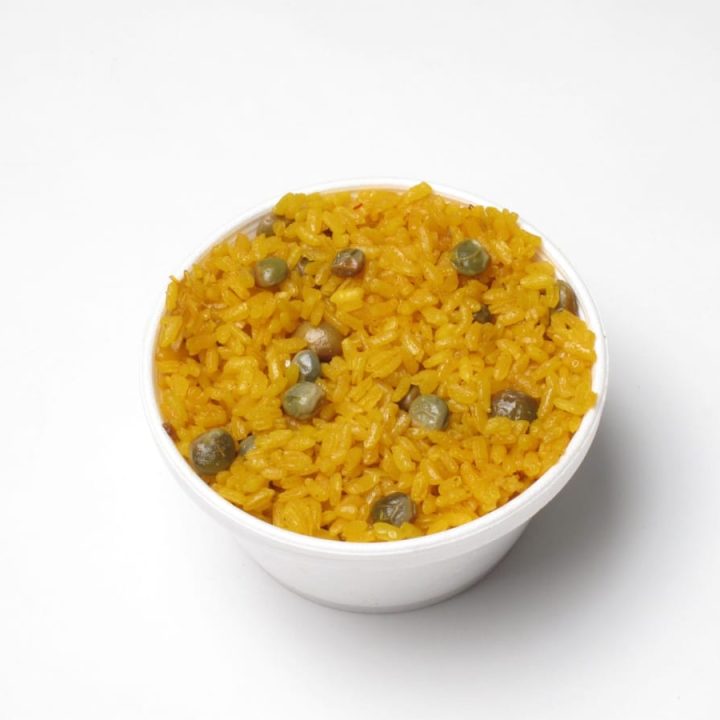
Arroz con Gandules (Puerto Rican Rice with Pigeon Peas)
The classic Puerto Rican rice with pigeon peas: medium-grain rice cooked in a caldero with sofrito, sazón, ham, olives and gandules until every grain is stained gold and a crispy pegao forms on the bottom. This is the holiday rice of Puerto Rico, but it is easy enough for a weeknight.
Ingredients
- 3 tablespoons achiote (annatto) oil, or 2 tablespoons olive oil plus an extra ½ packet sazón
- 4 ounces smoked ham, salt pork or bacon, diced (about ¾ cup)
- ½ cup sofrito, homemade or store-bought
- 1 packet (1½ teaspoons) sazón con culantro y achiote
- 1 teaspoon adobo seasoning
- ½ teaspoon dried oregano
- ¼ cup tomato sauce
- ¼ cup pimiento-stuffed manzanilla olives, plus 1 tablespoon of their brine
- 1 teaspoon capers (optional)
- 1 bay leaf
- 1 can (15 ounces) gandules (green pigeon peas), drained with liquid reserved
- 2½ cups medium-grain white rice, rinsed until the water runs nearly clear
- Low-sodium chicken broth or water, enough to make 4 cups total when combined with the reserved gandules liquid
- Salt, to taste
- 2 tablespoons chopped cilantro or culantro, to finish (optional)
Instructions
1. Render the ham
Heat the achiote oil in a caldero or heavy Dutch oven over medium heat. Add the diced ham and cook for 3 to 4 minutes, until the edges brown and the fat renders.
2. Bloom the sofrito
Stir in the sofrito, sazón, adobo and oregano. Cook for 3 to 4 minutes, stirring, until the sofrito darkens slightly and smells sweet.
Add the tomato sauce, olives with their brine, capers and bay leaf. Cook 2 more minutes.
3. Build the broth
Measure the reserved gandules liquid and add enough broth or water to make 4 cups total. Pour this into the pot with the drained gandules. Bring to a boil and taste: the broth should taste a touch too salty, because the rice will absorb it. Adjust with salt or adobo now, not later.
4. Add the rice and cook uncovered
Stir in the rinsed rice once so it is evenly distributed. Boil uncovered over medium-high heat for 6 to 8 minutes, until the liquid drops to the level of the rice and small craters open on the surface. Do not stir again.
5. Cover and steam
Fold a sheet of foil over the pot (or lay a banana leaf on the rice), press the lid on tightly and turn the heat to the lowest setting. Cook undisturbed for 20 to 25 minutes.
6. Fluff and rest
Uncover and gently fold the rice from the bottom up with a large spoon so the gandules and ham are spread through. Cover again and let it rest off the heat for 5 minutes. Discard the bay leaf, scatter with cilantro and serve, making sure someone gets the pegao from the bottom of the pot.
Notes
Pegao: For a thick crispy layer, leave the covered pot on the lowest heat for an extra 5 minutes at the end, then scrape the bottom with a metal spoon.
Liquid ratio: With medium-grain rice use about 1.6 cups of liquid per cup of rice (the gandules liquid counts). Long-grain rice needs closer to 1.75. Too much liquid is the number one cause of mushy arroz con gandules.
Instant Pot: Use a recipe developed for your pressure-cooker model and rice type; the stovetop liquid amount does not transfer directly. Count the gandules liquid in the measured total and follow the appliance’s fill and release instructions.
Vegetarian: Skip the ham, use vegetable broth and add ½ teaspoon smoked paprika for depth.
Frozen or fresh gandules: Add 2 cups with the broth and simmer 10 minutes before adding the rice, since they take longer than canned to soften.
Storage: Refrigerate up to 4 days; freeze up to 3 months. Reheat with a splash of water, covered.
Nutrition Information:
Serving Size: 1 cupAmount Per Serving: Calories: 330Total Fat: 7gSaturated Fat: 2gCholesterol: 12mgSodium: 640mgCarbohydrates: 56gFiber: 5gSugar: 2gProtein: 10g
If you make this arroz con gandules, tell us how your pegao turned out in the comments, and explore the rest of our Puerto Rican main dish recipes for what to cook with it.
More Puerto Rican Foods
See all →
Jorge Garcia is the founder of AmigoFoods, where he has spent over 20 years helping readers discover authentic Latin American and Spanish cuisine. Raised in a Cuban-American household, Jorge learned to cook at the hands of his mother and grandmother, carrying forward generations of family recipes. That heritage, backed by his family’s four-generation history in the Latin food industry, inspired him to launch AmigoFoods in 2003. With more than 1,000 published articles on recipes, ingredients, and food culture, Jorge’s mission is simple: make authentic Latin cooking approachable for home cooks everywhere while honoring the traditions behind every dish.