
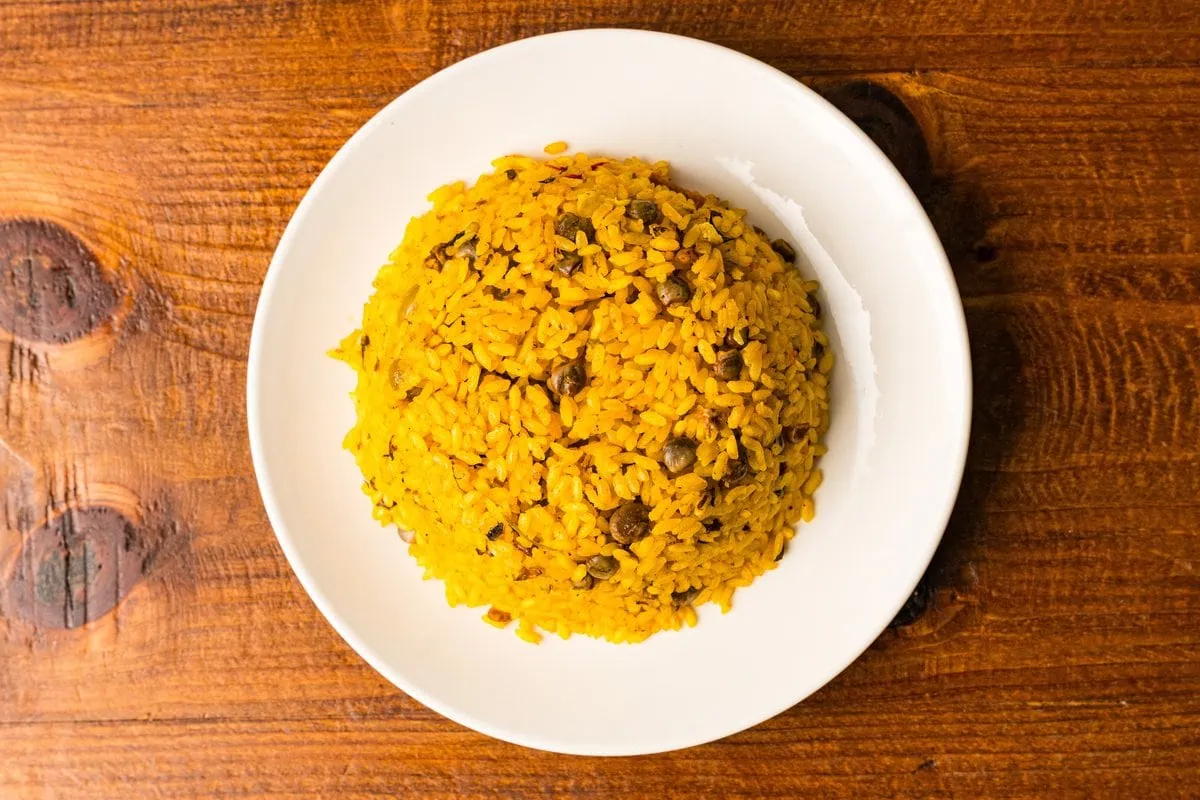
Moro de guandules is the Dominican Republic’s rice and pigeon peas: long-grain rice cooked in a single pot with guandules (green pigeon peas), a quick sofrito of onion, peppers, garlic and cilantro, a spoonful of tomato paste and Dominican oregano, until every grain is loose and the bottom of the pot turns into a golden crust called concón. Dominicans make it all year, but at Christmas it is usually made con coco, with part of the water swapped for coconut milk, and it sits next to the roast pork on the Nochebuena table. Its sweeter companion on many tables is arroz navideño, rice cooked with raisins and almonds. Below is what makes the Dominican moro different from Puerto Rican arroz con gandules, which pigeon peas and rice to buy, and a step-by-step recipe for moro de guandules con coco (with the everyday version without coconut in the notes).
Moro de Guandules at a Glance
AmigoFoods may earn a commission from qualifying Amazon purchases made through links on this page.
What is moro de guandules?
In Dominican kitchens, a moro is any rice cooked in the same pot as a legume, so the rice soaks up the bean’s flavor and color. That is what sets it apart from the everyday plate of white rice with stewed beans served on the side, the combination in la bandera. There is moro de habichuelas (red or pink beans), moro de habichuelas negras (black beans) and moro de guandules, made with pigeon peas, which is the one Dominicans save for parties, Sunday lunch and Christmas. The name comes from Spain, where rice and black beans were nicknamed moros y cristianos (Moors and Christians); Cuba still uses the long name for moros y cristianos.
Puerto Rican cooks also put these peas in a soupy stew called asopao de gandules, finished with plantain dumplings.
Guandules is the Dominican word for pigeon peas (Cajanus cajan), small round legumes with a nutty, earthy taste. Puerto Ricans call them gandules, Venezuelans quinchonchos, and in Jamaica they are gungo peas. Most people in the US buy them canned, either green (fresh peas, the usual choice for moro) or dried and cooked, which are browner and softer.
A good moro is sueltecito: loose and separate, never mushy. It comes out light brick-red to golden from the tomato paste (or bright golden yellow if you add a packet of sazón), with whole peas spread through it, and it tastes of sofrito, oregano and, in the coconut version, a little sweetness. The prize at the bottom of the caldero is the concón, the crisp layer of toasted rice that gets scraped out and fought over at the table.

Moro de guandules vs. arroz con gandules
The Dominican moro and Puerto Rico’s arroz con gandules are close cousins: both are rice and pigeon peas cooked together in a caldero, both are Christmas dishes, and both are judged by their crust (concón in the Dominican Republic, pegao in Puerto Rico). The differences are in the seasoning and the color.
- Color: Puerto Rican arroz con gandules is yellow-orange from achiote oil or sazón with annatto. Dominican moro gets a lighter, brick-red to golden color from tomato paste, and the coconut version is paler still.
- Sofrito: Puerto Ricans start with a blended sofrito or recaíto heavy on culantro and ají dulce. Dominicans usually chop the base by hand: red onion, cubanelle pepper, celery, garlic, cilantro and Dominican oregano.
- Pork: Puerto Rican arroz con gandules almost always cooks ham, bacon or salted pork in the pot. Many Dominican home versions have no meat in the rice at all; the pork is on the plate beside it.
- Coconut: Coconut milk is the signature of the Dominican Christmas moro. It started on the Samaná peninsula, which is covered in coconut groves, and is now made across the country.
- Olives and capers: standard in Puerto Rico. In a Dominican moro they are optional, and many cooks leave them out.
If you are looking for the Puerto Rican version with achiote, olives and pork, use our arroz con gandules recipe. This page is the Dominican moro.
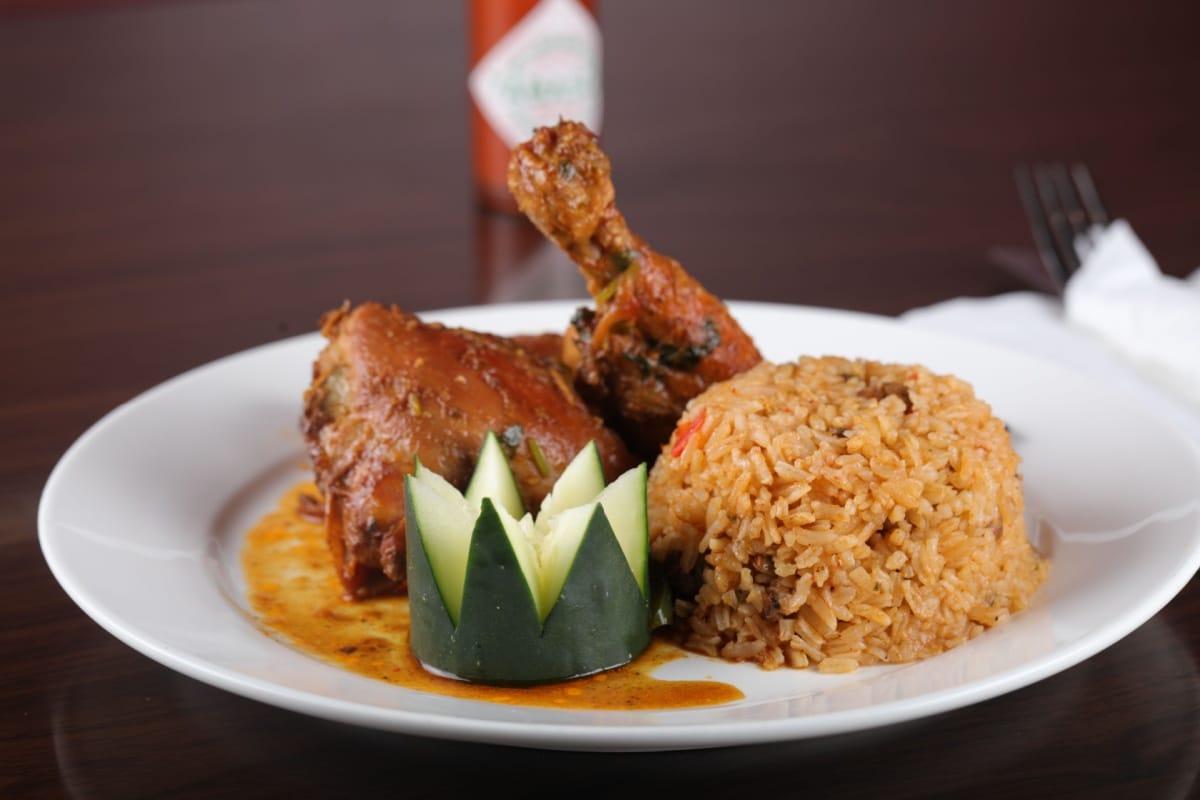
Moro de guandules con coco at Christmas
Dominican Christmas Eve, Nochebuena, is built around a few dishes that appear on almost every table: puerco asado (roast pork) or a baked chicken, ensalada rusa (potato and beet salad), pasteles en hoja wrapped in plantain leaves, telera bread, and a big caldero of moro de guandules con coco. Clara González of Cocina Dominicana (Dominican Cooking) writes that the coconut version was born in Samaná, where coconut goes into almost everything, and has become so popular that you can find it all over the country.
Fresh guandules come into season on the island toward the end of the year, which helps explain why they became the Christmas legume. The coconut milk makes the rice richer, slightly sweet and a little creamy, which is why it pairs so well with salty roast pork. See the full holiday spread in our guide to Dominican Christmas foods, and compare it with the Puerto Rican Christmas table, where arroz con gandules plays the same role.
The ingredients
Moro is a pantry dish. Everything except the fresh vegetables can sit in the cupboard until the holidays.
- Guandules: one 15-ounce can of green pigeon peas, drained and rinsed, is enough for 2 cups of rice. Frozen green pigeon peas work the same way (thaw them first). Dried pigeon peas must be soaked overnight and boiled for about an hour before you start; use 1 1/2 cups cooked peas.
- Rice: long-grain white rice is the Dominican standard and gives the loosest grains. Medium-grain rice works but needs a little less liquid. Rinse it until the water runs almost clear so the grains don’t stick.
- Coconut milk: use canned, unsweetened full-fat coconut milk, not the coconut milk beverage sold in cartons and never cream of coconut, which is sweetened and meant for desserts and coquito.
- The sofrito: red onion, cubanelle pepper (ají cubanela), a little red bell pepper, celery, garlic, cilantro and dried oregano. Dominican oregano is stronger than Mediterranean oregano; if you only have the regular kind, use a bit more. Our guide to Dominican ingredients covers all of these.
- Tomato paste: one tablespoon, cooked until it darkens, gives the rice its color.
- Seasoning: salt, plus an optional chicken bouillon cube or a packet of sazón. The difference between the two seasonings is explained in adobo vs. sazón.
- Optional: a few halved green olives, a tablespoon of capers, or a cube of auyama (West Indian pumpkin).

How to make moro de guandules
This is the Dominican one-pot method with coconut milk. For the everyday moro without coconut, replace the coconut milk with water or broth (see the recipe notes). Full measurements are in the recipe card below.
1. Rinse the rice
Put 2 cups (about 400 g) of long-grain white rice in a fine sieve and rinse it under cold water, rubbing the grains with your fingers, until the water runs almost clear. Let it drain while you cook the sofrito.
2. Cook the sofrito
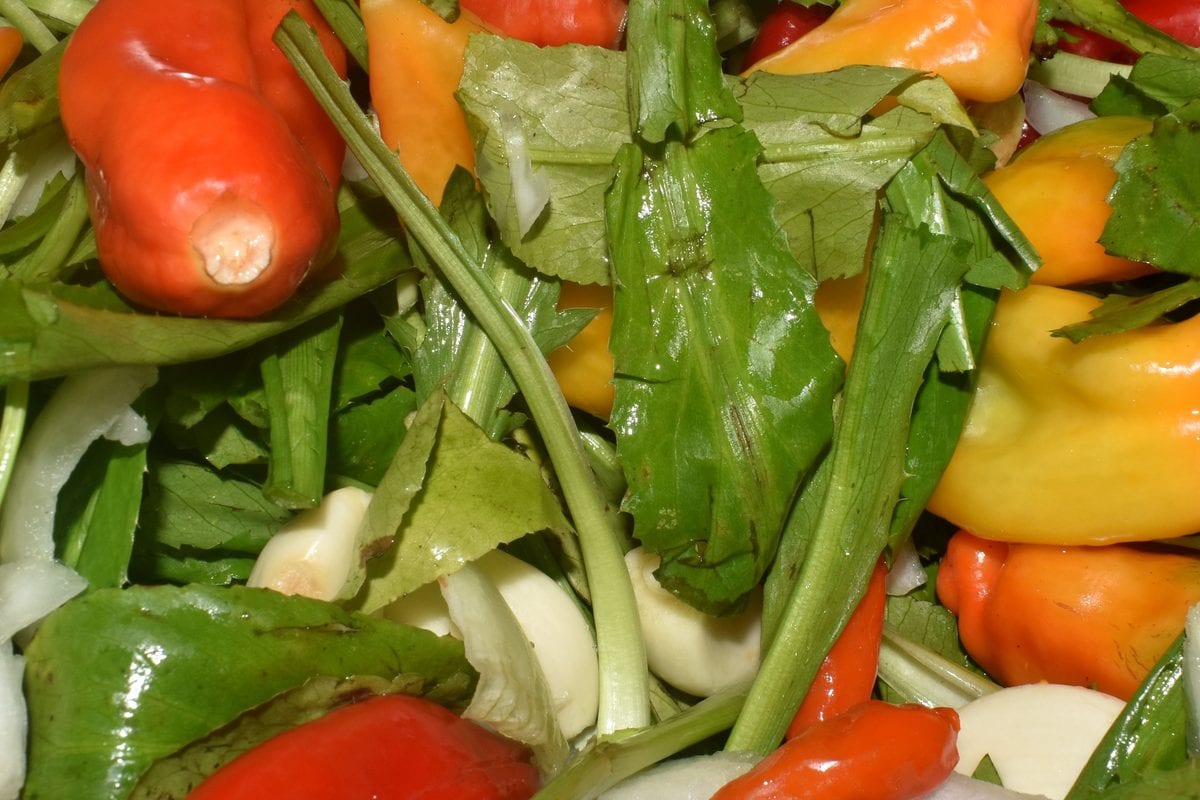
Heat 2 tablespoons of vegetable or olive oil in a heavy caldero or Dutch oven over medium heat. Add 1/2 finely chopped red onion, 1/2 chopped cubanelle pepper, 1/4 chopped red bell pepper and 1 finely chopped celery stalk, and cook for 4 to 5 minutes, until soft. Add 3 mashed garlic cloves, 2 tablespoons of chopped cilantro and 1/2 teaspoon of dried oregano (crush it between your palms), and cook for 1 minute. Stir in 1 tablespoon of tomato paste and cook for 2 minutes, until it turns a shade darker.
3. Add the guandules
Add one 15-ounce can of green pigeon peas, drained and rinsed, plus the olives if you are using them. Stir for 2 minutes so the peas are coated in the sofrito and take on its color.

- Handpicked tender from the Dominican Republic.
4. Add the coconut milk and season the liquid
Pour in one 13.5-ounce can of coconut milk (shake it first) and 1 1/4 cups of water, add a crumbled chicken bouillon cube if you like and 1 1/2 teaspoons of kosher salt (use 1 teaspoon if you added bouillon). Bring it to a boil and taste. The liquid should taste a little saltier than you want the finished rice, because the rice will absorb it.
5. Add the rice and boil it dry
Add the drained rice, stir once to spread it evenly, and let it boil uncovered over medium-high heat. Every couple of minutes, gently turn it from the bottom with a wooden spoon so it doesn’t catch too early. After 8 to 12 minutes the liquid will drop below the surface of the rice and small craters will appear on top. That is the signal to cover it. Dominicans say the rice has to secar (dry) before it is covered.

- COOKINGCAPACITY: This IMUSA caldero offers a generous 4.8 quart cooking capacity, perfect for...
- DURABLE AND RELIABLE: This caldero pot features durable cast aluminum walls that distribute heat...

6. Cover and steam
Turn the heat down to the lowest setting. Fold the rice once from the bottom to the top, shape it into a gentle dome, lay a few cilantro sprigs on top and cover the pot tightly. If your lid is loose, put a sheet of foil under it. Cook for 15 minutes without lifting the lid. Uncover, fold the rice once more from the bottom (but don’t scrape the crust), cover again and cook 5 to 10 minutes more, until the grains are tender all the way through.

7. Rest, fluff and serve the concón
Take the pot off the heat and let it rest, covered, for 5 minutes. Remove the cilantro sprigs and fluff the rice with a fork. Spoon the moro into a serving dish, then scrape up the concón from the bottom of the pot and serve it on the side.
Variations
- Moro de guandules sin coco: the everyday version. Replace the coconut milk with water or chicken broth (2 3/4 cups liquid in total). It is lighter and a little redder.
- With auyama: some cooks add a cup of diced West Indian pumpkin with the peas. It melts into the rice and makes it softer and slightly sweet.
- With olives and capers: closer to the Puerto Rican style and common in some Dominican families.
- Moro de habichuelas: the same method with red, pink or black beans instead of pigeon peas. With black beans it is close to Cuban moros y cristianos. A pot of beans and rice with chicken in it becomes a locrio, the Dominican cousin of arroz con pollo.
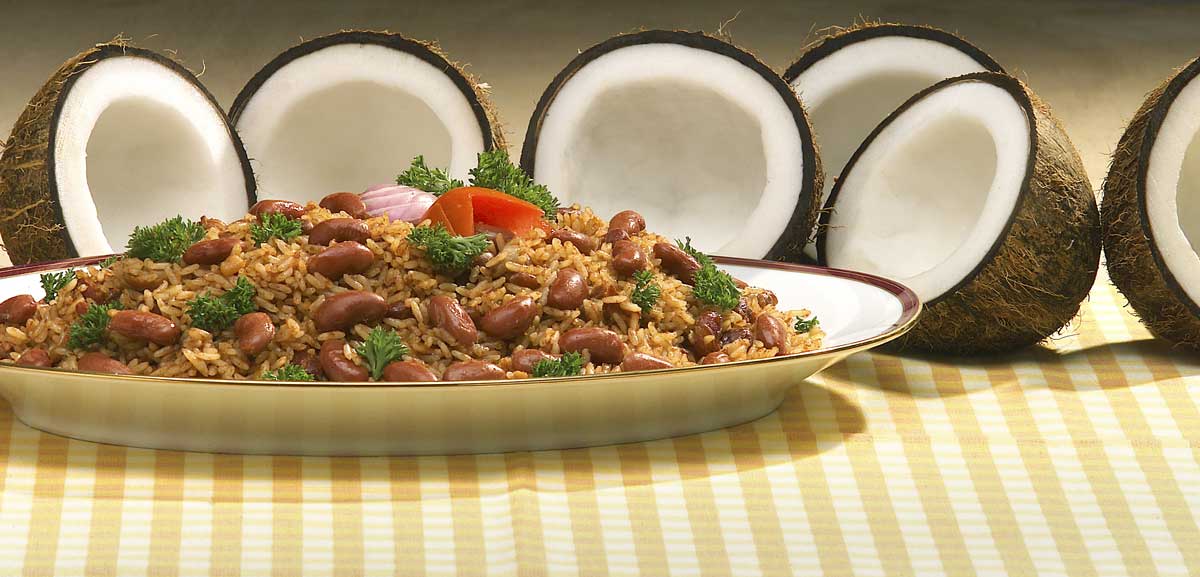
Caribbean rice and pigeon peas, side by side
| Moro de guandules (DR) | Moro de guandules con coco (DR) | Arroz con gandules (Puerto Rico) | Arroz con guandú y coco (Panama) | |
|---|---|---|---|---|
| Liquid | Water or broth | Coconut milk and water | Water or broth | Coconut milk |
| Base | Chopped onion, cubanelle, celery, garlic, cilantro, oregano | Same | Blended sofrito or recaíto with culantro and ají dulce | Onion, garlic, sometimes culantro |
| Color | Brick-red to golden (tomato paste) | Pale golden | Yellow-orange (achiote or sazón) | Pale, almost white |
| Meat in the pot | Usually none | Usually none | Ham, bacon or salted pork | Usually none |
| Extras | Olives optional | Olives optional | Olives and capers | None |
| Crust | Concón | Concón | Pegao | Raspa |
| When | Sundays, parties | Christmas Eve | Christmas, every holiday | Christmas, New Year |
What to serve with moro
Moro is a side dish, and it is filling, so it goes next to a meat and a salad rather than with more starch. At Christmas it is roast pork and ensalada rusa. The rest of the year, try it with pollo guisado, baked chicken, braised beef, fried fish or a simple avocado salad. For more ideas, see our lists of Dominican side dishes and Dominican food.
Make ahead and storage
You can chop the sofrito vegetables a day ahead and keep them in a covered container in the fridge. Cooked moro keeps in airtight containers in the refrigerator for up to 4 days. Cool it quickly, within an hour, and refrigerate it, since cooked rice shouldn’t sit out at room temperature. To reheat, sprinkle a tablespoon or two of water over each portion and warm it covered in the microwave or in a covered pan over low heat until steaming.
Troubleshooting
| Problem | Why it happens | Fix |
|---|---|---|
| Mushy or sticky rice | Too much liquid, unrinsed rice, or stirring after the pot was covered. | Next time measure the liquid, rinse the rice well and fold it only once or twice. Spread mushy rice on a tray to let the steam escape. |
| Rice still hard on top | The pot was covered too late, or the lid lets steam escape. | Sprinkle 1/4 cup of hot water over the top, seal with foil under the lid and steam 10 minutes more on low. |
| The bottom burned | Heat too high during the covered stage, or a thin pot. | Use the lowest heat once covered and a heavy caldero. Don’t scrape burned rice into the moro. |
| Bland rice | The liquid wasn’t salty enough before the rice went in. | Always taste the liquid at the boil. For leftovers, fold in a little salt and fresh cilantro when reheating. |
| Coconut milk split or looks greasy | Canned coconut milk separates; very hard boiling makes it oily. | Shake the can well and keep the boil steady but not violent. A little oil on top is normal. |
| Peas fell apart | Dried, very soft canned peas, or too much stirring. | Use green pigeon peas, add them before the liquid and stir gently. |
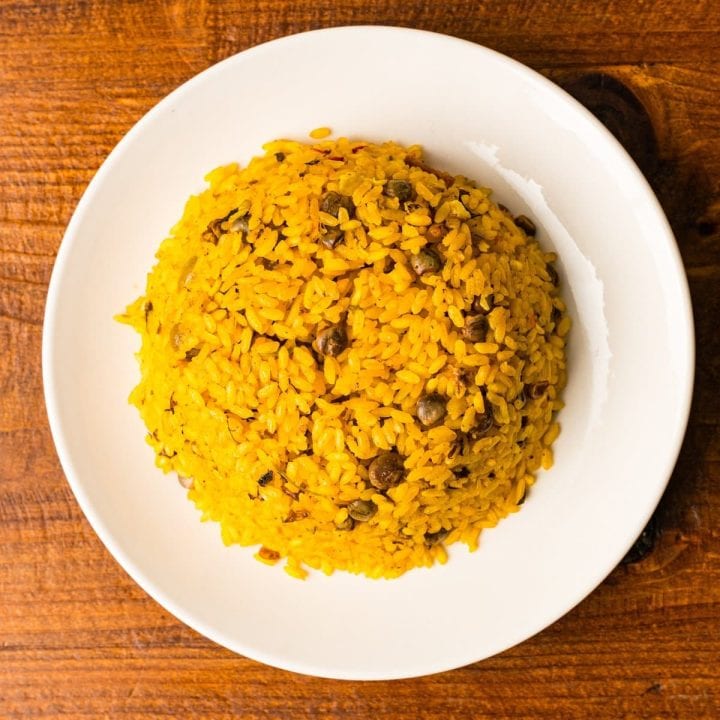
Moro de Guandules (Dominican Rice with Pigeon Peas)
Moro de guandules con coco, the Dominican Christmas rice: long-grain rice cooked in one pot with green pigeon peas, a chopped sofrito of onion, cubanelle pepper, celery, garlic, cilantro and oregano, tomato paste and coconut milk, until the grains are loose and a golden concon forms on the bottom of the caldero. Make it without coconut for the everyday version.
Ingredients
- 2 cups (about 400 g) long-grain white rice
- 2 tablespoons vegetable or olive oil
- 1/2 red onion, finely chopped
- 1/2 cubanelle pepper, chopped
- 1/4 red bell pepper, chopped
- 1 celery stalk, finely chopped
- 3 garlic cloves, mashed
- 2 tablespoons chopped cilantro, plus a few whole sprigs
- 1/2 teaspoon dried oregano (Dominican if you can find it)
- 1 tablespoon tomato paste
- 1 can (15 oz) green pigeon peas (guandules), drained and rinsed
- 8 pitted green olives, halved (optional)
- 1 can (13.5 oz) unsweetened coconut milk, shaken
- 1 1/4 cups (300 ml) water
- 1 chicken bouillon cube, crumbled (optional)
- 1 1/2 teaspoons kosher salt (1 teaspoon if using bouillon), plus more to taste
Instructions
- Rinse the rice. Put 2 cups (about 400 g) of long-grain white rice in a fine sieve and rinse it under cold water, rubbing the grains with your fingers, until the water runs almost clear. Let it drain while you cook the sofrito.
- Cook the sofrito. Heat 2 tablespoons of vegetable or olive oil in a heavy caldero or Dutch oven over medium heat. Add 1/2 finely chopped red onion, 1/2 chopped cubanelle pepper, 1/4 chopped red bell pepper and 1 finely chopped celery stalk, and cook for 4 to 5 minutes, until soft. Add 3 mashed garlic cloves, 2 tablespoons of chopped cilantro and 1/2 teaspoon of dried oregano (crush it between your palms), and cook for 1 minute. Stir in 1 tablespoon of tomato paste and cook for 2 minutes, until it turns a shade darker.
- Add the guandules. Add one 15-ounce can of green pigeon peas, drained and rinsed, plus the olives if you are using them. Stir for 2 minutes so the peas are coated in the sofrito and take on its color.
- Add the coconut milk and season the liquid. Pour in one 13.5-ounce can of coconut milk (shake it first) and 1 1/4 cups of water, add a crumbled chicken bouillon cube if you like and 1 1/2 teaspoons of kosher salt (use 1 teaspoon if you added bouillon). Bring it to a boil and taste. The liquid should taste a little saltier than you want the finished rice, because the rice will absorb it.
- Add the rice and boil it dry. Add the drained rice, stir once to spread it evenly, and let it boil uncovered over medium-high heat. Every couple of minutes, gently turn it from the bottom with a wooden spoon so it doesn’t catch too early. After 8 to 12 minutes the liquid will drop below the surface of the rice and small craters will appear on top. That is the signal to cover it. Dominicans say the rice has to secar (dry) before it is covered.
- Cover and steam. Turn the heat down to the lowest setting. Fold the rice once from the bottom to the top, shape it into a gentle dome, lay a few cilantro sprigs on top and cover the pot tightly. If your lid is loose, put a sheet of foil under it. Cook for 15 minutes without lifting the lid. Uncover, fold the rice once more from the bottom (but don’t scrape the crust), cover again and cook 5 to 10 minutes more, until the grains are tender all the way through.
- Rest, fluff and serve the concón. Take the pot off the heat and let it rest, covered, for 5 minutes. Remove the cilantro sprigs and fluff the rice with a fork. Spoon the moro into a serving dish, then scrape up the concón from the bottom of the pot and serve it on the side.
Notes
Without coconut (everyday moro): Replace the coconut milk and water with 2 3/4 cups (650 ml) water or chicken broth.
Peas: Use green pigeon peas (guandules verdes). Frozen work too; thaw them first. For dried, soak 3/4 cup overnight and boil about 1 hour, then use 1 1/2 cups cooked peas.
Rice: Long-grain rice gives the loosest grains. With medium-grain rice, use about 1/4 cup less water.
More concon: When the rice is done, leave the covered pot on medium-low 5 to 10 minutes more without stirring.
Vegan and gluten-free: Skip the bouillon, or use a vegetable bouillon labeled gluten-free.
Storage: Cool within an hour and refrigerate in airtight containers up to 4 days. Freeze up to 3 months. Reheat covered with a sprinkle of water.
Nutrition Information:
Serving Size: 1/6 of recipe (about 1 1/4 cups)Amount Per Serving: Calories: 475Total Fat: 20gSaturated Fat: 13gTrans Fat: 0gUnsaturated Fat: 5gCholesterol: 0mgSodium: 400mgCarbohydrates: 66gFiber: 4gSugar: 3gProtein: 9g
Nutrition information is an estimate and will vary with the brands and amounts used.
Moro de Guandules FAQ
What does moro de guandules mean?
Moro is the Dominican name for rice cooked in one pot with a legume, and guandules are pigeon peas. So moro de guandules is rice and pigeon peas cooked together.
Is moro de guandules the same as arroz con gandules?
They are close cousins but not the same. Puerto Rican arroz con gandules is yellow-orange from achiote, starts with a blended sofrito and usually has pork, olives and capers. Dominican moro is usually meatless, gets its color from tomato paste, and at Christmas is cooked with coconut milk.
Do Dominicans put coconut milk in moro?
Often, especially at Christmas. The coconut version, moro de guandules con coco, comes from the Samaná peninsula and is now made everywhere. The everyday moro is made with water or broth.
Can I use dried pigeon peas?
Yes. Soak 3/4 cup of dried pigeon peas overnight, then boil them in fresh water for about an hour, until tender. Drain and use 1 1/2 cups of cooked peas in place of the can.
What is concón?
Concón is the crisp, golden layer of rice that forms on the bottom of the caldero. Dominicans scrape it out and serve it on the side, and it is many people’s favorite part of the pot. Puerto Ricans call it pegao.
What rice is best for moro de guandules?
Long-grain white rice gives the loosest, most separate grains. Medium-grain rice also works but is a little softer; reduce the liquid by about 1/4 cup.
Is moro de guandules vegan?
This recipe is vegan and gluten-free if you skip the chicken bouillon or use a vegetable bouillon that is labeled gluten-free.
How many calories are in moro de guandules?
One serving of this recipe, a sixth of the pot, has about 475 calories with coconut milk, or about 340 calories without it.
More Dominican and holiday dishes
For the rest of the Christmas menu, see our guides to Dominican Christmas foods and Nochebuena. For everyday Dominican cooking, try locrio de pollo, pastelitos dominicanos and the sancocho de siete carnes, or browse our roundup of Latin side dishes.
Shopping list: Goya green pigeon peas, Goya coconut milk, Dominican oregano, long-grain white rice and an IMUSA caldero.
Sources
- Dominican Cooking (Clara González): Moro de Guandules, Rice with Pigeon Peas
- My Dominican Recipes: Moro de Guandules (Dominican Rice and Pigeon Peas)
- Sabores Dominicanos: Moro de Guandules
- Recetas Nestlé República Dominicana: Moro de guandules
- Goya Foods: Rice with Pigeon Peas and Coconut (Moro de Guandules con Coco)
- Food Network Kitchen: Moro de Guandules
- Gran Receta: Moro de Guandules, Dominican Rice and Pigeon Peas
- The Gastrographer: Moro de Guandules con Coco
- USDA FoodData Central (nutrition estimate)
More Dominican Foods
See all →
Jorge Garcia is the founder of AmigoFoods, where he has spent over 20 years helping readers discover authentic Latin American and Spanish cuisine. Raised in a Cuban-American household, Jorge learned to cook at the hands of his mother and grandmother, carrying forward generations of family recipes. That heritage, backed by his family’s four-generation history in the Latin food industry, inspired him to launch AmigoFoods in 2003. With more than 1,000 published articles on recipes, ingredients, and food culture, Jorge’s mission is simple: make authentic Latin cooking approachable for home cooks everywhere while honoring the traditions behind every dish.