
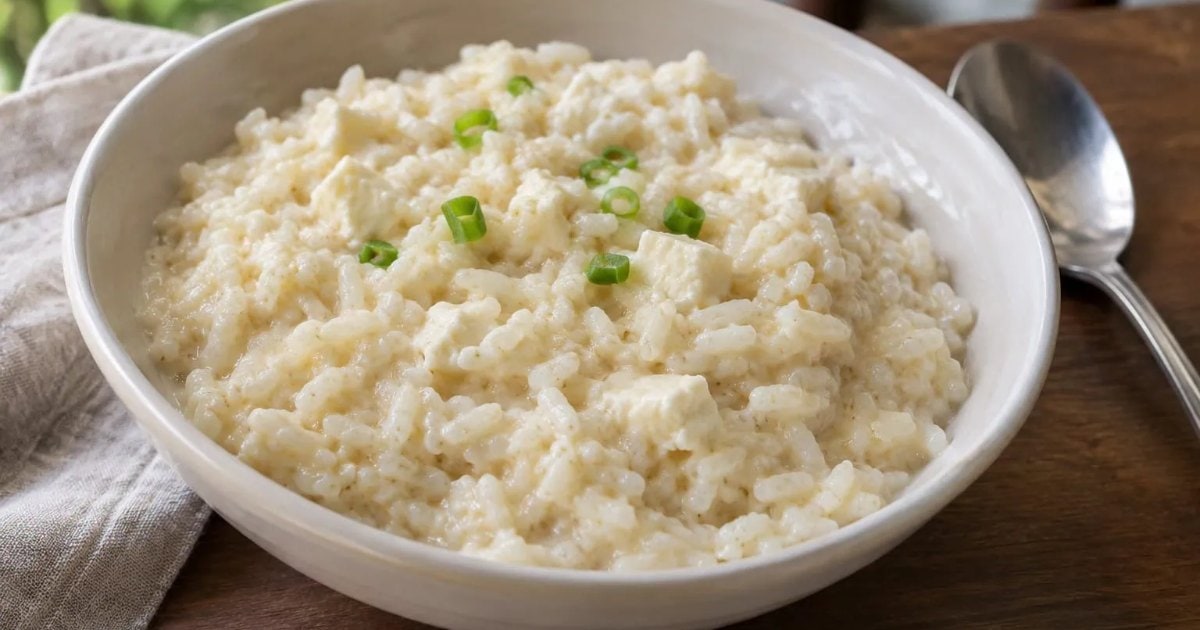
Arroz con queso is Bolivia’s creamy cheese rice: rice cooked with onion and garlic, then finished with hot milk and a generous amount of fresh cheese until it’s soft, sticky and stretchy. It’s the side dish Bolivians serve with grilled meat, fried fish and pork, and once you’ve had it, plain rice seems a little sad.
Arroz con Queso at a Glance
What Is Bolivian Arroz con Queso?
Arroz con queso simply means rice with cheese, and Bolivians make it in many ways, from a quick weeknight side to a baked version for parties. The most common style is creamy: the rice cooks in water like regular rice, then hot milk and lots of cheese go in at the end and everything is stirred until creamy. Melting cheeses blend into the rice; queso fresco softens but retains small curds.
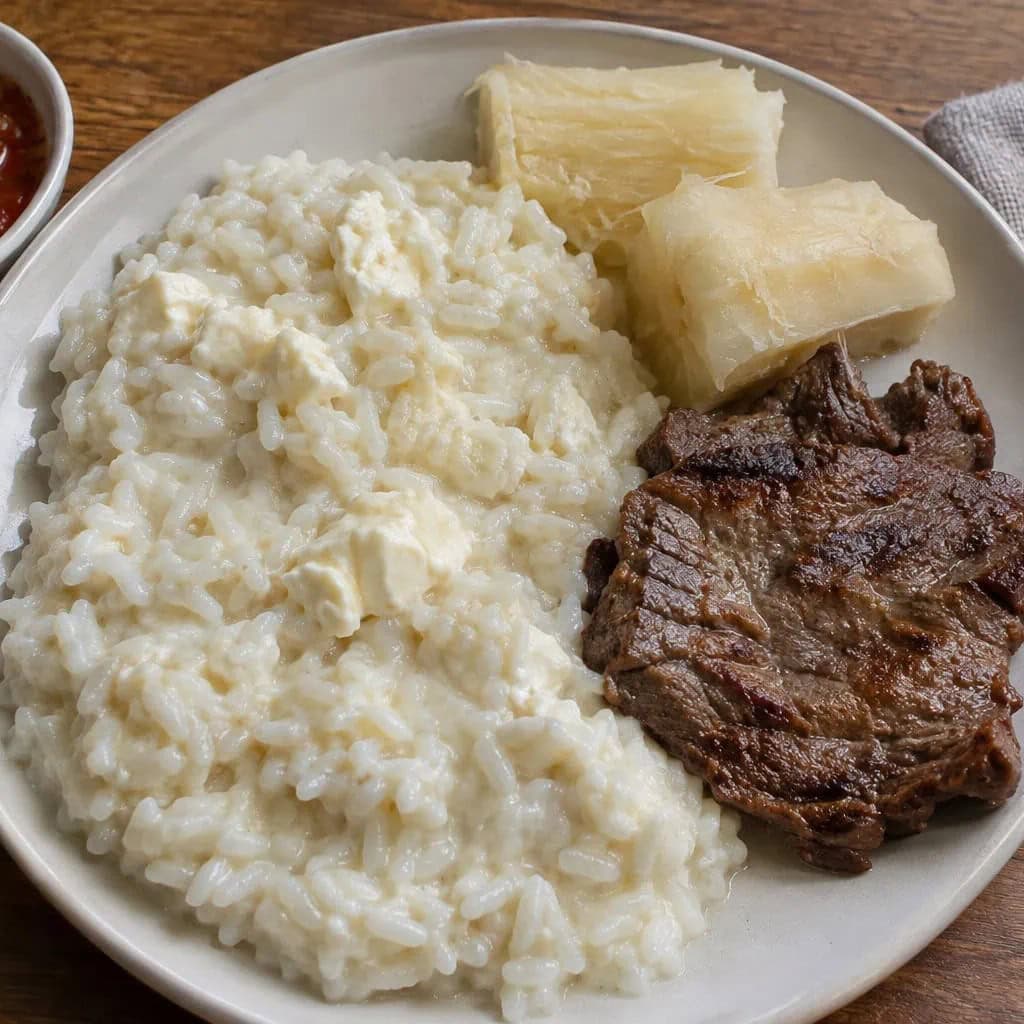
It’s especially popular in Santa Cruz and the eastern lowlands, where it’s a standard side at a churrasco, the Bolivian barbecue, next to grilled beef, sausages and yuca. You’ll also find it at lunch counters with fried chicken or fish, and as part of the Sunday meal at home.
| What it is | Details |
|---|---|
| In English | Bolivian rice with cheese |
| Where it’s from | Bolivia, especially Santa Cruz and the eastern lowlands |
| Made with | Rice, onion, garlic, milk and fresh cheese |
| Texture | Creamy and sticky, a little like a loose risotto |
| Served with | Grilled beef, pork, chicken or fried fish |
How It’s Different from Other Cheesy Rice
Bolivian arroz con queso is closer to a risotto than to a cheesy rice casserole, but it’s simpler: there’s no wine, stock or Parmesan, and the rice cooks in water. The flavor comes from fresh, mild, slightly salty cheese and milk. It’s not the same as Tex-Mex cheesy rice or the Cuban and Dominican rice dishes with cheese on top; in Bolivia the cheese is stirred all the way through.
Which Rice and Cheese to Use
- Rice: medium- or short-grain rice, such as Calrose, pearl or arborio, gives the creamiest result because it releases more starch. Long-grain rice works but is less creamy.
- Cheese: in Bolivia, cooks use fresh local cheese, often queso menonita from Santa Cruz’s Mennonite dairies, or queso criollo. In the US, use queso fresco for flavor plus some mozzarella or Monterey Jack so the rice gets that stretchy pull. Queso fresco softens but does not melt; the mozzarella or Monterey Jack provides the melt.
- Milk: whole milk, heated before you add it, so the rice doesn’t stop cooking.
Eat it right away: arroz con queso is best fresh, while it’s creamy. It firms up as it cools. To reheat, add a splash of milk and stir over low heat.
How to Make Arroz con Queso
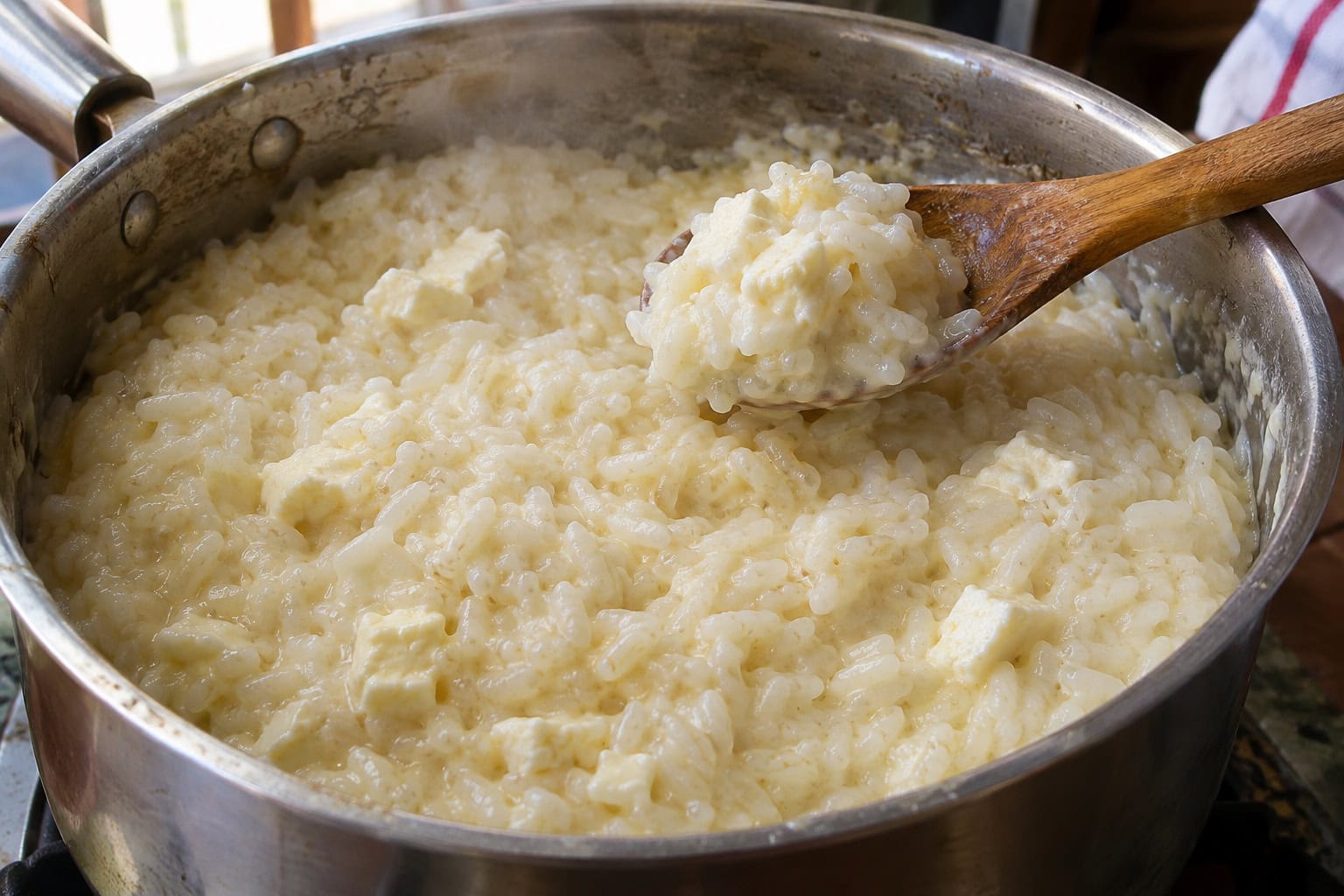
Cook chopped onion and garlic in butter or oil, add the rice and toast it for a minute, then add hot water and salt and simmer until almost all the water is absorbed. Pour in hot milk, stir in the cheese a handful at a time, and keep stirring until creamy. The full recipe, with quantities, is in the card below.
Tips for the Best Arroz con Queso
- Toast the rice. A minute in the butter with the onion gives the rice a nutty flavor and helps it hold its shape.
- Use hot milk. Cold milk stops the cooking and can make the cheese seize. Warm it in a small pot or the microwave first.
- Add cheese gradually. Stir over low heat until the mozzarella or Monterey Jack melts. Small softened queso fresco curds will remain; do not keep cooking to make them disappear.
- Don’t rinse the rice. The surface starch is what makes it creamy.
- Taste before salting. Queso fresco can be quite salty. Add the final salt after the cheese is in.
How to Serve It
Serve arroz con queso straight from the pot, sprinkled with chopped scallions or parsley. It’s perfect with grilled steak, chorizo and boiled yuca for a Bolivian churrasco, alongside silpancho, or with fried chicken. Put llajua, the Bolivian hot sauce, on the table.
Arroz con Queso Recipe
Arroz con Queso (Bolivian Cheese Rice)
Creamy Bolivian arroz con queso: rice cooked with onion and garlic, then finished with hot milk, queso fresco and mozzarella until soft and stretchy. The classic side for grilled meat, fried fish and pork.
Ingredients
For the rice
- 2 tablespoons butter or vegetable oil
- ½ medium onion, finely chopped
- 2 garlic cloves, minced
- 2 cups medium- or short-grain rice (Calrose, pearl or arborio)
- 4 cups hot water
- 1 teaspoon salt, plus more to taste
To finish
- 1 cup whole milk, heated
- 8 oz queso fresco, crumbled or coarsely grated
- 4 oz mozzarella or Monterey Jack, shredded
To serve
- 2 scallions or a few sprigs of parsley, chopped, for serving
Instructions
- Melt the butter in a large, heavy pot over medium heat. Cook the onion until soft, about 5 minutes. Add the garlic and cook 1 minute.
- Add the rice (don’t rinse it; its starch is what makes the dish creamy) and stir for 1 to 2 minutes to toast it.
- Add the hot water and salt, bring to a boil, then lower the heat, cover and simmer until most of the water is absorbed and the rice is just tender, 15 to 18 minutes.
- Meanwhile, warm the milk in a small saucepan or the microwave until steaming. Pour it into the rice and stir.
- Over low heat, add the queso fresco and mozzarella or Monterey Jack a handful at a time, stirring after each addition. Keep stirring for 3 to 5 minutes, until the melting cheese blends in and the rice is loose and creamy. The queso fresco will soften but keep small curds.
- Taste before adding more salt, since queso fresco can be salty. Sprinkle with scallions or parsley and serve right away.
Notes
Cheese: in Bolivia, cooks use fresh local cheese such as queso menonita or queso criollo. Queso fresco gives the right mild, salty flavor, and the mozzarella or Monterey Jack adds the stretch.
Rice: medium- or short-grain rice gives the creamiest result. Long-grain rice works but is less creamy.
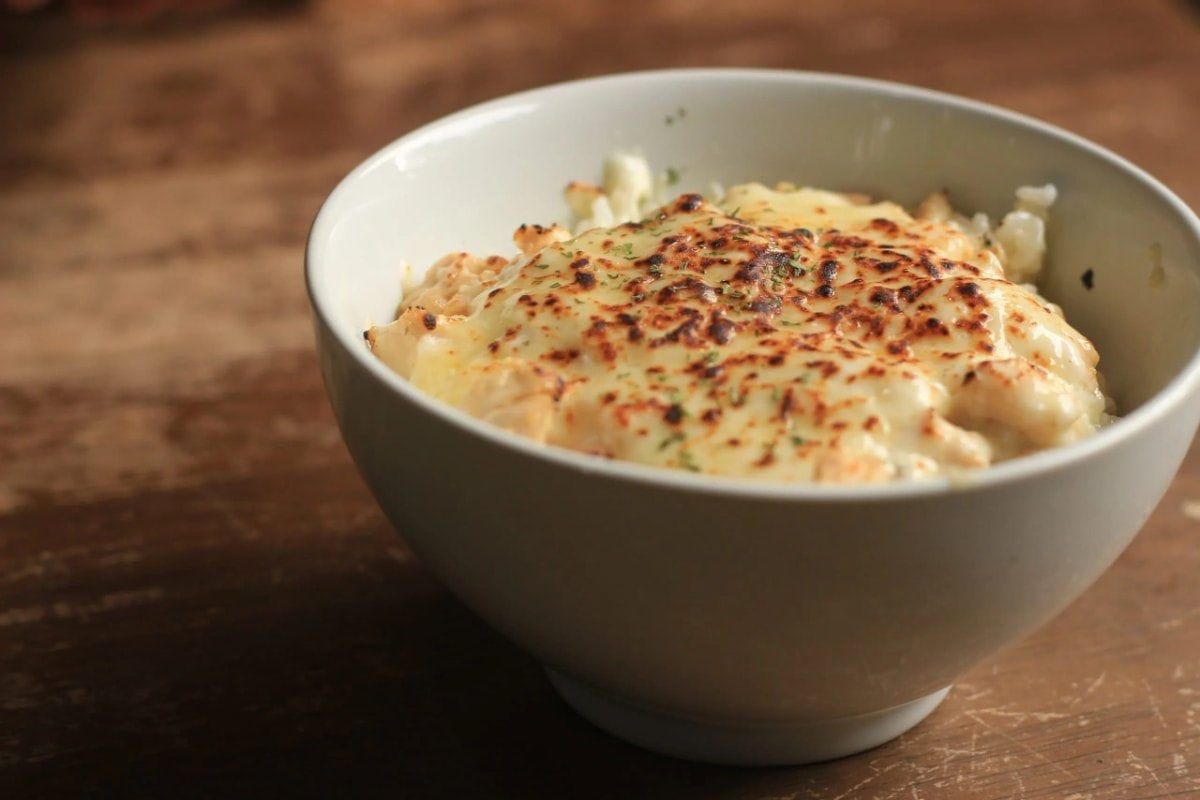
Baked version (arroz con queso al horno): spread the finished rice in a buttered baking dish, top with more cheese and bake at 375°F until golden, about 15 minutes.
Storage: refrigerate leftovers in a covered container for up to 3 days. The rice firms up as it cools.
Reheating: add a splash of milk and stir over low heat until creamy again.
Nutrition Information:
Yield: 6 Serving Size: 1 cupAmount Per Serving: Calories: 461Total Fat: 19gSaturated Fat: 11gTrans Fat: 0gUnsaturated Fat: 8gCholesterol: 55mgSodium: 850mgCarbohydrates: 53gFiber: 1gSugar: 3gProtein: 17g
Arroz con Queso FAQ
What is arroz con queso?
Rice with cheese. In Bolivia it’s a creamy side dish of rice finished with hot milk and fresh cheese.
What cheese do Bolivians use?
Fresh local cheese, such as queso menonita or queso criollo. In the US, a mix of queso fresco and mozzarella or Monterey Jack works well.
What is arroz con queso served with?
Grilled meat at a churrasco, fried chicken or fish, pork and other Bolivian main dishes.
Can I use long-grain rice?
Yes, but medium- or short-grain rice makes it creamier.
Can I make it ahead?
It’s best fresh. You can reheat it with a splash of milk, stirring over low heat until creamy again.
More Bolivian Food
Arroz con queso is one of the everyday dishes in our guide to Bolivian food. For another cheesy Santa Cruz favorite, try sonso de yuca, grilled cassava and cheese, or go big with pique macho, the beef and sausage platter from Cochabamba. For more, see our guide to Bolivian ingredients.
More Bolivian Foods
See all →
Jorge Garcia is the founder of AmigoFoods, where he has spent over 20 years helping readers discover authentic Latin American and Spanish cuisine. Raised in a Cuban-American household, Jorge learned to cook at the hands of his mother and grandmother, carrying forward generations of family recipes. That heritage, backed by his family’s four-generation history in the Latin food industry, inspired him to launch AmigoFoods in 2003. With more than 1,000 published articles on recipes, ingredients, and food culture, Jorge’s mission is simple: make authentic Latin cooking approachable for home cooks everywhere while honoring the traditions behind every dish.