
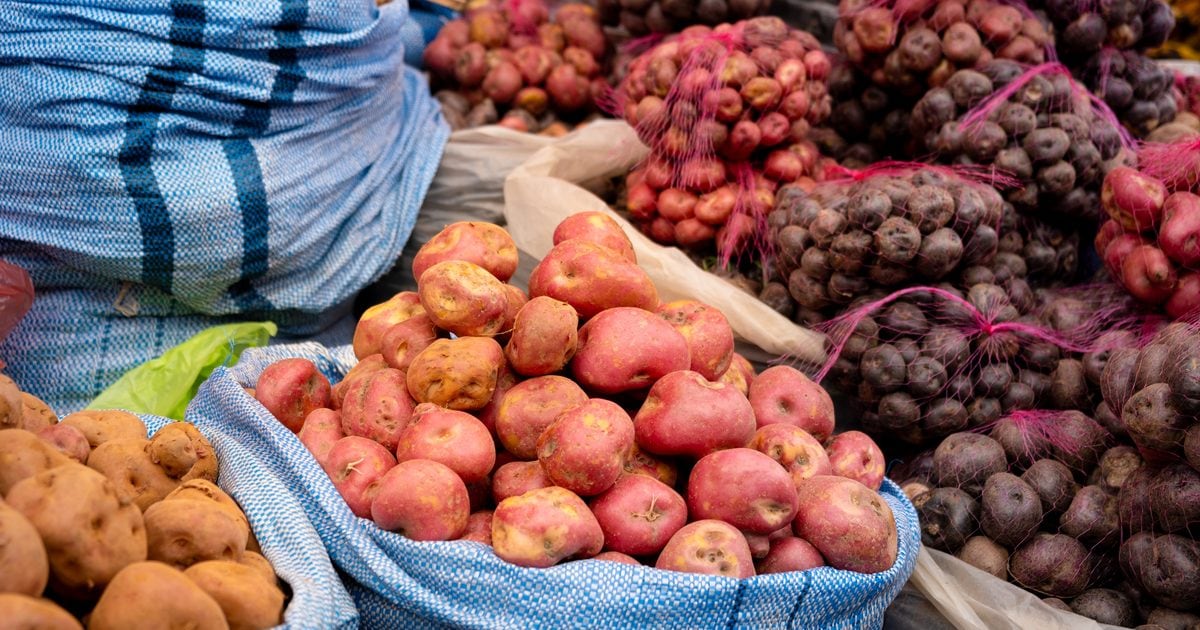
Bolivia cooks at two altitudes. Up on the Altiplano, above 12,000 feet, the pantry is potatoes, grain and dried meat, built to survive frost. Down in the lowlands around Santa Cruz, it’s rice, yuca, plantains and cheese.
What ties the two together is heat. Almost every Bolivian table has a bowl of llajua, and almost every Bolivian cook has opinions about how hot it should be.
Here are the fourteen ingredients behind a salteña, a bowl of sopa de maní and a plate of silpancho, and what each one is doing.
Bolivian Ingredients at a Glance
| Ingredient | What it is | Where it shows up |
|---|---|---|
| Locoto | Fleshy, fiery black-seeded pepper | Llajua, pique macho, soups |
| Ají colorado & amarillo | Ground dried chiles | Fricasé, sajta, picante stews |
| Quirquiña & huacataya | Pungent Andean herbs | Llajua, sauces, stews |
| Papas | Native potatoes, hundreds of kinds | Every meal |
| Chuño & tunta | Freeze-dried potatoes | Chairo, chuño phuti, fricasé |
| Oca & papaliza | Tangy and crisp Andean tubers | Stews and soups |
| Quinoa | Andean seed, quinua real | Soups, pesk’e, porridge |
| Maíz | Big-kernel Andean corn | Mote, humintas, api, chicha |
| Maní | Peanuts, ground raw | Sopa de maní, sauces |
| Charque | Salted, sun-dried meat | Charquekan, majadito |
| Arroz | Lowland rice | Majadito, silpancho |
| Yuca & queso | Cassava and fresh cheese | Cuñapé, sonso, pastel |
| Chancaca | Unrefined cane sugar | Syrups, sweets, hot drinks |
| Singani | High-altitude grape brandy | Chuflay |
Heat and Herbs
1. Locoto
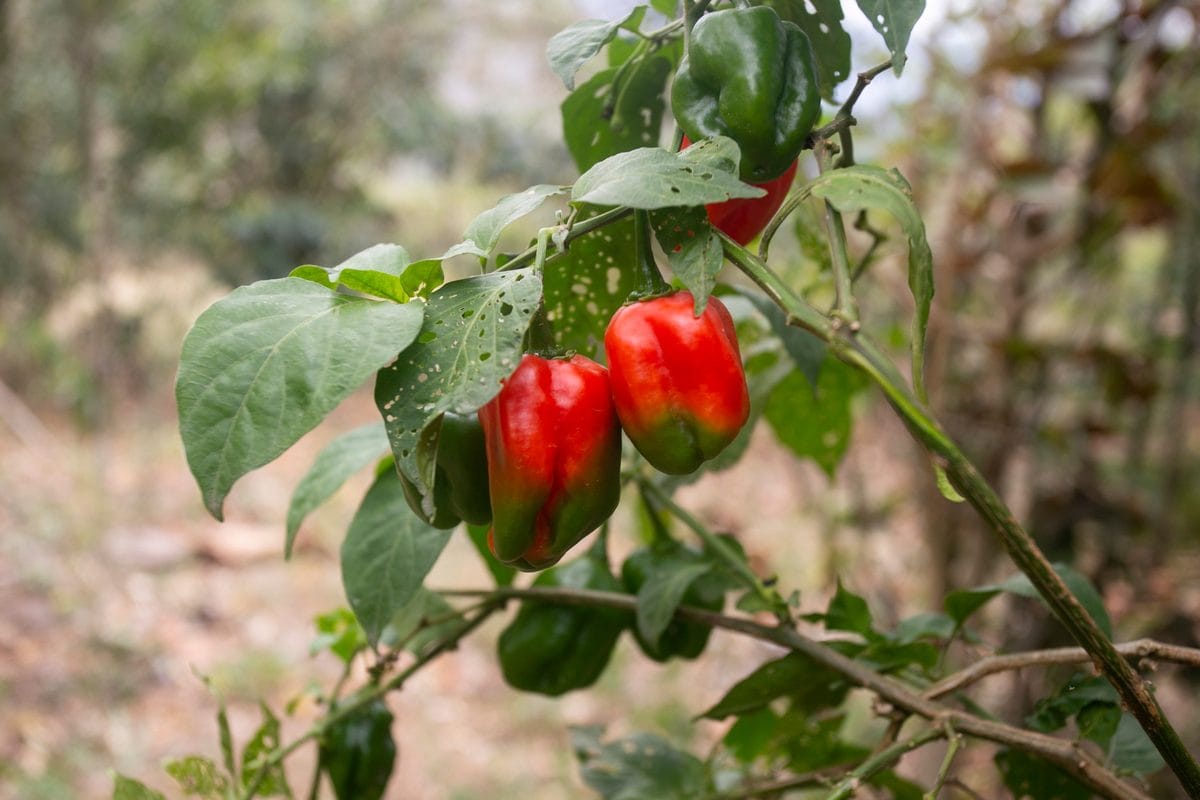
Locoto is Bolivia’s pepper, the same plant Peru calls rocoto. It’s Capsicum pubescens, the one chile species with black seeds and fuzzy leaves, and it grows happily in cool mountain valleys where other peppers struggle.
It looks like a small bell pepper and it’s nothing like one. The walls are thick and juicy and the heat is real. Bolivians chop it raw into llajua, slice it over pique macho and float it in soups.
Handle it with care: wear gloves if you’re cutting more than one, and pull out the black seeds and white ribs if you want less fire.
2. Ají Colorado and Ají Amarillo

Where locoto brings fresh heat, dried chiles bring color. Ground ají colorado, a dried red chile, turns sauces brick red. Ground ají amarillo turns them gold.
They’re the base of Bolivia’s picantes, the saucy, spicy stews like fricasé and sajta de pollo. Cooks usually buy them already ground, then fry the powder in oil with onion and garlic to wake it up. For more on the chile family, see our guide to Latin American chile peppers.
3. Quirquiña and Huacataya

These two herbs are why Bolivian llajua doesn’t taste like any other salsa.
Quirquiña (Porophyllum ruderale) is a leafy herb with a sharp, almost citrusy bite, somewhere between cilantro and arugula. It’s torn into llajua and eaten raw with grilled meat. Huacataya (Tagetes minuta, the huacatay of Peru) is Andean black mint, sweet and resinous, and it goes into sauces and stews.
Both are hard to find fresh outside South America. Cilantro plus a little arugula gets you closer to quirquiña than cilantro alone.
The Altiplano Pantry
4. Papas
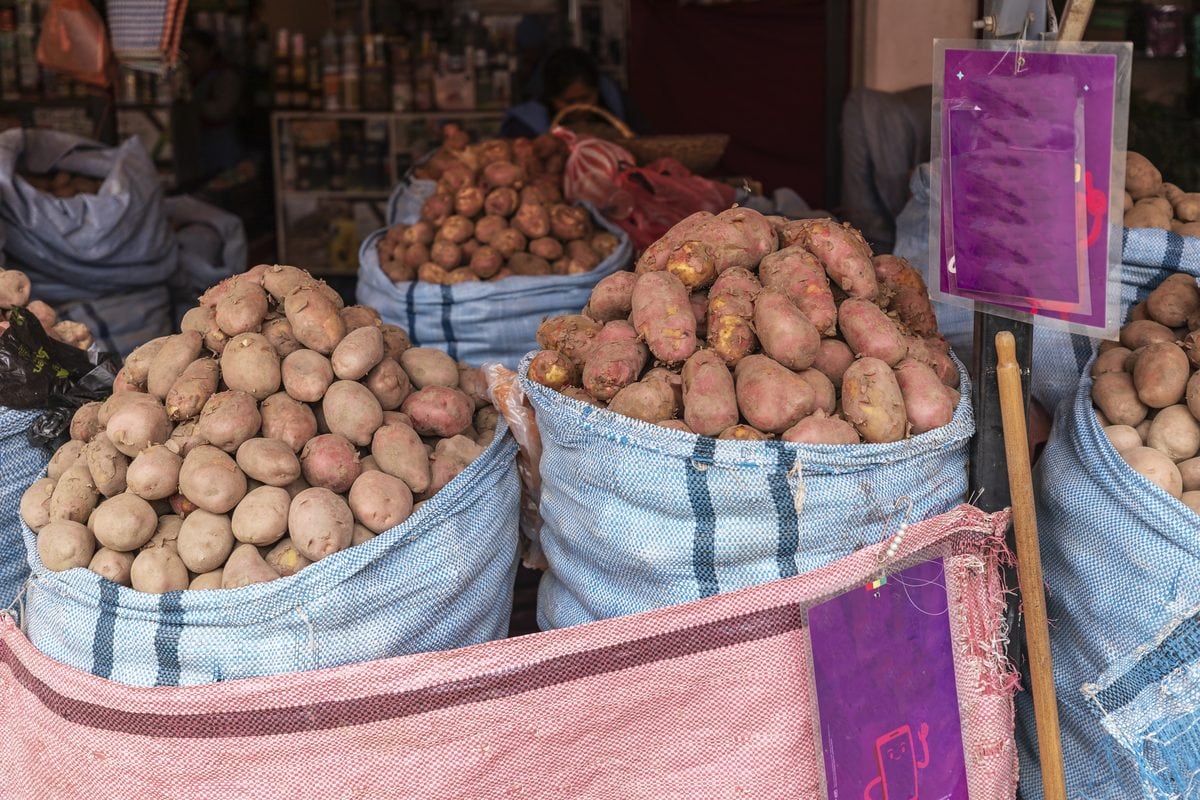
The potato was first domesticated in the Andes, in the region around Lake Titicaca that is now southern Peru and northwestern Bolivia, thousands of years ago. Bolivian farmers still grow hundreds of native varieties.
At a Bolivian market they come in sacks: waxy yellow ones, knobbly purple ones, tiny red ones for soup. Potatoes turn up in nearly every Bolivian meal, fried next to silpancho, boiled in soups and stuffed inside salteñas.
For the other Andean tubers on this list, see our guide to Latin American roots and tubers.
5. Chuño and Tunta

This is how the Altiplano made potatoes last. In June and July, farmers leave potatoes out on frozen ground overnight, dry them in the sun by day and stomp the water out by foot. The result is chuño: small, dark, very light, and good for years.
Tunta, or white chuño, goes one step further. The frozen potatoes are soaked and washed before drying, which turns them chalk-white and milder.
Both are soaked before cooking. They go into soups like chairo, get fried with egg and cheese as chuño phuti, and sit next to meat on a plate of fricasé.
6. Oca and Papaliza
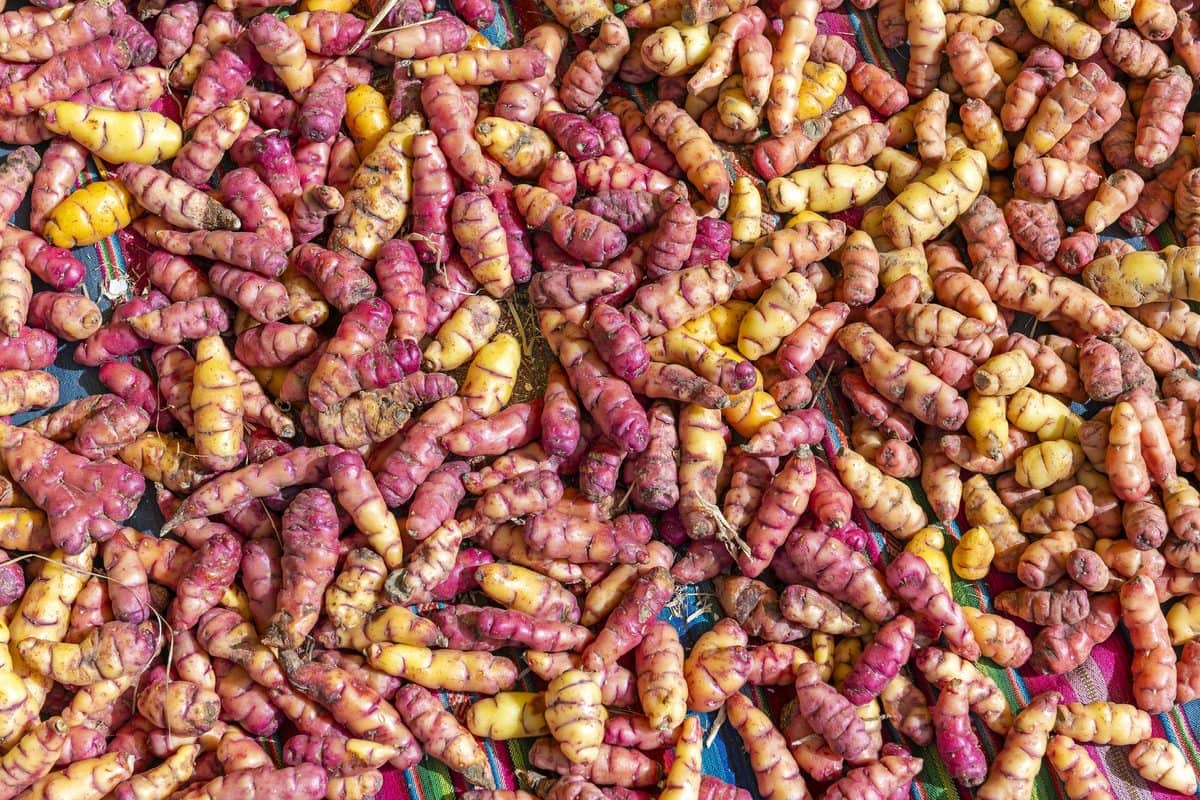
Two more tubers carry the highlands. Oca (Oxalis tuberosa) comes in pink, red and yellow and has a tangy, lemony bite when fresh. Left in the sun for a few days, it turns noticeably sweeter.
Papaliza, known in Peru as olluco, is small, glossy and speckled, with a crisp texture that holds its shape in stews. Both are boiled, stewed and added to soups alongside potatoes.
7. Quinoa
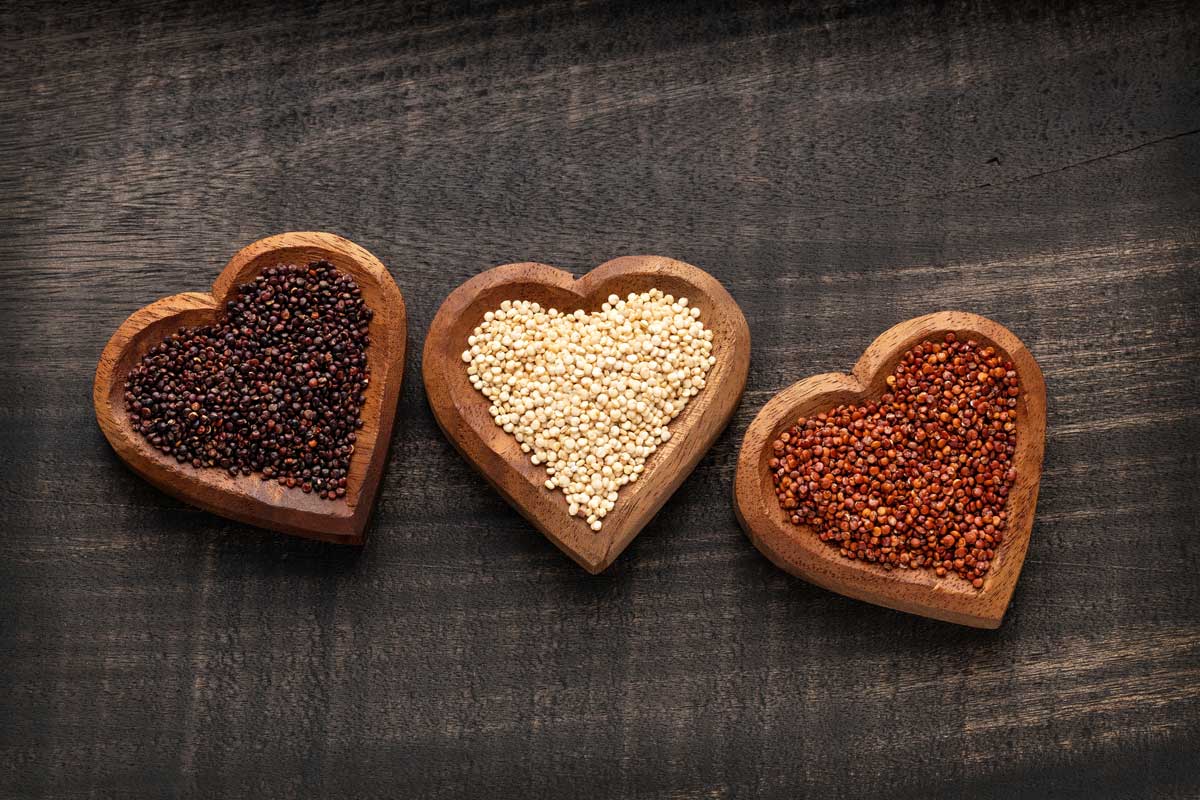
Quinoa was feeding the Andes long before it turned up in salad bowls abroad. Bolivia and Peru are the world’s leading growers.
The prized kind is quinua real, the large-grained quinoa grown on the harsh, salty plains of the southern Altiplano around the Salar de Uyuni. At home it’s cooked into soups, porridges and pesk’e, a savory quinoa mash with cheese.
8. Maíz

Corn in Bolivia is mostly the big-kernel Andean kind. Dried and boiled, it’s mote, a chewy side for grilled meat. Fresh, it’s choclo, eaten on the cob with cheese or ground into humintas.
Purple corn makes api, the thick, spiced hot drink Bolivians have with a fried cheese pastry for breakfast. Fermented corn makes chicha, the traditional corn beer of the Cochabamba valleys. Read more about maíz morado.
Meat, Peanuts and the Lowlands
9. Maní

The peanut is South American, and scientists trace its wild relatives to the lowlands east of the Andes, a region that includes southern Bolivia. Bolivians treat it as a cooking ingredient first and a snack second.
Ground raw peanuts thicken sopa de maní, Bolivia’s best-loved soup, made with beef, vegetables and a crown of thin fried potatoes. Peanuts also go into sauces for meat and into sweets.
10. Charque

Charque is meat salted and dried in the thin, cold air of the Altiplano, traditionally llama, now often beef. The word comes from Quechua, and it gave English the word jerky.
In Bolivia it’s soaked, boiled, pounded and fried crisp, then piled on boiled corn, potatoes and cheese as charquekan in Oruro. In the lowlands it’s shredded into majadito.
11. Arroz

Rice is the lowland staple. Around Santa Cruz and the Beni it replaces potatoes as the base of the meal, colored gold with urucú (annatto) and cooked with meat.
The classic is majadito: rice cooked with shredded dried beef or chicken, topped with a fried egg and served with fried plantain and yuca. Rice also goes on the side of silpancho in Cochabamba.
12. Yuca and Queso

In the lowlands, yuca and fresh cheese go together. Cassava starch and grated cheese become cuñapé, small chewy cheese rolls eaten with coffee in the afternoon. Mashed yuca and cheese, shaped around a stick and grilled, becomes sonso.
Fresh white cheese also fills the pastries of the Altiplano, from pastel to humintas. Find more in our guide to Bolivian breakfast foods and Bolivian street food.
Sweet and Strong
13. Chancaca

Chancaca is unrefined cane sugar, boiled down and set into hard blocks, the same product as panela. It tastes of molasses and caramel.
Bolivian cooks melt it into syrup for buñuelos, stir it into hot drinks and use it in many Bolivian desserts. Dark brown sugar with a spoonful of molasses is the closest stand-in.
14. Singani
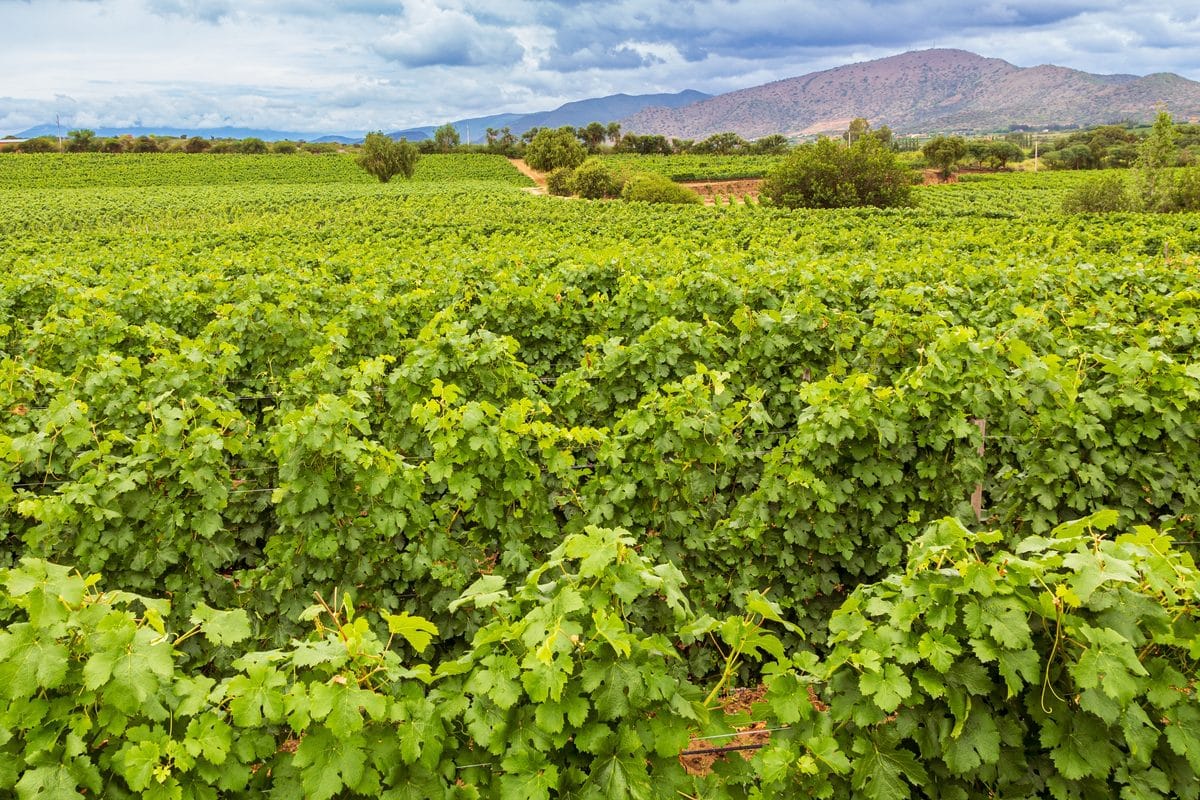
Singani is Bolivia’s national spirit, a clear brandy distilled only from Muscat of Alexandria grapes. By law the vines must grow at least 1,600 meters (about 5,250 feet) above sea level, and it has had a protected denomination of origin since 1992.
Most of it now comes from the valleys of Tarija. The classic way to drink it is a chuflay: singani topped with ginger ale or lemon-lime soda over ice.
Where to Buy Bolivian Ingredients
Outside Bolivia, start with a Latin or Andean grocery. Many carry frozen locoto (often labeled rocoto), jars of ají paste, bags of chuño, dried purple corn and quinoa.
Online, look for ají amarillo paste, chuño, purple corn and Bolivian quinoa. Singani is sold at larger liquor stores in the US.
Fresh quirquiña, papaliza and oca are the hardest to find. Grow them if you can, or cook without them. Everything else on this list travels well.
Frequently Asked Questions
What is the most important ingredient in Bolivian cooking?
The potato. It’s at nearly every meal, fresh or freeze-dried as chuño, and the Andes are where it was first grown.
Is Bolivian food spicy?
The dishes are usually medium, but the heat is always close. Llajua, a fresh salsa of tomato and locoto, is on nearly every table, and the picante stews are made with ground dried chile.
What is the difference between locoto and rocoto?
Nothing but the name. Both are Capsicum pubescens. Bolivians call it locoto and Peruvians call it rocoto.
What does chuño taste like?
Earthy and a little sour, with a firm, spongy texture. Tunta, the white version, is milder. Both soak up the broth they’re cooked in.
What is singani?
Bolivia’s national spirit: a clear brandy made only from Muscat of Alexandria grapes grown at high altitude. It’s usually mixed into a chuflay with ginger ale.
What Else Is Always There
A few more things live in a Bolivian kitchen. There’s urucú (annatto) for color, cumin and oregano for the stews, and a bottle of Paceña beer in the fridge. Plantains and fresh fruit come up from the lowlands every day.
Once your pantry is stocked, cook your way through our guide to traditional Bolivian food, try trancapecho browse the Bolivian ingredients hub or everything we’ve written about Bolivian food. To compare pantries, see our guides to Chilean ingredients, Argentine ingredients and Paraguayan ingredients, or explore ingredients by country.
More Bolivian Foods
See all →
Jorge Garcia is the founder of AmigoFoods, where he has spent over 20 years helping readers discover authentic Latin American and Spanish cuisine. Raised in a Cuban-American household, Jorge learned to cook at the hands of his mother and grandmother, carrying forward generations of family recipes. That heritage, backed by his family’s four-generation history in the Latin food industry, inspired him to launch AmigoFoods in 2003. With more than 1,000 published articles on recipes, ingredients, and food culture, Jorge’s mission is simple: make authentic Latin cooking approachable for home cooks everywhere while honoring the traditions behind every dish.