

Llajua is a fresh Bolivian hot sauce made with tomato, chile and herbs. This versatile Latin condiment takes about 10 minutes and adds a bright, spicy finish to grilled meats, soups, salteñas and pique macho.
Llajua at a Glance
What is Llajua
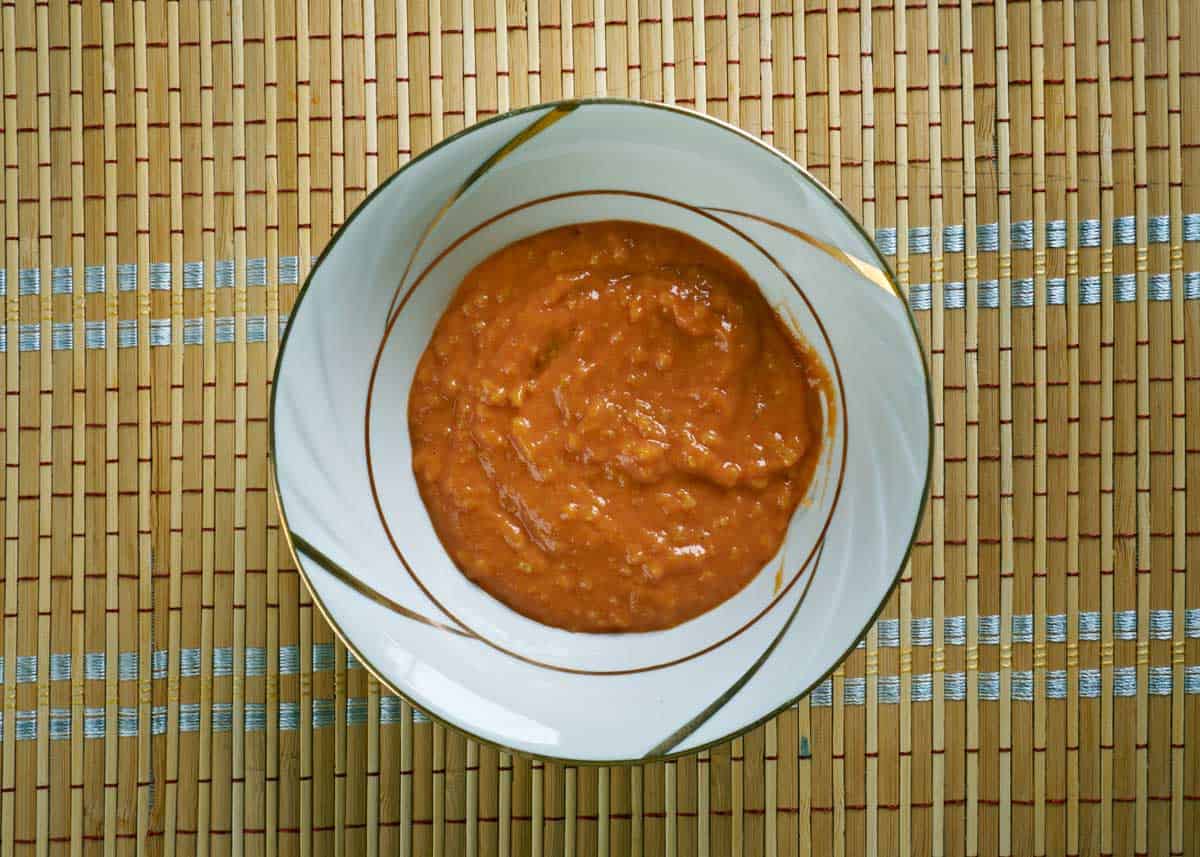
Llajua or Llajwa is a traditional sauce from Bolivia that adds a spicy and flavorful kick to a variety of dishes. This spicy Bolivian salsa is traditionally made with locoto peppers, and quillquiña (Bolivian coriander) leaves. It is often used as a condiment for Bolivian grilled meats, as a topping for salteñas or as sauce for the popular trancapecho sandwich.
History of Llajua Sauce
The origins of llajua sauce can be traced back to the indigenous Quechua people of Bolivia.
They have been using chili peppers and other spices in their cooking for centuries.
Over time, llajua sauce has evolved and adapted to different regional and cultural preferences in Bolivia.
Some versions of the Bolivian sauce use a variety of chili peppers, some spicier than others.
Tomato and fresh chile form the base of many versions; herbs and optional onion or garlic vary by household.
How to Make Llajua

This salsa is quite spicy, and most Bolivian families have a bowl or bottle on the table, for breakfast, lunch or dinner, so each person can add Llajua according to their preference.
If you don’t have locotos, use jalapeños instead. In place of the quillquiña, you can use cilantro.
Here’s how to make it:
Ingredients
- 1 large ripe tomato, roughly chopped
- 1/2 to 3 locoto peppers, to taste, or 1–2 large jalapeños as a substitute
- 1/4 cup loosely packed quillquiña leaves, or cilantro, roughly chopped
- Salt to taste
- 1 tablespoon finely diced yellow onion, optional
This makes roughly 1 cup, or eight two-tablespoon portions, in about 10 minutes. Locoto and jalapeño differ in flavor and heat, so start with less and adjust.
Directions
- Remove pepper stems. For less heat, remove seeds and inner ribs. Start with half a locoto or one jalapeño; the peppers are not equal in heat.
- Pulse tomato, herbs and the starting amount of pepper in a food processor until finely chopped. Alternatively, crush with a mortar and pestle.
- Taste a small amount and add more pepper gradually if desired. Add salt to taste.
- Transfer to a bowl and sprinkle with optional onion just before serving.
A mortar and pestle gives a traditional textured result; a food processor is convenient. Technique and substitutes were checked against Bolivian Cookbook and Lizet Bowen’s llajua.
How to Use Llajua Sauce

Llajua sauce is a versatile condiment that can be used in many popular Bolivian dishes.
Most notably, with the Bolivian empanada, salteñas and the popular silpancho sandwich dish, trancapecho.
Serve it as a fresh condiment alongside grilled beef, pork or chicken.
And can be used to flavor traditional Bolivian soups and stews.
Llajua is best freshly made. Refrigerate covered and use within 3 days; add optional onion only to the portion being served that day.
Llajua (and its peanut version) is also spooned over late-night anticuchos in Bolivia, the grilled beef heart skewers Bolivia shares with Peru. Try the Peruvian anticuchos recipe and serve it with llajua for a Bolivian-style plate.
Final Thoughts

Llajua is a traditional condiment from Bolivia that adds a spicy and flavorful kick to a variety of South American dishes.
The sauce is an important part of Bolivian cuisine, and can be found at many restaurants and street stalls throughout the country.
Llajua has a rich history and cultural significance in Bolivia, with roots in the indigenous Quechua people.
Whether you are a fan of spicy condiments or simply curious about the culinary traditions of Bolivia, llajua sauce is definitely worth trying!
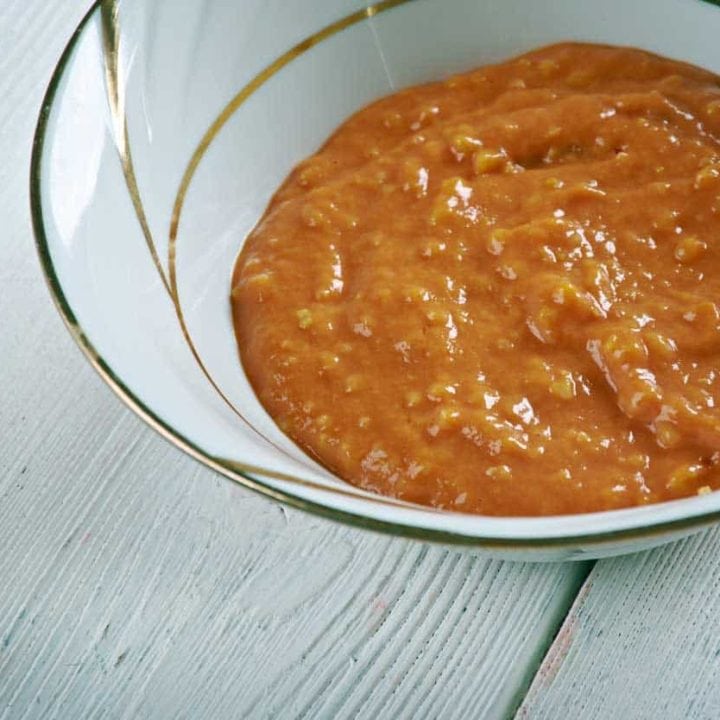
Llajua (Bolivian Fresh Hot Sauce)
A fresh Bolivian tomato-and-chile sauce with herbs and adjustable heat, for spooning over savory dishes.
Ingredients
- 1 large ripe tomato, roughly chopped
- 1/2 to 3 locoto peppers, to taste, or 1–2 large jalapeños as a substitute
- 1/4 cup loosely packed quillquiña leaves, or cilantro, roughly chopped
- Salt to taste
- 1 tablespoon finely diced yellow onion, optional
Instructions
- Remove pepper stems. For less heat, remove seeds and inner ribs. Start with half a locoto or one jalapeño; the peppers are not equal in heat.
- Pulse tomato, herbs and the starting amount of pepper in a food processor until finely chopped. Alternatively, crush with a mortar and pestle.
- Taste a small amount and add more pepper gradually if desired. Add salt to taste.
- Transfer to a bowl and sprinkle with optional onion just before serving.
Notes
About 10 minutes, with no cooking. Makes roughly 1 cup, or 8 two-tablespoon condiment portions; yield varies with tomato and pepper size.
Three locotos make a very hot version, so build up gradually. Jalapeño and cilantro give a useful substitute version with a different flavor. A finely chopped texture is traditional; blend smoother if preferred.
Technique and substitutions were compared with Bolivian Cookbook and Lizet Bowen’s llajua. Best fresh; refrigerate covered and use within 3 days. Add onion to the portion served that day.
More Bolivian Foods
See all →
Jorge Garcia is the founder of AmigoFoods, where he has spent over 20 years helping readers discover authentic Latin American and Spanish cuisine. Raised in a Cuban-American household, Jorge learned to cook at the hands of his mother and grandmother, carrying forward generations of family recipes. That heritage, backed by his family’s four-generation history in the Latin food industry, inspired him to launch AmigoFoods in 2003. With more than 1,000 published articles on recipes, ingredients, and food culture, Jorge’s mission is simple: make authentic Latin cooking approachable for home cooks everywhere while honoring the traditions behind every dish.