

Calentado turns cooked rice, beans and meat into a hearty Colombian breakfast with fresh aromatics and a fried egg. This version takes about 30 minutes using properly refrigerated leftovers, with avocado, arepas or plantains alongside if you like.
Calentado at a Glance
What is Calentado

Calentado is a traditional Colombian breakfast dish that transforms leftover rice, beans, and meat from the previous day’s meals into a delicious and hearty morning feast. The name “Calentado” literally means “heated” or “warmed up,” reflecting its origins as a way to repurpose and enjoy leftovers. Typically served with a fried egg on top and accompanied by arepas, avocado, or fried plantains, Calentado is celebrated for its rich flavors and comforting qualities. It embodies the Colombian spirit of resourcefulness and culinary tradition, offering a flavorful start to the day that is both satisfying and deeply rooted in the country’s culture.
Calentado History and Origins
The history of Calentado dates back to the colonial era in Colombia, when resourcefulness was a necessity in households.
Families would often prepare large meals for dinner, and the leftovers were cleverly repurposed to create a new dish for breakfast the next day.
This practice not only minimized food waste but also provided a hearty and nutritious start to the day, crucial for those who worked long hours in agriculture and labor-intensive jobs.
Calentado became a staple in Colombian cuisine, particularly in rural areas where resources were more limited and stretching meals was essential.
Over time, the dish evolved, incorporating regional variations and ingredients, reflecting the diverse culinary traditions of Colombia’s various regions.
Ingredients and Variations
Calentado’s core ingredients are simple yet versatile, making it a beloved Colombian dish that can easily adapt to what’s available in the kitchen.
The traditional base includes leftover rice and beans, typically red beans or black beans, mixed together to create a hearty foundation.
These staples are often combined with pieces of meat, such as beef, pork, or chicken, which add rich flavor and protein.
Aromatics like onions, garlic, and bell peppers are sautéed to enhance the dish’s depth, while spices like cumin and ground pepper provide an additional layer of warmth and complexity.
Beyond these basics, Calentado can vary significantly depending on regional preferences and available ingredients.
In Antioquia, for example, you might find Calentado featuring chorizo or ground beef, giving it a robust and savory character.
In coastal areas, seafood like shrimp or fish may be incorporated, offering a unique twist on the traditional recipe. Some versions of Calentado might include lentils or green peas for added texture and nutrition.
Toppings and accompaniments also play a crucial role in customizing Calentado.
How to Make Calentado

This recipe serves 4 and uses already cooked rice, beans and meat. Allow about 10 minutes prep and 20 minutes cooking.
Ingredients
- 2 cups cooked rice, promptly chilled and refrigerated
- 1 cup cooked red or black beans
- 1 cup cooked beef, pork or chicken, shredded or chopped
- 1 small onion, finely chopped
- 2 garlic cloves, minced
- 1 bell pepper, finely chopped
- 1 tablespoon vegetable oil, plus a little for frying eggs
- 1 teaspoon ground cumin
- Salt and black pepper, to taste
- 2–4 tablespoons water or bean cooking liquid, only if needed
- 4 eggs
- Optional: chopped cilantro, sliced avocado, prepared arepas or fried plantains, to serve
Method
- Heat 1 tablespoon oil in a large skillet over medium heat. Soften the onion and bell pepper for about 5–7 minutes. Stir in garlic and cumin for about 30 seconds.
- Add the cooked meat, rice and beans. Break up rice clumps gently and stir to combine. Add a splash of water or bean liquid if dry. Cook, stirring, for about 10–12 minutes or until steaming hot throughout and 165°F (74°C). Taste before adding salt and pepper because the leftovers may already be seasoned.
- Meanwhile, use a little oil in a separate skillet to fry the eggs until the whites and yolks are firm. If serving softer yolks, use pasteurized shell eggs.
- Divide the rice mixture among 4 plates and top each with an egg. Add cilantro or avocado if desired, and serve immediately with prepared arepas or plantains.
About 30 minutes total: 10 minutes prep and 20 minutes cooking. This assumes the rice, beans and meat are already cooked; preparing them or optional sides from scratch adds time.
Use leftovers that were cooled and refrigerated promptly. For this rice-based breakfast, use rice within 24 hours of cooking and reheat it only once. Make only the portions you intend to eat; reheating does not make poorly stored rice safe.
For a meatless version, replace the cooked meat with an extra cup of cooked beans. For a vegan version, also omit the eggs and use avocado or hogao as a topping. Recipes vary with the leftovers available; this version includes fresh onion and bell pepper.
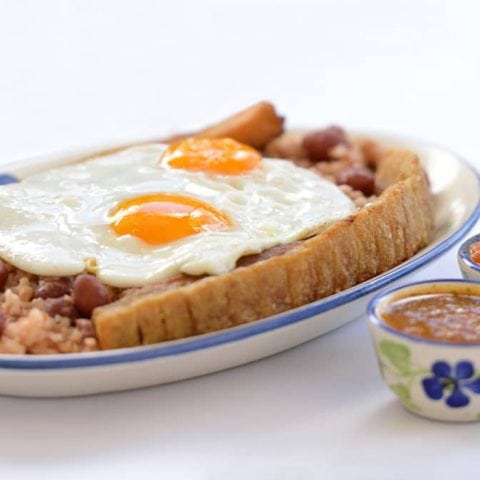
Calentado (Colombian Rice and Bean Breakfast)
A Colombian breakfast of reheated rice, beans and cooked meat with onion, bell pepper and a fried egg. Uses already cooked leftovers.
Ingredients
- 2 cups cooked rice, promptly chilled and refrigerated
- 1 cup cooked red or black beans
- 1 cup cooked beef, pork or chicken, shredded or chopped
- 1 small onion, finely chopped
- 2 garlic cloves, minced
- 1 bell pepper, finely chopped
- 1 tablespoon vegetable oil, plus a little for frying eggs
- 1 teaspoon ground cumin
- Salt and black pepper, to taste
- 2–4 tablespoons water or bean cooking liquid, only if needed
- 4 eggs
- Optional: chopped cilantro, sliced avocado, prepared arepas or fried plantains, to serve
Instructions
- Heat 1 tablespoon oil in a large skillet over medium heat. Soften the onion and bell pepper for about 5–7 minutes. Stir in garlic and cumin for about 30 seconds.
- Add the cooked meat, rice and beans. Break up rice clumps gently and stir to combine. Add a splash of water or bean liquid if dry. Cook, stirring, for about 10–12 minutes or until steaming hot throughout and 165°F (74°C). Taste before adding salt and pepper because the leftovers may already be seasoned.
- Meanwhile, use a little oil in a separate skillet to fry the eggs until the whites and yolks are firm. If serving softer yolks, use pasteurized shell eggs.
- Divide the rice mixture among 4 plates and top each with an egg. Add cilantro or avocado if desired, and serve immediately with prepared arepas or plantains.
Notes
About 30 minutes total: 10 minutes prep and 20 minutes cooking. This assumes the rice, beans and meat are already cooked; preparing them or optional sides from scratch adds time.
Use leftovers that were cooled and refrigerated promptly. For this rice-based breakfast, use rice within 24 hours of cooking and reheat it only once. Make only the portions you intend to eat; reheating does not make poorly stored rice safe.
For a meatless version, replace the cooked meat with an extra cup of cooked beans. For a vegan version, also omit the eggs and use avocado or hogao as a topping. Recipes vary with the leftovers available; this version includes fresh onion and bell pepper.
The Colombian Breakfast Dish Serving Suggestions

Calentado is a versatile dish that can be enjoyed in various ways, depending on your preferences and the time of day.
Here are some serving suggestions to elevate your Calentado experience:
- Traditional Breakfast Plate:
- Serve Calentado with a perfectly fried egg on top. Cook whites and yolks until firm, or use pasteurized shell eggs if you prefer a softer yolk.
- Accompany the dish with freshly made arepas, which provide a delightful contrast in texture and a slightly sweet flavor that complements the savory Calentado.
- Add a few slices of ripe avocado on the side for a creamy and refreshing element.
- Enhanced with Hogao:
- Spoon a generous amount of hogao (a traditional Colombian tomato and onion sauce) over the Calentado. This adds savory tomato and onion flavor; hogao is not necessarily spicy.
- Garnish with fresh cilantro or parsley for a burst of color and freshness.
- Hearty Brunch Option:
- Complete Meal:
- Serve Calentado with a side of mixed greens or a simple salad dressed with a light vinaigrette. This adds a healthy and refreshing component to the meal.
- For a more substantial meal, include a small portion of grilled or sautéed vegetables, such as bell peppers, zucchini, or mushrooms.
- Beverage Pairings:
- Calentado pairs beautifully with a strong cup of Colombian coffee, which enhances the rich flavors of the dish.
- For a lighter option, try serving it with freshly squeezed orange juice or a glass of refreshing agua de panela (a traditional Colombian drink made from unrefined cane sugar).
- Presentation Tips:
- Arrange the components of the dish artfully on the plate to make it visually appealing. Place the Calentado in the center, top it with the fried egg, and arrange the sides around it.
- Use colorful ingredients, like avocado and fresh herbs, to add vibrant touches to the presentation.
Calentado Nutritional Information
Nutrition varies with the cooked meat, beans, rice and toppings you use. The rice supplies starch, beans add fiber, and meat and eggs contribute protein. Oil, avocado and extra sides change the final serving.
A fixed calorie or nutrient figure would be misleading without specifying those ingredients. Use the amounts and labels for your own batch if you need an estimate.
Calentado in Colombian Culture
In many Colombian families, mornings start with the comforting aroma of Calentado being prepared in the kitchen.
It’s a dish that brings families together, offering a warm and satisfying meal that’s perfect for sharing.
The act of reheating and revitalizing leftovers not only highlights a respect for food but also serves as a metaphor for resilience and adaptability in Colombian culture.
Calentado’s significance extends to Colombian restaurants abroad, where it acts as a comforting reminder of home for expatriates and a delightful introduction to Colombian cuisine for newcomers.
By preserving this tradition, Colombian chefs and home cooks alike keep a vital part of their heritage alive, sharing the story of Calentado with the world.
Calentado Tips and Tricks

Creating the perfect Calentado involves more than just reheating leftovers.
Here are some tips and tricks to elevate your Calentado and ensure it’s both delicious and satisfying:
- Use Fresh Ingredients:
- While Calentado traditionally uses leftovers, adding fresh aromatics like onions, garlic, and bell peppers can enhance the dish’s flavor and make it more vibrant.
- Balance the Flavors:
- Ensure a good balance between the rice, beans, and meat. Too much of one ingredient can overpower the others. Aim for an even mix to create a harmonious dish.
- Spice it Up:
- Don’t be afraid to add spices and herbs. Cumin, paprika, and cilantro can add depth and complexity. Adjust the seasoning to your taste, adding salt and pepper gradually.
- Crisp the Rice:
- For added texture, allow the rice to crisp up slightly in the pan. Once you’ve combined all the ingredients, let the mixture cook undisturbed for a few minutes to form a crispy layer at the bottom.
- Incorporate Vegetables:
- Boost the nutritional value by incorporating extra vegetables. Diced tomatoes, spinach, or peas can add color and nutrients without overwhelming the traditional flavors.
- Use Leftover Meats Creatively:
- Experiment with different types of leftover meats. Shredded beef, grilled chicken, or even chorizo can add unique flavors and textures to your Calentado.
- Perfect the Fried Egg:
- A perfectly cooked fried egg can elevate your Calentado. Cook the egg until the white and yolk are firm; use pasteurized shell eggs if you choose a softer yolk.
- Add a Touch of Hogao:
- Prepare a quick hogao (Colombian tomato and onion sauce) to serve on top of your Calentado. This tangy and savory sauce adds an authentic touch and enhances the overall flavor.
- Serve with Traditional Sides:
- Complement your Calentado with traditional Colombian sides like arepas, fried plantains, or avocado slices. These sides add variety and make the meal more satisfying.
- Store and Reheat Properly:
- Start with properly chilled leftovers and reheat rice only once. Make the amount you plan to eat, rather than repeatedly cooling and reheating the finished calentado.
- Make it Healthier:
- For a lighter version, use brown rice instead of white rice and lean cuts of meat. You can also reduce the oil used for sautéing to lower the fat content.
- Experiment with Regional Variations:
- Try incorporating regional twists by using local ingredients. For example, seafood can be a great addition if you want to reflect the coastal flavors of Colombia.
Frequently Asked Questions (FAQs)
Q: What is Calentado? A: Calentado is a traditional Colombian breakfast dish made by reheating leftover rice, beans, and meat, often topped with a fried egg. It’s a hearty and flavorful meal that embodies Colombian culinary tradition and resourcefulness.
Q: Can I use any type of leftover meat for Calentado? A: Yes, you can use various types of leftover meats, such as beef, pork, chicken, or even chorizo. The choice of meat can add different flavors and textures to the dish.
Q: Is Calentado always served with a fried egg? A: While it’s common to top Calentado with a fried egg, it’s not mandatory. The egg adds richness and flavor, but you can skip it or substitute it with another topping like avocado or a dollop of hogao.
Q: Can I make Calentado with fresh ingredients instead of leftovers? A: Absolutely! While Calentado is traditionally made with leftovers, you can prepare fresh rice, beans, and meat specifically for this dish if you prefer.
Q: What are some popular variations of Calentado? A: Regional variations of Calentado include the use of different meats, such as chorizo in Antioquia or seafood in coastal regions. Additional vegetables like tomatoes, spinach, or peas can also be included for extra flavor and nutrition.
Q: How long can I store leftover Calentado? A: For this rice-based recipe, use promptly refrigerated rice within 24 hours and reheat only once. Cook only the portion you plan to eat; reheating does not reset the age of the leftovers.
Q: Is Calentado healthy? A: Calentado can be a balanced meal, providing a good mix of protein, carbohydrates, and healthy fats. To make it healthier, you can use brown rice, lean meats, and incorporate more vegetables.
Q: Can Calentado be frozen? A: Freeze promptly cooled rice and other cooked components before their first reheating if needed. Thaw in the refrigerator, reheat once until steaming hot throughout, and add freshly cooked eggs. Avoid freezing and reheating a batch already made from reheated leftovers.
Q: What are traditional sides served with Calentado? A: Common sides include arepas, fried plantains, avocado slices, and hogao. These accompaniments add variety and enhance the overall meal.
Q: What spices are typically used in Calentado? A: Common spices include cumin, salt, and pepper. You can also add paprika, cilantro, or other herbs and spices to suit your taste.
Q: Can I make a vegetarian version of Calentado? A: Yes, you can make a vegetarian version by omitting the meat and adding more beans or vegetables for protein and flavor. Consider using ingredients like lentils, tofu, or additional veggies.
Q: Is Calentado served only for breakfast? A: While Calentado is traditionally a breakfast dish, it can be enjoyed at any time of the day. Its hearty and satisfying nature makes it suitable for lunch or dinner as well.
Colombian Calentado: Experience the Comfort and Tradition

Calentado was born from the ingenious use of leftovers, embodies the spirit of resourcefulness and the rich cultural heritage of Colombia.
Whether you enjoy it with a fried egg on top, alongside crispy arepas, or with a tangy hogao sauce, Calentado offers a delightful and satisfying start to any day.
By trying your hand at making this hearty Colombian dish, you’re not just preparing a meal—you’re embracing a piece of Colombian culture and history.
Its versatility allows you to customize it to your taste, making it a perfect dish for any occasion.
Share this comforting and delicious breakfast with family and friends, and savor the taste of Colombia in every bite.
Recipe references: Erica Dinho’s calentado illustrates the traditional rice-and-bean base with hogao and accompaniments. For rice handling, see the Food Standards Agency’s cooking and reheating guidance.
More Colombian Foods
See all →
Jorge Garcia is the founder of AmigoFoods, where he has spent over 20 years helping readers discover authentic Latin American and Spanish cuisine. Raised in a Cuban-American household, Jorge learned to cook at the hands of his mother and grandmother, carrying forward generations of family recipes. That heritage, backed by his family’s four-generation history in the Latin food industry, inspired him to launch AmigoFoods in 2003. With more than 1,000 published articles on recipes, ingredients, and food culture, Jorge’s mission is simple: make authentic Latin cooking approachable for home cooks everywhere while honoring the traditions behind every dish.