

Chairo is a hearty soup of the Bolivian and Peruvian Altiplano, built around beef, chuño, grains and vegetables. This home version finishes with fresh mint and makes six warming bowls; soak the freeze-dried potatoes and wheat the night before.
Chairo at a Glance
What Is Chairo?
Chairo is a thick meat and vegetable soup from the Bolivian and Peruvian Altiplano, the high plateau around Lake Titicaca. Its roots go back to the Aymara, who have farmed potatoes and herded llamas there for centuries. The oldest versions were made with chalona or charque, dried lamb or llama meat, and chuño, two foods that kept for months in a place with a short growing season.
Today the soup usually starts with fresh beef, sometimes with a bit of lamb or dried meat added for depth. In La Paz it is so closely tied to the city that you’ll often see it called chairo paceño, and it’s a standard lunch soup in markets and family kitchens. In Puno it shows up at the same tables as other Altiplano classics.
Outside the Andes, “chairo” also means other things. In Mexico it’s political slang, and in Japanese it’s a shade of brown. This article is about the soup.
Chuño: The Ingredient That Makes Chairo

Chuño is potato that has been freeze-dried the ancient Andean way: left outside to freeze on frosty nights, thawed in the sun, then trampled to press out the water. Repeated over several days, this turns fresh potatoes into small, light, rock-hard pieces that keep for years.
Chuño negro (black chuño) is the kind used in chairo. Once soaked, peeled and crumbled into the soup, it softens and gives the broth an earthy, slightly tangy flavor and a thicker body that regular potatoes can’t match. You can buy dried chuño at Latin markets or find chuño on Amazon. White chuño, called tunta, is milder and used in other dishes.
What You Need
- Beef, such as chuck or brisket, cut into chunks. Some cooks add a little lamb.
- Dried meat (optional). A small piece of charque or beef jerky without seasoning adds a smoky, traditional flavor.
- Chuño negro, soaked overnight, peeled and crumbled.
- Peeled wheat (trigo pelado), soaked overnight. Hominy or pearl barley work as substitutes.
- Vegetables: potatoes, carrot, onion, garlic, fava beans, peas and corn kernels.
- Seasoning: cumin, dried oregano, salt, black pepper and a spoonful of red chili paste. Ají panca paste is a good stand-in for Bolivian ají colorado.
- Fresh mint (hierbabuena) to finish. It’s essential and gives chairo its fresh, herbal top note.
Plan ahead: soak the chuño and the wheat in separate bowls of water overnight. Change the chuño water once or twice so it loses its strong smell, then rub off the dark skins before crumbling.
How to Make Chairo
Simmer the beef and soaked wheat together, then add the chuño. In another pan, fry onion, garlic, chili paste, cumin and oregano until fragrant and stir that into the pot. Add the potatoes, carrot and peeled fava beans and cook until tender, then add the peas and corn near the end. Finish with mint just before serving. The full recipe, with quantities, is in the card below.
Tips for the Best Chairo
- Clean the chuño well. Soaking and changing the water removes bitterness. Rub off the dark peel, then break the chuño into small pieces by hand.
- Cook the wheat with the meat. Peeled wheat takes about an hour to soften, so add it early.
- Don’t skip the fried seasoning. Frying the onion, garlic, chili and spices in oil before adding them to the soup gives chairo its rich color and flavor.
- Add the mint at the end. Stir in chopped mint just before serving, or put it on top of each bowl, so it stays bright.
- Make it thick. Chairo should be spoonable, almost stew-like. If it gets too thick, add hot water; if it looks thin, simmer it uncovered for a few minutes.
How to Serve It
Serve chairo very hot in deep bowls, with mint on top and a bowl of llajua, Bolivia’s fresh tomato and locoto hot sauce, on the table. In La Paz some cooks top it with crispy pieces of pork crackling (chicharrón). It’s a full lunch on its own, often followed by a main course in a traditional Bolivian almuerzo. Start the day with salteñas, and you’ll have a classic La Paz menu.
Chairo Recipe
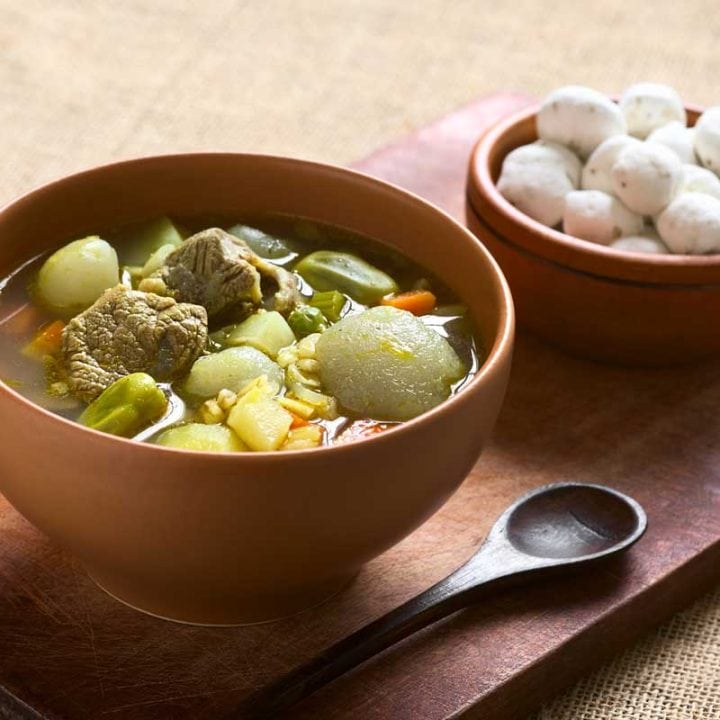
Chairo (Andean Beef and Chuño Soup)
A thick Altiplano soup from La Paz and Puno with beef, chuño, peeled wheat, potatoes, fava beans, peas and corn, seasoned with cumin and oregano and finished with fresh mint.
Ingredients
- 1 cup chuño negro (black freeze-dried potato), soaked overnight
- ½ cup peeled wheat (trigo pelado) or pearl barley, soaked overnight
- 1½ lb beef chuck or brisket, cut into 1½-inch pieces
- 2 oz charque or unseasoned beef jerky (optional)
- 12 cups water
- 2 teaspoons salt, plus more to taste
- 3 tablespoons vegetable oil
- 1 large onion, finely chopped
- 4 garlic cloves, minced
- 1 tablespoon ají panca or ají colorado paste
- 1 teaspoon ground cumin
- 1 teaspoon dried oregano
- ½ teaspoon black pepper
- 3 medium potatoes, peeled and cut into thin sticks
- 1 large carrot, cut into thin sticks
- 1 cup fresh or frozen fava beans, peeled
- ½ cup peas
- ½ cup corn kernels
- ¼ cup chopped fresh mint (hierbabuena)
- Llajua or other hot sauce, for serving
Instructions
- Drain the chuño, rub off the dark skins and crumble it into small pieces. Drain the wheat.
- Put the beef, the charque (if using) and the water in a large pot. Bring to a boil, skim off the foam, then add the wheat and 2 teaspoons salt. Simmer, partially covered, for 1 hour.
- Meanwhile, heat the oil in a skillet over medium heat. Add the onion and cook until soft, about 8 minutes. Add the garlic, chili paste, cumin, oregano and pepper and cook 2 minutes more.
- Add the chuño and the onion mixture to the pot and simmer for 20 minutes.
- Add the potatoes, carrot and peeled fava beans and simmer until tender, about 15 minutes or as long as the beans need. Add the peas and corn and cook 5 to 8 minutes more. Check that the meat, wheat and beans are all tender before serving. The soup should be thick; add hot water if needed.
- Taste for salt, stir in half the mint and serve in deep bowls topped with the rest of the mint, with llajua on the side.
Notes
Chuño: change the soaking water once or twice to remove its strong smell. Black chuño (chuño negro) is traditional; white chuño (tunta) is milder.
Substitutes: use soaked pearl barley if you can’t find peeled wheat. Cooked, drained hominy is another option; add it near the end just to heat through rather than treating dried hominy like soaked wheat.
Timing: The 2 hour 30 minute estimate excludes overnight soaking of the chuño and wheat. Prepare the onion seasoning while the meat and wheat simmer. Tougher meat and higher elevations may require a longer cook; check for tenderness.
Chairo FAQ
What is chairo made of?
Chairo is made with beef or lamb, chuño (freeze-dried potato), peeled wheat, potatoes, carrots, fava beans, peas and corn, seasoned with cumin, oregano and chili paste and finished with fresh mint.
Is chairo Bolivian or Peruvian?
Both. It comes from the Aymara people of the Altiplano and is most famous in La Paz, Bolivia, but it is also a traditional soup in Puno, Peru, on the other side of Lake Titicaca.
What does chuño taste like?
Earthy and a little sour, with a firm, chewy texture after soaking. It also thickens the soup.
Can I make chairo without chuño?
You can make a similar soup with extra potatoes, but it won’t taste like chairo. Chuño keeps for years, so a bag is worth buying.
Is chairo spicy?
Not very. It gets mild warmth from chili paste, and most of the heat comes from the llajua served on the side.
More Andean Soups
Chairo is one of the classics in our guides to Bolivian food and Peruvian soups and stews. If you like it, try caldo de gallina, Peru’s golden hen soup, or fricasé, the spicy pork stew Bolivians eat on weekend mornings. For more on Andean ingredients, see our guide to Bolivian ingredients.
More Bolivian Foods
See all →
Jorge Garcia is the founder of AmigoFoods, where he has spent over 20 years helping readers discover authentic Latin American and Spanish cuisine. Raised in a Cuban-American household, Jorge learned to cook at the hands of his mother and grandmother, carrying forward generations of family recipes. That heritage, backed by his family’s four-generation history in the Latin food industry, inspired him to launch AmigoFoods in 2003. With more than 1,000 published articles on recipes, ingredients, and food culture, Jorge’s mission is simple: make authentic Latin cooking approachable for home cooks everywhere while honoring the traditions behind every dish.