

Chamoy brings sweet, sour, salty and spicy flavors to fruit, snacks and mangonadas. This homemade apricot version simmers dried fruit until soft, then blends it with lime and mild chile for a pourable sauce you can adjust to taste.
Chamoy at a Glance
What is Chamoy

Chamoy is a popular condiment from Mexico that is typically made from pickled fruit, chili peppers, lime and salt. It has a unique flavor profile that’s simultaneously sweet, salty, sour and spicy. It’s often made using apricots, plums or mangoes as the fruit base, although other fruits can also be used.
Chamoy comes in various forms, including as a liquid, a paste or a powder.
It is commonly used as a dip for fresh fruit and vegetables, a glaze for meat, or a flavoring for snacks like chips.
It’s also frequently found in Mexican candies and is a key ingredient in the popular “mangonada” drink, a blended frozen beverage made with mangoes, and often topped with tajin and tamarind-coated straws.
Its unique flavor combination makes chamoy a versatile condiment that adds an exciting twist to many Mexican dishes and drinks.
History and Cultural Significance
Chamoy reflects Mexico’s adaptation of Asian salted and preserved-fruit traditions. Accounts differ on the route: some emphasize Chinese preserved fruit, while chef Rick Bayless describes a connection with Japanese umeboshi. A single definitive railroad-era origin is harder to establish.
In Mexico, chile and sweet-sour fruit flavors became part of a familiar condiment culture. Today chamoy appears on fresh fruit from street vendors, in candy and in chilled drinks. It’s the red drizzle on top of Mexican fruit cups.
What is Chamoy Made Of
Chamoy is a masterful blend of simple ingredients that together, create an extraordinary flavor experience.
Here is a closer look at the main components:
Key Ingredients of Chamoy
- Fruit: Chamoy is traditionally made from pickled fruit. The most common fruits used are apricots, plums, or mangoes. The fruit gives chamoy its sweet and tangy base.
- Chili Peppers: To add the characteristic heat, chili peppers are used. The type of chili can vary, but typically, a milder chili is used to prevent overpowering the other flavors.
- Lime Juice: Lime juice provides a citric acid component to chamoy, enhancing its tanginess and balancing out the sweetness of the fruit.
- Salt: Salt is used to enhance all the other flavors and to contribute to the pickling process.
The Process of Making Chamoy
Making chamoy involves a few steps.
Some versions begin with salted or preserved fruit. Quick homemade versions instead soften dried fruit in hot water and blend it with chile, citrus, sugar and salt. The recipe below uses that cooked approach, without fermentation.
Although traditional chamoy is a homemade affair, these days you can also find commercially made chamoy.
These versions might include additional ingredients like preservatives or food coloring, but the base components remain the same.
Whether homemade or store-bought, the combination of sweet, salty, sour and spicy flavors in chamoy is truly a delight for the taste buds.
Varieties and Uses

Varieties of Chamoy
Chamoy comes in several different forms, each with its own unique characteristics. These include:
- Chamoy Sauce: This is the most common form of chamoy and has a thin, syrup-like consistency. The Mexican sauce is often used as a topping or a dip.
- Chamoy Paste: This version is thicker and more concentrated. It’s typically used in recipes where a stronger chamoy flavor is desired.
- Chamoy Powder: This is a dried and powdered form of chamoy. It’s often used to coat fruit or candy, or as a seasoning for snacks.
- Chamoy Candy: Chamoy flavors are infused in various types of Mexican desserts, including gummies, lollipops, and hard candies. Some candies also have a liquid chamoy filling.
Uses of Chamoy

Chamoy’s unique blend of flavors makes it extremely versatile.
Here are some common ways chamoy is used in Mexican cuisine:
- Topping for Fresh Fruit: Chamoy sauce is often drizzled over fresh fruit like mango, pineapple, and watermelon. The tangy and spicy flavor of the Mexican chamoy sauce enhances the natural sweetness of the fruit.
- Ingredient in Beverages: Chamoy is used in various Mexican beverages, both alcoholic and non-alcoholic. It’s a key ingredient in the popular “mangonada” drink, where it’s blended with mangoes and ice, and often topped with tamarind-coated straws.
- Coating for Candy: Chamoy is used to flavor or coat a variety of candies. The tangy and spicy chamoy perfectly complements the sweet candy.
- Glaze for Meats: Chamoy paste can be used as a glaze for meats like chicken and pork. The sweetness of the fruit and the heat of the chili in the chamoy balance the savory flavors of the meat.
- Seasoning for Snacks: Chamoy powder is often used to season snacks like popcorn, chips, and nuts, adding a spicy and tangy kick.
Chamoy is more than just a condiment; it’s a way to add excitement to a dish, making it a beloved part of Mexican cuisine.
Chamoy also rims drinks: dip the glass in chamoy, then Tajín, and a michelada becomes a sweet-sour chamoyada.
Making Chamoy at Home

This simple cooked apricot sauce is one home-style variation. It uses no hibiscus or food coloring, so its color differs from many bright-red bottled sauces.
Ingredients
- 1 cup (about 170 g/6 oz) dried apricots
- 1 1/2 cups water, plus a little more to thin if needed
- 1/2 cup granulated sugar
- 1/4 cup fresh lime juice, plus more to taste
- 2 tablespoons pure mild ground chile, such as guajillo or ancho (not a cumin-based chili seasoning blend)
- 1 teaspoon salt, or to taste
Method
- Put the dried apricots, water and sugar in a medium saucepan. Bring to a boil, then lower the heat and simmer gently, partly covered, for about 25–30 minutes until the apricots are very soft. Stir occasionally; add a splash of water if the pan gets too dry. No overnight soak is needed.
- Remove from the heat and cool for about 15 minutes, or until safe for your blender. Do not seal hot liquid in a blender or use a personal blender that is not rated for warm mixtures.
- Blend the softened apricots and their cooking liquid with the lime juice, ground chile and salt until smooth. Taste and adjust the lime, chile or salt a little at a time. Add water by the tablespoon if needed for a pourable sauce.
- For a thicker sauce, return it to the saucepan and simmer gently for a few additional minutes, stirring to avoid scorching; cool again before storing. Transfer to clean containers and refrigerate promptly. Serve as a drizzle over fruit or in a mangonada.
Yield, adjustments and storage
Makes approximately 2 cups (32 one-tablespoon portions); the exact yield depends on evaporation and thinning. Plan 50 minutes: 5 minutes prep, 30 minutes cooking and 15 minutes cooling. Additional reduction or chilling takes longer.
This is a quick cooked apricot version, not a fermented or canned preserve. It may be orange-brown rather than the bright red of commercial chamoy or versions containing hibiscus. Pure mild chile powder differs from very hot cayenne and from American chili seasoning; start with less if your powder is hot.
Refrigerate in a clean covered container and use within 1 week, or freeze in small portions for longer storage. Do not store at room temperature or use this as a canning recipe. Sugar, salt and lime added to taste do not establish a tested shelf life.
You can experiment with dried plums or mango, adjusting the water, sweetness and acidity because each fruit behaves differently.
Recipe references: Compared with Rick Bayless’s chamoy and Isabel Orozco-Moore’s cooked-fruit version. This simplified apricot variation keeps its own ingredients; the review was source-based, not kitchen testing.
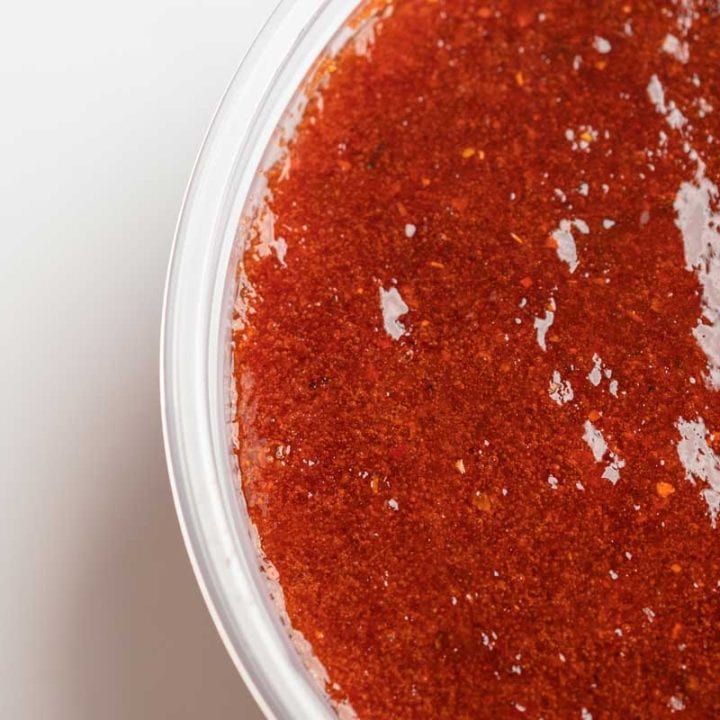
Homemade Apricot Chamoy
A sweet, sour, salty and spicy apricot sauce for fruit, snacks and mangonadas, made without an overnight soak.
Ingredients
- 1 cup (about 170 g/6 oz) dried apricots
- 1 1/2 cups water, plus a little more to thin if needed
- 1/2 cup granulated sugar
- 1/4 cup fresh lime juice, plus more to taste
- 2 tablespoons pure mild ground chile, such as guajillo or ancho (not a cumin-based chili seasoning blend)
- 1 teaspoon salt, or to taste
Instructions
- Put the dried apricots, water and sugar in a medium saucepan. Bring to a boil, then lower the heat and simmer gently, partly covered, for about 25–30 minutes until the apricots are very soft. Stir occasionally; add a splash of water if the pan gets too dry. No overnight soak is needed.
- Remove from the heat and cool for about 15 minutes, or until safe for your blender. Do not seal hot liquid in a blender or use a personal blender that is not rated for warm mixtures.
- Blend the softened apricots and their cooking liquid with the lime juice, ground chile and salt until smooth. Taste and adjust the lime, chile or salt a little at a time. Add water by the tablespoon if needed for a pourable sauce.
- For a thicker sauce, return it to the saucepan and simmer gently for a few additional minutes, stirring to avoid scorching; cool again before storing. Transfer to clean containers and refrigerate promptly. Serve as a drizzle over fruit or in a mangonada.
Notes
Makes approximately 2 cups (32 one-tablespoon portions); the exact yield depends on evaporation and thinning. Plan 50 minutes: 5 minutes prep, 30 minutes cooking and 15 minutes cooling. Additional reduction or chilling takes longer.
This is a quick cooked apricot version, not a fermented or canned preserve. It may be orange-brown rather than the bright red of commercial chamoy or versions containing hibiscus. Pure mild chile powder differs from very hot cayenne and from American chili seasoning; start with less if your powder is hot.
Refrigerate in a clean covered container and use within 1 week, or freeze in small portions for longer storage. Do not store at room temperature or use this as a canning recipe. Sugar, salt and lime added to taste do not establish a tested shelf life.
Tasting Chamoy: What to Expect

Flavor Profile of Chamoy
Chamoy offers a unique flavor adventure that might be different from anything you’ve tasted before.
Its hallmark is the blend of sweet, sour, salty, and spicy flavors:
- Sweet: Originating from the fruit base, usually apricots, plums, or mangoes.
- Sour: The tanginess comes from the addition of lime juice.
- Salty: Salt is used to enhance the other flavors and contribute to the pickling process.
- Spicy: Chili peppers give chamoy its heat, adding a touch of spice that makes it so distinctive.
These flavors meld together to create a complex and balanced sauce that is incredibly versatile and can add depth to a wide range of dishes.
First-Time Tasters
For first-time tasters, chamoy can be a surprising experience.
The initial sweetness quickly gives way to a tangy sourness, followed by a mild salty flavor, and ends with a subtle yet lingering spicy kick.
Dishes to Try Chamoy With

If you’re trying chamoy for the first time, there are a few classic Mexican dishes that truly showcase its unique flavor:
- Mangonada: This is a Mexican fruit drink made with mangoes, chamoy sauce, chili powder, and often topped with a tamarind-coated straw.
- Fresh Fruit: Chamoy drizzled over fresh fruit like mango, watermelon, or pineapple is a refreshing and popular snack.
- Mexican Candy: Various candies use chamoy as a coating or filling, providing a sweet and tangy experience.
Remember, the true joy of chamoy lies in its versatility. Don’t be afraid to experiment and try it with different foods.
You might just discover your new favorite pairing!
Health Benefits and Concerns
Chamoy is a condiment, so portion size and the particular recipe matter more than broad health claims. This version contains added sugar and salt; bottled products vary, so compare their labels if those are important to you.
The cooked apricot recipe here is not fermented and should not be described as probiotic. Nor does a small serving establish a meaningful vitamin-C, weight-loss or pain-relief benefit. Enjoy it for flavor alongside fruit or other foods.
Conclusion: Chamoy – A Flavorful Journey

The magic of chamoy resides not just in its irresistible combination of flavors, but also in the rich cultural story it tells.
Its global influence and popularity are a testament to the universal appeal of its balanced sweetness, sourness, saltiness and spiciness.
Whether it’s drizzled over fresh fruit, stirred into a refreshing drink, or used as a secret ingredient in a favorite dish, chamoy is a flavor journey that will captivate your taste buds.
More Mexican Foods
See all →
Jorge Garcia is the founder of AmigoFoods, where he has spent over 20 years helping readers discover authentic Latin American and Spanish cuisine. Raised in a Cuban-American household, Jorge learned to cook at the hands of his mother and grandmother, carrying forward generations of family recipes. That heritage, backed by his family’s four-generation history in the Latin food industry, inspired him to launch AmigoFoods in 2003. With more than 1,000 published articles on recipes, ingredients, and food culture, Jorge’s mission is simple: make authentic Latin cooking approachable for home cooks everywhere while honoring the traditions behind every dish.