

On this page
A michelada is Mexico’s seasoned beer cocktail: ice-cold lager poured over fresh lime juice, salsas and a pinch of salt in a chile-rimmed glass. In the US it usually comes red, with Clamato or tomato juice. In much of Mexico it is built on lime, Worcestershire, Maggi and hot sauce alone. This is the classic red michelada, made one beer per glass the way Mexican bars serve it, plus the regional styles and a batch mix for a crowd.
Michelada at a Glance
What Is a Michelada?
A michelada is a Mexican cerveza preparada (prepared beer): a light lager mixed with fresh lime juice, savory sauces, hot sauce and salt, served cold in a salt- or chile-rimmed glass. Many versions add Clamato or tomato juice.
It is pronounced mee-cheh-LAH-dah. The name comes from chela, Mexican slang for beer, and the drink sits somewhere between a beer with lime and a cocktail. The beer is still the star. Everything else is there to make it saltier, sourer and more refreshing in the heat.
The flavor is bright and savory, closer to a squeeze of lime over tacos than to anything sweet. Lime brings the acid, Worcestershire and Maggi bring a meaty depth, hot sauce brings heat and vinegar, and the salt on the rim makes every sip taste colder. With Clamato, it turns rounder and a little briny.

Micheladas are a daytime drink in Mexico: at the beach, at a Sunday comida, alongside seafood or with a bowl of menudo the morning after. They are also one of the most popular Mexican drinks in the US, where bars and canned versions have made the red, Clamato style the default.
Michelada vs. Chelada vs. Bloody Mary
These names get mixed up constantly, even in Mexico, because they change from region to region. In most of the country a chelada is just beer with lime and salt, and a michelada adds the sauces. In Mexico City the names can flip, and a plain lime-and-salt beer is often what arrives when you order a michelada. Here is how they usually compare:
| Drink | Base | Seasonings | Tomato or Clamato? | Rim |
|---|---|---|---|---|
| Chelada | Lager + lime juice | Salt | No | Salt |
| Michelada | Lager + lime juice | Worcestershire, Maggi, hot sauce, salt | Optional | Salt or chile salt |
| Michelada cubana | Lager (often dark) + lime | Worcestershire, Maggi, hot sauce, chile powder | No | Salt or chile salt |
| Michelada con Clamato | Lager + lime + Clamato | Worcestershire, Maggi, hot sauce | Yes | Tajín or chile salt |
| Bloody Mary | Vodka + tomato juice | Worcestershire, horseradish, celery salt, hot sauce | Yes, mostly tomato | Celery salt (optional) |
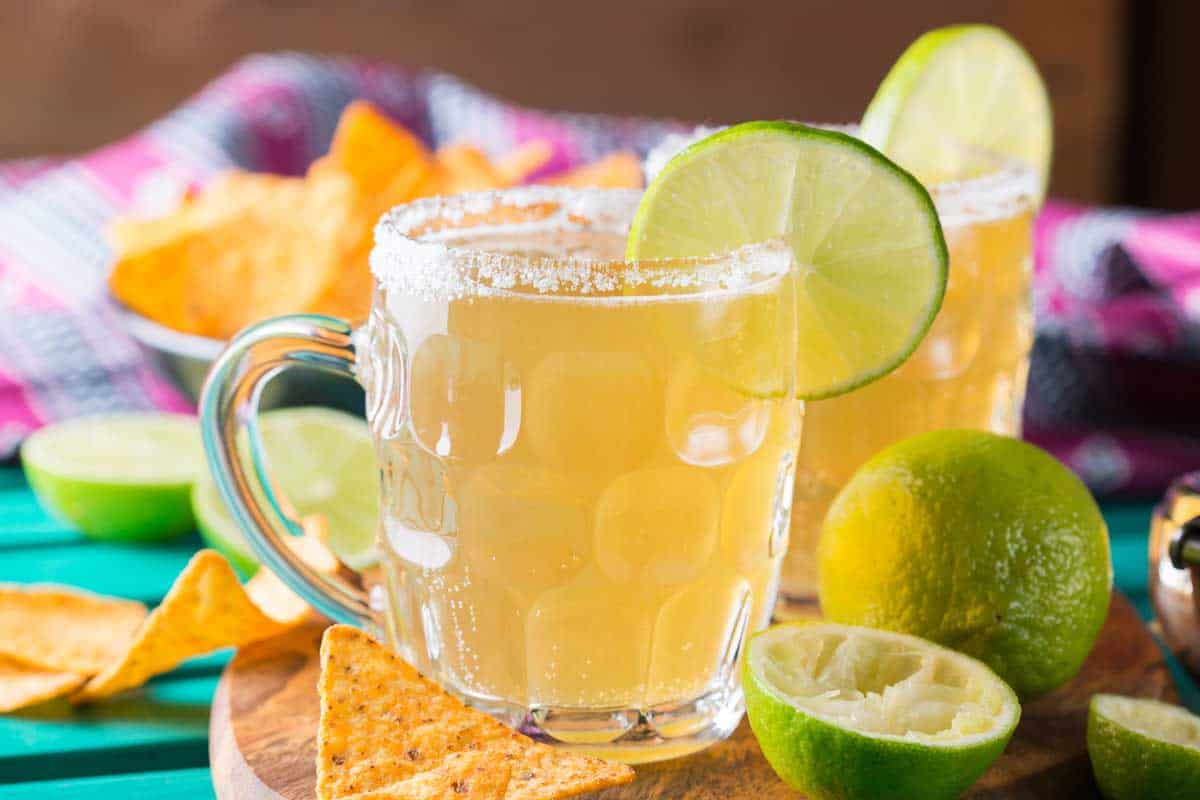
So is a michelada a beer Bloody Mary? Only the red US style comes close. A michelada uses much less juice, it is fizzy, and it is far lower in alcohol, since the only alcohol is the beer. A 12-ounce lager stretched with about 4 ounces of mix lands around 3% ABV.
Michelada Ingredients (and What Each One Does)
A good michelada is a balance of four things: acid, salt, savory depth and heat. Each ingredient covers one of them, so if your drink tastes flat, this is where to look.
How to Make a Michelada
This makes one drink with one 12-ounce beer, which is how micheladas are served in Mexico: you pour most of the beer into the seasoned glass and keep the bottle beside you to top it up as you drink. Exact amounts are in the recipe card.
- Freeze the glass. Put a 16- to 20-ounce glass or beer mug in the freezer for 15 minutes. A frosted glass keeps the drink cold without extra ice.
- Rim it. Run a lime wedge around the outside edge, then roll the edge in Tajín or chile salt on a small plate. Rolling the outside, rather than dipping, keeps the salt out of the drink.
- Build the base in the glass. Fill the glass halfway with ice. Add the lime juice, Clamato or tomato juice, Worcestershire, Maggi, hot sauce and a pinch of salt and pepper. Stir until it is evenly red.
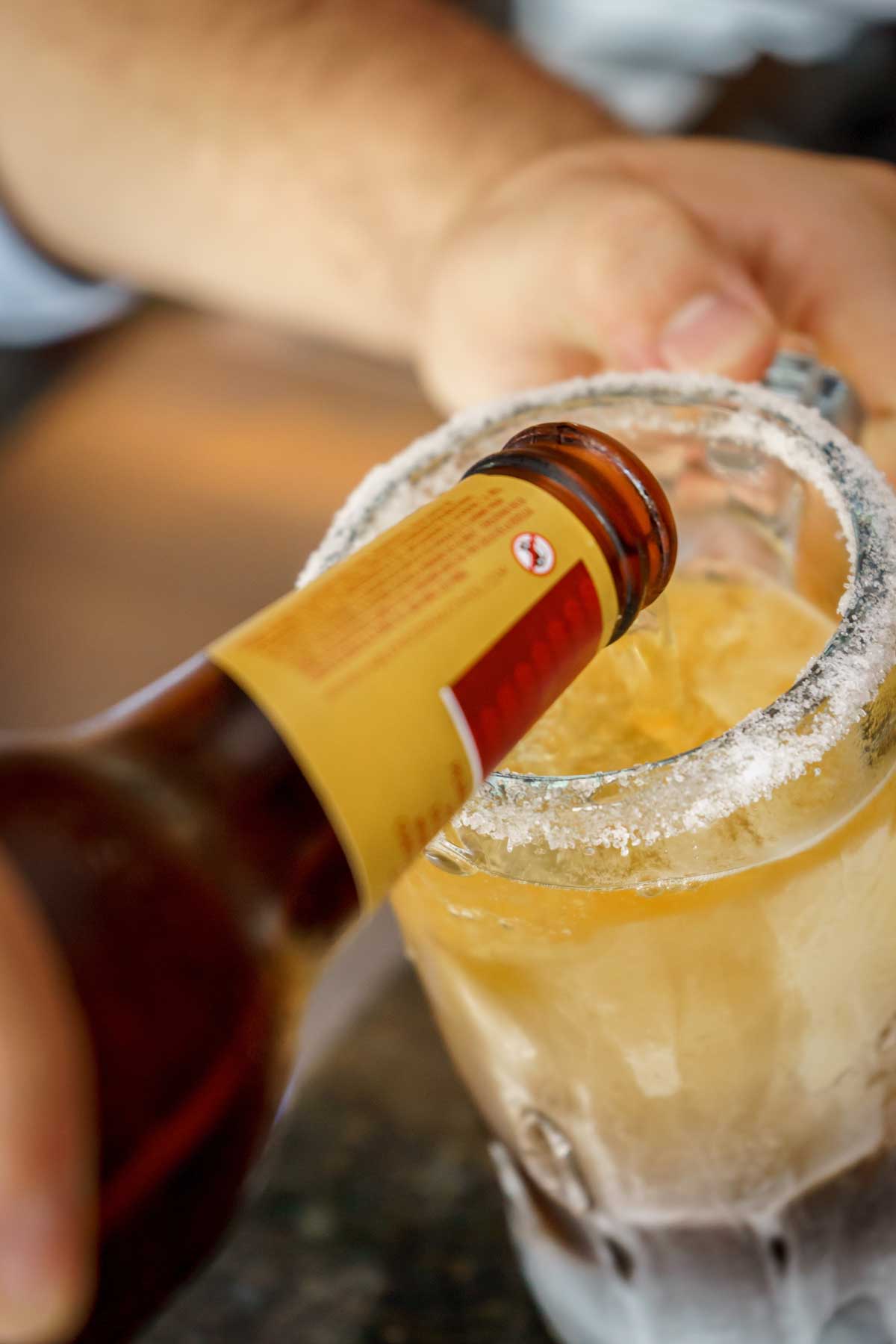
- Pour the beer slowly. Tilt the glass and pour about two-thirds of the beer down the side, the way you would pour a draft. Pouring straight down foams up the tomato and spills over the rim.
- Lift, don’t stir. Draw the spoon up from the bottom once to bring the base up into the beer. Stirring hard knocks out the carbonation. Taste, adjust with lime or hot sauce, and serve with the rest of the beer on the side.
Michelada
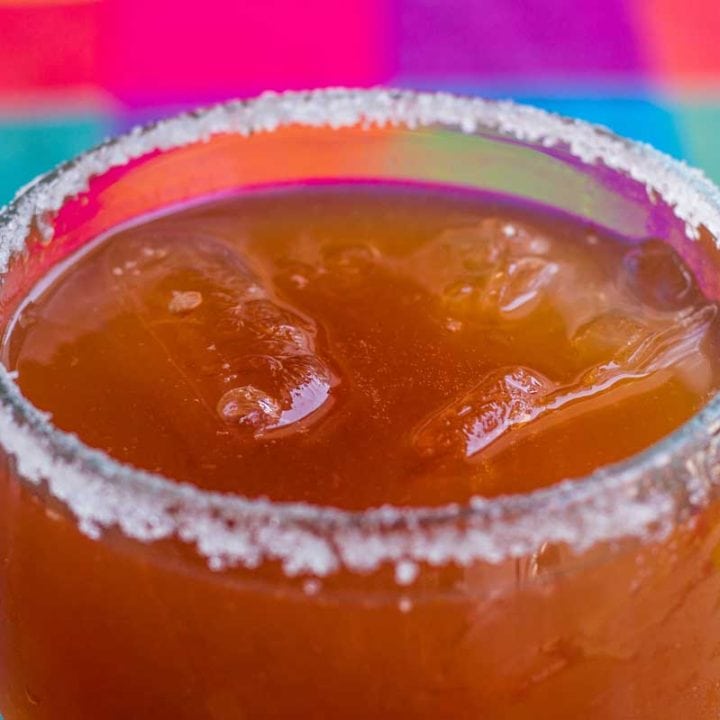
The classic red michelada, built one beer per glass the way Mexican bars serve it: fresh lime, Clamato or tomato juice, Worcestershire, Maggi and Valentina over ice in a Tajín-rimmed glass, topped with ice-cold Mexican lager.
Ingredients
For the rim
- 1 lime wedge
- 1 tablespoon Tajín Clásico, or coarse salt mixed with a pinch of chile powder
For the michelada
- Ice cubes
- 2 tablespoons (1 oz / 30 ml) fresh lime juice, from 1 to 2 limes
- 3 oz (90 ml) Clamato or tomato juice, chilled
- 1 teaspoon Worcestershire sauce (salsa inglesa)
- 1/2 teaspoon Jugo Maggi or soy sauce
- 1 teaspoon Valentina or other Mexican hot sauce, plus more to taste
- 1 pinch salt and 1 pinch black pepper
- 1 bottle or can (12 fl oz / 355 ml) Mexican lager, very cold
Instructions
- Chill the glass: put a 16- to 20-ounce glass or beer mug in the freezer for 15 minutes.
- Rim it: run the lime wedge around the outside edge of the glass, then roll the edge in Tajín on a small plate so it coats the outside, not the inside.
- Build the base: fill the glass halfway with ice. Add the lime juice, Clamato, Worcestershire, Maggi, hot sauce, salt and pepper, and stir until evenly red.
- Add the beer: tilt the glass and slowly pour about two-thirds of the beer down the side. Lift the spoon up through the drink once from the bottom; do not stir hard or it will go flat.
- Serve: taste, adjust with more lime or hot sauce, and serve right away with the rest of the beer on the side to top up as you drink.
Notes
Lighter, Mexico-style: skip the Clamato and use 3 tablespoons lime juice. Skip the sauces too and you have a chelada.
Michelada cubana: no Clamato; use 2 tsp Worcestershire, 1 tsp Maggi, 2 tsp hot sauce, a chile-salt rim and a dark lager such as Negra Modelo.
Alcohol-free: top with non-alcoholic lager or chilled sparkling mineral water.
For a crowd: mix everything except the ice and beer up to 2 days ahead and refrigerate; use about 4½ oz of base per glass. Never add beer to the pitcher.
Clamato contains clam and many Worcestershire sauces contain anchovy. For a vegetarian michelada, use tomato juice and a vegetarian Worcestershire.
The Best Beer for a Michelada
Use a crisp Mexican lager with a little body. The seasonings are bold, so a beer that is too thin disappears under the Clamato, and a beer that is too hoppy turns bitter against the lime and chile. For more Latin beers to try, see our guide to Latin American beers.
| Beer | Style | Why it works |
|---|---|---|
| Modelo Especial | Pilsner-style lager | The most common michelada beer in the US. Enough body to stand up to Clamato. |
| Victoria | Vienna-style amber lager | Toasty malt that rounds out Worcestershire and Maggi. Great for a sauce-heavy michelada. |
| Pacifico | Pilsner | Crisp and clean. Best in a chelada or a lime-forward michelada with little or no juice. |
| Tecate | Light lager | Inexpensive and easy to find in cans. Good for a big batch. |
| Negra Modelo | Dark lager | The classic beer for a michelada cubana. Caramel notes love Maggi. |
| Corona Extra | Light lager | Works, but it is thin. Cut the Clamato to 2 ounces so it doesn’t taste watery. |

Skip IPAs and heavily hopped craft beers. Wheat beers can work if you like a softer drink, and a light lager is fine if you want fewer calories. Just use a little less juice so the beer flavor still comes through.
The Best Hot Sauces, Salsas and Rims for Micheladas
Bars across Mexico each have a house combination, and it usually starts with a bottle of Valentina, a splash of salsa inglesa and a few drops of Maggi. Here are the bottles worth keeping on hand. For a deeper comparison, see our taste test of the best Mexican hot sauces.

- Tajín Clásico Rimmer
Wide, flat tub made for dipping glass rims. The easiest way to get an even chile-lime rim. - Tajín Clásico, 14 oz
The big bottle for rims, fruit and the pinch that goes into the drink. - Salsa Valentina
The default michelada hot sauce. Use the yellow label for mild, black label for extra hot. - El Yucateco Marisquera Red
A seafood-style hot sauce made for cócteles and micheladas con Clamato. - Tia Lupita hot sauce variety pack
Habanero, chipotle, jalapeño and salsa verde to find your house blend. - I Love Chamoy Original sauce
Sugar-free chamoy for a sweet-sour chamoyada rim. - Chamoy powder
Sweet, spicy, tangy powder that sticks to a chamoy-coated rim. - Michelada glasses and mugs
A heavy 16 to 20 oz mug holds one beer with room for the mix and ice.
As an Amazon Associate, AmigoFoods earns from qualifying purchases.
Types of Micheladas
Ask for a michelada in five Mexican cities and you can get five different drinks. These are the styles you will see most, with a quick build for each one.


Michelada Mix for a Crowd
For a party, make the base ahead and let everyone pour their own beer. This batch makes enough for 8 micheladas. Pour a heaping half cup (about 4½ ounces) into each ice-filled, rimmed glass, then top with a 12-ounce beer.
| Ingredient | Batch for 8 | Per drink |
|---|---|---|
| Clamato or tomato juice | 3 cups (720 ml) | 3 oz |
| Fresh lime juice | 1 cup (240 ml), about 8 limes | 2 tbsp |
| Worcestershire sauce | 2 tbsp + 2 tsp | 1 tsp |
| Jugo Maggi or soy sauce | 4 tsp | ½ tsp |
| Valentina hot sauce | 2 tbsp + 2 tsp | 1 tsp |
| Salt and black pepper | ½ tsp each | A pinch each |
| Mexican lager | 8 bottles or cans (12 oz) | 1 beer |
Keep the mix covered in the fridge for up to 2 days and stir it before pouring, since the lime and tomato settle. Never add the beer to the pitcher: it goes flat in minutes.
Store-bought mixes and cans. Bottled michelada mixes such as Zing Zang michelada mix are a shortcut, and ready-to-drink cans such as Bud Light Chelada, Modelo Chelada and Tecate Michelada sit in most beer aisles. They are convenient, but they are sweeter and flatter than a fresh one. If you buy a mix, add fresh lime and a pinch of salt and it improves immediately.
Where the Michelada Comes From
Mexicans have been squeezing lime and sprinkling salt into beer for generations, so nobody really invented the idea. The drink’s name has a more specific story, and the one told most often comes from San Luis Potosí, in north-central Mexico.
As it goes, a member of the Club Deportivo Potosino named Michel Ésper liked his beer over ice with lime and salt, served in a large glass called a chabela. Other members started ordering “Michel’s lemonade,” and the name shortened to michelada. Accounts disagree on the decade, with most placing it between the 1960s and 1970s.
The other explanation is simpler: mi chela helada, “my ice-cold beer.” Both versions may have fed into the name, and neither can be proven. A tale tying the drink to a general during the Mexican Revolution also circulates, but there is no record behind it.
The salsas came later, and Clamato and tomato juice later still. They are largely a northern Mexico and US development, and the michelada traveled north through Texas and the border states, where the red style took over. Today brewers on both sides of the border sell canned versions, and the original lime-and-salt chelada is still what many Mexicans order on a hot afternoon.
What to Eat With a Michelada
Micheladas are made for salty, spicy, citrusy food, especially seafood and anything fried. Some favorites:
- Seafood: aguachile, cóctel de camarones and anything from our list of Mexican seafood dishes.
- Tacos: tacos al pastor, carne asada tacos or carnitas tacos.
- Botanas: chips and salsa, peanuts with chile and lime, or a cup of esquites.
- The morning after: a bowl of menudo or a plate of chilaquiles, the classic Sunday pairing.
Want another Mexican drink with a story? Try tepache, the fermented pineapple drink, or tejuino from Jalisco. Prefer tequila? Make a classic paloma. For the full lineup, see our guide to Latin American and Spanish cocktails.
Michelada FAQ
What is in a michelada?
Mexican lager, fresh lime juice, Worcestershire sauce, Jugo Maggi or soy sauce, hot sauce and salt, served over ice in a salt- or chile-rimmed glass. Many versions, especially in the US, also add Clamato or tomato juice.
What is the difference between a michelada and a chelada?
In most of Mexico, a chelada is beer with lime and salt, while a michelada adds savory sauces and hot sauce. In Mexico City the names can be reversed, so if you want the sauces, ask for them.
Is a michelada like a Bloody Mary?
Only the red version. Both use tomato, Worcestershire and hot sauce, but a michelada is beer-based, fizzy, uses much less juice and is far lower in alcohol than a vodka Bloody Mary.
What does a michelada taste like?
Cold, salty, sour and savory, with a little heat. Think of a lager with a squeeze of lime and a splash of hot sauce. Clamato makes it rounder and slightly briny.
Do you put ice in a michelada?
Usually, yes. Mexican bars typically serve it over ice in a frosted glass. Use large cubes and very cold beer so it doesn’t water down.
Can you make a michelada without beer?
Yes. Make the base as usual and top it with non-alcoholic lager, which keeps the malty taste, or with sparkling mineral water for a lighter, alcohol-free drink.
How many calories are in a michelada?
Our recipe, made with a regular 12-ounce Mexican lager and 3 ounces of Clamato, works out to roughly 175 calories. With a light lager it is closer to 130. Nearly all of it comes from the beer.
Is a michelada good for a hangover?
It is a popular morning-after drink in Mexico, mostly because the salt, lime and cold feel restorative. It is still alcohol, though. Water and a bowl of menudo will do more for you.
How do you pronounce michelada?
Mee-cheh-LAH-dah, with the stress on the third syllable.
Sources
- VinePair: Micheladas across Mexico, from chelada to cubana
- Mexico News Daily: Michelada or chelada, what’s the difference?
- La República: El origen de la michelada (Spanish)
- The Austin Chronicle: Micheladas, Clamato and cerveza preparada
More Mexican Foods
See all →
Jorge Garcia is the founder of AmigoFoods, where he has spent over 20 years helping readers discover authentic Latin American and Spanish cuisine. Raised in a Cuban-American household, Jorge learned to cook at the hands of his mother and grandmother, carrying forward generations of family recipes. That heritage, backed by his family’s four-generation history in the Latin food industry, inspired him to launch AmigoFoods in 2003. With more than 1,000 published articles on recipes, ingredients, and food culture, Jorge’s mission is simple: make authentic Latin cooking approachable for home cooks everywhere while honoring the traditions behind every dish.