
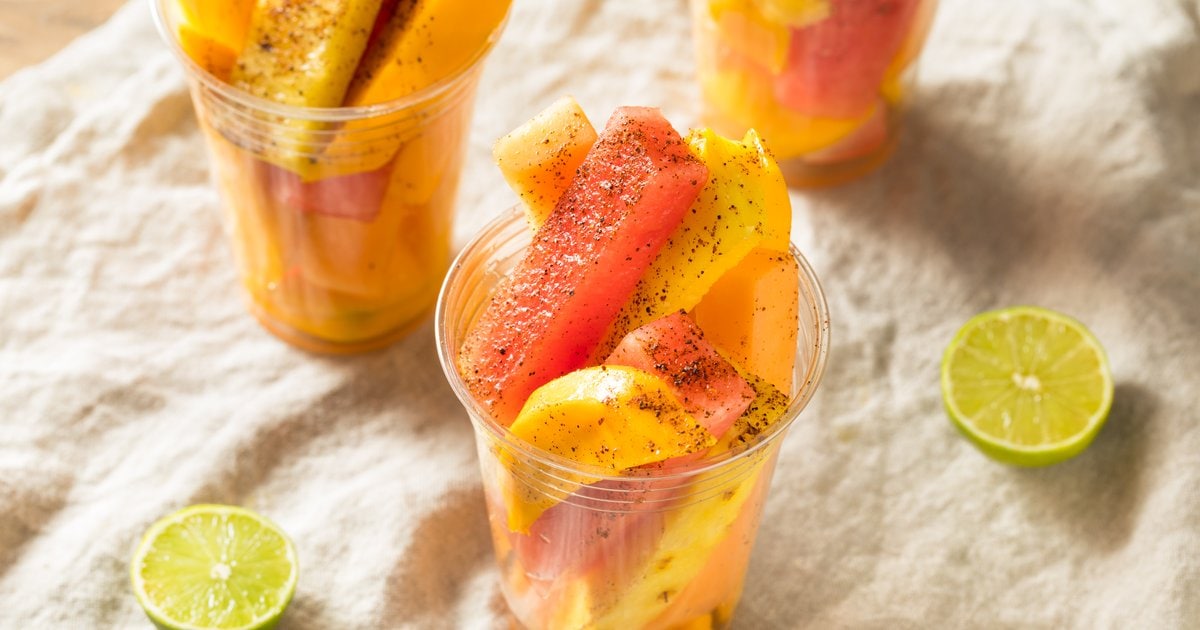
Mexican fruit cups are tall cups of chilled fruit cut into spears (mango, pineapple, watermelon, cucumber, jícama and papaya) finished with fresh lime juice, chile-lime salt like Tajín and a drizzle of chamoy. In Mexico they’re called vasos de fruta or fruta picada, and they’re sold from street carts everywhere. They take about 20 minutes and no cooking.
Mexican Fruit Cups at a Glance
Plan ahead: chill the whole fruit for a few hours first; cold fruit is half the appeal. You can cut everything up to a day ahead, but add the lime, chile and chamoy only right before serving.
AmigoFoods may earn a commission from qualifying Amazon purchases made through links on this page.
What Are Mexican Fruit Cups Called?
Ask for a vaso de fruta (cup of fruit) or fruta picada (cut fruit) and any vendor in Mexico will know what you mean. Many people simply say fruta con chile. The vendors are fruteros, and the carts with the glass cases full of whole fruit are carritos de fruta.
Don’t confuse them with coctel de frutas or ensalada de frutas, which are diced fruit mixed with yogurt, cream or condensed milk and topped with granola. That’s a sweet dessert, and its breakfast cousin is the biónico; the fruit cup is a salty, sour, spicy snack.
What Fruit Goes in a Mexican Fruit Cup?
The classic street-cart lineup is six fruits, chosen because they’re firm enough to stand up as spears and juicy enough to taste good with chile. Want to know more about any of them? See our guide to 40 Mexican fruits.
| Fruit | Why it’s there | How to cut it |
|---|---|---|
| Mango | Sweet, soft and the reason most people order | Peel, then slice long planks off the pit |
| Pineapple | Sharp and juicy; balances the sweet fruit | Quarter lengthwise, cut out the core, slice into spears |
| Watermelon | Cold and watery; cools the chile | Seedless; cut into thick 4-inch batons, rind off |
| Cucumber | Crisp and barely sweet, great with salt | English or Persian; peel in stripes, cut into spears |
| Jícama | The crunchy white sticks; holds chile best | Peel thickly, cut into ½-inch sticks (more on jícama) |
| Papaya | Soft, musky-sweet, very Mexican | Maradol; seed, peel and cut into wedges |
| Cantaloupe | A common stand-in for papaya | Seed, peel, cut into spears |
| Coconut | Fresh coconut meat, cut in strips | Optional; harder to prep at home |
| Orange | Segments or wedges; common in winter | Peel and pull apart or cut into wheels |

The white fruit in Mexican fruit cups is jícama, a crisp, mildly sweet root that tastes like a cross between an apple and a water chestnut. It’s the piece that soaks up the most chile and lime, and it never gets soggy.
Skip: bananas, berries, grapes and apples. They brown, bruise or roll around and don’t hold chile. Green (unripe) mango is a great addition if you can find it: sour, crunchy and classic with salt and chile.
The Toppings: Lime, Salt, Chile and Chamoy
The fruit matters, but the dressing is what makes it a Mexican fruit cup. The order matters too: lime first so the chile sticks, then chile, then chamoy.
Lime
Fresh Mexican or Persian limes, squeezed right over the cup. Bottled juice tastes flat. Plan on about half a lime per cup.
Chile-lime salt
Tajín is the standard: mild ground chiles, dehydrated lime and salt. Street vendors often use plain chile piquín powder and salt instead, which is hotter.
Chamoy
Chamoy is a thick, sweet-sour-salty red sauce made from pickled fruit and chiles. It’s the red drizzle on top, and it’s optional but beloved.

How to Make Mexican Fruit Cups
This is how the fruteros do it, scaled to four cups. The full ingredient list and amounts are in the recipe card below.
- Chill the fruit. Refrigerate the whole fruit for at least 2 hours, or overnight. Cold fruit is the point.
- Cut everything into long spears. Aim for pieces about ½ inch thick and 4 to 5 inches long, so they stand up in the cup and stick out the top. Peel the jícama thickly, past the fibrous layer under the skin.
- Pack the cups upright. Stand the spears in tall clear 16-oz cups, mixing colors and putting the sturdiest pieces (jícama, cucumber, pineapple) at the edges to hold the softer mango and papaya in place.
- Squeeze on the lime. Half a lime per cup, squeezed over the top so it runs down into the fruit. Add a pinch of salt if you like.
- Season with chile. Shake on Tajín or chile-lime salt generously, about ½ to ¾ teaspoon per cup, turning the cup as you go.
- Finish with chamoy. Drizzle 1 to 2 tablespoons of chamoy over the top and serve right away with a fork or toothpicks, and an extra lime wedge.
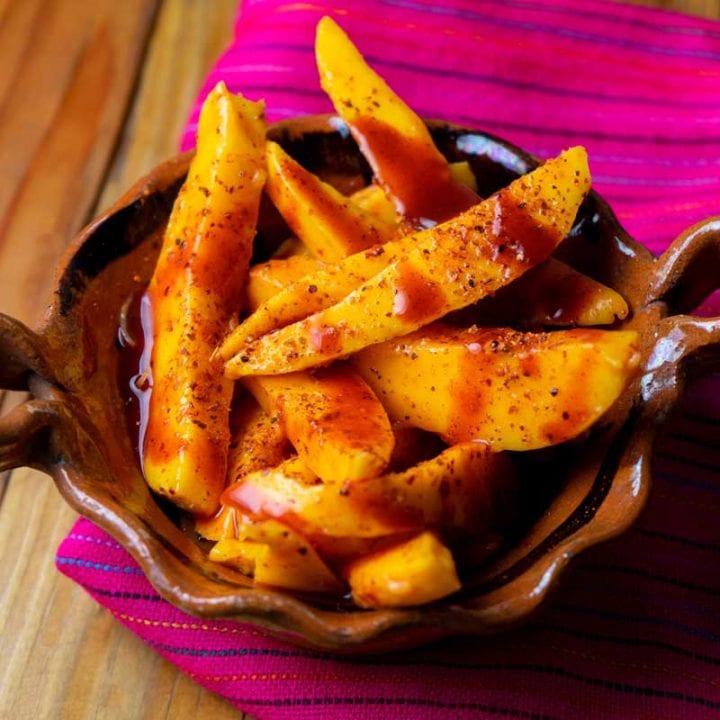
Mexican Fruit Cups (Vasos de Fruta)
Mexican street-cart fruit cups: chilled spears of mango, pineapple, watermelon, cucumber, jícama and papaya with lime, Tajín and chamoy.
Ingredients
- 2 cups watermelon spears (about ¼ small seedless watermelon)
- 2 cups pineapple spears (about ½ pineapple)
- 1 large mango or 2 Ataulfo mangos, peeled and cut into spears
- 1 English cucumber or 3 Persian cucumbers, cut into spears
- ½ medium jícama (about 1 lb), peeled and cut into ½-inch sticks
- 1½ cups papaya spears (about ¼ Maradol papaya) or cantaloupe
- 3 limes, 2 halved for juice and 1 cut into wedges
- ¼ teaspoon fine salt (optional)
- 2 to 3 teaspoons Tajín or other chile-lime seasoning
- ¼ to ½ cup chamoy sauce (optional)
Instructions
- Refrigerate the whole fruit for at least 2 hours so it is cold.
- Peel the watermelon, mango, pineapple, papaya and jícama (peel the jícama thickly, past the fibrous layer). Peel the cucumber in stripes.
- Cut everything into spears about ½ inch thick and 4 to 5 inches long.
- Stand the spears upright in four tall 16-oz cups, putting the sturdy jícama, cucumber and pineapple at the edges and the softer mango and papaya in the middle.
- Squeeze half a lime over each cup and add a pinch of salt if you like.
- Sprinkle each cup with ½ to ¾ teaspoon Tajín, turning the cup as you go.
- Drizzle 1 to 2 tablespoons chamoy over each cup and serve right away with extra lime wedges.
Notes
Cut fruit keeps up to 1 day in the fridge in separate containers. Add the lime, chile and chamoy just before serving; seasoned fruit gets watery after about 30 minutes. For a loaded version, dip the cup rims in chamoy and chile powder and top with chopped tamarind candy and chamoy gummies.
Loaded Fruit Cups With Chamoy and Candy
Mexican snack shops, especially in the US, sell over-the-top versions: the cup rim dipped in chamoy and chile powder, the fruit buried in chamoy, then topped with spicy tamarind candy, chamoy gummies and chile-coated candy straws. It’s a sugar bomb, and kids and teenagers love it.

How to load one: dip the rim of the cup in chamoy, then in chile powder, before packing the fruit. Season the fruit as usual, then pile on chopped tamarind candy, chamoy gummies or chile-coated mango slices. Add a little more chamoy on top.
What to buy for Mexican fruit cups
- Tajín Clásico, the chile-lime seasoning every cart uses
- I Love Chamoy (original), a sugar-free chamoy sauce
- Miguelito chamoy powder, sweet-sour chile powder for the rim
- Pulparindo, spicy tamarind candy to chop on top
- Goso spicy chamoy gummies, for the loaded version
- Don Turinos chile-chamoy mango slices, dried mango that tastes like the street cart
Mexican Fruit Cups for a Party
Fruit cups are one of the easiest things to serve a crowd: everything is cut ahead, and guests finish their own. Set up a fruit cup bar: a tray of cut fruit on ice, a stack of clear cups, and bowls of lime wedges, Tajín, chamoy and candy toppings.
| For about 12 cups | Buy |
|---|---|
| Watermelon | 1 small seedless (about 6 lb) |
| Pineapple | 1 large |
| Mango | 3 large or 5 Ataulfo |
| Cucumber | 2 English or 5 Persian |
| Jícama | 1 medium (about 2 lb) |
| Papaya | ½ Maradol |
| Limes | 8 to 10 |
| Tajín | One 5-oz bottle is plenty |
| Chamoy | About 1½ cups |
Make Ahead and Storage
- Cut ahead: cut fruit keeps up to 1 day in the fridge. Store each fruit in its own airtight container so the watermelon doesn’t make everything soggy, and squeeze a little lime over the jícama.
- Season at the last minute: salt and chile pull water out of the fruit, so a seasoned cup turns watery after about 30 minutes.
- Leftovers: eat seasoned fruit the same day, or blend it with water and ice into a spicy agua fresca.
Mexican Fruit Cups FAQ
What are Mexican fruit cups called in Spanish?
Vasos de fruta (cups of fruit), fruta picada (cut fruit) or simply fruta con chile. The vendors are called fruteros.
What is the white fruit in Mexican fruit cups?
Jícama, a crisp, mildly sweet root vegetable. It’s eaten like fruit in Mexico and stays crunchy under lime and chile.
What is the red sauce on Mexican fruit?
Chamoy, a sweet, sour, salty and mildly spicy sauce made from pickled fruit, chiles and lime. The red powder is chile-lime seasoning such as Tajín.
Is Tajín spicy?
Only mildly. Tajín Clásico is made with mild chiles, dried lime and salt; it tastes more tangy and salty than hot. For more heat, use chile piquín powder or Tajín’s habanero version.
Are Mexican fruit cups healthy?
The fruit is, and a plain cup with lime and chile is a light, refreshing snack. Chile-lime seasoning adds sodium and most chamoy adds sugar, so go easy on both or use a sugar-free chamoy. The loaded candy version is a treat, not a health food.
Can I make Mexican fruit cups the night before?
Yes, cut the fruit and refrigerate it in separate containers. Assemble and add lime, chile and chamoy just before serving.
More Mexican Snacks and Drinks
- Mexican Fruits: 40 Fruits of Mexico
- Mangonada
- What Is Chamoy?
- Tajín Mexican Seasoning
- Jícama Guide
- Mexican Street Food
- Paletas (Mexican Ice Pops)
- Mexican Aguas Frescas
More Mexican Foods
See all →
Jorge Garcia is the founder of AmigoFoods, where he has spent over 20 years helping readers discover authentic Latin American and Spanish cuisine. Raised in a Cuban-American household, Jorge learned to cook at the hands of his mother and grandmother, carrying forward generations of family recipes. That heritage, backed by his family’s four-generation history in the Latin food industry, inspired him to launch AmigoFoods in 2003. With more than 1,000 published articles on recipes, ingredients, and food culture, Jorge’s mission is simple: make authentic Latin cooking approachable for home cooks everywhere while honoring the traditions behind every dish.