

On this page
Tajín (say it tah-HEEN, often typed Tajin) is a Mexican chili-lime seasoning made from chili peppers, sea salt and lime. It tastes salty and sour first, with only mild heat, and people shake it over fruit, vegetables, snacks and drink rims. Tajín is really a brand name, and the bottle most people mean is Tajín Clásico.
Tajín at a Glance
Plan ahead: order the lime powder and citric acid first. Fresh zest or juice adds moisture, and the mix will clump.
What Is Tajín?
Tajín is a dry, coarse, brick-red seasoning sold in a shaker bottle. Think of it as chile, salt and lime already mixed, which is exactly how Mexican street vendors dress cut fruit.
| Quick fact | Tajín Clásico |
|---|---|
| Type | Chili-lime seasoning (dry powder) |
| Comes from | Jalisco, Mexico |
| Created | 1985, by Horacio Fernández |
| Made by | Empresas Tajín, based in Zapopan |
| Flavor | Salty and sour up front, with gentle chile warmth |
| Heat | Mild |
| Brand claims | Gluten free, kosher, sugar free, no artificial colors or flavors |
What Is Tajín Made Of?
The ingredient list on Tajín Clásico is short. Here is what each one does.
What Does Tajín Taste Like?
Tajín tastes salty, tangy and lightly fruity, and the lime comes through more than the chile. The grains are coarse enough to add a little crunch before they dissolve on wet fruit.

Is Tajín spicy?
Barely. The brand rates Tajín Clásico as mild, and most people notice the salt and sour first, then a slow warmth. If you want real heat, look for Tajín Habanero. If you are curious how this compares with the rest of the cuisine, read how spicy Mexican food really is.
How to Pronounce Tajín
Say tah-HEEN. The Spanish j sounds like an English h, and the accent mark puts the stress on the second syllable. It is also not the Moroccan stew tagine, which only looks similar on the page.
What to Put Tajín On
Start with something juicy, sweet or fatty. Those are the foods its salt and acid improve most. These are the classic uses.
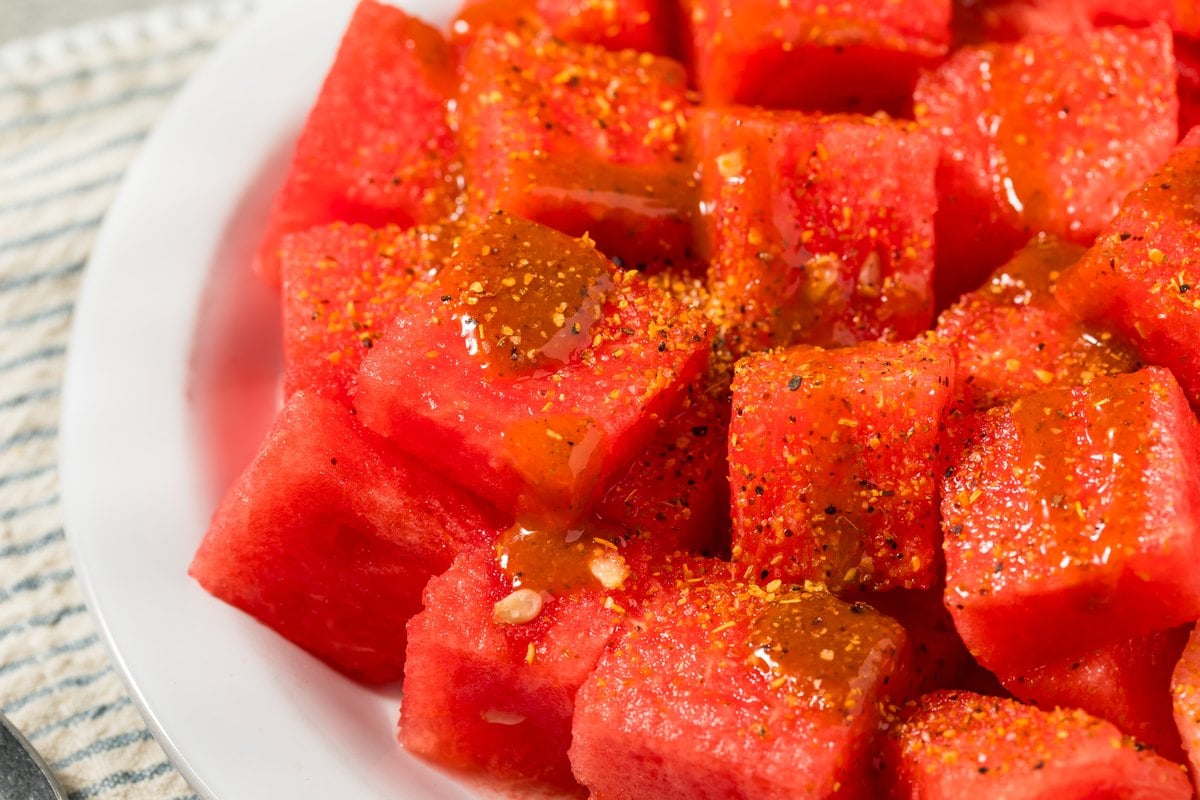


How to rim a glass with Tajín
- Pour a thin layer of Tajín onto a small plate.
- Run a lime wedge around the outside edge of the glass. Keeping the seasoning off the inside stops it from falling into the drink.
- Roll the wet edge through the Tajín, tap off the extra, then fill the glass.
A rim works on a margarita, michelada, paloma or cantarito, and also on soda or lemonade. See our full list of Mexican drinks for more ideas.

Tajín Products and Where to Buy
Look for Tajín in the spice aisle, the Hispanic foods aisle or, at some stores, the produce section beside the cut fruit. Most large US supermarkets and Walmart carry it. These are the versions worth knowing.
| Product | What it is | Best for |
|---|---|---|
| Clásico, 5 oz | The original, 190 mg sodium per ¼ tsp | Trying it for the first time |
| Clásico, 14 oz | Family-size bottle of the same blend | Regular use, parties |
| Reduced Sodium | 37% less sodium, 120 mg per ¼ tsp | Watching your salt |
| Clásico Rimmer | A shallow tub made for dipping glass rims | Margaritas and micheladas |
| Mini bottle | Small portable shaker | Lunch boxes, travel |
| Twist | A sweet and spicy version | Candy, churros, sweet snacks |
| Fruity Chamoy Sauce | A sweet, tangy liquid sauce | Drizzling with Clásico on fruit |
Amazon links on this page are paid links. As an Amazon Associate, AmigoFoods earns from qualifying purchases at no extra cost to you. Looking for more staples? See Mexican ingredients and our Latin American pantry essentials.
Tajín vs. Chamoy, and the Best Substitutes
Tajín and chamoy are not the same thing. Tajín is a dry seasoning with no sugar. Chamoy is a sweet, sour and spicy sauce made from pickled fruit. They are often used together: chamoy first, then Tajín, which sticks to the sauce.
If you are out of Tajín, try one of these.
A Short History of Tajín
- Mamá Necha’s sauce. As a boy, Horacio Fernández loved his grandmother’s sauce, made with seven chiles, poured over fresh corn.
- From sauce to powder. He worked out how to dry chile and lime so the flavor would keep on a shelf.
- December 23, 1985. The company’s official start, in Jalisco. Fernández first sold it store to store.
- The name. On a trip to the pre-Columbian city of El Tajín in Veracruz, he noticed that ají, a word for chili, sits inside the name.
- 1993. Tajín entered the US market and later built a plant in Houston.
- Today. It sells internationally and remains a family-run business, according to the company.
Is Tajín Bad for You?
Not in normal amounts, but the sodium is worth watching. The label lists 0 calories and 190 mg of sodium per ¼ teaspoon, or 8% of the daily value. That is easy to exceed: a full teaspoon has about 760 mg, roughly a third of the daily limit. The bottle itself warns that it is not a candy.
Acid, chile and salt can also bother a sensitive stomach, especially on an empty one or in large amounts. If salt is a concern, choose the reduced-sodium bottle or the lower-salt homemade batch, and ask your doctor if you have been told to limit sodium. For the bigger picture, read is Mexican food healthy?
How to Make Tajín at Home
Yes, you can make Tajín at home, and the secret is using dry sour ingredients. Most copycat recipes lean on lime zest, but the real label relies on citric acid and dehydrated lime juice, so this version does too.
The ratio is easy to remember: 2 parts chile to 1 part salt, plus a little lime powder and citric acid. Shop for ground guajillo, lime juice powder and food-grade citric acid if your store does not stock them. This is a homemade version of the flavor, not the company’s formula.
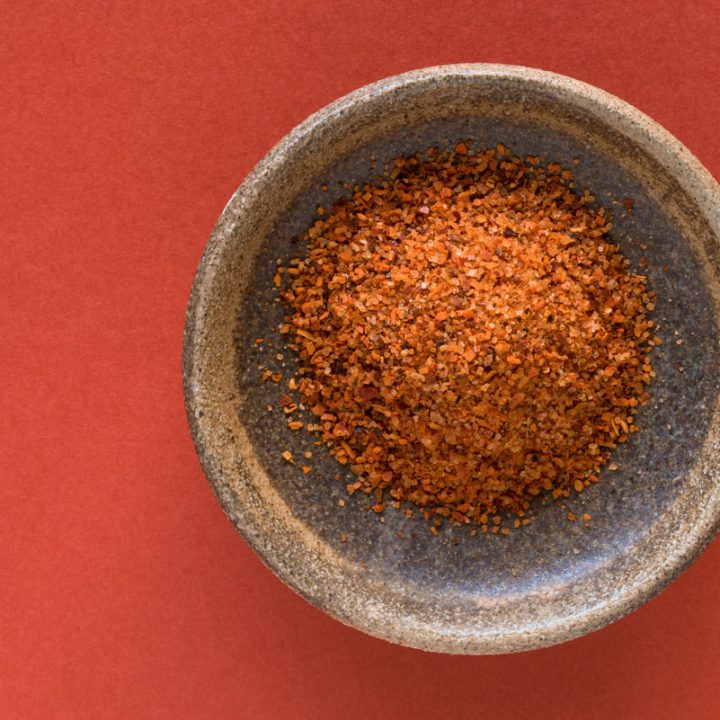
Homemade Tajín-Style Chili-Lime Seasoning
A chili-lime salt built from the Tajín label: mild ground chile, sea salt, lime powder and citric acid. It is a homemade version, not the brand’s own formula.
Ingredients
- ¼ cup ground guajillo or New Mexico chile (pure chile, not chili powder blend)
- ½ teaspoon ground chile de árbol or cayenne
- 2 tablespoons fine sea salt
- 1 tablespoon lime juice powder
- 1 teaspoon food-grade citric acid
Instructions
- Measure the ground chile, chile de árbol, salt, lime powder and citric acid into a small, completely dry bowl. Stir until the color is even.
- For a finer texture, pulse the mix in a dry spice grinder for 5 to 10 seconds. Let the dust settle before opening the lid.
- Taste a little on a slice of fruit or cucumber. Add a pinch of citric acid if you want it more sour, or more salt if the flavor seems flat.
- Funnel into a clean, dry airtight jar. Shake before each use.
Notes
Chile: use pure ground chile. American “chili powder” is a blend with cumin and garlic and will taste like taco seasoning.
Lime: fresh zest or juice adds moisture and makes the mix clump. Lime juice powder is the ingredient to buy.
Sodium: a ¼-teaspoon serving has an estimated 155 mg of sodium, compared with 190 mg on the Tajín Clásico label. For a lower-sodium batch, use 1 tablespoon of salt (an estimated 105 mg per serving).
Storage: keep airtight in a cool, dry cupboard and use within 6 months for the best flavor. Measure it into your hand instead of shaking the jar over a steaming pot.
Tajín FAQ
Where is Tajín from?
Tajín comes from Jalisco, Mexico. Empresas Tajín is based in Zapopan, next to Guadalajara.
Is Tajín gluten free?
Yes. The brand labels Tajín Clásico as gluten free and kosher.
Is Tajín vegan?
The Clásico ingredients are all plant or mineral based, and some retailers list it as vegan.
Does Tajín have sugar or Red 40?
Tajín Clásico is labeled sugar free with no artificial colors or flavors. Its red color comes from chile. Twist is a sweet product, so check that label separately.
Does Tajín expire?
The bottle has a best-by date. It is a dry, salty blend, so the main risk over time is faded flavor. Throw it out if moisture gets in and it smells musty or looks moldy.
Do you refrigerate Tajín?
No. Keep it tightly closed in a cool, dry cupboard. The fridge can add moisture and make it clump.
What does the name Tajín mean?
The company named it after El Tajín, the pre-Columbian city in Veracruz. The founder liked that it contains ají, a word for chili.
Sources
- Tajín: Tajín Clásico Seasoning
- Wikipedia: Tajín seasoning
- Safeway: Tajín Clásico ingredients and nutrition label
- Mexico News Daily: Turn to Tajín
- TODAY: The rise of Tajín
- Mental Floss: A Brief History of Tajín
More Mexican Foods
See all →
Jorge Garcia is the founder of AmigoFoods, where he has spent over 20 years helping readers discover authentic Latin American and Spanish cuisine. Raised in a Cuban-American household, Jorge learned to cook at the hands of his mother and grandmother, carrying forward generations of family recipes. That heritage, backed by his family’s four-generation history in the Latin food industry, inspired him to launch AmigoFoods in 2003. With more than 1,000 published articles on recipes, ingredients, and food culture, Jorge’s mission is simple: make authentic Latin cooking approachable for home cooks everywhere while honoring the traditions behind every dish.