
On this page
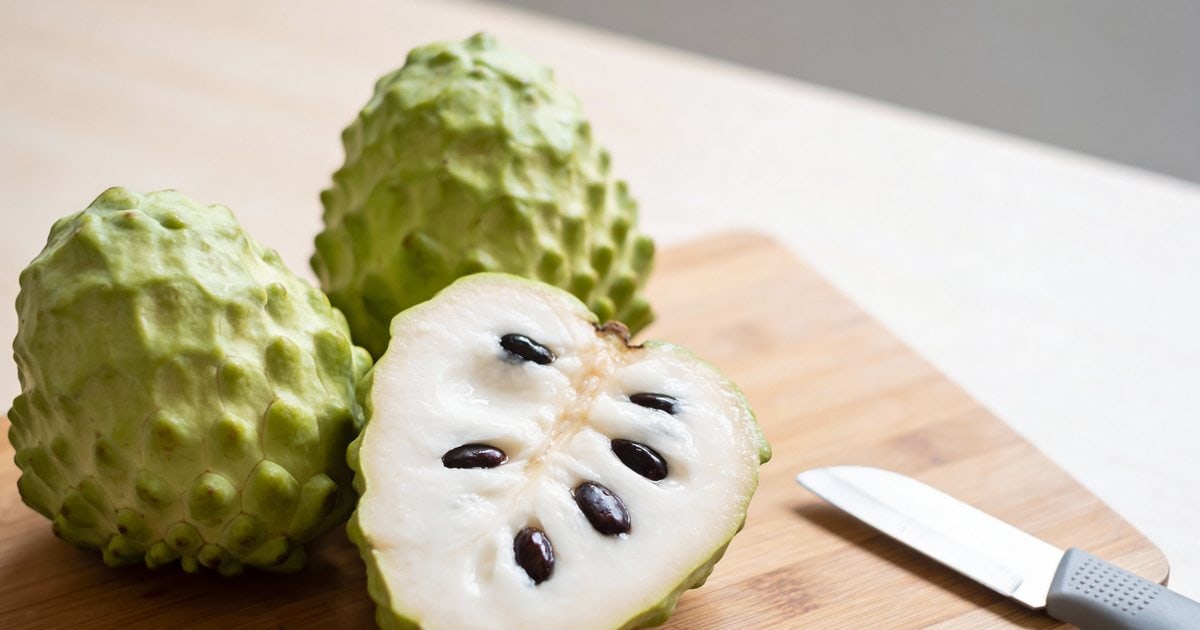
Cherimoya (chirimoya in Spanish) is a heart-shaped green fruit from the Andes with creamy white flesh that tastes like banana, pineapple and vanilla custard all at once. To eat one, wait until it gives slightly when you press it, cut it in half, scoop out the flesh with a spoon and spit out the large black seeds, which are toxic. Below is everything you need to know, from picking a ripe one to how it is eaten across Latin America, plus a recipe for chirimoya alegre, Chile’s favorite cherimoya dessert.
Chirimoya Alegre at a Glance
Plan ahead: Cherimoyas are sold hard. Buy them 2 to 4 days before you want to serve this and let them ripen on the counter until they give like a ripe avocado.
AmigoFoods may earn a commission from qualifying Amazon purchases made through links on this page.
What Is Cherimoya?
Cherimoya is the fruit of Annona cherimola, a small tree in the custard apple family, the same family as guanábana (soursop) and sugar apple. The fruit is usually 4 to 8 inches long and heart-shaped to oval, with green skin that can be smooth, lightly dimpled or covered in round bumps, depending on the variety.
Inside, the flesh is ivory white, soft and juicy, and dotted with shiny black seeds about the size of a bean. Growers in South America sort cherimoyas by skin type, from the smooth lisa to the bumpy umbonada and the warty tuberculada.

- Scientific name
- Annona cherimola (custard apple family, Annonaceae)
- Native to
- Andean valleys of southern Ecuador and northern Peru
- Also called
- Chirimoya, cherimoyer, custard apple
- Taste
- Banana, pineapple, papaya and vanilla custard
- US season
- Late fall through spring
- Top producers
- Spain and Chile
Chirimoya in English and Other Names
Chirimoya in English is simply cherimoya, the anglicized spelling of the Spanish name. The word comes from the Quechua chirimuya, usually translated as “cold seeds,” because the tree grows at cool, high altitudes in the Andes.
In the US you will also see it sold as custard apple, a nickname it shares with several of its relatives. That causes confusion: in the Caribbean and Asia, “custard apple” usually means Annona reticulata or the sugar apple, both different fruits (see the comparison below).
Mark Twain called the cherimoya “the most delicious fruit known to men,” and fruit lovers have been quoting him ever since.
What Does Cherimoya Taste Like?
A ripe cherimoya tastes like a tropical fruit salad blended with custard. Most people pick out banana and pineapple first, then papaya, pear, strawberry or vanilla. It is very sweet, with just a little acidity, and the texture is creamy and soft, like a ripe pear crossed with flan. Some people eat it chilled with a spoon as if it were ice cream.
An underripe cherimoya is hard, starchy and bland, and an overripe one turns brown and fermented, so timing matters (see how to pick one below).
Where Cherimoya Comes From
Cherimoya is native to the inter-Andean valleys of southern Ecuador and northern Peru, with the Loja province of Ecuador often named as its center of diversity. People in Peru’s highlands were eating it about 2,700 years ago, and it was a prized fruit under the Incas. Some researchers now argue the tree first came from Central America and was carried south by traders, but the Andes are where it was domesticated.
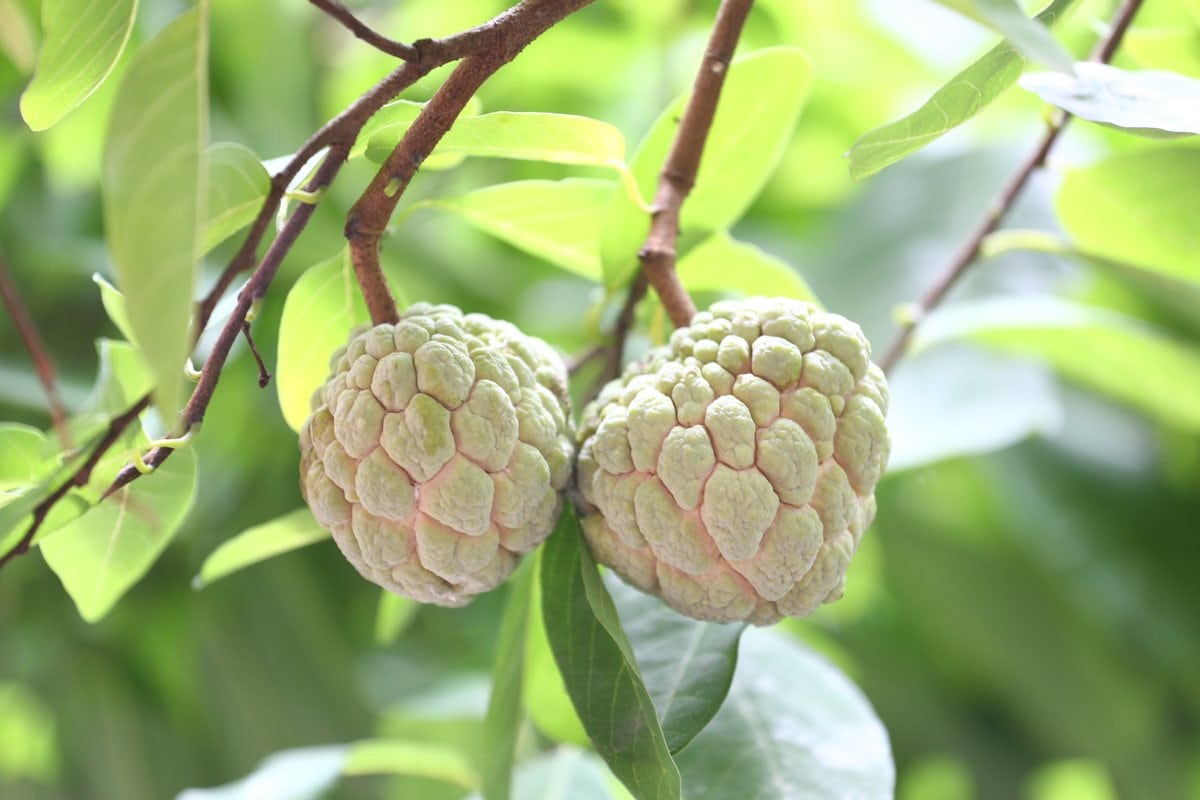
The Spanish carried it around the world. It reached Mexico in 1629 and Spain in the 1750s, and today Spain is the world’s largest producer. Almost all Spanish cherimoyas grow on the subtropical coast of Granada and Málaga, where the Fino de Jete variety is protected as Chirimoya de la Costa Tropical de Granada-Málaga. Chile is the other major grower, and Peru has its own famous name, the Cumbe cherimoya from the Cumbe valley near Lima.
In the US, the only commercial growers are along the Southern California coast. The flowers rarely pollinate themselves, so California farmers pollinate them by hand with a small brush, one flower at a time, which is a big part of why cherimoyas are expensive.
When Is Cherimoya in Season?
In the US, cherimoyas are in season from late fall through spring, with the most fruit in stores and farmers’ markets in winter. Imports from Chile and South America fill some of the gap, so you can occasionally find them year-round in Latin markets. In Spain, the harvest runs from September through January.
How to Pick and Ripen a Cherimoya
Cherimoyas are picked hard and ripen after harvest, the same way avocados do. At the store, choose fruit that feels heavy for its size, with even green skin and no cracks or large black patches. A little browning on the skin is fine.
- To ripen: leave it on the counter at room temperature for 1 to 4 days.
- To tell if it is ripe: press gently with your thumb. A ripe cherimoya gives slightly, like a ripe avocado or pear, and the skin may turn a slightly duller, yellow-green.
- Once ripe: eat it within a day or two, or refrigerate it for up to 2 days. An ethylene absorber in the produce drawer helps slow ripe fruit from going soft too fast.
- Do not refrigerate a hard cherimoya. Cold stops it from ripening properly and the skin turns black.
How to Cut and Eat Cherimoya
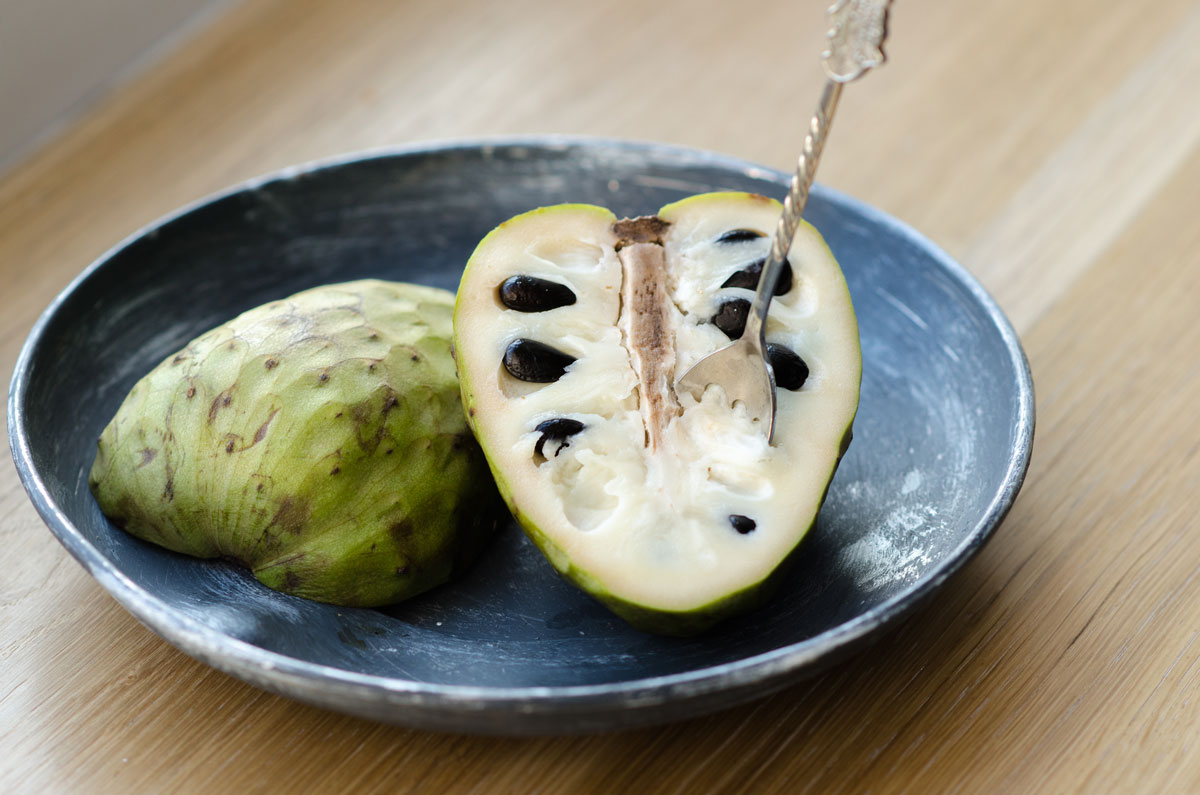
- Rinse the fruit and set it on a cutting board.
- Cut it in half lengthwise with a sharp knife, through the stem end.
- Scoop the flesh out with a spoon, or cut each half into wedges and eat the flesh off the skin.
- Pick out or spit out every black seed. Do not chew or swallow them.
- Discard the skin, which is not edible.
Tip: Chill a ripe cherimoya for an hour before eating it. Cold, it tastes even more like custard.
Are Cherimoya Seeds Poisonous?
Yes. The seeds, skin, leaves and bark of the cherimoya contain toxic alkaloids. Swallowing a whole seed by accident is not usually dangerous because it passes through, but never crush, chew or grind the seeds, and never blend the fruit with the seeds still in it.
The flesh is safe to eat. Like other fruits in the Annona family, it contains small amounts of a compound called annonacin, which researchers have studied in people who eat very large amounts of these fruits for years. Enjoying cherimoya the way most people do, as an occasional fruit, is not a concern.
Cherimoya Nutrition
Cherimoya is a good source of vitamin C, vitamin B6 and fiber, and it also gives you potassium, magnesium and folate. One cup of the flesh has about 4.8 grams of fiber, and one whole fruit provides roughly a third of the vitamin C most adults need in a day. It also contains lutein, an antioxidant linked to eye health.
It is a naturally sweet fruit, higher in sugar and calories than berries or citrus, so it works best as a dessert or a snack rather than something you eat by the bowlful every day.
Cherimoya vs. Soursop, Sugar Apple and Atemoya
Cherimoya has several close relatives that look alike and are often mixed up in stores. Here is how to tell them apart:
| Fruit | Spanish name | Looks | Tastes |
|---|---|---|---|
| Cherimoya (A. cherimola) | Chirimoya | Green, heart-shaped, smooth to bumpy skin | Creamy and very sweet: banana, pineapple, vanilla |
| Soursop (A. muricata) | Guanábana | Large, dark green, covered in soft spines | Tangier and more acidic, often used for juice |
| Sugar apple (A. squamosa) | Anón, saramuyo | Small, knobby, segments pull apart | Very sweet and slightly grainy |
| Atemoya | Atemoya | Bumpy, between its parents | A cross of cherimoya and sugar apple, sweet and smooth |
| Custard apple (A. reticulata) | Anona corazón | Reddish-brown, net-patterned skin | Milder, sometimes grainy |
So no, cherimoya and soursop are not the same fruit, although they are cousins. If you want to compare them side by side, read our complete guide to guanábana.
How Latin America Eats Cherimoya
In the countries where it grows, cherimoya is everyday fruit, sold by street vendors and in every market from Quito to Santiago. Most of the time it is eaten fresh with a spoon, but it also goes into:
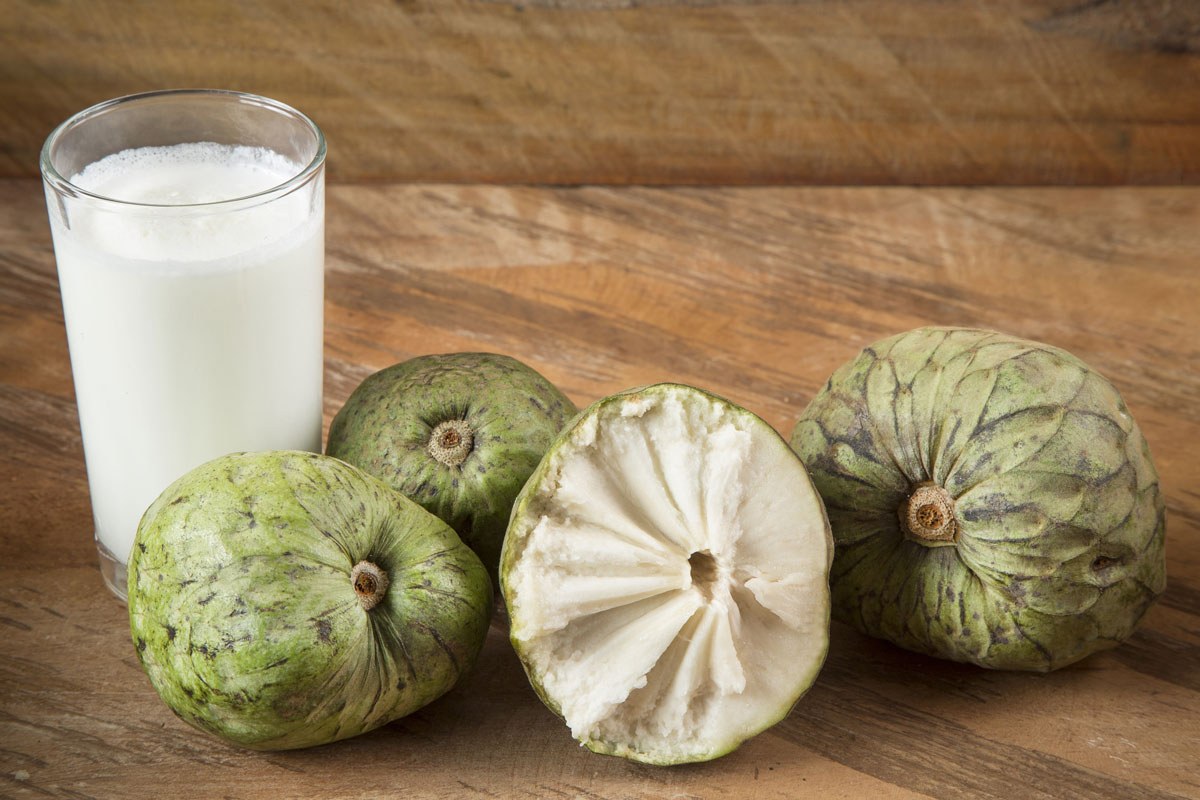
- Batido or jugo de chirimoya (Peru, Ecuador, Colombia): the flesh blended with cold milk or water and a little sugar into a thick, creamy shake.
- Helado de chirimoya (Peru, Chile, Bolivia): cherimoya ice cream is a classic flavor at Andean ice cream shops.
- Chirimoya alegre (Chile): chunks of cherimoya in fresh orange juice, the recipe below.
- Mousse and desserts: Peruvian pastry shops fold it into mousses, cheesecakes and the fillings of layered cakes.
See where cherimoya fits among other Andean fruits in our guides to Peruvian fruits, Ecuadorian fruits and Mexican fruits, or try it in one of our Peruvian desserts and Chilean desserts.
Where to Buy Cherimoya
In the US, look for cherimoyas in winter and spring at:
- Latin and Asian markets, which often carry them alongside guanábana and other tropical fruit.
- Farmers’ markets in Southern California, where local growers sell them from late fall into spring.
- Specialty grocers and the exotic-fruit section of large supermarkets.
- Online, through tropical fruit delivery services, and as cherimoya trees if you live somewhere frost-free and want to grow your own.
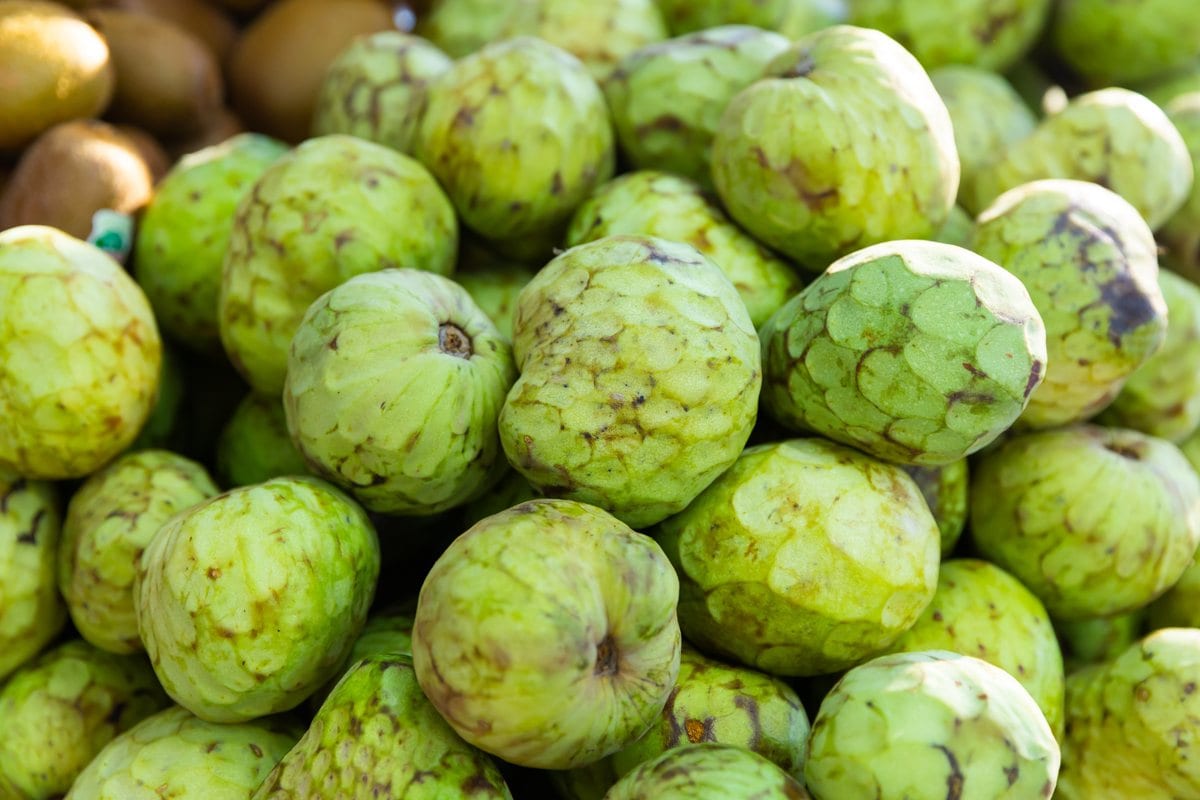
Expect to pay more than for everyday fruit. Cherimoyas are expensive because the trees grow well in only a few climates, the flowers usually have to be pollinated by hand, and the ripe fruit bruises easily and spoils within days, so a lot of it never makes it to the store.
Chirimoya Alegre: Chile’s Cherimoya Dessert
Chirimoya alegre, “happy cherimoya,” is the simplest Chilean dessert there is: ripe cherimoya cut into chunks and soaked in fresh orange juice. The orange’s acidity balances the cherimoya’s sweetness and keeps it from browning. It is a classic Chilean home dessert whenever cherimoyas are in season and cheap.

Use fully ripe fruit and freshly squeezed juice, and do not make it more than an hour or two ahead, or the cherimoya turns mushy.
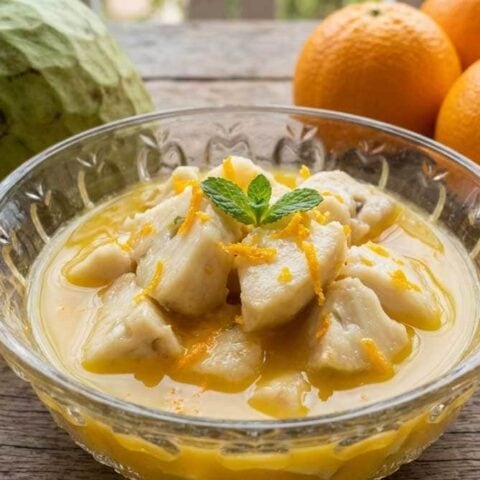
Chirimoya Alegre (Cherimoya in Orange Juice)
Chirimoya alegre is a classic Chilean dessert of ripe cherimoya chunks soaked in fresh orange juice. The orange balances the cherimoya's sweetness and keeps it from browning. It takes 15 minutes and no cooking.
Ingredients
- 2 large ripe cherimoyas (about 2 pounds total)
- 4 to 5 juicy oranges, for about 1 1/2 cups fresh orange juice
- 1 to 2 tablespoons sugar, optional
- Fresh mint leaves, to garnish
Instructions
- Juice the oranges and strain out the seeds. You need about 1 1/2 cups of juice.
- Cut each cherimoya in half lengthwise. Scoop out the flesh with a spoon, leaving the skin behind.
- Pull the flesh into bite-size chunks with your fingers or a spoon, removing every black seed as you go. Do not eat or blend the seeds.
- Put the cherimoya chunks in a serving bowl. If your cherimoyas are not very sweet, stir the sugar into the orange juice until it dissolves.
- Pour the orange juice over the cherimoya so the fruit is mostly covered and stir gently.
- Cover and refrigerate for 30 minutes to 1 hour, until cold.
- Spoon into small bowls with plenty of juice and garnish with mint leaves.
Notes
- Use fully ripe cherimoyas that give slightly when pressed. Hard fruit will be starchy and bland.
- Serve within 2 hours. After that the cherimoya softens too much.
- For a grown-up version, add a splash of orange liqueur or Chilean pisco to the juice.
- Store leftovers covered in the refrigerator and eat them the next day.
Frequently Asked Questions
What does a cherimoya taste like?
A ripe cherimoya tastes like a mix of banana, pineapple, papaya and vanilla custard, with a creamy, soft texture. It is very sweet with only a little acidity.
Why is cherimoya so expensive?
Cherimoya trees grow well in only a few mild climates, the flowers usually need to be pollinated by hand, and the ripe fruit bruises easily and lasts only a few days. All of that adds labor and loss, which raises the price.
What is the English name for cherimoya?
The English name is cherimoya, from the Spanish chirimoya. It is also sold as custard apple, a name it shares with some related fruits.
How do you eat cherimoya fruit?
Let it ripen until it gives slightly when pressed, cut it in half, scoop out the flesh with a spoon and remove the black seeds. Do not eat the seeds or the skin.
Is cherimoya the same as soursop?
No. Both are in the Annona family, but soursop (guanábana) is larger, spiny and tangier, while cherimoya is smaller, smoother and sweeter.
How do you know when a cherimoya is ripe?
Press it gently with your thumb. A ripe cherimoya gives slightly, like a ripe avocado, and the skin may turn a duller yellow-green. If it is rock hard, leave it on the counter for a few more days.
Can you eat cherimoya seeds?
No. Cherimoya seeds are toxic and should never be chewed or crushed. Remove them before eating or blending the fruit.
Is cherimoya the same as custard apple?
Cherimoya is often sold as custard apple in the US, but the name is also used for Annona reticulata and the sugar apple, which are different fruits.
More Ingredients
See all →
Jorge Garcia is the founder of AmigoFoods, where he has spent over 20 years helping readers discover authentic Latin American and Spanish cuisine. Raised in a Cuban-American household, Jorge learned to cook at the hands of his mother and grandmother, carrying forward generations of family recipes. That heritage, backed by his family’s four-generation history in the Latin food industry, inspired him to launch AmigoFoods in 2003. With more than 1,000 published articles on recipes, ingredients, and food culture, Jorge’s mission is simple: make authentic Latin cooking approachable for home cooks everywhere while honoring the traditions behind every dish.