
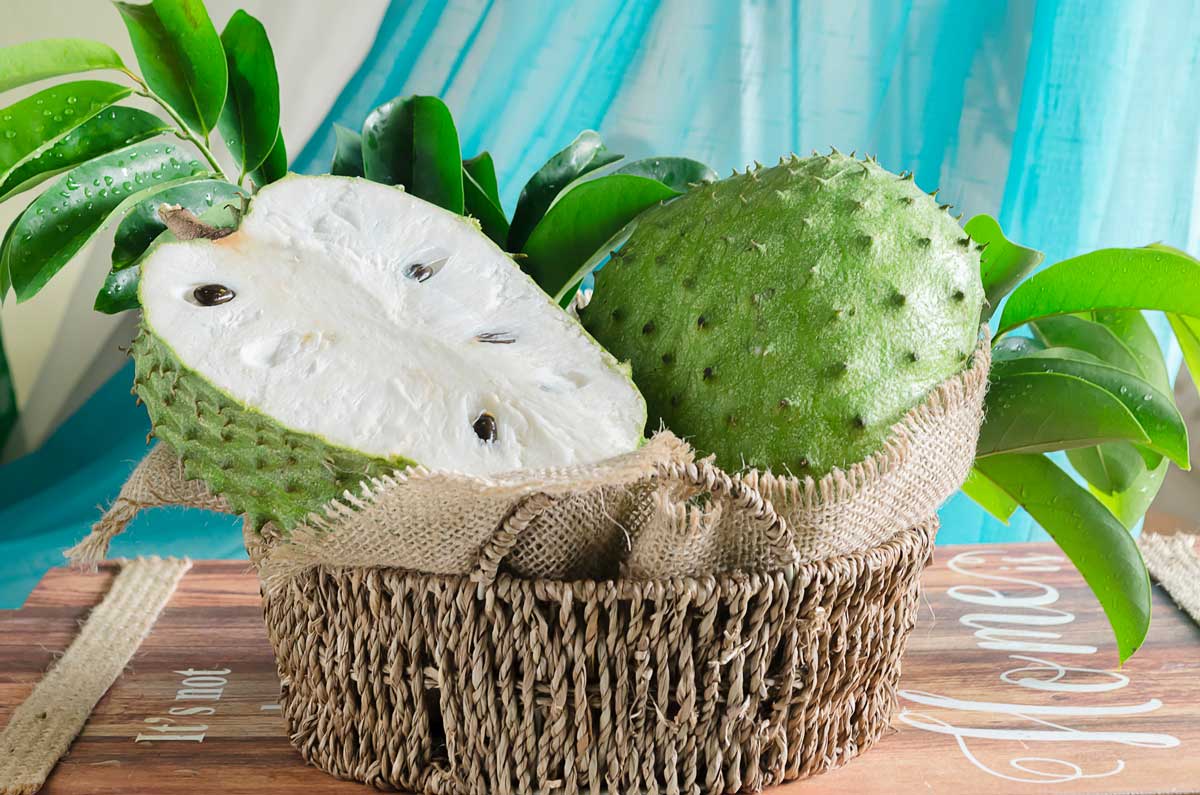
Guanábana (gwah-NAH-bah-nah), called soursop in English and graviola in Brazil, is a large, spiny green fruit with soft white flesh that tastes like pineapple, banana and a squeeze of lemon. Across Latin America and the Caribbean it is blended into jugo, batidos and helado. Outside the tropics most people buy it as frozen pulp. This is the guide we would hand anyone meeting guanábana for the first time.
Guanábana Juice at a Glance
AmigoFoods may earn a commission from qualifying Amazon purchases made through links on this page.
What is guanábana?
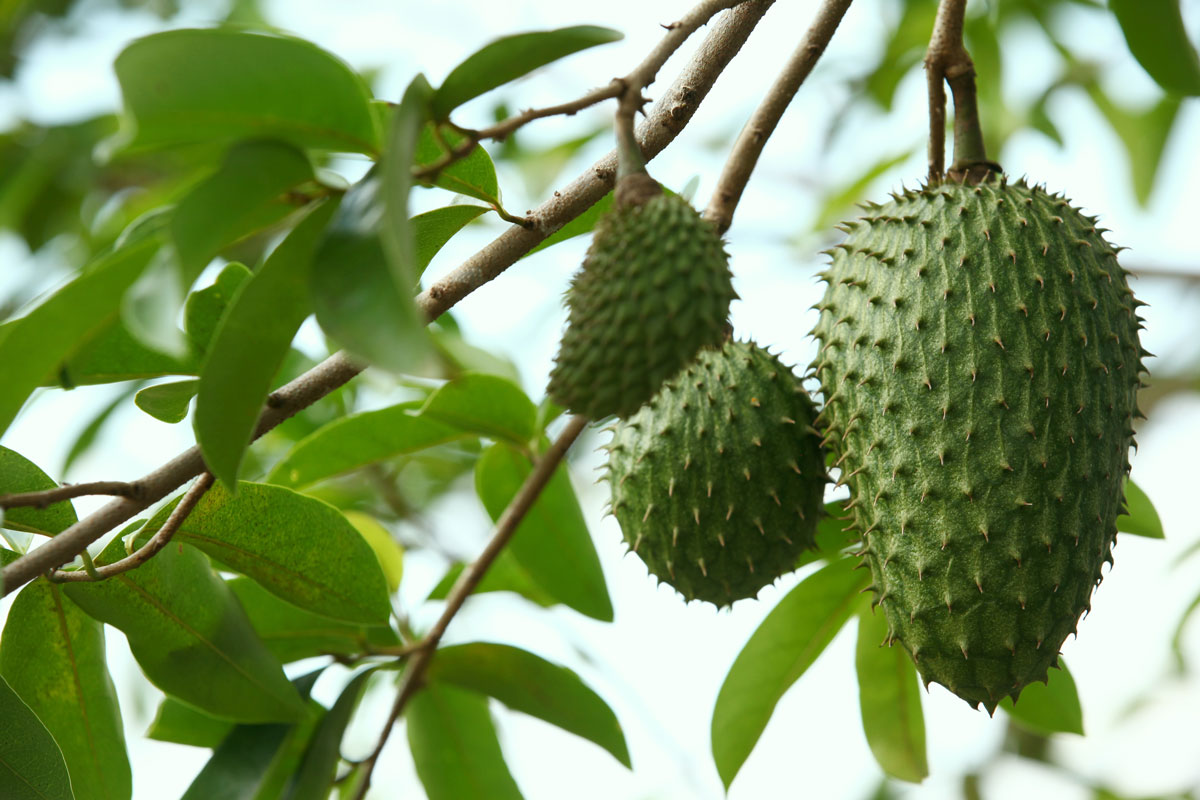
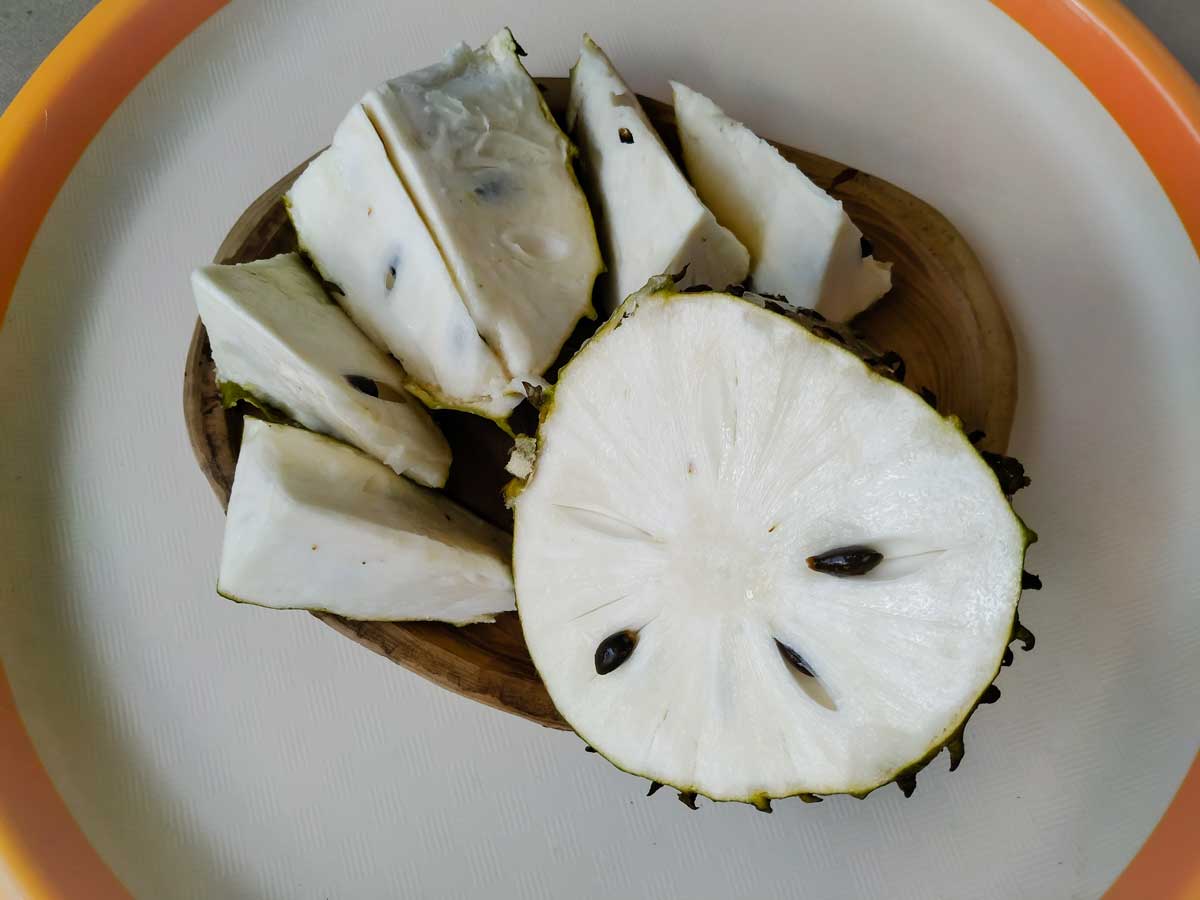
Guanábana is the fruit of Annona muricata, a small tropical evergreen tree native to the Caribbean and northern South America. Its fruit is oval or heart-shaped, covered in soft green spines, and filled with juicy, fibrous white pulp and shiny black seeds. In English it is called soursop. The pulp is eaten fresh or blended into drinks and frozen desserts.
It is the largest fruit of the Annona family, which also includes cherimoya and sugar apple. According to horticulturist Julia Morton’s Fruits of Warm Climates, a soursop can be 4 to 12 inches long and weigh as much as 10 to 15 pounds, although the fruit sold in markets is usually much smaller. The Spanish chronicler Gonzalo Fernández de Oviedo described it as abundant in the West Indies in 1526, and the name guanábana comes from the Taíno language of the Caribbean. From there it traveled to Africa, India and Southeast Asia, where it is now a common market fruit.
- Scientific name
- Annona muricata (custard apple family, Annonaceae)
- Native to
- The Caribbean and tropical Central and South America
- What you eat
- The white pulp only. Skin, core and seeds are discarded.
- Tastes like
- Pineapple, banana and strawberry with a citrusy, slightly sour finish
- Sold as
- Fresh fruit, frozen seedless pulp, canned nectar, dried leaves and tea
- Most important rule
- Never eat or blend the black seeds
Guanábana names by country
Most Spanish-speaking countries say guanábana, but the fruit picks up a new name almost everywhere it grows. That matters when you shop: a can labeled guyabano in an Asian market and a bag of graviola pulp in a Brazilian store hold the same fruit.
| Country or region | Name |
|---|---|
| Mexico, Colombia, Cuba, Puerto Rico, Dominican Republic, Venezuela, Ecuador, Peru, Central America | Guanábana |
| El Salvador | Guanaba (also guanábana) |
| Guatemala | Huanaba (also guanábana) |
| Venezuela (regional) | Catuche or catoche |
| Bolivia | Sinini |
| Brazil | Graviola; also jaca-do-pará and araticum-grande |
| Haiti, Martinique, Guadeloupe | Corossol |
| Curaçao, Aruba, Suriname | Sorsaka; zuurzak in Dutch |
| Jamaica, Trinidad, English-speaking Caribbean | Soursop |
| Philippines | Guyabano |
| Indonesia and Malaysia | Sirsak; durian belanda in Malaysia |
In English you may also see “prickly custard apple.” “Graviola” is the name most often printed on supplement bottles and teas, which is why health sources such as Memorial Sloan Kettering list it under that name.
What does guanábana taste like?
Ripe guanábana tastes like a mix of pineapple, banana and strawberry, with a tart, lemony edge that gives the fruit its English name. The aroma is tropical and a little musky. The sweetness and sourness vary from tree to tree: in Puerto Rico growers sort soursops into sweet, subacid and acid types, and in El Salvador the sweeter guanaba azucarón is eaten raw while the sour type goes into drinks.
The texture is the part people remember. The pulp is creamy and soft, but it pulls apart in juicy, fibrous segments; Morton compared them to flakes of raw fish. That creaminess is why guanábana blends into such a thick, milky juice, and why some people find the fresh fruit a little stringy to eat with a spoon.
When is guanábana in season?
Soursop trees flower and fruit on and off through the year, so you can find it at almost any time somewhere in the tropics. Each region still has a main harvest. According to Morton, it runs from about March to June or September in Puerto Rico, and from June to September in Mexico and Florida, where the tree grows in the far south of the state and the Keys. In the U.S., fresh fruit shows up mostly in Latin and Caribbean markets in South Florida, New York and other large cities, while frozen pulp is sold all year.
How to pick a ripe guanábana
Guanábana is picked firm and ripens off the tree, so most fruit in the store is not ready to eat yet. Here is how to tell:
- Color: Unripe fruit is dark green. As it ripens, the skin turns a duller, slightly yellowish green.
- Feel: A ripe guanábana gives to gentle thumb pressure, like a ripe avocado or peach. Rock-hard means wait; mushy all over means it is past its best.
- Spines: On ripe fruit the soft spines bend easily, and the tips break off with a light touch.
- Skin: Some dark patches are normal. Avoid fruit with splits, mold or a sour, fermented smell.
How to cut and eat guanábana
A soft, ripe guanábana is easy to open, and you do not need a sharp knife. The skin is bitter and the seeds are toxic, so the goal is simple: get the white pulp out and leave everything else behind.
- Rinse and halve. Wash the fruit, then cut or pull it in half lengthwise. A very ripe fruit can be broken open by hand.
- Remove the core. Pull out the soft, fibrous core that runs through the center. It is edible but chewy, so most people discard it.
- Scoop the pulp. Use a spoon or your fingers to lift the white segments away from the skin.
- Take out the seeds. Pop the black seeds out of each segment by hand. A large fruit can hold a few dozen to more than 200 of them, so do this over a bowl and count on a few minutes.
- Eat or blend. Eat the pulp chilled with a spoon, add it to a fruit salad, or blend it into juice, a batido or helado.
Guanábana nutrition facts
Guanábana is a fairly sweet fruit with a good amount of fiber and vitamin C. These numbers are for raw pulp from USDA FoodData Central:
| Nutrient | Per 100 g raw pulp | Per 1 cup (225 g) |
|---|---|---|
| Calories | 66 | 148 |
| Carbohydrates | 16.8 g | 37.9 g |
| Sugars | 13.5 g | 30.5 g |
| Fiber | 3.3 g | 7.4 g |
| Protein | 1.0 g | 2.3 g |
| Fat | 0.3 g | 0.7 g |
| Vitamin C | 20.6 mg | 46.4 mg (about 52% DV) |
| Potassium | 278 mg | 626 mg (about 13% DV) |
| Magnesium | 21 mg | 47 mg (about 11% DV) |
One cup of pulp gives you about a quarter of a day’s fiber and half of your vitamin C. It is not a vitamin C powerhouse, though: guava and orange carry more. Frozen pulp has roughly the same nutrition as fresh if it is unsweetened. Nectars and canned juices are mostly water and added sugar, so read the label.
Is guanábana good for you? What the research says
As a fruit, yes. Guanábana is a reasonable source of fiber, vitamin C and potassium, and eating plenty of fruit is part of any healthy diet. What it is not is a proven treatment for cancer or any other disease, despite what many websites and supplement labels say.
The cancer claims come from laboratory studies. Compounds in the leaves, seeds and fruit, called annonaceous acetogenins, have killed cancer cells in test tubes and slowed some tumors in animals. Memorial Sloan Kettering Cancer Center says there is no proof that graviola has benefits for cancer patients and that human studies are lacking, and Cancer Research UK says there have not been any studies of it as a cancer treatment in humans, so there is not enough reliable evidence that it works. MD Anderson Cancer Center reaches the same conclusion: soursop has not been shown to treat cancer in humans.
Lab and animal work also hints at effects on blood sugar, blood pressure and inflammation. These are early findings, and the same compounds being studied are the ones that raise the safety concerns below. Enjoy guanábana because it tastes good, and never use it in place of medical treatment.
Is guanábana safe? Side effects and who should be careful
Eating the fruit in normal food amounts is generally considered safe for healthy adults. MD Anderson treats about one cup of fruit or pulp as a standard serving. The concern is with eating a lot of it often, and with concentrated forms such as leaf tea, extracts and capsules.
- Nerve toxicity. Guanábana contains annonacin, which damaged nerve cells in laboratory studies and caused brain lesions in rats (Journal of Neurochemistry, 2004). On the French Caribbean island of Guadeloupe, researchers linked regular consumption of soursop fruit and leaf tea with an unusually high rate of atypical parkinsonism. A 2022 study of 180 Caribbean patients with parkinsonism in Movement Disorders found that more lifelong soursop fruit, juice and herbal tea was associated with more severe symptoms. MD Anderson warns that eating several cups a day or taking supplements daily may harm the nervous system.
- Leaf tea and supplements. These are the most concentrated forms. The European Food Safety Authority’s EU-FORA risk assessment found that a safe intake level for Annona muricata supplements could not be set and flagged their neurotoxic potential. Cancer Research UK also warns that graviola may damage the kidneys and liver if taken frequently, while noting that foods and drinks made with it are unlikely to harm you as part of a normal diet.
- Do not eat it if you have Parkinson’s disease or are at risk for it, or if you are pregnant, according to MD Anderson.
- Medications. Soursop may lower blood pressure and blood sugar. Talk to your doctor if you take blood pressure medicine, diabetes medicine or blood thinners.
- Medical imaging. Memorial Sloan Kettering advises avoiding graviola if you are having imaging tests such as a PET scan, because it can affect the results.
How Latin America uses guanábana
Guanábana is one of the most popular fruits in Cuba, Puerto Rico, the Dominican Republic, Colombia and northeastern Brazil, and nearly everywhere it grows it ends up in a glass. The two basic drinks differ only in the liquid.
With water: jugo de guanábana
Seeded pulp blended with cold water, sugar and often a squeeze of lime, then strained or not. It is light, tart and refreshing, the version sold at juice stands and served at lunch from Colombia to Mexico, where it is also an agua fresca flavor.
With milk: batido, champola and merengada
Blended with milk and ice it becomes a creamy batido. In Cuba and the Dominican Republic this is the champola de guanábana; in Venezuela, a merengada. Morton notes that Puerto Ricans call the drink carato, and in Brazil it is suco or vitamina de graviola.

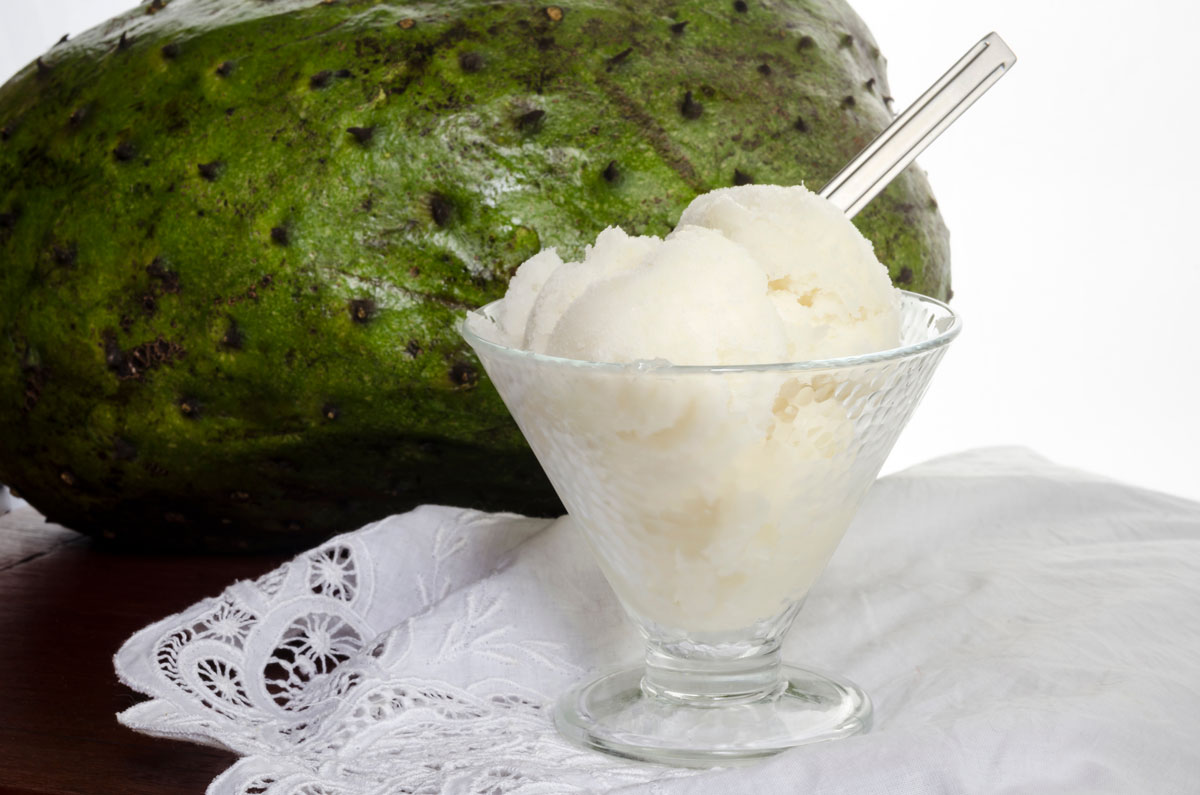
Beyond drinks, guanábana goes into frozen desserts almost everywhere. Look for it as a flavor of Mexican paletas and nieves, Ecuadorian helado de paila, Caribbean sorbete and Brazilian sorvete de graviola; our guide to Latin American ice cream and frozen treats covers many of them. The Dominican Republic also makes a guanábana custard and a sweet of pulp cooked in syrup with cinnamon and lemon peel. In Indonesia and northeastern Brazil, unripe soursop is even cooked as a vegetable.
Then there is the tea. In many Caribbean and Latin households, a cup of hot water poured over a few dried guanábana leaves is a traditional home remedy to help you sleep or settle a cough. It is part of the culture, but it is also the most concentrated way to take in annonacin, which is why the health sources above advise against drinking it regularly.
Where to buy guanábana (and which form to choose)
Fresh guanábana bruises easily and spoils fast, so outside the tropics it is a specialty item. You will find it in four forms:
| Form | Best for | Where to look |
|---|---|---|
| Fresh fruit | Eating with a spoon, fruit salad | Latin, Caribbean and Asian markets, especially in South Florida and large cities. Expect to pay by the pound. |
| Frozen pulp | Jugo, batidos, helado, sorbete | The freezer case of Latin markets and many supermarkets. Brands such as Goya and La Fe sell seedless guanábana pulp, usually in 14-ounce packs. Choose unsweetened. |
| Nectar and canned juice | Drinking straight, cocktails | Latin and Asian grocery aisles. Most are sweetened and contain a modest share of fruit. |
| Dried leaves and tea | Occasional traditional use only | Caribbean markets, health stores and online. See the safety notes above before buying. |
For most people, frozen pulp is the best way to get real guanábana flavor at home. It is already seedless, it tastes close to fresh fruit, and it keeps for months. Shelf-stable options are easy to order online, including guanábana nectar, guanábana pulp where frozen delivery is available, and soursop leaf tea. Skip graviola capsules and extracts. They are the products the unproven cancer claims are built on, and the most concentrated form of the plant.
How to store guanábana
- Firm fruit: Keep it at room temperature until it gives to gentle pressure, usually a few days.
- Ripe fruit: Refrigerate and eat within 2 to 3 days. The skin may turn black in the fridge while the flesh inside is still fine.
- Fresh pulp: Seed it, pack it in freezer bags or containers in 1- to 2-cup portions, and freeze for up to several months.
- Frozen pulp: Keep frozen at 0°F (−18°C). Thaw in the fridge or blend straight from partly frozen. Do not refreeze thawed pulp.
- Juice: Drink it the same day. Fresh guanábana juice darkens and separates quickly, so blend it just before serving.
Guanábana juice recipe (batido or jugo de guanábana)
This is the classic guanábana drink served in homes and juice stands across Latin America: thick, creamy and lightly sweet. Made with milk, it is a batido or champola; made with water, it is a lighter jugo. Frozen pulp makes it fast and removes the work of seeding the fruit.
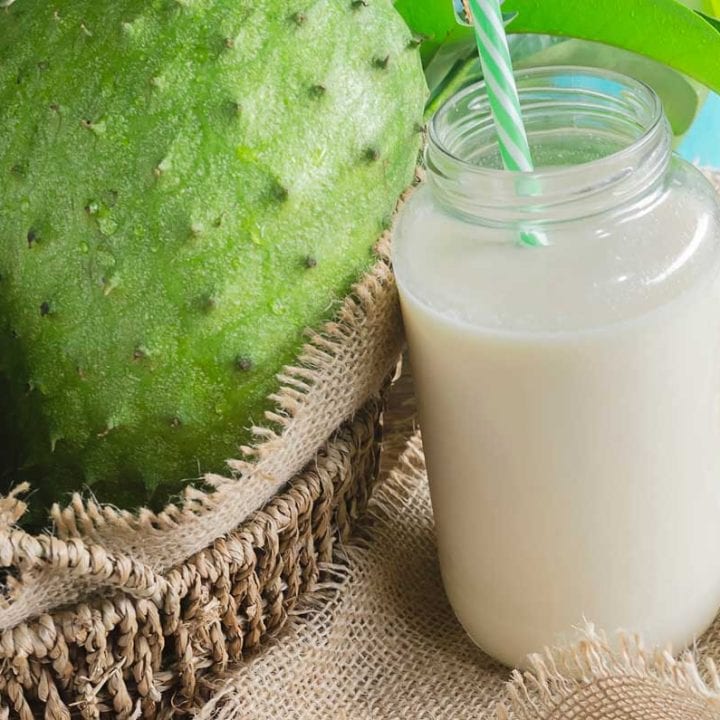
Guanábana Juice (Batido de Guanábana)
A creamy guanábana (soursop) drink made the way it is served across Latin America: seedless pulp blended with cold milk, a little sugar and ice. Make it with water and a squeeze of lime for a lighter jugo de guanábana. Frozen pulp makes it a 10-minute recipe.
Ingredients
- 1 pack (14 oz / about 400 g) frozen guanábana pulp, partly thawed, or 2 cups seedless fresh guanábana pulp
- 2 cups cold whole milk (for jugo, use 2 1/2 cups cold water instead)
- 2 to 4 tablespoons sugar, to taste
- 1 teaspoon fresh lime juice (optional; recommended for the water version)
- 1 cup ice
- Pinch of ground cinnamon, for serving (optional)
Instructions
- If using fresh fruit, remove every black seed and the fibrous core first. Never blend the seeds.
- Put the milk (or water) in the blender first, then add the guanábana pulp, 2 tablespoons of sugar and the lime juice, if using.
- Blend on high for 30 to 45 seconds, until smooth.
- Taste and add more sugar if needed. Add the ice and blend for a few seconds more.
- For a silkier drink, pour through a fine-mesh strainer. Leave it unstrained for more body and fiber.
- Serve right away in cold glasses, with a pinch of cinnamon on top if you like.
Notes
- Champola: in Cuba and the Dominican Republic, the milk version is called champola de guanábana. Some cooks add a few drops of vanilla.
- Jugo with water: lighter and more refreshing. The lime is what brightens it.
- Make it ahead: blend just before serving. The juice darkens and separates as it sits. Leftovers can be frozen in ice-pop molds.
- Serving size: each glass has about 100 g of pulp. Enjoy guanábana as an occasional treat rather than in several glasses a day.
- Nectar shortcut: canned guanábana nectar is already sweetened, so blend it with milk and ice and skip the sugar.
Nutrition Information:
Yield: 4 Serving Size: 1Amount Per Serving: Calories: 85Total Fat: 4gSaturated Fat: 2gUnsaturated Fat: 2gCholesterol: 39mgSodium: 52mgCarbohydrates: 8gFiber: 0gSugar: 8gProtein: 4g
Guanábana vs. cherimoya, atemoya and sugar apple
Guanábana has several cousins in the Annona family, and they are often mixed up in markets and online. All have creamy white flesh and black seeds that should not be eaten, but they look and taste different.
| Fruit | Looks like | Tastes like | Best use |
|---|---|---|---|
| Guanábana / soursop (A. muricata) | Largest; oval, dark green skin with soft spines | Tart and sweet: pineapple, banana, citrus; juicy and fibrous | Juice, batidos, helado |
| Cherimoya / chirimoya (A. cherimola) | Heart-shaped, pale green skin with scale-like or smooth surface | Sweet and mild, like banana, pear and vanilla custard; low acid | Eaten fresh with a spoon |
| Sugar apple / anón (A. squamosa) | Small and round, bumpy green segments that pull apart | Very sweet, custard-like, grainy | Eaten fresh |
| Atemoya (cherimoya × sugar apple) | Medium, bumpy green skin | Sweet custard with hints of vanilla and pineapple | Eaten fresh |
The short version: if it is big, spiny and a little sour, it is guanábana and it wants to be juiced. If it is smaller, smoother and very sweet, it is probably a cherimoya or a sugar apple, and it is best eaten with a spoon. You can read more about cherimoya in our guides to Peruvian fruits and Mexican fruits.
Guanábana FAQ
Is guanábana the same as soursop?
Yes. Guanábana is the Spanish name and soursop is the English name for the same fruit, Annona muricata. In Brazil it is called graviola, in the French Caribbean corossol, and in the Philippines guyabano.
Can you eat guanábana seeds?
No. The seeds contain annonacin and other toxic compounds. Remove them all before eating or blending the fruit. Accidentally swallowing a whole seed is unlikely to cause harm, but seeds should never be crushed or ground.
Does guanábana cure cancer?
No. The anticancer effects seen so far come from lab and animal studies. Memorial Sloan Kettering, Cancer Research UK and MD Anderson all say it has not been shown to treat cancer in people.
Is soursop tea safe to drink?
Soursop leaf tea is a concentrated source of annonacin, and studies from the Caribbean link regular use with more severe parkinsonism. Health sources advise against drinking it regularly, and anyone pregnant or with Parkinson’s disease should avoid it.
How much guanábana is safe to eat?
For healthy adults, about one cup of fruit or pulp as an occasional treat is considered a standard serving. Avoid eating several cups a day or taking graviola supplements.
Can you eat the skin?
No. The skin is bitter and is always discarded. Eat only the white pulp.
Where does guanábana grow in the U.S.?
Mainly in South Florida, the Florida Keys, Puerto Rico and Hawaii. The tree is very sensitive to frost.
More Latin fruits
If guanábana has you curious, try our guides to two other favorite juice fruits, lulo and tomate de árbol. For the bigger picture, browse our country guides to Colombian fruit and Brazilian fruits, where guanábana goes by graviola.
Shopping list: a sturdy countertop blender and a fine-mesh strainer are all you need for guanábana juice, along with guanábana nectar for when fresh fruit and frozen pulp are hard to find.
Sources
- USDA FoodData Central: Soursop, raw (FDC ID 167761)
- Morton, J. 1987. Soursop. In: Fruits of Warm Climates. Purdue University NewCROP
- Memorial Sloan Kettering Cancer Center: Graviola
- Cancer Research UK: Graviola (soursop)
- MD Anderson Cancer Center: Soursop: Does this tropical fruit have health benefits?
- Champy P, et al. Annonacin induces nigral and striatal neurodegeneration in rats. Journal of Neurochemistry, 2004
- Lannuzel A, et al. Atypical parkinsonism in Guadeloupe: etiological role of annonacin. Movement Disorders, 2008
- Cleret de Langavant L, et al. Annonaceae consumption worsens disease severity and cognitive deficits in degenerative parkinsonism. Movement Disorders, 2022
- EFSA Journal (EU-FORA): Risk assessment regarding the use of Annona muricata in food supplements, 2020
More Ingredients
See all →
Jorge Garcia is the founder of AmigoFoods, where he has spent over 20 years helping readers discover authentic Latin American and Spanish cuisine. Raised in a Cuban-American household, Jorge learned to cook at the hands of his mother and grandmother, carrying forward generations of family recipes. That heritage, backed by his family’s four-generation history in the Latin food industry, inspired him to launch AmigoFoods in 2003. With more than 1,000 published articles on recipes, ingredients, and food culture, Jorge’s mission is simple: make authentic Latin cooking approachable for home cooks everywhere while honoring the traditions behind every dish.