
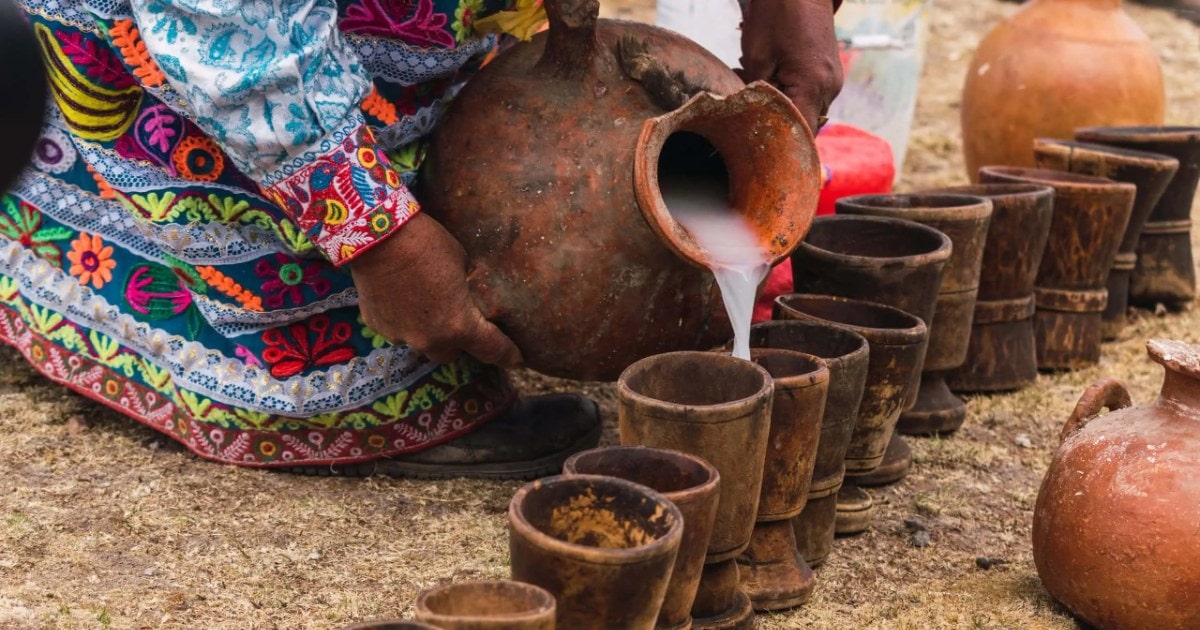
Chicha de jora is Peru’s traditional corn beer, brewed from malted yellow corn called jora. It is cloudy, tangy and lightly alcoholic, usually around 1 to 3% ABV. Andean people have made it for many centuries, and it is still poured in Peruvian chicherías and used to cook stews like seco.
Chicha de Jora at a Glance
AmigoFoods may earn a commission from qualifying Amazon purchases made through links on this page.
What is chicha de jora?
Chicha de jora is a fermented drink made from corn that has been sprouted, dried and ground. Brewers boil the ground corn to pull out its sugars, strain the liquid, and let it ferment for several days. That is essentially how barley beer is made, which is why it is often called Peruvian corn beer.
In Quechua the drink is aqa or aqha. It is also brewed in Bolivia, Ecuador and other parts of the Andes, but Peru is where the name chicha de jora is best known.

What does “jora” mean?
Jora is corn that has been germinated and then dried. In other words, it is malt. Sprouting wakes up enzymes in the kernel that can turn its starch into sugar, and yeast can then turn that sugar into alcohol. In Peru you may also hear sprouted corn called güiñapo, and our guide to Peruvian corn covers the other types grown there.
What does chicha de jora taste like?
Expect a tart, malty, gently fizzy drink with a toasted corn flavor. Young chicha is sweet and mild. Older chicha turns sour and funky, closer to a hard cider or a farmhouse beer than to a lager. It is thin rather than creamy, and usually hazy from the corn.

How much alcohol does chicha de jora have?
Most chicha de jora falls around 1 to 3% ABV, according to a 2020 study of Peruvian chicherías. It is not a fixed number, though. A study of chicha de jora from northern Ecuador measured samples from 0.1 to 5.6%. Time, sugar and temperature all push it up.
| Fermentation | Style | What you get |
|---|---|---|
| 1 to 2 days | Young | Sweet and mild, with very little alcohol |
| 3 to 5 days | Traditional | Balanced, tangy and gently fizzy |
| 6 to 8+ days | Strong | Sharp and sour, with more alcohol. Best for cooking |
Chicha de jora vs. chicha morada
These two get confused constantly, and they are very different drinks. “Chicha” is a family name across Latin America, and many members of the family contain no alcohol.
| Chicha de jora | Chicha morada | Chicha venezolana | |
|---|---|---|---|
| Base | Malted yellow corn | Purple corn with fruit and spices | Cooked rice and milk |
| Fermented? | Yes | No | No |
| Alcohol | Yes, usually low | None | None |
| Flavor | Tart, malty, funky | Sweet, fruity, spiced | Sweet, creamy, cinnamon |
| Color | Hazy gold | Deep purple | Milky white |
Ingredients for chicha de jora
- Jora corn: the one ingredient you cannot replace. Inca’s Food dried corn jora comes in 12-ounce bags, so buy two for this recipe and save the extra. Grind it coarsely in a grain mill or sturdy blender. Regular popcorn or cornmeal has not been malted and will not work the same way.
- Chancaca or panela: unrefined cane sugar. Read more about chancaca, or use panela or dark brown sugar.
- Dry ale yeast: not traditional, but a packet of ale yeast makes a home batch far more predictable.
- Cloves: optional, but common in home recipes. Some cooks add cinnamon or a handful of toasted barley instead.
- A fermenter: a 2-gallon fermenting bucket with an airlock leaves room for foam. Traditional brewers use a large clay pot, called a chomba or raki.

How to make chicha de jora
The work is mostly waiting. Here is the shape of it, and the full recipe card has the exact amounts.
How to tell when it is ready
Look for a foamy head, a steady stream of small bubbles and a smell like sour beer or cider. Taste it each day from day 2 with a clean ladle. When the sweet and sour are where you like them, move it to the fridge, which slows fermentation down.
Do you have to add yeast?
No. Traditional chicheras never open a packet. They rely on wild microbes living in their porous clay pots, and many add borra, the dregs of the last batch. Research on chicha yeasts keeps finding Saccharomyces cerevisiae, the same species used for beer and bread, doing most of the work alongside lactic acid bacteria. A wild batch can taste more complex, but it is less predictable and harder to control in a home kitchen.
How to make jora corn from scratch
If you cannot find jora, you can malt your own. Start with whole dried yellow field corn meant for eating. Never use seed corn, which may be treated with chemicals, or hominy, which will not sprout.
- Soak the kernels in cool water for about 24 hours, then drain.
- Sprout them in a shallow layer in a dark spot, covered with a damp towel. Rinse twice a day. Traditional producers leave corn for one to two weeks, often on a bed of leaves.
- Stop when the sprouts are about as long as the kernels. Throw out the batch if you see any mold.
- Dry in the sun or a dehydrator on low until completely hard. In Ecuador, brewers sun-dry it for about two days.
- Grind coarsely just before brewing.
The history of chicha de jora
Before the Incas. Nobody knows exactly when Andean people first fermented corn, but the evidence is old. In 2004, archaeologists working at Cerro Baúl in southern Peru found a large Wari brewery with more than 20 vats, used sometime between AD 600 and 1000. Its brewers favored chicha made with molle berries.
The Inca legend. A popular story credits the discovery to the reign of Túpac Yupanqui, when rain soaked a corn store and the sprouted grain was thrown away, only for someone to drink the fermented result. It is a good story, but the Wari brewery shows that the tradition is older.
The Inca state. Chicha was central to Inca food culture and politics. Chosen women known as aqllakuna brewed it, rulers offered it to the Sun at festivals, and sharing paired drinking cups called qeros sealed alliances.
The conquest. Inca noble Titu Cusi later wrote that a Spaniard spilled the chicha his uncle Atahualpa had offered, a deep insult. Chicha survived colonial rule anyway, largely through the women who brewed and sold it at home.
Today. Peru declared the picanterías of Arequipa national cultural heritage in 2014, followed by those of other regions, including Cusco, in 2015.
Why was chicha banned?
The famous ban happened in Colombia, not Peru. After the Bogotazo riots of April 1948, chicha was blamed for the violence, and a decree that June effectively outlawed it by requiring fermented drinks to be industrially made and sold in individual glass bottles. The Bavaria brewery had spent years promoting beer as the clean alternative. Colombians kept brewing chicha quietly anyway, and today it is sold openly in parts of Bogotá.
How chicha de jora is served in Peru

Look for a pole with a red flag, flowers or a plastic bag sticking out of a doorway. In towns across southern Peru, it marks a chichería, often just a room in somebody’s home. Chicha is typically ladled from the pot into a half-liter glass called a caporal, or sold by the liter to take home.
Around Cusco, many drinkers first tip a little onto the ground for Pachamama, Mother Earth. On the north coast it may arrive in a dried gourd called a poto. Picanterías serve it with spicy regional food, from stews to fried pork. For the rest of the country’s glassware, see our guide to what they drink in Peru.
Regional versions of chicha de jora
- Frutillada (Cusco): chicha de jora with strawberries, sweeter and pink, mostly around November to January.
- Chicha de güiñapo (Arequipa): a darker chicha made with local black corn, a picantería staple.
- Chicha de jora (Ecuador): also brewed for festivals such as Yamor in Otavalo. Our guide to Ecuadorian drinks has more.
- Chicha de muko: an old method in which corn is chewed so that enzymes in saliva convert the starch. Modern chicha de jora uses malting instead.

Cooking with chicha de jora
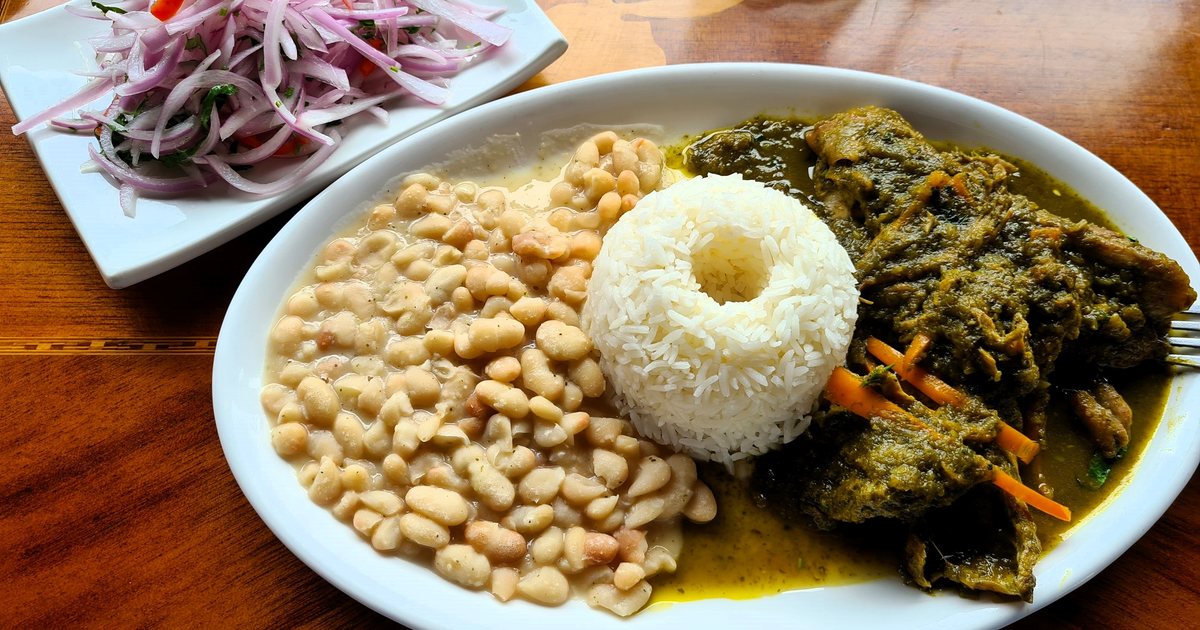
Peruvian cooks use sour, well-aged chicha much as French cooks use wine. It tenderizes meat and adds a tang that is hard to copy. Try it in seco de cabrito, seco de carne, arroz con pato, carapulcra or parihuela. Many of these also call for ají amarillo, and this Sanniti ají amarillo and rocoto paste set covers both of the common pepper pastes.
What can I use instead of chicha de jora?
| Substitute | Use it for | Notes |
|---|---|---|
| Dry hard cider | Stews and adobo | Closest tartness. Use the same amount |
| Dark beer + cider vinegar | Seco and braises | Add about 1 tablespoon vinegar per pint of beer |
| Light lager + vinegar | Arroz con pato and rice dishes | A milder choice when you want less malt flavor |
| Dry kombucha | Marinades | A low-alcohol option with similar tang |
Where to buy chicha de jora
Latin markets with a Peruvian section are your best bet. Online, Inca’s Food Chicha de Jora para Beber comes in a 16-ounce bottle. Check the label for alcohol content and ingredients, since a shelf-stable bottled version will not taste the same as a fresh batch from a chichería. Bottled chicha morada mixes are a different product, so read the name carefully.

Chicha de jora FAQ
What is chicha de jora made of?
Malted yellow corn (jora), water and usually a cane sugar such as chancaca. Some versions add barley, quinoa, cloves or other spices.
Is chicha de jora alcoholic?
Yes. It is fermented and usually contains around 1 to 3% alcohol, though stronger batches exist.
Is chicha de jora the same as chicha morada?
No. Chicha de jora is a fermented corn beer. Chicha morada is a non-alcoholic purple corn drink.
Is chicha de jora made with spit?
Usually not. Some traditional chichas are made by chewing corn so that saliva starts the conversion of starch to sugar. Chicha de jora gets those enzymes from malting the corn.
Is chicha de jora gluten-free?
Corn does not contain gluten, but some recipes add barley and bottled products vary. Check the ingredients if you need to avoid gluten.
How long does chicha de jora last?
Plan on about a week in the fridge in loosely closed jars. It keeps getting more sour, and older chicha can still be used for cooking if it smells clean and shows no mold.
Why is chicha de jora called corn beer?
Because it is made like beer, by malting a grain, boiling the liquid and fermenting it, using corn instead of barley.
Chicha de Jora Recipe
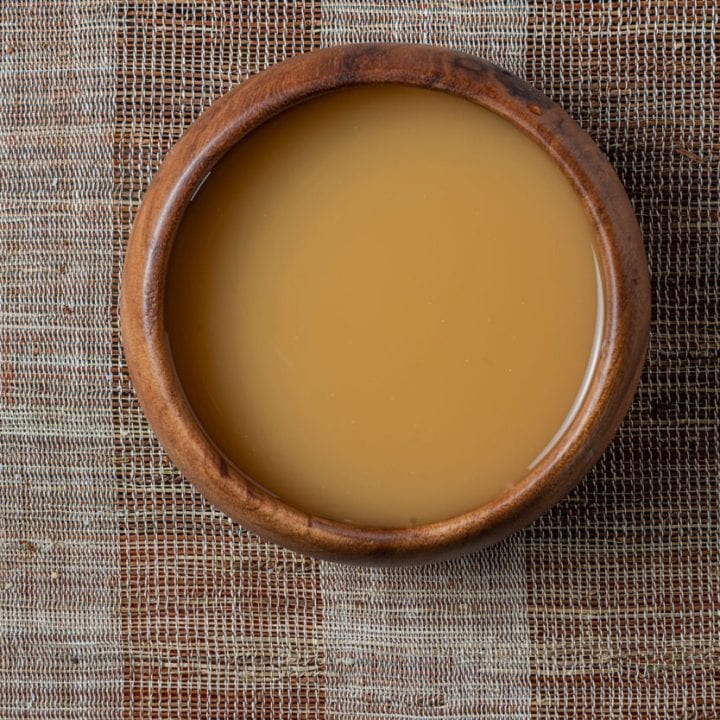
Chicha de Jora (Peruvian Fermented Corn Beer)
Peru’s traditional corn beer, made at home with malted jora corn, chancaca and cloves. It simmers for 3 hours, then ferments for 3 to 5 days into a cloudy, tangy, lightly alcoholic drink.
Ingredients
For the chicha
- 1 pound (454 g) dried jora corn (malted corn), coarsely ground
- 8 quarts (7.5 liters) water
- 14 ounces (400 g) chancaca or panela, chopped
- 8 whole cloves (optional)
To ferment
- 1 packet (about 11 g) dry ale yeast
Instructions
- Clean and sanitize a 1½- to 2-gallon fermenting bucket or glass jar, a fine sieve, a ladle and anything else that will touch the cooled liquid.
- Put the ground jora and water in a large stockpot (at least 12 quarts) and let it soak for 1 hour.
- Bring to a boil. Stir in the chancaca and cloves until the sugar melts, then lower the heat and simmer gently for 3 hours, stirring every 15 minutes so the corn does not scorch. You want about 1 gallon of liquid at the end; add hot water if it drops below that.
- Turn off the heat, cover and let the solids settle for 1 hour.
- Strain through the sieve lined with cheesecloth into the sanitized vessel, pressing gently. Cover and cool to about 70°F (21°C). An ice bath in the sink speeds this up.
- Sprinkle in the yeast. Fit an airlock or rest a loose lid on top. Do not seal it tight, because fermenting chicha makes gas.
- Keep at 60 to 75°F (16 to 24°C) for 3 to 5 days. Taste from day 2 with a clean ladle: day 2 is sweet and mild, days 3 to 5 are balanced and tangy, and longer turns sharper and stronger.
- Skim off the foam and ladle the chicha away from the sediment. Pour into clean jars, close them loosely and refrigerate. Serve cold or at cool room temperature within 1 week.
Notes
Alcohol: chicha de jora is usually around 1 to 3% ABV, but homemade batches vary and this one can run higher with time. It is an alcoholic drink for adults only.
Safety: discard the batch if you see fuzzy mold or if it smells rotten or like nail polish remover rather than pleasantly sour. Never store fermenting chicha in tightly sealed bottles, since pressure can build. Vent refrigerated jars daily.
Traditional method: chicheras skip the packaged yeast and rely on wild yeast from the vessel or a spoonful of dregs from the last batch. Results are less predictable.
Sugar: 2 cups packed dark brown sugar can replace the chancaca. To sweeten the finished drink, add syrup just before serving, not to the batch in the fridge.
Cooking: older, sharper chicha is the best kind for seco and adobo. Boiling drives off most of the alcohol, though not all of it.
More Peruvian drinks to try
Start with sweet, alcohol-free chicha morada or warming emoliente, then browse every option on our Peruvian drink recipes page. You’ll also find chicha de jora among the best Peruvian foods.
Sources: Bassi et al., Microorganisms (2020); The Field Museum on the Cerro Baúl brewery; American Homebrewers Association; PeruRail.
More Peruvian Foods
See all →
Jorge Garcia is the founder of AmigoFoods, where he has spent over 20 years helping readers discover authentic Latin American and Spanish cuisine. Raised in a Cuban-American household, Jorge learned to cook at the hands of his mother and grandmother, carrying forward generations of family recipes. That heritage, backed by his family’s four-generation history in the Latin food industry, inspired him to launch AmigoFoods in 2003. With more than 1,000 published articles on recipes, ingredients, and food culture, Jorge’s mission is simple: make authentic Latin cooking approachable for home cooks everywhere while honoring the traditions behind every dish.