

Emoliente is Peru’s hot herbal street drink: toasted barley and flaxseed simmered with horsetail and other herbs, then poured into a glass over fresh lime juice and honey. It is thick, slightly slippery from the flax, nutty from the barley and bright from the lime, and in Lima it is sold from wooden carts on almost every corner, especially on cold winter mornings.
This recipe makes the street version at home in under an hour, hot or iced, with the herbs you can actually buy in the US.
Emoliente at a Glance
AmigoFoods may earn a commission from qualifying Amazon purchases made through links on this page.
What is emoliente?
Emoliente is a sweetened herbal infusion built on toasted barley and flaxseed, the two ingredients every version shares. Vendors add their own mix of dried herbs, most often horsetail, alfalfa, plantain leaf (llantén) and boldo, then finish each glass with lime juice and sugar or honey.
It sits somewhere between a tea and a porridge water. The barley gives it body and a toasted, almost coffee-like note; the flax releases a gel that makes it coat your throat. That texture is the point. Peruvians drink it to warm up, to settle a stomach or to soothe a cold, and plenty drink it every morning simply because they like it.
Emoliente in English translates as “emollient,” from the Latin emolliens, “softening.” The name describes what the drink is supposed to do: soften and soothe. In Spanish the same word also means a skin moisturizer, which is why a search for “emoliente” turns up face creams alongside the drink.
Emoliente arrived in Peru during the colonial period as one of the medicinal tisanes Spain brought with it, and Lima adopted it so completely that the city came to have an emoliente seller on practically every street corner. It is still most closely tied to Lima and the Andes, though you will find it in Ecuador and across Peru’s coast as well.
Emoliente ingredients
No two emolienteros use the same blend, but the base is fixed. Here is what goes in, and what each ingredient does to the glass.

Barley Base
cebada
Toasted until deep brown, it gives emoliente its color, body and nutty flavor. Pearl barley is easiest to find; Latin markets also sell cebada tostada, already toasted.
Flaxseed Base
linaza
Simmered whole, flax releases a clear, slippery gel vendors call the goma. It is what makes emoliente thick. Use whole seeds, not ground.
Horsetail Classic
cola de caballo
The most common herb in Lima’s blends, with a mild, grassy flavor. Sold dried, loose or in tea bags.
Chamomile Optional
manzanilla
Not in every cart’s blend, but it rounds out the herbal flavor and is the easiest herb to find in any supermarket.
Boldo Optional
boldo
A bitter, minty leaf Peruvians reach for after a heavy meal. A little goes a long way.
Alfalfa and plantain leaf Optional
alfalfa y llantén
Vendors add fresh alfalfa juice or dried llantén for a greener, earthier glass. Skip them at home if you cannot find them.
Cinnamon and fruit Optional
canela, membrillo, cáscara de piña
A cinnamon stick, a quartered quince or apple, or a pineapple peel simmered with the barley adds sweetness and aroma.
Lime and honey Finish
limón y miel
Always added in the glass, never in the pot. Peruvian limón is small and sharp, so use limes, not lemons. Sugar or chancaca syrup work too.
How to make emoliente
The method has two parts that run side by side: a toasted barley and herb tea in a big pot, and a flax gel in a small one. You combine them at the end. Here is the short version; the full quantities are in the recipe card below.
- Toast the barley in a dry skillet until deep golden brown.
- Simmer it in water with cinnamon for 30 minutes.
- Meanwhile, simmer the flaxseed into a thick gel and strain it hot.
- Add the horsetail and boldo to the barley for 10 minutes, then steep the chamomile off the heat.
- Strain the tea, stir in the flax gel, and serve over lime and honey.
1. Toast the barley
Put ½ cup of pearl barley in a dry skillet over medium heat and keep it moving. After 6 to 8 minutes the grains should be the color of a dark roasted peanut and smell like toast. Pale barley makes a flat, starchy drink; the toasting is where the flavor comes from.
2. Simmer the barley
Add the toasted barley to a large pot with 8 cups of water and a cinnamon stick, plus a quartered quince or apple if you have one. Bring it to a boil, then simmer, partly covered, for 30 minutes. The water will turn amber.
3. Make the flax gel
While the barley cooks, simmer 3 tablespoons of whole flaxseed in 2 cups of water, stirring often, for 10 to 15 minutes. It is ready when a spoonful drips off in thick, egg-white strings.
4. Add the herbs
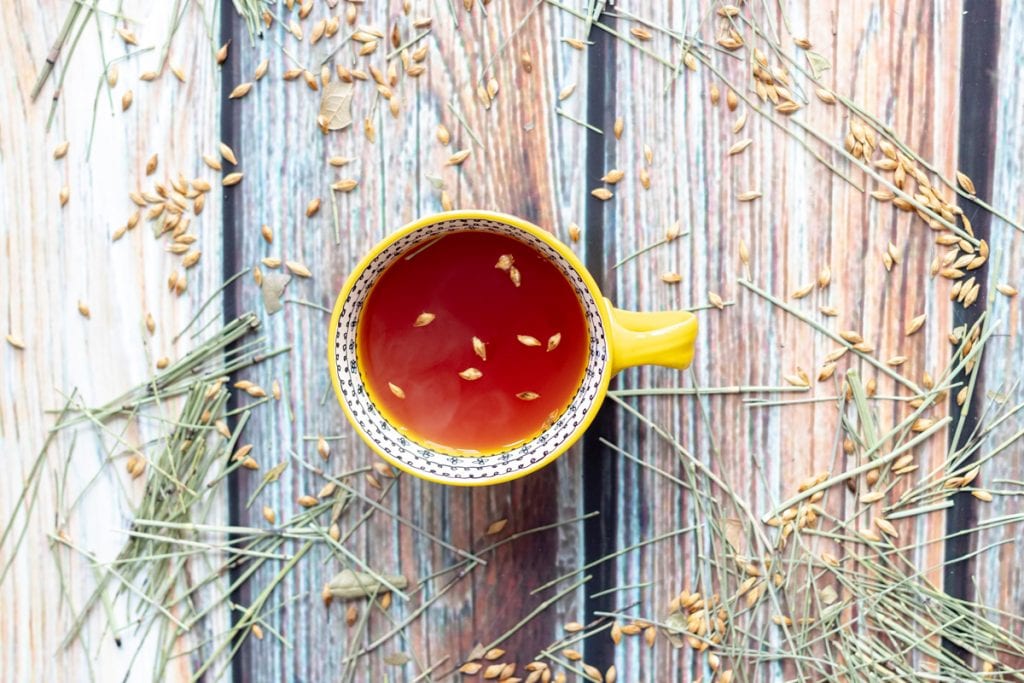
Stir 2 tablespoons of dried horsetail and 1 tablespoon of boldo, if using, into the barley pot and simmer 10 minutes more. Turn off the heat, add 1 tablespoon of chamomile, cover and let it steep for 5 minutes. Chamomile turns bitter if you boil it, which is why it goes in last.
5. Strain, thicken and serve
Strain the barley tea into a pitcher. Stir in half of the flax gel, taste, and add more until it is as thick as you like it. Lima’s carts serve it quite thick; start lighter if the texture is new to you.
To serve, stir 2 teaspoons of lime juice and 1 to 2 teaspoons of honey in the bottom of each glass, then pour in the hot emoliente. Adding the lime to the glass rather than the pot keeps it fresh and lets everyone set their own sweetness.
Hot or cold emoliente
Emoliente is a winter drink first, but Lima drinks it year round. In summer, vendors serve it at room temperature or poured over ice, and the alfalfa usually comes out of the blend.
Hot (caliente)
- Serve straight from the pot, as soon as it is strained.
- Use a heatproof glass, the way the carts do.
- Best on cold mornings, or when you have a sore throat.
Cold (helado)
- Cool, then chill at least 2 hours.
- It thickens in the fridge; thin it with a splash of cold water.
- Add lime and honey to each glass over ice.

How Lima’s emolienteros serve it
The emoliente seller, the emolientero or emolientera, works from a small wheeled cart lined with glass jars and bottles. The barley tea stays hot in a large kettle; the flax gel, the herb extracts, the alfalfa juice and the lime sit in separate containers, so each glass is built to order.
You tell the vendor how you want it: caliente or tibio (warm), sweet or not so sweet, and which herbs. Many carts offer blends for specific complaints, and regulars describe their symptoms and let the emolientero choose. A glass typically costs a sol or two, and it often comes with a yapa, a free top-up.
Carts open before dawn, when commuters stop for an emoliente with a sandwich, usually pan con chicharrón, pan con pollo or pan con tortilla. Many of the same carts sell the other classic Peruvian breakfast drinks, warm quinoa and maca, which is why the trio turns up together on lists of Peruvian breakfast foods.
Emoliente benefits: what the tradition says and what we know
In Peru, emoliente is treated as a home remedy for colds, sore throats, upset stomachs and “heat” in the body. Peruvian nutritionists mostly credit two things: the soluble fiber from the flaxseed and barley, and the fact that it is a warm, low-calorie way to drink more fluid. There is very little research on emoliente as a drink, so the honest picture is ingredient by ingredient.
| Ingredient | Traditional use in Peru | What is known |
|---|---|---|
| Flaxseed | Digestion, constipation, soothing the throat | Flax mucilage is soluble fiber; the gel is what coats the throat. Whole-seed infusions carry far less fiber than eating ground flax. |
| Barley | Energy, “cooling” the body, digestion | Barley contains beta-glucan fiber; some of it ends up in the cooking water. |
| Horsetail | Mild diuretic, kidney and urinary “cleansing” | Traditionally used as a diuretic. Not recommended in pregnancy or alongside diuretics or lithium. |
| Boldo | Digestion, liver, after heavy meals | Long used for digestion; not meant for daily, long-term use. |
| Chamomile | Calming, stomach upset | Widely used as a mild, calming tea. |
| Lime | Colds, freshness | Adds vitamin C, as long as it goes into the glass rather than the boiling pot. |
Emoliente has no caffeine. Most of its calories come from whatever you sweeten it with, so a glass with a teaspoon of honey is a much lighter drink than the very sweet versions some carts pour.

Emoliente variations
Emoliente piteado
The grown-up version. Lima’s night vendors once spiked hot emoliente with aguardiente; today bartenders make it with pisco. Stir 1½ ounces of pisco into a hot glass with lime and honey, or shake cooled emoliente with pisco, lime and simple syrup and serve it over ice, as you would a chilcano.
Tea-bag emoliente
If loose herbs are hard to find, use herbal tea bags: two horsetail, one boldo and two chamomile replace the loose herbs in this recipe. Steep them in the strained barley tea off the heat for 5 minutes.
Market-blend emoliente
Peruvian brands sell ready-mixed emoliente packets of toasted barley, flax and dried herbs. Simmer a packet according to its directions and finish with lime and honey. It is a good shortcut, though making the flax gel yourself gives a better texture.
Fruit-forward emoliente
Simmer a pineapple peel, a quartered quince or a sliced apple with the barley. Many home cooks in Peru do this, and it lets you cut the sugar.
Emoliente vs. barley tea and other barley drinks
Barley drinks show up all over the world, but emoliente is the only one built around flax gel and an herb blend. If you are trying to place it:
| Drink | Where | How it differs |
|---|---|---|
| Emoliente | Peru | Toasted barley plus flax gel and medicinal herbs, finished with lime and honey; thick and served hot or cold. |
| Barley tea (boricha, mugicha) | Korea, Japan | Only roasted barley steeped in water; thin, unsweetened, no herbs. |
| Resbaladera | Costa Rica | Barley or rice blended with milk, cinnamon and sugar; creamy and served cold. See Costa Rican drinks. |
| Barley water | Britain | Pearl barley simmered with lemon and sugar; thin and served cold. |
| Mate de coca | Peru, Bolivia | A coca-leaf tea with no barley; Peru’s other everyday herbal drink. See mate de coca. |
Where to buy emoliente ingredients
Barley, flaxseed and chamomile are in most US supermarkets. Horsetail and boldo are easiest to find at Latin markets or online. These are the ones we would use:
- Goya Dry Barley (Cebada): pearl barley that toasts evenly in a dry skillet.
- Yupik Organic Golden Flax Seeds: whole seeds for the flax gel; golden or brown both work.
- Hanan Peruvian Secrets Cola de Caballo: dried Peruvian horsetail, the classic emoliente herb.
- Hanan Te de Manzanilla: loose chamomile flowers from Peru.
- Hanan Boldo Herbal Tea: boldo in tea bags, handy for the tea-bag version.
Storing emoliente
Lima’s vendors make emoliente fresh every day, because the flax gel keeps thickening and its texture changes overnight. At home, it keeps in a covered jar in the fridge for up to 2 days. Reheat it gently on the stove and thin it with hot water, then add lime and honey to each glass. Do not freeze it; the flax gel separates when it thaws.
Emoliente FAQ
What does emoliente taste like?
Nutty and toasty from the barley, gently herbal, and sweet-tart from the honey and lime. The flax gives it a silky, slightly slippery body that surprises people the first time.
Is emoliente a tea?
It is an herbal infusion, so it is often called Peruvian herbal tea, but it is thicker than tea and contains no tea leaves or caffeine.
Is emoliente alcoholic?
No. Only emoliente piteado, the version spiked with pisco or aguardiente, contains alcohol.
Can I make emoliente without horsetail?
Yes. Barley, flaxseed, lime and honey are the core of the drink. Chamomile, lemon verbena or a cinnamon stick will give it an herbal note without horsetail.
Why is my emoliente not thick?
The flax was not simmered long enough, or there was too little of it. Cook the flaxseed until the water drips in strings, and add more of the gel to the strained tea.
When is the Day of Emoliente?
February 20, set by Peru’s Law 30198 in 2014, which also celebrates quinoa, maca, kiwicha and other traditional drinks.
Emoliente Recipe
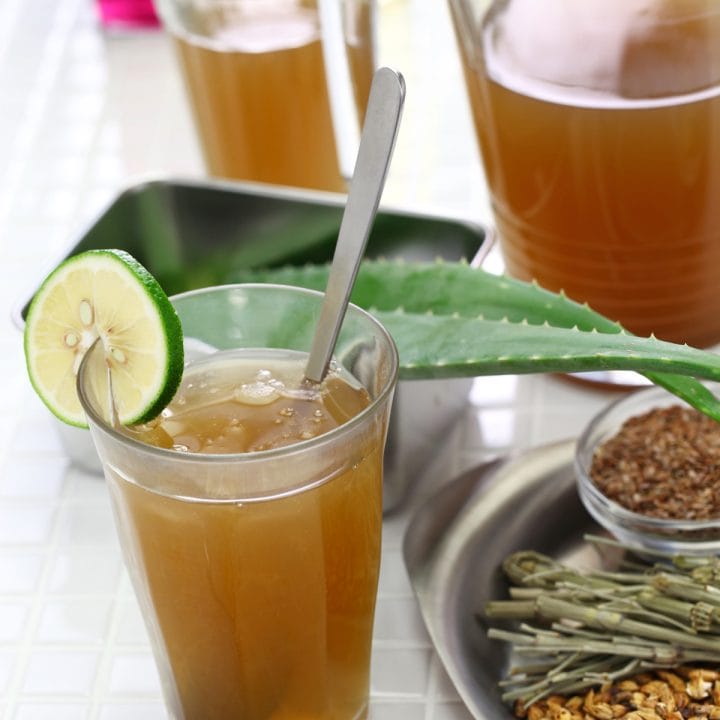
Emoliente (Peruvian Herbal Barley Drink)
Lima's street-cart herbal drink: toasted barley and flaxseed simmered with horsetail, chamomile and cinnamon, finished in the glass with lime and honey. Serve it hot on cold mornings or chilled over ice.
Ingredients
- ½ cup (100 g) pearl barley (cebada)
- 3 tablespoons (30 g) whole flaxseed (linaza)
- 10 cups (2.4 liters) water, divided
- 1 cinnamon stick
- 1 small quince or tart apple, quartered (optional)
- 2 tablespoons dried horsetail (cola de caballo), or 2 horsetail tea bags
- 1 tablespoon dried boldo leaves, or 1 boldo tea bag (optional)
- 1 tablespoon dried chamomile flowers, or 2 chamomile tea bags
- ¼ cup fresh lime juice (from 3 to 4 limes), plus wedges to serve
- 3 to 4 tablespoons honey or sugar, to taste
Instructions
- Toast the barley. Put the barley in a dry skillet over medium heat. Toast, shaking the pan often, for 6 to 8 minutes, until the grains are deep golden brown and smell like toasted bread.
- Simmer the barley. Tip the barley into a large pot with 8 cups of the water, the cinnamon stick and the quince or apple, if using. Bring to a boil, then lower the heat and simmer, partly covered, for 30 minutes.
- Make the flax gel. Meanwhile, put the flaxseed and the remaining 2 cups of water in a small saucepan. Simmer, stirring often, for 10 to 15 minutes, until the liquid is thick and slippery, like egg white. Strain it while still hot through a fine-mesh sieve, pressing on the seeds. Discard the seeds.
- Add the herbs. Stir the horsetail and boldo into the barley pot and simmer 10 minutes more. Turn off the heat, add the chamomile, cover and let it steep for 5 minutes.
- Strain and combine. Strain the barley tea through a fine-mesh sieve into a pitcher or clean pot. Stir in about half of the flax gel, then add more until the emoliente is as thick as you like it.
- Serve. For each glass, stir 2 teaspoons lime juice with 1 to 2 teaspoons honey, fill with hot emoliente and stir. For cold emoliente, let it cool, refrigerate, and serve over ice with lime.
Notes
Who should skip the horsetail and boldo: anyone pregnant or breastfeeding, with kidney or liver problems, or taking diuretics, lithium or blood thinners. Boldo is not meant for daily long-term use. The drink still works with barley, flax, chamomile and lime.
Tea-bag shortcut: use 2 horsetail, 1 boldo and 2 chamomile tea bags in place of the loose herbs.
Barley: pearl or hulled barley both work. Latin markets also sell cebada tostada, already toasted; skip step 1 if you use it.
Storage: best the day it is made. Refrigerate up to 2 days; it thickens as it cools, so thin with hot water and reheat gently.
Emoliente piteado: stir 1½ ounces of pisco into a hot glass.
More Peruvian drinks and breakfast classics
- Chicha MoradaPurple corn, pineapple and spice
- Api con PastelHot purple corn drink and fritter
- Mate de CocaThe Andes’ coca-leaf tea
- Pisco SourPeru’s national cocktail
- 14 Peruvian DrinksThe full roundup
- Non-Alcoholic DrinksAcross Latin America and Spain
More Peruvian Foods
See all →
Jorge Garcia is the founder of AmigoFoods, where he has spent over 20 years helping readers discover authentic Latin American and Spanish cuisine. Raised in a Cuban-American household, Jorge learned to cook at the hands of his mother and grandmother, carrying forward generations of family recipes. That heritage, backed by his family’s four-generation history in the Latin food industry, inspired him to launch AmigoFoods in 2003. With more than 1,000 published articles on recipes, ingredients, and food culture, Jorge’s mission is simple: make authentic Latin cooking approachable for home cooks everywhere while honoring the traditions behind every dish.