
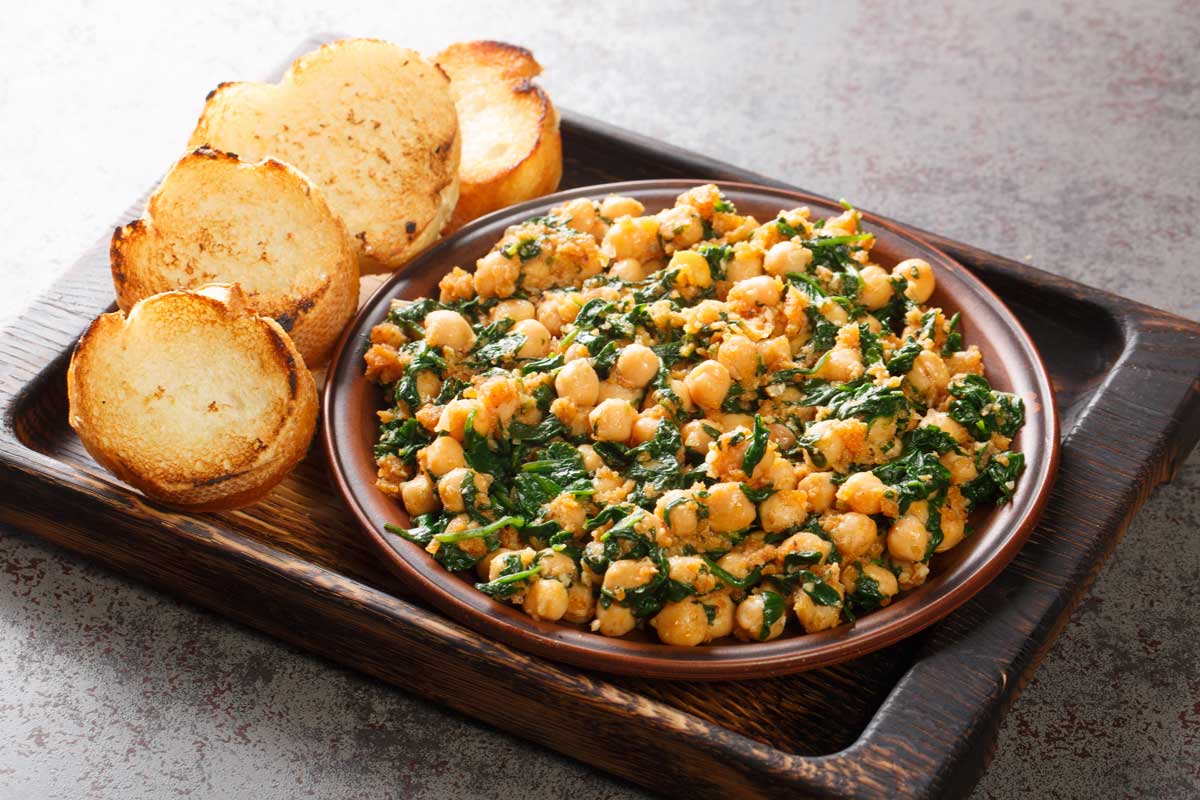
Espinacas con garbanzos (Spanish spinach and chickpeas) is Seville’s classic tapa: tender spinach and chickpeas simmered in olive oil with garlic, cumin and sweet pimentón, then thickened with a pounded paste of fried bread and sherry vinegar. It’s creamy without any cream, naturally vegan, and ready in about 40 minutes with canned chickpeas.
Espinacas con Garbanzos at a Glance
AmigoFoods may earn a commission from qualifying Amazon purchases.
What Is Espinacas con Garbanzos?
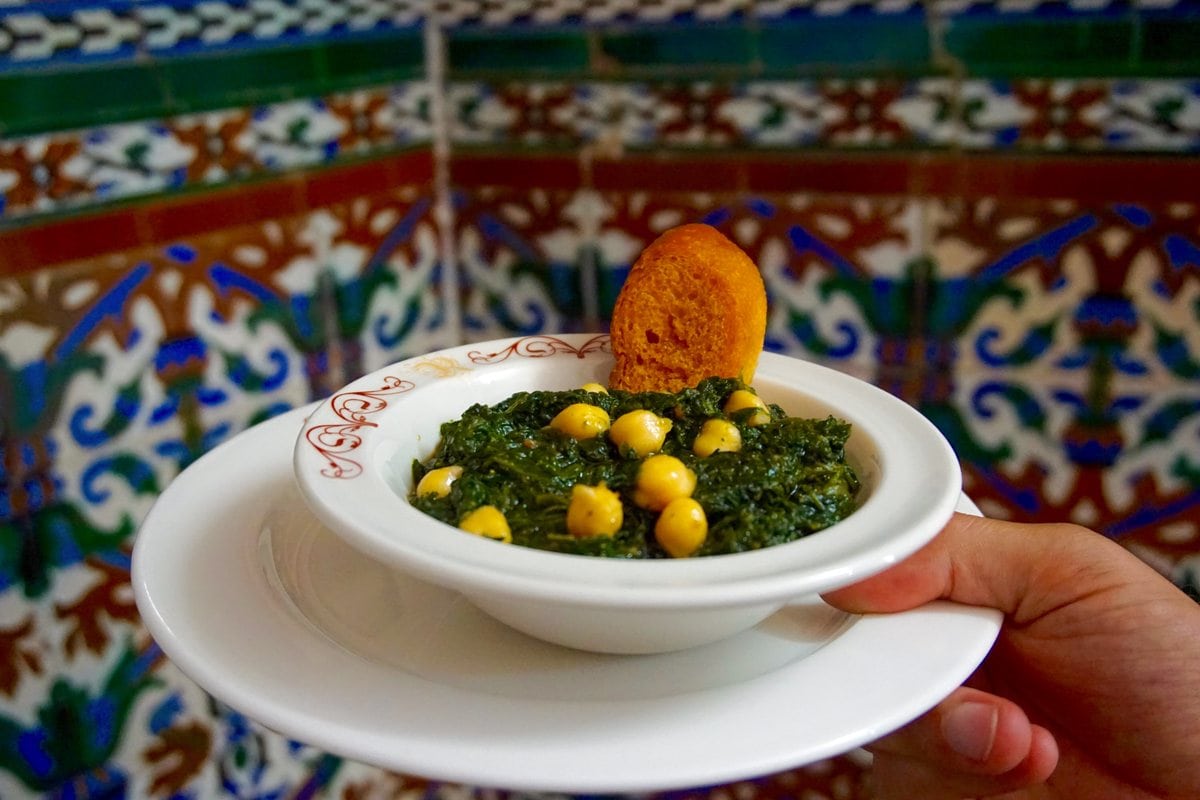
In English, espinacas con garbanzos simply means “spinach with chickpeas.” In Seville it’s served as a small plate among the city’s many Spanish tapas, and it’s thick enough to eat with a fork. It isn’t meant to be a soup.
The dish gets its body from a majado (locally majao), a crushed paste of bread and garlic fried in olive oil. The paste turns the cooking liquid into a silky sauce that clings to every chickpea. In Cádiz the same dish is often called garbanzos con espinacas, and you’ll see both names across Andalusia.
| Where it’s from | Seville and western Andalusia, Spain |
|---|---|
| What it is | Spinach and chickpeas in a garlic, cumin and pimentón sauce thickened with fried bread |
| Traditional season | Lent (Cuaresma) and Holy Week, though Seville bars serve it year-round |
| Served | Warm or at room temperature, as a tapa or a light main with bread |
| Key flavors | Cumin, sweet pimentón, garlic, sherry vinegar, olive oil |
| Diet | Home-style versions are vegan. Use gluten-free bread for a gluten-free version. Some bar versions use a ham bone. |
Where the Dish Comes From: History, Carefully Told
Many recipes online say “the Moors brought it” and leave it there. The real story is more layered, and some popular claims don’t hold up. Here’s what the evidence supports.
Spinach came through al-Andalus
Neither the Greeks nor the Romans cultivated spinach. Its first European mentions come from Andalusi agricultural writing, and it was grown in Spain from at least the 11th century. Cumin, a staple of Andalusi cooking, fits the same picture.
Chickpeas were already here
Spain’s trade agency, ICEX Foods & Wines from Spain, notes chickpeas were possibly brought by the Carthaginians and were already eaten by the Romans, centuries before al-Andalus. The same legume anchors Castilian stews like cocido madrileño.
The Sephardic theory
Some writers say the dish came from the Jewish quarters of medieval Seville. Spinach and chickpea dishes do exist in Sephardic family cooking, but we found no documented evidence tying today’s tapa to a Sephardic origin. Treat it as a plausible theory, not settled history.
Lent, Semana Santa and the bar counter
What’s well documented is the Lenten link. The Academia Sevillana de Gastronomía y Turismo describes it as a guiso cuaresmal (a Lenten stew), made while fresh spinach was in season before the summer heat. Meat was off the table on many days, so a filling plate of legumes and greens made sense. It shares the season with torrijas, the Easter bread dessert. For more on the festivals behind these seasonal foods, see our guide to Spain’s holidays.
Where to Eat Espinacas con Garbanzos in Seville
Today it’s one of the city’s signature tapas, on the menu at nearly every traditional bar. These are the classic places to try it. Hours and menus change, so check before you go.
El Rinconcillo
Calle Gerona 40, near Santa Catalina
Open since 1670 and generally called Seville’s oldest bar, run by the De Rueda family since 1858. Waiters still chalk your tab on the wooden counter. Its espinacas are among the most-ordered dishes in the house, made with an unusually long spice list (more on that below).
Casa Morales
Calle García de Vinuesa 11, El Arenal
A 19th-century wine shop turned tapas bar near the cathedral, with giant clay wine jars along the walls. A good stop for the dish with a glass of manzanilla.
Bodeguitas Antonio Romero
El Arenal
A local favorite for traditional Sevillian tapas, a short walk from the bullring. Order the espinacas alongside a montadito.
Pura Tasca
Triana
A busy neighborhood bar across the river, often recommended by Spanish food guides for its espinacas con garbanzos.
How to spot a good one: The best versions are rustic, with chopped spinach, whole chickpeas and a sauce that slumps gently on the plate. A smooth, bright-green purée served on a slate is a modern restaurant take, not the bar classic.
The Majado: Why Fried Bread Makes It Creamy
The technique is simple. Day-old bread and whole garlic cloves are fried in olive oil until golden. Then they’re pounded with spices, vinegar and a little liquid into a thick paste.
Stirred into the pan, that paste soaks up the liquid and swells, and the toasted bread and garlic add a nutty depth. That’s why good espinacas con garbanzos feels velvety even with no cream, tomato or nuts.
Majado, majao, picada: what’s in a name
Majado comes from the verb majar, which the Real Academia Española defines as “to crush.” Sevillian cooks often shorten it to majao. English-language recipes tend to borrow the Catalan word picada, which describes a similar pounded paste. A mortar gives the best texture, but a mini food processor works fine.
Sweet pimentón or smoked?
Sevillian sources, from home cooks to El Rinconcillo, generally call for sweet pimentón dulce. Many US recipes use smoked paprika instead, which gives a campfire note that’s delicious but less typical.

If you like smoke, use pimentón de la Vera, the oak-smoked DOP paprika from Extremadura, or split the amount half and half. La Chinata sweet smoked paprika is an easy one to find in the US. Our guide to pimentón, Spanish smoked paprika explains the sweet, bittersweet and hot styles.
Ingredients for Espinacas con Garbanzos
The ingredient list is short, so each one pulls its weight. Exact amounts are in the recipe card below.
Spinach
Fresh, mature spinach gives the best texture. Baby spinach works but shrinks more. Frozen chopped spinach is fine if you squeeze it very dry.
Chickpeas
Canned, jarred or home-cooked. Spanish jarred chickpeas are the creamiest shortcut (see the comparison below).
Day-old bread
A plain, crusty country loaf. This is the thickener, so avoid soft sandwich bread or sweet, enriched breads.
Garlic
Some cloves are fried whole for the majado, and the rest are sliced to perfume the oil.
Cumin and sweet pimentón
The signature Andalusian pairing. A pinch of cayenne or hot pimentón is optional.
Sherry vinegar and olive oil
Vinagre de Jerez adds the bright, nutty finish. Use a fruity Spanish extra-virgin olive oil, since there’s nowhere for a poor oil to hide.
Canned, Jarred, or Dried Chickpeas?
All three work. The best choice depends on how much time you have.
| Type | Texture | Time | Best for |
|---|---|---|---|
| Canned | Soft, sometimes a little mushy | Ready now | Weeknights. Drain and rinse them well before using. |
| Jarred Spanish | Firmer and creamier, closer to home-cooked | Ready now | The best shortcut. Common in Spain and sold online in the US. |
| Dried | Creamy inside, holds its shape | Overnight soak plus about 1–1½ hours of simmering | Weekends and batch cooking. You also get flavorful cooking liquid. |
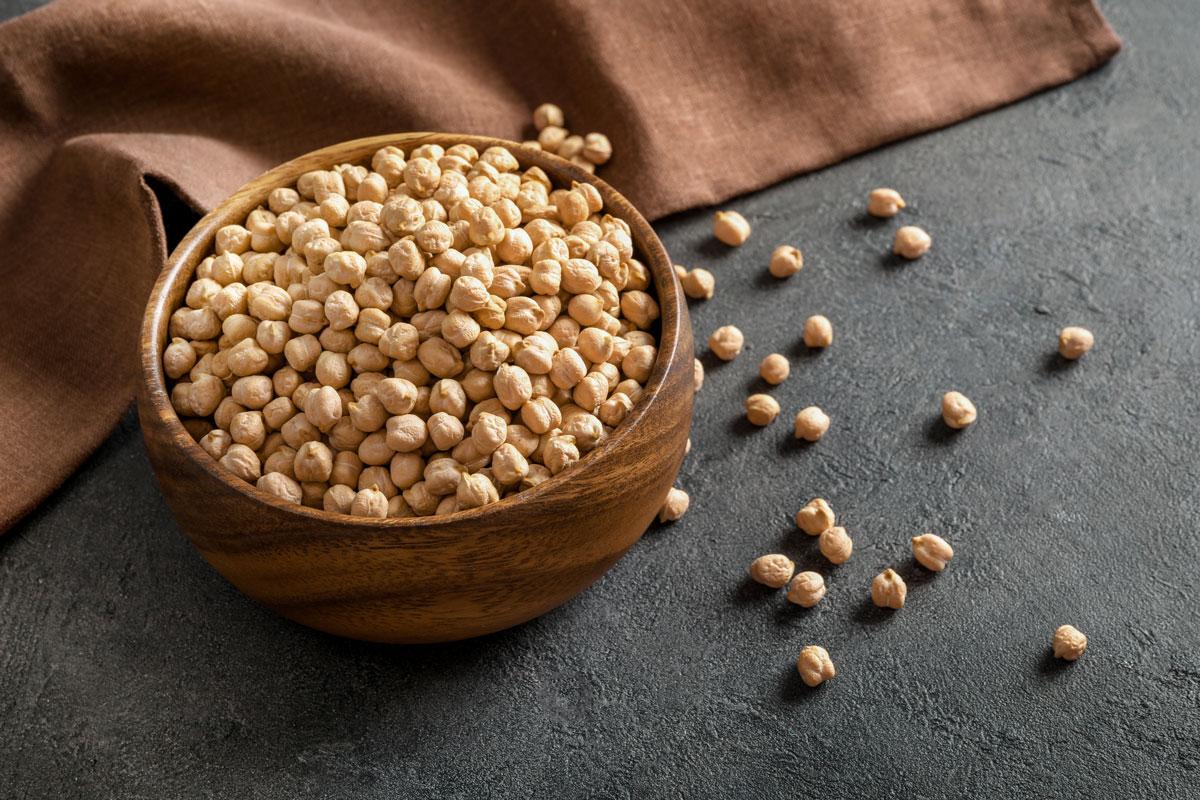
How to cook dried chickpeas for this dish
- Soak: Cover 1 cup (200 g) dried chickpeas with plenty of cold water and a pinch of baking soda (about ½ teaspoon per quart or liter) for about 12 hours. The baking soda helps soften the skins.
- Start hot: Drain, rinse and add them to water that’s already simmering rather than cold water. This is the method chef José Andrés recommends.
- Simmer and salt late: Cook gently until tender, usually 1 to 1½ hours. Salt only at the end, then use about 3 cups of cooked chickpeas in the recipe, swapping some chickpea cooking liquid for the water.
For canned, a pantry staple like Goya chickpeas or Iberia organic chickpeas works well. Rinse them, and let them simmer in the sauce for the full time so they soak up the flavor.
How to Make Espinacas con Garbanzos
This is the traditional home-style version, with no tomato or almonds, scaled for four people. The whole method comes down to four moves in one wide pan. A terracotta cazuela is traditional, but any large skillet works.
- Wilt and squeezeCook the spinach just until it collapses, then press out as much water as you can and chop it.
- Fry the bread and garlicFry cubes of day-old bread and whole garlic in olive oil until deep golden.
- Pound the majadoBloom the cumin and pimentón in the warm oil off the heat, then pound everything with sherry vinegar into a thick paste.
- Simmer togetherWarm the chickpeas with sliced garlic, stir in the paste and water, then add the spinach and simmer until creamy.
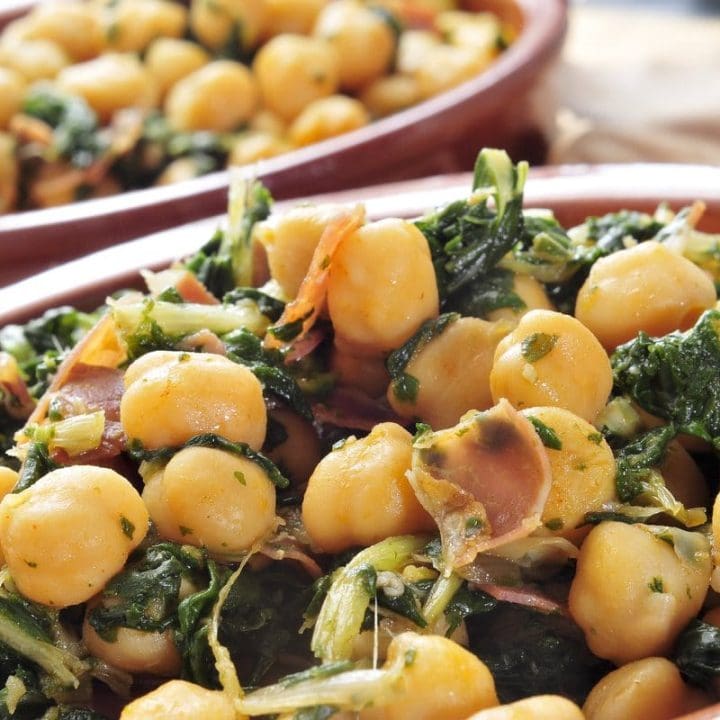
Espinacas con Garbanzos (Sevillian Spinach and Chickpeas)
A traditional Seville tapa of spinach and chickpeas simmered with garlic, cumin and sweet pimentón, thickened with a fried-bread picada and brightened with sherry vinegar. Vegan and ready in about 40 minutes.
Ingredients
- 1 lb (450 g) fresh spinach, washed and thick stems trimmed
- 1/3 cup (80 ml) extra-virgin Spanish olive oil, divided
- 2 thick slices (about 2 oz / 60 g) day-old rustic bread, cut into cubes
- 5 garlic cloves, peeled (3 left whole, 2 thinly sliced)
- 1 1/2 teaspoons ground cumin
- 1 1/2 teaspoons sweet pimentón (pimentón dulce)
- 1/8 to 1/4 teaspoon cayenne or hot pimentón (optional)
- 1 1/2 tablespoons (22 ml) sherry vinegar, plus more to taste
- 3/4 cup (180 ml) water or vegetable broth, divided, plus more as needed
- 2 cans (15.5 oz / 440 g each) chickpeas, drained and rinsed (about 3 cups / 480 g)
- 3/4 teaspoon fine sea salt, plus more to taste
- Freshly ground black pepper, to taste
- Crusty bread, for serving
Instructions
- Heat 1 tablespoon of the olive oil in a large, wide skillet or cazuela over medium heat. Add the spinach in handfuls with a pinch of salt and cook, turning, for 3 to 4 minutes, until just wilted. Transfer to a colander, press out as much liquid as possible, then chop roughly.
- Wipe out the pan and add 3 tablespoons of the olive oil over medium heat. Add the bread cubes and the 3 whole garlic cloves and fry for 3 to 5 minutes, turning often, until deep golden. Transfer the bread and garlic to a mortar or mini food processor, leaving the oil in the pan.
- Take the pan off the heat. Stir the cumin, pimentón and cayenne (if using) into the warm oil for about 10 seconds, without letting the pimentón scorch, then scrape the spiced oil into the mortar.
- Add the sherry vinegar and 1/4 cup (60 ml) of the water to the mortar. Pound or pulse into a thick, slightly coarse paste (the picada).
- Return the pan to medium heat with the remaining olive oil. Add the sliced garlic and cook for about 1 minute, until fragrant but not browned. Add the chickpeas and stir for 2 minutes.
- Stir in the picada, the remaining 1/2 cup (120 ml) water and the salt. Simmer for 5 minutes, stirring and lightly mashing a few chickpeas, until the sauce thickens.
- Add the chopped spinach and simmer for 5 to 8 minutes, adding splashes of water as needed, until the mixture is creamy and loose but not soupy. Season with black pepper and more salt and sherry vinegar to taste.
- Let rest for 5 to 10 minutes. Serve warm or at room temperature with a drizzle of olive oil and crusty bread.
Notes
Frozen spinach: use 10 oz (285 g) frozen chopped spinach, thawed and squeezed very dry; skip step 1 and add it in step 7. Dried chickpeas: soak 1 cup (200 g) dried chickpeas about 12 hours in cold water with a pinch of baking soda, drain, add to simmering water and cook 1 to 1 1/2 hours until tender, salting at the end; use about 3 cups cooked and replace some of the water with the cooking liquid. Smoky version: swap half or all of the sweet pimentón for pimentón de la Vera. Gluten-free: use a sturdy gluten-free bread. Vegan as written; check that the bread contains no dairy or lard. Batch and storage: the recipe doubles easily in a wide pot; refrigerate leftovers up to 3 to 4 days or freeze up to 2 to 3 months, and loosen with water when reheating because the sauce thickens as it sits.
Tips for Getting It Right
Squeeze the spinach
Wilted spinach holds a lot of water. Press it firmly in a colander so the sauce doesn’t turn thin and gray.
Spices off the heat
Pimentón scorches in seconds and turns bitter. Stir it into warm oil off the heat, then move on quickly.
Fry the bread properly
Aim for deep golden, not pale. The color is where the nutty flavor comes from.
Use real olive oil
A fruity Andalusian extra-virgin works beautifully. Our Spanish olive oil guide covers the main varieties.
Adjust at the end
The sauce should coat the chickpeas and slump gently on a plate. Add splashes of water to loosen it, or simmer a few minutes longer to thicken it.
Let it rest
Like many stews, it tastes better after 10 minutes, and even better the next day.
Variations Worth Trying
Tavern-style, the long way
Directo al Paladar and El Español have both reported how El Rinconcillo makes its version. The spinach is chopped very finely, blanched, then fried slowly in oil for about 30 minutes. The majao adds coriander seed, clove, black pepper and ginger to the cumin and pimentón. The pot then simmers very gently for about four hours before the chickpeas go in.
Their chickpeas are cooked with a ham bone, so this version is not vegan. For a meat-free take on the idea, add a pinch each of ground coriander, clove and ginger to the paste and cook low and slow.
With tomato or almonds
Outside Seville, and in many American recipes, you’ll find versions that add a spoonful of tomato sauce or crushed tomato, or swap some of the bread for toasted almonds (often Marcona) in the paste. Both are tasty. Tomato makes it brighter and redder, and almonds make it richer. Neither is how a Sevillian bar makes it, so try the classic first.
Potaje de vigilia
For Lent, many Spanish families turn the same pairing into a soupy potaje de vigilia with desalted salt cod (bacalao) and sometimes hard-boiled egg. It’s a spoon dish rather than a tapa. It sits alongside the heartier stews in our roundup of Spanish soups and stews.
Other easy swaps
- Frozen spinach: 10 oz (285 g) frozen chopped spinach, thawed and squeezed dry, replaces the fresh spinach.
- Swiss chard: Chop the stems and cook them a few minutes before adding the leaves. This is close to the Spanish garbanzos con acelgas.
- A touch of heat: Add cayenne or pimentón picante.
- Pine nuts and raisins: Some cooks, and some Seville bars, stir these in for a sweet-savory note.
Is It Vegan, Gluten-Free and Healthy?
Vegan: Yes, as written. It’s olive oil, vegetables, legumes, bread and spices. Just check that your bread has no milk, butter or lard. When you order it in Spain, ask, since some kitchens use meat stock or a ham bone. It’s one reason the dish is a favorite among vegetarian tapas.
Gluten-free: Not as written, because the bread is the thickener. Use a sturdy gluten-free loaf instead.
Healthy: It’s built on spinach, chickpeas and olive oil, so it’s naturally rich in fiber and plant protein. The olive oil and bread make it more filling than a plain vegetable side. Here’s a rough estimate per serving when the recipe serves four:
Estimated from standard USDA values for the ingredients. Actual numbers vary with how much oil and bread you use.
What to Serve With Espinacas con Garbanzos
Serve it in a small earthenware dish with bread for scooping. Traditional recipes often garnish it with extra fried bread for crunch. Warm or room temperature is perfect. It doesn’t need to be piping hot.
- As part of a tapas spread: Pair it with a chilled salmorejo in warm weather, a wedge of tortilla española, or a plate of patatas a lo pobre.
- As a light main: Serve a generous bowl with crusty bread and a green salad, or top it with a fried egg if you’re not keeping it vegan.
- To drink: A cold beer, a dry fino or manzanilla sherry, or one of the other Spanish drinks you’d find at a Seville bar.
Buying Guide: The Pantry That Makes It Sevillian
With so few ingredients, quality counts. These are the ones worth seeking out. Our wider guide to Spanish ingredients goes deeper.
Agrosevilla Spanish extra-virgin olive oil
An Andalusian oil from a Seville producer, fruity enough to finish the dish with a drizzle.
DOP sherry vinegar (vinagre de Jerez)
Made in the sherry triangle of Cádiz. Standard is aged at least 6 months in wood, Reserva at least 2 years and Gran Reserva at least 10. Standard or Reserva is ideal here.
La Chinata sweet smoked paprika
Pimentón de la Vera in its classic tin. Buy fresh, since paprika fades fast, and keep it tightly closed.
Iberia organic chickpeas
Ready-to-use garbanzos for a 40-minute weeknight version. Rinse well before cooking.
Umien granite mortar and pestle
An 8-inch granite mortar makes quick work of the bread-and-garlic majado and handles countless Spanish sauces.
Our Spanish pantry list
Jarred Spanish chickpeas, pimentón, conservas and other staples we’ve picked out on Amazon.
For bread, any plain, crusty country loaf that’s a day or two old will do. Avoid enriched or sweet breads.
Storing and Reheating
Cool leftovers quickly and refrigerate them in a covered container. FoodSafety.gov recommends eating soups and stews within 3 to 4 days, or freezing them for 2 to 3 months.
The bread keeps thickening the sauce as it sits. Reheat gently with a splash of water and a drizzle of olive oil, and add a few drops of sherry vinegar to wake it up. Leftovers are excellent spooned onto toast.
Frequently Asked Questions
What is espinacas con garbanzos in English?
It means “spinach with chickpeas.” You’ll also see it called Spanish spinach and chickpeas, Andalusian spinach and chickpeas, or spinach and chickpea cazuela, after the earthenware dish it’s served in.
What spices go in espinacas con garbanzos?
Cumin and sweet pimentón (Spanish paprika) are the essentials, with garlic and sherry vinegar. Some cooks add a pinch of cayenne, and El Rinconcillo’s tavern version also uses coriander seed, clove, black pepper and ginger.
Is espinacas con garbanzos served hot or cold?
It’s usually served warm or at room temperature, never scalding and not chilled. That makes it an easy make-ahead dish for a tapas spread.
Is espinacas con garbanzos healthy?
It’s built on vegetables, legumes and olive oil, so it’s naturally rich in fiber and plant protein. A serving of this recipe has roughly 390 calories, 13 g of protein and 10 g of fiber. Nutrition varies with how much oil and bread you use.
Can I make it without bread?
Yes. Mash a few chickpeas into the sauce, or fry a spoonful of blanched almonds with the garlic and pound them instead. The texture will be a little less silky, and it won’t be the classic Sevillian version.
Can I use frozen spinach?
Absolutely. Use 10 oz (285 g) of frozen chopped spinach, thawed and squeezed very dry. Skip the wilting step and stir it in at the point where the recipe adds the cooked spinach.
What are chickpeas called in Spain?
Garbanzos. In Spanish cooking they show up in everything from this tapa to cocido madrileño and Lenten potajes.
Did the Moors invent espinacas con garbanzos?
Not exactly. Spinach and cumin do reflect the legacy of al-Andalus, but chickpeas were eaten in Iberia long before, and no recipe proves a single origin. It’s best seen as a dish that grew out of Andalusia’s layered history and its Lenten traditions.
What’s the difference between espinacas con garbanzos and potaje de vigilia?
Espinacas con garbanzos is thick, eaten with a fork and served as a tapa. Potaje de vigilia is a brothy Lenten stew of chickpeas and spinach that usually includes salt cod, and it’s eaten with a spoon.
Final Thoughts
Espinacas con garbanzos shows how a few cheap pantry ingredients become something memorable when the technique is right. Fry the bread, respect the pimentón, finish with good sherry vinegar, and you’ll have a tapa that tastes like Seville. Make a double batch. It’s even better the next day.
More Spanish Foods
See all →
Jorge Garcia is the founder of AmigoFoods, where he has spent over 20 years helping readers discover authentic Latin American and Spanish cuisine. Raised in a Cuban-American household, Jorge learned to cook at the hands of his mother and grandmother, carrying forward generations of family recipes. That heritage, backed by his family’s four-generation history in the Latin food industry, inspired him to launch AmigoFoods in 2003. With more than 1,000 published articles on recipes, ingredients, and food culture, Jorge’s mission is simple: make authentic Latin cooking approachable for home cooks everywhere while honoring the traditions behind every dish.